


Likes
Comments
Share


@I_Identify_As_A_Dan
Follow
Week 19 for Gelato 41 by seedstockers,
Shes just getting so big, she was defoliated again at the start of the week & was given a dry amendments bloom feed by greenhousefeeding. And shes being fed 10L of plain water every morning.

Likes
110
Share


@Dennis_Bong
Follow
!!!!!!!!!!!!!!!!!!!!!!!!!!!!!!!!!!!!!!!!!!!!!!guckt euch letzen Report an !!!!!!!!!!!!!!!!!!!!!!!!!!!!!!!!!!!!!!!!!!!!!!!!!!!!!!
Blüte hat begonnen:
Edit:11.05
Die Pflanzen sind innerhalb von 2 Tagen explodiert. Ich habe das Licht nun auf 75 Prozent gestellt und noch einmal Cal-Mag nachgegeben, da die letzte Gabe nur eine halbe war. Die beiden Titan sehen fast identisch aus. Die beiden Epsilon sind circa 3 Tage unterschiedlich, eine ist etwa 5 cm kleiner als die andere und hat noch kaum Blüten. Ich denke, in 3 Tagen wird das der Fall sein. Die Cosmos F1 ist im Umfang circa 50-50 cm, kaum Blüten bisher. Ich hoffe, sie wird nicht noch viel größer, da der Platz langsam eng wird. Ich bin von dem Wachstum dieser Pflanze absolut begeistert. Mal gucken, was die Blüte bringt.
Edit ende
Ich habe alle Blüten entfernt, die nicht im direkten Licht sind, und alle Blätter, die die Blüten bedecken.
Die Pflanzen weisen einen Cal-Mag-Mangel auf, was bei der Blüte normal ist, gerade bei diesem Licht.
Ich habe dem Gießwasser etwas Cal-Mag hinzugefügt.
Die Pflanzen sind drei Tage älter als im letzten Report.
letzte Woche :
Die Pflanzen sind seit der Keimung auf diesen Fotos genau 30 Tage alt.
Ich habe eine Pflanze ausgetauscht, da es sich um eine Epsilon F1 handelte, die vermutlich Mutationen aufwies. Sie hatte verkümmerte Blätter, die nicht wie die ihrer Artgenossen aussahen, und wuchs deutlich langsamer. Daher habe ich sie nach 2,5 Wochen ausgetauscht. Der kleine Mann(die ausgetauschte Pflanze) leidet natürlich jetzt ein bisschen unter Lichtstress, deswegen werde ich wohl nur eine sehr gestauchte Pflanze erhalten. Aber besser, als die Fläche leer zu lassen.
So viel zu dem, was nicht funktioniert hat:
Die Sanlight stand die ersten 2 Wochen auf 20 Prozent.
Dann habe ich sie teilweise mit dem Dimmer höher gestellt: 2 Stunden auf 25 Prozent.
Eine Woche später bin ich auf 30 Prozent und 2 Stunden mit 35 Prozent gegangen.
Für Woche 4 habe ich 40 Prozent und 2 Stunden auf 45 Prozent gewählt.
Ich erhoffe mir, die Pflanzen so schneller an die starken Lampen zu gewöhnen.
Im Nächsten grow soll bei jeder Pflanze die TDS per Infrarot gemessen werden. Da werde ich dann ein Experiment zu machen, wie die Lichtsteigerung am besten umzusetzen ist.
Zu den Lampen kann ich bis jetzt nur Positives sagen. Im Gegensatz zur dazugehörigen App, diese ist wirklich nicht sehr gut umgesetzt. Das Menü und die Einstellungen sind teilweise irreführend und nicht sehr durchdacht. Ich muss mir immer wieder die Tutorials in der App ansehen, da diese immer wieder angezeigt werden.
Noch dazu hätte ich gerne die Möglichkeit, mehr Einstellungen treffen zu können. Das ist aber Meckern auf hohem Niveau, weil auch die App das macht, was sie soll, nur eben meiner Meinung nach nicht sehr gut umgesetzt.
Die Pflanzen wurden von mir mit Klipsen aus dem 3D-Drucker gestützt. Diese Klips kann man Stück für Stück im Winkel verstellen, so dass man die Triebe damit neigen kann. Das habe ich von Tag zu Tag im Winkel verstellt, so dass ich am Ende einen 45-Grad-Winkel habe. Das habe ich insgesamt über 6 Tage gemacht.
Die Pflanzen haben an sich ein sehr gleichmäßiges Wachstum. Die Cosmos F1 wächst so optimal, dass kein LST mit den Klipsen nötig ist. Ich habe an den Pflanzen keine Mängel entdecken können und auch keine Anzeichen von Mutationen.
Die Pflanzen haben im Durchschnitt eine Höhe von 35 cm, wobei eine etwas stärker abweicht mit 22 cm (wieder eine Epsilon F1). Der Umfang mit LST bei der Cosmos F1 liegt ohne LST bei 20 cm im Durchschnitt, wo wir wieder die Epsilon im Negativen haben mit 14 cm.
Die Pflanzen wurden alle entlaubt, das eine Woche vor der Blüte. Morgen werden die Pflanzen erneut entlaubt und ge-lollipoppt.
!!!!!!!!!!!!!!!zusätliche infos werden morgen ergänzt + Fotos !!!!!!!!!!!!!!!!!!!!!!!!!!!!!!!!
*1. Foto Mutation:
Dieses Foto wurde nur 5 Minuten nach dem Umtopfen der Pflanze aufgenommen. Vorher stand sie in einem größeren Topf, in dem sie genauso aussah. Ich habe sie umgetopft, weil ich den Topf brauchte, aber die Pflanze nicht wegwerfen wollte. Der Pflanze geht es gut, aber sie sieht im Moment etwas mitgenommen aus. Bilder folgen

Likes
15
Share

@Meisterwulle
Follow
Moin Leute,
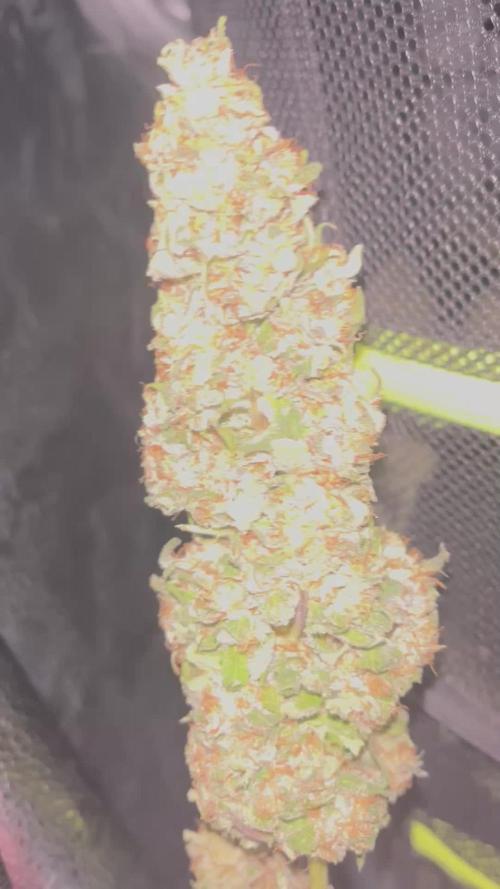
hab vor paar Tagen mit der Ernte der beiden Pflanzen begonnen, war etwa 3 Stunden mit dem Trimmen der beiden Pflanzen beschäftigt. Von der Farbe sind keine großen Auffälligkeiten erkennbar, Standard orange, hell bis dunkelgrüne Buds dabei. Die Größe der Buds variiert von den beiden Pflanzen, die eine eher mit sehr langen aber eher dünneren Headbuds, die andere eher mit breiten und kürzeren Headbuds. Insgesamt kam jetzt circa 640g Nass auf die Waage zusammen (gewogen am darauffolgenden Tag), denke das wird schon eine ganz gute Ausbeute. Im Nachhinein hätte ich schon eine Woche früher ernten können: Die trichome sind schon an manchen Stellen sehr bernsteinfarben gewesen (siehe Bilder). Auch musste ich ein paar Stellen aufgrund von Schimmel wegschneiden (denke das lag daran, dass manche Triebe zu nah an der Zeltwand lagen und aufgrund des wechselhaften Klimas insgesamt). Insgesamt bin ich natürlich sehr zufrieden mit dem Grow, ich konnte einiges an Erfahrung sammeln und werde diese auch für weitere Grows nutzen.
Zurzeit trocknen die beiden im Zelt mit aufgehängtem Trockennetz bei etwa 23 grad und zwischen 55-60 RH. Denke in einer Woche werden diese schon bereit für die Gläser sein, und dann kann man schon mal ein wenig naschen ;)
Ich danke nochmals dem Sponsor Dutch Passion für die Gelegenheit, bei diesem Contest dabei gewesen zu sein. Ich bin mit dem Strain sehr zufrieden - es gab kaum Komplikationen, die Pflanzen waren relativ resistent und das Wachstum ziemlich schnell.
Ein endgültiges Review werde ich erst nach dem Tasting machen können (um ehrlich zu sein hatte ich mir schon vor ner Woche mal einen Trieb abgeknapst und schon probiert, ist aber natürlich nicht ganz repräsentativ für den Grow - war aber mega :P).
Weiter gehts für mich erst mal mit den zwei Stecklingen von den Pflanzen und der dritten Pflanze, die anfangs im Zelt war - diese ist draußen in die reveg gegangen und wird - nachdem die Pflanzen im Zelt trocken sind - zusammen mit den Stecklingen in die Blüte geschickt.
Auch möchte ich jedem nochmal danken der dieses Diary supported und mich auf diesem Weg unterstützt - ich bin sehr froh Teil dieser Community zu sein, der gegenseitige Austausch ist wirklich super und alle sind sehr freundlich :)
Ich wünsche euch ein schönes Wochenende und ich melde mich zum smoke review wieder.
LG Wulle 😻🏻.

Likes
36
Share


@BrigadeDesTerps
Follow
Que dire mise à part que se strain est tous simplement magnifique ? Il porte bien son nom, il commence à être bien Frosty! Et la couleur violet commence à apparaître de plus en plus! Les bud sont beau et dégagent une belle odeur fruité, le plant a une sacré couverture résineuse, je pense qu’elle pourrais être parfaite pour faire des extraction!
Cette semaine je lui ai donné un thé de compost oxygéné, on va voir comment elle va réagir.
Recette du tco pour 20 litres. (Grammes : gr)
50gr biochar
250gr zéolite
3gr granulé Micro-Organisme IT45
10gr pollen d’abeilles
10gr levure de bière
3gr endomychorize
10gr consoude
20gr vers de farine
10gr cendre coque de ricin
12gr ortie microniser
15gr Kelp
10gr spiruline
10gr de cbd living soil
20ml de miel liquide
30ml de mélasse
20ml d’acide humiques et fluvic
Mettre tous les ingrédients (sauf la mélasse ,l’acide h/f et le miel) dans un filtre 400micron, le placer dans un seau avec de l’eau (10litres). Rajoutez le miel et 10ml de mélasse
Y mettre un micro bulleur alimenter sur une pompe à air et faire oxygéné le mélange pendant 24h. Rajout de 10ml de mélasse après 12h le début de la mise en route de la pompe.
A la fin des 24h rajoutez le restant de mélasse et d’acide h/f, mettez y en plus 10litres d’eau au mélange.
Reste plus qu’à arroser!
Pour la Frosty j’y ai incorporé 7litre de mélange
La veille j’ai préparé le pot à l’arrosage avec 500ml d’eau et 2gr de Bacillus IT35 Amyloliquefaciens X5
Bacillus Amyloliquefaciens : rhyzosphère, probiotiques. Aspersion et arrosage. Utilisable pour toutes cultures.
La bactérie Bacillus Amyloliquefaciens se fixe dans la rhizosphère en se nourrissant des exsudats racinaires. En contrepartie, elle stimule la croissance racinaire en sécrétant des métabolites de croissance et solubilise le phosphore en sécrétant des phytases (enzymes).
Effet probiotique consistant en l’utilisation de micro-organismes bénéfiques pour la nutrition et la santé des plantes.
La spiruline, le plus riche et le plus complet des amendements organiques
La Spiruline est une algue aquatique connue comme complément alimentaire, la Spiruline est aussi un amendement organique et écologique très complet.
D'une grande qualité nutritive, elle apporte à vos plantes une quantité de nutriments, dont l'azote, phosphore, potassium, minéraux, acides aminés, vitamines, chlorophylle et protéine.
Le charbon végétal actif est capable d’absorber jusqu’à cinq fois son poids propre en eau ainsi que les éléments nutritifs qui s’y trouvent. Il joue ainsi le rôle de catalyseur et d'amplificateur pour les fertilisants traditionnels, qu'ils soient d'origine organique ou minérale. Ce pourquoi il est idéal pour activer un sol et pour les thés de compost oxygénés.
Le charbon végétal améliore la diffusion et la disponibilité des éléments nutritifs dans le sol et offre des conditions propices au développement des micro-organismes.
Le Biochar peut être introduit dans une grande variété de sols. Il est particulièrement efficace dans les sols pauvres, difficiles et acides.
Pour faire agir rapidement et efficacement sa capacité d’amendement, le charbon végétal est enrichi et biologiquement activé avec des micro-organismes. Le Biochar se comporte ainsi comme un structurateur et un activateur dans le but de valoriser les sols.
Composition :
• Charbon végétal actif 31%
• Matière organique 33%
• Matière sèche 75%
• C/N : 17
• PH : 7,2
• Azote (N) : 2,1 % dont 1,2 % azote organique
• Phosphore (P205) : 0,74%
• Potassium (K20) : 1,18%
• Calcium (Ca) : 6,8%
• Magnésium (MgO) : 0,65%
Le pollen est l'ingrédient de base de la fabrication du miel par les abeilles. Riche en vitamines et minéraux, il est qualifié « d'aliment parfait », y compris pour les plantes !
Les zéolithes sont des roches cristallines, présentant des capacités d'adsorption particulièrement importantes vis à vis des polluants que l'on rencontre dans l'eau et dans certains liquides, ainsi que dans l'air et les gaz. Elles sont extrêmement poreuses comme les charbons activés et elles peuvent être chargées électriquement pour opérer comme des échangeurs d'ions.
La zéolithe est un produit naturel qui respecte notre environnement. Utilisé dans le milieu industriel depuis de longues années déjà, ce minerai aux propriétés filtrantes particulières commence à se vulgariser dans le domaine de la piscine privée, de l'aquariophilie, des bassins d'agrément, de la récupération des eaux de pluie, ou encore de la culture des bonsaïs et autres plantations diverses par exemple...
4 points techniques majeurs :
- Grâce à leur propriété hydrophile, les zéolithes peuvent adsorber l'eau jusqu'à 30% de leur poids total et sans aucune variation de volume : pas de gonflement en présence d'eau ni de craquement en cas de déshydratation comme certaines argiles. Les zéolithes sont d'ailleurs de puissants agents anti-mottant (anti-agglomérant). Cette propriété est très appréciée dans le cas des terrains de golf et autres aires de jeux.
- Les zéolithes ne captent pas l'eau de façon irréversible, elles se comportent comme une réserve au voisinage des racines. Celles-ci peuvent capter l'eau en fonction de leur besoin. Les zéolithes permettent ainsi de réduire les besoins d'arrosage jusqu'à 35 %.
- Une zéolithe se comporte comme une "Zone de Stockage" qui retient l'azote et les éléments minéraux nutritifs au voisinage des racines et les relâche lentement en fonction des besoins de la plante. Cela se traduit par une croissance harmonieuse mais rapide du végétal.
- La capacité d'adsorption et l'énorme rapport surface/volume des zéolithes, vont permettre à la fois la rétention de la solution du sol et une bonne oxygénation au voisinage du système racinaire. Les zéolithes favorisent donc l'organisation biologique des sols en contribuant au développement de la micropopulation. L'apport en nutriments (N, P, K) est réduit de 20 à 25 %. Ces derniers, adsorbés par la zéolithe, sont beaucoup moins sensibles au lessivage et à l'évaporation.
Composition minéralogique :
* Chabasite 70 %
* Phillipsite 2 %
* Feldspath 5 %
* Augite 3 %
* Illite - Mica 2%
Analyse atomique:
* Sio2 52 %
* AL2o3 17 %
* CaO 5,7 %
* K2O 6,1 %
* MgO 2 %,
* Na2O 0,6 %
* Fe2O3 3,6 %
Amendement calcaire, dolomie et gypse avec préparation microbienne à base de Bacillus Amyloliquefaciens IT45 et Saccharomyces cerevisiae LYCC6420
Formulation : micro granulés (1 – 1,6 mm) à base de rhizobactéries favorisant la croissance des plantes qui se multiplient et colonisent rapidement la zone des racines, et de levures Saccharomyces cerevisiae souche LYCC ayant un effet probiotique.
Les PGPR produisent des enzymes qui solubilisent le phosphore à partir de complexes inorganiques et organiques dans le sol et stimulent la croissance des racines efficaces augmentant ainsi la zone d'interception des éléments nutritifs. Les levures LYCC permettent une occupation de la rhizosphère par une flore bénéfique.
Composition :
• Matière sèche : 96,8%
• Matière organique : 91,5%
• N total : 6,6% dont N soluble dans l'eau 0,17%
• P total : 2%
• K total : 1,7%
Micro-granulés :
• Oxyde de calcium (CaO) total : 30%
• Oxyde de magnesium (MgO) total : 7%
• Anhydride sulfurique (SO3) : 13%
La levure de bière est une matière vivante qui permet un meilleur fermentation pour les thés de compost oxygénés notamment conseillé pour accompagner les croissances ou apporter un gros coup de pousse pendant la floraisons.
La levure stimule la vie des sols également à l'arrosage direct en apportant tout aussi bien que dans le TCO sa population l'espèce micro-bactérienne positive pour votre sols ainsi que des oligo-éléments et diverse vitamines.
Composition :
• 2,8% (N) total dont 1% (Norg),
• 2,3% (P205)
• 1,6% (K20)
• 35% de MO
• C/N : 8. PH : 8,4.
Sous forme de poudre mouillable. Il contient des spores du champignon mycorhizien Rhizophagus Irregularis MUCL57891 avec des levures inactivées spécifiques. 2000 spores/gramme d’endomycorhize Rhizophagus Irregularis MUCL57891 et Saccharomyces Cerevisiae LYC6420 inactivée. Se connecte efficacement au système racinaire et forme un vaste réseau souterrain de filaments, qui agissent comme des extensions pour atteindre les nutriments et l’eau au-delà de la rhizosphère
Composition :
• Poudre contenant 2000 spores/g. d’endomycorhizes Rhizophagus irregularis
La Consoude (Symphytum Officinale) est une plante présentant de nombreuses propriétés.
Particulièrement riche en Potassium (K) organique, la consoude est une alliée idéale pour les périodes de floraison. La consoude a tout pour plaire : riche en vitamine B12, elle agira également comme stimulateur racinaire, mais aussi comme biostimulant cellulaire, grâce aux alcaloïdes, aux allantoïnes et jusqu'à 30% de protéine !
100% déjection de vers de ténébrions.
Très riche en microorganismes, le guano de vers de farine est une matière directement composté par les vers. En effet, c'est bien la digestion de matières végétales par des larves, insectes ou autres arthropodes qui valident le processus de compostage, que ce soit en zone de production de cultures d'insectes, pour le compost maison ou la dégradation de litière forestière.
Les bactéries et autres champignons obtenus grâce au système digestif de nos vers, permettent la dégradation accélérée des éléments nutritifs dans vos supersoils, et les symbioses permettant l'assimilation des éléments nutritifs.
Cette bio-activation intense mettra dans vos sols, à la disposition de vos plantes, un panel tellement varié de nutriments frais qu'il nous est aujourd'hui technologiquement impossible de pouvoir tous les nommer et de les compter.
Le guano de vers de farine fournit une grande polyvalence. Très équilibré, il s'utilise en entretien ou en apport ciblé seul ou en complément de d'autres amendements ou fertilisants organiques.
Il agit comme un puissant activateur de sol et/ou de substrat.
Cendre coque de ricin NPK 0,1-18,6-16,5. 0,1% (N-Azote), 18,6% (P205-Phosphore), 16,5% (K2O-Potasse), 11,7%(Ca0), 9,1 (Mg0) - Origine : Inde
ACTION SOL • rend rapidement accessible au sol Phosphore, Potasse, Magnésium et Calcium.
ACTION PLANTE • Apport aux stades agronomiques propices. • Produit riche en éléments fertilisants : combinaison NPK 35%. • Régularité de l’apport, milieu et fin de floraison. . Favorise la sénescence.
Analyse chimique :
• NPK 0,1-18,6-16,5
• N-Azote 0.1%
• P205-Phosphore 18,6%
• K2O-Potasse 16,5%
• CaO-Calcium 11,7%
• MgO-Magnésium 9,1%
Ortie bio micronisée Stimule la vie du sol et la végétation.
Composition :
• 2,8% (N) total dont 1% (Norg),
• 2,3% (P205)
• 1,6% (K20)
• 35% de MO
• C/N : 8. PH : 8,4
KELP poudre
ascophyllum nodosum
- amendement sol
Croissance et floraison - Meilleure germination - Meilleur développement racinaire Meilleure assimilation - Résistance aux stress osmotiques - Augmente la production de chlorophylle = plantes plus vertes = lumière mieux captée - Lutte contre le stress osmotique - Développement des Micro-Organismes dans le sol – Riche en vitamines, fer, iode, oligo-éléments, hormones de croissance auxines et cytokinines - Idéal en épandage et pour les thés de compost oxygénés.
Important : notre Kelp est un goémon noir mais il n'est pas le varech bien moins fertile de la même famille qui est l'algue qui pullule et pollue la Bretagne, notre algue pousse uniquement à plus de 50 mètres de fond dans les grands courants froids au large de la Norvège.

Likes
61
Share


@Island
Follow
Day 8 Flower
The mission until the end of pre flowering is Fill all scrog area.
Both Plants smelling well, showing pistils and become more thirsty.
Now Im watering 3, maybe 4, a week (2 times with nutrients).
At this week I started with Big Bud from Advanced Nutrients and its the last week of Open Sesame (Fox Farm).
Now every week Im gonna stay anxiows, vegetative is boring but flowering dont.
Lets ROCK! 😆
Day 11 Flower
The routine still the same, watering 2 times a week with nutrients.


Likes
28
Share


@Salgeezi
Follow
Ended up cutting all of the front left plant this week and majority of the back two plants. Guna let the lowers get some light for a few more days. Really noticing all the tiny ass buds. Hopefully I'll make something out of them. First run with a net and I just left way too many branches/bud sites for this size of plants they were. Buds look good though. Flushing last plant and will be cutting in a few days.

Likes
10
Share


@Kloud9gardenz
Follow
Don't have a lot of time these days to take pics so I'll sum things up. CO2 got outta control and the plants took tf off literally. The video is around middle of week 3, I had to flip at week 4 BC I literally ran out of room and I had to constantly defoliate.

Likes
9
Share


@Mr_nugs_lover_David
Follow
I Should have been chopped down 5 plants instead of just one however I lost her 4 sisters because of fungal infection due to a high humidity and and a very hot day. Wish I could have been able to get a lot of jars full of this wonderful and magical organics nugs.
Likes
2
Share


@AestheticGenetics
Follow
4/27/25 Struggling to figure out how to keep her smaller and to let her fill out. Shes so long and lanky. So theres some unorthodox training going on at the moment. Hopefully itll all work out.
My landscape staples are too short and the soil isnt compacted much so i have her pulled down to the soil and swirled around the pot to keep her contained within her own small space at the moment.
in hindsight i suppose i could top her more 🤷🏾♂️
Likes
25
Share


@Jessemon1106
Follow
She is a great strain thus far. My tent has been getting a bit hotter in the summer. Just a bit of issue though. Can't wait to try this one. Such a sweet candy smell.

Likes
10
Share


@Rob691
Follow
D-63 : everything is ko untill now ! A litle stress is visible on the leaves of the Lemon Kix that are abit too yellow. Then I set the Ph a litle bit lower with 6.3 couple of days ago. New leaves are looking ok.
I think there still 2-3 weeks for the lemon kix, 1-2 weeks for the others. I'm checking the trichomes every days. Nothing much to do but removing the leaves that obstruct the light, watering and wait !
D-68 :
Mokum's Tulip is gone for 48h of darkness. Harvest is coming on wednesday.
Lemon Kix : is ok. A bit thirsty.
Pinapple Express Young : Going great. Watching the trichomes everyday. I think the harvest could be next week-end.
Pinapple Express Old : Look at this faxtailed beauty !!! She's bigger than my fist with alooooot of thricomes. She's the oldest, but she could be the last to harvest ! She's amazing.
Likes
7
Share

@DeepRootsGrowTrees
Follow
STICKY BROCCOLI 🥦 / ZAMNESIA & PLAGRON
WEEK #13 OVERALL
WEEK #7 FLOWER
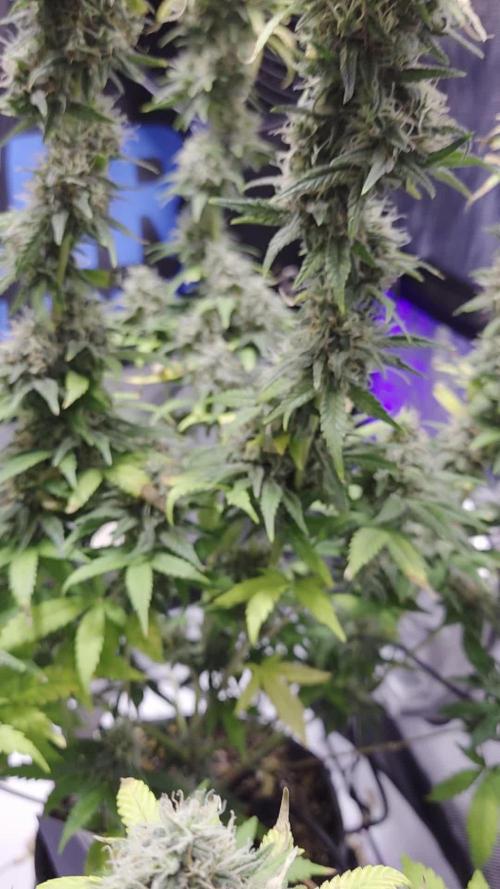
This week we lost some leaves 🍃 😪 had to make some adjustments. Turned the light down just a bit and just have her H2O with a little GREEN SENSATION. As always there's a leaning curve when growing a new strain, however that's the fun 😁 of growing. Leaning what the plant wants and when it wants it. She's stacking nicely though starting to get some weight to her buds. Buds are dense and sticky covered in trichomes. She's got a nice aroma going on also. Doing great for some of the issues she's had. STAY GROWING MY FRIENDS!!
THANK YOU FOR TAKING A LOOK IT'S MUCH APPRECIATED!!
THANK YOU ZAMNESIA AND PLAGRON!!!
STICKY BROCCOLI 🥦 / ZAMNESIA SEEDS

Likes
4
Share


@IndicaVibeMe
Follow
Phenotype #4 & #5 Female plants = Pollinated successfully by brother Phenotype #1 Male
Also mixed this Mystery Purp Male Pollen w/ a Jackpot Seed i found in my weed bag from a Lume Dispensary.
☆First & Probably last time, only found 1 Single Fat seed ☆ Going to ne excited to grow these cultivars. Going to plant immediately the F2 Genetics when seeds are ready for harvest.
Phenotype #4 is mostly sinsemilla
except for the very bottom branch successful pollination by brother Phenotype #1



Likes
4
Share


@NuttyYeti
Follow
She needs a lot of water because of the tiny pot but coming along nicely.

Likes
1
Share

@ChitownCannaChica
Follow
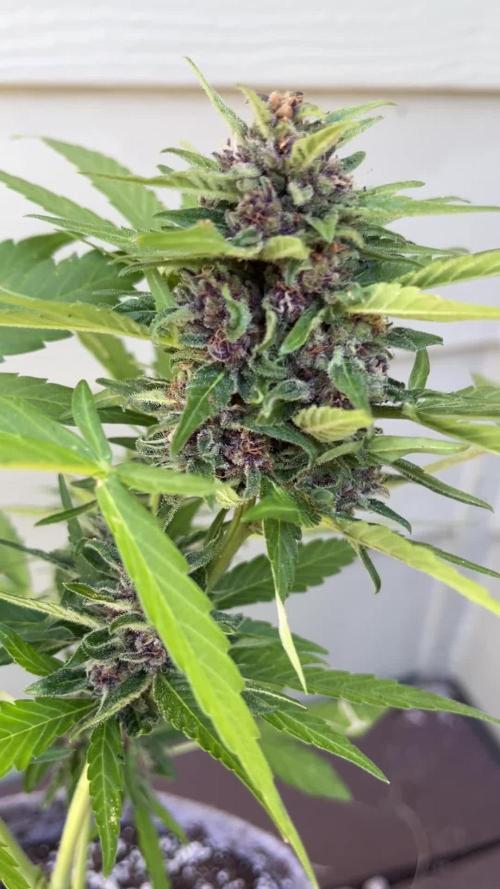
Temps dropped by 10-17 degrees- especially at night. Have not given any nutrients, just hose water. She seems to be doing fine. Ipm weekly and the cold is making her slow down a touch. Other than that, the frost is developing nicely and countering all this plant has been through with the temp swings, bouts of rain, bouts of dryness, wind, sun, no sun, etc- I should get a decent little harvest! Smell is divine! Has these sweet vanilla pine aromas with a deep purple bud. Probably chopping next week!🏻💚

Likes
1
Share

@Professor_Little
Follow
27.11.
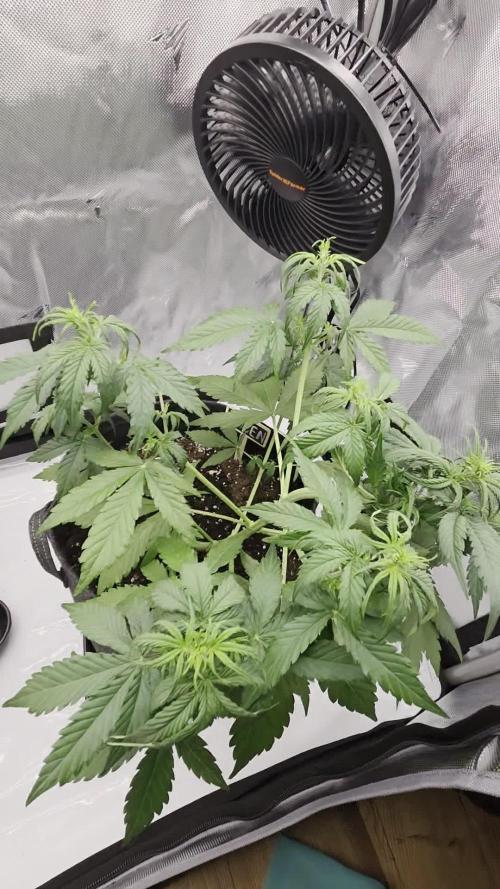
She’s really starting to take off — looks like she’s about to flip into flower soon (at least from my noob POV). I can already see some pistils popping. I did stress her a bit though — didn’t water in time and she got a little droopy the next day. Gave her a good drink right after and she bounced back nicely. We’ll see how she goes.
Likes
17
Share


@valiotoro
Follow
Hello everyone week 4 of flower has passed for this Cinderella Jack auto 👸🏼
For the feeding schedule i stopped feeding Power Roots and Pure Zym and started feeding Green Sensation 0,5/l
Mars hydro SP-6500 power 75%
have a great day and wish you all happy growing 😎👨🌾🏻
Likes
24
Share
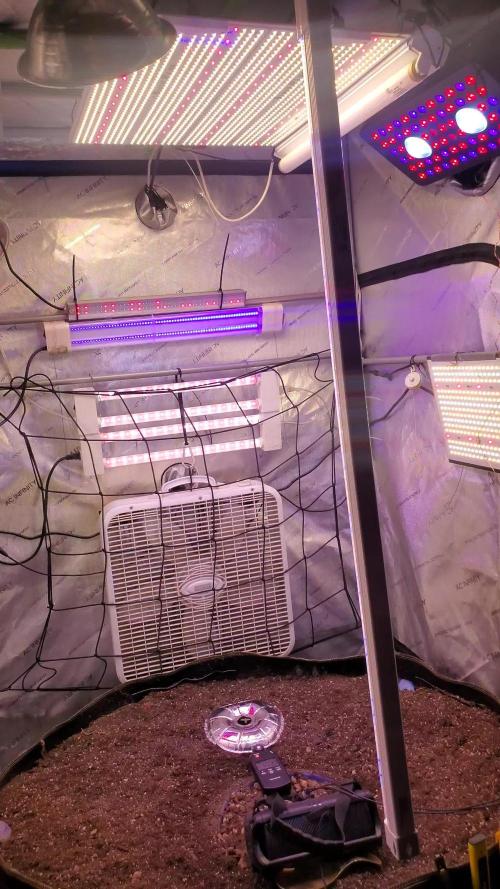

@Ultraviolet
Follow
The cannabis strain Grape Guava can be a purple strain, depending on its specific phenotype and genetic makeup. While not all phenotypes of Grape Guava are purple, some variations, such as the Zatix Grape Guava, are noted for their striking purple appearance due to the genetic expression of anthocyanin pigments.
In a garden of green, Grape Guava gleams,
With its fruity aroma, enchanting dreams.
Clusters of grapes, guava's sweetness ignite,
A strain so divine, in purple and white.
Euphoria whispers, a lush fruity haze,
Grape Guava's embrace, a tranquil daze.
Off and away.@1400ppm. The increased CO2 allows plants to thrive at higher temperatures, which in turn necessitates higher humidity to maintain the ideal VPD for healthy growth and transpiration. 80F -5F = 75F LST with 70% RH = 0.72 kPa. Higher temperatures and humidity promote rapid growth, nutrient uptake, and photosynthesis while maintaining a lower stress level. Temperature influences the rate of enzymatic reactions involved in aerobic respiration. Enzymes, such as those involved in glycolysis, the Krebs cycle, and the electron transport chain, work most efficiently at an optimal temperature range. In low temperatures, enzymatic activity will slow down, thus reducing the rate of aerobic respiration. In high temperatures, enzymes can become denatured, thus impairing their function and stopping the process of aerobic respiration. Glucose is the primary fuel for aerobic respiration. The rate of aerobic respiration increases with the availability of glucose, as it is the starting point for glycolysis. If glucose levels are low, cells may rely on alternative energy sources such as fatty acids or amino acids , but these processes may yield less ATP or be less efficient. To determine this effect, carbon dioxide volume was measured (as carbon dioxide is an output of aerobic respiration)
A seed germinated via skotomorphogenesis (in the dark) will generally develop faster in its initial stages to reach light, though it will be etiolated (elongated and weak) and will switch to slower, more robust photomorphogenesis (light development) once it emerges into light. While skotomorphogenesis is a rapid, growth-oriented process for soil escape, it's a temporary phase; photomorphogenesis is a more sustainable development program that prepares the seedling for photosynthesis.
18/6 with the 6 being IR instead of darkness, keeping temps overnight a neat 77F-80F. PPFD overnight 1.8.
Think of my tent as a lung. What goes in must come out. When the rate of air going out exceeds the amount of air coming in, it creates a negative pressure. Tent concaves (bends in). If set up correctly, your RH will begin to drop slowly to the desired level you set, and the extraction turns off when it reaches 50% RH. The plant, as it performs cellular respiration, will always be releasing more water into the air, so the RH% of the tent overnight will always increase, so long as oxidative phosphorylation is occurring. As soon as the RH% creeps back up to 55%, the extraction turns back on, over and over, this creates a strong pressure differential which will work wonders on your grow. replicating high and low pressure fronts in nature, critical for oxygen diffusion, but more importantly, full control of your RH%.
Moisture will not transfer from a saturated atmosphere to another if that air is already at or above its saturation point, meaning the air can't hold any more water vapor. Once I understood that water is produced as a by product during cellular respiration, specifically at the very end of the electron transport chain (ETC) where electrons are finally transferred to molecular oxygen, the higher the RH of the air, the more resistance there is for more moisture to be added to that environment, and effects the ease with which it does so. But none of that water comes from the pot; it's pulled from the air. If you run high daytime RH, your medium/pot is 100% reliant on transpirational root pull to move water. ZERO evaporation happens across the atmosphere if the tent air has high RH%, the medium cannot release its water through evaporation. Once a canopy develops, light no longer slowly wicks and evaporates from the topsoil. The Soil-Plant-Atmosphere Continuum (SPAC) describes the continuous pathway and process of water movement, driven by a gradient in water potential, from the soil, through the plant's roots, stem, and leaves, and finally evaporating into the atmosphere through transpiration. There is evaporation, there is transpiration, then there is evapotranspiration; Evapotranspiration (ET) is the combined total of two processes: evaporation (water lost directly from soil and surface water into the atmosphere) and transpiration (water released from plants to the atmosphere through their leaves). Evapotranspiration represents the total amount of water that moves from the medium into the air. There is no such thing as a medium with too much water, only a medium that retains too much for too long.
The water must always flow efficiently from one atmosphere(Medium) to another(Air) in a timely manner. Moisture is a critical factor for bacterial growth and decay. Dictating how long it's allowed to sit in any one location for any given period is a key preferred control. To ensure a net reduction in a bacterial population, the rate of removal (ET) must exceed the rate of bacterial growth (decay rate), which is often modeled as a growth rate for the specific bacterium under the given conditions. By optimizing daytime VPD, we also optimize conditions for bacterial growth to explode exponentially above 77°F.. If water is allowed to sit in a medium without an escape within a timeframe, nothing good will happen. IF High RH is maintained overnight as well as during the day, placing 100% of water movement at the behest of daytime transpiration, roots can only pull where they can reach, and if soil is compressed above a certain point, moisture will become trapped in a medium with no way of moving day or night. This will begin the countdown for decay to take hold. When water stagnates in a medium, it loses oxygen, creating anaerobic conditions that foster the growth of harmful microorganisms like bacteria and fungi, which can produce toxins and disease vectors.
Thigmomorphogenesis, the process by which plants respond to mechanical stimuli like touch by altering their growth and development, resulting in significant morphological changes to improve survival against mechanical perturbations. This complex response involves sensing touch and initiating physiological and genetic responses, leading to changes in form and structure over days or weeks. The process is triggered by physical forces such as wind, rain, or touch. Plants adapt to these stimuli by changing their shape and structure, which may include slower growth, thickened stems, or altered leaf development. Plants possess sophisticated mechanisms to detect even subtle mechanical stimuli and initiate responses. A variety of molecules, including calcium ions, jasmonates, ethylene, and nitric oxide, are involved in signaling these mechanical inputs. Touch can induce the expression of genes that encode proteins for calcium sensing, cell wall modification, and defense mechanisms. A plant exposed to constant wind may become shorter and sturdier. A plant that is touched frequently might grow slower to conserve energy and develop thicker cell walls. These changes increase a plant's resilience and ability to survive in harsh environments.
Let's get Thiggy with it.
Likes
22
Share


@Bread_n_Buds
Follow
There are some things that still amaze me, one of these is the huge autoflowering that I can do lately. Today I harvested the second Green Crack F1 Hybrid Automatic by Zamnesia.
** Remember that for all strains we have at least two plants, one left to grow straight and one worked with the techniques (go back in the week too see).
Technique Used // In this case we let the plant grow straight and it seems to have worked great. I think thanks to the Plagron additives we had powerful and fast growth very voracious in everything in fact it was very difficult to keep it in balance and not send it into over.
Better with the techniques or normal? This time I have no doubts, even if this wonderful one had the grace of a slightly less cold vegetative there is no comparison it is a marvel of nature queata without the use of techniques but with a wise cleaning at the bottom to have only flowers of great quality. Zero popcorn totally.
Flower quality // The plant has resined very well everywhere and unlike some autoflowering plants that fail to consolidate the flower here we have pure Carrara marble. A flower of this quality is truly a pleasure to see, touch, smell, feel. Exceptional. The trichomes are mostly milky, some transparent and some amber.
Check the article in your language // https://www.zamnesia.io/it/guida-coltivare-cannabis/333-lavaggio-delle-ceme
Feertilizers// I am very happy with how I managed to unload the plant that at a certain point before going flush was fed a few days only with additives and then went flush and we are discolored sufficiency.
All the fertilizers and additives of Plagron in the green version / 100% organic have fully satisfied me. Choose your soil based on your style and calculate the sheet on the site www.plagron.com
You can instead find the fertilizers in convenient all-inclusive packs on the Zamnesia site.
Try a seed of this strain that drives us crazy..
---- https://www.zamnesia.io/en/10677-zamnesia-seeds-green-crack-f1-automatic.html
Zamnesia Description // Forget what you think you know about cannabis. Green Crack F1 Automatic by Zamnesia Seeds is here to shake up the entire industry. Using F1 genetics, growing cannabis has never been easier. These plants offer uniform and abundant yields. Get ready to harvest high-quality buds, full of flavor and amazing effects.
Music and Frequencies // For about 4/6 hours a day my plants listen to 432Hz frequencies made especially for their well-being and sometimes a bit of black music to give them those vibrations that only music can give. www.radionula.com
All the best that mother nature has to offer is at ---- www.zamnesia.com
Processing
Likes
11
Share


@Leonweed10
Follow
Muy saludables en su dia 18 de vida se ven todas!
An comenzado a alimentarse con fertilizante de crecimiento y en unos días más les haremos transplante a maceta de 7 litros definitiva.


