Likes
Comments
Share
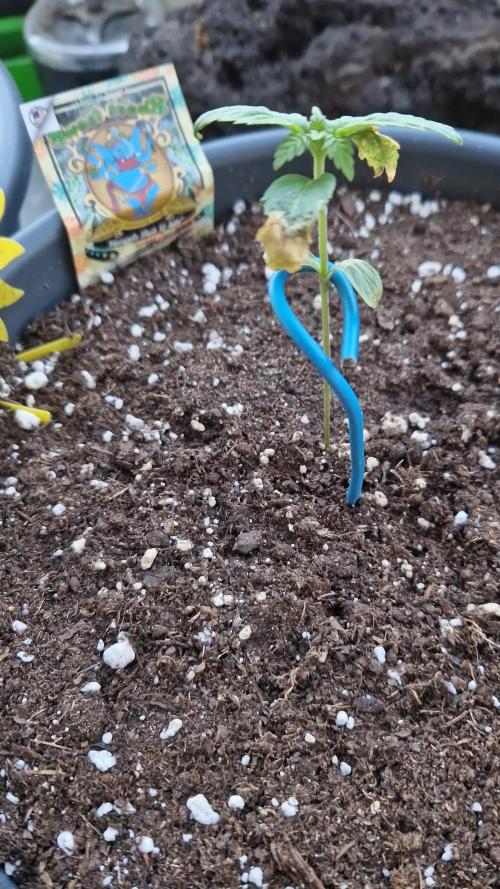
Unos días más de Vegetativo y ya pasamos a florar. Antes de pasarla voy a hacer esquejes de todas las plantas para cuidar los fenos más potentes y ricos 🤑 Hoy 10/7 voy a realizar una poda de bajos, un poco de defoliación y sacar los esquejes.
Likes
58
Share
Hello Growers and Tokers! 👋 👩‍🌾 🧑‍🌾.🔥💨 A lot to talk about this week.. Got my lights installed and oh my have they grown. Royal Gorilla has taken a major growth spirt this week, new growth everywhere and getting taller. I spread her out a bit doing some LST. She took it great and ket growing. Amazed with how these lights are working for them. Most likely will do some defoliation next week to clear some space, more light penetration and have the main colas grow. Happy with how this girl bounced back, she had time to recover when they were all under the 150W CFL... and now she's at an even height with the others. Watering every other day.. Hope your week goes as great or better than mine, have a good one growers!
Likes
16
Share
Seedling managing 93F 30%RH, around 20 DLI. Vpd is in the 3's. No I don't recommend. Signum Magnum. "A great sign appeared in the sky a woman clothed with the sun with the moon under her feet and on her head a crown of twelve stars. Sing ye to the Lord a new canticle: because He has done wonderful things. Glory to the Father, and to the Son, and to the Holy Spirit As it was in the beginning, and now, and ever shall be, world without end." The plant nutrient nitrogen exists in forms with both positive and negative charges. Ammonium (NH4+)(immobile in soil)(Cation) has a positive charge, while nitrate (NO3-) (highly mobile in soil)(Anion)has a negative charge. Nitrogen is unique among plant nutrients in that it can exist in both positively charged (ammonium, NH₄⁺) and negatively charged (nitrate, NO₃⁻) forms in the soil. This makes it a special nutrient. In that it is responsible for providing balance for reactionary trade offs when it comes to ph. Because ph itself in the medium will always slowly drift towards acidicity, such is nature. 80% of nitrogen should be nitrate and no more than 20% ammoniacal nitrogen. Ca, mg, and K are the big 3 cations related to soil composition, pH & base saturation. When nitrogen is in the form of ammonium, it can compete with calcium, magnesium, and potassium for absorption sites in the plant root. This competition can lead to a reduction in the uptake of these other essential nutrients. Nitrogen, particularly in its nitrate form (NO3-), can increase soil acidity, which can also affect the availability of calcium, magnesium, and potassium. The form of nitrogen applied (ammonium vs. nitrate) can influence its interactions with other nutrients. Ammonium nitrogen can have a more pronounced negative effect on the uptake of calcium, magnesium, and potassium compared to nitrate nitrogen. Common forms of ammonium nitrogen include ammonium ion (NH4+), urea, and ammonium compounds like ammonium nitrate, ammonium sulfate, and ammonium phosphate. Common forms of nitrate nitrogen include potassium nitrate (KNO3), sodium nitrate (NaNO3), calcium nitrate (Ca(NO3)2), and ammonium nitrate (NH4NO3). Phosphorus is an essential plant nutrient, and its availability in the soil is strongly linked to the presence of oxygen. Plants primarily absorb phosphorus as phosphate (PO4), and oxygen is a key component of this molecule. Furthermore, the availability of phosphorus in the soil can be impacted by factors like soil aeration and temperature, which in turn affect the oxygen supply to the roots. Phosphorus uptake in plants is most critical during the early stages of growth, particularly within the first few weeks of plant development. Young plants actively growing tissues have a high demand for phosphorus. They may absorb up to 75% of their total phosphorus requirements within the first few weeks of vegetative growth, with up to 51% of uptake happening overnight, primarily in the first few hours or early nightfall. ⑨Anaerobic root respiration, or respiration without oxygen, is detrimental to plants because it's less efficient and produces toxic byproducts, leading to reduced energy production, nutrient uptake issues, and ultimately, root damage and plant stress. ⑨Anaerobic respiration, unlike aerobic respiration, doesn't utilize oxygen as the final electron acceptor in the electron transport chain. This results in a significant drop in the amount of energy (ATP) produced, which is necessary for various plant functions, including growth, nutrient uptake, and maintenance of cellular processes. ⑨In the absence of oxygen, plants produce byproducts like ethanol and lactic acid during anaerobic fermentation. These byproducts can be toxic to the roots and inhibit their function, ⑨When oxygen is depleted in a medium, the pH tends to decrease (become more acidic) due to the production of metabolic byproducts. This is particularly relevant in biological systems where aerobic respiration relies on oxygen as the final electron acceptor. ⑨When oxygen is scarce, plants may switch to anaerobic respiration. This process produces carbon dioxide (CO2) as a byproduct. ⑨CO2 dissolves in water to form carbonic acid (H2CO3). This acid lowers the pH of the medium, making it more acidic. ⑨Anaerobic conditions can impair a plant's ability to regulate its internal pH, leading to a drop in cytoplasmic pH and potentially cellular acidosis. ⑨The change in pH can also affect the availability of certain nutrients to the plant, as pH influences the solubility of micronutrients like iron, manganese, zinc, copper, and boron. ⑨The lack of oxygen in the plant medium leads to a decrease in pH due to the production of carbon dioxide during anaerobic respiration and impaired pH regulation within the plant. In plant cells, cellular acidosis, a drop in the internal pH of the cytosol, is a significant stress response, particularly during conditions like flooding or hypoxia. This acidification can be triggered by a decrease in oxygen levels, leading to the production of metabolic byproducts like lactic acid and CO2. The plant's ability to tolerate and recover from these conditions depends on its cellular mechanisms to regulate pH and mitigate the effects of acidosis. When plants are subjected to low oxygen environments, such as those experienced during flooding, anaerobic metabolism, which produces lactic acid and ethanol, becomes the primary source of energy. This can lead to a build-up of these acidic metabolites in the cytosol, causing a drop in pH. OXYGEN Atomic oxygen (single oxygen atom, O) is the lightest form of oxygen, as it has the lowest mass of the oxygen molecules. Oxygen also exists as a diatomic molecule (O2) and an allotrope called ozone (O3), which have higher masses due to the number of oxygen atoms combined. Atomic Oxygen (O): This refers to a single oxygen atom, which is the most fundamental form of oxygen. Molecular Oxygen (O2): This is the common form of oxygen we breathe, consisting of two oxygen atoms bonded together. Ozone (O3): This is an allotrope of oxygen, meaning it's a different form of the same element, consisting of three oxygen atoms bonded together. Since atomic oxygen has the fewest oxygen atoms, it naturally has the lowest mass compared to O2 or O3. Ozone (O3) Lifespan: Ozone has a relatively long lifespan in the stratosphere, particularly at lower altitudes. For example, at 32 km in the middle latitudes during spring, ozone has a lifetime of about 2 months. Oxygen (O) Lifespan: Atomic oxygen, on the other hand, has a much shorter lifespan. At the same altitude, its lifetime is about 4/100ths of a second. Ozone-Oxygen Cycle: The ozone-oxygen cycle involves the rapid exchange between atomic oxygen (O) and ozone (O3). UV radiation can split molecular oxygen (O2) into atomic oxygen (O), which then reacts with O2 to form ozone (O3). Ozone can also be photolyzed by UV radiation, creating atomic oxygen again, which can then react with O3 to reform O2. Dominant Form: The partitioning of odd oxygen (Ox) between ozone and atomic oxygen favors ozone in the lower stratosphere. This means that a much larger proportion of odd oxygen exists as ozone than as atomic oxygen, especially in the lower stratosphere. Recombination: Atomic oxygen has a high energy and reactivity. When it encounters another oxygen atom, they can combine to form O2. This process releases energy, contributing to the heating of the atmosphere. Ozone Formation: Atomic oxygen can also react with molecular oxygen (O2) to form ozone (O3). Ozone plays a significant role in absorbing harmful UV radiation. Other Reactions: Atomic oxygen can react with various other molecules in the atmosphere, like nitrogen (N2), water (H2O), and carbon dioxide (CO2), forming different compounds. UV light below 240nm (peak 185nm) creates ozone (O₃) through a process called photolysis, where UV light breaks down dioxygen molecules (O₂) into single atomic oxygen atoms (O). These single oxygen atoms then react with other oxygen molecules to form ozone (O₃). Specifically, UV-C light with wavelengths shorter than 240 nm can cause this photolysis. UV light with wavelengths between 240-280 nm, (peak 254 nm) breaks down ozone (O₃) into dioxygen molecules (O₂) and atomic oxygen atoms (O). 280nm does not have the energy potential to break apart the stable bond of (O₂) into enough (O) to make (O₃) At ground level, atomic oxygen (single oxygen atoms) has a very short lifespan. This is because it's highly reactive and quickly combines with other molecules to form stable diatomic oxygen (O2) or other compounds. While the exact timeframe varies depending on the specific circumstances, its lifespan is typically measured in nanoseconds or picoseconds.
Likes
32
Share
Likes
9
Share
@Lazuli
Follow
Big love to MSNL seeds for breeding this fire, if i ever win the lottery i will save each and every one of u guys and buy big mansions. This plant is pure gold, elite level smell and resin production i cant believe its like life is a dream. Believe me if u grow it your life will change 💚
Likes
18
Share
* 3rd December - Day 14 from seed * Well, what a week! And I wasn't even here to enjoy it. My partner lovingly tended Nora (we decided to name her) while I was away. Looking at 'germination week', you'll see I was constantly aerating the nutrient solution. For the first 4 days, my partner was pH adjusting the solution (Rhizotonic seems to leave pH constantly climbing - around half a point per day), pouring out any old solution from Nora's 'semi-kratky' pot, then syringing 24ml of solution through the rockwool. As soon as the tap root was around half way down the pot (4th day), we filled the pot so the tap root was just touching a well of nutrient solution within the pot. Each day, the solution was emptied and refreshed - not taking any Pythium chances here. Within the next 3 days the rest of the explosive root growth came bursting through the rockwool. So, time to transport her. Made some changes to the bucket: lots of holes in the rim for LST, full foil-bubble insulation (including around the rim of the net pot , and aluminium tape around the entire silicone air line - zero light leaks), a very large new air stone, and a 25w pump to power it. The pump is ridiculously quiet - not 'quiet for 25w', simply ridiculously quiet. And as you can see, it creates a bucket which looks like a pot on full boil. There's absolutely no way pythium is getting any sort of foothold on this grow. The root explosion made it very easy to position the rockwool cube within the hydroton - the roots are submerged while the rockwool sits just above. Decided to stick with the Formulex as it's doing a grand job, albeit the dose has been kicked up. Swapping the Rhizotonic for Regenaroot as I hear very good things, including that pH remains stable! Will now use Rhizo for foliar applications only.
Likes
12
Share
They're very beautiful, so proud of them. I'm putting the photos of the most larger, but the next week i will upload also the photos of the other 2 girls, they're a little smaller but still very fit. This week is the hottest of this year, so I'm a little scared
Likes
12
Share
Week 8 looking good. Buds have been growing steadily lower leaves turning yellow and dropping off. Using Nutrients to help with bud production. I'm feeding them Flora combo of 2 Litres or until a little flow through. Every two to three days. Bottom of the pot was really dry gave it a mini flush until a little came out the bottom. 4L per plant.
Likes
10
Share
@ACMPRgrow
Follow
Lollipoping 5 or 4 nodes down on main branch and all branches. Going into flowering this Sunday! Stay tuned!
Processing
Likes
15
Share
Just topped it couldnt wait for it to get to 5-6 nodes. Was getting big looking healthy and at 4. So I topped it at the 3rd node the 4th was big enought to use as a cutting got 5 all together gave them to my dad he likes gardening not smoking. And there is a picture of all the plants in my tent the royal gorilla. Two mango sapphire in the darker pots. A chocolate haze is the more mature of the lighter pots. The seedling is a white widow that's going outside probably not the late June early July.
Processing
Likes
8
Share
@STLGROWER
Follow
This week has been amazing! Starting to see fast growth on one of the plants . Finally into the vegetation stage, but the other plant has fallen behind an is not in the video. Giving the plant more attention and hope it pulls through. ***Updates*** Hey, My name is marcus . I am the Head Grower here. Just giving you a update. Ive improved/upgraded my watts
Likes
7
Share
Looking absolutely gorgeous on the 2nd week after planted this 5 Lemon cream kush auto by Spliff seeds are growing up super fast and I must say that the 5 plants look very similar to each other, let's see how this ladies surprise me on this sog run with 29 plants and 9 different strains
Likes
6
Share
Day 78 Hey growmies, The girls received 2 liters of water with fertilizer and Cal-Mag today. Before that, I defoliated them for the last time – I hope it wasn’t too much, but I wanted to try a more radical approach to hopefully get an even better end result. Unfortunately, some of the Pink Gelato's leaves are showing clear signs of heat stress, but so far she’s still growing well. I hope the terpenes are okay. Day 79 The girls are doing well so far. Unfortunately, the tips of the Pink Gelato are a bit burned, and it's supposed to get even hotter in the next few days. I hope she survives the heat. The other two ladies don’t seem to mind it. The smell and the buds are getting bigger and bigger. The carbon filter is managing to neutralize the strong smell. Now we're heading into the final days of flowering Day 80 Today, the plants received 2 liters of water with fertilizer and Cal-Mag. Unfortunately, it's still too hot. You can see that the Pink Gelato is struggling with the heat. The other two girls are handling it better. I've now set the lamp to 90% and raised it by 10 cm since we're slowly approaching the final stage. Day 82: Today I watered all three plants with 2 liters of water, including nutrients and Cal-Mag. The weather has cooled down a bit, and the ladies are smelling wonderful. I set the light to 100% and raised it slightly. Day 84: Today, the plants were watered with 2 liters of water, along with fertilizer and Cal-Mag. Unfortunately, the Pink Gelato is currently not absorbing any water, so it was not watered. The heat is really affecting it, and I believe mold has developed in and on the soil. I’ve heard that cinnamon can help, so I sprinkled a thin layer of it on the soil. I also set the lamp to 100% and raised it a bit. I think keeping the humidity high to counter the heat wasn’t a good idea — that’s probably what caused the mold to form on the soil.
Likes
62
Share
@Biglskin
Follow
2 of them really starting to cannibalise all their fan leaves.. on day 56 and wanted to make day 70. Not sure if I should cut down a few now or let them all keep going til the end. Got the gnats under control. Days are going by very slowly 😆 3 different genres of music to go with each strain haha. Smells are out of this world when I unzip the tent! 24k and sour kosher all smelling gassy with lots of earthy undertones and the gelato just smells straight gasoline.
Likes
13
Share
@mck47
Follow
Die LSD ist am BT 69 geerntet. Sie wird die nächsten 1-2 Wochen im Zelt trocknen. Die Pflanze an sich sieht cool aus und riecht gut, mal gespannt was die auf die Wage bringt. In der Blüte war sie ein paar Wochen unterdüngt. Kann man in der Blüte noch viel Stickstoff geben. Update:26g Topbud und 17g b flower. Minus ~3g zur verköstigung. Also kommen wir auf ca. 46g grob getrimmt.
Likes
3
Share
Plant is recovering well from defoliation. It seems to be taking more water now so I'll up feedings to 2 litres twice a week to see if it responds well to that.
Likes
2
Share
@TTerpz
Follow
Start of week 9 4/9/25 4/10/25: was fed with the nutrient dosage above 4/12/25 : watered with plain ph’d water
Likes
48
Share
@Aleks555
Follow
Hello, everyone. I want to inform you that the week went well. I noticed that the stems at the bottom, closer to the pot, are thinner, while the stems higher up, closer to the top, are thicker. We acquired supports for our girl due to her height. Because of the height, she was too close to the lamp, and I don't know how it will affect her in the future. We'll hope for the best. We fixed the mistake. The lamp was 5 cm from the top in some places. Now it's 30 cm. Thanks to everyone who reads my updates, follows the diary, and gives likes – you're awesome.