Likes
Comments
Share


@GanjaDjarin
Follow
Days 15 to 17, varying by plant: My journey of experimentation, aiming to refine and perfect my cannabis cultivation methods, continues. This venture’s ultimate objective is to position myself as a preeminent cannabis cultivator in my locale. As I navigate through the labyrinth of regulatory licensing, I’m conducting a trial run with my seedlings under continuous lighting conditions and a minimal nutrient regime. My primary goal during this phase is to identify any potential hiccups that could hinder the growth process and ultimately impact the productivity of my intended commercial operation.
As I delve deeper into this exploratory phase, I draw invaluable insights from the thriving cannabis community, whose collective wisdom informs my decision-making process. Given my geographical location and available resources, I’ve opted for a strategic shift in my cultivation strategy.
Previously, I’ve been procuring seeds at an average cost of $10 to $22 per seed, with a relatively broad success rate variance, ranging from 70% to 85%. However, an alternative presents itself in the form of local cultivators. These businesses offer cannabis plants aged between 2 to 4 weeks, boasting an impressive variety of over 100 strains.
These juvenile plants are offered at a cost-effective rate: an average of $100 for eight plants. With a success rate hovering between 70% and 95%, these plants offer excellent value. Essentially, I can access pre-grown plants at a substantial discount, in turn significantly boosting my chances of success.
Consequently, I am poised to transition away from growing cannabis from seeds to harvesting. By sourcing my plants from local cultivators, I stand to significantly reduce overhead and production time—an undeniably smart move from a business standpoint. This strategic pivot signifies the end of an era and the exciting beginning of a more efficient and cost-effective chapter in my cannabis cultivation journey.
I am currently outlining a plan to expand my cultivation by acquiring several juvenile plants, which should be happening between July 1st and 3rd. The new additions to my garden will include Acapulco Gold, Gelato, White Truffle, and Runtz. These will be cultivated in harmony with the existing growth, which comprises God’s Gift, Northern Lights, and the final surviving F1 Epsilon.
My primary objective is to establish the most efficient and cost-effective supply chain possible. I aim to achieve this through the use of an off-grid system that runs solely on solar power, which will ensure complete sustainability and renewability. From a business standpoint, this approach is advantageous as it allows me to leverage the growth of high-quality plants that are already in the cultivation phase.
The new plants are expected to arrive in about a week. If the growth rate of the currently cultivated plants doesn’t meet expectations, I’ll be incorporating several of the newly arrived plants into the hydroponics systems. This methodical approach aims to ensure an optimal growth rate and the highest possible yield.
I also wish to address the cannabis grower community directly. I hope that my decision to skip the seed-to-plant stage does not cause any offense. My intentions are simply focused on maximizing quality and output, while minimizing our carbon footprint. I believe this approach is in the best interest of sustainability and efficiency, without compromising on the quality that our community values so highly.
As we proceed with this venture, we’re currently in the phase of collecting equipment and navigating through the licensing process. To help lower our overhead and assist with consulting fees, we would greatly appreciate any donations, especially in terms of lighting equipment. Your support in this endeavor will contribute significantly towards optimizing our operation and will be deeply appreciated.
Disclaimer:
Let it also be known I am completely abiding by all state laws, and do not plan on selling any of this current bud. This is for research to avoid future growing "potholes" in the growing part of the business as we have a very small team. My end goal is to help change the current stigma around cannabis and provide a useful service that can help localize and reduce the inflation on cannabis prices in socal by providing a logical supply system. Again I intend on doing all things through the legal route as there is no need to do other wise given the laws on personal use and growing.


Likes
24
Share


@DeepRootsGrowTrees
Follow
SWISS DREAM ROSE 🌹 CBD AUTO
ORGANIC GROW by KANNABIA
Week #13 Overall
Week #10 Flower
This week she's looking amazing she's got a about a week or two left before harvest and she has a 😋 sweet arouma to her!! Stay Growing!!
Kannabia.com
SWISS DREAM ROSE 🌹CBD AUTO

Likes
26
Share


@eriinho
Follow
Hello growers, starting another week.
Weeks 2, 3 and 4 are gone, now I close the application of BIG BUD and continue only with BIG CANDY and SENSI BLOOM.
I would like to ask a question with you, I know that the days to start the flush would be the 15 days before the harvest but which week should I start?
I would be very grateful if you would help me commenting below.
Gratitude family!!! 🙏
Day 62 - Hello growers, day 62 showing a video of how she is. Would you like your help, when should I get this girl's flush? In the seed information it says that her lifespan is 75 days to be ready, I see her I think I will spend a little more than 75 days, but let's wait for the next episodes.


Likes
150
Share


@FrenchxFarmer63
Follow
Ces demoiselles présentent un début de Près floraison !!
Ça promets ! 🤝👍


Likes
26
Share

@MistaOC
Follow
Final Week – Late Flower
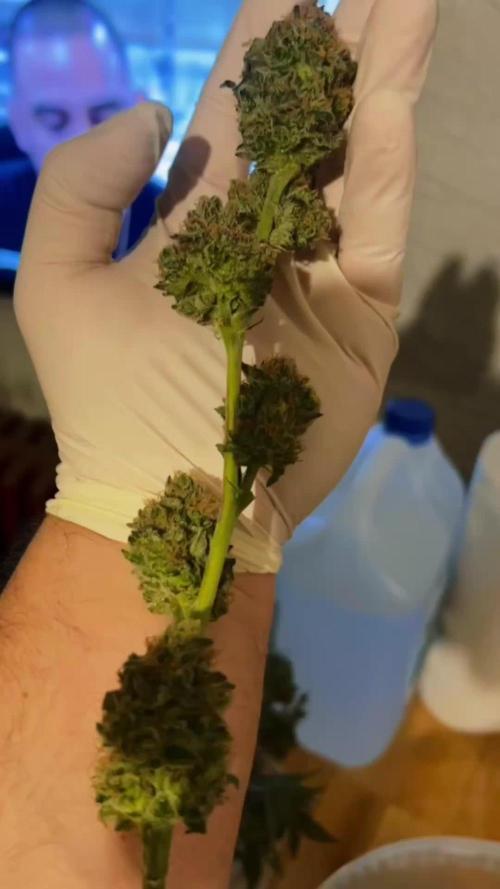
The final week was essentially a clean finish to the run. The buds swelled further, becoming dense and well structured. Despite the ongoing mildew issue, the situation remained controlled and never spiraled out of hand.
Lowering nighttime humidity below 50 % clearly helped slow down further spread. The focus was on maintaining stable conditions and consistently removing affected leaves.
Overall, the positives clearly outweigh the negatives: strong plants, solid bud development, and very relaxed handling thanks to Biotabs and the automatic irrigation system.
Now it’s simply about finishing strong and harvesting.
Likes
32
Share


@Fatnastyz
Follow
Week 8
10-14 Day 50
She looks, smells and grows well!
Little studdered on drinking.
What else but pics and videos!
10-16
Just water and pictures. Letting her do her thang!
Around 500-700ml water a day.
10-19
Some burn, so I ran some runoff, yep burn!
1200 ppm now 400.
😱 Well 2 weeks from here 🤣 or so.
10-20
Nothing changed.
.
Processing
Likes
22
Share


@Yiyis_Grow
Follow
Semana tranquila. Algunas hojas inferiores se están poniendo amarillas por falta de luz. Este cultivo decidí no quitar hojas y dejar que las plantas tuvieran el mínimo de estrés, por lo tanto las hojas inferiores no reciben luz.
Las flores han aumentado bastante de tamaño y ya comienza a oler bastante rico el cuarto.
Están consumiendo prácticamente dos litros de líquido al día.
Buenos humos para todos!


Likes
35
Share


@nonick123
Follow
Día 94 (02/09) Aplico Insect Frass como Top Dress para ver si revierto un poco el amarilleamiento que muestran algunas hojas, ya que empieza a ascender por la planta
Riego con 500 ml H2O pH 6,5
Día 95 (03/09) Dia nublado y de temperaturas entorno a 24 ºC. NO es necesario regar!
Día 96 (04/09) Llueve que te llueve! 🌧️. Temperatura 21 ºC. Días de humedad alta por aquí!
Riego con 500 / 1000 ml H2O pH 6,5
Día 97 (05/09) Floración en progreso. No veo ni una sola oruga con el bacillus thuringiensis y espero que siga así! 🤞
Dia muy nublado. No hace falta riego
Día 98 (06/09) Riego con 500 / 1000 ml H2O pH 6,5 + 4 ml/L de BioGrow de Biobizz para tratar de parar el amarilleamiento que asciende por la planta
Día 99 (07/09) Riego con 500 / 1000 ml H2O pH 6,5 + 4 ml/L de BioGrow de Biobizz para tratar de parar el amarilleamiento que asciende por la planta
Día 100 (08/09) Riego con 1 Litro de Té Floración de Lurpe Solutions. Preparación: 24 horas con bomba de aire (oxigenación) con ingredientes:
Healthy Harvest 8 ml/L + Insect Frass 16 ml/L + Hummus Lombriz 8 ml/L + Melaza 1 ml/L + Kelp Hidrolizado 0,25 g/L
Aplico de nuevo Insect Frass como Top Dress
💦Nutrients by Lurpe Solutions - www.lurpenaturalsolutions.com
🌱Substrate PRO-MIX HP BACILLUS + MYCORRHIZAE - www.pthorticulture.com/en/products/pro-mix-hp-biostimulant-plus-mycorrhizae

Likes
21
Share

@DeepRootsGrowTrees
Follow
SATIVA DREAM by KANNABIA
Week #6 overall June 11th-18th
Week #5 Veg
This week she recovered from the break in her stem and was doing well so I topped her towards the end of the week.
Likes
20
Share


@Elpicor
Follow
D 114 05/09
Maybe 1 or 2 weeks for harvesting, she take flowering stage of 10-12 weeks

Likes
32
Share


@Bossman
Follow
Looks like I'm going to be satisfied with the autos and the photos their coming along fine very nicely. I super cropped the one outside and that's turning out fantastic

Processing
Likes
3
Share


@Bloom_Room_By_Jared
Follow
3/21: Just letting her do her thing for now contemplating on taking a few leaves off
3/22: I talked to the company yesterday that I purchased my light from in early February they said my Optic 4 XL LED will ship out this upcoming week......I’m definitely happy about that news I really need more light what I have right now since I had to take down my cheap Chinese blurple isn’t cutting it
3/24: Fed plain water and took off a few bottom leaves, in a few days I’m going to pry her open more then I’m gonna try not to fuck with her as much unless it’s necessary. Received email that my Optic 4XLs shipped finally

Likes
3
Share

@Z420Organics
Follow
Fastbuds Auto Update – Week 7
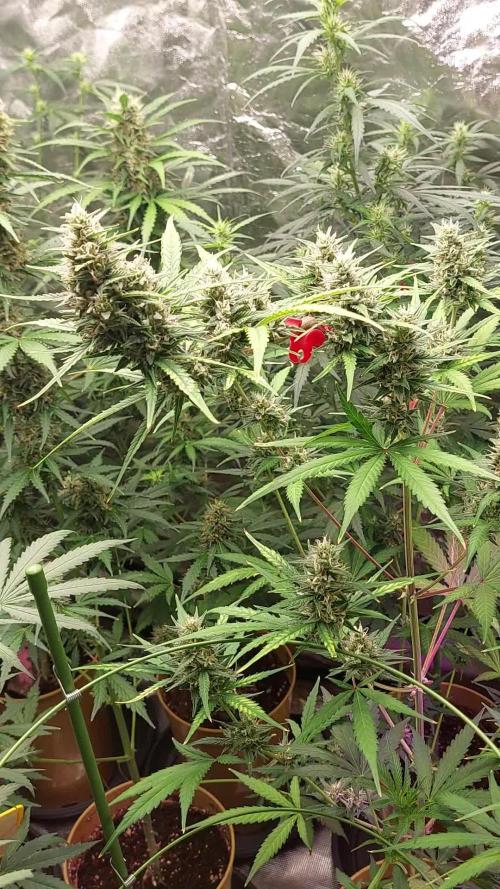
One of the autos is really standing out already — beautiful frosty buds forming and an amazing fruity aroma filling the space! 🍓✨ It’s definitely the star of the group so far.
I had to switch the light schedule down to 12/12 because I’m running a shared space with my photoperiod plants. This caused a bit of a step back in their growth pace. ⏳
Honestly, if I had kept them at 18 hours of light, I think they’d be much closer to harvest by now. 🌞.
Still, they’re pushing through nicely, and I’m excited to see how these buds fatten up over the next weeks! 💪🌿
Processing
Likes
3
Share


@VanillaGorilla
Follow
OCT 9 - DAY 50 - Looking great, growing fast
OCT 14 - DAY 55 - Brown spots, gave her a SLEDGEHAMMER flush for an hour and a new res. Let's see how she takes it.
-----------------------------------------SLEDGEHAMMER FLUSH OCTOBER 14---------------------------------------------
-----------------------------------------NEW RESERVOIR OCTOBER 14 2020---------------------------------------------
Likes
23
Share


@SonomaSungrown
Follow
Buds are really setting up nicely.
French Macaron smells right on brand... and the Chem Brulee... my god!
It smells like a Tropical Rocket Fuel. Amazong.
The Pineapple Meatball has a really unique odor, but it is still fairly faint.
Hoping that the neem/nute burn didn't somehow affect its resin/terp/bud production.
It certainly hasn't seemed to affect the French Macaron and the Chem Brulee!
This week, I sprayed 3 times with Dr Zymes, and it completely knocked out the small number of fungus gnats I was dealing with. Also released 4,500 ladybugs, and it's been fun watching them spread and work.
Will probably stick with the once-per-week Zymes treatment for the next few weeks.


Likes
74
Share


@Mr_Maes
Follow
This week we will see the colas and buds really dense up. We are about 2 weeks away from harvest now. Next week I will start my flush.


Likes
21
Share


Likes
2
Share


@DogDoctorOfficial
Follow
🍮 8×8 Adventure – Week 14 🌸 Chem Brûlée – Pheno A
🔥 Still Wild. Still Evolving. Letting the Beast Reach Her Own Finish Line.
Hello everyone, and welcome back to another chapter of the 8×8 Adventure! 🌱💚
And here she is again...
Our beautiful Chem Brûlée Pheno A! 🍮🔥
Now, my friends, I'm not going to pretend that we've done something spectacular to this girl this week.
We haven't.
😂
She's doing her thing.
She's continuing to evolve, moving through the later part of her flowering journey, and we're simply watching her progress.
No big changes.
No unnecessary interventions.
No dramatic new plans.
Just observation, consistency, photographs, and a little bit of appreciation for what this girl has become.
And honestly?
Sometimes that's exactly what a good update should be.
Not every week needs a big event.
Not every report needs a problem to solve.
Sometimes the plant is doing her job, and the grower needs to know when to step back and let her continue.
💚🌸
So let's give Chem Brûlée Pheno A her own spotlight this week.
Because even when we're doing very little, she's still writing her own story.
────────────────────────
🔥 THE WILD GIRL KEEPS DOING HER THING
If you've been following this girl from the beginning, you'll know she's never been particularly interested in following anyone else's schedule.
She's got her own personality.
Her own structure.
Her own rhythm.
And now, as we move further into the later part of her journey, we're continuing to watch that expression develop.
She's still evolving.
We're still observing the flowers and the overall plant.
And we're allowing her to continue toward her finish line without trying to force a particular date onto her.
That's the important part.
I'm not going to tell you she's finished next week.
I'm not going to invent a harvest date.
And I'm not going to make predictions just because we're getting deeper into the run.
The calendar gives us context.
The plant gives us something to observe.
And we'll keep documenting what actually happens.
😂🍮
For now, the wild girl is still here, still evolving, and still deserving of every bit of attention we give her.
────────────────────────
🌸 NOT MUCH INTERVENTION — AND THAT'S THE POINT
Honestly, we're not doing much to this girl at the moment.
We're observing.
We're keeping an eye on her development.
We're maintaining the shared environment.
We're documenting the changes.
And we're letting the plant continue her journey.
Why create extra work when there's no specific problem demanding our attention?
The structure is already there.
The flowers have their own story.
And this stage is about watching the plant develop rather than constantly finding something new to do.
Sometimes growers can feel as though they need to intervene every week to prove they're doing something.
But growing isn't measured by how often we touch a plant.
Sometimes the work is maintaining consistency.
Sometimes it's noticing a change.
Sometimes it's recognising that the best thing we can do is leave the plant alone.
😂🌿
And that's where we are with Chem Brûlée Pheno A.
We're not ignoring her.
We're paying attention without inventing unnecessary interventions.
There's a difference.
────────────────────────
🍮 HER OWN PLANT, HER OWN TIMELINE
One of my favourite parts of the 8×8 Adventure is seeing how differently these plants behave when they're sharing the same general environment.
Some girls have been moving quickly.
Others have taken their time.
Some have developed very different structures from their neighbours.
And Chem Brûlée Pheno A has certainly established her own identity in this room.
She's the wild girl.
The one we've watched evolve week after week.
The one with that impressive main cola and her own distinctive expression.
And now we're letting her continue toward the next stage without rushing her.
That's what individual phenotype diaries are all about.
We're not trying to make every plant behave identically.
We're documenting what each plant actually does.
Same room.
Same general conditions.
Same lighting ecosystem.
Different plants.
Different expressions.
Different timelines.
And twelve opportunities to learn something new.
💚🌱
────────────────────────
🌱 THE 8×8 ADVENTURE — SAME ROOM, DIFFERENT STORIES
For anyone discovering this diary for the first time, welcome to the 8×8 Adventure!
Twelve plants.
Different genetics and phenotypes.
One shared room.
One general environmental strategy.
One 12/12 lighting schedule.
One nutritional program.
One lighting ecosystem.
And a whole lot of individual personalities.
😂🌿
That's the idea behind this experiment.
We keep the general conditions consistent and observe how the different plants develop within that shared environment.
We can control many aspects of the room, but we cannot make every phenotype respond identically.
And that's precisely why we give every plant her own report.
Chem Brûlée Pheno A doesn't need to have the same story as her sister or the other girls in the room.
She needs to have her own story documented properly.
So even when the weekly update is simple, she still gets her own chapter.
Because the quiet weeks are part of the journey too.
────────────────────────
💡 THE ARTIFICIAL SUN — FUTURE OF GROW BLACK SERIES
The lighting setup remains part of the upgraded Future of Grow Black Series ecosystem.
We're continuing with the two additional Black Series 600W fixtures supplied for this experiment, with output previously reduced to approximately 59% from the plug.
Our working reference remains around 1,500 PPFD across the upper canopy, with actual intensity varying according to plant height and position.
The important point is that we're not simply running everything at maximum because we have the capacity to do so.
Having additional lighting capability gives us more flexibility.
The goal is to work with the setup we have, maintain the shared environment, and observe how the different plants respond.
And Chem Brûlée Pheno A continues her journey beneath that artificial sun.
Same photons.
Same room.
Her own expression.
💡🌱
A huge thank you to Future of Grow for supplying those additional Black Series fixtures and giving us the opportunity to explore this upgraded setup throughout the 8×8 Adventure!
────────────────────────
🔴 THE RED-LIGHT UPDATE — WHAT ARE WE ACTUALLY DOING?
Let's revisit the additional 15-minute red-light period after the main lighting period.
Since we're discussing this across our individual reports this week, I want to keep the explanation consistent and, most importantly, scientifically accurate.
Plants don't just respond to the amount of light they receive. They also respond to its wavelength and timing.
One important group of photoreceptors is the phytochrome system, which responds to red and far-red light and helps plants interpret changes in their light environment.
Red and far-red wavelengths can influence plant signalling, but their effects depend on the spectrum, intensity, duration, timing, and physiological state of the plant.
Our additional 15-minute red-light period is part of the lighting routine we're documenting.
However, we're not going to claim that those 15 minutes automatically improve flowering, increase yield, or guarantee a better finish.
Those are specific outcomes that would need evidence.
We're recording the routine, learning about the underlying science, and keeping our conclusions separate from our assumptions.
That's how we should approach these techniques.
Curiosity is good.
Experimentation is interesting.
But understanding what we're actually testing is even better.
🔴🌱
────────────────────────
🔬 THE EMERSON EFFECT — A LITTLE PHOTOSYNTHESIS EDUCATION
While we're discussing light, let's talk about the Emerson effect.
It's a fascinating and well-established phenomenon in photosynthesis.
In simplified terms, the Emerson effect describes how photosynthetic activity can increase when certain red and far-red wavelengths are supplied together, producing a response greater than expected from their individual effects under the relevant experimental conditions.
Why?
Photosynthesis uses two cooperating photosystems:
🌿 Photosystem II (PSII)
🌿 Photosystem I (PSI)
Both play important roles in the light-dependent reactions that convert light energy into chemical energy.
The photosystems have different light-absorption characteristics, and their cooperation is essential to photosynthesis.
Under suitable conditions, combining particular wavelengths can improve the balance between their activity and increase the overall photosynthetic response.
That's the basic principle behind the Emerson effect.
But here's the important distinction:
The Emerson effect does not mean that adding a short red-light period after the main lights automatically produces the same response.
The classic phenomenon concerns the combined effects of red and far-red wavelengths under particular illumination conditions.
Our additional 15-minute red-light period is a different situation, and we shouldn't automatically attribute a measurable benefit to it.
The actual spectrum matters.
The intensity matters.
The timing matters.
And the result we want to measure matters.
So yes, the Emerson effect is real and scientifically interesting.
But we need to distinguish the established phenomenon from the specific lighting routine we're using in this grow.
That's how we turn interesting information into useful knowledge.
🔬💡🌱
────────────────────────
🌙 RED LIGHT, FAR-RED LIGHT, AND THE END OF THE DAY
One final point worth remembering:
Red light and far-red light are not interchangeable.
They interact with plant photoreceptors in different ways, and the response depends on the precise conditions.
A short red-light period after the main lighting period isn't automatically equivalent to a far-red treatment, nor does either treatment guarantee a particular outcome.
For this adventure, we're documenting our additional 15-minute red-light period as part of the current lighting routine.
We're explaining the science behind plant responses to light.
And we're avoiding claims that go beyond what we can establish from the information available.
If we want to determine whether this particular treatment makes a measurable difference, we'd need suitable comparisons and measurements.
Until then, let's keep learning, keep observing, and keep asking good questions.
That's what makes a grow diary more than a collection of photographs.
It's a record of the process and the things we learn along the way.
💚🔬
────────────────────────
🌱 NUTRITION — CONSISTENCY ACROSS THE ROOM
The general nutritional program remains consistent with the shared setup.
Our current recipe reference remains:
🌱 Plagron Pure Zym — 1 ml/L
⚗️ Plagron pH Plus — 0.03 ml/L
🍋 Plagron Lemon Kick — 0.03 ml/L
🌸 Plagron Terra Bloom — 2 ml/L
🌿 Plagron Power Buds — 1 ml/L
🍯 Plagron Sugar Royal — 1 ml/L
🌱 Plagron Green Sensation — 1 ml/L
The previous solution readings were approximately pH 6.04 and EC 2.05 mS/cm.
We're keeping the overall approach consistent while continuing to observe each plant individually.
And as Chem Brûlée Pheno A approaches her own finish line, we're not going to make decisions based on the week number alone.
We'll continue assessing her development and decide on any changes when there's a reason to do so.
No unnecessary drama.
No invented work.
Just observation and consistency.
────────────────────────
🌡️ WEEK 14 — ROOM CONDITIONS
The shared room setup continues to be documented using the following reference readings:
🌸 Flowering — Week 14
💡 Light schedule — 12/12
💡 Lighting — Future of Grow Black Series, upgraded setup
🔌 Approximate lighting output — 59% from the plug
☀️ Upper-canopy PPFD reference — ~1,500
🌡️ Day temperature — ~27°C
🌙 Night temperature — ~26°C
💧 Relative humidity — ~61%
⚗️ Previous pH reading — ~6.04
⚡ Previous EC reading — ~2.05 mS/cm
🌡️ Nutrient solution temperature — ~25°C
🌱 Substrate temperature — ~25°C
🌬️ CO₂ — ~693 ppm
🌱 Pot size — 15 L
💦 Irrigation reference — ~1.45 L per plant / 24h
These are the shared room references from the previous update, not a claim that every reading has been independently remeasured this week.
Same room.
Same general strategy.
Same lighting ecosystem.
And Chem Brûlée Pheno A continues developing in her own way.
────────────────────────
📸 SOME WEEKS, THE BEST UPDATE IS SIMPLY ANOTHER LOOK
I think it's important to say this.
Not every report needs a dramatic change.
Not every week needs a new technique.
Not every photograph needs to show something completely different.
Sometimes the value is in continuing to document the same plant over time.
Because when we look back at the complete diary, those individual weeks become part of a much bigger picture.
We can follow the structure.
We can observe the changes.
We can compare photographs.
We can see how her development unfolded.
And we can remember what we were seeing at each stage.
That's the point of keeping the diary going.
Chem Brûlée Pheno A doesn't need a new headline-grabbing event this week.
She's still here.
She's still evolving.
And we're still watching.
🍮💚📸
────────────────────────
💬 COME JOIN THE DOG DOCTOR COMMUNITY!
If you're enjoying the 8×8 Adventure and want to chat about growing, genetics, lighting, equipment, experiments, or simply share your own growing journey, come and join us on Discord!
We love a good discussion.
Questions are welcome.
Different experiences are welcome.
And respectful debates about techniques and equipment are always part of learning.
Whether you're here to share your own progress, ask questions, exchange ideas, or just hang out with fellow growers, there's room for you in the community.
💚🌱
Come say hello!
🔗 https://discord.gg/dogdoctorofficial
Bring your questions, bring your experiences, and let's keep learning from one another.
Growers helping growers.
That's what it's all about.
────────────────────────
❤️ FINAL THOUGHTS — LET HER FINISH HER STORY
Week 14.
Chem Brûlée Pheno A.
And this week?
She's doing her thing.
😂🍮💚
We're not making big changes.
We're not trying to invent a new intervention.
We're not rushing her toward a date on the calendar.
We're observing.
We're documenting.
We're maintaining the shared environment.
And we're allowing her to continue toward her own finish line.
She's already given us plenty of interesting chapters throughout this adventure, and she still deserves her own spotlight, even when the update is simply about continuing to evolve.
We've also used this week's report to revisit our red-light routine and the Emerson effect.
Because sharing a grow means sharing what we learn, but it also means being honest about what the science does and doesn't establish.
The Emerson effect is a real photosynthetic phenomenon involving the cooperation of photosystems under particular illumination conditions.
Our additional 15-minute red-light period is something we're documenting, not proof that we're reproducing that effect or guaranteeing a particular result.
We can be curious without making promises.
We can experiment without pretending we already know the outcome.
And we can keep learning while the plants continue their journey.
That's the spirit of this adventure.
💚🔬🌱
So, Chem Brûlée Pheno A...
Keep doing your thing, wild girl.
Keep evolving.
Keep moving toward your finish line.
We're not going to rush you.
We're not going to invent work for ourselves.
We're simply going to keep watching and appreciate the journey you've given us.
One week at a time.
One photograph at a time.
One phenotype at a time.
🍮🌸💚✨
────────────────────────
🙏 THANK YOU
A huge thank you to Zamnesia for the Chem Brûlée genetics and for giving us the opportunity to follow this individual phenotype throughout the 8×8 Adventure. 🌸
Thank you to Plagron for supporting the nutritional side of the journey. 🌱
A massive thank you to Future of Grow for the Black Series lighting and especially for supplying the two additional Black Series 600W fixtures for this experiment. 💡🙏
Thank you to LumiFlora for adding another lighting dimension deeper into the canopy.
Thank you to TrolMaster for helping us monitor and maintain the environment behind the scenes.
And, of course, thank you to everyone following these reports on GrowDiaries.
Thank you for the comments, the questions, the support, and the interest in these individual plant stories.
And if you'd like to continue the conversation, don't forget to join us on Discord:
🔗 https://discord.gg/dogdoctorofficial
Let's keep sharing experiences, asking questions, and learning together.
Chem Brûlée Pheno A is still writing her story.
We're still here to document it.
And when she's ready for the next chapter, we'll be here to give her the spotlight again.
🍮💚🌸
Growers Love & Happy Growing! 🌱💚