


Likes
Comments
Share


@Geili_Seili_fireinfireout
Follow
Anfang woche 3 in flow und fangen schon an richtig geil zu duften.👌💚
Hätte mit etwas mehr strech gerechnet. Aber is auch gut so wie es is.😅😅 da ich im sommer eh immer gern mehr platz zur lampe habe.
Bin bis jetzt echt zufrieden und gespannt wo die reise mit diesen ladys noch hingeht.
Die vitalsten und saubersten stecklinge (weil alle 2-3 monate im labor getestet) gibts wie immer hier bei ROOTS-FARMS. The best in austria and maybe in europe

Likes
25
Share


@Fatnastyz
Follow
Week 8
10-14
Water, both drinking around 750 ml a day!
Pretty much just fun with pictures from here.
Kosher still seems a bit hungry, but doing awesome!
Ztrawberriez is just nasty! Cant seem to get good enough pictures! Lol
10-17
Water and Guy was up to no good! 😻
10-15
Guy stopped in to pose today!
10-19
Flushed both today. I thought they should be low on food, but I over loaded again, I guess.
K ppm starting was 1200, now 440
Z 1050 now 310
Sheesh! One day I may Not over feed. 🤣
I even thought 2 tbs was light. 🤣
.


Likes
3
Share


@Coupleofstoners
Follow
This is actually 10 days into flower, i forgot to post pictures at week 1!
We will be flushing in 3 days (at around week 2 of flower) and then a few days later will be introducing flower nutrients.


Likes
120
Share


@DogDoctorOfficial
Follow
Welcome to Week 17 of our epic Lego Ninja Tropical Tangie Run! This week, the garden symphony hits a crescendo as we approach harvest day. The trichomes, those tiny crystal sentinels, stand guard over buds that have matured into a sight to behold. Reflecting on this journey, from seed to the imminent harvest, is like revisiting chapters of a captivating story.
Our Tangie, a botanical warrior, weathered every stage with grace. From the early days of nurturing to the defiant stretch of vegetation, she embraced the scorching sun and danced under the grow lights. The art of defoliation sculpted her canopy, and the scrog net became a stage for her floral performance.
As she enters the final act, the trichomes, like miniature crystal cities from heaven, sparkle with the promise of potent delights. The ninja buddies and I share a moment of anticipation, knowing that soon, the harvest symphony will commence.
In the midst of this, I offer you a teaser timelapse, a sneak peek into the visual poetry that will unfold in the full 8 minutes version (if grow diaries gives e that honour as at the moment cant upload anything over 100 megas with is kind a small file for videos)—capturing the essence of a Lego Ninja Tangie's journey from a tiny seed to a bountiful harvest.
Join me in this reflection, a pause to appreciate the magic in each leaf, bud, and trichome. This journey has been a testament to the harmony between nature, science, and a touch of Lego Ninja magic.
As I prepare for the final curtain call, I extend my deepest gratitude to @DutchPassion_Official for their stellar genetics, Aptus Holland for being the backbone of my nutrient regimen, and Grow Diaries for providing the canvas to paint this green masterpiece.
Stay tuned for the grand finale, where we'll witness the Timber Symphony as each branch meets its destiny. Until then, keep the ninja spirit alive, and may your gardens be evergreen!
As always thank you all for stopping by, for the love and for it all , this journey of mine wold just not be the same without you guys, the love and support is very much appreciated and i fell honored and blessed with you all in my life<3 <3 <3
#aptus #aptusplanttech #aptusgang #aptusfamily #aptustrueplantscience #inbalancewithnature #trueplantscience
With true love comes happiness <3 <3 <3 Always believe in your self and always do things expecting nothing and with an open heart , be a giver and the universe will give back to you in ways you could not even imagine so <3 <3 <3
Friendly reminder all you see here is pure research and for educational purposes only
<3 <3 <3 Growers Love To you All <3 <3 <3
P.S- I must extend my sincerest apologies for the missing video reports. Regrettably, Grow Diaries is still facing some technical issues that are preventing me from uploading them. Rest assured, as soon as the situation is resolved, I'll share those videos to give you an even closer look at this fascinating journey. or in my case apparently GD dont let me do uploads over 100mb with is super small file if you working and editing videos .


Likes
7
Share


@Ginger_gnome
Follow
Man what a busy week. I left for a small vacation with the family and left the plants in the care of someone and luckly everything is still alive lol. Then today I almost forgot to post my weekly diary because I was busy build my new grow office and moving all the equipment in. The room I built is where all the plants well eventually end up ones my coco and perlite arrive.
This washing machine strain is growing really strong. Not surprising seeing as how nice ripper seeds strains have bee so far. Only one plant of the 15 ive done has been a dud. Roots are at the bottom of the 1 gal pot and well need to be transplanted soon.
Well that's all for now so happy growing everyone.


Likes
82
Share


@ClubRiot
Follow
Week 9 ,
pH Perfect Connoisseur Bloom Part A ( 1 ml/L )
pH Perfect Connoisseur Bloom Part B ( 1 ml/L )
CarboLoad Liquid ( 2 ml/L )
Sensi Cal-Mag Xtra ( 2 ml/L )
Sensizym ( 2 ml/L )
Bio-Heaven ( 2 ml/L )
Big Bud ( 2 ml/L)
Nirvana (2 ml/L)
Likes
9
Share


@XanHalenTGI
Follow
All done all done there we go bam
First ever successful grow I’m psyched, can’t wait to do four more of this strain under a way better light and see how dense I can get those nugs
Recommend any new grower looking to try out some auto flowers.

Likes
14
Share
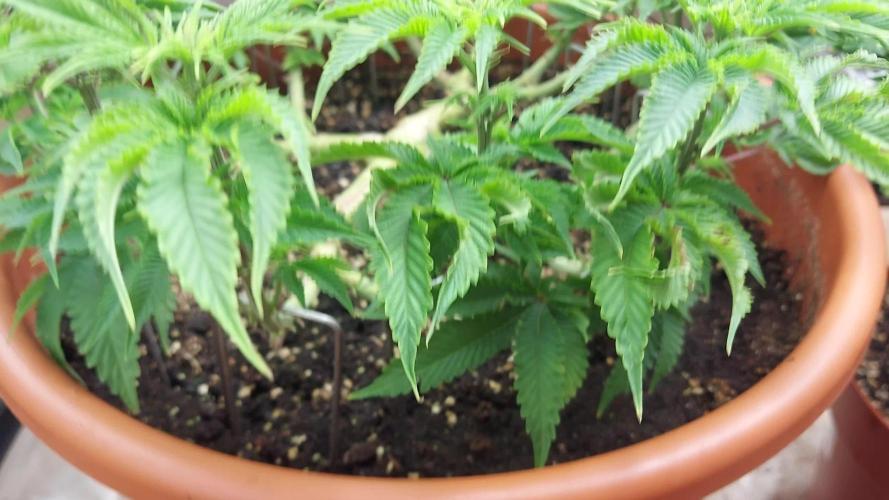

@311Budz
Follow
Ich wollte ja eigentlich die Blüte einleiten aber ich hab noch Veg Dünger gefunden also zieh ich nochmal 2 wochen mindestens durch um mehr Höhe zu gewinnen.

Likes
2
Share


@mck47
Follow
Sprayed her 2x with magnesium + aloe vera in the last week & watered only with rainwater..
Put some old salad & leafs from defoliation on top of the soil for the worms.
I dont know what to think about this one. lets see how she will produce.
Likes
68
Share


@Hawkbo
Follow
Running bunch of clones with the Floraflex microdrip/platforms. Everything from clone, going to be learning the drip system throughout the grow so could go either way. Check out my Instagram to get discounts and info on the system. The platforms are fuckin awesome they make life so much easier whether your hand watering or running the drip system. I have made a list of products to help those who want to try it out get started. A 6 plant platform setup is under $100 (not including pump $61) and 6 plant platform/microdrip is around $150 BEFORE THE DISCOUNT! Please feel free to contact me with any questions and to get the list, my Instagram dms is prob the best way to reach me I check them every couple days @bangdangbuds.
There's 2 gorilla grow tents 4x8 and 5x9, 22 plants total, will be running co2 tanks for the first time on the autopilot monitor, trellis for the first time, floraflex base nutrients, product called oxyphos to keep lines clear and will mix in some samples aptus sent me when possible (cant use with oxyphos due to h2o2. Clones for 5x9 are already in final pots, clones for 4x8 are in the incubator.
Strains
Seed junky- Cherry Kush mints (mobilejay cut)
In house genetics- Trop Juice 1 and 4
Polar Vortex 4 and 6
Garlicane 1, 2 and 3
Platinum Gushers (Stickynicky cut)
Frosted Apricots (Stickynicky cut)
Ethos- Mandarin Cookies r1v2 3 and 4
Marion Berry 1
Rocbudinc- Purple Candy Paint 3 (bangdang cut)

Likes
4
Share

@DogDoctorOfficial
Follow
💙 Project Blue Tent – Week 10
🥒 Pickle Lemon Haze F1 – Pheno B
🌸 The Week Where We Let Her Shine
Hello everyone, and welcome back to another chapter of Project Blue Tent! 💙🌱
And this week...
I'm going to start by saying something that has become increasingly obvious while watching this project develop:
These girls are incredible.
😂💙
Not because they're doing something completely different from each other.
Actually...
quite the opposite.
They're becoming remarkably similar.
Same room.
Same environment.
Same lighting.
Same irrigation.
Same nutrition.
Same training philosophy.
Same major interventions.
And now, as we reach this stage of flowering...
they almost look like copies of each other.
And that is fascinating.
Today we're putting the spotlight back on Pickle Lemon Haze F1 – Pheno B.
And honestly?
She's looking absolutely beautiful.
🌿 WEEK TEN – NOTHING TO FIX
After the amount of work we did during the previous weeks, this week was refreshingly simple.
We didn't perform another major defoliation.
We didn't change the structure.
We didn't move branches around.
We didn't install another SCROG.
We didn't start chasing the canopy.
We didn't try to force anything.
We simply watched.
And that's because there really isn't anything screaming at us for attention.
Pickle Lemon Haze Pheno B is approximately 145 cm tall.
She's healthy.
She's vigorous.
She's flowering.
She's supported.
And she's settling beautifully into the structure we created for her.
Sometimes...
doing nothing is actually doing something.
😂🌱
🌸 LOOKING AT THE RESULTS OF THE PREVIOUS WEEKS
This is the part of the project I find particularly satisfying.
During the previous weeks, we were constantly making decisions.
The girls stretched.
We ran out of vertical space.
The LEDs needed to be raised.
The carbon filter and extractor were moved outside the tent.
The canopy became extremely dense.
We performed a deep defoliation.
We installed the second SCROG.
We added additional airflow underneath the canopy.
We adjusted the nutrition.
There was a lot happening.
But now?
We get to watch those decisions play out.
And Pickle Lemon Haze Pheno B is giving us a very nice answer.
She's standing there with a beautifully organized flowering structure.
The branches are visible.
The canopy is open.
The flowers are developing.
The support system is in place.
The airflow is moving.
And the plant looks comfortable.
That's what we wanted.
🌿 THE DEFOILIATION IS NOW IN THE REAR-VIEW MIRROR
One of the biggest things I'm watching this week is how beautifully the plant has settled after the heavy defoliation.
At the time, the room looked completely different.
We had an enormous amount of vegetative material.
The plants had stretched aggressively.
The interior of the canopy was extremely dense.
So we opened everything up.
Not because leaves are bad.
Quite the opposite.
Leaves are essential.
But the structure had become so crowded that we needed to manage the density and make the flowering architecture more functional.
And now...
we're seeing the result.
The plant has had time to recover.
The remaining foliage is doing its job.
The flowering sites are much easier to see.
Air can move through the structure.
And the entire plant feels more organized.
That's the beautiful part.
The intervention is finished.
Now the plant gets to tell us what it thought about it.
And so far?
I like the answer.
💡 LUMIFLORA – LIGHTING THE LOWER CANOPY
The biggest new addition to the setup is still the LumiFlora under-canopy light.
We're now running the **LumiFlora 150W full-spectrum fixture**, with additional emphasis toward the red portion of the spectrum.
And with these girls becoming this large, it makes perfect sense to explore supplemental lighting underneath the canopy.
The main Phytonaut LEDs continue providing the primary light from above.
But with a plant this tall and this developed, the lower portions naturally receive less direct light.
So instead of constantly removing more foliage to try to expose every single flowering site to the overhead fixtures, we're taking another approach.
We're bringing supplemental light to the lower canopy.
The LumiFlora is there to complement the overhead lighting.
Not replace it.
Not compete with it.
Simply add another layer of light where the structure naturally creates more shade.
And now...
we watch.
🌸
I'm particularly interested in seeing how the lower flowering areas develop over the coming weeks.
That's one of the reasons I love documenting these experiments.
We make a change.
Then we wait for the plant to answer.
🕸️ THE SECOND SCROG IS RIGHT WHERE WE WANT IT
The second SCROG remains in place and, just like the rest of the setup, we're not touching it unnecessarily.
It has already done what we wanted.
The first SCROG helped us organize the vegetative canopy.
The second SCROG is now there to provide additional support as flowering continues.
With Pheno B reaching approximately 145 cm, she's built a substantial framework.
As those flowers continue gaining weight, having that extra support available becomes increasingly useful.
We're not trying to reshape her anymore.
We're not trying to force branches into new positions.
The structure is established.
Now we support it.
And then we let her do her thing.
🥒💙
🌬️ AIRFLOW – KEEPING EVERYTHING MOVING
The airflow system also remains unchanged.
We have airflow working through different levels of the canopy, with the additional Zamnesia clip fan underneath helping move air through the lower portion of the plant.
That becomes particularly interesting now that the LumiFlora has been introduced.
We're adding light underneath the canopy, so naturally we want to make sure the lower portion of the room continues to have good air movement as well.
The goal isn't to create a hurricane.
😂
It's simply to avoid stagnant pockets of air inside a very mature flowering structure.
The canopy is open.
The air is moving.
The extraction system is outside the tent.
And the room feels much more balanced than it did a few weeks ago.
NUTRITION – CONSISTENCY IS KING
The nutrition remains exactly where the plants are telling us they want it.
We're continuing with the PLAGRON Hydro program:
PLAGRON Hydro A — 2.2 ml/L
PLAGRON Hydro B — 2.2 ml/L
🌱 PLAGRON Hydro Roots — 1 ml/L
🌸 PLAGRON Power Buds — 1 ml/L
pH adjusted as required
Current EC is approximately 2.49 mS/cm.
And again...
we aren't changing things just for the sake of changing them.
The plants are happy.
They're consuming.
They're flowering.
They're maintaining beautiful foliage.
So we're staying consistent.
This is something I've always enjoyed about working with plants:
They tell you when they're comfortable.
You just have to pay attention.
Don't feed a number.
Watch the plant.
🌸💙
🥒 PHENO B – LOOKING MORE AND MORE LIKE HER SISTERS
Here's the really fascinating part.
Pickle Lemon Haze Pheno B is beginning to look remarkably similar to the other girls in the tent.
And that's something I find genuinely interesting.
These are individual plants.
They're being documented separately.
We're watching their individual personalities develop.
And yet...
under the exact same environmental conditions...
they're showing an incredible amount of uniformity.
The same general height.
The same aggressive vegetative development.
The same flowering transition.
The same response to the structural work.
The same need for support.
The same beautiful recovery after defoliation.
It's almost like looking at several versions of the same plant.
😂💙
Of course, there will still be phenotype differences.
That's what we're here to discover.
But right now?
The uniformity is impressive.
And that's making me even more curious about what happens as they mature.
🔬 SAME ENVIRONMENT – LETTING GENETICS SPEAK
This is exactly why Project Blue Tent is so interesting to me.
We're keeping so many variables consistent.
Same tent.
Same lighting.
Same irrigation.
Same nutrition.
Same environmental conditions.
Same general training.
And then we watch.
The more consistent the environment remains, the more interesting the individual differences become.
Or, in this case...
the lack of obvious differences.
😂
The Pickle Lemon Haze F1 girls are behaving remarkably similarly.
And that's giving us a very interesting picture of how these genetics are expressing themselves in this particular environment.
But we're not jumping to conclusions yet.
We're still early enough in the flowering development that the final differences may become much more obvious later.
So...
we watch.
🌿 THE PLANT DOESN'T NEED US TO CONSTANTLY TOUCH IT
One of the biggest lessons from this stage of the grow is knowing when to step back.
There is always something a grower can do.
You can remove another leaf.
Move another branch.
Change another setting.
Adjust another number.
Add another product.
But that doesn't mean you should.
😂
At this point, Pheno B looks like she doesn't need another intervention.
She needs stability.
She needs time.
She needs light.
She needs nutrition.
She needs airflow.
And then...
she needs to be left alone to do what plants do.
Grow.
Flower.
Develop.
Finish.
And that's exactly what we're doing.
💡 FROM OVERHEAD LIGHT TO A COMPLETE LIGHTING ENVIRONMENT
The introduction of LumiFlora is also changing how I'm thinking about the lighting inside this tent.
Previously, the main story was always the overhead LEDs.
How high are they?
How far from the canopy?
How much stretch?
How much vertical room?
Now we've added another dimension.
We're thinking about the plant in three dimensions.
Light from above.
Supplemental light underneath.
A canopy occupying the space between.
And that's particularly interesting with plants that have become this large.
The LumiFlora 150W full-spectrum fixture gives us another tool to explore how supplemental lower-canopy lighting can fit into the overall system.
We're not expecting miracles.
We're not claiming it will automatically transform the plants.
We're simply giving the lower canopy another source of light...
and watching.
That's what this whole project is about.
Observation.
Experimentation.
Documentation.
🌸 CURRENT GROW CONDITIONS
🌸 Flowering: Week 10
📏 Height: approximately 145 cm
💡 Light schedule: 12/12
☀️ Day temperature: 27°C
🌙 Night temperature: 27°C
💧 Relative humidity: 61%
⚗️ pH: 6.0
⚡ EC: approximately 2.49 mS/cm
🌡️ Solution temperature: 24°C
🌱 Substrate temperature: 24°C
🌬️ CO₂: approximately 666 ppm
💦 Watering: approximately 1.6 L per plant / 24h
? Pot size: 8 L
💡 LumiFlora Under-Canopy: 150W Full Spectrum
The room is stable.
The plants are stable.
And that's exactly what we want right now.
🔭 WHAT I'M WATCHING NOW
At this point, the questions have changed.
I'm no longer asking:
"How do we control the stretch?"
We've already dealt with that.
I'm no longer asking:
"How do we fit them into the tent?"
We've created the space.
I'm no longer asking:
"How do we open the canopy?"
We've already done that.
Now I'm asking:
How quickly will the flowers develop?
How will the lower canopy respond to the LumiFlora?
How will the second SCROG perform as the flowers gain weight?
Will the Pickle Lemon Haze phenotypes continue looking this similar?
And finally...
what are these girls going to look like when maturity really starts showing?
Those are much more exciting questions.
😂💙
🌸 LET THEM WORK
This week is really about one thing:
Let them work.
We've already spent weeks building these plants.
We've created the structure.
We've managed the canopy.
We've opened the room.
We've improved airflow.
We've raised the lights.
We've added support.
We've adjusted nutrition.
We've now introduced supplemental under-canopy lighting.
There isn't much more I want to manipulate right now.
I want to see what the plants do with everything we've given them.
And Pheno B is making that decision very easy.
She's looking fantastic.
🥒💙
🌸 FINAL THOUGHTS – THE QUIET WEEKS ARE SOMETIMES THE BEST ONES
This week might not have been dramatic.
There was no major training session.
No emergency.
No broken branch.
No big room rearrangement.
No massive intervention.
And honestly?
That's wonderful.
😂
Because sometimes the best grow updates are the ones where you can simply stand back and say:
"Look at her."
And that's exactly how I feel looking at Pickle Lemon Haze Pheno B.
She's standing there at approximately 145 cm.
She's healthy.
She's vigorous.
She's flowering.
The canopy is open.
The branches are supported.
The airflow is moving.
The nutrition is consistent.
The overhead lighting is doing its job.
And now the LumiFlora is giving the lower canopy another source of full-spectrum light.
Everything we've done over the previous weeks is now becoming visible.
This is the payoff phase.
Not the harvest yet.
Not the finish line.
But the point where all those earlier decisions start becoming the plant we're looking at today.
And that's incredibly satisfying.
💙🌸🥒
The most fascinating part?
She looks remarkably similar to her sisters.
Four girls.
One room.
Same environment.
And somehow...
they're developing like they're reading the same instruction manual.
😂
Maybe that's the beauty of these F1 genetics.
Maybe it's simply the environment.
Maybe we'll see more differences later.
That's exactly why we're documenting everything.
We don't need to decide the story today.
The plants will tell us.
And Pickle Lemon Haze Pheno B?
She's telling us she's very happy.
So we're listening.
We're keeping everything stable.
We're giving her the light, nutrition, support and airflow she needs.
And we're stepping back.
Now let's see what the future has waiting for this beautiful girl.
🌸🥒💙
🙏 A HUGE THANK YOU
A huge thank you once again to Zamnesia for making Project Blue Tent possible and for giving us the opportunity to explore these beautiful Pickle Lemon Haze F1 genetics phenotype by phenotype.
Thank you to PLAGRON for the Hydro nutrient line supporting these vigorous girls throughout this incredible flowering journey.
A massive thank you to Zamnesia for the Phytonaut LED lighting, curved scissors and clip fans that have become such important parts of this project.
Thank you to Mars Hydro for the automatic drip irrigation and drainage system that keeps these girls consistently supplied throughout their very thirsty journey.
And a special thank you to LumiFlora for the 150W full-spectrum under-canopy light that we're now introducing into the setup to explore supplemental lighting underneath this beautiful flowering canopy.
And of course, thank you to GrowDiaries for giving us the platform to document this entire adventure.
Most importantly...
thank you to everyone following Project Blue Tent. 💙
This week was quiet.
But sometimes quiet is exactly what you want.
The plants are doing beautifully.
The room is stable.
The structure is established.
The support is ready.
The lighting is working from above and below.
The nutrition is consistent.
And now...
we wait.
Four plants.
One environment.
Different phenotypes.
And an increasingly fascinating amount of similarity between them.
😂💙
Let's see what the future has in store.
For now, Pickle Lemon Haze Pheno B is exactly where I want her to be.
Healthy.
Happy.
Supported.
Flowering.
And shining.
🥒🌸💙
Until next week...
Less intervention.
More observation.
More flowers.
And hopefully...
a little more of that beautiful Pickle Lemon Haze F1 magic.
Growers Love, happy growing, and take care everyone! 🌱💙


Likes
9
Share


@Nachtjasmin
Follow
Zum Vergleich Bilder mit einem Feuerzeug. Beide FastBuds Pflanzen bisher sind ziemlich enttäuschend. Triebe, höchstens (!) zweimal so lang wie mein Daumennagel und schon steif mit ersten Anzeichen der Vorblüte.
Vergleicht das einfach mal mit der Sunshine LSD Auto, die ich im Sommer in 20l angebaut und so ziemlich alles falsch gemacht habe. Das Teil war ein Monstrum. Selbst jemand, der seit vielen Jahren mit Photoperiodischen zu tun hat und mir von Autoflowers abriet, war sehr sehr positiv überrascht, was das Teil unter widrigsten Umständen geliefert hat. Die Buds waren so schwer, dass ich alles abstützen musste, damit nicht alles umkippt. Alleine die Hauptcola über 30cm. Wirkung hat auch gepasst. Unglaubliches Teil.
Und was haben wir hier hier? Was wird das? Ein Zwergenwunderland?
Ich bin ziemlich enttäuscht aber vielleicht geschieht ja noch ein Wunder. Verstehe jetzt, warum von Autoflowers Indoor wegen Stromkosten/-verschwendung abgeraten wird. Das hier wäre was für meinen Balkonkasten im Sommer aber nicht für nen 14l Topf unter 240 Watt. Hatte nach der billigen aber bombastischen Sunshine LSD Auto von 66seeds echt mehr erwartet von Breedern, die sich speziell auf Autoflowers spezialisiert haben. Wenn der Ertrag so winzig ausfällt, wie das, was ich hier in den Kübeln habe, war es das mit FastBuds. Habe noch eine Blackberry Auto und einen Mix Pack mit fünf Samen da. Aber alleine dafür sind es mir die teuren Strompreise nicht wert. Ein Miniaturwunderland kann ich auch woanders bestaunen gehen.
Falls jemand einen Tipp hat, wo man ähnliche Autostrains wie die Sunshine LSD findet, bitte her damit ;) Die ist gut aber immer nur Skunk Geschmack wird auf Dauer langweilig.
Likes
49
Share


@masterofsmeagol
Follow
6/9 I can't believe it but I had faith. The transplant yesterday LOOKED like it was fucked. I cleaned it up though and left it outside. This morning it was standing straight up. Both transplants were! I put tarps up to block the wind tunnel between buildings. It's still overcast and rainy. Sun isn't supposed to come out for a couple poke days. Chance of thubder storms tomorrow but I'm going to try to get everyone in their forever homes today. Or at least most of them. I plan to light dep a few right in the 3 gallon. I'm sure I'll be updating this after I get some work done.
UPDATE: I WENT OVER AND GOT THREE MORE TRANSPLANTED. THAT MEANS FIVE ARE OUTSIDE IN THE CAGE. TWO 10TH PLANET, 2 BLUEBERRY CHEESE AND A LITTLE PURPLE PUNCH. THE 3 GALLON POTS WERE RELATIVELY HEAVY SO I PICKED THE LIGHTER ONES TO TRANSPLANT. I LEFT THE ORHER TWO 10TH'S IN THE GARAGE WITH THE DOOR OPEN WITH THE REMAINING PLANTS. I ALSO ADDED WIND BREAKS AND SUPPORTS TO EVERYTHING. I WANTED TO GET EVERUTHING DONE TODAY BUT THERE MAY BE A THUNDER STORM SO IF I DONT GET IT DONE ITS NOT A BIG DEAL AND ILL FINISH TOMORROW. TRANSPLANTS WENT SMOOTH. I THINK THEY'LL GO EVEN SMOOTHER IF THEY DRY OUT A BIT. STILL HAVE THE 50 AND 40'S TO FILL. Took a bunch of videos but the don't want to load. I'll have to try tomorrow or later tonight.
UPDATE: I TOOK TONS OF PICTURES AND VIDEOS BUT THEY DONT WANT TO SEEM TO UPLOAD. IVE GOT SIX IN THERE FINAL HOMES OUTDOORS 20s and 30 gallon smart pots. Still have massive plants but I'm going to out those in the 50 and the 40. I'll finish this shit up tomorrow and get all the girls in their forever homes and if I don't have room for some I was planning on doing a light dep anyway so that will work out good. I learned a lot and transplanting went a lot smoother todsy than before. I feel really proud of myself. The last Transplant I did break a few leaves off that I didn't notice but whatever. I used tomato cages for suppirt on two and bamboo poles and string on the others. I'll add the vertical trellis as they grow. I'm proud of myself.
6/10 I got a lot done yesterday. Six are outside already. Two are in 20s in the garage. I'm planning on transplanting the rest today or tomorrow. I'll update later. Accidently uploaded lots of stuff on the wrong week. UPDATE: I TRANSPLANTED THAT SUPER TALL PURPLE PUNCH THAT I DIDNT TOP OR HST AT ALL INTO A 40 GALLON TUB. ROOTS WERE DRY AND THIS TIME IT ACTUALLY LOOKED LIKE THEY FELL AWAY. THE PLANT HOWEVER STAYED STANDINGVUP FINE. I THINK THIS PHENO IS GOING TO BE A TOUGH ONE. LOOKS GOOD LIKE AN HOUR LATER. I HAD THE 50 READY TO TRANSPLANT THIS MONSTER BLUEBERRY CHEESE I FIMed BUT THE POTS WERE SUPER HEAVY AND I FIGURED I NEEDED TO SLOW DOWN AND THINK. WE HAVE THUNDER STORMS COMING TONIGHT. TOMORROW IS GOOD. I MAY TRY TO FINISH UP TONIGHT BUT WE SHALL SEE. THE GOOD THING WITH DOING IT A FEW AT A TIME IS THAT IF SOMETHING HAPPENS OUTSIDE IVE STILL GOT A CROP INSIDE LOL. WHAT IM PLANNING TO DO IS EITHER LIGHT DEP THAT BIG BLUEBERRY CHEESE OR PUT IT IN THE FIFTY BUT IM PLANNING TO LIGHT 3 RIGHT IN THEIR 3 GALLON CONTAINERS. HAVENT DECUDED FOR SURE BUT IM THINKING THATS WHATS GOING TO HAPPEN.......of course videos won't upload and the ones that do are old videos. Damn. I need to sharpen my computer skills....and my growing skills. Especially transplanting. I suck at transplanting. I decided not to out all my eggs in one basket and left the 10th planet amd Blue berry cheese in the 20s in the garage. I pulled them out for light further but I'm ousting them back a little tonight. That way I'll have a back up if something catastrophic happens. I doubt it but better safe than sorry. I'm proud of what I've accomplished thus far. I've successfully uploaded my 1 minute plus video several times but it won't appear. Oh well. I'll try to load the videos tomorrow I guess. Just started raining. Just a light rain. Probably what fresh transplants like.
6/11 BEAUTIFUL outside. Today is the day. Most is done and I'll add the supports as trellis as they grow. This new grow space gets about twice as much sun as my old spot. The tar stops the burrowing insects. I'm getting everything out today. I just need to decide if I'm going to light dep that MASSIVE blueberry cheese or bite the bullet and put it in the fifty. Maybe I'll try to get some help from my cousin. Plants withstood the thunderstorm like Champs. I'll update as the day goes on. I planned better this year so I SHOULDN'T have an unmanageable jungle. UPDATE: WATERED THE 3 PLANTS LEFT IN THE 3 GALLONS (1 10th PLANET WITH GREAT BRANCH STRUCTURE AND TWO PURPLE PUNCH THAT WERE THE SMALLER ONES. IM GOING TO LIGHT DEP THEM. EVERYTHING IS OUTSIDE NOW IN A MIX OF 1/3 FOX FARM OCEAN FOREST, HAPPY FROG AND ROOTS ORGANIC 707 IN EQUAL PARTS. TRANSPLANTED WITH MYKOS. EVERYTHING IS OUTSIDE NOW. FINALLY DECIDED TO GET The MONSTER BLUE CHEESE I FIMed INTO ITS FOREVER HOME A 50 FALLON POT. IT WAS TGE EASIEST BEST TRANSPLANT OF THEM ALL. JUST LIKE AETTING A POT IN THE WHOLE. I DONT EVEN THINK THE PLANT NOTICED. ONE OF THE PURPLE PUNCHES HAD ROOTS OB ONE OF ITS LEAVES WHEN I LOOKED BUTVIT WAS STILL STANDING UO STEAIGHT. I KNOW SOME OF THE PLANTS LOOK DROOPY BUT WEVE HAD SEVERAL DAYS OF RAIN AND A MASDIVE THUNDER STORM. I BROUGHT OUT THE EARLIER TRANSPLANTS AS WELL. THEY ARE OUT OF THE SHOCK. WIND IS PRETTY HIGH BUT I DONT WANT TO ADD MORE TARPS. I THINK THINGS ARE SECURED GOOD ENOUGH FOR NOW. IM SUPER STOKED THAT TRANSPLANT WENT SO GOOD! Went back at 7:30pm. Some plants have a little bit of transplant shock and a little bit of burn but it's negligible considering they've been through a thunderstorm with pouring rain and extremely high winds. That blueberry cheese in the 50 transplanted so easy and still looks like it didn't even know the difference. I'll start light dep once I get a plan. Plants are recovering nicely but should something happen to one I could replace it. I'm interested in the light dep though and I've got a pretty good idea how to start.
6/12 The plants that had a little transplant shock are coming out of it. We had a thunderstorm and pouring rain the day of some of the transplants. Wasn't forecasted. High winds moved the plants around a bunch bit they are tough as hell. Everything is out now. Suppisedcto have showers the next few days. I'm putting together a feeding schedule abd setting up a spit to start light dep on the three plants I decided to flower early. The cage now gets twice as much sun as before. This is going to be a good year.
Went back over and plants are perking up and doing even better everytime I see them. I took a video but it might not upload until tomorrow. I may start a new diary for the light dep. I have a few places I'm thinking to use for light dep. I need to make a solid plan before I start so maybe a day or two. Trying to upload again but I doubt it.
6/13 Had a rushed morning but I watered the plants in the 3 gallons as they were dry. I had added more soil to a couple of the bags. The top soil is startingvtj dry out but the plants look good and we are supposed to get rain so I don't really want to water if it's going to be raining. I think I've found my light dep spot and schedule. I'll update after I do something.
WENT BACK OVER AND SPRAYED A LITTLE BIT OF WATER ON THE EXTREMELY DRY TOPSOIL THAT I HAD TOPPED SOME OF THE PLANTS OFF WITH. SHITTY THING IS THAT WAS ADDED AFTER THE THUNDER STORM SO IT MAKES IT HARDER TO JUSTE THE PLANTS WATERING NEEDS. I CAN TELL THAT ONE OFCTHE FIRST TEANSPLANTS IS STILL HOLDING WATER. I MEAN WE GOT A DOWNPOUR AND I DONT WABT TO WATER IF WE'RE GOING TO BE GETTING RAIN ANYWAY. IM GOING TO LOOK BACK OVER THE DIARY. THATS ONE GREAT THING ABOUT THESE. YOU CAN GO BACK AND CHECK YOUR WORK.
6/14 Glad I held off watering. It's raining today. Just showers. We haven't gotten any of that extreme wind we usually do. I have the plants supported but I still worry. Definitely more than I should. Plants are still doing good and acclimating to there homes. I have not started the light dep with the 3 gallons but I think I've found my spot. Once I start it will just be staying consistent putt8ng them in and out. I need to train them anyway. I have some research to do and a joint to smoke so I'll update later.


