Likes
33
Share
Likes
Comments
Share
@UGrowGuy
Follow
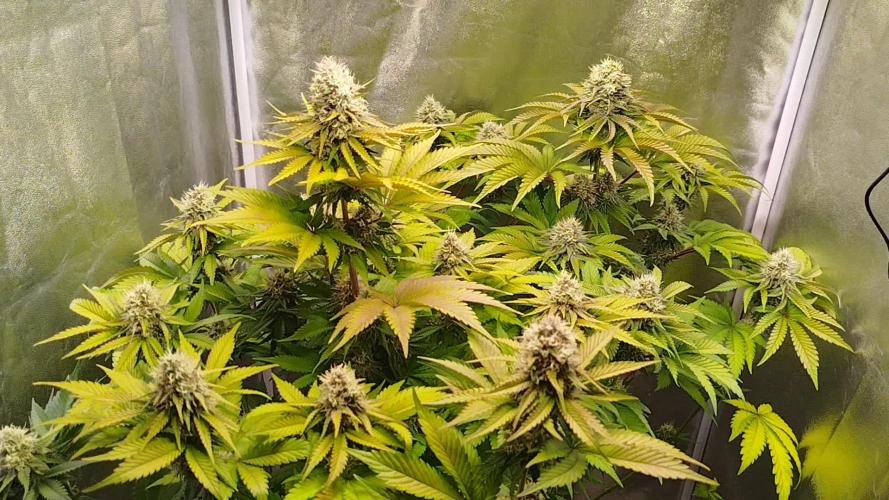
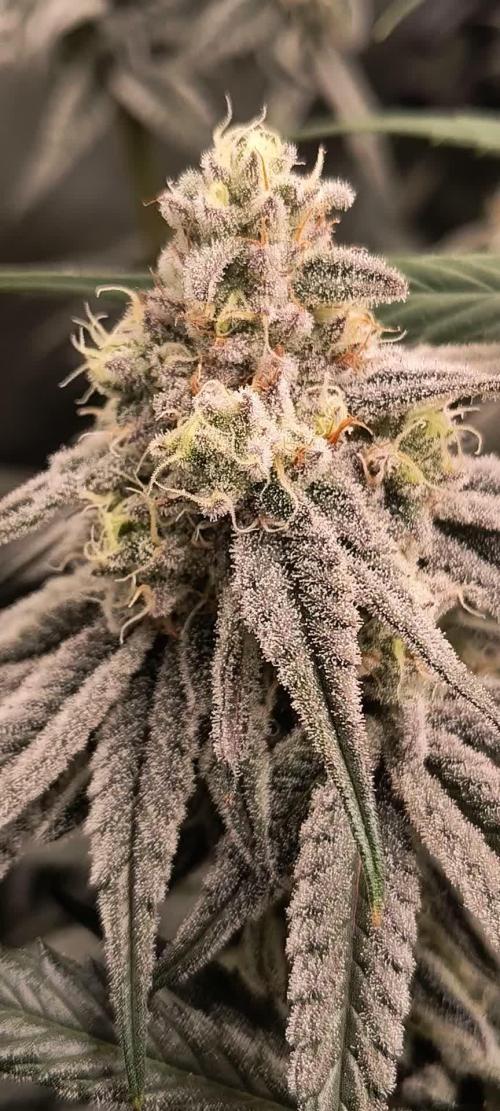
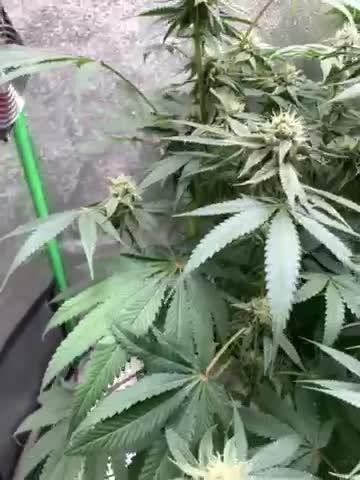
Been a lil busy. Haven't been on here or in the garden as much as i need to. The girls are growing all natural. I have literally taken no leaves off their entire lives. Some of the old fan leaves die during light drybacks. Inuse deybacks for stacking nutes and some light drought stress which can increase oil production. They just have a small cage at two levels. I have cut nutrients to most of them, going for quality smoke as its already more than I can consume lol. Two look like they are still bulking. Some are getting close. Everyone is still getting bokashi/ffj for the terps and ethylene found in the ripe fruits. It helps with senescence.. I turned the lights and temps down to help crop steer ‘em. We are getting close! Thanks for readin
Likes
6
Share
Okay so I’ve been slacking a bit on the grow-diaries, only because I’ve had a lot going on and also because I don’t feel obligated to do so because this isn’t a sponsored grow. It’s been nice to have a little break but I think I’m ready to come back at it full force again. These girls are living their best lives, they are all the same age and they are all thriving. Floraflex nutrients, as well as some Silica, Regina-root, and a trichome enhancer called “Grease”!! Seems like the real deal. Watering every other day and let me tell you these girls are very thirsty. Defol as needed! My new HLG Blackbird lamp fixture is out of this world. My 3 autos that you can also find in my profile absolutely blew up. I typically fit 4 autos in my 3x3 but now it’s essentially one Purple punch from Fastbuds and I had to cram 2 more inside basically because they are going crazy. Unfortunately I had to move them from under the blackbird and put them under a HLG350R and they are still going crazy. Basically what I’m saying is HLG Lamps=Crazy growth and amazing lamps!! HLG has a lifetime customer! That’s it for now but check in next week to see the progress! Thanks for tuning in. Until next time and as always, Stay Smokey my Friends!!! 💨💨💨 Instagram: Virginia_nugz_540 Sponsors: Horticulture Lighting Group HLG-Blackbird HLG-600RSpec HLG-350R Diablo (X2) Discount code: Virginia_Nugz Petra Tools LTPRO 2.0 Backpack Sprayer Trimbag Standard Trimbag Discount Code: Virginia_nugz Fastbuds Fastbuds Genetics Goat and Monkey Hydrokulture Store 4x4 Gorilla Tent
Likes
19
Share
Yellow butterfly came to see me the other day; that was nice. Starting to show signs of stress on the odd leaf, localized isolated blips, blemishes, who said growing up was going to be easy! Smaller leaves have less surface area for stomata to occupy, so the stomata are packed more densely to maintain adequate gas exchange. Smaller leaves might have higher stomatal density to compensate for their smaller size, potentially maximizing carbon uptake and minimizing water loss. Environmental conditions like light intensity and water availability can influence stomatal density, and these factors can affect leaf size as well. Leaf development involves cell division and expansion, and stomatal differentiation is sensitive to these processes. In essence, the smaller leaf size can lead to a higher stomatal density due to the constraints of available space and the need to optimize gas exchange for photosynthesis and transpiration. In the long term, UV-B radiation can lead to more complex changes in stomatal morphology, including effects on both stomatal density and size, potentially impacting carbon sequestration and water use. In essence, UV-B can be a double-edged sword for stomata: It can induce stomatal closure and potentially reduce stomatal size, but it may also trigger an increase in stomatal density as a compensatory mechanism. It is generally more efficient for gas exchange to have smaller leaves with a higher stomatal density, rather than large leaves with lower stomatal density. This is because smaller stomata can facilitate faster gas exchange due to shorter diffusion pathways, even though they may have the same total pore area as fewer, larger stomata. Leaf size tends to decrease in colder climates to reduce heat loss, while larger leaves are more common in warmer, humid environments. Plants in arid regions often develop smaller leaves with a thicker cuticle and/or hairs to minimize water loss through transpiration. Conversely, plants in wet environments may have larger leaves and drip tips to facilitate water runoff. Leaf size and shape can vary based on light availability. For example, leaves in shaded areas may be larger and thinner to maximize light absorption. Leaf mass per area (LMA) can be higher in stressful environments with limited nutrients, indicating a greater investment in structural components for protection and critical resource conservation. Wind speed, humidity, and soil conditions can also influence leaf morphology, leading to variations in leaf shape, size, and surface characteristics. Small leaves: Reduce water loss in arid or cold climates. Environmental conditions significantly affect gene expression in plants. Plants are sessile organisms, meaning they cannot move to escape unfavorable conditions, so they rely on gene expression to adapt to their surroundings. Environmental factors like light, temperature, water, and nutrient availability can trigger changes in gene expression, allowing plants to respond to and survive in diverse environments. Depending on the environment a young seedling encounters, the developmental program following seed germination could be skotomorphogenesis in the dark or photomorphogenesis in the light. Light signals are interpreted by a repertoire of photoreceptors followed by sophisticated gene expression networks, eventually resulting in developmental changes. The expression and functions of photoreceptors and key signaling molecules are highly coordinated and regulated at multiple levels of the central dogma in molecular biology. Light activates gene expression through the actions of positive transcriptional regulators and the relaxation of chromatin by histone acetylation. Small regulatory RNAs help attenuate the expression of light-responsive genes. Alternative splicing, protein phosphorylation/dephosphorylation, the formation of diverse transcriptional complexes, and selective protein degradation all contribute to proteome diversity and change the functions of individual proteins. Photomorphogenesis, the light-driven developmental changes in plants, significantly impacts gene expression. It involves a cascade of events where light signals, perceived by photoreceptors, trigger changes in gene expression patterns, ultimately leading to the development of a plant in response to its light environment. Genes are expressed, not dictated! While having the potential to encode proteins, genes are not automatically and constantly active. Instead, their expression (the process of turning them into proteins) is carefully regulated by the cell, responding to internal and external signals. This means that genes can be "turned on" or "turned off," and the level of expression can be adjusted, depending on the cell's needs and the surrounding environment. In plants, genes are not simply "on" or "off" but rather their expression is carefully regulated based on various factors, including the cell type, developmental stage, and environmental conditions. This means that while all cells in a plant contain the same genetic information (the same genes), different cells will express different subsets of those genes at different times. This regulation is crucial for the proper functioning and development of the plant. When a green plant is exposed to red light, much of the red light is absorbed, but some is also reflected back. The reflected red light, along with any blue light reflected from other parts of the plant, can be perceived by our eyes as purple. Carotenoids absorb light in blue-green region of the visible spectrum, complementing chlorophyll's absorption in the red region. They safeguard the photosynthetic machinery from excessive light by activating singlet oxygen, an oxidant formed during photosynthesis. Carotenoids also quench triplet chlorophyll, which can negatively affect photosynthesis, and scavenge reactive oxygen species (ROS) that can damage cellular proteins. Additionally, carotenoid derivatives signal plant development and responses to environmental cues. They serve as precursors for the biosynthesis of phytohormones such as abscisic acid () and strigolactones (SLs). These pigments are responsible for the orange, red, and yellow hues of fruits and vegetables, while acting as free scavengers to protect plants during photosynthesis. Singlet oxygen (¹O₂) is an electronically excited state of molecular oxygen (O₂). Singlet oxygen is produced as a byproduct during photosynthesis, primarily within the photosystem II (PSII) reaction center and light-harvesting antenna complex. This occurs when excess energy from excited chlorophyll molecules is transferred to molecular oxygen. While singlet oxygen can cause oxidative damage, plants have mechanisms to manage its production and mitigate its harmful effects. Singlet oxygen (¹O₂) is considered a reactive oxygen species (ROS). It's a form of oxygen with higher energy and reactivity compared to the more common triplet oxygen found in its ground state. Singlet oxygen is generated both in biological systems, such as during photosynthesis in plants, and in cellular processes, and through chemical and photochemical reactions. While singlet oxygen is a ROS, it's important to note that it differs from other ROS like superoxide (O₂⁻), hydrogen peroxide (H₂O₂), and hydroxyl radicals (OH) in its formation, reactivity, and specific biological roles. Non-photochemical quenching (NPQ) protects plants from damage caused by reactive oxygen species (ROS) by dissipating excess light energy as heat. This process reduces the overexcitation of photosynthetic pigments, which can lead to the production of ROS, thus mitigating the potential for photodamage. Zeaxanthin, a carotenoid pigment, plays a crucial role in photoprotection in plants by both enhancing non-photochemical quenching (NPQ) and scavenging reactive oxygen species (ROS). In high-light conditions, zeaxanthin is synthesized from violaxanthin through the xanthophyll cycle, and this zeaxanthin then facilitates heat dissipation of excess light energy (NPQ) and quenches harmful ROS. The Issue of Singlet Oxygen!! ROS Formation: Blue light, with its higher energy photons, can promote the formation of reactive oxygen species (ROS), including singlet oxygen, within the plant. Potential Damage: High levels of ROS can damage cellular components, including proteins, lipids, and DNA, potentially impacting plant health and productivity. Balancing Act: A balanced spectrum of light, including both blue and red light, is crucial for mitigating the harmful effects of excessive blue light and promoting optimal plant growth and stress tolerance. The Importance of Red Light: Red light (especially far-red) can help to mitigate the negative effects of excessive blue light by: Balancing the Photoreceptor Response: Red light can influence the activity of photoreceptors like phytochrome, which are involved in regulating plant responses to different light wavelengths. Enhancing Antioxidant Production: Red and blue light can stimulate the production of antioxidants, which help to neutralize ROS and protect the plant from oxidative damage. Optimizing Photosynthesis: Red light is efficiently used in photosynthesis, and its combination with blue light can lead to increased photosynthetic efficiency and biomass production. In controlled environments like greenhouses and vertical farms, optimizing the ratio of blue and red light is a key strategy for promoting healthy plant growth and yield. Understanding the interplay between blue light signaling, ROS production, and antioxidant defense mechanisms can inform breeding programs and biotechnological interventions aimed at improving plant stress resistance. In summary, while blue light is essential for plant development and photosynthesis, it's crucial to balance it with other light wavelengths, particularly red light, to prevent excessive ROS formation and promote overall plant health. Oxidative damage in plants occurs when there's an imbalance between the production of reactive oxygen species (ROS) and the plant's ability to neutralize them, leading to cellular damage. This imbalance, known as oxidative stress, can result from various environmental stressors, affecting plant growth, development, and overall productivity. Causes of Oxidative Damage: Abiotic stresses: These include extreme temperatures (heat and cold), drought, salinity, heavy metal toxicity, and excessive light. Biotic stresses: Pathogen attacks and insect infestations can also trigger oxidative stress. Metabolic processes: Normal cellular activities, particularly in chloroplasts, mitochondria, and peroxisomes, can generate ROS as byproducts. Certain chlorophyll biosynthesis intermediates can produce singlet oxygen (1O2), a potent ROS, leading to oxidative damage. ROS can damage lipids (lipid peroxidation), proteins, carbohydrates, and nucleic acids (DNA). Oxidative stress can compromise the integrity of cell membranes, affecting their function and permeability. Oxidative damage can interfere with essential cellular functions, including photosynthesis, respiration, and signal transduction. In severe cases, oxidative stress can trigger programmed cell death (apoptosis). Oxidative damage can lead to stunted growth, reduced biomass, and lower crop yields. Plants have evolved intricate antioxidant defense systems to counteract oxidative stress. These include: Enzymes like superoxide dismutase (SOD), catalase (CAT), and various peroxidases scavenge ROS and neutralize their damaging effects. Antioxidant molecules like glutathione, ascorbic acid (vitamin C), C60 fullerene, and carotenoids directly neutralize ROS. Developing plant varieties with gene expression focused on enhanced antioxidant capacity and stress tolerance is crucial. Optimizing irrigation, fertilization, and other management practices can help minimize stress and oxidative damage. Applying antioxidant compounds or elicitors can help plants cope with oxidative stress. Introducing genes for enhanced antioxidant enzymes or stress-related proteins over generations. Phytohormones, also known as plant hormones, are a group of naturally occurring organic compounds that regulate plant growth, development, and various physiological processes. The five major classes of phytohormones are: auxins, gibberellins, cytokinins, ethylene, and abscisic acid. In addition to these, other phytohormones like brassinosteroids, jasmonates, and salicylates also play significant roles. Here's a breakdown of the key phytohormones: Auxins: Primarily involved in cell elongation, root initiation, and apical dominance. Gibberellins: Promote stem elongation, seed germination, and flowering. Cytokinins: Stimulate cell division and differentiation, and delay leaf senescence. Ethylene: Regulates fruit ripening, leaf abscission, and senescence. Abscisic acid (ABA): Plays a role in seed dormancy, stomatal closure, and stress responses. Brassinosteroids: Involved in cell elongation, division, and stress responses. Jasmonates: Regulate plant defense against pathogens and herbivores, as well as other processes. Salicylic acid: Plays a role in plant defense against pathogens. 1. Red and Far-Red Light (Phytochromes): Red light: Primarily activates the phytochrome system, converting it to its active form (Pfr), which promotes processes like stem elongation and flowering. Far-red light: Inhibits the phytochrome system by converting the active Pfr form back to the inactive Pr form. This can trigger shade avoidance responses and inhibit germination. Phytohormones: Red and far-red light regulate phytohormones like auxin and gibberellins, which are involved in stem elongation and other growth processes. 2. Blue Light (Cryptochromes and Phototropins): Blue light: Activates cryptochromes and phototropins, which are involved in various processes like stomatal opening, seedling de-etiolation, and phototropism (growth towards light). Phytohormones: Blue light affects auxin levels, influencing stem growth, and also impacts other phytohormones involved in these processes. Example: Blue light can promote vegetative growth and can interact with red light to promote flowering. 3. UV-B Light (UV-B Receptors): UV-B light: Perceived by UVR8 receptors, it can affect plant growth and development and has roles in stress responses, like UV protection. Phytohormones: UV-B light can influence phytohormones involved in stress responses, potentially affecting growth and development. 4. Other Colors: Green light: Plants are generally less sensitive to green light, as chlorophyll reflects it. Other wavelengths: While less studied, other wavelengths can also influence plant growth and development through interactions with different photoreceptors and phytohormones. Key Points: Cross-Signaling: Plants often experience a mix of light wavelengths, leading to complex interactions between different photoreceptors and phytohormones. Species Variability: The precise effects of light color on phytohormones can vary between different plant species. Hormonal Interactions: Phytohormones don't act in isolation; their interactions and interplay with other phytohormones and environmental signals are critical for plant responses. The spectral ratio of light (the composition of different colors of light) significantly influences a plant's hormonal balance. Different wavelengths of light are perceived by specific photoreceptors in plants, which in turn regulate the production and activity of various plant hormones (phytohormones). These hormones then control a wide range of developmental processes.
Likes
17
Share
@Naujas
Follow
it's amazing, this growth looks much better than my first attempt, my decision was to put a smaller pot and change the light - the girl really liked it, FastBuds goriilla cookies with a small space manage perfectly:).
Likes
21
Share
@Smokey89
Follow
Week 2 and the clones are starting to veg nicely. Got some nice roots starting to develop in the nutrient solution so hopefully over the ne t week or so I should see some nice growth. Couple of the older fan leaves that came with the clone were starting to do more damage than good so decided to strip some and I'll do the others over the next few days Day 10 Uploaded some more pictures of the root system these babies are developing quickly. Next feed/water change is due tomorrow so I'll up the white shark powder to help aid the root growth and I'll also increase the fulvic acid to 2mm per litre of water Day 11 Added some shogun sumo boost at 1ml per litre and increased the cal mag 3ml per litre and increased the great white rooting powder to one and a half spoonfuls. Ok so now the plants they are looking nice and green the newer leaves have a really healthy smell of chlorophyll the older leaves that came with the clones look a bit worse for ware but are still doing more good than bad so they will stay for now. So I tried some kushman chiropractic techniques to increase strength and nutrient transfer. The first one my stomach was doing flips I was so nervous I thought I might snap the stem completely but all was good the plants dropped a little but have started to recover after only half hour in the tent. I will repeat this process once a week on the new growth Day 13 Started to use sumo boost foliar spray at 1ml diluted with 1 litre of ph 6.5 water. Cut off some more of the damaged leaves and they are all looking back to good health after the kushman chiropractic treatment Day 15 Got myself a ppm meter and checked my reservoir as I haven't used one during the grow I was expecting to be around the 450ppm mark but to my surprise it was at a lovely 380ppm. Solution temp is now constant at 22.2c humidity fluctuates between 55%rh and 73%rh Day 18 so I've added two carbon dioxide bags to the grow room to give these ladies a little extra boost. Nutrients and temps have all stayed the same. Now the plants they are all growing well some better than others but that was to be expected considering I'm using clones that where half dead when I got them. So I stopped the plants and did a little defoliation Day 20 New spider farmer ts2000 has arrived and what a piece of kit it is currently got it set to 60% will be keeping an eye on them to make sure this is not to intense for my girls. Viper 300 carbon filter kit installed and I'm very happy with the filter and the fan supplied got my intake fan set to about 20% to give a good airflow through the tent all in all very happy with my upgrades. Now the girls as you can see they are getting bigger and have bounced back after the second chiropractic treatment and the topping I did to them. I've moved my two 1000w led lights over to one side of the tent to give the coco experiment a bit more light. Not sure if I mentioned this but my tent I's 8ftx5ftx6ft. Please feel free to give me any feedback. Happy growing guys
Likes
10
Share
Week 7 flower and it’s smelling lovely had to top dress the slurricane which is the big one at the back, she’s hungry all the rest will be alright for the last 3 or so weeks. 1 of the blackberry moon rocks, 2 nova og, 2 Purps og, 1 future and 4 mob boss I’ve started to give just water as they only have a week left.
Likes
2
Share
Bin richtig neugierig, was am Ende wird🤔😁
Likes
31
Share
Welcome to 📅Day 15 of veg 3/29/2021 she is fully recovered from my micro top and growing fast under the MH TS 1000. I'm not going the change much at this point nutrient wise as she is doing good and she is still small. Update 📅Day 17 of veg 3/31/2021 well it looks like she is growing fast and strong I'm very happy with the MH TS 1000 I have high hopes. I decided that at this point I can increase the light output to 60% that gives me a LUX of around 20,000 LUX 💡. The light intensity is much higher then the AGLEX at this point now with the AGLEX light not able to hit 20,000 LUX 💡 without the bloom switch on and I am going to wait till next week for that Update 📅Day 19 of veg 4/2/2021 she is growing fast and I'm very happy with her progress. I installed the trellis net just above the canopy and over night she is through it lol. Can't wait to see how she does in flower under the Mars Hydro TS 1000💡, at this point I wish I had 2 TS 1000💡 so I could just run them. that's it for this weeks updates as as always Happy growing🍃 and keep you stick on the ice 🏒
Likes
5
Share
Our King Louis Automatic are truly those plants with a great desire to grow, the one in main lining is perfect. Remember that we are growing 1 Plant worked with the techniques and one left to grow without cutting techniques to preserve its speed. In this diary we find the plant that is growing normally, nice and straight just with a little cleaning and LST at the bottom only on the branches and not on the main stem. The plant had a moment of over at the end of the vegetative phase when it was time to move into flowering it had a manifestation of rusty spots on the sunbathing leaves but now at the beginning of flowering everything seems fixed. In my opinion it is a lack of K but yes The comparison is the salt of the experience so the plant in the other diary will be worked very differently go and see it to compare them. We have started the Plagron fertilization program, we are in 100% organic configuration, the soil is recycled Promix + 1/3 fresh soil + 10% Perlite + RQS Mycorrhiza Mix (4 g in the mix, 1 g under the small fiber pot). We are administering // 1 ml/l Power Roots - 1 ml/l Pure Zym - 1 ml/l Sugar Royal - 3 ml/l Alga Grow We have sprayed Vita Race Foliare 3 ml/l. https://plagron.com/en The doubts about the compatibility between Pure Zym and mycorrhizae have been dispelled, they can get along according to Plagron experts. If someone tells you that enzymes eat mycorrhizae, which in principle may seem possible, explain to them that it is not true. https://www.royalqueenseeds.it/growing/452-easy-roots-mix-di-micorrhize.html Love this strain perfect for main lining! ---- https://www.zamnesia.io/it/11238-zamnesia-seeds-king-louis-automatic.html Brief description of Zamnesia // Say hello to true royalty with King Louis Auto, an autoflowering version of the original King Louis. Bred from OG Kush, LA Confidential and a premium ruderalis cutting, King Louis Auto delivers premium bud fit for a king just a few weeks after germination. As if that wasn't enough, her small size and vigor make her great for almost any grow environment. Incredibly efficient King Louis Auto has inherited the best traits of her photoperiod cousin, all wrapped up in a fast and easy-to-grow seed. With good soil and adequate watering, King Louis Auto seeds will quickly grow into robust and vigorous plants. Once fully mature, these plants will not exceed 80cm indoors, meaning they can easily fit into even the smallest of grow spaces. Likewise, outdoor plants will only reach 100cm, making this strain ideal for guerrilla grows or other environments where discretion is key. And if that wasn't enough, King Louis Auto only takes 9–10 weeks from germination to harvest, after which she'll reward you with yields of up to 300g/m² indoors and 150g/plant outdoors. With its pungent terpenes and high THC levels, King Louis Auto offers a fragrant and relaxing experience. When you open your jars of buds, you'll immediately notice intense scents of pine, damp earth and fragrant wood. After inhaling her equally complex smoke or vapor, you'll be hit with a deep, relaxing body stone that's perfect for those moments of well-earned rest and relaxation. With 24% THC, King Louis Auto hits hard and takes effect within minutes, working every muscle in your body to relax. Perfect for evenings, weekends or any time you want to unwind. Buy your seeds now and experience the king of sweet strains. You can find the entire world of growing on Zamnesia and more, just take a look at the site and you will find "all the best that nature has to offer" in various shapes and colors. The new strains are fantastic and the old ones are no exception... --- // www.zamnesia.com
Likes
43
Share
Bud sites are swelling nicely, I’m guessing they will really go for it over the next 2 weeks which is when I’m guessing harvest will be. Maybe 3 weeks. I have nute burn as you can see from the tips, so will be feeding just water next feed and with a slight lower ph to also lower it a little as the run off is 7 currently. Pot drying out every 2/3 days. Taking 2.5 litres Day 58 Noticed some brown spots on the tips or leafs and Margins I’m guessing K deficiency, also most leafs are now going a yellow/light shade of green so my thinking is it’s hungry and I’m under feeding so gonna be upping the pk boost and bloom for the remaining 2 weeks.
Likes
36
Share
Welcome back to my summer grow🙂 Everything is still in need for more, more light - more nutes - more airflow and last but not least, more ir/uv 😎 Also gaining weight so that’s also great 😊 Hope to see you again next week 😎 ------------------------------------------------------------------------------------------------------- SpectrumX LED🔥 @medicgrow 880 Watt⚡️ 2x UV/IR LED panels 💥 2.7 μmol/J🔥 Full Spectrum V1,F1,VS,FS🌈 Display with PPFD & Live spectrum Light measurement: Apogee MQ-610 & Apogee DLI-600. Fertiliser: Organics Nutrients https://www.organicsnutrients.com/en/ Green Buzz Nutrients Discount Code: GD42025 Grants 25% with a minimum Order value at 75 Euro. https://greenbuzzliquids.com/en/shop/
Processing
Likes
4
Share
@Ledros
Follow
Day 29 (2020-06-07): Changed out reservoir (5.6 PH). Picked up some 3% H2O2 so added 3ml/gallon to help combat some of the growth I am getting. Also wiped down the outside of the fabric pots to kill the mold. Did some new LST and defoliation to even things out. CBD Crack is in pre-flower. The G14 might be a bit behind. Day 30 (2020-06-08): Reservoir PH around 5.65. Removed a leaf or two and did some tucking. Day 31 (2020-06-09): PH at 5.8. The G14 Blumat drip tube had gotten stuck in the dirt and was not dripping. Hand watered back to normal. Some slight LST adjustments to even things out and removed a few leaves. Day 32 (2020-06-10): PH at 5.96. Yellow leaf tips on newer growth haven't really gotten any better. I am also noticing some other yellow and brown spotting on older leaves. I am not as worried about the spotting since it is likely related to previous PH fluctuation that has been taken care of but I am now wondering if the yellow tips are something new. Maybe the start of nutrient burn? I do not believe it is light related since I adjusted this a few days ago. Day 33 (2020-06-11): After some helpful advice from the community I checked the calibration of my PH pen and found it off by about .5! This must have happened sometime in the last week or two but would explain the issues since as a result my PH was adjusted way to low (around 4.9 to 5). FIxed pen, flushed plants and changed out the reservoir. Hopefully things will get back on track. Also took the opportunity while I had the plants out to even out the LST and do some more defoliation. Day 34 (2020-06-12): Things are looking OK. I am not sure if the yellow on the tips will go away but it is not getting worse. Reservoir PH is at 5.75. Day 35 (2020-06-13): Res PH at 6.1 but slight smell. Probably will have to change out tomorrow. Things are looking good for the plants. G14 is definitely behind on flowering compared to the CBD.
Likes
51
Share
An in to soil she and her sister testers go, i know that for know everything looks the same , apart from the photos, but this will start changing with them growing. For now all of them are growing pretty much the same and now that they move in to soil and start feedings they will start showing the phenotype and genetic differences, but for now all looking great , healthy and strong af!!! Haded a intro video from seed in to now, including how i transplant and what i use wen doing it so, and from here the moon is no limit for this babes i believe , so stay tuned as this testers they promise to be a interesting ride <3 <3 <3 They grew amazing for only a week fast and vigorous, all the testers for now look very the same <3 <3 <3 As always thank you all for stoping by and for supporting me on this journey, i am super passion about growing and fell blessed to have you all with me on this new journey <3 <3 <3 Genetics - Fast Buds Tester 08 09 10 11 Ligth - LUMATEK ZEUS 465 COMPACT PRO 
Food - APTUS HOLLAND #aptus #aptusplanttech #aptusgang #aptusfamily #aptustrueplantscience #inbalancewithnature #trueplantscience #fastbuds #dogdoctorofficial #growerslove With true love comes happiness <3 <3 <3 Always believe in your self and always do things expecting nothing and with an open heart , be a giver and the universe will give back to you in ways you could not even imagine so <3 <3 <3 
All info and full product details can be find in can find @ https://2fast4buds.com/ wen released 

https://aptus-holland.com/
 
https://autopot.co.uk/ 

https://lumatek-lighting.com/ <3 <3 <3 Growers love to you all <3 <3 <3
Likes
11
Share
@PanGrower
Follow
I think about the fact that it is no longer necessary to cut leaves. I cut it a lot, but I notice that many people cut a bunch of leaves at one time, although somewhere I read no more than 10% at a time. When I gave fertilizers, I always diluted them with water even more to reduce ppm Day 68: I added cal-mag to the diet because the leaves are really turning yellow from the bottom. 0.5 ml Day 70: I added 1 ml cal-mag
Likes
199
Share
These came down 11 weeks to the day from seed , this is them on their last day here. Wet weight is 😂 😂 😂 😂 😂 😂 was not expecting so much, it will last me HOURS ! these got wet trimmed now they're on the mat drying , the smell is typical american sweet candy ... was it fun? yes , yes it was fun ! what a plant this one is, my tallest one at 100cm, averaging 85cm , wet weight is.... gonna wait for dry weight, before i jinx it could be dense could be loose ! looks dense + not expecting to loose more than 50% it's all in the cure now ! 🚀
Likes
101
Share
Una cosecha linda y abundante como toda cosecha exterior las flores de muy lindo color huelen mucho y muy bien, se ve mucho tricoma y mucha resina tengo muchas ganas de probar los resultados
Likes
4
Share
🍰 Lava Cake – Week 8 (4th Week Flower) | The Bulking Phase The fourth week of flower has arrived, and both Lava Cakes are showing their full potential. Their structure is strong, pistils are snow-white and thick, and bud sites are stacking beautifully. This is the week where the promise of flowers begins to turn into visible production, every day, you can almost see them swelling. ⸻ 🔬 What’s Happening in Week 4 Flower By now, stretch is nearly finished. The plants are redirecting their energy: • From vertical growth ➝ into flower bulk. • From nitrogen demand ➝ into phosphorus & potassium demand. • From building structure ➝ into packing density. This transition is crucial: the roots, the soil microbiology, and the nutrient profile all work together to feed flowers instead of stems and leaves. What we see this week: • Thick, healthy pistils at every site. • Calyx swelling beginning, the first signs of true bud stacking. • Leaves still dark and strong — proof of balanced nutrition. • No stress, no burn, no deficiencies. ⸻ 🥤 Feeding Strategy – Why Boosters Matter Now This week, we removed the Aptus All-in-One Liquid, despite it being in the photo. The reason: the soil’s super soil base + slow-release pellets still carry enough NPK to support the girls. Overfeeding at this stage could risk tip burn or nutrient lockout — and we want the roots to stay clean and active. Instead, the focus is on precision boosters: Recipe (per L water): • Aptus Regulator – 0.15 ml → strengthens cell walls, stress protection, and nutrient uptake efficiency. • Aptus CalMag Boost – 0.25 ml → keeps calcium steady (critical for bud structure) and magnesium strong (photosynthesis & chlorophyll). • Plagron Power Buds – 1 ml → directs plant energy into flower production. • Plagron Sugar Royal – 1 ml → provides organic nitrogen + enzymes to stimulate terpene development. • Plagron Green Sensation – 1 ml → PK booster + biostimulant, promoting dense, resin-rich flowers. Why this mix? • Because the NPK in soil is still sufficient → boosters fill in the extra needs of flowering without overwhelming the root zone. • Because boosters provide specialized roles → each product targets a specific physiological process. • Because balance prevents problems → overdoing NPK at week 4 could backfire, while focused boosters guide the plants safely into mid-bloom. ⸻ 🌡️ Environmental Notes • Temps: Still ~31–34°C until AC arrives. High, but plants are adapting. • Humidity: 55–60%, VPD ~1.8–2.0 kPa — slightly high, but still manageable. • Watering Rhythm: Once substrate moisture falls near 19–20%, measured by TrolMaster WCS substrate sensor. This ensures roots get oxygen before each feed. Even under warm conditions, the plants are drinking heavily — proving they are metabolically active and thriving. ⸻ 🌸 What to Expect Next Week (Week 5 Flower) ✅ Expect: • Noticeable bulking → flowers will become rounder, denser, and begin to “stack.” • More pistils → a full carpet of white hairs covering colas. • Aroma development → the first hints of Lava Cake’s dessert-like terpene profile may start releasing. ❌ Not to Expect (yet): • Full frost coverage → heavy trichome production usually comes weeks 5–7. • Final density → buds will continue swelling for several weeks, so patience is key. ⸻ ✨ Closing Thoughts Week 4 flower is the foundation of yield. It’s when the plants finish their stretch, define their bud sites, and begin to convert light, water, and nutrients into the weight and density we harvest later. Our Lava Cakes are in perfect rhythm: • Strong genetics, showing symmetrical growth. • Balanced feeding, keeping roots clean and buds fueled. • Stable environment, with monitoring from TrolMaster guiding every adjustment. From here forward, every day brings visible progress. The journey of seeds to now feels like preparation — this is the beginning of the true show. 🔬 Science Spotlight – The Unsung Heroes: Calcium & Magnesium Many growers focus on NPK during flower, but two “quiet players” — calcium (Ca) and magnesium (Mg) — are just as vital to ensure flowers bulk properly. 🌿 Calcium (Ca): • Strengthens cell walls, making flowers denser and less prone to collapse. • Improves nutrient transport, ensuring phosphorus and potassium (the bloom drivers) actually reach the buds. • Helps roots resist stress in warm environments (like our 31–34°C room). 🌿 Magnesium (Mg): • The central atom in chlorophyll → without magnesium, photosynthesis collapses. • Supports enzyme activity, converting sugars into energy for bud building. • Directly influences terpene production, giving flowers their aroma and flavor. Why CalMag Boost now? • In soil mixes, calcium can sometimes get “locked up” as the pH fluctuates. • With daily watering at slightly acidic pH (5.8–6.0), we guarantee Ca and Mg are immediately available. • This ensures strong, vibrant leaves → which means more energy for flower sites. In short: while NPK builds the skeleton of yield, calcium and magnesium are the glue and spark that hold it all together. Skipping them would weaken the entire flowering process. ✨ Grower’s Analogy: Think of your plant like a construction site: • NPK are the bricks and beams (the main structure). • Calcium is the cement holding every wall together. Without it, the structure would crumble. • Magnesium is the spark plug in the engine — it makes photosynthesis “run” and fuels the work crews building the flowers. No cement, no structure. No spark plug, no engine. That’s why CalMag support is never optional — especially in flower when the demand skyrockets. 🌸 📲 Don’t forget to Subscribe and follow me on Instagram and YouTube @DogDoctorOfficial for exclusive content, real-time updates, and behind-the-scenes magic. We’ve got so much more coming, including transplanting and all the amazing techniques that go along with it. You won’t want to miss it. • GrowDiaries Journal: https://growdiaries.com/grower/dogdoctorofficial • Instagram: https://www.instagram.com/dogdoctorofficial/ • YouTube: https://www.youtube.com/@dogdoctorofficial ⸻ Explore the Gear that Powers My Grow If you’re curious about the tech I’m using, check out these links: • Genetics, gear, nutrients, and more – Zamnesia: https://www.zamnesia.com/ • Environmental control & automation – TrolMaster: https://www.trolmaster.eu/ • Advanced LED lighting – Future of Grow: https://www.futureofgrow.com/ • Root and growth nutrition – Aptus Holland: https://aptus-holland.com/ • Nutrient systems & boosters – Plagron: https://plagron.com/en/ • Soil & substrate excellence – PRO-MIX BX: https://www.pthorticulture.com/en-us/products/pro-mix-bx-mycorrhizae • Curing and storage – Grove Bags: https://grovebags.com/ ⸻ We’ve got much more coming as we move through the grow cycles. Trust me, you won’t want to miss the next steps, let’s push the boundaries of indoor horticulture together! As always, this is shared for educational purposes, aiming to spread understanding and appreciation for this plant. Let’s celebrate it responsibly and continue to learn and grow together. With true love comes happiness. Always believe in yourself, and always do things expecting nothing and with an open heart. Be a giver, and the universe will give back in ways you could never imagine. 💚 Growers love to all 💚
Likes
14
Share
@Belivitez
Follow
29.8. Plants look just amazing! I dont add any nutritions... Just bionova powder nutritions in start which i get from zamnesia 💪 maybe i found right nutritions for my plants 31.8. I will leave those beautys for few days more 😍 i cant wait to taste this buds! 2.9. Another week more and they are done 🤟 so far im impressed 🚀