


Likes
Comments
Share


@PEAKYPLANTERS
Follow
Hi guys, What's up?
Welcome back
I wanted to share with you the growth of this wonderful specimen
With a Formula 1 start, she burned all her roommates on the spot
Smells and colors are starting to take their shapes 😉😋

Likes
3
Share

@billycardine0420king
Follow
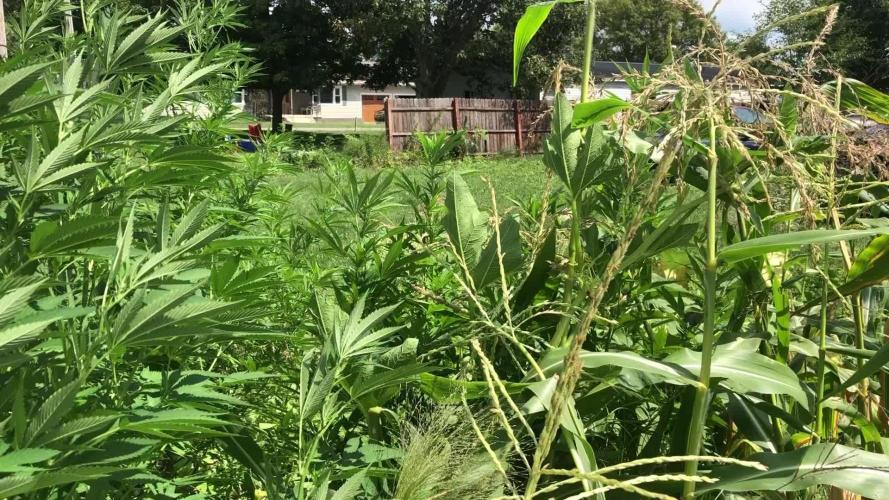
8/23/2025- Starting to see some solid flowers now. I again today fertilized the plants with about 14 gallons of water with the above nutes. I tested and adjusted ph after to about 5.8 and the ppm's were about 1000. The past fertilizing I mainly just used 7 gallons but I doubled that up this time, so they got blasted with twice as much juice this week. I realize the pics suck, the plants are in the middle of my garden and huge bushes but as the buds start getting a bit more developed im going to defoliate and trim some of the branches on the bottom of the plant and in the coming weeks should have some pretty pics to show. 👽


Likes
11
Share


@Papastroumf
Follow
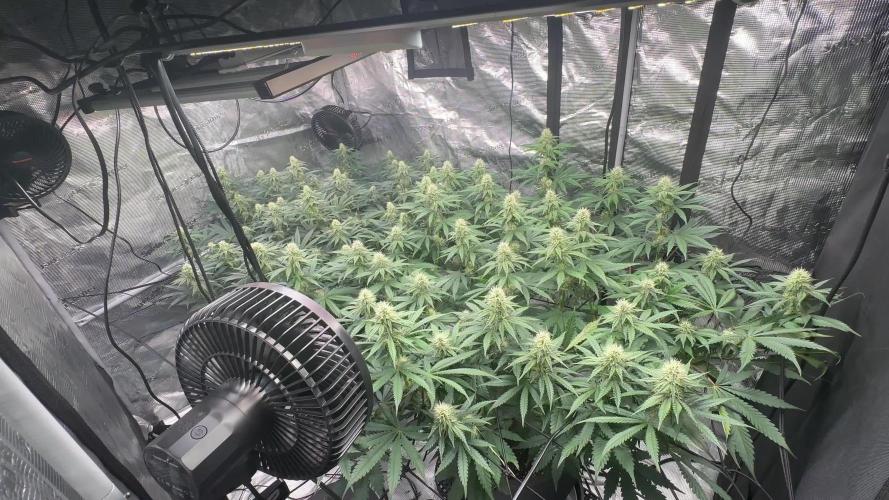
Day 66 : This lady continues fattening, faster now. Also crystal production increased. The breeder suggests 70-75 days. For now all crystals are almost milky with some cloudy. So she need 1 week for sure, maybe a bit more. That gum smell is so attractive, you want to eat it. Reduced bio grow and removed Calcium.
Edit 70 : I saw the first ambers, very little. So i watered for last time with juices Next watering will be flush to reduce the juices in the soil. So if initially has 1200-1300ppm i want to reduce it to 350-500ppm. After flush continue pure water until chop chop. This is my approach for all ladies always.



Likes
3
Share

@FrostedPeak
Follow
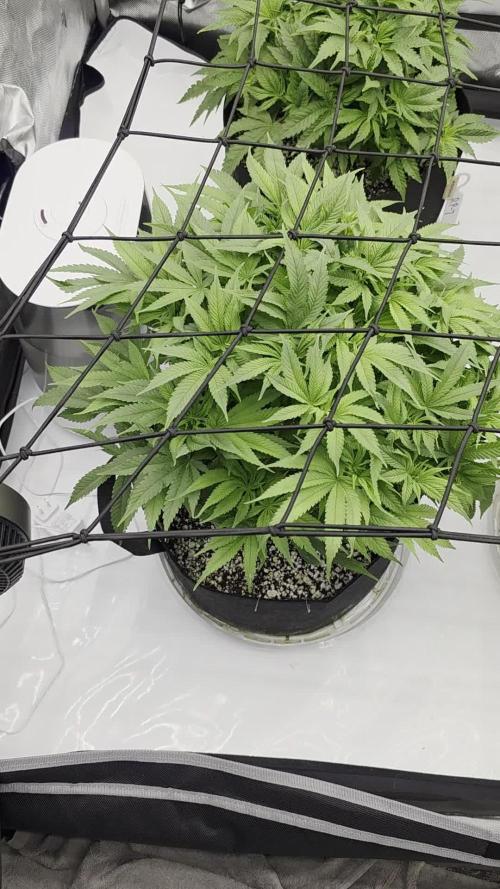
Daily feeding, Heavy flushing this week to balance PH and EC. Recalibrated PH and EC Meters.(Found PH meter of by .3 lower than meter showing, and EC was .3 Higher than what meter was reading.) Working the smaller side of the tent to the scrog net and planning to flip to flower in the next 2-4 Days about 2 weeks behind schedule due to Slower growth on the left side of the tent. Flip at end of week.


Likes
5
Share


@TheGreenDisciple
Follow
Day 73 ~ Plant 1 is looking great and hopefully will be ready to harvest by the end of the week. Been checking the trichomes and while most are getting milky white, there are still a couple sites on the plant where I find clear trichomes.
Plant 2 seems to be about a week or two behind the first plant...I will give plant 2 their final Nutes tmrw and then begin to flush.
From reading about this strain it seems like it should take around 90 days from seed to harvest. So I would think plant 1 is running a little ahead of schedule and plant 2 is right on time.
Day 75 ~ Both plants looking and smelling amazing! I was hoping to be harvesting the first plant by this weekend, but she is still growing and her trichomes are still not all milky and I haven't yet to find an amber one. So it might be another week or so before I can start drying her out.


Likes
12
Share


@Metamorph
Follow
Hello again, dear growers! 🌱👋
We’ve officially stepped into Week 10 of this wild and fragrant journey! Last week ended with a little makeover for the girls—I defoliated about 30-40% of the leaves again. ✂️ The Gorilla decided to keep me on my toes by showing some nutrient deficiencies on her leaves—guess she didn’t get enough food after the flush. 🍌🌿 (Lesson learned: don’t keep a Gorilla hungry!)
Now, let’s talk about Runtz! 😍 She’s an absolute queen—so photogenic that even my struggling phone can’t capture her real beauty. 📸✨ She’s forming into one giant, luscious bud, and her fragrance is something else entirely! 🕵️♂️ The carbon filter is fighting the good fight, but if the room isn’t aired out every 8-9 hours, a little aroma starts sneaking through.
But opening the tent… oh, my friends, that’s where the magic happens! 🌬️💫 The aroma is intoxicating—imagine diving headfirst into a field of flowers while bees whisper secrets in your ears. 🌺🐝 I just sit there, enchanted, savoring the smell, and staring at these beauties like a hypnotized gardener. Honestly, it’s hard to walk away. 😂
Here’s their menu for the week:
🍵 Feed: A+B 4ml/L, Micro Chum 1ml/L, Big Bud 2ml/L
📊 PPM: 1050 | pH: 5.8
💧 Runoff: PPM 1000 | pH 6.0-6.3
Now, for the not-so-great news…
I’m struggling with humidity levels—daytime sits around 65-77%, and at night, it can climb to a stubborn 80%. 🌫️ Temperature-wise, it’s 23-25°C during the day and drops to a cool 16-18°C at night. ❄️🔥
Despite the challenges, the endgame is near, and I’m savoring every moment of this grow! 🌟 🙌 Happy growing, everyone! 🌱🔥
Processing
Likes
21
Share


@LittleBigTrees
Follow
Plucked a few more leaves but other than that just feed them this week including bloom.
Also gave them some rice starch (from boiled rice water collection) on day 42 as a boost for the microbes 👍
Turned the IR off now and turned up to 34000lux
Likes
21
Share


@Ultraviolet
Follow
Heyókȟa
I desire to study nature, and to know better the mind of God, the creator, Holy art thou, O Father.
12x12=144, A dodecahedron is a polyhedron with 12 faces, and in coordination chemistry, it refers to a geometry where ligands surround a central metal atom (in this case, Magnesium) in a specific, 8-coordinate arrangement. Dodecahedrane is a hydrocarbon, meaning it's composed solely of carbon and hydrogen atoms. The carbon atoms are arranged at the corners of a dodecahedron, a 3D shape with 12 pentagonal faces. The water molecules in the dodecahedron form hydrogen bonds that are individually slightly weaker than in either the dimer or the tetramer. However, because three-quarters of the O -H groups in the dodecahedron form hydrogen bonds, it has a more negative energy per molecule than has either the dimer or the tetramer. Magnesium (Mg2+) is the essential, central metal ion in the chlorophyll molecule, crucial for photosynthesis by enabling light absorption and energy transfer. It is chelated by four nitrogen atoms within the porphyrin (or chlorin) ring structure. Chlorophyll appears green because it reflects light in the green region of the visible spectrum, specifically between 490 and 570 nm. The main resonance electronic frequency of a neutral Magnesium (Mg) atom corresponds to the transition from the ground state to the first excited state. Resonance Line Wavelength of Mg2+: 285.1nm (UVB light). The central atom of the chlorophyll molecule is Magnesium (Mg2+), which is coordinated within a porphyrin ring. The electronic "resonance frequency" of this central atom—meaning the frequency at which its electrons absorb energy—is primarily driven by the electronic transitions (ETR) of the surrounding conjugated chlorin ring structure, rather than a discrete atomic transition of the Magnesium atom itself. The resonant electronic frequencies of the chlorophyll porphyrin (technically, a chlorin) ring are determined by the energy required to promote π-electrons within its conjugated system, primarily appearing in the blue and red regions of the visible spectrum.
In standard physics, Chloryphyll b has peak absorption at 460nm (Blue). If we take the peak wavelength 460nm and a UV-B, UVR8 peak absorption wavelength 285nm Tryptophan-285 (W285) Sensing protein. 460/285=1.618 Φ, "natural harmony" and the "structure of light". The cryptochrome photoreceptor (CRY) is a UV-A/blue light receptor that shares this dual sensitivity with several other biological structures and functions, including significant sequence similarity and a common evolutionary ancestor with DNA photolyase enzymes. These are light-activated enzymes that use blue/UV-A light to repair DNA damage caused by UV-B radiation in plants.
Dodecahedrane (C20H20) is a hydrocarbon with a cage-like structure where carbon atoms form 12 pentagonal faces (a regular dodecahedron). It is highly symmetric (icosahedral), contains no delocalized electrons (no aromaticity), and has minimal angle strain, but significant torsional strain. Water Dodecahedron (H2O) forms hydrogen-bonded cages. While individual hydrogen bonds in this structure are weaker than in the linear dimer or tetramer, it has a more negative total energy per molecule. This is because three-quarters (75%) of the groups are involved in hydrogen bonding, creating a very stable, closed-shell configuration. a 3D carbon hydrocarbon (C20H20) to stable water clusters in hydrate, while the Magnesium ion acts as the central activator within a conjugated ring in biological systems, with its electronic absorption dominated by the ring, not the atom itself.
Effective quantum efficiency of photosystem II, often denoted as ΦPSII
In horticultural lighting, adding 730 nm (far-red) LEDs alongside standard red/blue lights has been shown to increase canopy photosynthesis by 20–30% in several crops by acting synergistically with shorter wavelengths. However, the limitation is that excessive, pure IR/Far-red light (without accompanying red light) can trigger the "shade avoidance response," causing plants to grow tall, weak, and spindly rather than robust. Knowing is half the battle however, engineering or utilizing infrared light (specifically the 700-750 nm far-red range) is a viable method to boost photosynthetic efficiency. It acts as a bridge to allow PSII to utilize a broader spectrum of light, breaking the traditional 700 nm barrier.
Extend, then multiply.
UVR8-mediated signaling (often in conjunction with CRY proteins) triggers protective mechanisms that maintain the stability of the photosynthetic apparatus (including LHCII and reaction center proteins), thus ensuring that the efficiency of Photosystem II remains higher in UV-B-exposed plants compared to plants lacking this receptor. ΦPSII indictates the rate of electron transfer from water to plastoquinone, which drives the production of ATP and NADPH. There is a close link between ΦPSII and the true rate of CO2 fixation (Φ*co2), particularly in C4 plants.
Effective quantum efficiency of photosystem II, often denoted as ΦPSII, represents the proportion of light absorbed by Photosystem II (ΦPSII) that is actually used in photosynthetic electron transport. It is a key indicator of how efficiently a plant is using light for photosynthesis, as opposed to losing it as heat or fluorescence. ΦPSII (effective quantum yield of photosystem II) functions primarily as a "multiplier" (a coefficient of efficiency) rather than an additive factor when estimating the overall photosynthetic electron transport rate (ETR). Multipliers are considered far more beneficial than additions because they generate exponential growth, leverage existing resources to their full potential, and create sustainable, self-multiplying capacity, rather than just incremental, linear increases.
Humans, and most other mammals, rely on other mechanisms, such as nucleotide excision repair, to manage and repair UV-induced DNA damage. As such, humans do not have the direct, light-driven repair mechanism that photolyase offers in plants.

Likes
26
Share


@PedroAndHisPlants
Follow
Day 64 (First Grow, Flowering Phase):
Hey everyone!
We’re on day 64, and the flowering phase is in full swing. The buds are forming beautifully, and the plants have grown 5-10 cm above the SCROG net, creating a lush canopy. The humidity is steady at around 50% or lower, which is ideal for this stage.
To recap, we've been maintaining an even canopy with the SCROG net and our Timor shield mantis continues to keep pests at bay naturally. Our plants are thriving, thanks to the even light distribution and careful humidity control.
We're considering installing a second fan in a few weeks to improve airflow and potentially adding a second SCROG net to support the plants as they continue to stretch during flowering. This should help stabilize the plants and ensure they get the support they need as the buds get heavier.
Any tips or advice for the next steps? Let us know in the comments!


Likes
Comments
Share


@Elguacho420
Follow
Buenas a tod@s... Vamos llegando al final de este cultivo, es verdad q al principio hubo algunas carencias pero de a poco fuimos solucionando todo, hoy en día están grandes, fuertes y absorben muy bien los nutrientes, en resumida cuenta están espectaculares... En 2 semanas aproximadamente ya estarán listas... Buenos humos para tod@s... 💨💨🤗😱
🇦🇷😎💀

Likes
17
Share


@CanadianFillmore
Follow
Welcome back growfessors to another episode of growfessor theatre! 👽🌳💚
Week 8F begins for the ladies of the 4x8, last round of feeding before the flush.
LSD has gone crazy over the last week, insane bulk-up in her buds, from top to bottom, in by the stock and out to the tips, she's just bulky, dense, sticky, frosty and incredible! By far, the best looking results from any of my LSD grows.
Green Crack also looks incredible and the rest of the ladies, while doing awesome, will be their final grow in my garden.
Thanks for stopping by growfessors, tune in next week for another episode! 👽🌳💚


Likes
12
Share


@L_Choppa
Follow
I don’t know what’s going on with my big girl I think is wind burn by me increasing the airflow I’m thinking it’s windburn well anyways I don’t know if it’s budrot cause I really want to chop thoses two tops off just incase help anyone if you know what this is
Likes
3
Share


@NoProbation4Weed
Follow
This week the beautiful lady was set into final 20L Pot.
Just a small defoliation of the biggfest leaves.
Bending down the stemps with a scrog net.
Light hitting with around 550 - 650 PPFD.
Likes
6
Share


@FinalElk10
Follow
Chopped the first GG plant will update after it drys and I trim it. The cheese plant that isn't LST probably has another week or so maybe less. The rest have a few weeks slowly making more room in the tent. Only giving water for the rest of the time maybe some cal-mag to help the plants that at burnt (NL, both cheese).
