


Likes
Comments
Share


@TheBulldozerSicily
Follow
Che dire un altra scorta e venuta a me!! Le foto parlano da sole, sono contento del risultato finale, e mi sono risparmiato la fatica della trimmatura grazie al nuovo apparecchio, bisogna aspettare che secchi tutto per osservare e assaggiare il risultato finale, e con lo scarto del trim faremo il burro magico per le nostre ricette di biscotti brownies oli essenziali tinture
....ecc ecc ecc....
Ci vediamo al prossimo diario!!!
Peace! ✌️




Likes
25
Share


@Mr_Awesome_Badass
Follow
Pretty happy with the outcome so far. This style of growing will not yield the the most or greatest stuff due to all the stress but it's for the looks.
And this girl looked awesome.
Very happy with this grow and looking forward to doing something else.
Think I will do a photo period next so I have more control.
Thanks for following!!

Likes
3
Share


At this point, you just do what you gotta do. Beautiful process of learning that comes to an end. Now we just have to wait until it's ready to smoke, maybe in a couple of weeks.

Likes
14
Share


@Curbyourenthusi
Follow
***********************************************************************************************************
START OF WEEK
The Hawaiian Lion (right) and Tricho Jordan (left) are the two plants that dominate the face-on tent photos, and for good reason. Each of those plants is twice the mass of either Chimera. The HL is superior in bud sites, resin, and terp intensity, but the Tricho and the good Chimera #3 are both not too far off in resin production and aroma profiles. The weird runt is frosting up too, so we're looking at getting something unique and quality from each.
That is, if I don't muck this up.
I fed last night, and as part of that process, I mix my nutrients in a four gallon batch at a double(ish) strength. I then add that to my reservoir, which is shut off at that time. This allows me to work in the res, to both get the ppms right and the ph within range. I just use plain water to level off the ppms and then I adjust for ph.
What I didn't do last night is TURN back on the flow of water from the reservoir. However, you wouldn't have guessed it from how the plants woke up today (see first image). I normally check the bases of each plant daily, and in doing so today, I noticed that one felt slight dry. All tanks were empty, but all plant bases were somewhere between wet to moist. This is how I spot check, and it's worked in the past. This isn't the first time these tanks have had a catastrophic issue leading to an unexpected no flow sitch.
There's a filter that sits between the reservoir tank and the primary feed line. That has unexpectedly clogged on me in the past, but with no deleterious effect to the grow. That was caught within a day as well by testing the plant bases. I don't blame autopot for either event.
Obviously, last night I was a baked potato and just forgot a step. The clog is because I use yucca in my mix, which is an organic material that over time in the reservoir leads to build up. I'm afraid to introduce hydrogen peroxide into the set-up, so I'm just maintaining my reservoir by cleaning it fully every other week for now. I don't want to kill off the bacteria in the environment. I'm also using some fungus, too, so I'd rather promote coexistence of a microbiome than serialize it, especially considering the plants seem to be on pace.
****************************************************************************************************************************************************************
END OF WEEK
Shit! I've got a herm. I've found four nanner clusters this week, all on the lower third-ish of the Hawaiian Lion. Someone, thankfully, spotted it in the purple flower pics. Turns out, while super fun to look at, those sweet violet flowers turned into harbingers of mother fucking doooooommm.
I've never seen this before. I guess I've been fortunate, but I've also never had a camera this capable before either. I had no idea how small these pee pee's were. I guess I was expecting girth, but shame on me for not knowing. I rapidly learned as much as I could over the last two days, and I've come to the conclusion that I may or may not be screwed. The consensus on my situation ranges from either burn my tent down to thank ja for the blessings of feminized seeds. We're riding this baby out.
I think I have fifteen to twenty days left and I think these little nanners might have been in action for ten days, hopefully less. I don't know what kind of damage will be done in that time, but honestly, I'm not too worried. While disappointing, my use case is a personal supply of bubble hash and flower rosin. If it's seedy, I'll wash most of it.
I don't know what caused it, but I'm thinking a light leak or genetics. The environment is dialed and that plant hasn't shown one sign of anything less than vigor throughout. The spots that developed the purple flowers (lower bottom half to bottom quarter) are all in the vicinity of where I found the herms (four locations) and these locations are close to the edge of the tent along the zipper. I'm vigilant about keeping my tent and grow space in order, but a light leak can't be ruled out. I'll have to test that after the harvest.
The herm flowers are minuscule and I'm surprised I found them. The camera was a great tool in this case. I sprayed the areas that I removed the nanners and then dried it, but for what it's worth, I think the damage was already done. That water bit felt more like ritual, but I'm still feeling optimistic that I'm not totally hosed.


Likes
78
Share


@Kitties_and_Colas
Follow
~_~_~_~_~_~_~_~_~_~_~_~_~_~_~_~_~_~_~_~_~_~_~_~_~_~_~_~_~_~_~_~_~_~_~_~_~_~_~_~_~_~_~_~_~_~_~_~_~_~_~_~_~_~_~_~_~_~_~_~_~_~_~_~_~_~_~_~_~_~_~_~_~_~_~_~_~_~_~_~_~_~_
❤️💡🌱😽💨
2nd week of flower!! Everything is going great..a couple are showing signs of overfeeding but not too bad, no clawing yet but close. We'll be doing water only w/ a little calmag for these until they lighten a few shades.. its been an easy week in this tent, no drama 🐱👍🌱
~_~_~_~_~_~_~_~_~_~_~_~_~_~_~_~_~_~_~_~_~_~_~_~_~_~_~_~_~_~_~_~_~_~_~_~_~_~_~_~_~_~_~_~_~_~_~_~_~_~_~_~_~_~_~_~_~_~_~_~_~_~_~_~_~_~_~_~_~_~_~_~_~_~_~_~_~_~_~_~_~_~_



Likes
12
Share


@Preston22
Follow
Still looking Good .. Buds Looking good
Added some big bloom in last week… got some yellow fan leaves on it
Sticking with 13-14 weeks before harvest time
Likes
5
Share


@Juiced_Up_Genetix
Follow
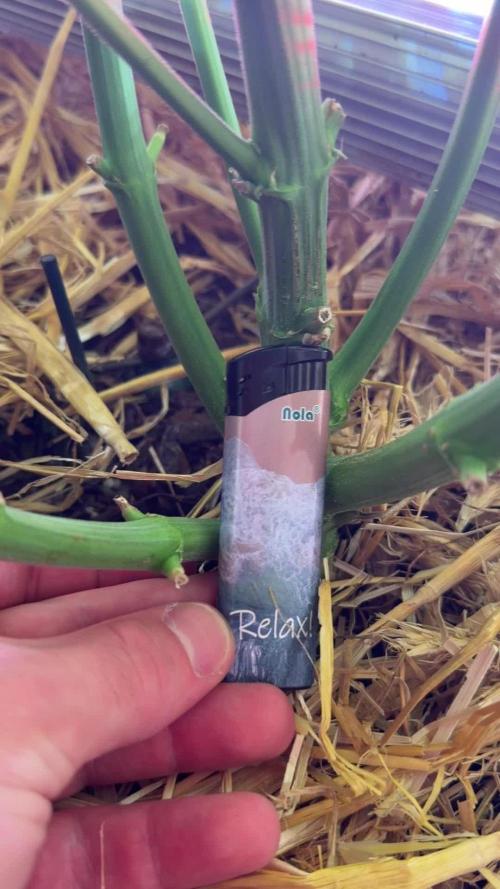
Getting big. Let her go now for another week or two and we’ll see how she stretches. Her stalk and branches are stupid thick with purple candy cane striping. I love how she’s shaping. Watch how big she ends up being.
Likes
2
Share

Likes
52
Share


@Rangaku
Follow
Just moving branches around now with the tie wires to get an even spread under the light , heat mats are staying on to combat ambient temps of 5C , flushed them and will feed them another week of veg nutes .
Likes
5
Share


@BigGeekSmallGrower
Follow
Its been smooth sailing the last week, little to do but admire progress. I kept feeding the full 3.0 EC from start of flower to today, no signs of too much nutrients nor of too less.
I wonder why, either the Athena Pro line is excellently fine tuned to what the plants need and nothing is left to really build up, or I am missing something big...expected some sort of problems at least, but I wont complain also...maybe its the silence before the storm and I am compromising what I would call formidable chances on a high grade yield😅
Ill keep this updated if something big happens or I find too much free time laying around.


Likes
18
Share


@Diips
Follow
first week of flower.
shes looking good. 👍
20/4 - 550-600 ppfd.
reading done with photone, using paper diffuser, close enough to what i was imagining it would be, with 75% at 16’.
d.45 - she grew 3 cm over 24 hours, thats pretty impressive!
d.48 - light defoliation in the bottom
Likes
5
Share

@Aleks555
Follow
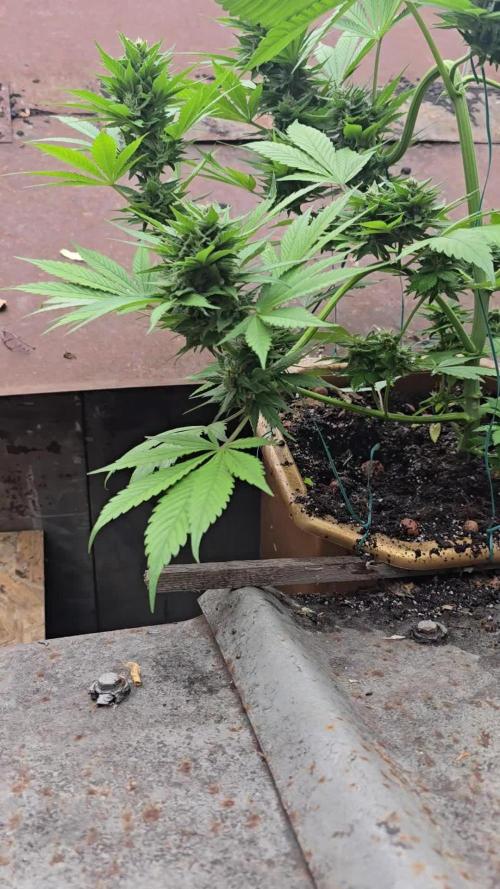
Week 9 and everything is going well. Even though the weather hasn't been very sunny and we've mostly had cloudy days and plenty of rain, our beauty keeps growing.
The trichomes have started turning cloudy, and we can already see some amber ones appearing. We're going to wait until about 50% of them are amber before harvesting.
We picked a small bud to dry and test at this stage so we can compare the effect, and then we'll try it again when the plant reaches around 50% amber trichomes.
The finish line is getting closer! 🌱💚
Processing
Likes
5
Share


@Chunkmasta1
Follow
Day 6 of flower sorry for the very late update been a busy few weeks..... she has some issues my cat knocked the pump plug out of the wall and she sat in stagnant water for two days 😑 she is strong and will bounce back quickly. The scrog filled out nicely and she started her stretch I will clean up some of the larger leaves in the next few days before we get to far into flower I sat her in 24 hours of dark to start the process I like this method though many people have different views this is the one I like to do and I have never had any issues

Likes
15
Share


@SouthernOnions
Follow
All is well here in week 10 although I'm starting to notice some possible nutrient burn or deficiency. Some of the foliage on plant 2 and 4 are looking a little rusty speckled. It's probably too late to correct the issue but if anyone has any advice on that I'd much appreciate it! Plant 1 is starting to do her thing, she's definitely stunted and may take an extra week or two to finish out guess we'll see! I've started late bloom feeding schedule which consists of 1.5 grams per gallon of B1&B2 as well as 3 grams per gallon of FullTilt from FloraFlex.

Likes
6
Share


@LoganatorDude
Follow
Yeah it’s not anything like I had planned, but like I said last week, there is always next year. I’m just giving her molasses here and there. I don’t know the pH or ppm of the feed water. It’s just molasses and my 8 pH well water. Then back to just plain water if I’m not feeding. There are obviously a lot of soil amendments that I’m leaning on. I suppose the picture of her trunk isn’t that impressive because it lacks a reference of scale. But those are some big roots on the top there.
Likes
17
Share


@Lazuli
Follow
Very intense high, hits very fast and long. Im not stoned but still sleep like a rock after a few hits