





@NuttyYeti
Volgen
She smells great! I wish she didn't get powdery mildew at the end but I couldn't risk it spreading to my other plants. Fortunately I caught it in time and the buds look good. The biggest one weighs 36 grams.



@ZariRat_Grow
Volgen
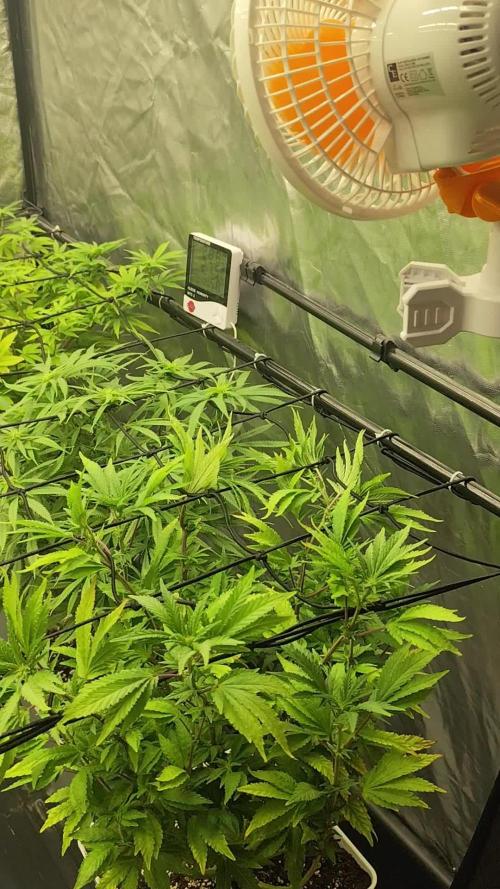
🌸 2° semana de floración y restructuración 🚀
¡Saludos, familia! 🐭💚
Cerramos una semana con tristeza, una de las pequeñas ⚠️Zkittlez 2.0 salió macho, nada mas descubrirlo la eliminamos del cultivo, limpiamos y restructuramos el cultivo para poder recuperar con las otras el hueco que ha dejado.
💡Iluminación:70% a 60cm del dosel. Plantas verde lima/pálido.
Nutrición: Dieta estricta EC estable en 1.7. ¡Las plantas beben como máquinas!
🌡️Clima: 26°C día / 20-23°C noche. HR 50-60%.
📊En resumen
Las Strawberry Banana, resina temprana y terpenos cremosos, inundando la entrada del armario. 🍓🍌
Las Zkittles 2.0 y la Blueberry Cupcake, en el fondo, marcando territorio y empezando a hacerse un monstruo 🌳✨
📐 Entrenamiento
Hemos tensado la red de SCROG al límite con bridas y estamos aplicando LST selectivo con alambre para domar a las "monstruos" del fondo y nivelar a las 3 pequeñas SB del centro (que llevan una semana de retraso). ¡El objetivo es un mar de verde perfectamente plano y lo estamos logrando! 💪🏻
Veredicto: Plantas duras, rígidas y con una buena salud aparente 🌿
✨ Saludos amigos growers y buenas vibras 🐭💚





@DogDoctorOfficial
Volgen
Week 3 Blossom Ballet: Cherry Cola's Floral Extravaganza Unleashed
Greetings, fellow green enthusiasts! We've hit Week 3 in the enchanting flower journey of our beloved Cherry Cola Auto, and let me tell you, the botanical ballet within the tent is reaching an unprecedented crescendo. Our green queen is unleashing a floral extravaganza that's nothing short of spectacular.
As we dive into the heart of Week 3, the tent is transformed into a vibrant canvas of blooming beauty. The once-lush bush has metamorphosed into a floral symphony, each bud site a note in a melodious composition. The topping technique deployed earlier is now revealing its full glory, with multiple colas reaching for the spotlight.
The decision to release our Cherry Cola from training supports continues to pay dividends. She's embracing her freedom with a wild elegance, and the tent is now an immersive experience of green abundance. The bushy ballet is a testament to the success of our horticultural endeavors, creating a living masterpiece.
The topping triumph from the previous weeks echoes in every corner of the tent. The colas have matured into regal structures, each vying for attention in this botanical drama. The decision to venture into topping during the vegetative phase has proven to be a stroke of genius, enhancing both yield potential and structural beauty.
Ah, a crucial note in our nutrient symphony! I introduced Potassium (K) to our water mix, adding another layer of vitality to our Cherry Cola's performance. P-Boost's phosphorus prowess, coupled with Topbooster's organic grace, dances in harmony with the added Potassium, contributing to the formation of hefty buds and enhancing the overall flowering response.
Visual euphoria reigns supreme as our Cherry Cola daily unfurls new growth, showcasing the sheer energy and vitality she possesses. It's not just a plant; it's a living canvas of horticultural artistry that leaves me in perpetual awe.
As we wrap up Week 3, Cherry Cola Auto stands as a living testament to the joy and wonder of cultivation. The floral odyssey is far from over, and the tent is a stage for a botanical performance that promises to linger in our memories. Stay tuned, fellow enthusiasts, as the Cherry Cola Chronicles continue to unfold!
Genetics Cherry Cola Auto @Fast_Buds @fastbuds_genetics_official @fastbuds_official @fastbuds_espana
Nutrition: @aptusholland @aptus_world @aptus_
Love, Care, and Attention: @dogdoctorofficial
As always, thank you all for joining me on this journey, for your love, and for it all. My horticultural odyssey would never be the same without you. Your love and support are cherished, and I feel both honored and blessed to have you in my life


@Aedaone
Volgen
The temperatures, humidity, and watering volume(if measured) in grow conditions are all averaged for the week. The pH is soil pH. Any watering done by me is well water which is 7.6 pH and 50° F. Any listed nutrients are ml/gallon of soil top dressed.
Day 1 we had high temperature of 85 and sunny skies. I watered 3-5 gallons from the hose. I added 45 ml coop poop and 50 ml plant tone. I spread the dry fertilizer evenly across the top of the soil.
Day 2 we had high temperature of 87°F with partly cloudy to cloudy skies. I watered 3-4 gallons from the hose. I added 100 ml of blood meal spread evenly across the top of the soil.
Day 3 We had a high temperature of 85°F. It rained the previous night and intermittently raining and thunderstorms today. The rain is watering today.
Day 4 we had a high temperature of 73°F and all day rain. The rain was what remained of hurricane Beryl. There was a lot of wind up to 20 miles per hour. These girls handled it and loved the rain.
Day 5 we had clear sunny skies and a high temperature of 85°F. I fed 150 ml feather meal and 45 ml Coop Poop. I watered 3-5 gallons from the water hose.
Day 6 we had a high temperature of 86°F and partly cloudy skies. Plants #1, that developed powdery mildew on its lower leaves, began treatment with Arber organic biofungicide. I'll continue that for 5 days. I ran the fertilizer a little hot the girls are clawing and super dark green this evening
Day 7 we had a high temperature of 85 with partly cloudy skies.
This week was a success. We got a touch of powdery mildew on the #1 plant. It's on the bottom leaves. I'll continue to treat that with Arber. Both of these girls began flower the last couple of days this week. About 9 weeks from now we should have some big old beautiful buds.
shorts_status_processing


@versace_grow
Volgen
DAY 1 (06/03/2020)
The seedlings started growing tonight after 4 days since they were planted inside the rockwool cube (02/03/2020). They are under a 23w CFL until they are a little taller and start to make the first 2 leaves. The distance is very small from the light to not get them too stretched. Feeding just water now. I already prepared the RDWC setup with a 60 liters box (0,6 m x 0,4 m x 0,25 m) for 3 plants. The grow tent is 120x120 cm. The light will be a Sylvania 600w HPS powered by a Gib Ligthing LXG Timer 600w Electronic Ballast. Since it is dimmable I will start with 250w and increase in the first weeks until reaching 600w. The ballast has the Sunlight mode which increase the wattage of the lamp during the first hour and decrease during the last to simulate the sun cycle.
DAY 5 (10/03/2020)
Seedling are growing well. I started RDWC yesterday and put 25 liters of water with 15 ml of FloraCoco Grow, 15 ml of FloraMicro,15ml of FloraBloom. I also added 5 ml of Great White Mycorrhizae to strengthen roots. The water from my tap is 40 ppm , the water in the reservoir is 500 ppm. Increased power light to 350w. Temperature and Humidity when lights on: 23°C and 35%. Added a humidifier inside the room to increase humidity.


@gr3g4l
Volgen
De la previsión del tiempo hay que hacerle un caso relativo, la semana pasada por ejemplo no se prevenian las bajas temperaturas a las que se llegaron.
con 28 dias ya pasados unos cuantos dias de lluvias y bajas temperaturas parece que siguen creciendo aunque con una distancia internodal exagerada😒 . Ahí donde están me suelen crecer siempre así y es que hay una gran pantalla de vegetacion por un lado y por otro está la casa. Tienen muy poco espacio o pocas horas de sol directo.




@Ultraviolet
Volgen
Removed autoflower and put her in her own pot outside the tent.
Foliars applied in strong blue 430nm with 4000hz tone. 20min dose prior to application.
In essence, you're seeing a combination of the infrared light reflected by the plant, which the camera perceives as red, and any residual visible blue light the plant reflects, which results in a purple hue.
I was doing more stretching of the stems, adjusting weights, just a little too much, and it snapped almost clean. I got a little lucky in that it was still connected, wrapped her almost instantly while holding her in place with yoyos. I am hopeful she will recover and reconnect the xylem and phloem channels. Oopsy level stress event.
ANTHOCYANINS!


@LAShugars
Volgen
Going to stop giving her nutes. I think she’ll be ready in 2 weeks. She’s been an easy grow. Her smell, colors and bud density are wonder


@DogDoctorOfficial
Volgen
💙 PROJECT BLUE TENT – WEEK 15 💙
🌈 BLUE WAFFLE F1 – PHENO A
🍂 THE SEASON IS CHANGING! BEAUTIFUL AUTUMN COLOURS, INCREDIBLE FLOWERS, AND THE FINAL CHAPTERS ARE HERE!
Hello everyone, and welcome back to another chapter of Project Blue Tent! 💙🌱
My friends...
I think we're getting there.
I genuinely feel that we're approaching the end of this beautiful journey, and when I look inside the tent this week, I get that unmistakable feeling that the season is changing.
Autumn has arrived!
Reds, browns, blues, greens, yellows... you name the colour, and there's a good chance you'll find it somewhere inside this room! 😂🍂🌈
The girls are changing, the leaves are fading, the flowers are looking absolutely incredible, and the entire atmosphere feels different.
And Blue Waffle F1 Pheno A?
WOW!
She's developing into a beautiful, compact, incredibly dense plant, with an outstanding flower structure and colours that make it difficult to put the camera down.
The aroma is amazing, the flowers are looking like little golf balls throughout the plant, and the overall appearance is giving us plenty of reasons to stop and admire what we've achieved.
But there's something important happening this week.
After observing the flowers, their structure, the aroma, the trichomes, and the overall condition of the plants, I've decided that it's time to move away from our nutritional recipe and introduce plain water.
We've brought the EC down to approximately 0.2 mS/cm, which is essentially our starting-point water reading.
The pH is sitting around 6.8, and we're not using pH Plus or pH Minus to adjust it.
For now, we're keeping things simple.
A few days of plain water, potentially around a week, depending on how the plants progress.
I genuinely feel we're very close to the finish, and I want to give the girls the time they need.
But before we get carried away thinking about harvest, there's plenty to appreciate this week.
We also have a special little visitor named Matilda, some beautiful macro photography, a new 3D-printing experiment for our next run, and an under-canopy lighting setup that's giving us some particularly interesting results.
So grab a cup of tea, my friends, get comfortable, and let's enjoy another chapter of Project Blue Tent!
💙🌸🍂
🌱 A QUICK LOOK BACK – HOW DID WE GET HERE?
Before diving into this week's observations, let's take a moment to remember what Project Blue Tent is all about.
This project brings together four beautiful plants from two different Zamnesia F1 genetics:
🌈 Two Blue Waffle F1 plants.
🥒 Two Pickle Lemon Haze F1 plants.
Four individual plants, two different cultivars, and one shared ecosystem.
All four girls have been growing in the same tent, sharing the same general environmental conditions, the same reservoir, the same irrigation system, and the same lighting arrangement.
We've documented their individual journeys from the early stages, following their development through transplantation, training, topping, SCROG, defoliation, and the transition into flowering.
We've also been experimenting with supplemental under-canopy lighting, using two LumiFlora 150W full-spectrum fixtures arranged in an X-cross configuration.
Throughout the project, we've worked with PLAGRON Hydro A and B, gradually adjusting the nutritional concentration as the plants progressed.
The girls have also benefited from the equipment and support provided by our partners, including Zamnesia, Mars Hydro, PLAGRON, LumiFlora, and our other collaborators.
And now, after all those weeks of work, we're looking at the results.
The original structure is established.
The branches are supported.
The flowers have developed throughout the canopy.
And we're entering the final stage of the journey.
One of the things that makes this project particularly interesting is that even though the plants share the same ecosystem, they don't necessarily develop identically.
Different cultivars, different phenotypes, and individual characteristics all contribute to what we're seeing.
That's why we've kept separate diaries.
Every girl deserves her own story, and every plant has something different to show us.
Blue Waffle F1 Pheno A has certainly given us plenty to appreciate!
💙🌱
🌈 BLUE WAFFLE F1 PHENO A – AN AUTUMN MASTERPIECE!
Let's talk about this beautiful girl!
Seriously, look at those flowers!
The first thing that catches my attention is the incredible structure.
We're seeing compact, dense flowers with a beautifully developed appearance throughout the plant.
The buds are looking almost like little golf balls, from the lower sections towards the upper canopy.
And the colours!
That's where things become particularly interesting.
We're seeing a beautiful combination of green, purple, reddish, brown, and yellow tones developing throughout the plant.
The overall appearance is changing, and it's giving this phenotype a completely different character compared with the earlier weeks.
She's no longer that predominantly green plant we were looking at during the earlier stages.
Instead, we're seeing a beautiful autumn display.
The flowers remain the main attraction, but the surrounding foliage is becoming part of the story too.
The contrast between the different colours, the flower structure, and the visible trichomes makes this girl an absolute pleasure to photograph.
And honestly, I couldn't be happier with how she's looking.
The structure is outstanding.
The flowers are incredibly compact.
The aroma is fantastic.
And the overall appearance makes her one of those plants that you simply have to stop and admire.
Blue Waffle F1 Pheno A, you've done a beautiful job! 😂💙🌈
🍂 WHY ARE THE PLANTS CHANGING COLOUR?
This is one of the most interesting parts of the final flowering stage, and something worth explaining.
As plants approach maturity, we can begin observing significant changes in the appearance of their foliage.
The familiar green appearance gradually gives way to other colours.
Some leaves become yellow.
Others develop reddish or purple shades.
Some areas become brown, while other parts retain their green colour for longer.
But why does this happen?
One important part of the process is the changing balance of pigments within the leaves.
Chlorophyll is responsible for much of the green colour we associate with healthy foliage.
As plants progress through their life cycle, chlorophyll levels can decline, allowing other pigments to become more visible.
Carotenoids contribute yellow and orange tones, while anthocyanins are associated with red, purple, and blue colouration.
Genetics play an important role in how these colours are expressed.
Environmental conditions can also influence colour development, including temperature and light exposure.
This is why different plants can display very different colour combinations, even when they're growing in the same room.
And that's precisely what we're enjoying right now.
The room is looking like autumn!
But it's important to understand that fading isn't automatically proof of perfect maturity, nor does every change in colour mean the same thing.
We're looking at the overall condition of the plant, the flower development, the trichomes, the aroma, and the other observations we've collected throughout the journey.
For Pheno A, all those observations are coming together and making me feel that we're very close to the finish.
And I absolutely love the colours we're seeing!
🍂🌈💙
❄️ FLOWER STRUCTURE – LITTLE GOLF BALLS FROM TOP TO BOTTOM!
Now, let's appreciate those flowers!
One of the things that has impressed me throughout this run is the development of the canopy under our combined lighting arrangement.
The flowers are incredibly compact and dense, with a beautiful structure throughout the plant.
And when I say throughout the plant, I really mean it!
We're seeing those little golf-ball-like flowers from the lower sections all the way towards the top.
The consistency of the flower development is particularly interesting to observe.
We've spent so much time discussing the SCROG structure, branch management, and lighting distribution throughout this project.
Now, looking at the finished development across the canopy gives us an opportunity to appreciate the entire setup.
And the under-canopy lighting experiment deserves special attention here.
The two LumiFlora fixtures have been an important part of this project, and I'm genuinely impressed by what we're observing.
The lower flowering sites haven't simply disappeared into the shadows.
We've been able to document beautiful flower development throughout different sections of the plant.
Of course, we shouldn't attribute every result to one piece of equipment without considering the entire growing environment.
Genetics, canopy structure, lighting from above, supplemental lighting, and all the other environmental factors work together.
But I can tell you that this experiment has been particularly interesting, and the results we're seeing have made me even more curious about exploring under-canopy lighting in future projects.
More on that shortly!
💙💡❄️
💡 UNDER-CANOPY LIGHTING – ONE OF THE MOST INTERESTING PARTS OF THIS PROJECT!
I really want to give this experiment its own moment.
Throughout Project Blue Tent, we've been using two LumiFlora 150W full-spectrum fixtures beneath the canopy.
They're positioned in an X-cross configuration, providing supplemental lighting to the lower sections of the plants.
And looking at the flowers now, I'm genuinely impressed.
The development we're seeing throughout the plant is beautiful.
From the lower flowering sites to the upper canopy, we're finding compact, well-developed flowers that are making this experiment particularly rewarding to document.
When we started this project, one of the questions I wanted to explore was how supplemental lighting beneath the canopy could contribute to the development of the lower flowering sites.
Now we're looking at the plants near the end of their flowering cycle, and we have an entire journey of photographs and observations to review.
I'm not going to claim that under-canopy lighting alone produced these results.
We have several variables working together, including genetics, the main lighting system, canopy management, environmental conditions, and nutrition.
But I can certainly say that the experiment has been worth exploring.
And it's something I want to continue investigating in future runs.
The two LumiFlora fixtures have earned their place in this project!
A special thank you to LumiFlora for making this experiment possible.
💡💙🌱
⚗️ THE BIG CHANGE THIS WEEK – WE'RE MOVING TO PLAIN WATER!
Now, let's talk about the nutritional update.
This is probably the most important change in this week's report.
After observing the plants and considering the overall development, I've decided that it's time to stop the previous nutritional recipe and move to plain water.
We're no longer adding Hydro A, Hydro B, or Power Buds to the reservoir.
We're also not using Green Sensation, which was discontinued earlier in the flowering cycle.
For this stage, we're keeping things simple.
Our current reservoir readings are:
EC: approximately 0.2 mS/cm.
pH: approximately 6.8.
The EC reading represents the starting-point water we're using.
The pH is naturally around 6.8, so we're not adding pH Plus or pH Minus.
We're simply using the water as it is.
Why have I decided to make this change?
Well, it's based on the overall picture.
When I look at the flowers, their density, their development, the changing appearance of the plants, the aroma, and the trichomes, I get the feeling that we're approaching the end.
And I don't want to continue following a nutritional recipe simply because it's what we were using last week.
The plants have progressed, and our approach needs to reflect the stage they're currently in.
Since we're not following an organic feeding program in this project, I've decided to introduce a period with plain water.
For now, I'm thinking about a few days, potentially around one week.
We'll continue observing the plants and decide how the final timeline develops.
I'm not going to promise an exact number of days because I genuinely feel that we're very close, and I want to keep that decision based on what we're observing.
One important clarification: plain water doesn't magically remove nutrients from flowers, and it doesn't guarantee a particular flavour or quality outcome.
It's simply the change I've chosen to make at this stage of this particular run.
The important thing is that the diary accurately records what we're doing and why.
And from this week onward, the reservoir is running on plain water.
💧 EC 0.2 mS/cm.
💧 pH approximately 6.8.
💧 No additional nutrients.
Let's see how the final chapter unfolds!
🌡️ THE ROOM FEELS LIKE AUTUMN – BUT THE WEATHER OUTSIDE HAS OTHER IDEAS!
Now, this is an interesting one!
While the plants are showing us all those beautiful autumn colours, the temperatures outside have decided to climb again.
It's almost as if summer wants another chance! 😂
During the nighttime, we're now seeing outside temperatures above 22°C.
One of the readings was approximately 22.4°C around midnight.
And that's something we need to manage because we don't want the warmer outside conditions to push the tent temperatures higher than intended.
Fortunately, with the air conditioning running, we're managing to maintain the internal environment.
Our current reference conditions remain:
Day air temperature: approximately 25°C.
Night air temperature: approximately 20°C.
Relative humidity: approximately 55%.
Solution temperature: approximately 21°C.
Substrate temperature: approximately 21°C.
The important part is maintaining a stable environment despite the warmer conditions outside.
The AC is helping us manage those changes, and we're keeping a close eye on the readings.
It's quite funny, actually.
Outside, summer is trying to make a comeback.
Inside, the girls are showing us every colour of autumn!
😂🍂🌈
🌸 THE AROMA – THE ROOM IS SPEAKING FOR ITSELF!
There's something else I want to mention.
The aroma!
My friends, the smell throughout the room is incredible.
It's one of those things that makes the final weeks particularly enjoyable.
We've spent so much time documenting the visual development of these plants, but there's another part of the experience that photographs simply cannot communicate.
The aroma.
The flowers are looking fantastic, and the smell is making the entire room even more enjoyable to spend time in.
I won't invent a detailed terpene profile without having properly documented it.
But I can tell you that the overall aromatic experience is outstanding.
And combined with the colours and the density of the flowers, it makes this stage particularly memorable.
💙🌸
🕷️ MEET MATHILDA – OUR LITTLE VISITOR!
Now, my friends, we have a very special guest this week.
Meet Mathilda! 🕷️😂
While spending time around the room, I spotted this little spider wandering around.
And instead of simply ignoring her, I decided to give her a little moment in the spotlight.
I brought her into the photography setup and took a few photographs, including some macro shots.
And honestly, she turned out to be a fantastic little subject!
Look at those legs!
The details!
The textures!
The incredible structure!
Macro photography gives us an opportunity to appreciate things that are normally too small to notice properly.
And Mathilda was absolutely perfect for that.
Of course, she wasn't part of the original Project Blue Tent cast, but apparently she decided she wanted to make a guest appearance before the season ended.
😂🕷️💙
I always enjoy finding these little moments during a project.
We're so focused on the plants, the equipment, the environmental readings, and the weekly reports that sometimes we forget to appreciate everything else happening around us.
And this week, Matilda reminded me of that.
A little unexpected visitor.
A few macro photographs.
And another beautiful addition to the photographic collection.
Welcome to the room, Mathilda!
📸🕷️
📸 MACRO PHOTOGRAPHY – THERE'S ALWAYS SOMETHING NEW TO DISCOVER!
Photography continues to be one of my favourite parts of documenting these projects.
And during the final stages, there's so much to appreciate.
The flower structure.
The trichomes.
The changing colours.
The textures.
And even our unexpected little spider visitor!
I love getting closer and discovering details that we might otherwise overlook.
This is also why I enjoy experimenting with macro photography and focus stacking.
A single photograph can only capture a limited depth of field, particularly when working at high magnification.
Focus stacking allows us to combine photographs taken at different focus distances, creating an image with a greater depth of field.
It's a technique that opens up another way of documenting the small details.
And this week, between the flowers and Matilda, we certainly had some interesting subjects!
I hope you enjoy the photographs as much as I enjoyed taking them.
📸💙🌱
🖨️ A LITTLE SNEAK PEEK INTO OUR NEXT RUN – 3D PRINTING EXPERIMENT!
Now, let's talk about something that isn't directly part of this week's plant development but is worth introducing.
I've been experimenting with 3D printing and have produced a number of prototype bases that I'm currently testing.
The idea is quite simple.
These are small plates designed to sit beneath the watering points, helping distribute the incoming water more evenly across the coco surface.
Instead of having water fall into one concentrated area, the intention is to create a more even distribution.
I'm still testing the prototypes, and I haven't decided yet whether they'll become part of the next run.
At the moment, I'm only doing a few small tests.
I want to see how the water behaves, whether the distribution is actually improved, and whether the design works well enough to justify using it in a future setup.
Will it work perfectly?
Will I need to modify the design?
Will I end up printing another version?
That's precisely why they're prototypes! 😂🖨️
I've included a few photographs so you can see what I've been working on.
The proper testing and results will come in the next project.
For now, consider this a little preview of what's happening behind the scenes.
Project Blue Tent might be approaching its finish, but the next ideas are already taking shape!
And that's something I really enjoy about this hobby.
There's always something new to experiment with, improve, or learn.
More information coming soon!
🖨️💙🌱
🔭 WHAT TO EXPECT NEXT WEEK – ARE WE HEADING TOWARDS HARVEST?
This is probably the biggest question right now.
And honestly, I have a strong feeling that we're very close.
Looking at the flower development, the density, the aroma, the trichomes, and the overall condition of the plants, I'm beginning to feel that this may be the final weekly chapter before we move into harvest.
But let's not get ahead of ourselves.
We've introduced plain water this week, and we'll continue observing the plants over the coming days.
The next step will depend on how they progress.
If everything continues as expected, we may be moving towards the harvest stage very soon.
What I don't want to do is promise a harvest date simply because we're excited to reach the finish.
We'll continue looking at the individual plants, because all four girls don't necessarily have to finish together.
Blue Waffle F1 and Pickle Lemon Haze F1 are different cultivars, and each individual plant deserves an independent assessment.
So what should you expect from the next update?
More observations.
More photographs.
More attention to the trichomes and overall flower maturity.
And potentially the beginning of the harvest chapters!
What shouldn't you expect?
Major changes to the environment.
New training sessions.
A new nutritional recipe.
Or unnecessary interventions just to keep ourselves busy.
The girls have already done their part.
Now it's time to observe, document, and prepare for the next stage.
We're getting there, my friends!
💙🌸🍂
💙 FINAL THOUGHTS – THE SEASON IS CHANGING, AND THE FINISH IS NEAR!
My friends, what a beautiful stage to document!
Blue Waffle F1 Pheno A is looking absolutely outstanding.
The flowers are incredibly dense and compact, the structure is beautiful, and the colours are giving us an incredible autumn display.
The aroma is fantastic, and the development throughout the canopy has been particularly interesting to observe.
The under-canopy lighting experiment has been one of the highlights of this project, and I'm genuinely looking forward to reviewing everything we've documented once the run is complete.
We've also welcomed Matilda, our unexpected little spider visitor, enjoyed some macro photography, and started experimenting with a few 3D-printed prototypes for the next project.
And nutritionally, we've made our biggest change in quite some time.
We've moved away from the previous PLAGRON recipe and are now using plain water.
EC approximately 0.2 mS/cm.
pH approximately 6.8.
No additional nutrients or pH adjustments.
I'm thinking about a few days, potentially around a week, depending on how the plants progress.
I genuinely feel we're very close to the finish.
Perhaps this is the last weekly report before harvest.
Perhaps we'll have one more chapter to share.
Let's see!
One thing is certain: the season is changing, the plants are showing us their beautiful final colours, and I'm enjoying every moment of documenting the journey.
Four plants.
Two cultivars.
One shared ecosystem.
And so many lessons, photographs, and memories along the way.
Project Blue Tent is approaching its final chapter, but the adventure doesn't stop here.
There's always another experiment, another idea, another genetic to discover, and another opportunity to learn something new.
Thank you for being part of this journey!
💙🌈🍂❄️
💬 COME JOIN THE DOGDOCTOROFFICIAL DISCORD COMMUNITY!
And before we finish, I want to invite everyone to join our Discord family!
If you're already there, you know what we're building together.
And if you haven't joined yet, you're more than welcome!
We've created a community where growers can share their experiences, exchange knowledge, show their gardens, discuss equipment, photography, and all the little details that make this hobby so enjoyable.
We also organize our community photo championships, cups, and giveaways!
There's always something happening, and one of the things I appreciate most is how much we continue learning from each other.
You don't need to be an expert.
You don't need a particular setup.
You don't need to have years of experience.
Everyone is welcome.
Come and introduce yourself, share your photographs, join the discussions, and become part of the community.
💙 JOIN US HERE:
https://discord.gg/dogdoctorofficial
Growers helping growers.
Sharing knowledge.
Learning together.
And having a little fun along the way!
We'd love to see you there!
🙏 A HUGE THANK YOU – THE PEOPLE BEHIND PROJECT BLUE TENT!
A project like this doesn't happen alone, and I want to take a moment to thank everyone who has been part of the journey.
A massive thank you to ZAMNESIA for providing the genetics and making it possible for us to document these beautiful Blue Waffle F1 and Pickle Lemon Haze F1 plants.
Thank you to PLAGRON for the Hydro nutrient line supporting the project throughout the journey.
A huge thank you to MARS HYDRO for the irrigation and drainage equipment helping us maintain our setup.
Thank you to ZAMNESIA for the Phytonaut LED lighting, curved scissors, and clip fans that have become part of our growing environment.
A special thank you to LUMIFLORA for the two 150W full-spectrum under-canopy fixtures. This has been one of the most interesting experiments in Project Blue Tent, and I'm looking forward to sharing more observations.
Thank you to HEMP HOOKS for joining our adventure and providing our community with an exclusive discount opportunity.
🌐 https://hemphooks.com/
Discount code: DogDoctor
15% OFF YOUR ENTIRE ORDER!
Thank you to GROWDIARIES for giving us a platform to document the journey, share our photographs, and exchange experiences with growers from around the world.
And, of course, a huge thank you to everyone in our community.
To everyone following the reports, sharing comments, supporting the projects, participating in our competitions, and joining the giveaways.
You are a big part of what makes these adventures so enjoyable.
And to our Discord family, thank you for continuing to build such a fantastic community.
We have more cups, more giveaways, more photography, more experiments, and plenty of new adventures waiting for us!
Thank you, everyone!
Until the next chapter, my friends...
More colours.
More flowers.
More photographs.
More experiments.
And hopefully, some beautiful harvest stories very soon!
GROWERS LOVE, HAPPY GROWING, AND TAKE CARE EVERYONE! 🌱💙🌈🍂❄️



@DieselKush
Volgen
Oct.29 - We transplanted the girls into soil since they are moving into vegetation phase
Nov.4 - Watered each plant 250mL, 0.25mL of each nutrient for each girl


@Squaregrouper
Volgen
Looking very healthy leaves are green and there is no nutrient deficiency that I can see.. reeks of strawberry lemonade.. with honey


@SBCannabisCo
Volgen
Yessir! Just transplanted. 2 7gallons
2 5 gallons
2 2 gallons
1 - 2 Weeks till flower


@Card1Cultivations
Volgen
March 17 - 24
Growth is still going very well with lots of LST and defoliation.
Business as usual with nutrients and the Blumat system seems dialed in a I prepare to leave them unattended for 5 days in April.
Near the end of the week I installed a second net.



@Chubbs
Volgen
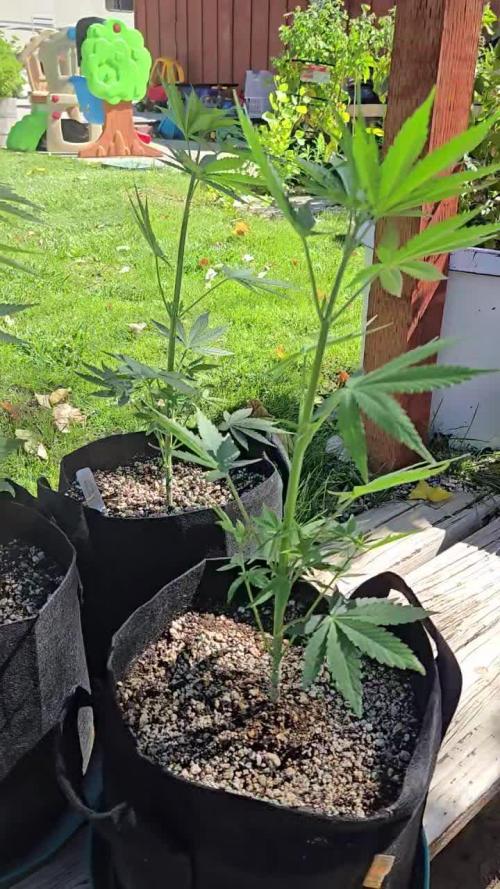
These ladies are growing great. After being transplanted last week they've definitely doubled in size. I did some defoliation today taking off the first set of branches and fan leaves that were at the soil level. All in all Happy Growing.

@Tropical_Growerz
Volgen
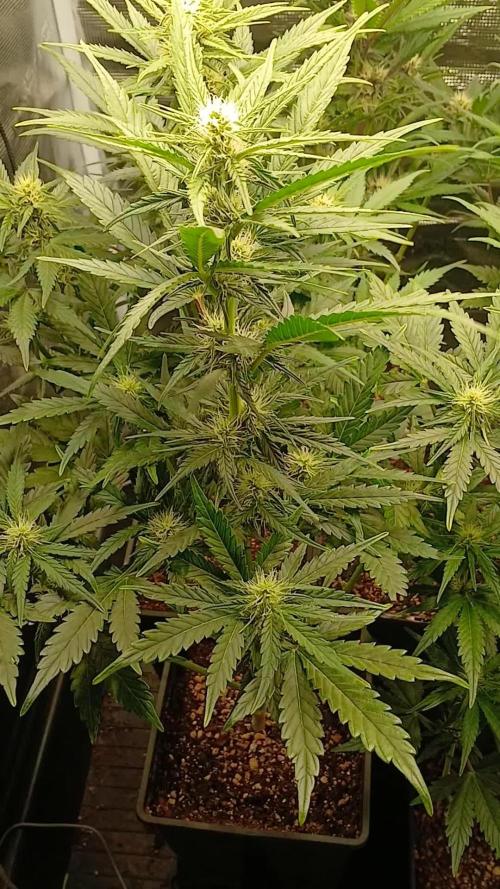
Hi, the plants are doing great.
There's a problem with one GorillaZ that's taking its time to flower, so I moved it to a grow tent under a 12/12 light cycle.
I'm keeping a close eye on it because it seems to be photoperiodic. Enjoy the beautiful colors of the Purple Punch.