





Likes
31
Share


@Santica_Garden
Follow
How's it growing guys, this is my new Diary that I would like to share with the Grow Gang! 2 short videos just explaining the setup and showing the germination rate. My other 2 diaries were my 1st which I'm not doing a good job of filling it out properly but I will do a better job with this strain on keeping you guys updated.
Also I have another diary coming up for my Auto Pineapple Crack which I will be putting up in a week.
Any questions just ask guys. Happy Growing 👍🏾👊🏾🌱🌴💯

Likes
5
Share

@GoodTimesOrganics
Follow
Hi liebe Community and Welcome back! 💚
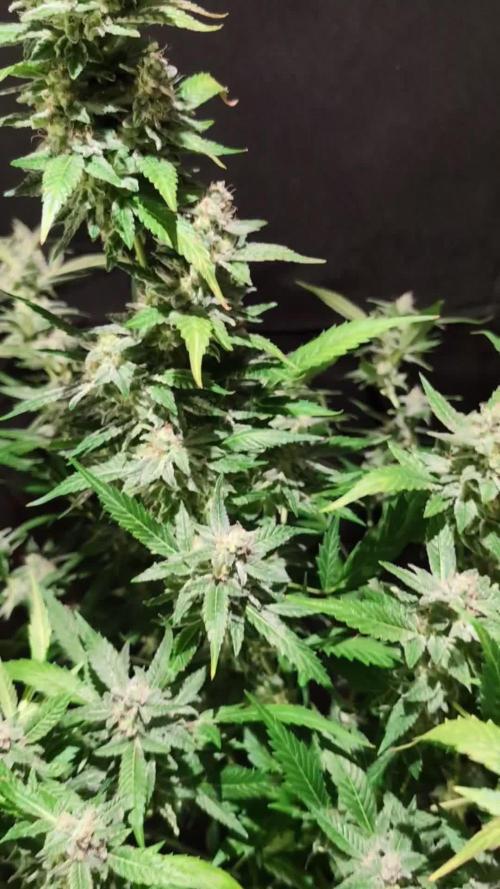
Jetzt war es Zeit für den Trichomcheck und ja, es sieht genau so aus, als wäre die Pflanze exakt in der 8 Wochen Blüte Range.
Nächste Woche ist es dann endlich soweit und die DMO Grapefruit kommt unter die Schere ✂️.
Ich habe die Pflanze nochmal Stark ausgedünnt und es zeigt sicher eine sehr stark ausgeprägte Blütenstruktur. Absolut im XL Bereich.
Es lässt sich beobachten, dass die Blütenbildung im mittleren Bereich der Colas stark ausgebreitet hat und die Pflanze Richtung Spitze eher etwas dünner wird.
Sie bildet die Blüten sehr vielseitig aus, von dünner kompakt bis hin zur breiten dichteren stellen.
Ihr Geruch ist nun sehr stark ausgeprägt und eine Grapefruit Note zeichnet sich als markante Hauptnote ab.
Abgerundet wird dass ganze durch etwas skungige, Säure und etwas Zwiebel/Pfefferigel Noten. Auch eine leichte Süße Komponente kommt etwas hindurch.
Die Wachstumsbedingungen im Growzelt sind aktuell wieder super!
———————
🌞 Temp: 23°C
🌚 Temp: 20 °C
💨 RH: 53%
VPD: 1,00 kPa
😎PPFD: 830 mqm
———————
Stay Tuned! 💚
Likes
35
Share


@MadeInGermany
Follow
Info:
Unfortunately, I had to find out that my account is used for fake pages in social media.
I am only active here on growdiaries.
I am not on facebook instagram twitter etc All accounts except this one are fake.
Hi everyone :-)
This week it has developed really well again :-).
I didn't train her this week, I'll do it again next week :-).
It was poured twice this week with 1.2 l each time (see nutrient table above for adding nutrients).
I sprayed them all with GreenBuzzLiquida Fast Plant spray.
I also cleaned the entire tent and checked everyone's health.
Fresh osmosis water was prepared and filled into canisters.
Yellow boards against flies have been put up and blue tags to prevent trips.
Unfortunately I still struggle with them but they have become significantly less pushed.
I think in a few weeks the last story should be :-).
Otherwise, like every day, they were looked at and petted for a while ;-).
I wish you lots of fun and stay healthy 🙏🏻
You can buy this Nutrients at :
https://greenbuzzliquids.com/en/shop/
With the discount code: Made_in_Germany you get a discount of 15% on all products from an order value of 100 euros.
You can buy this Strain at :
https://greenhouseseeds.nl/
☝️🏼☝️🏼☝️🏼☝️🏼☝️🏼☝️🏼☝️🏼☝️🏼☝️🏼☝️🏼☝️🏼☝️🏼
Green House Seeds Company Cup Clone 🏆
Type:
Wonder Pie
☝️🏼
Genetics:
Wedding Cake x OG Kush
👍😍
Vega lamp: 2 x Todogrow Led
Quantum Board 100 W
💡
Flower Lamp : 2 x Todogrow Led
Cxb 3590 COB 3500 K 205 W
💡💡☝️🏼
Earth: Canna Coco Professional +
☝️🏼
Nutrients :
Green Buzz Liquids :
Organic Grow Liquid
Organic Bloom Liquid
Organic more PK
More Roots
Fast Buds
Humic Acid Plus
Growzyme Big Fruits
Clean Fruits
Cal / Mag
Organic Ph - Pulver
☝️🏼🌱
Water: Osmosis water mixed with normal water (24 hours stale that the chlorine evaporates) to 0.2 EC. Add Cal / Mag to 0.4 Ec Ph with Organic Ph - to 5.8

Likes
5
Share


@GrowBalu
Follow
Sie wächst gut habe sie heute getoppt
Werde sie Ende nächster Woche auf 12 12 umstellen

Likes
75
Share


@Theia
Follow
Started week 7 with another topping. She looks a bit of a mess ATM as I have had to bend some of her arms a full 90degrees and do some funky leaf tieing to keep everything in shape.. Nothing snapped and she seems okay. I will see how she recovers in the next day or two.
Re introduced grow to her feed.
I shall check back in after a few days of recovery and try to get a better pic then the blurple ones I managed earlier.
Day 48
She is so strong. The topping did not bother her showing 3 cm of growth the night I topped her.. I have cleaned all old fan leaves and defoliated the mainlines. Just have 8 colas atm. I attached a ring from a plant holder to try and hold the shape. 7 of the 8 colas have grown exactly where I wanted but 1 has taken a funny turn and as a result it's grown a bit short of where I need it. I shall try to bring them all to a uniformed height then I think I'm going to let 2 more nodes grow out and if that looks like it's given me enough space I will do the final topping for 16 colas. If she looks like it will be to busy I shall stick to 8..
Thanks for looking stay safe and happy growing.😁👍🤘

Likes
26
Share


@420DeepGrow
Follow
Gracias al equipo de Seedsman y XpertNutrients sin ellos esto no sería posible.
💐🍁 Bubba Cheescake:
Bubba Cheesecake es un cruce de Bubba Kush anterior al 98 con Cheese Cake (Wedding Cake x Exodus Cheese). Se trata de un híbrido 70% índica con muy buenos rendimientos, alto en THC y bajo en CBD. Bubba Cheesecake prospera en interiores y exteriores. En interior se aconseja un corto periodo de crecimiento vegetativo debido a la cantidad de estiramiento que presentan las plantas. Las plantas pueden crecer hasta una altura de 250 a 350 cm. cuando se deja crecer naturalmente al aire libre. En interior, la floración dura entre 60 y 65 días, con rendimientos entre buenos y altos, de 400 a 550 gr/m2. Las plantas de exterior son capaces de producir entre 700 - 800 gr. peso seco. En las latitudes norteñas, en exterior, los productores pueden esperar cosechar a principios de octubre. Los cogollos son grandes y duros como piedras. Las plantas maduras muestran atractivos colores púrpuras y azules y brillan con una resina pegajosa que cubrirá las manos del cultivador si no tiene cuidado. El componente Wedding Cake agrega dulzura al sabor del regaliz y el aroma es terroso y musgoso. La producción de THC es muy alta con un nivel bajo de CBD. El efecto es intensamente narcótico, fuerte y duradero.
🌻🚀 Consigue aqui tus semillas:
🍣🍦🌴 Xpert Nutrients es una empresa especializada en la producción y comercialización de fertilizantes líquidos y tierras, que garantizan excelentes cosechas y un crecimiento activo para sus plantas durante todas las fases de cultivo.
Consigue aqui tus Nutrientes:
https://xpertnutrients.com/es/shop/
📆 Semana 6:
Buena semana, ellas está consumiendo todos los nutrientes perfectamente, espero que pronto agarre tierra profunda y empiece a crecer como bestia 🐅.

Likes
23
Share


@Ararhiel
Follow
Been a bit busy lately but back on them now, thinking at putting a net over them so I can test it out to see if getting more yield .

Likes
7
Share


@RivenWaters
Follow
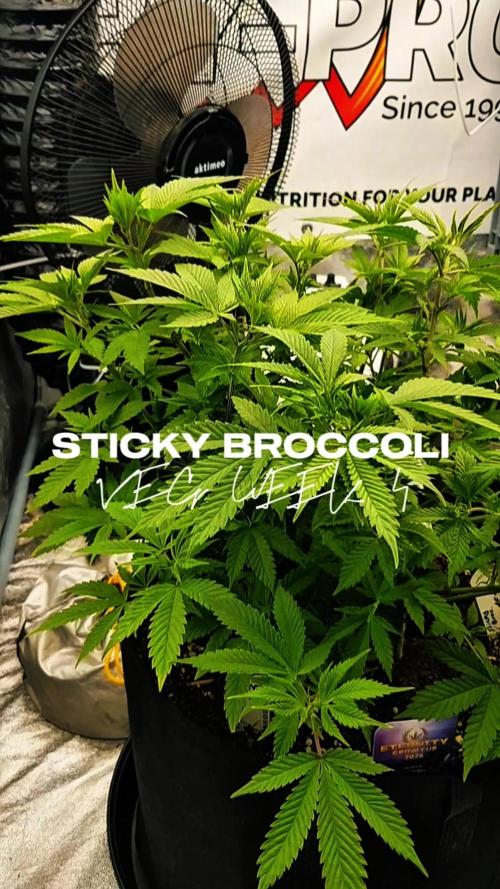
Getting close to harvest, maybe one or two weeks more. I had some powdery mildew starting on one plant so I cut those out, drying them now.


Likes
23
Share


Likes
30
Share


@Virginia_Nugz_540
Follow
So this grow wasnt to bad considering it was my first indoor auto grow. For the most part I am satisfied with. However I will stick with the high end genetics from here on out as I want to grow the dankest of the dank and this is what I enjoy doing so why not do it the best way possible with the best names in the game. Stay tuned to see what 🔥 I’m growing next!!! Thanks for tuning in and as always stay Smokey my Friends!! 💨💨💨


Likes
7
Share


@ODNTrick
Follow
Growing super well. Gave some molasses and kelp. The pot has an ample supply of bone meal and blood meal so I’m not concerned about nutrients... yet. It is a very supple willowy plant and winds here can be vicious going into late summer and worse in the fall so decided to start training. Video shows how even a modest breeze blows those thin leaves around.

Likes
25
Share

@TrickzGrowz
Follow
Servus Moin!
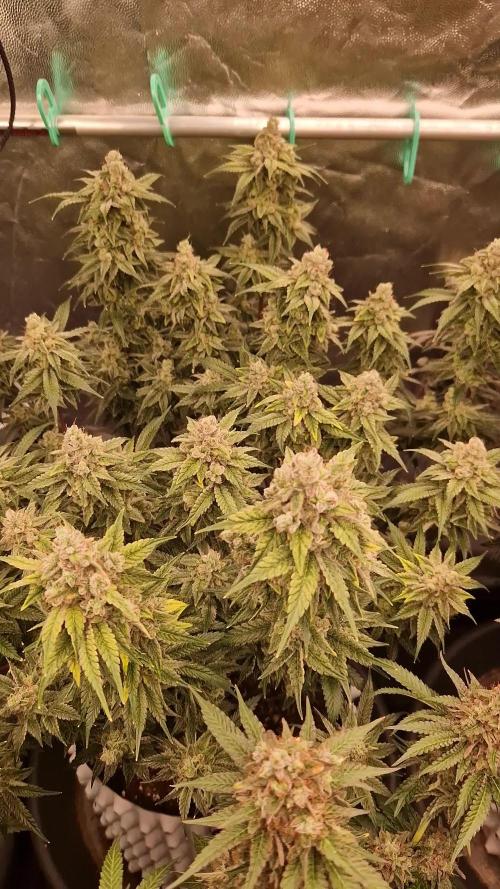
Die Pink Poochie geht jetzt in die letzte Woche. Ich sehe immer mehr ähnlichkeiten zur Straw Limez. Vielleicht weil bei beiden das Pink Limez drin ist. Aufjedenfall hat sie schöne feste Buds bekommen und der Geruch gefällt mir mega!
Likes
3
Share


@SKIDR0W
Follow
Blütezeit Indoor
Zwischen 60 und 66 Tagen (im Schnitt 63 Tage)
Wuchsverhalten
Schmächtig
Schnell
Gestreckt
Kräftig
Seitentriebe
durchschnittlich bis viele; sehr lang sowie sehr stark und kräftig.
Die Pflanzen dieser Sorte...
...wachsen eher wie eine Indica.
...sind gut geeignet für einen SoG (See of Green).
...sollten nicht zu stark beschnitten werden.
...benötigen nicht viel Dünger.
...sind nicht anfällig für Pilzkrankheiten.
...haben keine Probleme mit niedrigen Temperaturen.
...haben keine Probleme mit hohen Temperaturen.
...sind gut geeignet für einen ScroG (Screen of Green).
...sind eine gute Wahl für den kommerziellen Anbau.
...bilden viele, dicke Buds an den Seitentrieben.
...sollten in der Blüte gestützt werden (Netze, JoJos, Stöcke).
...können in der Wachstumsphase Vorblüten bilden.

Likes
12
Share

@Hempface86
Follow
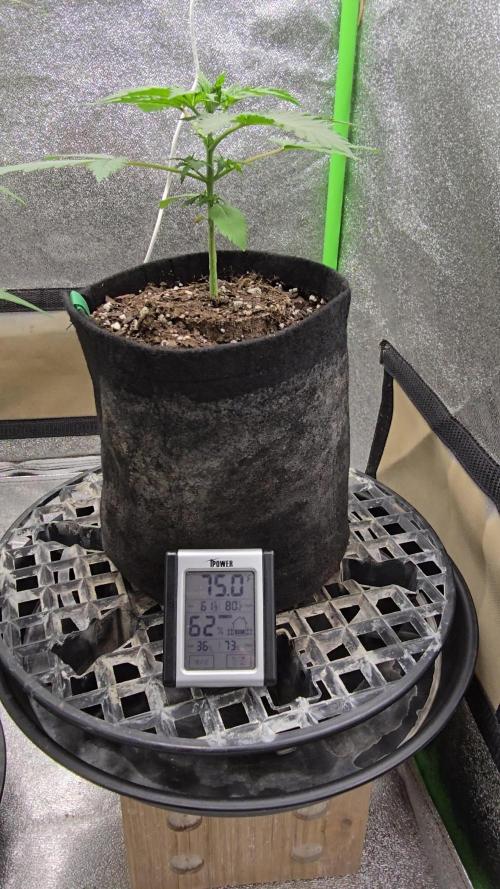
Big shout out to Herbies Seeds for making this grow possible, this is a very exciting grow for a couple reasons, one being that I love purple haze, and secondly, this is my first run with growdots so I'm really hoping they work great because I don't have the time with work. Anymore to do my old concoction, because it would take me literally 3 hrs some days just to gave all the plans their own individual feed, because I would make each batch for each individual plant depending on their needs... I hope everybody's doing well. I am doing better than I was doing, and so God is good ... i hope everyone's having a great day. And I really look forward to this girl growing out because there's a good chance as well that this is gonna be my last auto flower for a little bit.. I have a couple that I wanna grow ( purple b****** eater by roc bud and banana daddy bx auto my ethos ... both thanks to my buddy @Grow4releaf...
Hope everyone is doing well.God bless and happy growing ✌️
Likes
5
Share


@Rko41
Follow
10cm de stretch en 1semaine et c’est pas fini vu la génétique et que c’est seulement le début de Flo

Likes
Comments
Share

@Count-Dooku
Follow
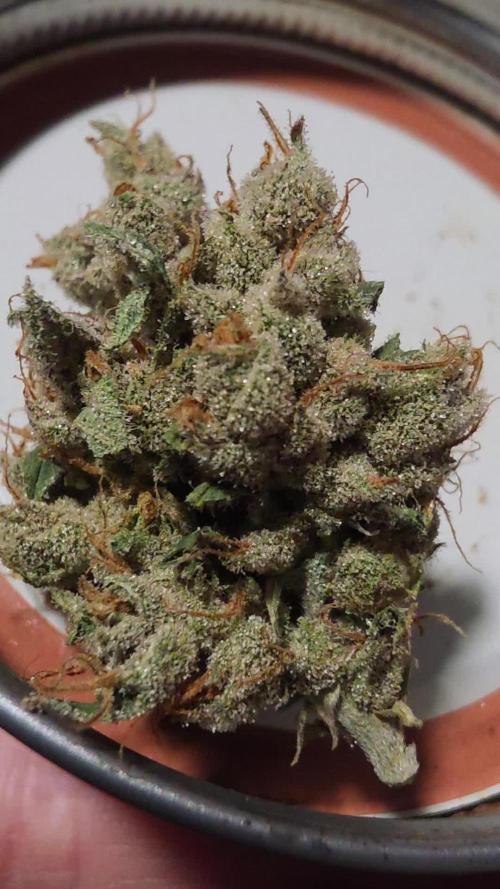
Another one down, now the tent can flourish. Already going into third week on the next flower cycle.
Going to try a dry trim on this one. So far I've been doing wet trims, but I have more space this dry cycle.
I've had chocolope a few times before, a few different phenotype expressions from the original seeds. I'll be curious to see if this is just like those previous chocs or if I will be able to pick out notes of whatever it crossed with. It definitely grew like chocolope I've grown in the past, very stretchy, long stretch time, genetically foxtailly.
8/12 getting ready to do a little test press on some larfy nugs that should be a bit dryer than the big nugs.
In the bag, it smells just like Nam wah, but the plant 100% had the chocolope structure, except the buds were smaller than a choc for sure.
I kind of attributed that to having an ec issue early flower, but maybe it was the Nam wah influence. Pretty crazy how the genes crossed like that. Wow.
It got pretty warm here and we're letting the house breathe, so the tent is actually warmer during lights out daytime, than it is during lights out night. I like it, seems to make them grow faster and could potentially shorten flower time.
Likes
5
Share


@Ninjabuds
Follow
Gas tax x obama runtz there is not alot to update this week. They have not grown very much the past week. They got extra dark last time when I watered and gave 2ml per gal of grow big. They are still the smallest 2 plants in the tent. They both have started making their 1st set of leaves with 5 point although the other leaves have not started to get larger yet. I don't think they have rooted solid quite yet.
Happy late turkey day grow diaries world!!!! It's now day 24 from seed for all the seedlings I have going. The past few days the plants have really started to take off. There roots have really started to dig in. Every other water I am still giving 2ml per gal of fox farm grow big. I keep having to tell myself not to add any more nutes other than that. I don't want to fry my plants but I also want they to start jumping. I'm quite excited for the coming week, I think the next 7 days or so is when the plant really starts to transform and look more like a pot plant than just some random little green thing.
A few days ago I decided to move the plants from under my 55w cheep amazon light to under my spider farmer 100w newer version light with the good leds in it. The plants will hopefully be ready to up pot them here soon and get them in the large tent.
Sometimes when growing multiple different strains it can be really hard to balance giving to much or to little light. You don't want the faster growing plants to get to stretched out waiting on the slower plants to catch up
I spend Thanksgiving day morning transplanting the plants into 2gal pots. I am useing spme promix potting soil it's my 1st time tring this soil. It is actually doing really well the roots were all white and nice looking. I think next time I'm going to add some worm casting, kelp, granular mycos, and a little bit extra perlite. I just didn't have the money with christmas coming to splurge for all the extra stuff. I got rid of 2 plants 1 of the bubble og and 1 skunk apple runtz. There is only room for 10 pots in the 2x4 tent. I will peob only bring 8 of them to flower, always good to have back ups. Yesterday I also stuck the plants back under the 500w medicgrow mini sun 2 in my 2x4 tent. They did great under it the 2nd half the day I was happy they didn't get stressed. I had put them under that light a little early about 10 days ago or so. I am expecting in a week these plants will ge going crazy with growth