Likes
Comments
Share
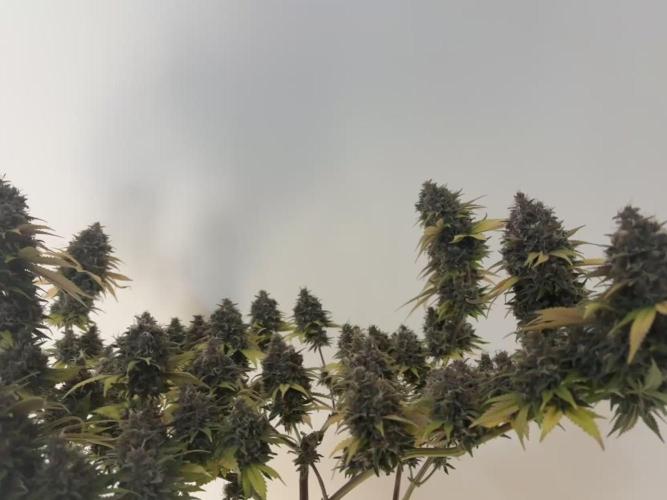
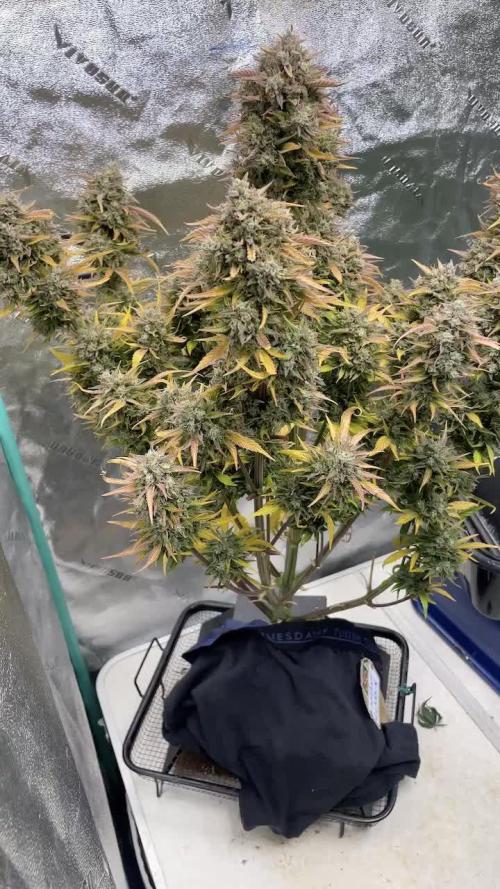
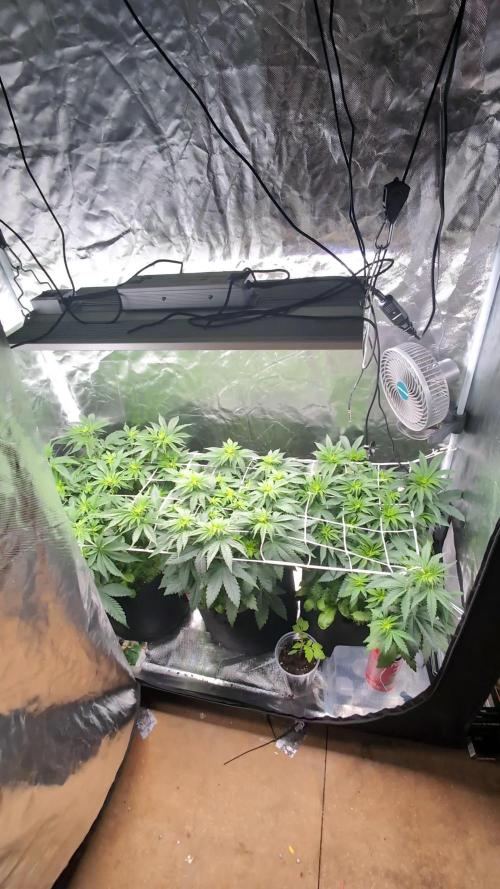
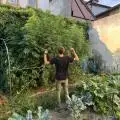
Week 4: Girls have responded well to nutes. Defoliation started this week. White spots started showing, After research we believe this to be because of our hard water and getting water on the leaves. We also started LST using fishing line, however this did not work so we removed it.
Likes
45
Share
@cherokee
Follow
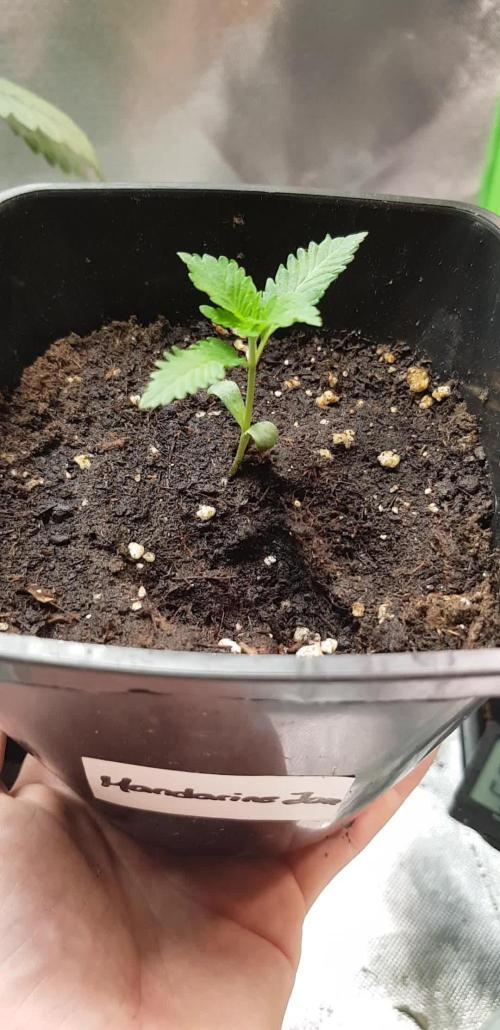
Привет 🖖 Мы с моей помошницой начали новый цикл в 2023 году 💪 Кстати её 🐱 зовут мышка))) Из 3 семочек проросло только 2(((
Likes
10
Share
Likes
33
Share
🌱 Sour Apple⁠⠀⁠⠀⁠⠀ 🌸 flowering 9 weeks⠀⁠⠀⁠⠀⁠⠀⁠⠀⁠⠀ 💚 70% Indica, 30% Sativa⠀⁠⠀⁠⠀⁠⠀⁠⠀ 💣up to 27%⁠⁠ THC⁠⠀⁠⠀⁠⠀⁠⠀ 👅Apple, lemon⠀⁠⠀⁠⠀ ⚖️ 550g/m²⁠⠀ Sour Apple was created by an intersection of the original Sour Diesel and a Pure Kush. It is an indica dominant hybrid with a combination of both indica and sativa effects. It has an delicious intense taste of sour apples and lemon and a gigantic potency. The rockhard buds are covered in a thick layer of milky white trichomes and are packed with sweet resin. Users describe the high of the sour Apple as a strong mental shift, a uplifting head high that leaves you motivated and focused with a sense of overwhelming euphoria and social tendencies. This is followed by a slow fade into an intensely overwhelming couch-lock. Sour Apple sends her 27% of THC stright to your mind to kick you in other psychedelic spheres. We proudly present this unique goddess to all the growers in the world. GROWING SOUR APPLE When growing indoors it is a good idea using screen of green or sea of green methods. You can expect big yields of 500g or more per squae meter indoors, 700g per plant outdoors. The flowering time is 9-11 weeks. Indoors, Sour Apple is a vigorous grower with many side stems which can be trimmed to keep the plant in bounds. Indoors, the plants grow between 1,00-1,50 m depending on the introduction of the flowering phase, outdoors Sour Apple can reach four metres of hight. MEDICAL USE Because of its strong effects Sour Apple is an ideal strain for treating patients who suffer from conditions such as chronic stress or anxiety, chronic pain due to injury or illness, and sleep disorders (insomnia and sleep apnea). In low doses it is daytime suitable for medical applications, at higher doses, it is the ideal weed for medication at the evening.
Likes
9
Share
Plants are growing at a insane rate, going to give them one more week but could have got a good result flipping them today. But I will be patient and wait. Big roots big fruits
Likes
21
Share
Defoliated some leaves to let light in, chopped one down early as I run out of bud 🙄 it's good for less than 4 weeks flowering. Have them rice water starch again this week in with there food. A layer of frost is slowly forming 😎 hopefully they will fatten up nice and frost up really good to 🤞
Likes
19
Share
@Wenz004
Follow
Die Woche getoppt und von 0.5 in 3 l umgetopft. EC unter der Woche leicht auf 1.1 erhöht...mit etwas mehr AllinOne.
Processing
Likes
7
Share
Likes
18
Share
A light spectrum in the scope of 400 to 700nm induces growth and development, and UV (100–400nm) and infrared (700–800nm) light play a role in plant morphogenesis—which is essentially the process of plants developing their physical form and external structure. Optimizing Your Knowledge in the Grow Room To maximize your yield, always aim for 40 moles, or 40,000,000 μmol, per day. Here is how much PPFD is needed per second for each phase of cannabis growth to achieve the DLI of 40 moles of light per day. Seedling phase (18hr cycle): 200–300 μmol m-2 s-1 Vegetative phase (18hr cycle): 617 μmol m-2 s-1 Flowering phase (12hr cycle): 925 μmol m-2 s-1, (1500 μmol m-2 s-1 @2000ppm co2) (ballpark) When choosing grow lights for cannabis, it is essential to check the technical specifications to determine if they are strong enough to get the job done. Of course, this doesn't mean that you have to buy the most expensive lights there are. Still, it does mean that you should research each of these specifications in relation to your cannabis plants to find a grow light that will fully serve your needs. This is especially true with PPFD, as this is arguably the most insightful value for growers—it tells you exactly how much useful light your plants are absorbing at a certain distance from the grow light. With my fixed light source, as the plant develop height through stages, it will naturaslly grow into higher μmol ranges naturally dictated by its height. Look forward to filling the tent for the next grow. Last week will see increased blues. ELONGATED HYPOCOTYL5 (HY5), a bZIP-type transcription factor, acts as a master regulator that regulates various physiological and biological processes in plants such as photomorphogenesis, root growth, flavonoid biosynthesis and accumulation, nutrient acquisition, and response to abiotic stresses. HY5 is evolutionally conserved in function among various plant species. HY5 acts as a master regulator of a light-mediated transcriptional regulatory hub that directly or indirectly controls the transcription of approximately one-third of genes at the whole genome level. The transcription, protein abundance, and activity of HY5 are tightly modulated by a variety of factors through distinct regulatory mechanisms. This review primarily summarizes recent advances in HY5-mediated molecular and physiological processes and regulatory mechanisms on HY5 in the model plant Arabidopsis as well as in crops. Plants utilize light as the predominant energy source for photosynthesis. Besides, light signal acts as an essential external factor that mediates a variety of physiological and developmental processes in plants. Plants are continuously exposed to dynamically changing light signals due to the daily and seasonal alternation in natural conditions. The various light signals are perceived by at least five classes of wavelength-specific photoreceptors including phytochromes (phyA-phyE), cryptochromes (CRY1 and CRY2), phototropin (PHOT1 and PHOT2), F-box containing flavin binding proteins (ZTL, FKF1, and (LKP2), and UV-B RESISTANCE LOCUS 8 (UVR8). These photoreceptors are biologically activated by various light signals, subsequently initiating a large scale of transcriptional reprogramming at the whole genome level. Extensive genetic and biochemical studies have established that the ELONGATED HYPOCOTYL5 (HY5), a bZIP-type transcription factor, tightly controls the light-regulated transcriptional alternation. Loss of HY5 function mutant seedlings display drastically elongated hypocotyls in various light conditions, suggesting that HY5 acts downstream of multiple photoreceptors in promoting photomorphogenesis in plants. In addition to inhibiting hypocotyl growth, HY5 regulates other various physiological and developmental processes including root growth, pigment biosynthesis and accumulation, responses to various hormonal signals, and low and high temperatures. This review summarizes the recent advances and progress in HY5-regulated cellular, physiological, and developmental processes in various plant species. We also highlighted emerging insights regarding the HY5-mediated integration of multiple developmental, external, and internal signaling inputs in the regulation of plant growth. Among the genes regulated by the circadian clock, we found that the excision repair protein XPA is controlled by the biological clock, and we, therefore, asked whether the entire nucleotide excision repair oscillates with daily periodicity. XPA transcription and protein levels are at a maximum at around 5 pm and at a minimum at around 5 am. Importantly, the entire excision repair activity shows the same pattern. This led to the prediction that mice would be more sensitive to UV light when exposed at 5 am (when repair is low), compared to 5 pm (when repair is high). We proceeded to test this prediction. We irradiated two groups of mice with UV at 5 am and 5 pm, respectively, and found that the group irradiated at 5 am exhibited a 4–5 fold higher incidence of invasive skin carcinoma than the group irradiated at 5 pm. Currently, we are investigating whether this rhythmicity of excision repair exists in humans. Molecular mechanism of the mammalian circadian clock. CLOCK and BMAL1 are transcriptional activators, which form a CLOCK-BMAL1 heterodimer that binds to the E-box sequence (CACGTG) in the promoters of Cry and Per genes to activate their transcription. CRY and PER are transcriptional repressors, and after an appropriate time delay following protein synthesis and nuclear entry, they inhibit their own transcription, thus causing the rise and fall of CRY and PER levels with circa 24-hour periodicity (core clock). The core clock proteins also act on other genes that have E-boxes in their regulatory regions. As a consequence, about 30% of all genes are clock-controlled genes (CCG) in a given tissue and hence exhibit daily rhythmicity. Among these genes, the Xpa gene, which is essential for nucleotide excision repair, is also controlled by the clock. Circadian control of excision repair and photocarcinogenesis in mice. The core circadian clock machinery controls the rhythmic expression of XPA, such that XPA RNA and protein levels are at a minimum at 5 am and at a maximum at 5 pm. The entire excision repair system, therefore, exhibits the same type of daily periodicity. As a consequence, when mice are irradiated with UVB at 5 am they develop invasive skin carcinoma at about 5-fold higher frequency compared to mice irradiated at 5 pm when repair is at its maximum. The mouse in the picture belongs to the 5 am group with multiple invasive skin carcinomas at the conclusion of the experiment.
Likes
Comments
Share
@Cultiv8or
Follow
Transplanting these this week.
Likes
39
Share
Easy week, the plant is growing fast. Only feeding water for a few more weeks. Will start training next week and maybe top if needed. Nothing else to say, this is the boring part.
Likes
14
Share
@EaRtH
Follow
27.4. - Plants are looking nice and healthy, buds are getting bigger, smell is improving too. Still worried a bit about the yellowing, but I think it slowed down. Also, I'm fitting a bit with humidity. However, still better than last round 😎 28.4. - Watered 💧 30.4. - Buds are getting bigger and fatter each day. Even the smell is starting to get stronger. Watered 💧 2.5. - Watered 💧 3.5. Week wrap-up: Everything goes smoothly for now. I am still fighting with humidity level raising after watering, but it seems that airflow is good. Buds are getting fatter and smellier 😎 I am already excited for the final results, even though I still have some weeks left. 27.4. - 3.5.2024
Likes
12
Share
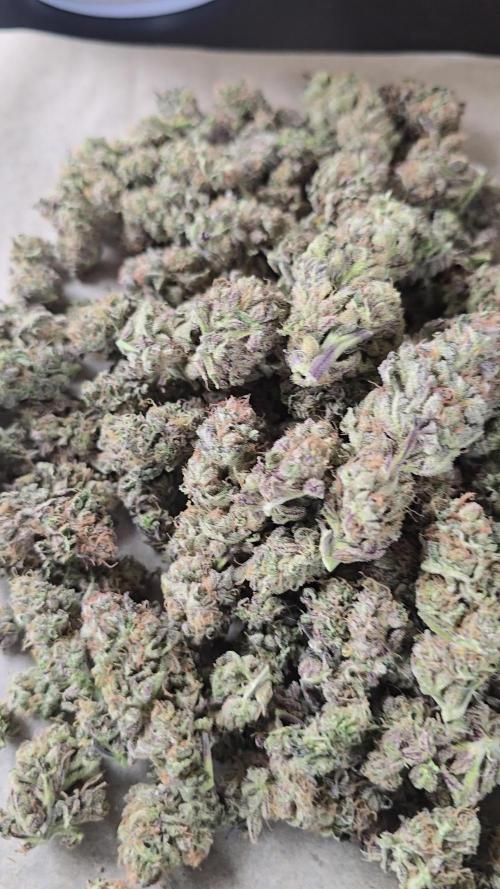
2023-09-19 I had to cut them a little earlier, than planned, because of one Plnat in the Room, that hermied. Trichomes were milky/ some were amber. So for me fine. In the end of the Grow, the Plants had structureproblems, Buds went to heavy for the stems, and they needed a corsage. But MSNL mentioned that, i just underestaminated it. Budswise iam very fine, Buds look crumbely but are dense and frosty. UPDATE october, 18th I harvested the Outdoor Plants, that were finalising Indoors( last 4 Weeks. and they were perfect! super structure, solid branches ans stems Buds HUGE dense and crusted with Trichomes 10 of 10 Points
Likes
4
Share
@BMGenetix
Follow
Last week of the grow. Checking deep in the plant, it has around 20-25% amber trichomes. I decided it was time to cut it and free up the rest of the tent to get ready to flower.
Likes
7
Share
Made sure the run off was 0.5ms, the water that I feed with has a reading of 0.3ms so I'm looking forward to when she has dried and cured so I can update with the smoke review
Likes
2
Share
@Luke_Lee
Follow
————————————————————— WEEK 9 / DAY 58-64 Mars Hydro FC-E3000 Floragard Professional GrowMix 11L Plant bag made of fleece Light: 40cm Schedule: 18/6; PPFD: 1050-1150umol/m2/s 19° C - 45 RH 1L per Plant PH 6,5-7 4ml BioGrow; 4ml TopMax ; 4ml BioBloom 1ml CalMag #1 Blueberry Automatic #2 Blueberry Automatic Fan, extractor and pump ON 24/0. ————————————————————— -17.03.2025 The fourth week of flowering begins. Everything is going great, so far there have been no complications apart from the defects on one of the Blueberrys. From this week onwards, the quantity of BioGrow, BioBloom and TopMax is increased to 4ml/1L. The lamp is also turned up, the measured value with the PhotoneApp is 1050-1150. -19.03.2025 Both plants were watered with 1.5 liters of water with fertilizer each. In addition, an extra fan is now running for better air circulation. -23.03.2025 The next week is coming to an end. The plants look good, the buds are growing and getting nice and frosty. I think the week after next will be the time to harvest the ladies. Both plants were watered the last time with 1.5 liters of water and fertilizer mix. From next week only clear water.
Likes
6
Share
The Oasis Project | Week 11: Veg Strain: Durban Poison Quartet (DP1, DP4, DP5, and DP6) Container: 25-Gallon Fabric Bags (Elevated on wheeled dollies) Method: Organic Soil / DIY Automated Halo Irrigation Overview & Environment We have officially crossed into Week 11 of vegetative growth, and the backyard deck is officially looking like a botanical engineering lab. The High Plains weather is starting to test the environment, but the quartet is locked in, vibrant green, and praying hard to the Colorado sun. Key Milestones This Week 1. The Automated Manifold is Live 🛠️ The biggest victory of the week was getting the DIY irrigation manifold completely hooked up, pressure-balanced, and dialed in. The Setup: Custom green hose "halos" are wrapped around the base of each individual plant inside the rims of the 25-gallon fabric bags. The Run: Clocked our first official initial run this week. The manifold pushed an excellent, steady volume of water, completely saturating all four massive containers in just **15 minutes**. The Baseline: This uniform edge-to-edge moisture spread is exactly what we need to ensure the organic soil mix stays perfectly charged without leaving dry pockets. No more manual water lugging for my back! 2. Air Gaps & Root Pruning 💨 With the 25-gallon bags lifted entirely up off the deck floor on mobile furniture dollies, we have a perfect air gap underneath. The Impact: Thanks to the low humidity and steady wind on the Eastern Plains, these elevated pots are acting as massive evaporative cooling systems. The 360-degree airflow is drying the bags out from the outside-in and bottom-up. The Strategy: This is triggers natural air-pruning at the bottom, forcing the plants to stop circling their roots and instead blast out a massive web of lateral feeder roots higher up in the rich organic mix. We're keeping a close eye on the bag weights over the next 48 to 72 hours to map out our new watering frequency. 3. Plant Training & Structural Breakdown (Featuring DP5) 📏 The quartet is responding beautifully to the first topping session and ongoing structural training. Current Height: Took the tape measure out to the deck today—**DP5** is sitting stout and muscular right at the 12.5 to 13-inch mark. Canopy Architecture: By pulling the lower branches outward with precise tie-downs secured to the bag rims and supporting them with bamboo stakes, the core of the plants is completely open. Sun & Wind Defense: Node spacing is incredibly tight, building thick, rugged main stalks that split beautifully at the topping nodes. This low, wide profile is exactly what we want to withstand the heavy plains winds. Every single lower growth tip now has direct access to high-altitude UV light, transforming them into future dominant vertical colas. Next Steps The bamboo frameworks are built, and the trellis netting is already waiting in the wings directly behind the deck setup. We’re letting the quartet digest their big drink from the manifold for the next 2 to 3 days to see how they explode horizontally. Once they stack a few more inches and fill out the width of the bags, we'll start weaving them into the screen! -Keep growing and stay mindful! ✌️ Update 5.26.26: The quartet recieved their first full strength nutrients since making the move to the 25 gallon bags. 3 gallons per plant with full nutrients is a hell of a task, but the girls will be happy. PH corrected level of 6.0. 1215 PPM
Likes
Comments
Share
Likes
2
Share
Looking good few more day and i willl clean her up ,some defoliation been performed too
Likes
7
Share
@NewMan
Follow
Došel bud candy , další uz dávat nebudu a dojedu to bez něj. Vlhkost nahoře 55% ale vysoké VPD takže to bude chtít nejspíš další hračku zvlhčovačku.Jinak je to snad cajk..