


Likes
Comments
Share


@DreamIT
Follow
-Sponsored by:
🏡GANJA FARMER SEEDS🏡-💡VIPARSPECTRA💡-💐GREEN BUZZ LIQUIDS💐-🛠️WEDRYER🛠️
8/7 After several days of Growdiaries making it difficult for me to write and respond to comments, I found that I can still update the journals. I apologize to everyone for the non-replies but I have replaced the main email and the email to confirm the account never arrives, and Growdiaries' customer service seems to be non-existent.
10/7 everything is going well, nothing special to add🤘🦄
12/7 all right, we are two weeks before the cut, yeah
__________________________________________
Personal advertising (contains affiliate links)
__________________________________________
🦄 Huge collection of exquisite genetics since 2009! Anonymous shipping!
✅https: //bit.ly/Ganjafarmer
__________________________________________
Did you know that Green Buzz Liquids fertilizers are 100% vegan? A complete line of products ready to give the best to each of your plants! Visit the site and see my journals to see how they work 🦄
🤯 And with the code "dreami t" you will immediately receive a 15% discount on your purchases
✅https: //bit.ly/GreenBuzzLiquidsPro
__________________________________________
👀 Are you looking for a good lamp to start with? 👀
🌞Viparspectra has something more than the others, take a look at their site.
⏩ Use "GDVIP" for an extra discount or "DREAMIT3" for an extra 5 %% discount
👀 Search for it on Amazon
✅Amazon USA: https://amzn.to/30xSTVq
✅Amazon Canada: https://amzn.to/38udUVe
✅Viparspectra UE: bit.ly/ViparspectraUE
✅Viparspectra USA: bit.ly/ViparspectraUS
______________________________________________
🌈 Tired of blowing on your weed hoping it dries quickly? Check out the Wedryer website! You will find a well-made accessory that will help your weed dry in just 8-10 days without the annoying risk of finding mold or other annoyances! (no affiliate links)
✅https: //bit.ly/Wedryer_
______________________________________________
📷🥇Follow the best photos on Instagram 🥇📷
https://www.instagram.com/dreamit420/
Backup
https://www.instagram.com/dreamit4200/
🔻🔻Leave a comment with your opinion if you pass by here🔻🔻
🤟🦄💚 Thank you and good growth 💚🦄🤟



Likes
13
Share


@nickthecook
Follow
Hello evrybody!!!!!! I m happy guys, these scrog got out of my hands, the net is fullfilled, every branch is ending on the top (as u can see on the first photo) with new gems spreading out and the photo is taken in the first day of flowering so them will stretch up.
The only negative side is that it's not easy to defoliate the plants behind. I m excited cause is the first time i have this results and the grow room is so filled up. we'll see what happens next days and weeks, but it seems to be a great cicle!!!!!
ps i will upload better photos next days, for today i just had those


Likes
12
Share


@HIAZ_urbanbudfarmer
Follow
This girl was a fast finisher harvested on day 46 of flower, nearly 7 full weeks.

Likes
8
Share


@sevengreenfingers
Follow
Hello everyone! I promised to track this grow very closely this time and ufortunately life got in the way. Here is a quick sumup of the grow.
First of all- One of the sour stomper plants unfortunately didn't make it. It died at about week 4. The main stem somehow had rubbed/broken down. That's why it was falling down. It was almost like a mini beaver had chewed it off at the point where the stem touches the riot rooter. At first I thought nothing much of it, maybe it hasn't been rooted in quite well yet or something. And I was constantly touiching it when watering, that made it worse. Soo the leaves were dropping and the plant looked very weak. Then I decided cut thr rapid rooters top layer and found out the severity of the problem. Tried to tape it up and other things, but it was too late. At the end it appeared all good as the remaing plants got so big the I had some space issue so I wouldn't have been able to fit another plant in anyway.
At that time I finally made my self-draining saucers. I took me a while and a lot of effort, but finally they were ready and working well. I also installed the self watering system and flowering was starting. Pretty soon I started noticing weird leaf symtoms. Brown spots, different kind. Some plants had it more, some less. Sour Stomper looked pretty good throughout the grow. Mango smiles seemed sensitive and Strawberry Nuggs were pretty strong until the end.
The grow was basically me experimenting with the setup- changing watering schedules , changing ppm, ph and all that stuff to keep the leaves looking healthy and it was very hard I have to admit. Probably my hardest grow in that regard. But somehow, the bud leaves remained healthy and the buds really fattened up good. I got away with an amzing 700G dry bud harvest which was def a new record from one grow. And the bud quality is very good too!
Next time definetly no more than 4 plants as they got pretty big and I thought it was a little overcrowded. I was doing some good defoliation too. I should have defolited strawberry nugs more tho. Sour Stomper got some amazing bud development from top to bottom because it was was growing next to strawberry nuggets which were really small most of the grow. They actually took the most time to harvest even longer than Mango smile. Mango smiles were ready quite early. Sour Stomper was just in time!
I topped sour stomper and both Mangoi smiles, left SNs both normal. Looking back at it, the way I grow them, Should have topped SNs too. Would probably have more space in the middle and longer side branches. Probably wouldn't have been as bushy!
I followed the full Terra aquatica feed chart until the end. I was supplementing with CalMag a lot as I thought the symptoms could have been from a CalMag deficiency as this was my first grow with RO water.
Overall a very challenging but good grow at the end. First time no mold problems. A record breaking yield for me. Basically surpassed the upper limit for all plant probable harvest sizes. Got good smelling quality bud. Very happy overall and will continue experimenting with Mephisto beans in the future for sure! I guess what I like the most about Mephisto is how close to description the plant is, very stable genes in that regard.
Next time I will also have to start feeding plants higher PPM feed faster at the very start. and during flowering. But still not 100% sure what caused the leaf symptoms.

Likes
23
Share


@Bauhinia
Follow
She’s starting to smell really nice and fruity, kind of mango-ish. There are a bunch of pistils starting to turn amber as well, but most trichomes are still clear. Transitioning to late bloom nutrients, so stopped adding Gro and will be slowly decreasing overall nutrients probably next week. The damaged cola has been recovering as well, and I noted good new growth and new pistils sprouting on its damaged tip. All the other colas are growing really nicely and forming nice dense nugs.


Likes
10
Share


@I_Identify_As_A_Dan
Follow
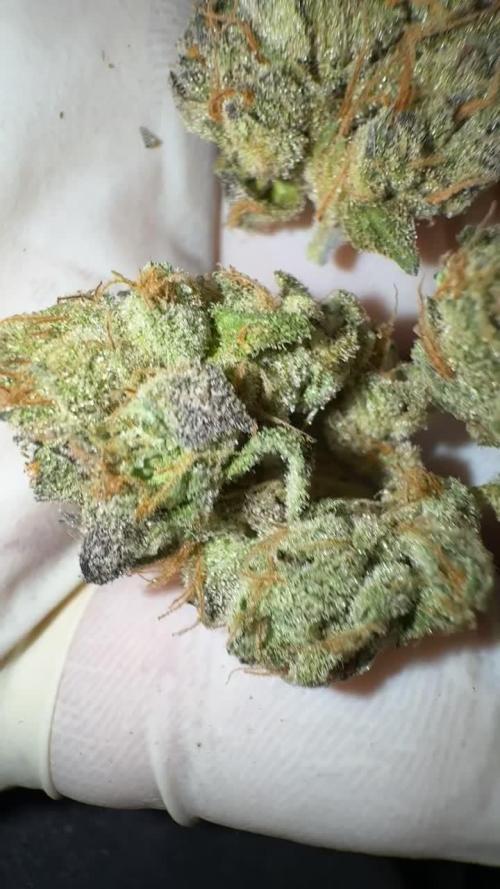
Start of week 4 for White Widow
Defenetely has that indica ciompact structure!
Gave her an extra 25g of Bio Grow + 25g of Bio Bloom, as shes such a big plant for this pot size already.
Not doing anymore defoliation as recommended by the greenhouseseedco team👊



Likes
435
Share


@Ju_Bps
Follow
Hello my friends growers 👩🌾👨🌾💨💨,
Week was good, baby's continuing to grow up, we have now 2 nodes.
This end week,
I've removed the glass, and put on my extractor,
I continue to give water with my vaporisator
Water + rhizo PH@6
I keep a wet soil and give water everywhere, not only around the stem.
I put a bit up supply lamp each day, we are now at 20%
#3 is smallest than others because going out soit delayed than 2 others.
Thanks community for follow, likes, comments, always a pleasure 👩🌾👨🌾❤️🌲
Also to @marshydrococo2 , @News_SweetSeeds for sponsoring 💕💕.
Mars Hydro TS 1000
https://www.mars-hydro.com/ts-1000-led-grow-light
Gorilla Girl F1 fast version
https://sweetseeds.es/en/photoperiod-dependent-seeds/3065-gorilla-girl-f1-fast-version.html
See you next week my friends
Have a good week end 😁💕

Likes
17
Share


@Canna96
Follow
Hey now, hope everyone is having a great weekend,. It was a good week for all five ladies. The Red Hot Cookies is slightly ahead of the Sundae Driver and Durban Nights. The Green Crack is the slowest growing so far, and the Sundae Driver has some holes in the leaves that I am thinking are from bugs, I have sprayed her twice with neem oil so far so we will see what happens. I topped all five ladies on day 23 above the third node as I am going to build mainlines out of all of them.
I am still not able to list my nutrients for some reason, but I am feeding with all GH, Silica, Cal Mag, and Maxi Grow at an EC of 1.2 and a ph between 5.5 and 6.5. I use an auto feeding reservoir with halo feeders set on a timer to feed every 5 hours for one minute. I am hoping to get the second toppings done sometime this week, and then the final toppings done the next, and then flip to flower around week 7 or so. I am still using this Spectrum X from Medic grow, and have it cranked up to about 50% power and they are seeming to love it. We are in the midst of hopefully the final heat wave of the year and I am looking forward to cooler temps and lower humidity by the time I flip to flower.
I hope everyone enjoys the first weekend of NFL football, Thanks for stopping by, Stay Safe and Blaze On!!! 💪
Website: https://medicgrow.com/
https://growdiaries.com/grower/medicgrowled
Likes
19
Share


@Dunk_Junk
Follow
Finally some decent growth!! 19cm this week and she got a lot bushier.
Not in flowering yet but that's ok, she needs to grow more ideally.
For nutrients I'm using 15g of 20-20-20 mixed with 10L of water. Also added 4ml/L of both Cannazym and Terpinator. This brings it to around 1600ppm including ~300ppm for my clean water.
Timelapse Sequence:
Pineapple Express
Blue Dream
*** Auto Jack (Not in shot) *** 😭
Pineapple Express
CBD Compassion


Likes
8
Share


@huyngoquang12
Follow
This time the plant grew up pretty big buds but in the last 2 weeks the climate turned to summer so my plant was under heat stress and showed signs of herma but nonetheless it is a very wonderful plant.

Likes
109
Share


@JOE_S_GARDEN
Follow
Our most infamous strain with the stickiest buds in the game. A knockout artist who boasts a staggering 24% THC. Very big and potent. The “glue” comes from so much resin, that your fingers will literally be stuck together while trimming. A large-sized plant that only needs around 9 weeks to reward growers with big enormous sticky fat buds, that any type of grower will fall in love with. Super easy to grow and her pine and diesel terp profile will impress even the most experienced cannabis connoisseur. She is well suited for beginner growers and hash makers should not miss out on this trichome queen.
Bud descriptionGorilla Glue Auto’s buds will be chunky and dense, with a heavy resin production that causes your fingers to stick together like super glue. The buds are dark green, with swollen pointy calyx that swell wrapped in bright orange hairs. A truly impressive amount of trichomes that would make excellent cup winning extracts hands down.Smoke reportShe is one for smokers with the highest tolerances and fans of powerful hybrids. Gorilla Glue Auto is extremely potent and her effects are not for the light-hearted. Not only will she glue you to the nearest armchair, your eyes and face will slowly feel the force of her physical effects while you enjoy a nice head high that will keep you deeply motivated and energized. Certainly a perfect choice for staying at home and lounging out with friends or relieving stress and pain while maintaining an uplifted spirit that allows you to continue with your day-to-day chores.Plant AppearanceThis lady likes to stay low and will usually grow to a height of 60-130cm, making her ideal for keeping out of sight. She does not require much maintenance and will reward you with massive yields of up to 450-600gr/m2. Her growth structure is short and bushy, thanks to her sativa dominance, and will grow one main central cola, with fat side branches all around. Once flowering starts, expect Gorilla Glue Auto to fill out thick and fast, as she begins to pack on size, weight and go crazy with the trichome output. From seed to harvest she is ready in 9-10 weeks, where she will finish with a short and fat appearance.
Likes
43
Share


@MadeInGermany
Follow
Hey guys :-)
A lot has happened this week :-).
She has developed very well.
Today it was topped on the main shoot for the first time.
How often I will use topping on her, I make it dependent on how everyone else develops.
I want to bloom soon so it won't happen very often :-).
It was poured twice this week with 1 l each time (for nutrients, see table above).
Fast plant spray from GBL was applied 2 times this week.
New was added this week Fast Bud from GBL is preparing her for the coming flowering.
Bio Grow Stay away for a while because the substrate is 30-50 % consists of fresh earth and the ladies are nice and dark green :-).
Today there was another spray with neem oil against the remaining tripse which I will repeat one last time next week.
As always, everything was cleaned and checked.
Have fun with the update and stay healthy 🙏🏻
👇🏼👇🏼👇🏼👇🏼👇🏼👇🏼👇🏼👇🏼👇🏼👇🏼👇🏼👇🏼
You can buy this Nutrients at :
https://greenbuzzliquids.com/en/shop/
With the discount code: Made_in_Germany you get a discount of 15% on all products from an order value of 100 euros.
👇🏼👇🏼👇🏼👇🏼👇🏼👇🏼👇🏼👇🏼👇🏼👇🏼👇🏼👇🏼
You can buy this strain at :
https://www.exoticseed.eu/
Water 💧 💧💧
Osmosis water mixed with normal water (24 hours stale that the chlorine evaporates) to 0.2 EC. Add Cal / Mag to 0.4 Ec Ph with Organic Ph - to 5.8 - 6.4
MadeInGermany


Likes
2
Share


@Ninjabuds
Follow
My Gorilla Cookies seedling is off to an amazing start! The stem is thick and sturdy, promising strong growth, and the leaves are already nice and wide, soaking up all the light. I'm excited to see how this one develops. The genetics on this strain are top-notch, so I've got high hopes for some seriously frosty buds down the line. Stay tuned for updates as this little lady grows!
The weather has been absolutely gorgeous this past week! We've been hitting that sweet spot of 70 degrees during the day, perfect for getting outside and soaking up some sun. Then, it cools down to a comfy 50 degrees at night, which is ideal for sleeping with the windows open. I've been loving all the fresh air!
I finally got around to building that little wooden planter for my windowsill. It was a fun project, and now my regular plants have a nice new home. It really brightens up the room, and I'm thinking of adding some herbs to it soon. Maybe I'll even try growing some basil!
Likes
4
Share

@BasedBuds_89
Follow
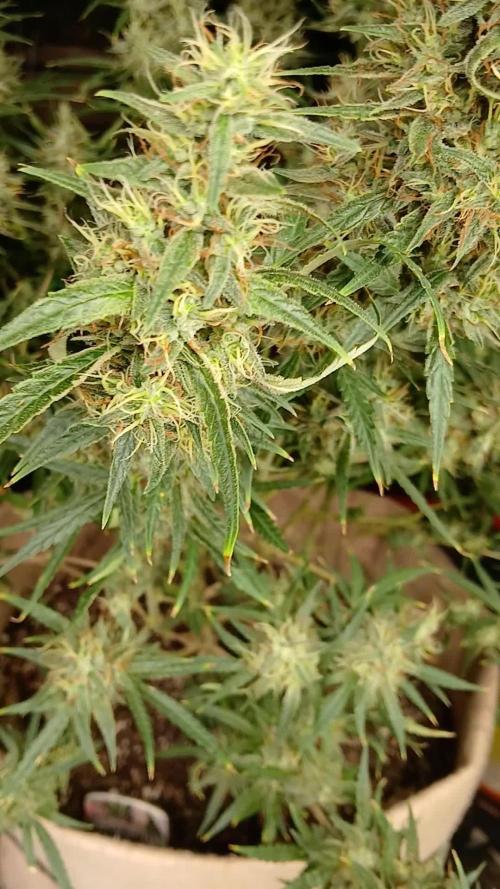
Had a really good week, im going to give this baby another month at most, trichomes look great and the nugs are swelling more and more every day. The smell is skunky with a piney after smell. It's covered in sticky trichomes. This plant will yield the most out of this grow guaranteed.

Likes
2
Share


@CecilioJardinero
Follow
Doy comienzo al SoG de OG 24K de Bsf 🌱🧐
Hace frío en Santiago de 🇨🇱 pero en cuarentena nada mejor que plantar.
Estas son 12 og 24k en macetas de 3lt de momento aunque serán las 12 macetas de 11 o 7 lt.
Esperando que hagan una buena raíz, las tendremos 4 semanas en 3lt y luego transplante.
Quedo atento a comentarios y sugerencias, es primera vez que tiro 12 en un metro. 🤠😲🤭
