


Likes
Comments
Share


@Rooflower
Follow
Week 2
Both plants looking great so far , good growth rate 📈 and looking healthy so far.
Boosting a bit nutrients to see how much they can take to maximize their potential starting later this week.
Roots have been already all over the bottom of the pots while looking thick and healthy 💥
D4
Applied some foliar feed this morning while turning off the lights for an hour till they dried /sucked up all the juice from their leaves. mixture was basically water with 1ml/lt boost accelerator.
Both look really nice and healthy in other news 🍀😅



Likes
46
Share


@The_Bearded_Grower
Follow
Welcome to 📅Day 1 6/7/2021 the girls are doing great and I'm happy they have started the veg faze on mon.
This new setup uses both my AGLEX 1200 lights and my MARS HYDRO TS1000 but I'm not using the AGLEX just yet as I'm sticking to the MARS HYDRO for the start of veg.
At this point I will mention the 2 sponsors of this grow, the first being SWEET SEEDS for giving me the seeds I am using in this grow. thank you very much 💖
my second sponsor is MARS HYDRO for giving me the TS 1000 to use I am very happy with this light I only wish I had 2 of them lol. thank you 💗
Update 📅 Day 5 6/11/2021 sorry for the late update but GD was not working yesterday. The girls are doing great and I'll be keeping with the top watering for most likely 2 weeks.
the Mars Hydro TS 1000 is great for veg🌱 as it is great for growth if you like taller veg plants for easier SoGing and micro topping this light is great my only wish is that I had a TS 2000

Likes
62
Share


@masterofsmeagol
Follow
9/5 PREVENTATIVE SPRAY OF 1TBSP POTASSIUM BICARBONATE AND 1/4 TBSP DAWN TO TREAT WPM. Foggy this morning and rained again last night. Weather hasn't been the greatest. Not seeing much PM unless it advanced so much that it just killed all the leaves. I still have yellowing leaves that die. It's probably septoria and I probably should've used a copper fungicide but I'm in flower. Ice cream cake and a couple seedlings are far behind but everything else seems like it will finish. This weather has been getting me down. I may feed later today or I might wait until tomorrow. I also need to add a few more supports. Wet buds are heavy. I'm getting there. Slowly but surely.
9/6 FED TWO GALLONS TO GARDEN
PLANNED TO USE BEASTIE BLOOM BUT COULD ONLY FIND CHA CHING. Rained heavy all night. I came back to hanging branches but no damage. I added some supports quickly and tied up a hanging branch. Ran a couple strings across the frame but I have more work to do. I took some pics and a video. At least now I'm seeing buds. Walking down there is like getting slapped in the face with a wet bud (which happened today). It's a super strong smell. Trichomes are developing at various stages. This is when things get paranoid but it's also fun. I can't wait until fall.
9/7 Plants we're wet this morning so I gave them a good shake. Defoliated what needed it and added a couple more supports. I don't like these leaves falling like this. Didn't have time to work on the ice cream cake that's growing into the fence. Now it's a race with the weather. Things are looking pretty good but I'm getting antsy. Also I'm not sure what caused all this weird damage from earlier and if I should just cut off useless branches. I'm hesitant as I don't want to create an open wound for more fungal infections.
9/8 Rained like crazy. Super heavy at times. I added a video I took yesterday. and took some pictures. Defoliated some dead stuff but it's hard to work in the pouring rain. Forecast said three inches. Plants are booming thoughgh
9/9 Still raining. Hard. No damage. Defoliated what I could and added supports where needed. I do need to say the plants I'm growing are some resilient girls. They've taken a beating and come back kicking butt. If we can get a few good days in a row shit will really start taking off. Need to spray BT and do another k bicard spray or switch it up with peroxide. I've checked the tops of my plants with a ladder and things look good so far. I'm super excited.
9/10 Poured like crazy. I fucked my diary up a bunch of times so I'll probably have to upload vids/pics again. Cannabis gods heard my cries and at noon time it's all sunshine. Was able to defoliate what needed it. Plants are just exploding. I'll do pics tomm. BT and K Bicarb spray needed. YEAH IM MISSING A BUNCH OF PICS AND A VIDEO. WILL HAVE TO FIX LATER
9/11 Beautiful sunny day. Found my beastie bloom and fed two gallons to the garden. I started low but I'll increase if it seems to benefit. Continued with only 1tbsp of grow big. Then if I like it I'll move on to cha ching. One plant will be ready VERY shortly. I took out my scope to check things out. In the bright sun ours easy to spot little pm patches. Oh well. I'll spray tonight. Everything looks so amazing. Also found more moth eggs it's time for a BT spray. Defoliated and added more supports as it's windy af out here


Likes
156
Share


@StarLorr
Follow
Helloing 👋🏻friends and visitors.
Welclone to my Clone diary🙃
Buds got a bit chunkier since last week,
Spotted more amber trichomes, probably gave their last feeding today and will harvest later on this week.
Feeding:
Tue 02Jan 3L each w/Flawless pH'd 6.5
Fri 05Jan 3L each w/Flawless pH'd 6.5
Mon08Jan 3L each w/Flawless pH'd 6.5
_____________________________
Thanks for stopping by, likes and comments are appreciated.
Keep on growin!
Keep on tokin!!!
😙💨💨💨💨💨


Likes
6
Share


@DogDoctorOfficial
Follow
# 💙 Project Blue Tent – Week 12 💙
## Blue Waffle F1 – Pheno B
### 🌸 466 Photos. 600 Photos. One Ridiculously Frosty Girl! ❄️😂
Hello everyone, and welcome back to another chapter inside Project Blue Tent! 💙🌱
And my friends...
I REALLY DON'T KNOW WHAT TO SAY ANYMORE! 😂❄️
Well, actually, I do. I have plenty to say, because this beautiful girl deserves her own report!
Last week, we talked about the incredible uniformity we're seeing throughout this tent. Four plants, two different cultivars, the same environment, the same irrigation system, and the same nutritional program.
And this week?
Her sister is looking ridiculously beautiful too!
But today, we're giving the spotlight to Blue Waffle F1 – Pheno B, because even when plants share the same room and the same conditions, each one deserves to have her own story documented.
And honestly, what a story she's giving us.
The flowers are stacking. The buds are developing. The frost is becoming increasingly impressive, and the whole plant is showing us why I love documenting every stage of a grow.
We've made a few small adjustments to the environment, increased the power of the overhead LEDs, and left the nutrient recipe unchanged.
No unnecessary interventions.
Just a beautiful ecosystem, some seriously frosty flowers, and a grower who's spending far too much time staring at them.
😂💙🌸
Let's get into it!
## 🌿 PHENO B – SAME ROOM, SAME ENVIRONMENT, SAME BEAUTIFUL STORY
If you've been following Project Blue Tent, you'll already know how much work went into getting these girls to this point.
The long vegetative period gave us the structure. The topping and training helped organize the growth. The SCROG supported the canopy, and the second layer of support helped us manage the flowering structure after the stretch.
We also improved the available space inside the tent by moving the extraction equipment outside and raising the main lights.
All those decisions helped us establish the environment we're working with today.
And now?
We're watching the flowers develop within that structure.
Blue Waffle F1 Pheno B is approximately 145 cm tall, and the overall framework is already established. We're not looking to reshape the plant every week or make changes just to have something to report.
At this stage, I'm much more interested in observing the flowers, following their development, and seeing how the plant responds to the environment.
And she's giving us plenty to look at!
## 🌸 THE FLOWERS ARE STACKING BEAUTIFULLY
One of the things that really catches my attention this week is the flower development.
Look at those close-ups!
The flowering sites are becoming increasingly defined, the buds are developing along the branches, and the amount of visible resin in the photographs is absolutely beautiful.
The white pistils are still prominent, and the flowers are continuing to develop.
This is such an interesting stage because the plant is gradually shifting our attention away from the structure and toward the flowers themselves.
Earlier in the project, we were talking about stretch, canopy management, training, defoliation, and support.
All of that work established the framework.
Now we're looking at what that framework is carrying.
And Pheno B is certainly giving us a reason to keep the camera ready.
She's stacking. She's budding. She's developing.
And she's looking ridiculously frosty!
😂❄️💙
## ❄️ THE FROST IS REAL, MY FRIENDS!
I know I keep saying it.
And I know I'm probably going to keep saying it next week too.
But LOOK AT HER!
😂😂😂
The close-up photographs show an incredible amount of detail across the developing flowers and surrounding sugar leaves.
And that's precisely why I enjoy taking the time to photograph these plants properly.
From a distance, you can appreciate the overall structure and the way the flowering sites are distributed.
Get closer, though, and there's an entirely different world waiting to be discovered.
The trichomes. The pistils. The tiny details across the flowers.
It's beautiful to see, and it's even more satisfying when we can document those details and compare them with the previous weeks.
And the best part?
Her sisters are looking just as impressive.
This isn't a story about one plant doing all the work while the others watch.
The entire tent is giving us something to appreciate.
But today, Pheno B gets the spotlight.
And she's absolutely shining! 💙🌸❄️
## 📸 PHOTO STACKING – 466 PHOTOS AND 600 PHOTOS COMBINED!
Now, let's talk about something a little different in this week's report.
The photography!
For this girl, we managed to create two separate photo stacks.
One combines 466 photographs, while the other combines 600 photographs.
And yes, my friends, that's a lot of photographs!
😂📸
We weren't able to take this plant out of the tent and move her into the studio setup, so we had to work with the conditions available to us inside the grow room.
It's not the same as stacking photographs in the studio, where we have much more control over the environment and the shooting conditions.
But we made it work!
And honestly, I'm happy with the results.
The two stacks give us a closer look at the flowers and allow us to appreciate details that can be difficult to capture in a single photograph.
More importantly, they give everyone following this diary a better view of what's happening throughout the flowering structure, including the lower portions of the buds.
Because the top of the plant isn't the whole story.
There's plenty happening further down, too, and I want to document as much of that development as possible.
These photographs are another way of bringing the community closer to the plants.
We can't all stand inside the tent together, so let's bring the tent to the community!
😂💙
And if you're interested in photography, this is also a nice opportunity to see what can be achieved through stacking hundreds of images, even when we're not working in a dedicated studio.
Are the results identical to studio stacking? No.
Am I happy with what we managed to achieve under the circumstances?
Absolutely!
Two stacks. Hundreds of photographs. One very frosty Pheno B.
I'll take that!
📸❄️🌸
## 🔬 WHY PHOTOGRAPH THE LOWER FLOWERS?
This is something I particularly wanted to highlight this week.
When we photograph a flowering plant, it's very easy to concentrate on the most accessible tops.
They're usually easier to reach, easier to frame, and often the first places our eyes are drawn to.
But the plant is a three-dimensional structure.
There are flowers at different heights, branches extending in different directions, and flowering sites that don't all sit in the same position relative to the main lights.
That's why I wanted to make these stacks available.
They help us look more closely at the flowers beyond the most obvious parts of the canopy.
And that matters for documentation.
We're trying to record the plant as a whole, not simply collect a few attractive photographs of the uppermost flowers.
The more detail we can preserve, the better we can appreciate the development we're documenting.
The stacks aren't a substitute for observing the whole plant, of course, but they're a fantastic addition to the diary.
And personally, I love having the opportunity to show everyone a little more of what's happening inside this beautiful ecosystem.
## 💡 MORE LIGHT FROM ABOVE – A SMALL BUT INTERESTING CHANGE
This week, we increased the power of the overhead LEDs.
We're now running the main lighting at the highest level we've decided to use in this 1 × 1 metre tent.
Notice the wording!
We're not necessarily running the equipment at its absolute maximum output. We're using the maximum level we've currently planned for this particular setup.
I honestly don't think we need to push everything to 100% just because we can.
The goal is to give the plants an appropriate amount of light while maintaining a balanced environment.
Light intensity is an important factor in plant development and flower production, but more light doesn't automatically mean more weight.
The response depends on how much light actually reaches the canopy, how the plants tolerate it, and whether the surrounding conditions remain suitable.
So we're increasing the available light without treating maximum output as the objective in itself.
And now we observe.
How will the flowers continue developing?
How will the plant respond to the additional light?
How will the environmental adjustments work alongside the lighting?
Those are the questions we're interested in answering as the project progresses.
We're not making promises about the outcome.
We're documenting the experiment.
And that's what makes this interesting!
💡🌿
## 🌡️ SLIGHTLY LOWER TEMPERATURES AND HUMIDITY
Alongside the lighting adjustment, we've also reduced the temperature by approximately one degree and lowered the relative humidity slightly.
We're making small adjustments rather than changing the entire environment.
The structure is established, the equipment is working, and we're happy with the overall direction of the grow.
So there is no reason to introduce unnecessary changes everywhere at once.
We want to maintain a comfortable environment while observing the plants as flowering progresses.
The increase in lighting power makes it particularly important to keep paying attention to the relationship between light intensity, temperature, humidity, and the plants' overall condition.
It's all connected.
And this is where I think a well-organized ecosystem really makes a difference.
You can adjust one part of the system while keeping the rest as consistent as possible.
That gives you a much clearer picture of what you're observing.
The temperature has come down a little. The humidity has come down a little. The lights have gone up a little.
And the nutrition?
Exactly where it was.
No need to change everything just because we've adjusted a few settings.
## 🌱 NUTRITION – KEEPING THE RECIPE CONSISTENT
The nutrient recipe remains unchanged this week.
We're continuing with the PLAGRON Hydro line, and we're keeping the same mixture in the reservoir.
Our current recorded recipe is:
- PLAGRON Hydro A — 2.2 ml/L
- PLAGRON Hydro B — 2.2 ml/L
- PLAGRON Power Buds — 1 ml/L
- PLAGRON pH Plus — 0.03 ml/L, recorded quantity
- PLAGRON pH Minus — 0.03 ml/L, recorded quantity
Hydro Roots is not part of the current recipe.
We're keeping the nutrition consistent while making the environmental adjustments, which means we're not introducing another variable into the picture.
The current recorded pH is 6.01, and the last recorded EC is 2.24 mS/cm.
Those readings give us a reference point, but we shouldn't automatically assume they're unchanged without taking fresh measurements.
For now, the important point is that the recipe itself remains the same.
We're observing the plants, maintaining the system, and recording what happens.
Consistency is part of the experiment too!
## 💧 IRRIGATION AND DRAINAGE – STILL PART OF THE BIG PICTURE
The automatic irrigation and drainage system continues to play an important role in this setup.
All four plants share the same reservoir, and the system allows us to maintain a consistent approach across the tent.
That's particularly useful for this project because we're documenting the individual plants while keeping the shared inputs as consistent as possible.
The irrigation system doesn't need to be the star of every report.
When everything is working as expected, that's already a positive result.
Our job is to keep an eye on the system, monitor the plants, and make adjustments when there's a reason to do so.
And that's the philosophy we're following this week.
Keep things running smoothly, avoid unnecessary changes, and let the plants continue developing.
💧🌿
## 🕸️ THE STRUCTURE IS READY – NOW THE FLOWERS TAKE CENTRE STAGE
Remember how much work went into creating this structure?
The topping and training.
The original SCROG.
The management of the flowering stretch.
The defoliation.
The second SCROG for additional support.
The changes to the extraction system and the available vertical space.
All those steps helped us reach the stage we're at now.
The plant has an established framework, and the support system remains in place.
We're not trying to redesign her this week.
Instead, we're observing how the flowers develop throughout the existing structure.
And this is one of the most satisfying parts of a long grow.
You make decisions weeks earlier, sometimes without knowing exactly how everything will look when the plant reaches flowering.
Then time passes.
The plant develops.
And eventually, you can stand back and appreciate the result of all that work.
That's what I'm enjoying right now.
The structure has done its job.
Now the flowers are telling their story.
## 💡 TWO LUMIFLORA FIXTURES – THE LOWER CANOPY MATTERS TOO
Our two LumiFlora 150W full-spectrum under-canopy fixtures remain part of the setup.
The main LEDs provide the primary lighting from above, while the LumiFlora fixtures supplement the lower portions of the canopy.
This is an interesting experiment because the plants have substantial vertical structure, and the light reaching different parts of the plant naturally varies with position.
We're interested in observing how the lower flowering sites develop as the plants progress through flowering.
We're not assuming that supplemental lighting will automatically produce a particular result.
We're watching, documenting, and learning.
And this week's photo stacks complement that experiment beautifully.
They allow us to inspect the flowers more closely and give the community a better view of the details we're observing.
The lights are one part of the experiment.
The photographs are another part of the documentation.
Together, they help us tell a more complete story of what's happening inside Project Blue Tent.
## F1 UNIFORMITY – THESE SISTERS ARE INCREDIBLE
And now we come back to something that continues to amaze me.
The similarity between these plants!
We have four individual plants sharing the same tent, with two different cultivars represented.
Blue Waffle F1 and Pickle Lemon Haze F1.
They're sharing the environment, irrigation, reservoir, and general cultivation approach.
And when I look across the room, the similarities in their development are genuinely impressive.
Similar overall structure.
Similar flowering progression.
And now, increasingly impressive flowers across the tent.
Of course, we're still keeping individual diaries because each plant deserves to be documented separately.
Even when two plants look remarkably similar, we shouldn't assume they'll remain identical throughout the entire flowering cycle.
The subtle differences are part of what makes these comparisons interesting.
But right now?
I'm extremely happy with what we're seeing.
And I have to say, Blue Waffle F1 Pheno B is absolutely holding her own.
Her sister looks incredible too, and so do the other girls.
Four plants. Two cultivars. One beautiful ecosystem.
What a pleasure it is to document this!
💙🌸
## 🌿 SOMETIMES THE BEST DECISION IS TO LEAVE THINGS ALONE
One of the biggest lessons from this stage of the project is that not every week requires a major intervention.
There was a time when we were constantly managing the structure, training branches, opening the canopy, and making room for the stretch.
Now, the main structure is established.
The support is in place.
The irrigation is running.
The nutrition remains consistent.
And the flowers are developing.
So we're making a few deliberate adjustments to the environment, but otherwise, we're allowing the plant to do what she needs to do.
There's always a temptation to change something simply because another week has passed.
But that isn't a good reason by itself.
If the system is working, sometimes consistency is the most valuable thing we can provide.
We observe.
We record.
We learn.
And we intervene when there's a genuine reason.
That's how I want to approach the rest of this journey.
## 🌸 CURRENT GROW CONDITIONS
- Cultivar: Blue Waffle F1
- Phenotype: Pheno B
- Flowering: Week 12
- Height: Approximately 145 cm
- Light schedule: 12/12
- Day temperature: 27°C, last recorded
- Night temperature: 27°C, last recorded
- Relative humidity: 59%, last recorded
- pH: 6.01, last recorded
- EC: 2.24 mS/cm, last recorded
- Solution temperature: 25°C, last recorded
- Substrate temperature: 24°C, last recorded
- CO₂: Approximately 666 ppm, last recorded
- Pot size: 8 L
- Watering volume: Approximately 1.6 L per plant per 24 hours, recorded value
- Main lighting: Increased this week to the maximum planned level for this tent
- Under-canopy lighting: 2 × LumiFlora 150W full-spectrum fixtures
- Nutrient program: PLAGRON Hydro
- Nutrient recipe: Unchanged this week
The environmental readings above are the last recorded values shown in the diary. This week's temperature and humidity were reduced slightly, but the new readings have not yet been provided.
## 🔭 WHAT I'M WATCHING NEXT
At this stage, my attention is on the details.
I'm watching the flowers continue developing.
I'm watching the pistils and the way the buds are forming.
I'm watching the overall appearance of the plant and the visible resin across the flowers and sugar leaves.
I'm interested in how the plants respond to the increased overhead light intensity and the slightly cooler, less humid environment.
And I'm particularly interested in continuing to document the lower flowering sites.
The two photo stacks have already given us a fantastic opportunity to look more closely at Pheno B.
I want to keep building that photographic record as the plant progresses.
Because every week adds another piece to the story.
And we're not finished yet!
## 💙 FINAL THOUGHTS – SHE'S FROSTY, AND HER SISTERS ARE TOO!
My friends, if I had to describe this week in a few words, I'd say:
Same room. Same environment. Same beautiful cultivar sisters. And a whole lot of frost!
😂💙❄️
Blue Waffle F1 Pheno B is looking fantastic.
The flowers are stacking.
The buds are developing.
The frost is beautiful.
The structure is established.
The nutrient recipe remains unchanged.
We've slightly reduced the temperature and humidity, increased the overhead LED power, and continued observing the plants without making unnecessary changes.
And we also managed to create two photo stacks, combining 466 and 600 photographs, giving us a closer look at the flowers and the lower parts of the buds.
I'm genuinely happy with the results.
It's not the same as taking the plant into the studio, but it gives us another way to appreciate and document the incredible details we're seeing.
And honestly, I think that's what matters.
We're working with the conditions available to us, finding ways to improve our documentation, and sharing the results with everyone following the project.
I also have to say how much I'm enjoying this entire ecosystem.
Four plants. Two cultivars. Shared conditions. Individual diaries.
The similarities between these girls are fascinating, and the flowers are becoming more impressive every week.
But today, Pheno B gets her moment.
And she deserves it.
We've done the structural work.
We've established the system.
We've made a few small environmental adjustments.
Now we're watching these beautiful flowers develop.
Let's see what the next week brings!
More flowers. More photographs. More observations. And hopefully, even more reasons to stand in front of the tent and say...
"MAN, SHE'S FROSTY!"
😂💙🌸❄️
## 🙏 A HUGE THANK YOU
A huge thank you to Zamnesia for making Project Blue Tent possible and giving us the opportunity to document these beautiful Blue Waffle F1 and Pickle Lemon Haze F1 plants individually.
Thank you to PLAGRON for the Hydro nutrient line supporting this project.
A massive thank you to Mars Hydro for the irrigation and drainage system helping us maintain consistency throughout the tent.
Thank you to Zamnesia for the Phytonaut LED lighting, curved scissors, and clip fans that have become important parts of this ecosystem.
And a special thank you to LumiFlora for the 150W full-spectrum under-canopy fixtures that we're using to explore supplemental lighting beneath the canopy.
Thank you to GrowDiaries for providing the platform where we can document the entire journey, including the experiments, the photographs, the unexpected moments, and the lessons we learn along the way.
And, of course, thank you to everyone following Project Blue Tent!
Your support makes sharing these individual diaries even more enjoyable.
We're continuing to learn, observe, photograph, and appreciate every stage of the journey.
Four plants. Two cultivars. One beautiful ecosystem.
And four girls giving us plenty of reasons to smile.
Growers Love, happy growing, and take care everyone! 🌱💙🌸

Likes
27
Share


@Smokepurple137
Follow
All have taken well to nutrients, will probably keep at same ratio throughout flowering. Will also be using 1ml/l of b52 from flower week 3 and then ripen before flush. A few seem to be fattening up before the others but all are doing OK. Will update every 1-2days.
Likes
13
Share


@StonedandSteady
Follow
#AutoBlueberry Total Dry Yield, DIY Dry Box, Full Garden Update and Smoke Sesh: Super Cropped with Low stress Training for Big Bushes and Bulbous Budz! Big Girls getting Flipped to Flower on 9-24-21
AutoBlueberry 14th w/ 9th W/ Flower breed by #DivineSeeds #DivineSeedsSquad #DivineSeedsBreedingCompany
No 6th feed of #NukeHeads Nutrients #PlutoniumBloom this week, I Flushed her out for the last 5 days of her life w/ 2 gallons a day w/ some Cold Declorinated Tap water and Checked her Tricks every few days till she was Ready for Steady! Lol These Lush Ladies and those Awesomely Purple Budz with Trippy Trichomes Growing on! I made and/or converted one of my Budz into a Polyploid (Bigger and More Bulbous Bud) This AB is Flowering out and her Smells are Super Strong of Gasy and Candied Blueberries! I recently Trained down her branches to expose more Bud sites and Removed the Biggest fan leaves to expose the Bud site's to this Glorious #BloomPlusBP1500w #GrowStarQB1000w #OsreeQB1000w Full Spectrum Grow Lights! I've also Super Cropped, Topped um, Defoliated, Leaf tucked, and Implement the 3D's method like my Broski #TigerfishOrganics to remove the Dead, Dying and Diseased leaves!
Origin:Afghani/Thai
Type:50% Indica/ 40% Sativa/ 10% Ruderalis
Flowering:56 days
THC:22%
Harvest:400-550 g/m2
Height:110-150 cm
They were Growing under the #Growatt600w and in my #TopoLite 24×24×48 Grow Tent but I've Upgraded and Updated it to my #OsreeQB100W I'm also using #TNBNaturals #TheEnhancer Co2 Despersal Canister and using thier Ph⬆️⬇️ for my Decolinated Tap Water!
Green and Growing Up Great! She's Growing into her 9th week of Flower! She's Growing in my special blend of ProMix potting mix, a 1/2 bag of Earthworm castings and 2 light handfuls of Diatomaceous Earth mixed Up well for before transplanted! Diatomaceous Earth: Diatomaceous earth is made from the fossilized remains of tiny, aquatic organisms called diatoms. Their skeletons are made of a natural substance called silica. WHAT IS DIATOMACEOUS EARTH?
In a nutshell, DE comes from the fossilised remains of small marine organisms called diatoms. Over a 30 million year period, these hard-shelled algae collected on the bottom of bodies of water, eventually forming into a type of sedimentary rock. Fast forwarding, it wasn’t until around 1836 that a German peasant Peter Kasten discovered the ivory-coloured, powdery substance while drilling a well in northern Germany. Ever since, the usefulness of DE for multiple purposes, including industrial and horticultural applications, has been well-reported. Just sprinkle some diatomaceous earth on top of your soil and watch mother nature's secret weapon work its magic.CONDITIONS THE SOIL
When it comes to growing cannabis, everyone strives to provide the best soil to grow the best plants—but there’s always a way to make it even better. Making the soil a better medium is called soil conditioning, which is exactly what diatomaceous earth does. It works by improving the retention of moisture in your potting soil, holding a large amount of fluid and drying at a rate that’s much slower. This natural soil additive also helps to retain nutrients and allows for better oxygenation of the substrate. NATURALLY CONTROLS PESTS
DE is an all-natural, safe-to-use substance that doesn’t harm the cannabis plant with toxic chemicals. The nature of diatomaceous earth makes it useful against most types of insect infestation you might be experiencing; and unlike chemical insecticides, insects can’t develop a resistance to the effects of DE. So once they’re gone, they’re gone for good. DE is an abrasive. and when used as an insecticide, it gradually scrapes away an insect’s exoskeleton, absorbs the fluids, and dehydrates insects and other critters to eventual death. IMPROVES PLANT STABILITY
When using DE in your soil, it can be especially beneficial as it frees up nutrients so that they are made available to the plants as needed. This works via the silica content of DE being absorbed into the plant tissue, which helps improve the plant’s ability to respond and receive more nutrients as DE activates. This in turn results in greater yields and better stability under small pH fluctuations!
https://divineseeds.net/
https://instagram.com/divine.seeds?igshid=osxe2v7en33v https://divineseeds.net/
Thanks Again to All my Friends, Family's, Teams, Sponsors, Followers and Subscribers!!! Your Genetics are Merry Magnificent, Mega Marvelous and Mighty Medical! Love um!!! I really Can't stress enough how Thankful and Grateful I am of All of you and what you've Shared with Us! Means the World!!! It's definitely a Pleasure being able to Grow with these Phenomenal Grow Lights! Please Enjoy! BudBrothers4-Life! Cheers Famz!!! Much Props and Much Topz!💯🔥 #BloomPlus #Osree #GrowStar #Growatt #TNBNaturals #TNBTeam #GrowYourOwn #Bliss
https://instagram.com/bloom.plus?utm_medium=copy_link
https://instagram.com/growstarstore?utm_medium=copy_link
https://instagram.com/osree.light?utm_medium=copy_link
https://instagram.com/as420.ca?igshid=1f116alw054wp
The Grow Bags: https://www.as420
https://instagram.com/tigerfish_organics?utm_medium=copy_link
TN Tonny Dual headed Clip on Fan Amazon Link: https://www.amazon.com/dp/B07PJH8CDT/ref=cm_sw_r_cp_awdb_imm_6E4BCKYN6HTAASNQDJSM?_encoding=UTF8&psc=1

Likes
8
Share


@Qaggy
Follow
Great growth from all the girls this week.
Stretched massively.
I have done a major defoliation to let more light to bud sights. 95% flowers are in light now. I will do another Small defoliation next week.
Dry amended top soil with bat guano, worm castings and bio life. Should be enough to bring them into mid flower.
I had a slight fungus knat issue but got some nematodes and they are starting to clear along with sticky traps.
I have also taken cuttings from a few of the girls to cross a few of the stronger strains and create my own strain. First time I will be doing this so excited to see how it turns out.

Likes
17
Share


@Bushbanker4
Follow
She is flowering more and more each day and getting bigger than I expected haha.
I have had to construct a makeshift "scaffold" around the tent so I can hang the light higher.
The leaves are now slightly to big for the tent, so I hope she dosent get much bushier.
Lots more pistels, and lots more growth, quite happy.
# new tent coming 😁

Likes
12
Share


@FlavoursUk
Follow
Day 30 for this girl and shes getting fatter every day, she smells fruity and very pleasant on the nose. Very strong aroma. Very pleased with her so far, and I'm already tempted to do another run of this girl. Highly recommend, she can take a heavy feeding.
Also her first sign of brown pistols were showing today which normally indicates harvest is 3 weeks away, however I only harvest based on the trichomes and the overall maturity of the plant. Nice to know I'm not too far now. Being an 8 week strain I may let her go to 9/10 weeks. Cant wait to see what she produces. So far soooooo good! Back with an update soon. Stay tuned. FlavoursUK.
If you're not already following my Instagram and youtube channel.. give me a follow and SUBSCRIBE if you like the content. Loads to come. Thanks again.

Likes
435
Share


@Ju_Bps
Follow
Hello my friends 👨🌾👩🌾,
This week I've continued my training,
Removed several leaves making shadow, I'll continue to remove leaves and next week.
Today I've transplanted the ladies in 11l pot with plagron batmix.
I've given 600 ml/plants 2 times.
After transplanted 1.2l/plants
Start week, mid week, today
1x water + tera vega + boost
1x water + cannazym
1x water + rhizo
PH@6
Starting 12 12 next week, last growth week!
Not yet found the bugs, maybe removed in same time than leaves, because not too much damage this end week.
Thanks community for follow, likes, comments, always a pleasure 👩🌾👨🌾❤️🌲
Also to @marshydrococo2 , @News_SweetSeeds for sponsoring 💕💕.
Mars Hydro TS 1000
https://www.mars-hydro.com/ts-1000-led-grow-light
Gorilla Girl F1 fast version
https://sweetseeds.es/en/photoperiod-dependent-seeds/3065-gorilla-girl-f1-fast-version.html
See you next week my friends
Have a good week end 😁💕
Likes
1
Share


@SzkolaZiola
Follow
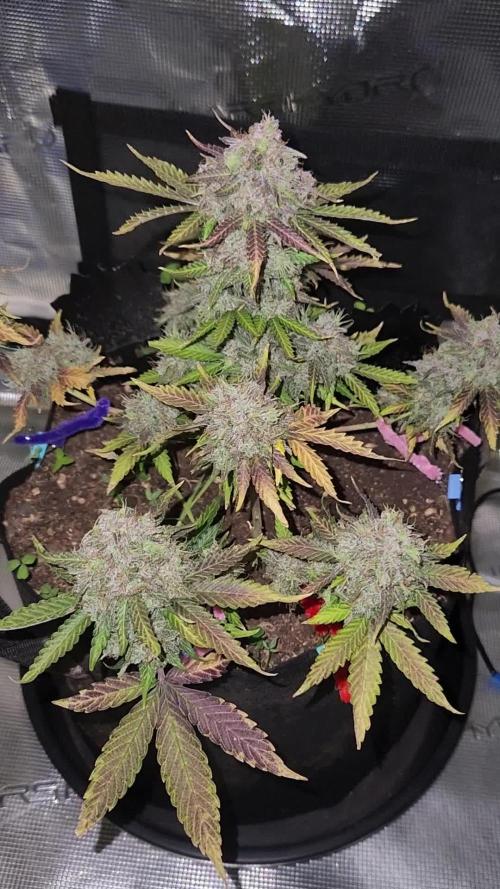
Yet another beautiful creation from Humboldt Seed Company. Huge trichome heads, amazing, complex aroma.
Oh and did I mention magnificent leaf and bud colouration? They are purple AF 💪
I love them sooo much 😍😍😍

Likes
19
Share


@MiyaguiOkPolilla
Follow
Ha ido bien. Hace 5 días que esta afuera y recibe la luz y el clima de invierno,11° a 23° Celsius y una humedad relativa del 35 al 40 %. 11 horas de luz de las cuales 5 son directas y el resto indirectas. Lo que ha hecho que los tricomas no se degraden tanto tal como los terpenos. Huele DEMASIADO en comparación cuando estaba dentro del armario de cultivo.
En breves actualización con el corte final y su peso. Me gusta mucho esta genética y se ha convertido en una de mis favoritas.
Likes
11
Share

@Growtopus
Follow
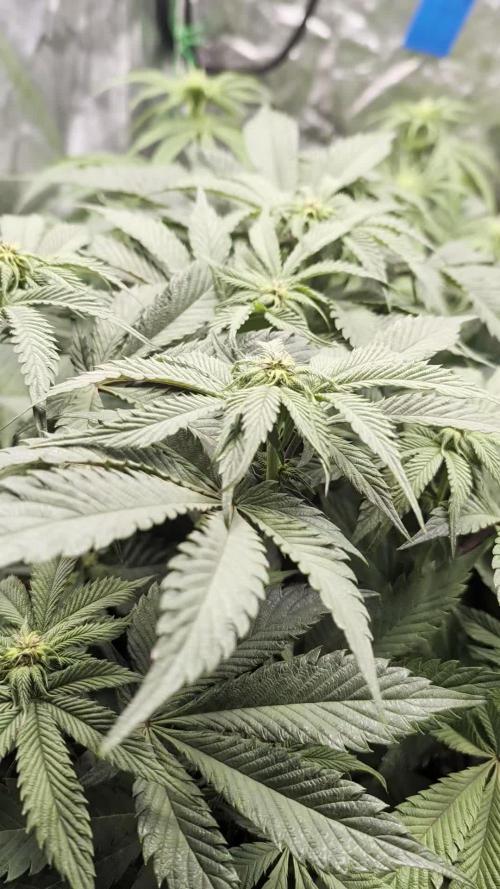
Nicht ganz eine Woche zum letzten Update, aber trotzdem eine BW weiter.
Die Lampe läuft mittlerweile auf 80 % und alle 3 vertragen die Umstellung bisher gut. Durch die höhere Lichtleistung ist auch die Temperatur etwas gestiegen, passt aber aktuell perfekt, RLF ist etwas niedrig.
Entwicklung passt, Geruch ist eher den Blättern zuzuordnen und nach dem Entlauben haben sich die restlichen Blätter stark ausgebreitet, da wird nächste Woche nochmal nach geschnitten.


Likes
36
Share


@Salokin
Follow
Training has been continued. She is developing very nicely. As of today she has been switched to 12/12, as the net starts to get busy and anticipating another stretch I thought it would be time.
Likes
14
Share

@MrGrowDiarie
Follow
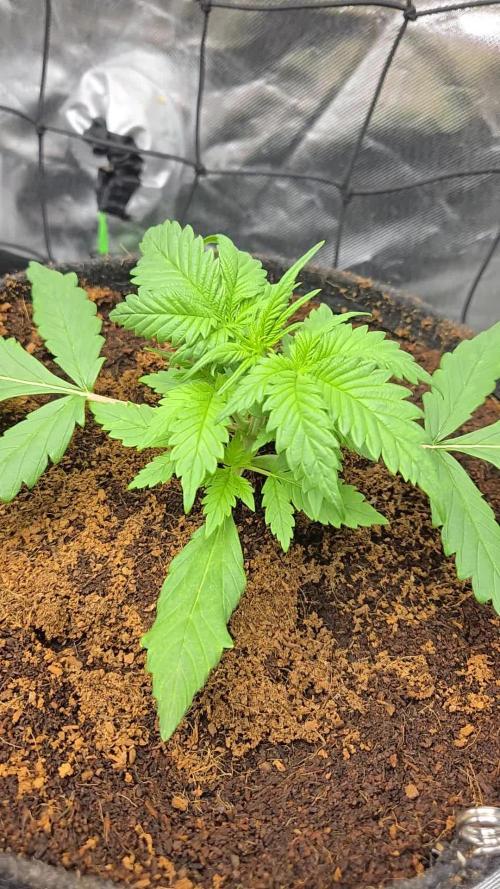
Welcome to week 3! It's the biggest so far in terms of growth – partly because she's in a 15L pot. She's already showing signs of being an autoflower at day 15, which is pretty early for an auto. But the stretch will show how big she’ll really get in the end. I watered her 2 days before with drain