


Likes
Comments
Share


@Lickey
Follow
They are really stretching this week. I’m having concerns over some of them not drinking and yellow leaf tips. Not sure what can be causing stress. Ah maybe cold floors as I remove the insulation
Half way through this 3rd week of training they are looking good and thriving

Likes
9
Share


@russrahl
Follow
60 days into flowering now, pulled 2 of these girls 7 days ago because 1 had a few bananas on it and the other was stressed to much from light and not really giving any quality bud and it was stretched out taking up lots of space. The 2 left have been flushing a little over a week now and are very close to harvest. I will prob harvest them sometime this week. Everything is going good so far anyway for these 2 and we will hopefully get some nice dense buds, we will see. Cheers💨
Day-62 update
Found my microscope! Got some picks up of the tricombs up now, and as I suspected they are not quite ready yet. There are a few amber but I’m still seeing clear ones, but there mostly all cloudy now so I’m thinking another week or so will probably do it. That will give me a good 2 week flush as well. I got some pics and a video up as well just before my lights came on so there better then under the HPS anyway. Lol cheers💨

Likes
2
Share


@JuanP
Follow
In to week 2 of flower, screen starting to fill in nicely. Nothing much else to report, everything looking healthy with no signs of any deficiencies, really stepped up a gear with growth now. I’ll be doing some more tucking to fill the screen completely over the next few days, final defoliation and clean up below the screen next week and that should be the training finished till harvest.

Likes
18
Share


@DeadwebsiteBoringcommunity
Follow
so tall some yellowing.. lots of leaves we can lose a few.. good yield expected from both plants.. Zamadelica is in the tent.. I should update the zam diary.. Look at how much she has stretched.. Crazy sauce... Sativa alittle bit me thnk ha ha ha.,

Likes
16
Share


@Ultraviolet
Follow
Seedling managing 93F 30%RH, around 20 DLI. Vpd is in the 3's. No I don't recommend.
Signum Magnum.
"A great sign appeared in the sky
a woman clothed with the sun
with the moon under her feet
and on her head a crown of twelve stars.
Sing ye to the Lord a new canticle:
because He has done wonderful things.
Glory to the Father, and to the Son, and to the Holy Spirit
As it was in the beginning, and now, and ever shall be, world without end."
The plant nutrient nitrogen exists in forms with both positive and negative charges. Ammonium (NH4+)(immobile in soil)(Cation) has a positive charge, while nitrate (NO3-) (highly mobile in soil)(Anion)has a negative charge. Nitrogen is unique among plant nutrients in that it can exist in both positively charged (ammonium, NH₄⁺) and negatively charged (nitrate, NO₃⁻) forms in the soil. This makes it a special nutrient. In that it is responsible for providing balance for reactionary trade offs when it comes to ph. Because ph itself in the medium will always slowly drift towards acidicity, such is nature. 80% of nitrogen should be nitrate and no more than 20% ammoniacal nitrogen.
Ca, mg, and K are the big 3 cations related to soil composition, pH & base saturation.
When nitrogen is in the form of ammonium, it can compete with calcium, magnesium, and potassium for absorption sites in the plant root. This competition can lead to a reduction in the uptake of these other essential nutrients. Nitrogen, particularly in its nitrate form (NO3-), can increase soil acidity, which can also affect the availability of calcium, magnesium, and potassium. The form of nitrogen applied (ammonium vs. nitrate) can influence its interactions with other nutrients. Ammonium nitrogen can have a more pronounced negative effect on the uptake of calcium, magnesium, and potassium compared to nitrate nitrogen.
Common forms of ammonium nitrogen include ammonium ion (NH4+), urea, and ammonium compounds like ammonium nitrate, ammonium sulfate, and ammonium phosphate.
Common forms of nitrate nitrogen include potassium nitrate (KNO3), sodium nitrate (NaNO3), calcium nitrate (Ca(NO3)2), and ammonium nitrate (NH4NO3).
Phosphorus is an essential plant nutrient, and its availability in the soil is strongly linked to the presence of oxygen. Plants primarily absorb phosphorus as phosphate (PO4), and oxygen is a key component of this molecule. Furthermore, the availability of phosphorus in the soil can be impacted by factors like soil aeration and temperature, which in turn affect the oxygen supply to the roots.
Phosphorus uptake in plants is most critical during the early stages of growth, particularly within the first few weeks of plant development.
Young plants actively growing tissues have a high demand for phosphorus. They may absorb up to 75% of their total phosphorus requirements within the first few weeks of vegetative growth, with up to 51% of uptake happening overnight, primarily in the first few hours or early nightfall.
⑨Anaerobic root respiration, or respiration without oxygen, is detrimental to plants because it's less efficient and produces toxic byproducts, leading to reduced energy production, nutrient uptake issues, and ultimately, root damage and plant stress.
⑨Anaerobic respiration, unlike aerobic respiration, doesn't utilize oxygen as the final electron acceptor in the electron transport chain. This results in a significant drop in the amount of energy (ATP) produced, which is necessary for various plant functions, including growth, nutrient uptake, and maintenance of cellular processes.
⑨In the absence of oxygen, plants produce byproducts like ethanol and lactic acid during anaerobic fermentation. These byproducts can be toxic to the roots and inhibit their function,
⑨When oxygen is depleted in a medium, the pH tends to decrease (become more acidic) due to the production of metabolic byproducts. This is particularly relevant in biological systems where aerobic respiration relies on oxygen as the final electron acceptor.
⑨When oxygen is scarce, plants may switch to anaerobic respiration. This process produces carbon dioxide (CO2) as a byproduct.
⑨CO2 dissolves in water to form carbonic acid (H2CO3). This acid lowers the pH of the medium, making it more acidic.
⑨Anaerobic conditions can impair a plant's ability to regulate its internal pH, leading to a drop in cytoplasmic pH and potentially cellular acidosis.
⑨The change in pH can also affect the availability of certain nutrients to the plant, as pH influences the solubility of micronutrients like iron, manganese, zinc, copper, and boron.
⑨The lack of oxygen in the plant medium leads to a decrease in pH due to the production of carbon dioxide during anaerobic respiration and impaired pH regulation within the plant.
In plant cells, cellular acidosis, a drop in the internal pH of the cytosol, is a significant stress response, particularly during conditions like flooding or hypoxia. This acidification can be triggered by a decrease in oxygen levels, leading to the production of metabolic byproducts like lactic acid and CO2. The plant's ability to tolerate and recover from these conditions depends on its cellular mechanisms to regulate pH and mitigate the effects of acidosis. When plants are subjected to low oxygen environments, such as those experienced during flooding, anaerobic metabolism, which produces lactic acid and ethanol, becomes the primary source of energy. This can lead to a build-up of these acidic metabolites in the cytosol, causing a drop in pH.
OXYGEN
Atomic oxygen (single oxygen atom, O) is the lightest form of oxygen, as it has the lowest mass of the oxygen molecules. Oxygen also exists as a diatomic molecule (O2) and an allotrope called ozone (O3), which have higher masses due to the number of oxygen atoms combined.
Atomic Oxygen (O):
This refers to a single oxygen atom, which is the most fundamental form of oxygen.
Molecular Oxygen (O2):
This is the common form of oxygen we breathe, consisting of two oxygen atoms bonded together.
Ozone (O3):
This is an allotrope of oxygen, meaning it's a different form of the same element, consisting of three oxygen atoms bonded together.
Since atomic oxygen has the fewest oxygen atoms, it naturally has the lowest mass compared to O2 or O3.
Ozone (O3) Lifespan:
Ozone has a relatively long lifespan in the stratosphere, particularly at lower altitudes. For example, at 32 km in the middle latitudes during spring, ozone has a lifetime of about 2 months.
Oxygen (O) Lifespan:
Atomic oxygen, on the other hand, has a much shorter lifespan. At the same altitude, its lifetime is about 4/100ths of a second.
Ozone-Oxygen Cycle:
The ozone-oxygen cycle involves the rapid exchange between atomic oxygen (O) and ozone (O3). UV radiation can split molecular oxygen (O2) into atomic oxygen (O), which then reacts with O2 to form ozone (O3). Ozone can also be photolyzed by UV radiation, creating atomic oxygen again, which can then react with O3 to reform O2.
Dominant Form:
The partitioning of odd oxygen (Ox) between ozone and atomic oxygen favors ozone in the lower stratosphere. This means that a much larger proportion of odd oxygen exists as ozone than as atomic oxygen, especially in the lower stratosphere.
Recombination:
Atomic oxygen has a high energy and reactivity. When it encounters another oxygen atom, they can combine to form O2. This process releases energy, contributing to the heating of the atmosphere.
Ozone Formation:
Atomic oxygen can also react with molecular oxygen (O2) to form ozone (O3). Ozone plays a significant role in absorbing harmful UV radiation.
Other Reactions:
Atomic oxygen can react with various other molecules in the atmosphere, like nitrogen (N2), water (H2O), and carbon dioxide (CO2), forming different compounds.
UV light below 240nm (peak 185nm) creates ozone (O₃) through a process called photolysis, where UV light breaks down dioxygen molecules (O₂) into single atomic oxygen atoms (O). These single oxygen atoms then react with other oxygen molecules to form ozone (O₃). Specifically, UV-C light with wavelengths shorter than 240 nm can cause this photolysis.
UV light with wavelengths between 240-280 nm, (peak 254 nm) breaks down ozone (O₃) into dioxygen molecules (O₂) and atomic oxygen atoms (O). 280nm does not have the energy potential to break apart the stable bond of (O₂) into enough (O) to make (O₃)
At ground level, atomic oxygen (single oxygen atoms) has a very short lifespan. This is because it's highly reactive and quickly combines with other molecules to form stable diatomic oxygen (O2) or other compounds. While the exact timeframe varies depending on the specific circumstances, its lifespan is typically measured in nanoseconds or picoseconds.
Likes
142
Share


@MadeInGermany
Follow
Hi people 🤗
A lot has happened this week 😄
The 3 Blue Cheese and 2 Kosher Tangie Kush which have been in the flowering tent for 1 week have become very bushy 👍
Unfortunately I just noticed that I completely forgot to take pictures of the Blue Cheese Phenotype # 3 🤦♂️🏻
The picture will be given later.
The rest of the Vegi tent is also progressing very well.
They are repotted in 11 liter pots this week, and then come to the flowering chamber die the following week
The next week there will be new pictures, until then I wish everyone a nice start into the new week 🙏🏻💪🏻
Let it grow 🍀🌱


Likes
12
Share

@Organic473
Follow
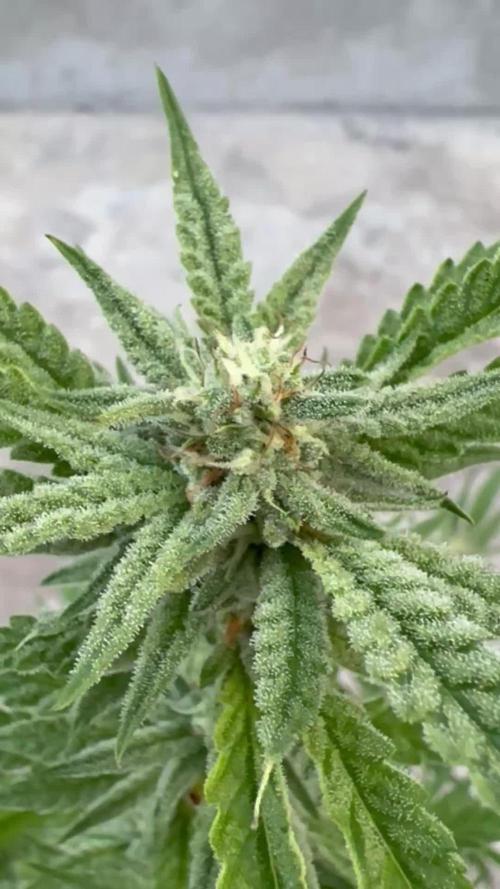
The old saying, I’ve never judged a book by cover… this girl amazes me. She smells amazing.

Likes
6
Share


@Ninjabuds
Follow
It's been two weeks since i started using the UAP 1500 light, and the results are definitely showing! The 'Peyton' papaya seems to love it. The leaves have this amazing vibrant green, and the whole plant looks so healthy and strong.
Papaya 'Peyton' is really thriving! The leaves are absolutely gorgeous, so full and plump, giving the plant a lush, healthy look. I'm really impressed with the structure – it's short and stocky, which is quite unique, and the nodes are nice and tight, promising good growth.
It's clear this plant is getting the perfect care. The vibrant green color of the leaves and the overall compact shape make it a standout.

Likes
9
Share


@Krautbauern
Follow
The clone is in the same height as the rainbow triangle. we set the Forbidden Nectar a little bit up because she is the smallest one…indica dominant
After 25 days of flowering we recognized that the forbidden nectar is already starting to purple a little bit (last picture)


Likes
3
Share

@Wizardgreen317
Follow
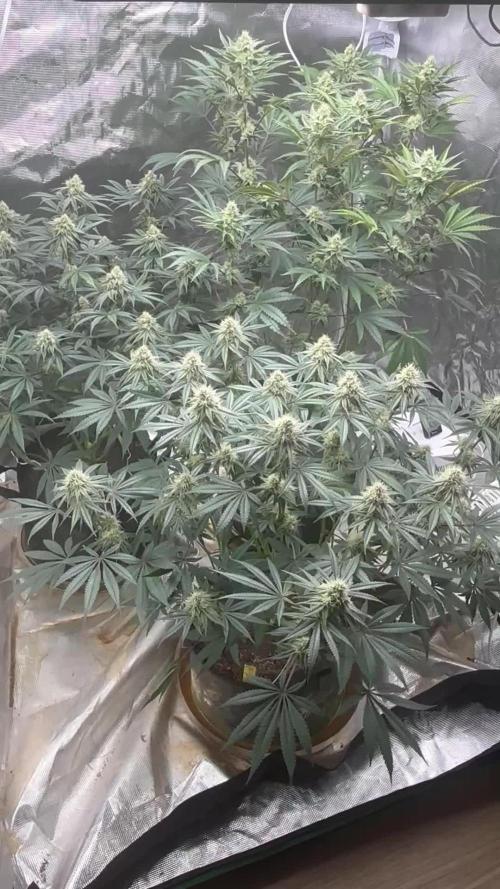
Smell at night is stupid crazy smell like cake and weed , the noses are crazy on both strains but yeah I’m definitely growing some blueberry cupcake next go around. Yes, the strains are amazing and available at North Atlantic seed company for 15 dollars for three seeds. I had popped six seeds everything germinated.. really good seed . These plants where about four weeks veg 7 weeks in total but yes very easy but really got moody in transplanting but but yes Im please so far these are pheno hunt seeds photos not auto but they have the same deal for them to. Also the colors are coming in strong very light green with purple outlines on the cheese danish x gmintz and the blueberry muffins x nf90 s1 is smelling like cake straight up when prune the bottom leave it make the room smell amazingly like cake .this could be something special in both these strains .

Likes
27
Share


@Stigghiola
Follow
This week looks very good flower of black cream are a little bit violet, all the plants are goods and very healthy...waiting to harvest... 😲🙄
Aggiornamento 1 novembre, le piante sono tutte in ottimo stato ho dato una bella sfoltita a tutte piante, facendo così arrivare luce a tutti i fiori.

Likes
4
Share


@weedelicious
Follow
Day 57:
Today I defoliated all the plants again. It wasn't much on the Tropical Marker, but I had to remove quite a bit from the other two because they're growing very bushy. I also wove the shoots further into the net. I think it's turning out really well. I also watered the Tropical Marker and the Purple Kush with 2 liters of water each with fertilizer and a pH of 6.3. I set the light to 80%. The Tropical Marker's flower is getting bigger and bigger!
Day 58:
Not much new has happened; they've enjoyed the defoliation and more light. All the girls are preaching to the light. I've also woven some shoots further into the net.
Day 59:
Hey guys, the plants look great! The Purple Kush and Pink Gelato are starting to stretch more. The buds are slowly forming. Today, I watered all three plants with 2 liters of water. I added 5 ml of Hes-Bio-Bloom and 1 ml of Bio-Bizz-Calmag to the water per liter. Then, I increased the pH to 6.4 with bio-bizz-up. Here and there, I weaved some shoots further into the net.
Day 60:
The girls look good and are preaching to the light. Today I measured the PPFD. It was between 600 and 740 PPFD. So I set the light to 90%. Now I've measured a PPFD of 700-850. I'll observe how the ladies like it and increase the value if necessary. I've also woven the shoots further into the net. It's very hot in the tent, so I set the fan to 80%.

Likes
18
Share


@Wakesk8
Follow
Runtz is almost done ✔️ I will cut her between Sunday and Monday
Balance going good let’s see the final result…
Colas are pretty nice !

Likes
Comments
Share


@GreeneScene
Follow
Day#37 update: i finally made her beg for her water . The way all her leaves are hanging at a downward angle , then in the 1st video if you look you can see her “drooping” leaves begin to “pray” stand themselves back up. O watered her to run off then did a life-medium defoliation instead of a super heavy one like I planned and then I “ponytailed” each of her main tops to allow the other nodes to become strong to produce more branching .
Day#40Update: the re-growth from defoliating & pony tailing has been decent . On one or two she’s trying her hardest to break out of the tie. I’ll release her from the ponytails later today & we’ll see where we are in two days for day #42 week 6
The plan is still to top all her main tops after untying the ponytails .
Day#42 Update : end of week #6 she’s growing so evenly and well that I ru still don’t see a benefit in topping. These lateral sode branches are growing for what they know .
She’s a squat plant for sure but man is she full. She’s been in this one gallon since day #9 so it’s been 33 days she should be asking for food soon . I’m debating on top dressing her in the one gallon or up-potting during a transplant for her . Part of me wants to skip forward straight to a 6gall pot but part of me is saying to “punish” her a little more and leave her in this pot a few more weeks .
Likes
17
Share

@The_outdoor_guy
Follow
"Bugs and birds" + "organic wellness retreat" august 17th.
Lots of stuff going on this week 😊💪
We had a beautiful visitor, a mettalic green shining beetle aka "rose chaver", Rosenkäfer.
So pretty to look at!!
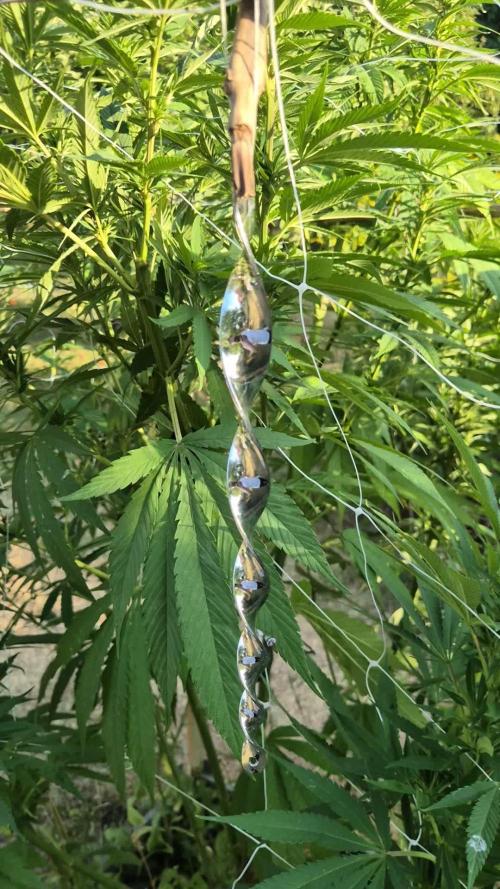
Then having some issues with birds, that are a bit too comfortable on the cage. They basically shit on the plants, that can really be an issue in flower. For now I had this shiny wind twisters. But they dont help. So I sadly have to make use of my shotgun 😑.
Just kidding! I will get a fake Crow to scare them away.. 🙏
In the night I have my personal special force squad (aka spider squad) taking out those unwanted bugs. I even got one nice picture of it!
And then the 2 sisters got a full on crazy organic Wellness treatment. This treatment that basically sends you into a new dimension moaning.
I removed some branches and leafes for airflow.
Then they got more "brenesseljauche" and compost and sprayed that with compost tea. I over did it a bit... haha some leave tips had nitrogen burn haha😬
Then sprayed the plants completly with neemoil to kill all bugs and aphids, even though there are almost none this year😊💪
Then sprayed them with LAB Lactic Acid Bacteria so any dirt and insects remaining gets metabolised by the bacteria.
And finally added some organic PK "bloom fertiliser" with some phosphate compost tea to finish them off!💪🙏
Now they r ready for anything 💪!
Ah yes and they started flowering like 3 days ago! So everything perfectly in the schedule!
Man i m excited! they are looking brutally healthy this year!
Cant wait for the next weeks!!

Likes
1
Share


@Olduffybastard88
Follow
Nice and frosty next to no effort was put into tbis plnt just let her do her thing and she turned out a beauty really easy to grow and no problems so far
Likes
15
Share


@Aleks555
Follow
Gorilla Zkittlez Auto is a true work of art among autoflowers. With its powerful, dense buds literally dotted with 'sugar', each stage of growth of this plant is pure eye pleasure. The scent she exudes is as delicious as her taste-sweet, with fruity notes, promising an unforgettable delight. This beauty not only looks great, but also gives a strong, powerful effect that both relaxes and cheers up. Special thanks for this outstanding variety of 42Fast Buds, and, of course, Xpert Nutrients-your fertilizers made such impressive results possible. Each stage of growth was perfect thanks to this tandem. This variety is a real miracle for any grower!
Xpert Nutrients is the fertilizer that truly makes a difference! 🌱
From the very start of our grow, Xpert Nutrients has proven itself to be exceptional. Every plant receiving this nourishment flourishes—from strong roots to dense, trichome-covered buds. With its balanced formula and ease of use, our beauties get everything they need for optimal growth and flowering. It’s a joy to see how the plants respond to this fertilizer!
A huge thank you to Xpert Nutrients for your high-quality product and continuous support. Without your nutrients, our results wouldn't be as impressive! 🙌
Likes
2
Share


@PatriciaGant
Follow
now time to harvest gets closer every day and time feels now as if she stands still, holy i cant wait to finaly taste this sweet buds. have a beautifull day.
Processing
Likes
10
Share


@Xspellsx
Follow
Added a tnb naturals c02 bottle. It seems ok havnt yet bought a ppm measurement device for co2 so not sure how well its working. Ive done some research and the canister with the original contents doesnt seem to put off enough co2 for it to matter not even with 2 of them! I do everything myself though always have so i got to thinking my mushroims put off co2 but the led kills them huh??? I brew beer and that gives off co2 i did some more research turns out bread yeast baking soda to drop ph to 5 and sugar and water does the trick in a dark container like a tnb naturals bottle wrapped in alinum foil. I ordered high gravity yeast for making lager like steel reserve high alcohol content more reaction more co2. Using brewers yeast which is cheap 10bux a lb 1 tsp 1and hal cup sugar NO BAKING SODA NEEDED WITH BREW YEAST that includes champagne yeast which im used to using. Im going to grind rice to a fine powder about a 1/8th cup and add to extend co2 production i wanna change least as possible cuz it take 14hrs to start to produce. If u keep a starter in ur fridge then 8 hrs . google brew yeast starter diy and diy co2! Also flushed thus week no florekleen just h20 with a little cal mg like 3tsp 5gal and pk 1tsp5gal. Clearing res nitrogen from veg and switch nutes. Peace and love and enjoy theres a treat this week in the pics!
Likes
12
Share


@Colepus
Follow
I tried wettrim and drytrim to understand what i prefer. The wettrim dried inside dryferm bags inside a drybox with ventilation that i build myself. The drytrim dried inside the tent and got a trim after 9 days. Havent tried the buds yet since they have to cure first but they smell very lemony so far. Curing happens in grovebags. Half of the bags also got a boveda to see the difference if its worth it for the future or not.