Likes
Comments
Share
@bvsbuds
Follow
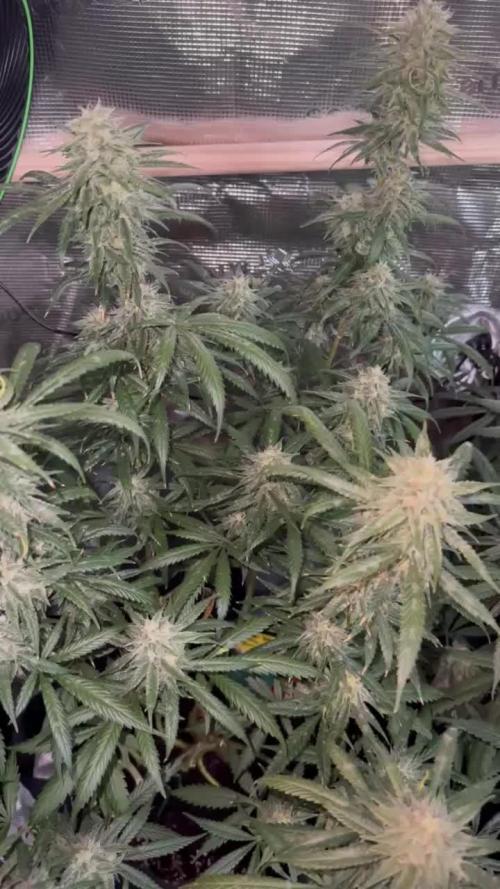
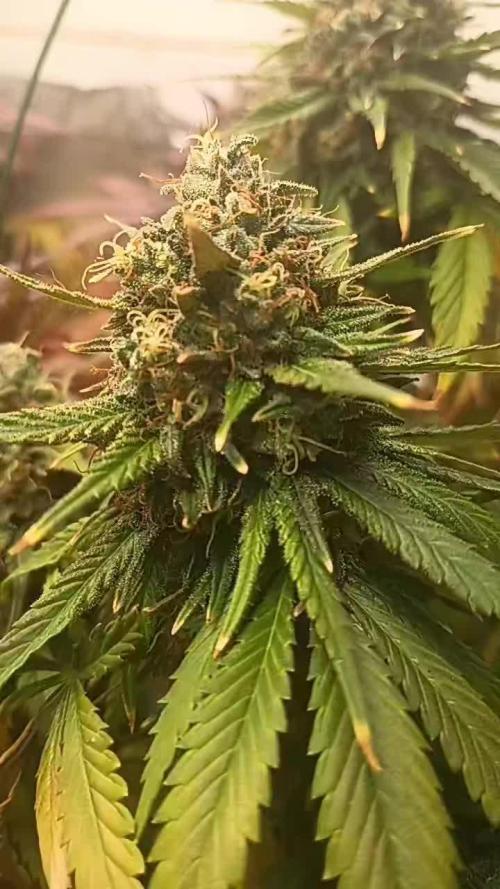
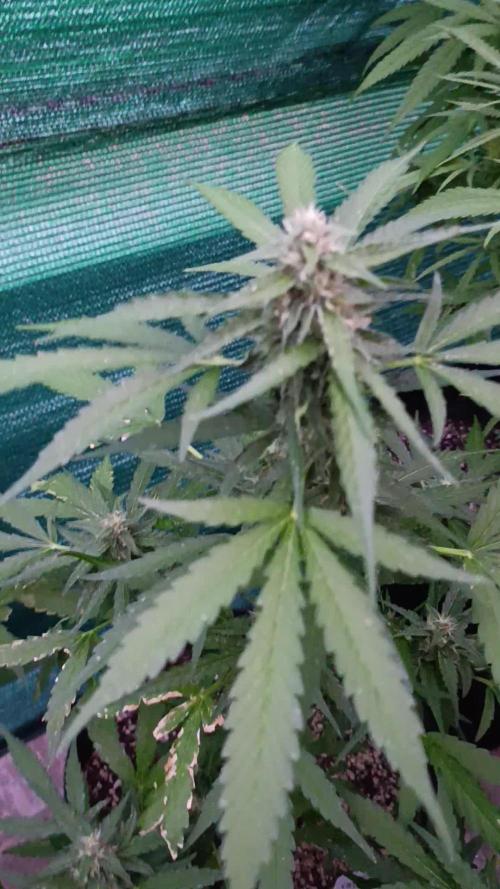
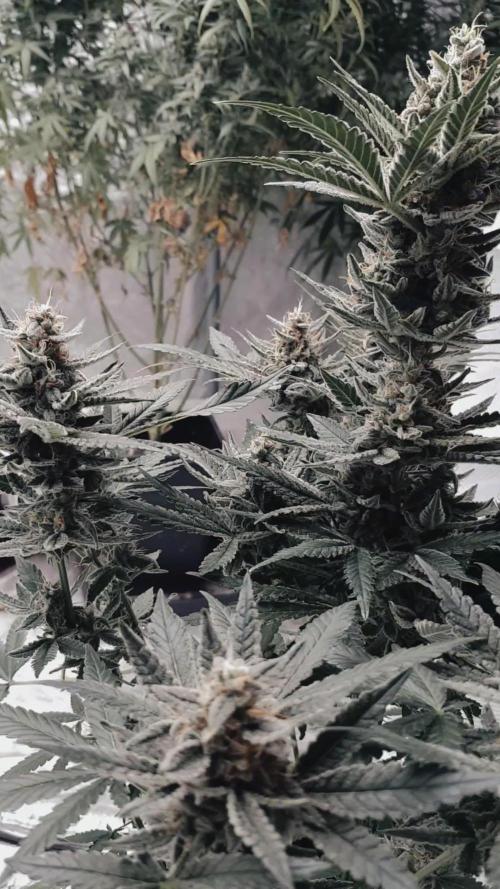
Hey growmies, After a feed, I like to water with molasses and the plants love me for it. I raised the light a few inches because they are stretching fast. I also topped dressed with worm castings and added a bio enhancer. Officially 18th day of flower. Happy growing 😎
Likes
2
Share
I absolutely love to watch them grow! Especially that moment they hit their first growth spurt. I started with RO water that is remineralized for drinking purposes. The ppm is only 18! My tap is 156! So considering they don’t need much water, I’ve been stealing some of our drinking water. The RO water starts at pH of 7. After I add the nutrients, ppm of 249 @ pH of 5.8 while soil is still sweet @ pH of 7 I think my days are off as a new week begins on the last day of the previous week. I am going to leave that for consistency. 04/21 - Noticing some possible nutrient issues with the Fruity Pebbles for several days now. Going to see what she needs. Up front I’m thinking maybe just a super small amount of Amino Acids with a little Epsom Salt. Maybe she is struggling to access the nitrates from the neem cake. IF it’s a issues with nitrogen. We will see. Maybe she would benefit from some extra calcium?… Any ideas are greatly appreciated. Day 22 and I am noticing how these girls have been burning up a lot of potassium lately, dealing with the wind and sun 💨 ☀️, getting pushed around all day. I plant to top dress with some Kelp Meal pretty soon. Day 24 -> 4/22/22- a quote from the weather on today’s red flag warning and dust storm warning. “ HAZARD...Less than a quarter mile visibility with damaging wind in excess of 60 mph. SOURCE...Satellite imagery. IMPACT...Dangerous life-threatening travel.” I’m keeping the girls inside today. Day 26, I was planning to check the runoff on some of these girls, especially the fruity pebbles, however I messed that up as I also top dressed WAY too much of the seaweed bliss. So I flushed with plain RO water at pH of 7 until there was only slight coloration in the runoff. I didn’t check the runoff as a lot has changed with all that flushing. So next watering/feeding I will make sure I check the runoff on multiple plants. So the seaweed bliss with its 17 on potassium, seems to be the most likely culprit for why there is a bronze-ish color on the inside of the new growth. Hopefully a foliar feed of Epsom salts can correct the problem. Inside tent, lights on LOW. Noticing similar pattern in all of them to a degree, most noticeable in the fruity pebbles.
Likes
4
Share
@pzwags420
Follow
On day 1 week 2 flower the Gals are really stretching now, hope I have enough room 😂They seem to be taking the flower nutes well even without a transition phase 😀. On day 3 the gals have stretched so much they are within 6 in of my light hoping The stretch will slow down soon yikes 😱. I defoliated the lower and upper canopy to bring in more light and air flow. On day 6 the stretch seems to be slowing down. I increased my light intensity from 75% to 100% to see if I can halt anymore stretching. I also bent my highest colas down as they were touching the grow light 😂. On day 7 flower clusters are forming and the stretch has slowed. I will continue to bend over the tallest colas and do my best to manage the canopy without too much loss of yield. It looks like some of my colas might get light stressed/burnt. There is not much else I can do except learn from my mistakes...next time I would flip the plants earlier and give them stronger light intensity before flowering stretch. The top leaves are canoeing so I reduced light intensity back to 75% to see if they improve. I got my first clog in my blumat systems main line... I will be switching to liquid based fertilizers for the next run as I believe my fertilizer caused the clog. I released the clog by using a pipette filled with water. I took the pipette and squeezed liquid through the main line exiting my reservoir. Then the lines were running smooth 😂
Likes
13
Share
Can't believe we're at the start week 5 already. This is such a beautiful process. Things are looking good - I started defoliation on all the ants this week. I figure, the little one isn't getting much bigger, the big one is so bushy the light is having trouble getting thru even with LST, and the bag seed seems to be a photoperiod plant so I have all the veg time I need to recover on that one. Update: The bigger girl started flowering on day 32! Let me know what y'all think!
Likes
1
Share
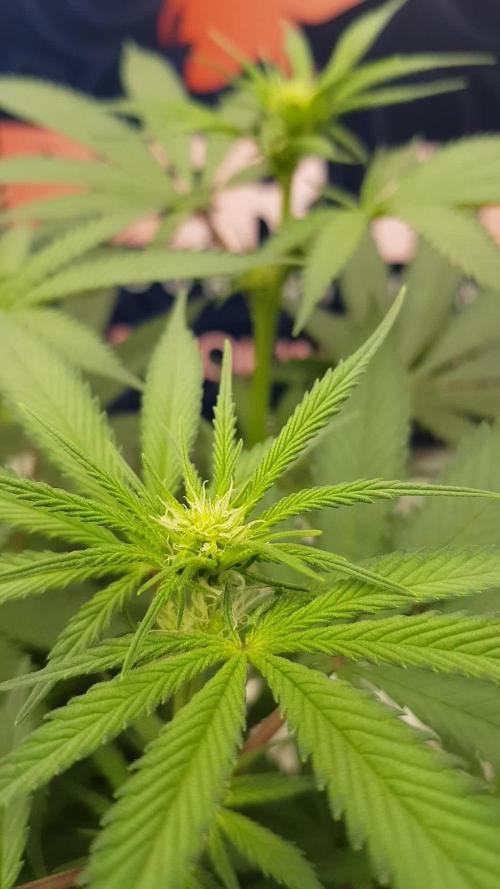
Hello Growers & Tokers! Roots, roots, roots. At the beginning of the week they got transplanted into their final pot, 11L fabric. Medium used was Light Mix from BioBizz. Synergy from Grotek nutrients was blended in the medium to help out the roots. They were a bit down after transplanting but by the end of the week they were doing better. I'll leave her be for a week then I'll be topping to spread that canopy out and have loads of colas. Or at least that's the idea but two of them seem to be growing faster than the others so I might have to die those tops down. Take care out there and happy growing!
Likes
24
Share
@Stinkfox
Follow
I defoliated this week, in the 3rd week of flower. The stretch should be about over. Pistils and bud sites abound. I increased Tiger Bloom. Now we wait.
Likes
16
Share
Haben noch ein bisschen angeschoben. Aber minimal. Hab hier den seltenen indica pheno erwischt😅😅🤷‍♂️ Sie duftet seit gestern schon einbisschen nach den legendären weihrauch zitus mix👌 Bin gespannt was noch passiert. Kenne nur die sative phenos von haze. Darum auch eher zu früh in der blüte um ne woche ca🤷‍♂️😊 (Gibt schlimmeres🤷‍♂️ jetzt weiß ichs ja😋) Die geilsten und saubersten stecklinge gibts wie immer bei ROOTS_FARMS AT👌🔥💚
Likes
61
Share
@BlumenBot
Follow
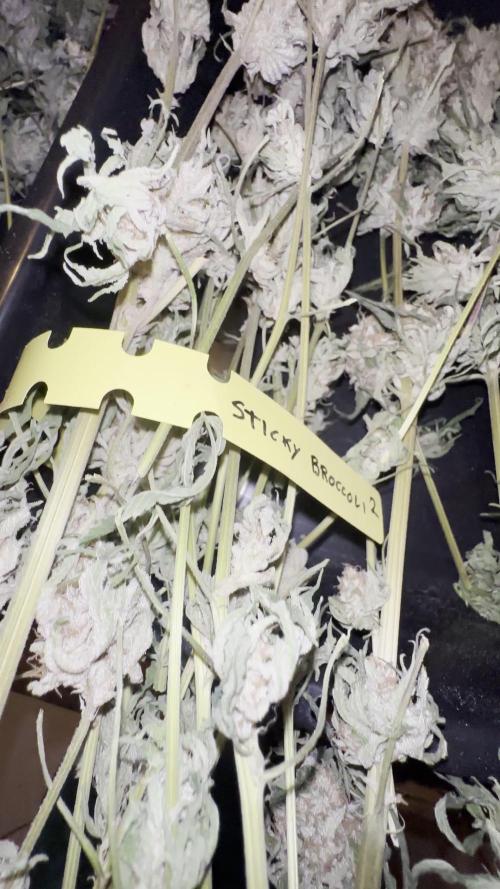
7/12 - dumped ice on the soil and turned the lights off. She will get the chop late tomorrow night. 7/13 - chopped and hung whole with humidifier set at 60% and trying to keep temp in low 70s. Not sure if she will get a full 10 days before getting kicked out by Super Silver Haze from below but I hope so!! 7/25 - into the jar she goes. My hands are so damn sticky!
Processing
Likes
6
Share
@ladyjane
Follow
6/13 - It's the beginning of week 3 and 2 of my 3 Jack Herers are suffering from Zinc deficiency. I noticed this yesterday and believe this is a root issue and not a pH issue. They have most likely outgrown these little 4 inch nursery pots and used up all the nutrients in the soil. I'm about a week late in transplanting them as is. I was going to do it last week, but my schedule got thrown off. I knew I would have to leave them in a bit longer so I gave them a very light feeding last week as I was afraid to burn them. However, it turns out for these two, it most likely wasn't enough. I will be transplanting them into 1 gal pots tomorrow with brand new Roots Organic original soil amended with Roots Organics Uprising Foundation. That should take care of any issues. 6/15 - Transplanted all three Jacks into 1 gallon pots. I started with Roots Organics Original soil then added some Oregonism XL to the root ball and a good amount inside of the hole before planting. Then, I top dressed all with some Uprising Foundation also by Roots Organics. . For gnat prevention, I used Bti (Bacillus thuringiensis) aka mosquito bits. I also added some Uprising Grow, as a dry amendment to the one plant that were showing deficiencies for a little extra boost going forward. Finally, I watered everyone with compost tea that I brewed for 18 hrs. They are already looking stronger and healthier.
Likes
17
Share
Hello Diary. The first week of flowering is over, the plants have branched out nicely, the Purple Punch has grown more than 60cm and has now become crowded on the Farm. Specifically, Purple Punch # 1 grew 66 cm, Purple Punch # 2, which sprouted a few days later, grew 54 cm, which surpassed roommate Watermelon, who keeps them company on the Farm. Along with the height, there are a lot of leaves throughout the plant, but this time I'm not sure if I would do defoliation. The plants normally look healthy and satisfied, they did not reflect as much as on Watermelon, that they were harmed by too many nutrients. They’re obviously a little more resistant to that. Except for the yellowish tips of the leaves, which I believe is genetics, everything else seems fine. The flowers started to form, so I have new motives to photograph. At the beginning of the week, I also changed the light regime to 20 hours of the day and 4 hours of the night. I water every two to three days, when each plant gets about 2 liters of water. I add food at about every other watering. Sometimes biobizz and sometimes I put Easy Grow or Easy Bloom tablet, depending on the stage the plant is in. p.H. I always adjust the water value to a value between 6.2 and 6.5. Conditions on the Farm are more or less satisfactory, the temperature is about 25 degrees while the humidity is slightly lower than satisfactory, varying between 40% and 50%. Here’s a brief overview of the past week. 18/02/2021 - Day 23. Watering. I adjusted the water to 6.3 p.H with Plagron’s Lemon Kick and added 1.5 mL / lit CalMg preventively. Temp / Humidity on the farm - 25 degrees and 41% humidity. 20/02/2021 - Day 25. Watering. I regulated the water to 6.4 p.H, I added 1ml / lit CalMg and BioBizz as scheduled for the first week of flowering. Temp / Humidity on the farm - 24.4 degrees and 43% humidity. 22/02/2021 - Day 27. Watering. This time I watered only with water which I regulated p.H at 6.3. Temp / Humidity on the farm - 24.6 degrees and 40% humidity. 23/02/2021 - Day 28. Photography and height measurement. Temp / Humidity on the farm - 25 degrees and 42% humidity. That’s it for this week, a big hello and thank you to everyone who follows the diary and thanks for the comments. See you soon.
Likes
85
Share
Been a smooth week for the gelat og. I am loving her node spacing and branch structure. She is building some buds and doing her thing. I gave her a 10 gallon flush and fresh nutrients. Started them on some liquid Koolbloom. Just going to keep the lights beaming and the juice pumping. Nutrients per gallon .75 tsp maxibloom .2 tsp liquid koolbloom .5 tsp calimagic .25 tsp armor si .1 tsp 90/10 humic/fulvic acid
Likes
14
Share
@dekss
Follow
*LOS FERTILIZANTES SON HACIA LAS OTRAS PLANTAS NO TERMINADAS NO LA QUE SE CORTO ESA SOLO AGUA* *reemplazo bio bloom por monster bloom como los dos son PK la planta se sobrefertiliza* semana 10 y se va de corte la primera contento de terminar mi primer diario entero en esta plataforma cogollos llenos de resina muy contento con la producción en 68 días desde germinación *la planta en total creo un poco menos que el doble de lo que se corto pero fui sacándoselo de a poco antes* ahora solo queda esperar secar y las otras que vienen en camino 70.85 gramos en humedo contando tallos y una hoja de viento por rama espero marcar unos 15 en solo cogollos y ya secos LST en las dos ramas principales de una de las que viene siguiente muy compacta en lo personal me gustan los cogollos con casi nada de hoja (de esto dependerá cuanto raspe en la garganta) por lo que el humo entra sin dejar ninguna molestia muy suave y sativo
Likes
285
Share
👉Alrighty Then👈 So we are at DAY 28 of Flowering with the Sugar Larry 👈 And she's doing fantastic 👍shes finally done with her stretching 👌 and building Budz 👈 😀 decided to showcase pheno #2 , definitely has different traits then #1 very interesting 😀 thoe both are killing it 👈 Hedgehogs in full bloom 👈 I did a major strip , defolation is complete 👌 Except for some slight watering , ive been doing some defolation as well as some LST manipulation to pull branches to the side 👌 👉I had to Top her during the middle of 4th week 👍 Happy Growing 👉Soil Provided by ProMix.ca 👉Nutrients Provided by Agrogardens 👉Lighting Provided by MarsHydro.ca Thanks my friends for the great support over the years 🙏 Happy Growing
Likes
69
Share
We are at the last week of this awesome strain. Now i flushed very well. ___________SOME DETAILS___________ *** this is another cycle with the amazing Vanilla Kush by Barney's Farm, one of the most famous strains in the '80 *.* <3 It is an amazing strain because it is one of the tastiest strain you can smoke, it is noob friendly, easy to grow with a normal flowering period (but it is a high yielding strain). The high is immediate and powerful, and it brings you to a deep state of relaxation. ____________________________________________________________ VANILLA KUSH™️? Cannabis Seeds Strain Specifications Type: Feminised Photoperiod: Normal Genetics: Afghani Kush x Kashmir Effect: Euphoria, Happy, Calm, Sleepy Indoor Yield (g):up to 600 gr/m² Flowering Time (days): 55 - 60 Feminised Outdoor Harvest Month: September Feminised Outdoor Harvest Month Week: 3rd-4th week Height (cm): 90/100cm Height Indoor (cm): 90/100cm Height Outdoor (cm): 100cm Height: Medium Indica %: 80%Sativa %: 20% Indica/Sativa: Mostly Indica Taste: Sweet Molasses, Vanilla, Sweet Lavender, Citrus, Earthy Aroma: Vanilla, Molasses, Floral, Lavender This is the link where you can buy this must have strain: https://www.barneysfarm.com/vanilla-kush-25 _____________WHAT I AM USING_____________ -LIGHTS: Quantum board - 480w - 4x120w Boards by Zhoangshan Koray Opto-Electronic Ltd. Samsung LM301B 288 led/board +24led/board led Osram 660nm Efficiency 2.6 umol/J 220 lm/w Driver: Meanwell HLG-480H-36B temperature: 3000k Heat dissipator board: No Noise: 0dB Quantum board - 240w - 2x120w Boards by Shenzen Yuanhui Led Ltd. Samsung LM301H 504 led +24led/board led Osram 660nm Efficiency 2.7 umol/J 220 lm/w Driver: Meanwell HLG-240H-48B temperature: 3500k Heat dissipator board: YES 15MM Noise: 0dB -ESTRACTION FAN: Blauberg 125 Turbo Pro Series Power: 42-50W RPM: 1940-2620 minimum -1 Maximum air flow: 430-560 m³ / h Sound pressure level at 3 m: 32-44 dBA -FANS: A)OSCILLATING FAN Maximum consumption: 20 W Minimum consumption: 17 W Fan diameter: 15 cm Housing diameter: 20 cm Height with handle: 35 cm 2100 revolutions per minute Two speeds B) COMPUTER FAN Sunon DP200A - 230V Nominal power: 22/21 Watt Noise level: 44 / 49dB (A) Rated speed: 2700/3100 RPM ± 10% Air delivery: 95/115 CFM C)Cornawall Electronics Multifan Turbo, three speeds, can be used both on support surfaces and mounted on the wall. High capacity, about 740 m3 / h, can be used in medium-sized rooms. High silence and reliability make it adaptable and versatile. Technical details: Rotation range of 90 degrees Tilt adjustment Three speeds of rotation Suitable for wall and ceiling suspension Power Consumption: 35 Watts Air Flow: Approx. 740 mc / h Operating noise: approx. 39 db Diameter: 20 cm Voltage: 220-240V Frequency: 50Hz Dimensions: L 28 x D 16 x H 28 cm FERTILIZERS: MAIN FERTILIZER BRAND: TOP CROP I use these products: -DEEPER UNDERGROUND: to stimulate roots system -TOP VEG: for a excellent growth in the vegetative phase -GREEN EXPLOSION: to promote creation of bud sites and to allow a faster growth -MICRO VITA: bacterias for equilibrate the soil and to make the plant healty -BIG ONE: to stimulate bud sites and to stimulate resin production -TOP BLOOM: to achieve excellent big and hard buds -TOP CANDY: to feed the buds with molasses for a tastier smoke and to gain weight -TOP BUD: to enlarge buds and to gain weight PLAGRON: PK 13-14 to have big and hard buds and to feed plants with lower effort ADVANCED NUTRIENTS: Sensi Cal-Mag Extra-> for cal mag deficiency GROTEK: cAL MAG for cal mag deficiency HESI: PowerZyme to clean and balance the soil. It feeds the plant cleaning the soil. GHE: - Final Part (ex Ripen) accelerate the final flowering phase, dissolves minerals in excess - Flash Clean to flush the plant and to be sure that all excesses are out from plant and pot These two products improve A LOT the smoke of our babies ____________________________________________________________________________________________ <3 Thank you for being here <3 Please leave a comment with your opinions, it is very important to us to have a comparison. If you like our job, please, tap the weed button and follow us. It will be really appreciated. Thank you again Sweet hugs CHILLING_RACOONS
Processing
Likes
3
Share
4/16: I’m really not happy with her....she really needs to start swelling up 4/17: seeing a little deficiency with her gave her a little cal-mag bump 4/19: I took off 5 leaves that had patches on them
Likes
Comments
Share
@TyRun
Follow
Decided to make a spin off for the new batch of clones. This time we will make this right and it will be in separate grow diary. So, we are continue to flowering, got some EC spikes in runoff (and leaves tips starting to burn a lil bit) so I had to decrease the amount of base nutrients from 4ml/l to 2.5ml/l. I suppose that comes after using AN SensiZym, so I'm stop using it for a while. Also tried T.A. Fulvic acid but think it's too much with the AN connoisseur base nutes.
Likes
16
Share
As for the smell, the smell is beautiful and too strong. And as for the yield, what I see now, kind of average, nothing special... So I will avoid RF3 in the future. I'll stick to the old gold...
Likes
34
Share
Yellow butterfly came to see me the other day; that was nice. Starting to show signs of stress on the odd leaf, localized isolated blips, blemishes, who said growing up was going to be easy! Smaller leaves have less surface area for stomata to occupy, so the stomata are packed more densely to maintain adequate gas exchange. Smaller leaves might have higher stomatal density to compensate for their smaller size, potentially maximizing carbon uptake and minimizing water loss. Environmental conditions like light intensity and water availability can influence stomatal density, and these factors can affect leaf size as well. Leaf development involves cell division and expansion, and stomatal differentiation is sensitive to these processes. In essence, the smaller leaf size can lead to a higher stomatal density due to the constraints of available space and the need to optimize gas exchange for photosynthesis and transpiration. In the long term, UV-B radiation can lead to more complex changes in stomatal morphology, including effects on both stomatal density and size, potentially impacting carbon sequestration and water use. In essence, UV-B can be a double-edged sword for stomata: It can induce stomatal closure and potentially reduce stomatal size, but it may also trigger an increase in stomatal density as a compensatory mechanism. It is generally more efficient for gas exchange to have smaller leaves with a higher stomatal density, rather than large leaves with lower stomatal density. This is because smaller stomata can facilitate faster gas exchange due to shorter diffusion pathways, even though they may have the same total pore area as fewer, larger stomata. Leaf size tends to decrease in colder climates to reduce heat loss, while larger leaves are more common in warmer, humid environments. Plants in arid regions often develop smaller leaves with a thicker cuticle and/or hairs to minimize water loss through transpiration. Conversely, plants in wet environments may have larger leaves and drip tips to facilitate water runoff. Leaf size and shape can vary based on light availability. For example, leaves in shaded areas may be larger and thinner to maximize light absorption. Leaf mass per area (LMA) can be higher in stressful environments with limited nutrients, indicating a greater investment in structural components for protection and critical resource conservation. Wind speed, humidity, and soil conditions can also influence leaf morphology, leading to variations in leaf shape, size, and surface characteristics. Small leaves: Reduce water loss in arid or cold climates. Environmental conditions significantly affect gene expression in plants. Plants are sessile organisms, meaning they cannot move to escape unfavorable conditions, so they rely on gene expression to adapt to their surroundings. Environmental factors like light, temperature, water, and nutrient availability can trigger changes in gene expression, allowing plants to respond to and survive in diverse environments. Depending on the environment a young seedling encounters, the developmental program following seed germination could be skotomorphogenesis in the dark or photomorphogenesis in the light. Light signals are interpreted by a repertoire of photoreceptors followed by sophisticated gene expression networks, eventually resulting in developmental changes. The expression and functions of photoreceptors and key signaling molecules are highly coordinated and regulated at multiple levels of the central dogma in molecular biology. Light activates gene expression through the actions of positive transcriptional regulators and the relaxation of chromatin by histone acetylation. Small regulatory RNAs help attenuate the expression of light-responsive genes. Alternative splicing, protein phosphorylation/dephosphorylation, the formation of diverse transcriptional complexes, and selective protein degradation all contribute to proteome diversity and change the functions of individual proteins. Photomorphogenesis, the light-driven developmental changes in plants, significantly impacts gene expression. It involves a cascade of events where light signals, perceived by photoreceptors, trigger changes in gene expression patterns, ultimately leading to the development of a plant in response to its light environment. Genes are expressed, not dictated! While having the potential to encode proteins, genes are not automatically and constantly active. Instead, their expression (the process of turning them into proteins) is carefully regulated by the cell, responding to internal and external signals. This means that genes can be "turned on" or "turned off," and the level of expression can be adjusted, depending on the cell's needs and the surrounding environment. In plants, genes are not simply "on" or "off" but rather their expression is carefully regulated based on various factors, including the cell type, developmental stage, and environmental conditions. This means that while all cells in a plant contain the same genetic information (the same genes), different cells will express different subsets of those genes at different times. This regulation is crucial for the proper functioning and development of the plant. When a green plant is exposed to red light, much of the red light is absorbed, but some is also reflected back. The reflected red light, along with any blue light reflected from other parts of the plant, can be perceived by our eyes as purple. Carotenoids absorb light in blue-green region of the visible spectrum, complementing chlorophyll's absorption in the red region. They safeguard the photosynthetic machinery from excessive light by activating singlet oxygen, an oxidant formed during photosynthesis. Carotenoids also quench triplet chlorophyll, which can negatively affect photosynthesis, and scavenge reactive oxygen species (ROS) that can damage cellular proteins. Additionally, carotenoid derivatives signal plant development and responses to environmental cues. They serve as precursors for the biosynthesis of phytohormones such as abscisic acid () and strigolactones (SLs). These pigments are responsible for the orange, red, and yellow hues of fruits and vegetables, while acting as free scavengers to protect plants during photosynthesis. Singlet oxygen (¹O₂) is an electronically excited state of molecular oxygen (O₂). Singlet oxygen is produced as a byproduct during photosynthesis, primarily within the photosystem II (PSII) reaction center and light-harvesting antenna complex. This occurs when excess energy from excited chlorophyll molecules is transferred to molecular oxygen. While singlet oxygen can cause oxidative damage, plants have mechanisms to manage its production and mitigate its harmful effects. Singlet oxygen (¹O₂) is considered a reactive oxygen species (ROS). It's a form of oxygen with higher energy and reactivity compared to the more common triplet oxygen found in its ground state. Singlet oxygen is generated both in biological systems, such as during photosynthesis in plants, and in cellular processes, and through chemical and photochemical reactions. While singlet oxygen is a ROS, it's important to note that it differs from other ROS like superoxide (O₂⁻), hydrogen peroxide (H₂O₂), and hydroxyl radicals (OH) in its formation, reactivity, and specific biological roles. Non-photochemical quenching (NPQ) protects plants from damage caused by reactive oxygen species (ROS) by dissipating excess light energy as heat. This process reduces the overexcitation of photosynthetic pigments, which can lead to the production of ROS, thus mitigating the potential for photodamage. Zeaxanthin, a carotenoid pigment, plays a crucial role in photoprotection in plants by both enhancing non-photochemical quenching (NPQ) and scavenging reactive oxygen species (ROS). In high-light conditions, zeaxanthin is synthesized from violaxanthin through the xanthophyll cycle, and this zeaxanthin then facilitates heat dissipation of excess light energy (NPQ) and quenches harmful ROS. The Issue of Singlet Oxygen!! ROS Formation: Blue light, with its higher energy photons, can promote the formation of reactive oxygen species (ROS), including singlet oxygen, within the plant. Potential Damage: High levels of ROS can damage cellular components, including proteins, lipids, and DNA, potentially impacting plant health and productivity. Balancing Act: A balanced spectrum of light, including both blue and red light, is crucial for mitigating the harmful effects of excessive blue light and promoting optimal plant growth and stress tolerance. The Importance of Red Light: Red light (especially far-red) can help to mitigate the negative effects of excessive blue light by: Balancing the Photoreceptor Response: Red light can influence the activity of photoreceptors like phytochrome, which are involved in regulating plant responses to different light wavelengths. Enhancing Antioxidant Production: Red and blue light can stimulate the production of antioxidants, which help to neutralize ROS and protect the plant from oxidative damage. Optimizing Photosynthesis: Red light is efficiently used in photosynthesis, and its combination with blue light can lead to increased photosynthetic efficiency and biomass production. In controlled environments like greenhouses and vertical farms, optimizing the ratio of blue and red light is a key strategy for promoting healthy plant growth and yield. Understanding the interplay between blue light signaling, ROS production, and antioxidant defense mechanisms can inform breeding programs and biotechnological interventions aimed at improving plant stress resistance. In summary, while blue light is essential for plant development and photosynthesis, it's crucial to balance it with other light wavelengths, particularly red light, to prevent excessive ROS formation and promote overall plant health. Oxidative damage in plants occurs when there's an imbalance between the production of reactive oxygen species (ROS) and the plant's ability to neutralize them, leading to cellular damage. This imbalance, known as oxidative stress, can result from various environmental stressors, affecting plant growth, development, and overall productivity. Causes of Oxidative Damage: Abiotic stresses: These include extreme temperatures (heat and cold), drought, salinity, heavy metal toxicity, and excessive light. Biotic stresses: Pathogen attacks and insect infestations can also trigger oxidative stress. Metabolic processes: Normal cellular activities, particularly in chloroplasts, mitochondria, and peroxisomes, can generate ROS as byproducts. Certain chlorophyll biosynthesis intermediates can produce singlet oxygen (1O2), a potent ROS, leading to oxidative damage. ROS can damage lipids (lipid peroxidation), proteins, carbohydrates, and nucleic acids (DNA). Oxidative stress can compromise the integrity of cell membranes, affecting their function and permeability. Oxidative damage can interfere with essential cellular functions, including photosynthesis, respiration, and signal transduction. In severe cases, oxidative stress can trigger programmed cell death (apoptosis). Oxidative damage can lead to stunted growth, reduced biomass, and lower crop yields. Plants have evolved intricate antioxidant defense systems to counteract oxidative stress. These include: Enzymes like superoxide dismutase (SOD), catalase (CAT), and various peroxidases scavenge ROS and neutralize their damaging effects. Antioxidant molecules like glutathione, ascorbic acid (vitamin C), C60 fullerene, and carotenoids directly neutralize ROS. Developing plant varieties with gene expression focused on enhanced antioxidant capacity and stress tolerance is crucial. Optimizing irrigation, fertilization, and other management practices can help minimize stress and oxidative damage. Applying antioxidant compounds or elicitors can help plants cope with oxidative stress. Introducing genes for enhanced antioxidant enzymes or stress-related proteins over generations. Phytohormones, also known as plant hormones, are a group of naturally occurring organic compounds that regulate plant growth, development, and various physiological processes. The five major classes of phytohormones are: auxins, gibberellins, cytokinins, ethylene, and abscisic acid. In addition to these, other phytohormones like brassinosteroids, jasmonates, and salicylates also play significant roles. Here's a breakdown of the key phytohormones: Auxins: Primarily involved in cell elongation, root initiation, and apical dominance. Gibberellins: Promote stem elongation, seed germination, and flowering. Cytokinins: Stimulate cell division and differentiation, and delay leaf senescence. Ethylene: Regulates fruit ripening, leaf abscission, and senescence. Abscisic acid (ABA): Plays a role in seed dormancy, stomatal closure, and stress responses. Brassinosteroids: Involved in cell elongation, division, and stress responses. Jasmonates: Regulate plant defense against pathogens and herbivores, as well as other processes. Salicylic acid: Plays a role in plant defense against pathogens. 1. Red and Far-Red Light (Phytochromes): Red light: Primarily activates the phytochrome system, converting it to its active form (Pfr), which promotes processes like stem elongation and flowering. Far-red light: Inhibits the phytochrome system by converting the active Pfr form back to the inactive Pr form. This can trigger shade avoidance responses and inhibit germination. Phytohormones: Red and far-red light regulate phytohormones like auxin and gibberellins, which are involved in stem elongation and other growth processes. 2. Blue Light (Cryptochromes and Phototropins): Blue light: Activates cryptochromes and phototropins, which are involved in various processes like stomatal opening, seedling de-etiolation, and phototropism (growth towards light). Phytohormones: Blue light affects auxin levels, influencing stem growth, and also impacts other phytohormones involved in these processes. Example: Blue light can promote vegetative growth and can interact with red light to promote flowering. 3. UV-B Light (UV-B Receptors): UV-B light: Perceived by UVR8 receptors, it can affect plant growth and development and has roles in stress responses, like UV protection. Phytohormones: UV-B light can influence phytohormones involved in stress responses, potentially affecting growth and development. 4. Other Colors: Green light: Plants are generally less sensitive to green light, as chlorophyll reflects it. Other wavelengths: While less studied, other wavelengths can also influence plant growth and development through interactions with different photoreceptors and phytohormones. Key Points: Cross-Signaling: Plants often experience a mix of light wavelengths, leading to complex interactions between different photoreceptors and phytohormones. Species Variability: The precise effects of light color on phytohormones can vary between different plant species. Hormonal Interactions: Phytohormones don't act in isolation; their interactions and interplay with other phytohormones and environmental signals are critical for plant responses. The spectral ratio of light (the composition of different colors of light) significantly influences a plant's hormonal balance. Different wavelengths of light are perceived by specific photoreceptors in plants, which in turn regulate the production and activity of various plant hormones (phytohormones). These hormones then control a wide range of developmental processes.
Likes
15
Share
Easy strain to grow, didn't stretch much and yielded good for a cookie. Frosty REALLY dense buds fragrant buds. Really good. 🙏: 1:
Likes
9
Share
Transplanted into final 9l airpot and soon to be big ready for producing
Likes
10
Share
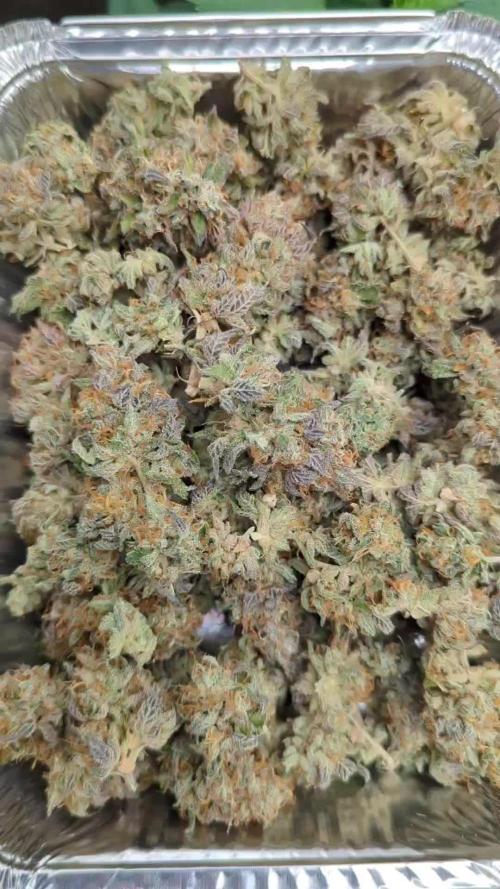
For my first run I am happy with my results even though the yield was very low . The banana cake is frosty and has a great nose on it . The bud has white ash and overall it tastes great . I will be doing another grow soon and Im going switch it up . Going to be a great next grow so don’t miss it .