




Likes
49
Share


@Roberts
Follow
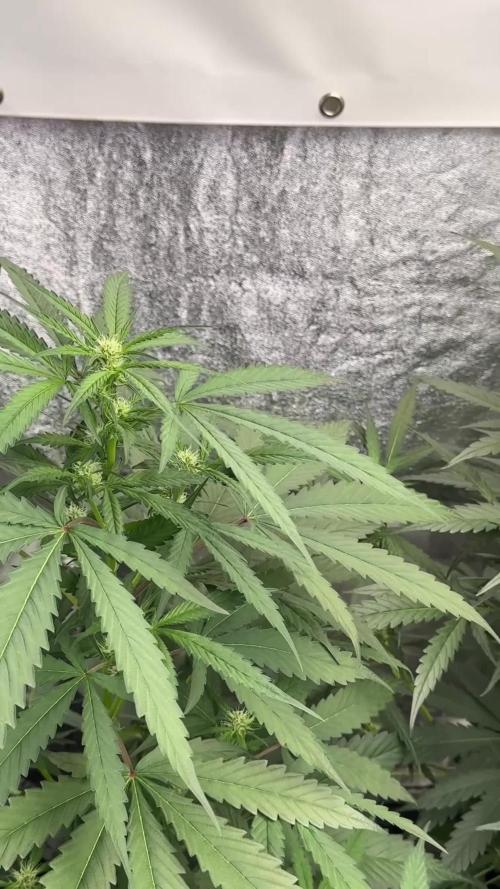
I switched her to ph water yesterday. She has a good cloudy trichromes with just a few amber started. So in roughly a week she should be right about where I want to try it at. She still has some flower, even though I messed her up in vegging. I have been having issues across the board here, and there on different plants. Beside that she smells good, and good trichrome layer. I am just letting her finish up, and will harvest on next update. Thank you Medic Grow, Athena, and Fast Buds. 🤜🏻🤛🏻🌱❄️🌱
Thank you grow diaries community for the 👇likes👇, follows, comments, and subscriptions on my YouTube channel👇. ❄️🌱🍻
Happy Growing 🌱🌱🌱
https://youtube.com/channel/UCAhN7yRzWLpcaRHhMIQ7X4g
If anyone needs to purchase fastbuds here is a link for my affiliate program
https://myfastbuds.com/?a_aid=60910eaff2419

Likes
29
Share


@Kushycat
Follow
So now we’re in the first week of flowering, and I’m really happy with how things are going. The plants are constantly putting on more leaf mass, so I have to prune them every few days to remove the light-stealers and the small shoots that keep popping up. They take it all in stride and reward me by stretching nicely. 😄
The lights are now running at 60% power. My goal is to reach 80–90% during flowering weeks 5–6, and then gradually dial them back again for a nice fade.
A very kind person sent me a few very special treats, so I already have some of the ingredients for the next run ready to go. But more on that once this one starts winding down. 😉

Likes
54
Share


@Fatnastyz
Follow
1-9
Watered 3x, starting flush.
1-11
Day 67 from seed
Day 43 of flower
Boosted Scc and cal/mag
Small shot ppm 550 ph 6.2
1-12
Started 3x flush. Ppm brought down to about 200.
1-14
Feed Scc ppm 550. Same as last feed.
Leaves showing fading.
.
Likes
18
Share


@cheetah844
Follow
The second tallest one of the bunch. I'm excited to watch how a strain rich in CBD grows in comparison to THC rich strains.
I topped and defoliated every plant. I'm trying to form them into canna-bushes. Hopefully I'm doing the correct training procedures to make them all grow that way both indoors and out.

Likes
3
Share

@CheeRz
Follow
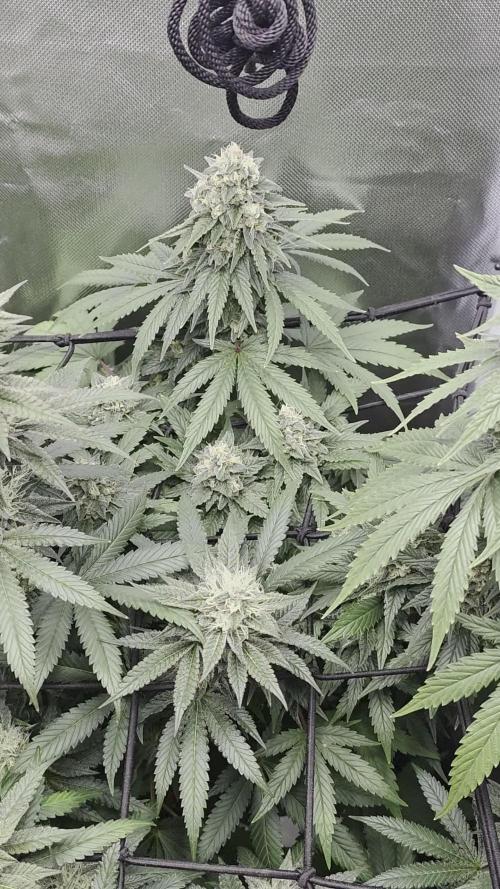
We are nearing the finish line! Both ladies look great, and the delicious aroma wafting from the tent brings a smile to my face every time. I think we should finish the run in about two weeks. 🍋🍋🍋

Likes
150
Share


@Ferenc
Follow
Day 80, 22nd of October 2020: 3rd week of flowering! Happiness she needs a lot of boost hard to keep up. She loves fertilization too much..... I mean before always craving for nitrogen now qould need more potassium and phosphorus hard to keep up. I also detect deficiency based on the leaves getting lighter and brown spots but I do feed her as much as I can really.
This week i have relised the first nice trichomes started "sitting" on the leaves as well and the pistils coming out nicely pre flowers forming. Let's go.


Processing
Likes
12
Share


@GYOweed
Follow
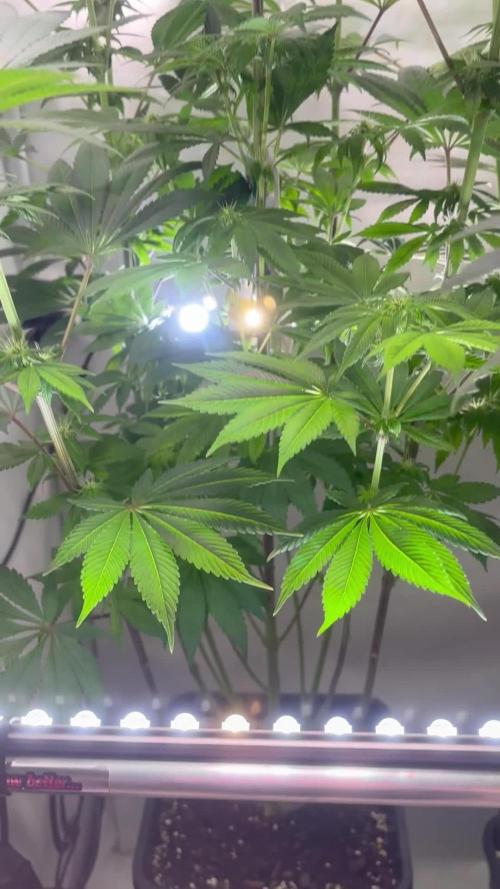
Added a 37w 5k few days ago and sat it ontop of another 2 gal so now closer to a bluer vegetation light spectrum.
Not bad at two weeks for an organic auto in a .75 gallon dollar tree pot!

Likes
Comments
Share

@Organic_bud21
Follow
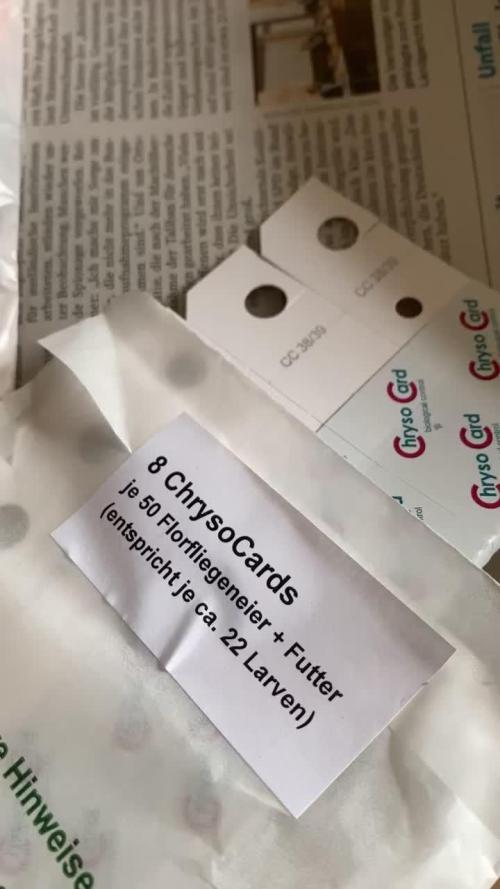
Anfang dieser Woche stand Umtopfen auf dem Plan. Da ich vom vorherigen grow noch Mycotrex hatte, wird auch alles verbraucht, genauso wie zum eintopfen 0,5g pro Pflanzloch. Den ersten Tag habe ich die Bewässerung ausgesetzt, zum anwurzeln lassen. Der 2te wurde normal bewässert 10% vom Topf Volumen. Ohne drain. Ab 4tag der dritten Woche, wieder tägliche Bewässerung 10%. Nach dem Umtopfen habe ich mit B-52 und Rhino Skin angefangen. B-52 wurde als kleines Experiment mit Break Thru Foliar ausgebracht, direkt nach dem umtopfen. Ich habe Außerdem einen leichten Thrips Befall festgestellt. Deshalb wurde einmal zum Ende der dritten blütewoche mit Neemöl 5ml pro L Spritzwasser behandelt und Nützlinge wurden auch danach eingesetzt. Raubmilben + Florfliegeneier. Ab jetzt sind 30% des unteren Topfvolumen Euro Pebbles.

Likes
35
Share


@organically
Follow
Week 5 - Day 4 - 11.12.2017
-
Hay lovers of Green, i will give you a big update.
While trying to fix the PH and Humidity issues last week, i've already found some nice root developments and decided to transplant to support the regeneration - 6.12.2017 -.
The Plants were unhealthy and shocked.
After 2 Days they started to reviltalize and stable - 08.12.2017 - and i found a suprise, the Dinamed's start to Preflower.
-
Today the sweetys are healthy,vital,bushy and got nice stems, in height arround 16 cm
-
■ Dinamex Auto. [Dinamex (Cali Sour D x OG Kush {Emerald OG}) x Haze 2.0 Auto (Jack Herer x Haze Automatic) ]
■ OG Kush Auto. CBD [ OG Kush Auto {OG Kush x Haze 2.0 Autoflowering} x Auto CBD ]
-
■ Timeline ■
Germination start [ 09.11.2017 - 17:00]
Germinated / into Coir Pellets [ am - 11.11.2017 / ]
PreVegetative start [ 13.11.2017 ]
Transplanted into 1L Airpots [ 19.11.2017 ]
Vegetative start [ 26.11.2017 ]
Transplanted into 7L TeKu [ 06.12.2017 ]
-
PreFlowering start [ Dinamex - 08.12.2017 // ]
-
Flowering start [ xx.xx.xxxx ]
Harvesting Part 1 [ xx.xx.xxxx ]
Harvesting Part 2 [ xx.xx.xxxx ]
-
■ Growroom ■
Size » 90x90x170 ~ 0,8 m²
-
PreVegetative Lightning
» 24 ▪️ LED ~ 33W - daylight - 3700lm
Vegetative Lightning
» 24 - 20/4 ▪️ HID ~ 250W - 5600K - 18.000lm
Flowering Lightning
» 12/12 ▪️ HID ~ 400W - 2100K - 56.500lm
-
Supply air ▪️ mesh window - negative pressure
Exhaust air fan ~ max.420m³/h ]
Circulating air fans ~ 3x16W max.2250 rpm
-
Pots ▪️ Coir Pellets --> 1 L Airpots --> 7 Liter TeKu.
Medium ▪️ Organic Soils!
Composition ▪️ bark humus,wood fibers,coconut fibers,coconut husks,compost,guano,hornmeal,clay minerals,trace elements,calcium carbonate,perlite.
-
■ Supported by ■
» Dinafem Seeds!
» Cellmax - Organic Growing.
//////////////////////////////////////////////////////////////////
👋 Greetings your organically
» tried and true, since simple is the best! 👍
Likes
24
Share


@DeepRootsGrowTrees
Follow
COLOMBIAN JACK by KANNABIA
Week #19 Overall
Week #8 Flower
This week she's still doing good buds are starting to get nice structure to them good trichome coverage she about half way through flower!!
Stay Growing!!
Kannabia.com
COLOMBIAN JACK




Likes
22
Share


@coriander
Follow
Day 99 - Finally got to chop a plant! Chopped the cheese, did a rough wet trim and hung it all in my diy drying chamber (see video above). I knew I was going to be chopping one before the other, so I threw together a cheap unit out of a garment box I bought from a moving company.
-It came with a cross bar, so I cut the box and re-taped it the way I wanted it, to conceal everything proper.
-Then, I drilled some holes in the sides for ventilation and taped some carbon filter from my air purifier overtop to keep pests and dust out.
-Outside of the box, I've got a Coway air purifier pulling out the smell and adding a bit of air circulation (pulls air passively through the vents in the sides) .
-For added flair 😉, I threw some velcro on the flaps and built a thermometer/hygrometer into the front to keep an easy watch.
They will hang from some clip hangers I grabbed, for a week or so, or until they're ready. Then I'll do a dry trim and time to cure!
Super Lemon Haze is still plugging along and getting dense. Smells great, and although the leaves show a past of issues, the buds are looking amazing. Can't wait 'till she's done! It's really nice to have the extra space in the tent now too. It was getting a little cramped.
Day 105 -
Cheese is doing well in the drying tent. Stems aren't snapping quite yet, so will need a day or two more. Drying chamber is working great. No smell whatsoever.
Super Lemon Haze is STILL GOING and looking good. Done with nutes now and watching trichs everyday. Buds are beefing up. The leaves are starting to fade, but the look and colour of the flowers is wild. Can't wait for it to finish up. Should be sometime in the next week or so.
Will post a final harvest for the cheese soon!
Thanks for stopping by! 🥦

Likes
37
Share


@GrownwithLED
Follow
In week 6 my HOMEBOX growtent has filled up so much, that I need to defoliate the plants. I take them out one by one and take off all lower branches (that dont get enough light) and all leaves of the lower part of the plant. I also take off most of the bigger fan-leaves of the top part of each plant, so the light can penetrate deeper into the canopy. I also add stakes and a plant-holder-ring to each pot, so the bigger plants are supported for better growth. You can see the difference in the BEFORE AND AFTER pics above. Two PURPS-plants from BC-BUD-Depot turned out to be male and have been discarded. Into one of the empty spots I put a small plant of BLUE MINT from Mountain High Seeds as replacement. The other spot stays empty. I simply put a tray into the open spot, so the water is not in the light and no algea grows in my autopot system. The watering via the Flexitank-reservoir works very well. Once a week I fill the reservoir with water mixed with BIO NOVA nutrients, following the SOIL-CULTIVATION schedule of BIO NOVA. Since the EC of my tap water is very high (comes out with EC=1,0 already) I can only add a lower amount of nutrients, therefore I use the BIO NOVA schedule at HALF strength. My babies LOVE the light from the EVO4-120 LED-fixtures from SANlight, they THRIVE under it! At this stage my two lamps are dimmed to 80% (=two green lights are ON, on the dimmer at side of lamp) and hang at a distance of 30 cm from the top of the plants. Now after the defoliation the airflow through the tent is much better and the light can also get to the lower parts of the plant. This way the flowering can continue with an enhanced grow of the buds.


Likes
2
Share

@DogDoctorOfficial
Follow
💜 Purple Haze by Zamnesia – Pheno A
Week 6 | The Legend Begins to Reveal Herself
Welcome back to another chapter of the 8×8 Adventure!
Every week these diaries become a little more exciting.
The differences between each phenotype become clearer.
Personalities emerge.
Growth patterns separate.
And some plants begin demanding your attention the moment you unzip the tent.
Purple Haze Pheno A has officially become one of those plants.
She isn't trying to be the loudest.
She simply stands there...
Elegant.
Confident.
Growing exactly the way a classic Haze should.
This week she reminded me why some genetics earn legendary status.
🌱 One Experiment... Countless Stories
If you're joining this diary for the first time, welcome!
This entire project is built around one simple idea:
What happens when every plant receives exactly the same opportunity?
Every seed in this room has been grown under the 12/12 From Seed technique.
No long vegetative period.
No separate flowering room.
No individual treatment.
Every phenotype receives:
• The same light schedule
• The same nutrients
• The same environment
• The same temperatures
• The same humidity
• The same care
The only variable...
...is genetics.
And Purple Haze continues proving just how powerful genetics truly are.
🌿 Grace in Every Direction
At approximately 88 cm tall, she has become one of the tallest ladies in the entire room.
Yet height alone doesn't tell her story.
What impresses me most is how balanced her structure has become.
The internodes have spaced beautifully.
Every branch has found its place.
The canopy remains open.
The airflow is excellent.
Light reaches deep into the plant without needing aggressive defoliation.
She almost seems to be building herself.
Every day she becomes a little more elegant.
A little more refined.
Classic Haze architecture is beginning to reveal itself, and it's beautiful to witness.
🌸 Flowers Everywhere You Look
This week marks the moment where there's no longer any doubt.
Purple Haze has fully entered flowering.
Every branch is producing flowers.
Every node carries fresh white pistils.
The tops continue stacking while secondary branches quickly catch up, creating dozens of future colas across the plant.
The stretch hasn't completely finished, but now another transformation begins.
The energy that once built stems is gradually shifting toward flower production.
Week by week the framework is disappearing beneath an ever-growing collection of buds.
And she's only getting started.
🍃 Healthy Leaves Tell an Important Story
One of my favourite things about this phenotype isn't actually the flowers.
It's the foliage.
The leaves are exactly what every grower hopes to see.
Large.
Rich green.
Flat.
Healthy.
Every fan leaf acts like a perfectly functioning solar panel, collecting energy that will eventually be transformed into dense, resin-covered flowers.
Rather than removing healthy foliage unnecessarily, I've continued relying mostly on leaf tucking to expose developing bud sites while allowing the plant to keep producing as much energy as possible.
Sometimes patience produces a better canopy than scissors ever could.
💧 Feeding the Next Chapter
As flowering progresses, the feeding program continues evolving alongside the plant.
This week's nutrient program includes:
• Terra Bloom
• Power Buds
• Green Sensation
• Sugar Royal
• Pure Zym
• Careful pH adjustment for maximum nutrient availability
Every adjustment is made gradually.
The objective isn't simply feeding bigger flowers.
It's supporting the plant while allowing her genetics to express their full potential without unnecessary stress.
So far...
She's responding beautifully.
🌡️ Stability Creates Great Plants
One lesson this project keeps reinforcing is just how important consistency can be.
Current environmental conditions remain stable:
• Day temperature: 29°C
• Night temperature: 25°C
• Relative humidity: 60%
• Solution temperature: 22°C
• Root zone temperature: 21°C
• CO₂ concentration: 639 ppm
When the environment remains consistent, plants can dedicate their energy to growing instead of constantly adapting.
That consistency allows every phenotype to show what it's truly capable of.
📷 This Week's Gallery
This week's photographs capture a plant beginning to reveal her future.
Close-ups highlight fresh clusters of bright white pistils emerging from every flowering site.
The wider shots showcase her beautiful Haze structure, with long, elegant branches carrying evenly spaced bud sites from top to bottom.
Several photographs focus on the healthy foliage surrounding the flowers, while others document the impressive overall symmetry that continues developing across the canopy.
Looking back at previous weeks, it's incredible to see how quickly she's transformed.
And somehow...
It still feels like she's only just getting warmed up.
🔮 Looking Ahead
Over the coming weeks I expect one of the most exciting stages of her journey to begin.
The stretch should gradually slow.
The flowers will begin swelling.
Bud sites that currently look delicate will merge together, forming the long, spear-shaped colas so many growers associate with classic Haze genetics.
If she continues following the path she's on today...
She has every opportunity to become one of the standout phenotypes of this entire 8×8 Adventure.
Not because she's the tallest.
Not because she's growing the fastest.
But because she's doing everything with remarkable balance.
Sometimes that's what truly exceptional genetics look like.
💚 Thank You
Thank you so much for following another chapter of this 8×8 Adventure.
Every week reminds me why documenting every individual phenotype has been one of the most rewarding projects I've ever undertaken.
Each diary tells a different story.
Each plant teaches a different lesson.
And Purple Haze Pheno A is reminding us that true elegance isn't measured by speed—it's measured by consistency.
A huge thank you to:
💚 GrowDiaries for providing a platform where growers from around the world can learn, share experiences, and inspire one another.
🌱 Zamnesia for providing the outstanding genetics behind this incredible phenotype hunt.
💜 Plagron for supplying the nutrition supporting every stage of this journey.
💡 Future of Grow LED for delivering the light that powers this entire project.
🌿 TrolMaster for helping maintain the stable environment that allows every phenotype to express its full potential.
And finally...
Thank you to everyone following these diaries, leaving comments, asking questions, and growing alongside me.
Every week this remarkable lady writes another chapter of her story.
And if this week is any indication...
I have a feeling we're watching something truly special unfold.
Growers Love... and Purple Haze Pheno A is only beginning to show us why legends are remembered. 💜🌿

Likes
2
Share


@DJWILF
Follow
Week6... Day5 Since Flip... Found 2 pistils on the plant at the back😊Used an app on my phone to measure ppfd...Im gonna let the plants stretch into the light...Im reading 800+On the top buds and still 550 on the buds that need to stretch😊 The spider farmer gives off a more intense light... The unit farm has a lot of reds in it... Both Plants are responding well...The daytime temps have dropped 2c...😊I'm not gonna Defoliate or lollipop...Im Not worried about larfy Nugs... They'll all go with the trim into cannabutter... Plus my plants are small the light Penetrates quite well😊Fed on Day44 3ltr 2ml/ltr BioGrow 2ml/ltr Biobloom 1ml/ltr Topmax No Epsom Salts
Likes
12
Share


@mowsgrows
Follow
Sweet, Sour, Gassy.. now we talking
Der Geruch erinnert mich nun an Vitamin C Bonbons und die Buds legen immer mehr zu.
Ich bin zufrieden mit dem Gesamtbild und freue mich über immer mehr frost.
Manche Blätter drehen sich vor lauter Trichomen zwischen den Zacken. Überall sieht man Zuckerkristalle bis auf die grossen Fächerbätter hinaus.
Es hat sich hier deutlich abgekühlt und für die letzten Wochen finde ich es sogar gut um ein klein wenig Herbst zu imitieren :)
Basis Dünger werden nur bei jedem zweiten Giessen verwendet, Booster bei jedem Mal. Ich gebe nun bis zum Schluss Alfa Boost mit hinzu, während ich bei den Mengen von Growzyme und Huminsäure Plus variiere
Das Thermometer habe ich nun mal auf Höhe der Blüten gehängt, im Endeffekt waren die Werte bisher alle von der Höhe der Töpfe
Edit 5.Sept. : Habe gestern an einer Pflanze Bananen in den Buds entdeckt. Habe Sie gespült, mit Skalpell die Sichtbaren Bananenteile entfernt und wieder etwas niedriger ins Zelt gestellt. Die anderen Beiden bekamen heute nochmal nutrients und werden mit der nächsten Tour auch gespült.
Ich brauche die Zwitter Pflanze mindestens zur weiterverarbeitung.
:(
Likes
64
Share


@SmokingTiki
Follow
Welcome to the Smoking Tiki's hut!
For this grow, I'm using some of the seeds I won at the Summer Buds contest from last year. I kept the seeds in my fridge door during one year. It worked very well because all the seeds successfully germinated after 48h! 😎 I used 3x3 seeds. I selected 2x3 seeds with the bigger root to put them in some pots. I will let them grow a bit and then select the 3 best plants to make it until the harvest.
It's the first time I grow some Fast Buds under a light and in a controlled environement, I'm really curious to see how it turns out!
My set-up:
--------------------------------------------------------------------------------------------------------------------------------------------------------------------------------------------------------------------
- Mars Hydro TSW2000 (300W).
- Tristar fan (30W)
- Greenmigo dehumidifier (155W).
- Compo Sana universal soil (2x40l)
- Timer
- Weather station + pH meter
Have a nice journey through my grow diary!
Likes
7
Share


@sensistar9
Follow
The strain is not the biggest yielder but its quite promissimg,the smell is top and the effects are a very mellow creative smoke,tastes like sweets,will grow it again ✌️✌️