


Likes
Comments
Share


@Hydronaut
Follow
This new 2 x 2 x 55 design packs everything you could want INSIDE a 100% Wi-Fi / Smart enabled grow cabinet; including a reservoir chiller. You can easily adjust and view all your variables remotely. No more guessing or endless A/B testing.
We’ve been running this new cabinet design empty for 10 days. We can keep the temperature within 1-2 degree, and the humidity within “2-4%” of our desired schedule (excluding full room exchanges); INSIDE the grow cabinet. We are implementing dual humidity system, so we will have adequate humidity inside this box without swimming in the high humidity in the office. Should help significantly with keeping LVPD in check without turning my desk into a swamp. Secondary humidifiers on the way.
Three seeds are soaking today. Maybe I’ll have something in the hopper soon!
Just created some software logic and added secondary humidifier into the grow box today and was able to bring the the humidity differential into check. I don’t have much faith in this 2 liter humidifier but I have room to squeeze another in on the other side if it drinks too fast. It’s on all the time with exhaust requirement. I can now keep my office around 50% and the box in the lower 60’s at canopy, with a 5-6 degree temp differential between the inside box and ambient. WAY better since I have to work in here too, and will get me in an ideal LVPD range. To get in the 60’s inside the box before meant my humidity in the office was close to 80% at times. Yikes. No dice with the “m” word. We’ll see how all the tech plays together for the next day or so. Beans should pop in the next day or two?
Today added smart energy monitor outlet on grow cabinet and another for heating, cooling, humidity and circulation. This configures into our app too!
System is just about dialed in with all variables in check. One bean crack today, so time to get the loose ends tied, and let her do her thing.
All three seeds cracked today. Stuck them into 3 mini humidity domes filled with RW, and placed them in the grow cabinet.

Likes
11
Share


Likes
5
Share


@BB_UK
Follow
Well these beauties are stood at a whopping 42" and are now working on their flowers in full effect! I'm quite sure at this point all these clones are the same strain of sugar bomb punch 😁 so ending up with the favourite in their! She reminds me of runtz muffin because of the orange punch in her genetics!

Likes
16
Share


@the_medicine_grow_uk
Follow
So she’s a week into flush with only about 10% amber trichomes so has a few more days yet. The bud size isn’t moving but the density of the buds has definitely increased.
Let me know what you think. 🙌🏼🙌🏼

Likes
6
Share

@DivineBuds420
Follow
Both RS11 plants are growing steadily and looking healthy. In contrast to the Pink Gelato, her leaves are noticeably thinner, showing a different growth characteristic.
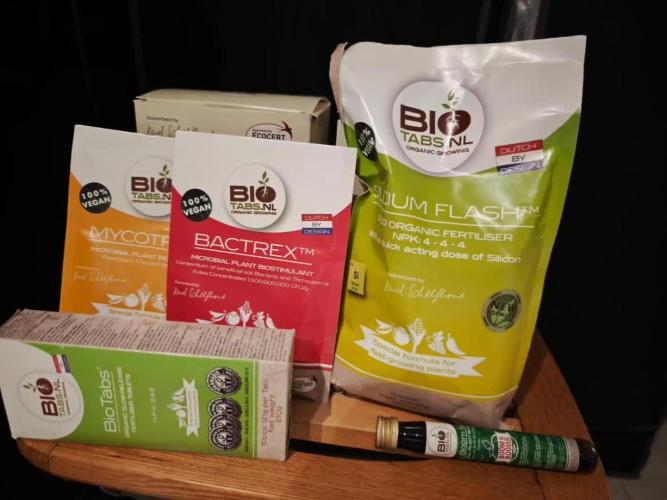
During the week, they’ll likely be transplanted into a slightly bigger pot and will get their full BioTabs treatment – nutrients, beneficial microorganisms, the whole organic setup. I’m excited to see her thrive.
I’ll be away on vacation for a few weeks after this update, so some diary entries may appear a little later. My cousin will be looking after the plants and watering them, and he’ll also take a few photos to keep track of their progress. Everything should continue smoothly while I’m away.
Both plants were successfully transplanted into 3.5 liter pots and received the full BioTabs treatment, including microorganisms and nutrients.
The substrate is based on reused and reconditioned soil with roughly 50% perlite mixed in. The base soil is BioBizz Light Mix.
Since watering is done exclusively with osmosis water, about 7 g of dolomite lime per liter of soil was added to provide proper calcium and magnesium buffering.
This run marks the first time following the BioTabs “just add water” strategy.
The substrate was prepared accordingly and amended with Startrex and Silicium Flash.
Before placing the plants into their new pots, Mycotrex was sprinkled directly into the planting hole and one BioTab was added to each pot.
After transplanting, the leaves were lightly sprayed with Boom Boom Spray.
The substrate was then watered with osmosis water mixed with Bactrex.
Everything went smoothly and the plants handled the transplant very well.
From here on, it’s all about letting the biology do the work.



Likes
321
Share


@Tropicannibis_Todd
Follow
🤔🤔🤔🤔🤔 HAPPY GROWING 🤔🤔🤔🤔🤔
We are now 35 Days into flowering and everything is going great 👍 👈 We are now slowing down in the streching and the budz are growing all over 👌
Did a good strip 👌 defolation is complete 👌 and happy with out come 😄
👍 decided to showcase the Mini BigBand , was a extra seed that germed so I kept it as a Mini Me 😊 She's killing it 👈
Except for some watering it's been pretty smooth I've done a little maintenance and manipulation of the canopy 👈
👉Soil Medium Provided by ProMix.ca
👉Nutrients Provided by Agrogardens
👉Lighting Provided by MarsHydro.ca
I would like to thank the many growmies for support throughout the years 🙏 So Let's Do This 👊👊👊 Happy Growing

Likes
11
Share


@Paradox_1ste1
Follow
The plants look very healthy and they have big and dense buds , ill havr to wait anothe week or cuple days until harvest even tho it may be a bit soon for it. One of the plants has started to root its top head of the buds , but i soupose its because of the temp . The air is getting dry cuz of the hot weather even tho im using 250w-400w lights on them . Trichromes look preety good and the bud is frosty . Some of the plants are not ready yet for some reason so i think i have to give them a bit more time
Likes
3
Share


@danielsegovia
Follow
17.06.20 (28 DÍAS) Empezaron a salir los primeros pistilos y se está estirando bastante
23.06.20 (34 DÍAS) La Red Critical Auto empieza a mostrar sus primeros buds violetas.

Likes
16
Share


@Nickeluring
Follow
We're getting close to harvest. She is putting on the last bit of weight and adding some trichomes these last days. Her smell is strong and good.
She'll go down later this week...
Likes
9
Share


@newenglandgrowers
Follow
Scratch what I said at the end of last week pests are still around just had some bug fly at me and bite/sting me on the neck now a got a welt on my neck smh, not sure what the heck it was it was some sort of black bug maybe a thrip but I honestly have no idea, did another neem oil drench on the medium only and tomorrow I'm going to use a hydrogen peroxide mixture again that way I can also use it on the tops and undersides of the leaves as well. Some of the roots started to become exposed on the top soil so I added more an inch or two coco to cover the exposed roots. Another successful week I guess the plants aren't dead so onto week 9, Week 4 of flower

Likes
72
Share


@BodyByVio
Follow
Beginning of week 8 and seems like a long way to go. Most of the hairs still white. Hopefully the buds will fill in more! As right now I’m planning to take it 10+ weeks.
This week I will lower the CO2 slowly 50 PPM every day until I will reach 800PPM. Also I will lower the light intensity by 2% every day.
This week I lowered the day temp to 79 degrees and next week I’m playing to lower it every further to 76 degrees Fahrenheit. Water temp is at 68 degrees and probably from week 9 I will lower it to 66.
Beginning of week 8 TDS is at 550PPM.
I sent adding the Late bloom enhancer from Current Culture!
End of week 8 : lowered the TDS to 470ppm , she seems that it not eating so much nutrients anymore. She still drinking 3 gallons of water every single day.

Likes
7
Share


@OwlGang_Uk
Follow
Gorilla Glue #1 - Harvest Comment - I Am Very Satisfied With What I Got, I got 3 ounce 7 grams - I Uses Advance Nutrients PH perfect In veg then I switch to the iguana juice organic juice for the flowering stage. I notice a much more slower growth when I switch to organic nutrients.00

Likes
14
Share


@ConspiracyFly
Follow
Amnesia 1 created fat buttons unlike amnesia 2 one of the reasons was poor rooting.


Likes
1
Share

@Ninjabuds
Follow
BeLeaf is having a massive 50% OFF sale on all seeds across our entire website — starting today!
Whether you're stocking up for the season or trying something new, this is the perfect time to grab our premium genetics at an unbeatable price. Use code Hello2026 at checkout!
✔️ 50% OFF all seeds
✔️ Limited-time sale
✔️ Available while supplies last
✔️ Fast, discreet shipping
If you’ve been waiting for the right moment, this is it.
Visit our shop and take advantage of the sale before it ends:
🌿 Shop Now: www.boomfiya.com

Likes
8
Share

@WestphaliaFarms
Follow
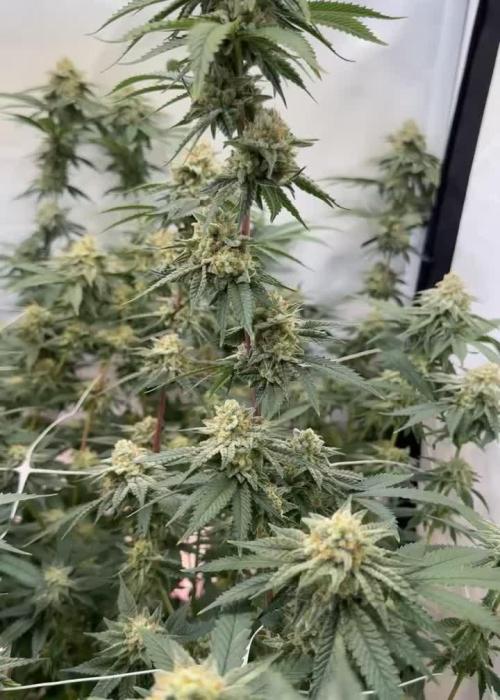
Bloom Feed Week 6: Cut down the EC faster than usual, because they seem to finish faster than planned. No more Voodoo Juice Plus, Big Bud and Rhinoskin. Just Base and Bloom and one last handfeed with Bud Factor X on monday. Did a last small defo on day 35 to open up the canopy. They are swelling up nicely and most trichs start to turn milky, resulting in some nice fruitsalat/strawberry banana gum aromas.


Likes
8
Share

@CalGonJim
Follow
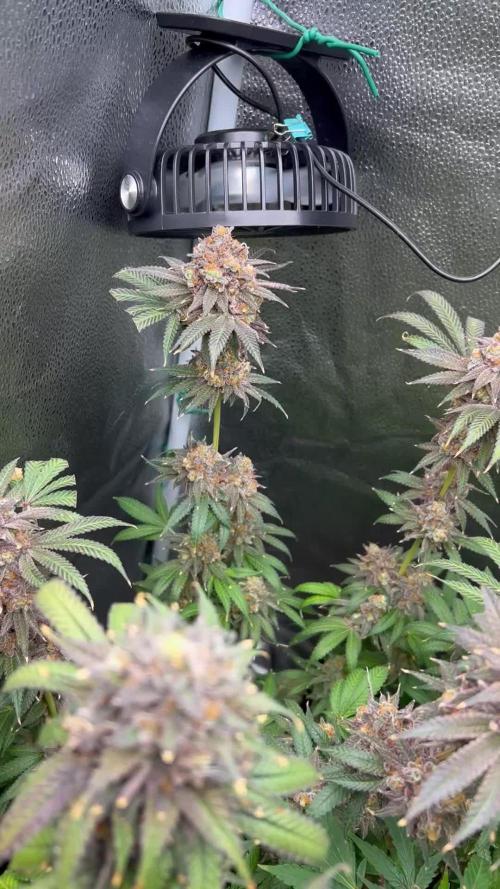
4/13 11AM MONDAY RQS Gelatto 44 and Punch Pie Tyson 2.0 are Finished!!! I will let them go a couple weeks longer but they are good to go! 9/10 Srong, good in coco/ no problems at all!
MONTEL DREAM WIDOW 11/10 ANOTHER WINNER!! So much resin, AMAZING BUDS SHAPED LIKE SPIDERS...SO GREAT. My ICE t is a little small, I didnt have enough space so she stayed compact and perfect small. Bubbles, Julinan and Ricky are doing better than ever
4/14 4:09 AM I just had an idea flash for my next grow so I need to make some notes. I have a cutting I took from a gorilla gas F1 fast flower by seedsmen I did it last year. I took the cutting when she was in flower. I put her in an organic grow plug that I got from seats man as well and I tortured her and I forgot to water it and I left it in there and then I put her in 1 gallon and I haven’t tried to do anything but she survived everything so I’m gonna grow her out into a full-size plant. I’ll probably put it in a bigger pot and do a small smaller grow not so many plants next time I think she’ll really be something.
4/14 1;23pm I turned the light up to 114 W and I’m just under 120. I’m trying to feel the driver and keep it cool so it doesn’t heat the room up. I have some plants in there that I didn’t veg right so they’re kind of screwed up and I have too many of them. I’m gonna have to take some down. The extra plants are preventing the better plants from growing so my experiment making my own seeds, it actually worked, but it’s still not as good as getting it from the actual breeders. And I have a series of medical problems that disable me for several days at a time so plans not look good and then I get behind a little bit so that.
4/18 1:30 PM I used floor clean and did a heavy flush on the Tyson plants gelato 44 and punch pie. I also used a little bit of it on the Montell Williams plant, which is amazing. Montel‘s dream widow is just incredible and she’s growing in an unusually small container and doing very well corkscrew auto however, was not an auto flower from Royal Queen seeds, but she’s behaving like a normal photo and her color is going great so even though it’s not an auto at 12:12 she did develop photo traits and is going to grow very successfully. I think as a photo she’s doing really good and I have a bubbles blueberry in there. I grew her terribly so she’s not doing as good as she could, but that’s on me.


Likes
5
Share

@MmaJunkie420
Follow
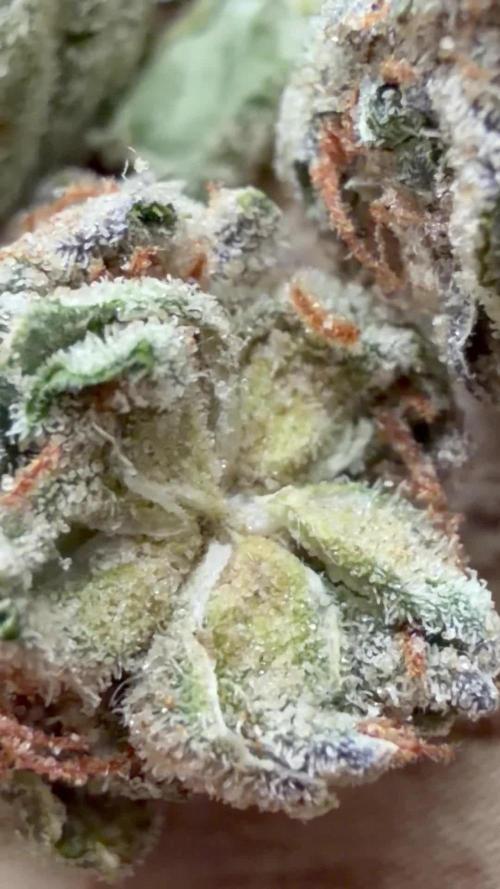
Week 8 start tomorrow and the super fast papaya frosting is down wow what a plant! Cannot wait for the cure heavy tropical pineapple/papaya/lime notes almost like fruit salad chewits. Coated in trichomes expecting roughly 3-4 oz from her she was the smallest in mass of the 4 though she must be sitting very high on THC & terps.
Another week for the zkittlez probs another 2 for the frozen biscotti 🔥🔥🔥



Likes
12
Share


@Ctbest2023
Follow
Week went good some are further along then others but they all looking beautiful fan leaves starting to yellow and purple and such on some then others they just stretching still they won’t all finish at same time I don’t think but it’s ok
Likes
7
Share

@UnitedStrainsGermany
Follow
Gorilla Girl XL Auto – Sweet Seeds
Woche 6 gesamt | Blüte Woche 1
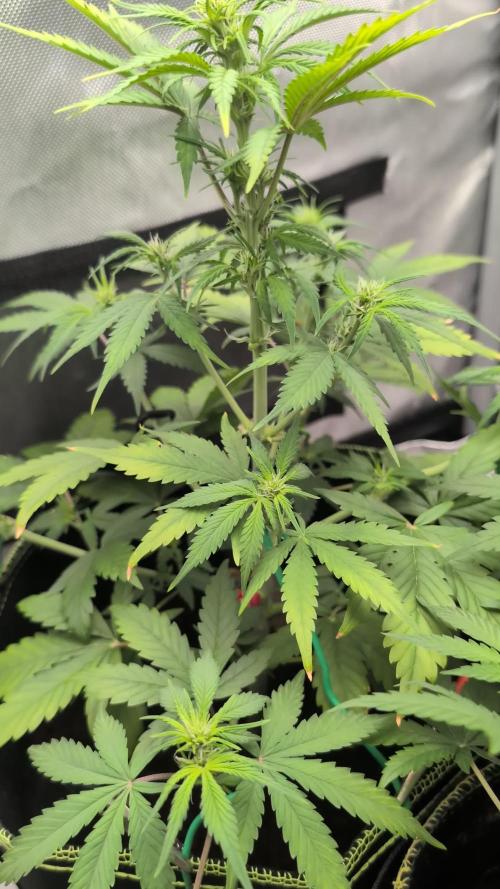
Die Gorilla Girl XL Auto ist jetzt voll in der Blüte angekommen und liefert direkt stark ab. Der Stretch läuft noch, aber wird langsam kontrollierbarer – sie hat in kurzer Zeit ordentlich an Höhe und Breite zugelegt und füllt den Space jetzt richtig gut aus.
Die ersten weißen Pistillen sind überall sichtbar und die Budsites entwickeln sich sauber und gleichmäßig. Vor allem im oberen Bereich bilden sich schon stabile Ansätze für dicke Colas. Die Struktur wirkt sehr aufgeräumt: gute Internodienabstände und viele potenzielle Headbuds durch das vorherige Training.
Die Pflanze steht top da – sattes Grün, kräftige Seitentriebe und keinerlei Anzeichen von Mangel oder Stress. Sie nimmt alles an, was man ihr gibt.
Licht-Update:
Die Leistung wurde jetzt von 60W auf 120W erhöht, was man direkt am Wachstum merkt. Die Pflanze reagiert sehr positiv darauf – kompaktere Entwicklung und mehr Druck auf die Budbildung. Die LED kann bei Bedarf noch bis 180W gefahren werden, aktuell ist aber ein sehr guter Sweet Spot erreicht.
Geruchlich geht es jetzt langsam los: leicht süßlich mit einer fruchtig-dieseligen Note im Hintergrund. Noch nicht zu aufdringlich, aber definitiv vorhanden – das wird in den nächsten Wochen eskalieren.
Setup / Notes:
120W aktuell → deutlicher Push im Wachstum
Bis 180W möglich in späterer Blütephase
Stretch noch aktiv, aber unter Kontrolle
Sehr gleichmäßige Budentwicklung
Keine Probleme bisher
Fazit Woche 6:
Perfekter Übergang in die Blütephase. Mit dem erhöhten Lichtlevel kommt jetzt richtig Energie rein – wenn das so weiterläuft, wird das eine fette, harzige Ernte 🔥
