


Likes
Comments
Share


@Bakeryguy420
Follow
Sorry guys havent updated in awile
Gg4 harvested
Tangiematic harvested
Ogesus #1,2 harvested
Gluebeerry just main cola harvested
White rrussian harvested
Sweet creme harvested
In.the run.left is rhino rryder, royal haze, amnesia gold , amensia haze , forgotten cookies and gluebeery and the new girls
Update on 3rd grow going Start a new diary for them today . My cat knocked down the seedlings 3 times zero stunt life which is shocking crazy crackhead ..
Quality is amazing for them all yield wasnt aa, much as I wanted believe emerald harvest is as garbage as foxfarm.

Glueberry Auto · Expert Seeds
Gorrila Glue #4 Auto (Expert Gorilla Auto) · Expert Seeds

Tangie Auto · Fast Buds
Sweet Cream Auto · Expert Seeds

Amnesia Haze Auto · Vision Seeds

Amnesia Gold · Pyramid Seeds
OGesus Auto · Expert Seeds

Royal Haze Auto · Royal Queen Seeds

Caramella Auto · Custom Breeder & Strain
Rhino Ryder Auto · Fast Buds

Fugue State Auto · Mephisto Genetics
Likes
14
Share


@LazysHomegrow
Follow
14 days on the auto watering system and the girls are looking happy. Everything survived well and my reservoir size was just right. They are looking a little hungry, but nothing s fresh mix of nutes shouldn't fix.
Things are starting to look frosty.
I'll Be pulling all the Larfy bits this week to optimize my tops.


Processing
Likes
12
Share


@growking123
Follow
Germinating looks good they were 1" long when I put them in super soil. Cover with cloche for a few days. Autoflower are supposed to go in the final pot. No transplanting. Got good seed from Crop King. We will see!!

Likes
17
Share


@Sergio_721
Follow
So far it seems to be fine even if the high humidity worries me even if the temperatures are still high then they have stopped growing and will finally focus on the flowers and slowly we recover these small deficiencies
Likes
5
Share


@Woodz
Follow
Good week this plants going steady about 3 n a bit weeks more than four but that's OK giving an update anyway plant going good nice and easy going once I've controlled temps being winter and all plus controlling nutes a bit more this plant seems to need more trace elements good learning loving it.

Likes
5
Share


@SpliffDoc
Follow
WOW! What a stinky little powerhouse this apricot is turning into, I've never smelt weed like this, so unique. She was always a runty little thing but what she's lacks in size she makes it up with her character, purple, pink resin coated gem buds💎
Likes
72
Share


@Roberts
Follow
Auto Maxi Gom is doing really well. I started adding the master bloom from Xpert Nutrients to the diet a few days ago. I did trim up her lower side a little more. She has stretched a few more inches since last update. Her colas are starting to develop, and looks like she will start bulking very soon. Nothing more to report at this time. Thank you Medic Grow, Seeds Mafia, and Xpert nutrition. 🤜🏻🤛🏻🌱🌱🌱
Thank you grow diaries community for the 👇likes👇, follows, comments, and subscriptions on my YouTube channel👇.
❄️🌱🍻 Happy Growing 🌱🌱🌱
https://youtube.com/channel/UCAhN7yRzWLpcaRHhMIQ7X4g
Likes
18
Share


@Stonyways
Follow
PATIENCE, cooler temps and straight water for 2 weeks, girls smell sweeter each time I have a look inside.
getting close to $60 for 2 complete grows with my SF 2000. my next grow I will factor in all costs from dirt, seeds to all electricity and nutrients.
Some amber showing, won’t be too much longer
I’m ready but the girls have other plans apparently, so I wait...waiting for the sun, waiting for the sun....
2/28/21. .... well shit, the girls won't be ready together, which means I will need to use another tent to start drying. my place will be packed up in boxes ready for the movers except for a drying tent for the kush...its gonna be close.
Later that day... one plant harvested at 1.4lbs wet (22.5 oz)
Life is good
Likes
13
Share

@El-Ecko
Follow
5 Week Flowering
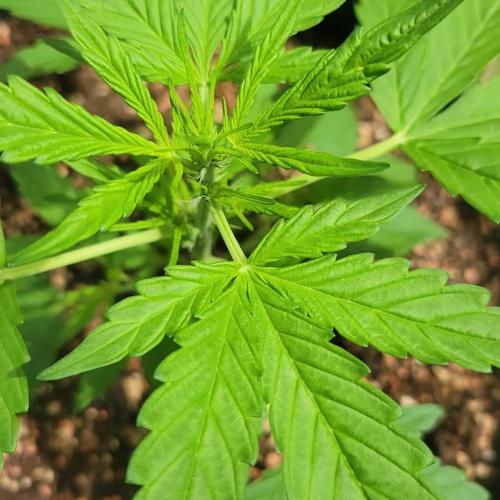
Little Pearl ⚪️ is now slowly entering the flowering phase and is doing very well.
She certainly won’t be the biggest, but she looks absolutely healthy🤤😋.
Unfortunately, the weather has been rather dreary and wet at times, but it’s supposed to get sunnier and warmer again next week. ☀️

Likes
18
Share


@thenotillwizard
Follow
Harvested at day 76, after 72h of darkness.
Very good yield!
3.3 pounds of dry buds + 1 pound of trim
The 2 keepers yielded 366 and 342g of premium quality smoke.
Very uplifting and energizing high :) Love it!

Likes
45
Share


@Bembeto
Follow
Todo perfecto, las hojas empiezan a cambiar el color. Signo claro de que ya se aproxima el corte
Próximo riego con lavador de raíz y a esperar 💐💕

Likes
23
Share


@PositiveVibes
Follow
Day 65: What a beauty! The sugar leaves have all faded purple and she is covered with frost. The buds are really starting to fatten up now.
I gave her 2L of water with nutrients. The weather has been rainy here the last couple days and I kept the lights on 24 hours to avoid the humidity rising above 60%. Soon the humidity should drop and I can go back to 20hrs. Maybe this wasn't really necessary, but I gives me peace of mind.
Day 67: I gave her 2L of water with nutrients. The smell opening the tent is so strong now. It smell of the tent is skunky, but if I smell the buds up close it smells sweeter and a bit like berries. There are a few more leaves yellowing at the bottom and a few of the fan leaves are starting to turn purple now too. The buds are fattening quickly now. The trichomes are a mix of clear and cloudy.
Day 69: I gave her another 2L of water with nutrients. Buds have grown noticeably since the last watering 2 days ago. She is also looking pretty frosty.

Processing
Likes
12
Share


@SmylinPupil
Follow
There isn’t a ton to report this week other than the two behind my garage are on their stretch, and the one in the garden is bulking up. It has been raining a lot here, I gave all two big dosages of cal/mag and tiger bloom. I figured most of the nutrients were washing through the soil. I haven’t noticed any nute burns, so I’ll likely keep feeding them once a week. I did some bud backbuilding on my garden plant about a week ago, because the other two didn’t look as developed, i snipped the tip of the buds on the other two about two days ago. I think overall I should have a pretty good yield this summer, I wish I had a bit more purple buds, but hey🤷♂️ Purple kush none the less. I’m signing out for the week, thanks for tuning in.
Cheers.

Likes
8
Share


@Mo_Powers
Follow
it is stable in the wind, withstands hot days and continues to grow. it is showing the first signs of flowering. i think it will go into full bloom next week. she still has 2 months before i move. i hope she makes it. she gets fertiliser every 2 days.
Likes
6
Share


@flitflitz
Follow
🥦 ayahuasca purple 🥦
peso: 173g cogollos secos
cogollos: poco pegajosos, duritos y de tamaño medio/pequeño
sabor y aroma: kush y huele a hierba de toda la vida
conclusión: esperaba poco de ella y las plagas que ha sufrido no le han ayudado. sin más, no pasará al recuerdo. hierba de guerrilla, teniendo las otras, ésta seguramente acabe para comestibles y demás

Likes
25
Share


@NONSENSE
Follow
Hi all!
Today I continue to record my DARK Phoenix lady vegetation stage.
This week the plant has grown a little. I continue to stretch the branches to the sides, thereby freeing up space for air circulation and light penetration.
There are enough fertilizers from the Green House Seeds and the plant looks healthy and strong. I added some root food from GHE and also the Urtica from GHE.
I continue to water every day, since it is COCONUT and it should always be wet - then there will be no salting.
And I keep the PH in the range between 6.3-6.5. I Added slightly more fertilizer to water this week, so the PPM is about 650-700.

Likes
2
Share

@Elron_mc_Bong
Follow
Blütetag 77 – Geduld zahlt sich aus
Drei Wochen über Herstellerangabe – und genau deshalb fühlt sich dieser Zeitpunkt richtig an.
Ich habe mich bewusst entschieden, nicht nach Kalender, sondern nach Reifegrad zu gehen. Ziel ist ein stark körperbetontes, sedierendes Endergebnis – also Geduld statt Eile.
Der Fade ist deutlich, die Blätter verlieren an Kraft, während die Buds dicht, harzig und vollständig ausgereift wirken. Jetzt geht es nicht mehr um Masse, sondern um Feinreife.
Die finale Woche beginnt.
🌿 Abschlussbericht – Franco’s Lemon Cheese 🍋🧀 | Tag 80 – Ernte
Tag 80. Heute ist der Tag, auf den ich die ganze Zeit hingearbeitet habe: Erntezeit.
Nach geduldigem Warten ist der Amber-Anteil jetzt genau da, wo ich ihn haben wollte – und damit ist für mich der perfekte Punkt erreicht, um die Schere anzusetzen.
Dieser Run war für mich vor allem eins: Kontrolle, Geduld und Feintuning. Ich hab bewusst nicht überhastet reagiert, sondern die Pflanze sauber bis zum Ende geführt. Die letzten Tage waren nochmal pures Beobachten: Trichome checken, Reife bewerten, Bauchgefühl + Lupe zusammenführen – und heute hat’s einfach „klick“ gemacht.
Was ich mitnehme aus diesem Grow
• Timing schlägt Stress: Das bisschen extra warten hat sich gelohnt – genau diese letzten Prozent machen am Ende den Unterschied.
• Reife vor Optik: Nicht nur nach „sieht fertig aus“ gehen, sondern nach dem, was die Trichome wirklich sagen.
• Stabil bis zum Schluss: Gerade die Endphase entscheidet, ob man mit einem guten Ergebnis endet oder mit einem „hätte ich mal…“.
Jetzt startet Phase 2
Ab jetzt geht’s nicht mehr um Wachstum, sondern um Qualität sichern:
Trocknung, Klima, Geduld – und dann Curing, bis die Franco’s Lemon Cheese genau das wird, was sie sein soll: hart, aromatisch, sauber, fertig.
Ich halte euch auf dem Laufenden mit den nächsten Updates zu:
• Wet Trim / Dry Trim
• Trocknungsdauer & Klima
• Erster Smoke-/Vape-Test
• Curing-Woche 1–4
Bis hierhin: Run sauber durchgezogen.
Heute wird geerntet. 🍋🧀✂️
Trocknung ist gestartet und läuft kontrolliert über den Controller:
• 60% rF
• 2% Totzone
• 16–18°C
Jetzt heißt’s: Ruhe bewahren, Klima stabil halten und langsam trocknen, damit Terps und Qualität sauber erhalten bleiben. Nächster Step: Dry-Check & Trim, sobald die Äste anfangen leicht zu “snappen”.
Likes
3
Share


@KannaGrowing
Follow
Esta semana, poca cosa a añadir, tan solo que continuamos como la semana pasada.
Riegos alternos entre abono y agua, según tabla de fertilización de JUJU Royal by BioBizz.
Hemos aumentado la potencia de extracción para evitar olores.
Likes
3
Share


@CaliJ
Follow
Récolte de 70 grammes sec pour une plante en pot de 7 litres, magnifique. Royal Critical auto à refaire
Processing
Likes
10
Share


@mkrmkr
Follow
Completing the fourth week, pruning "topping" performed on 05/30/20, apparently the plants are fine.
Plant 1 - Completing the fifth week of life.
Plant 2 - Completing the fourth week of life.
Plant 3 - Completing the fourth week of life.
Plant 4 - Completing the third week of life.
Pot transplant and LST performed today 06/06/20, let's see how they will behave.
Likes
1
Share


@sunshinegroww
Follow
What cani say its doing her things and looking rather happy has a big 🍁 and smells stinky and potent short plant im expecting big yield but see how it goes
