




Processing
Likes
19
Share


@Ganjagrandaddy
Follow
Day 47 ( 10 days flowering): Another week passes and these girls take full advantage of the available resources. #1 in the e ecothrive soil is killing it for size , bud sites and general health . Their is a clear difference between them all in the Los compared to the coco , mc fed plants. I do suspect 3 different phenos of the smoothie and others in this run but they are all 3 different. #2 is now under the TSL-2000 with her sister as she outgrew the light height in the middle. I have not out too much on her as she still looks very odd with discolouring and a cabbage look to her leaves. she is nowhere near as big overall but is straight up with no lst so should still give some decent bud.
#3 Is the little lady of the three and looks like a totally different plant than the other two. very stout and robust and will no doubt produce some fatties judging by her branch sizes. I am glad I have the sp250 for the smaller ones or they would be pain to keep level canopy wise. The 20L pots could have been a mistake and bigger could have been better. I wont be sure it it was pot size or medium that gave the LOS the edge.lol
I am loving the #1 girl and her size is huge. she could use a light of her own !!
peace and love folks. green days.


Likes
34
Share


@crystal_garden_0
Follow
End of week 5. Huge gains in all ways. Plants are quite big and lots of buds developing really fast. So far they are much more ahead of the other strains I'm running. Very fast plant. Very smelly, delicious.


Processing
Likes
8
Share


@Dunk_Junk
Follow
Her first week above ground!
I didn't do a very good job with this strain last time 😏
Lets see what happens this time.


Likes
2
Share


@AZTERPHUNTER
Follow
Giving another week didn’t realize these would go so long. I freeze-dried a couple top cola of each pheno to get a better profile on them Terps.

Likes
16
Share


@CheeRz
Follow
We started LST but the the lady in the back of the left side is round about 8 cm higher than the lady in the front. It looks like they r different pheno types. I hope that she'll grow faster now. If not I've to put her on a shoe box to match the height of the other plants.

Likes
21
Share


@Ultraviolet
Follow
Heyoka.
12x12=144, A dodecahedron is a polyhedron with 12 faces, and in coordination chemistry, it refers to a geometry where ligands surround a central metal atom (in this case, Magnesium) in a specific, 8-coordinate arrangement. Dodecahedrane is a hydrocarbon, meaning it's composed solely of carbon and hydrogen atoms. The carbon atoms are arranged at the corners of a dodecahedron, a 3D shape with 12 pentagonal faces. The water molecules in the dodecahedron form hydrogen bonds that are individually slightly weaker than in either the dimer or the tetramer. However, because three-quarters of the O -H groups in the dodecahedron form hydrogen bonds, it has a more negative energy per molecule than has either the dimer or the tetramer. Magnesium (Mg2+) is the essential, central metal ion in the chlorophyll molecule, crucial for photosynthesis by enabling light absorption and energy transfer. It is chelated by four nitrogen atoms within the porphyrin (or chlorin) ring structure. Chlorophyll appears green because it reflects light in the green region of the visible spectrum, specifically between 490 and 570 nm. The main resonance electronic frequency of a neutral Magnesium (Mg) atom corresponds to the transition from the ground state to the first excited state. Resonance Line Wavelength of Mg2+: 285.1nm (UVB light). The central atom of the chlorophyll molecule is Magnesium (Mg2+), which is coordinated within a porphyrin ring. The electronic "resonance frequency" of this central atom—meaning the frequency at which its electrons absorb energy—is primarily driven by the electronic transitions (ETR) of the surrounding conjugated chlorin ring structure, rather than a discrete atomic transition of the Magnesium atom itself. The resonant electronic frequencies of the chlorophyll porphyrin (technically, a chlorin) ring are determined by the energy required to promote π-electrons within its conjugated system, primarily appearing in the blue and red regions of the visible spectrum.
In standard physics, Chloryphyll b has peak absorption at 460nm (Blue). If we take the peak wavelength 460nm and a UV-B, UVR8 peak absorption wavelength 285nm Tryptophan-285 (W285) Sensing protein. 460/285=1.618 Φ, "natural harmony" and the "structure of light". The cryptochrome photoreceptor (CRY) is a UV-A/blue light receptor that shares this dual sensitivity with several other biological structures and functions, including significant sequence similarity and a common evolutionary ancestor with DNA photolyase enzymes. These are light-activated enzymes that use blue/UV-A light to repair DNA damage caused by UV-B radiation in plants.
Dodecahedrane (C20H20) is a hydrocarbon with a cage-like structure where carbon atoms form 12 pentagonal faces (a regular dodecahedron). It is highly symmetric (icosahedral), contains no delocalized electrons (no aromaticity), and has minimal angle strain, but significant torsional strain. Water Dodecahedron (H2O) forms hydrogen-bonded cages. While individual hydrogen bonds in this structure are weaker than in the linear dimer or tetramer, it has a more negative total energy per molecule. This is because three-quarters (75%) of the groups are involved in hydrogen bonding, creating a very stable, closed-shell configuration. a 3D carbon hydrocarbon (C20H20) to stable water clusters in hydrate, while the Magnesium ion acts as the central activator within a conjugated ring in biological systems, with its electronic absorption dominated by the ring, not the atom itself.
Effective quantum efficiency of photosystem II, often denoted as ΦPSII
In horticultural lighting, adding 730 nm (far-red) LEDs alongside standard red/blue lights has been shown to increase canopy photosynthesis by 20–30% in several crops by acting synergistically with shorter wavelengths. However, the limitation is that excessive, pure IR/Far-red light (without accompanying red light) can trigger the "shade avoidance response," causing plants to grow tall, weak, and spindly rather than robust. Knowing is half the battle however, engineering or utilizing infrared light (specifically the 700-750 nm far-red range) is a viable method to boost photosynthetic efficiency. It acts as a bridge to allow PSII to utilize a broader spectrum of light, breaking the traditional 700 nm barrier.
Extend, then multiply.
UVR8-mediated signaling (often in conjunction with CRY proteins) triggers protective mechanisms that maintain the stability of the photosynthetic apparatus (including LHCII and reaction center proteins), thus ensuring that the efficiency of Photosystem II remains higher in UV-B-exposed plants compared to plants lacking this receptor. ΦPSII indictates the rate of electron transfer from water to plastoquinone, which drives the production of ATP and NADPH. There is a close link between ΦPSII and the true rate of CO2 fixation (Φ*co2), particularly in C4 plants.
Effective quantum efficiency of photosystem II, often denoted as ΦPSII, represents the proportion of light absorbed by Photosystem II (ΦPSII) that is actually used in photosynthetic electron transport. It is a key indicator of how efficiently a plant is using light for photosynthesis, as opposed to losing it as heat or fluorescence. ΦPSII (effective quantum yield of photosystem II) functions primarily as a "multiplier" (a coefficient of efficiency) rather than an additive factor when estimating the overall photosynthetic electron transport rate (ETR). Multipliers are considered far more beneficial than additions because they generate exponential growth, leverage existing resources to their full potential, and create sustainable, self-multiplying capacity, rather than just incremental, linear increases.
Humans, and most other mammals, rely on other mechanisms, such as nucleotide excision repair, to manage and repair UV-induced DNA damage. As such, humans do not have the direct, light-driven repair mechanism that photolyase offers in plants.

Likes
27
Share


@Smokepurple137
Follow
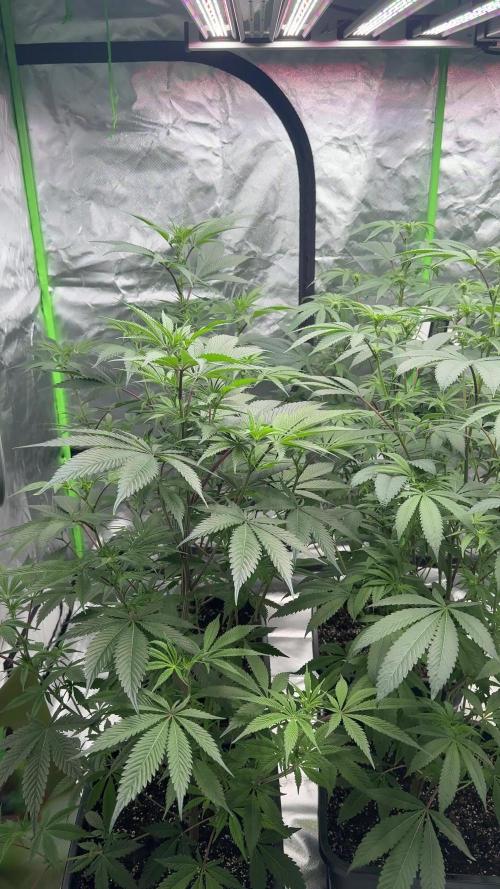
I'm happy with the progress they have made, all have responded well to defoliation and LST. I'll be adding a few more light nutrients at some point this week. The gorilla zkittles is shorter than the rest but looks very sturdy and has plenty of bud showing already, I think this is because it started flowering maybe 7days before the rest and in them 7days the rest shot up rapidly! I'll update daily and try get some nice videos with lights out.
Likes
1
Share



Likes
Comments
Share


Likes
7
Share


@GizaWRZ
Follow
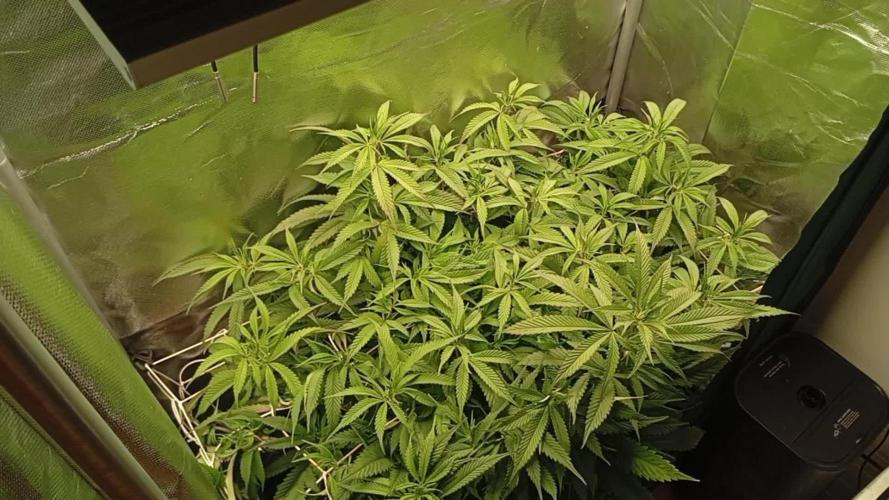
O.Sherbert its have better structure of buds and better smell, high its diffrent then white widow but very positive 👍 O.S > W.W
Likes
9
Share


@Gardengobblin
Follow
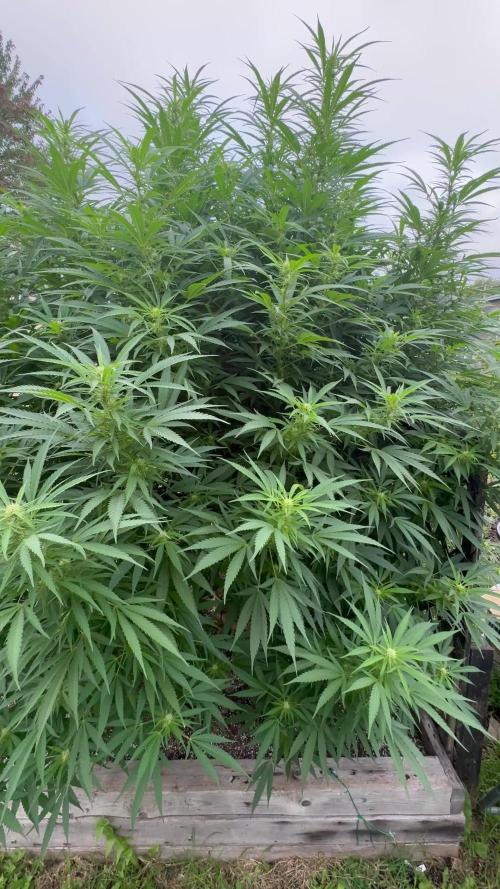
La transplantation a eu lieu ce matin . Assie la plante sur un eau lit de dynomico
Elle se porte à merveille et est en pleine santé. Les latéral on presque déjà dépasser la principal depuis que j'ai topper la principal ..
Je me répète mais les FF de fastbuds semble debtres bonne qualiter. Bien hâte de voir les fleurs dans quelque semaine


Likes
1
Share

@hinterhofgrower
Follow
.
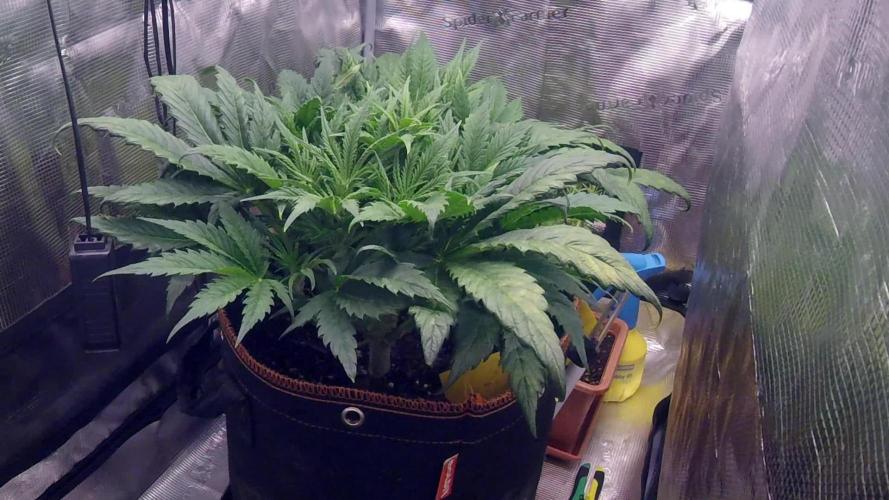
🌱 : Signs of Ca deficiency
💧 : 4l day 44. removed 1l runoff on day 45, 2l day 46
💡 : Dli: 45 mol/m²/d
🤔 : adjusting pH to 6,5 to force more Ca uptake, should have enough Ca / Mg available due to dolimte lime in the soil on day 46
Likes
34
Share


@ertaverd
Follow
Lots of wind and electric storms this week but they're still growing up, I did a defoliation and still watering with fish, roots and bio bloom from biobizz.
Mucho viento y tormentas eléctricas pero siguen creciendo bien. He hecho una defoliacion y sigo regando solo con biobizz. Cuando este en plena floracion le metere BloomBastic.

Likes
7
Share


@Cultivatorcarlos
Follow
Week 4 was actually pretty smooth. she was showing nitrogen and potassium deficiencies because she was being terribly underfed and because i had weened her off the veg nutes WAY too soon. I found the dyna gro nutrient schedule and ive been following that. i will definitely be following the schedule much better next round as i wasnt actually aware they had a schedule out. Shes currently week 5 day 1 and shes already fat af and super trichomey.s he still got at least 2 weeks left. she might be ready by week 7 honestly tho who knows guess well see. Ive been giving her 1 gal each time of dechlorinated tap water just straight water. it has been phd to 6.6 ph. runoff tested at 6.3 ph. will probably flush one last time before continuing the bloom feed.
Likes
5
Share


