Check the winners The Grow Awards 2026 🏆
Likes
Comments
Share
@LedDave
Follow
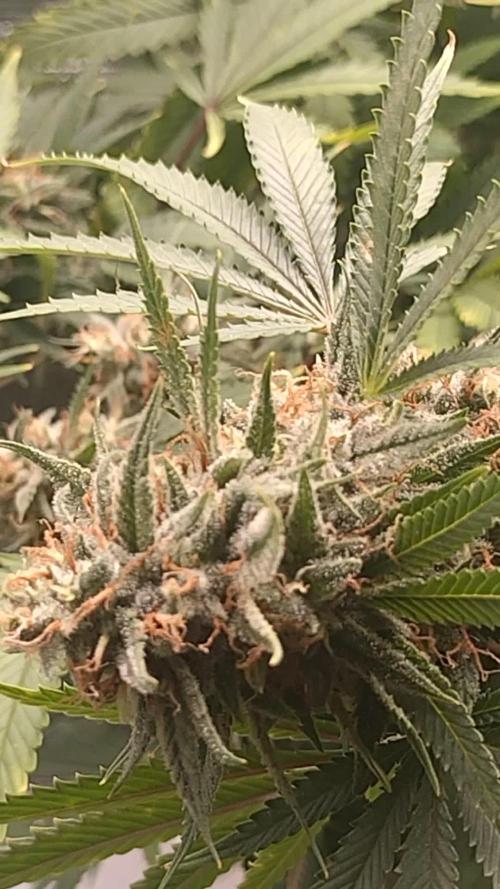
Will definitely grow this stain again if the opportunity arises, she gave me should dense nugs which smelt amazing!
Likes
12
Share
Привет друзья. Моей растихе сегодня 48 дней. Начал применять LST технику на 19 дне и продалжаю применять её через день, а 18 августа добавил ДЕФОЛИЗАЦИЮ С 20.08 ДЕФОЛИЗАЦИЮ делаю каждые 3,4 дня С 20.08 LST технику делаю каждые 4.6 дней На сегодняшний день влажность 50% Три дня назад заметил высокий Ph 7.9 С сегодняшнего дня Ph 5.8 Заказал погладитель влажности, отпишусь в следующем репорте. Не смотря на высокую влажность и высокий Ph, растение растёт хорошо, генетика радует. Всем мира и добра! https://t.me/smail_seeds #Smail_Seeds
Likes
46
Share
@Roberts
Follow
Drunken Bitch slap is looking really good. She is growing great under the Hortibloom Solux 350. I defoliated a little, and pruned roots up. She should be ready to switch times to flowering in about a week. Thank you Hortibloom, and Aeque Genetics. 🤜🏻🤛🏻🌱🌱🌱 Thank you grow diaries community for the 👇likes👇, follows, comments, and subscriptions on my YouTube channel👇. ❄️🌱🍻 Happy Growing 🌱🌱🌱 https://youtube.com/channel/UCAhN7yRzWLpcaRHhMIQ7X4g
Likes
5
Share
Im learning with this coco and the watering Im trying to improve this as I am allways over watering . She was deffo ready today as the leaves were wilting so shes had a good drink about 3 litres. The shogun nutrients seems to be amazing no deficiencies and super growth. I had too many plants in my tent so have reorganised everything to improve their health
Likes
25
Share
i accidently bought some unbuffered coco and mixed it with my ussual earth, had major calmag problems in mid-flower but i´m still pleased with the results...also had a little trouble with mold at the end due to bad weather and high humidity in the final weeks of the grow, had to remove a few buds and harvest early @ day 55 of flower....but there's still alot of great looking buds left for me to enjoy and all look mostly done... Just harvested and hung them upside down, currently drying them at constant 19.5-20.5°C and 50-60% RH..will update as soon as they are dry
Likes
88
Share
@Roberts
Follow
Gorilla Jealousy F1 is growing great. She had a solution change a few days ago. She also got lst and selective defoliation done today. In a few weeks she will go over to my Spider Farmer tent to flower her. The other plants are not gonna be ready when she is. She should be showing signs of maturity very soon. Everything has been going really well with her. Nothing more to report at this time. Thank you Seedsman, and Spider Farmer. 🤜🏻🤛🏻🌱🌱🌱 Thank you grow diaries community for the 👇likes👇, follows, comments, and subscriptions on my YouTube channel👇. ❄️🌱🍻 https://www.seedsman.com/?a_aid=Mrsour420. This is my affiliate link to seedsman. Thank you Happy Growing 🌱🌱🌱 https://youtube.com/channel/UCAhN7yRzWLpcaRHhMIQ7X4g
Likes
11
Share
Topped this plant been a few days fingers crossed she stays in veg state
Processing
Likes
8
Share
Que hay de nuevo familia, mis green ak xL están dando sus frutos, no veas que bonitas que se están poniendo, floración algo lenta y variedad difícil de cultivar pero que si sabes realmente merece la pena.
Likes
41
Share
@Haoss
Follow
This beautiful girl has started to bloom actively, she receives 5 liters of food every day, she feels very well 💚🌋
Likes
23
Share
@MistaOC
Follow
******************************************* 20.02. Day 25 ******************************************* Hello folks, I currently water about 0.5L every 2 to 3 days // RO Water // TEMP 20C // PH 6,4 // CalMag 1,5 // ******************************************* 23.02. Day 28 ******************************************* Today 3L Water for all Five plants // RO Water // TEMP 20C // PH 6,4 // CalMag 1,5 //
Likes
4
Share
@Sadom
Follow
22.08.: Die Blütewoche 3 beginnt. Ich bin noch bis Ende der Woche im Urlaub, sodass ich vom Anfang der Woche leider kein Material hab. Sobald ich wieder zuhause bin, werde ich ein aktuelles Update geben. Ich bin schon sehr gespannt, wie sie sich entwickelt haben, aber fest steht die G41 ist nen ordentliches Gerät geworden. Das Nächste Update kommt dann entweder am 25. oder am 26. Höhe Pflanze: PBB = 100cm G41 = 140cm Abstand zur Lampe: PBB = 66cm G41 = 26cm 27.08.: Wo soll ich nur anfangen?! In der Zeit, in der ich abwesend war hat sich die G41 so weit gestretcht, dass sie teilweise bis an die Lampe ran bzw. sogar schon vorbei gewachsen ist. Da das natürlich sehr schlecht für die Qualität der Blüten ist, wenn die Lampe zu nah an der Pflanze ist, musste ich sie bändigen und etwas Platz zwischen Lampe und Pflanze schaffen. Dafür habe ich ein 3. Netz installiert, welches jetzt als Stütze für die Triebe dient. Da ich auf gar keinen Fall zu diesem Zeitpunkt nochmal toppen wollte, blieb nur die Möglichkeit ein Supercropping oder auch Abknicken der Trieb durchzuführen. Dabei habe ich die Triebe kurz über dem Netz abgeknickt und dann auf dem Netz abgelegt. Dadurch werden natürlich untere Triebe verdeckt, aber das muss ich wohl in Kauf nehmen. Außerdem habe ich noch bei beiden Pflanzen einiges an Blättern und Triebe, die zu weit unten hängen geblieben sind, weggenommen, damit mehr Licht nach unten gelangt. Die PBB hat sich seit dem in der Höhe nur wenig verändert, aber ist dafür schon wesentlich weiter, was die Blütenbildung angeht. Man kann schon einige Trichome auf den Blättern erkennen und es kommen auch schon ein paar erste Terpene. Die Lampe habe ich von ca. 40% auf ca 70% hochgeregelt, damit bei der PBB auch noch ein paar Photonen ankommen. Abschließend gab es dann noch ein kleines Extra für die G41 in Form einer Handwässerung mit etwas Acti-Vera von BioBizz und hydrolysiertem Kelp, beides nach Augenmaß. Die Höhe der G41 anzugeben macht natürlich dementsprechend nicht mehr viel Sinn.
Likes
5
Share
@Klausi_J
Follow
Very good. Decresing the humidity to 45 %
Likes
7
Share
Ernte Die Pflanze wurde kurz nach der neunten Blütewoche geerntet, etwa drei Tage später, als die meisten Trichome milchig waren und vereinzelt schon bernsteinfarbene zu sehen waren. Ziel war ein eher euphorisches, klares High – und das wurde auch erreicht. Die Trocknung lief über etwa zehn Tage bei Temperaturen zwischen 15 und 21 °C und einer Luftfeuchtigkeit von rund 55 bis 62 %. Die Bedingungen waren stabil, und die Buds konnten langsam und schonend trocknen. Nach dem Trocknen wurden die Blüten manikürt und anschließend in Gläser mit Feuchtigkeitspacks gelegt, um das Curing zu starten. Die Buds waren zu diesem Zeitpunkt sehr klebrig, harzig und haben stark geglitzert, mit einem intensiven, süß-zitronigen Geruch. Update nach 4 Wochen: Trocknung & Curing Nach der Ernte wurde die Amnesia Lemon insgesamt etwa 10 Tage lang langsam getrocknet. Die Temperaturen lagen dabei meist zwischen 15–21 °C bei einer Luftfeuchtigkeit von ungefähr 55–62 %. Durch die eher kühlen Bedingungen konnten die Blüten langsam und kontrolliert trocknen, ohne zu schnell auszuhärten. Bereits während der Trocknung entwickelte sich ein sehr intensiver Geruch. Besonders auffällig waren starke Zitronen- und süßliche Terpennoten, kombiniert mit einer leicht würzigen Frische. Anfangs war noch ein leichter Heugeruch vorhanden, der sich im Verlauf des Curings jedoch deutlich abgebaut hat. Nach dem Trocknen wurden die Buds manikürt und anschließend in Braungläser mit 58 % bzw. 62 % Feuchtigkeitspacks gelagert. Während der ersten Wochen des Curings veränderte sich das Aroma nochmals deutlich. Der Geruch wurde tiefer, runder und deutlich angenehmer. Beim Öffnen der Gläser kommt inzwischen ein extrem intensiver süß-zitroniger Duft entgegen, der sich sofort im Raum verteilt. Die Blüten besitzen mittlerweile eine sehr gute Konsistenz: außen trocken, innen noch leicht elastisch und insgesamt sehr kompakt und harzig. Das Raucherlebnis wurde über die Wochen ebenfalls spürbar angenehmer und weicher. Eine spätere Laboranalyse bestätigte schließlich ein sehr gelungenes Endergebnis: 21 % THC 10,3 % Restfeuchtigkeit 0,4 AW Wasseraktivität Besonders positiv hervorgehoben wurden dabei die optimale Trocknung sowie der intensive Geruch des Samples. Insgesamt ein sehr erfolgreiches Endergebnis mit starkem Aroma, angenehmem Rauchverhalten und einer klaren, kopflastigen entspannten Wirkung. 😋
Likes
25
Share
ANTHOCYANIN production is primarily controlled by the Cryptochrome (CR1) Photoreceptor ( !! UV and Blue Spectrums are primary drivers in the production of the pigment that replaces chlorophyll, isn't that awesome! 1. Diverse photoreceptors in plants Many civilizations, including the sun god of ancient Egypt, thought that the blessings of sunlight were the source of life. In fact, the survival of all life, including humans, is supported by the photosynthesis of plants that capture solar energy. Plants that perform photosynthesis have no means of transportation except for some algae. Therefore, it is necessary to monitor various changes in the external environment and respond appropriately to the place to survive. Among various environmental information, light is especially important information for plants that perform photosynthesis. In the process of evolution, plants acquired phytochrome, which mainly receives light in the red light region, and multiple blue light receptors, including his hytropin and phototropin, in order to sense the light environment. .. In addition to these, an ultraviolet light receptor named UVR8 was recently discovered. The latest image of the molecular structure and function of these various plant photoreceptors (Fig. 1), focusing on phytochrome and phototropin. Figure 1 Ultraviolet-visible absorption spectra of phytochrome, cryptochrome, phototropin, and UVR8. The dashed line represents each bioactive absorption spectrum. 2. Phytochrome; red-far red photoreversible molecular switch What is phytochrome? Phytochrome is a photochromic photoreceptor, and has two absorption types, a red light absorption type Pr (absorption maximum wavelength of about 665 nm) and a far-red light absorption type Pfr (730 nm). Reversible light conversion between the two by red light and far-red light, respectively(Fig. 1A, solid line and broken line). In general, Pfr is the active form that causes a physiological response. With some exceptions, phytochrome can be said to function as a photoreversible molecular switch. The background of the discovery is as follows. There are some types of plants that require light for germination (light seed germination). From that study, it was found that germination was induced by red light, the effect was inhibited by subsequent far-red light irradiation, and this could be repeated, and the existence of photoreceptors that reversibly photoconvert was predicted. In 1959, its existence was confirmed by the absorption spectrum measurement of the yellow sprout tissue, and it was named phytochrome. Why does the plant have a sensor to distinguish between such red light and far-red light? There is no big difference between the red and far-red light regions in the open-field spectrum of sunlight, but the proportion of red light is greatly reduced due to the absorption of chloroplasts in the shade of plants. Similar changes in light quality occur in the evening sunlight. Plants perceive this difference in light quality as the ratio of Pr and Pfr, recognize the light environment, and respond to it. Subsequent studies have revealed that it is responsible for various photomorphogenic reactions such as photoperiodic flowering induction, shade repellent, and deyellowing (greening). Furthermore, with the introduction of the model plant Arabidopsis thaliana (At) and the development of molecular biological analysis methods, research has progressed dramatically, and his five types of phytochromes (phyA-E) are present in Arabidopsis thaliana. all right. With the progress of the genome project, Fi’s tochrome-like photoreceptors were found in cyanobacteria, a photosynthetic prokaryotes other than plants. Furthermore, in non-photosynthetic bacteria, a homologue molecule called bacteriophytochrome photoreceptor (BphP) was found in Pseudomonas aeruginosa (Pa) and radiation-resistant bacteria (Deinococcus radiodurans, Dr). Domain structure of phytochrome molecule Phytochrome molecule can be roughly divided into N-terminal side and C-terminal side region. PAS (Per / Arndt / Sim: blue), GAF (cGMP phosphodiesterase / adenylyl cyclase / FhlA: green), PHY (phyto-chrome: purple) 3 in the N-terminal region of plant phytochrome (Fig. 2A) There are two domains and an N-terminal extension region (NTE: dark blue), and phytochromobilin (PΦB), which is one of the ring-opening tetrapyrroles, is thioether-bonded to the system stored in GAF as a chromophore. ing. PAS is a domain involved in the interaction between signal transduction-related proteins, and PHY is a phytochrome-specific domain. There are two PASs and her histidine kinase-related (HKR) domain (red) in the C-terminal region, but the histidine essential for kinase activity is not conserved. 3. Phototropin; photosynthetic efficiency optimized blue light receptor What is phototropin? Charles Darwin, who is famous for his theory of evolution, wrote in his book “The power of move-ment in plants” published in 1882 that plants bend toward blue light. Approximately 100 years later, the protein nph1 (nonphoto-tropic hypocotyl 1) encoded by one of the causative genes of Arabidopsis mutants causing phototropic abnormalities was identified as a blue photoreceptor. Later, another isotype npl1 was found and renamed phototropin 1 (phot1) and 2 (phot2), respectively. In addition to phototropism, phototropin is damaged by chloroplast photolocalization (chloroplasts move through the epidermal cells of the leaves and gather on the cell surface under appropriate light intensity for photosynthesis. As a photoreceptor for reactions such as escaping to the side of cells under dangerous strong light) and stomata (reactions that open stomata to optimize the uptake of carbon dioxide, which is the rate-determining process of photosynthetic reactions). It became clear that it worked. In this way, phototropin can be said to be a blue light receptor responsible for optimizing photosynthetic efficiency. Domain structure and LOV photoreaction of phototropin molecule Phototropin molecule has two photoreceptive domains (LOV1 and LOV2) called LOV (Light-Oxygen-Voltage sensing) on the N-terminal side, and serine / on the C-terminal side. It is a protein kinase that forms threonine kinase (STK) (Fig. 4Aa) and whose activity is regulated by light. LOV is one molecule as a chromophore, he binds FMN (flavin mononucleotide) non-covalently. The LOV forms an α/βfold, and the FMN is located on a β-sheet consisting of five antiparallel β-strands (Fig. 4B). The FMN in the ground state LOV shows the absorption spectrum of a typical oxidized flavin protein with a triplet oscillation structure and an absorption maximum wavelength of 450 nm, and is called D450 (Fig. 1C and Fig. 4E). After being excited to the singlet excited state by blue light, the FMN shifts to the triplet excited state (L660t *) due to intersystem crossing, and then the C4 (Fig. 4C) of the isoaroxazine ring of the FMN is conserved in the vicinity. It forms a transient accretionary prism with the tain (red part in Fig. 4B Eα) (S390I). When this cysteine is replaced with alanine (C / A substitution), the addition reaction does not occur. The effect of adduct formation propagates to the protein moiety, causing kinase activation (S390II). After that, the formed cysteine-flavin adduct spontaneously dissociates and returns to the original D450 (Fig. 4E, dark regression reaction). Phototropin kinase activity control mechanism by LOV2 Why does phototropin have two LOVs? Atphot1 was found as a protein that is rapidly autophosphorylated when irradiated with blue light. The effect of the above C / A substitution on this self-phosphorylation reaction and phototropism was investigated, and LOV2 is the main photomolecular switch in both self-phosphorylation and phototropism. It turns out that it functions as. After that, from experiments using artificial substrates, STK has a constitutive activity, LOV2 functions as an inhibitory domain of this activity, and the inhibition is eliminated by photoreaction, while LOV1 is kinase light. It was shown to modify the photosensitivity of the activation reaction. In addition to this, LOV1 was found to act as a dimerization site from the crystal structure and his SAXS. What kind of molecular mechanism does LOV2 use to photoregulate kinase activity? The following two modules play important roles in this intramolecular signal transduction. Figure 4 (A) Domain structure of LOV photoreceptors. a: Phototropin b: Neochrome c: FKF1 family protein d: Aureochrome (B) Crystal structure of auto barley phot1 LOV2. (C) Structure of FMN isoaroxazine ring. (D) Schematic diagram of the functional domain and module of Arabidopsis thaliana phot1. L, A’α, and Jα represent linker, A’α helix, and Jα helix, respectively. (E) LOV photoreaction. (F) Molecular structure model (mesh) of the LOV2-STK sample (black line) containing A’α of phot2 obtained based on SAXS under dark (top) and under bright (bottom). The yellow, red, and green space-filled models represent the crystal structures of LOV2-Jα, protein kinase A N-lobe, and C-robe, respectively, and black represents FMN. See the text for details. 1) Jα. LOV2 C of oat phot1-to α immediately after the terminus Rix (Jα) is present (Fig. 4D), which interacts with the β-sheet (Fig. 4B) that forms the FMN-bound scaffold of LOV2 in the dark, but unfolds and dissociates from the β-sheet with photoreaction. It was shown by NMR that it does. According to the crystal structure of LOV2-Jα, this Jα is located on the back surface of the β sheet and mainly has a hydrophobic interaction. The formation of S390II causes twisting of the isoaroxazine ring and protonation of N5 (Fig. 4C). As a result, the glutamine side chain present on his Iβ strand (Fig. 4B) in the β-sheet rotates to form a hydrogen bond with this protonated N5. Jα interacts with this his Iβ strand, and these changes are thought to cause the unfold-ing of Jα and dissociation from the β-sheet described above. Experiments such as amino acid substitution of Iβ strands revealed that kinases exhibit constitutive activity when this interaction is eliminated, and that Jα plays an important role in photoactivation of kinases. 2) A’α / Aβ gap. Recently, several results have been reported showing the involvement of amino acids near the A’α helix (Fig. 4D) located upstream of the N-terminal of LOV2 in kinase photoactivation. Therefore, he investigated the role of this A’α and its neighboring amino acids in kinase photoactivation, photoreaction, and Jα structural change for Atphot1. The LOV2-STK polypeptide (Fig. 4D, underlined in black) was used as a photocontrollable kinase for kinase activity analysis. As a result, it was found that the photoactivation of the kinase was abolished when amino acid substitution was introduced into the A’α / Aβ gap between A’α and Aβ of the LOV2 core. Interestingly, he had no effect on the structural changes in Jα examined on the peptide map due to the photoreaction of LOV2 or trypsin degradation. Therefore, the A’α / Aβ gap is considered to play an important role in intramolecular signal transduction after Jα. Structural changes detected by SAXS Structural changes of Jα have been detected by various biophysical methods other than NMR, but structural information on samples including up to STK is reported only by his results to his SAXS. Not. The SAXS measurement of the Atphot2 LOV2-STK polypeptide showed that the radius of inertia increased from 32.4 Å to 34.8 Å, and the molecular model (Fig. 4F) obtained by the ab initio modeling software GASBOR is that of LOV2 and STK. It was shown that the N lobes and C lobes lined up in tandem, and the relative position of LOV2 with respect to STK shifted by about 13 Å under light irradiation. The difference in the molecular model between the two is considered to reflect the structural changes that occur in the Jα and A’α / Aβ gaps mentioned above. Two phototropins with different photosensitivity In the phototropic reaction of Arabidopsis Arabidopsis, Arabidopsis responds to a very wide range of light intensities from 10–4 to 102 μmol photon / sec / m2. At that time, phot1 functions as an optical sensor in a wide range from low light to strong light, while phot2 reacts with light stronger than 1 μmol photon / sec / m2. What is the origin of these differences? As is well known, animal photoreceptors have a high photosensitivity due to the abundance of rhodopsin and the presence of biochemical amplification mechanisms. The exact abundance of phot1 and phot2 in vivo is unknown, but interesting results have been obtained in terms of amplification. The light intensity dependence of the photoactivation of the LOV2-STK polypeptide used in the above kinase analysis was investigated. It was found that phot1 was about 10 times more photosensitive than phot2. On the other hand, when the photochemical reactions of both were examined, it was found that the rate of the dark return reaction of phot1 was about 10 times slower than that of phot2. This result indicates that the longer the lifetime of S390II, which is in the kinase-activated state, the higher the photosensitivity of kinase activation. This correlation was further confirmed by extending the lifespan of her S390II with amino acid substitutions. This alone cannot explain the widespread differences in photosensitivity between phot1 and phot2, but it may explain some of them. Furthermore, it is necessary to investigate in detail protein modifications such as phosphorylation and the effects of phot interacting factors on photosensitivity. Other LOV photoreceptors Among fern plants and green algae, phytochrome ɾphotosensory module (PSM) on the N-terminal side and chimera photoreceptor with full-length phototropin on the C-terminal side, neochrome (Fig. There are types with 4Ab). It has been reported that some neochromes play a role in chloroplast photolocalization as a red light receiver. It is considered that fern plants have such a chimera photoreceptor in order to survive in a habitat such as undergrowth in a jungle where only red light reaches. In addition to this, plants have only one LOV domain, and three proteins involved in the degradation of photomorphogenesis-related proteins, FKF1 (Flavin-binding, Kelch repeat, F-box 1, ZTL (ZEITLUPE)), LKP2 ( There are LOV Kelch Protein2) (Fig. 4Ac) and aureochrome (Fig. 4Ad), which has a bZip domain on the N-terminal side of LOV and functions as a gene transcription factor. 4. Cryptochrome and UVR8 Cryptochrome is one of the blue photoreceptors and forms a superfamily with the DNA photoreceptor photolyase. It has FAD (flavin adenine dinucle-otide) as a chromophore and tetrahydrofolic acid, which is a condensing pigment. The ground state of FAD is considered to be the oxidized type, and the radical type (broken line in Fig. 1B) generated by blue light irradiation is considered to be the signaling state. The radical type also absorbs in the green to orange light region, and may widen the wavelength region of the plant morphogenesis reaction spectrum. Cryptochrome uses blue light to control physiological functions similar to phytochrome. It was identified as a photoreceptor from one of the causative genes of UVR8 Arabidopsis thaliana, and the chromophore is absorbed in the UVB region by a Trp triad consisting of three tryptophans (Fig. 1D). It is involved in the biosynthesis of flavonoids and anthocyanins that function as UV scavengers in plants. Conclusion It is thought that plants have acquired various photoreceptors necessary for their survival during a long evolutionary process. The photoreceptors that cover the existing far-red light to UVB mentioned here are considered to be some of them. More and more diverse photoreceptor genes are conserved in cyanobacteria and marine plankton. By examining these, it is thought that the understanding of plant photoreceptors will be further deepened.
Processing
Likes
50
Share
Hello growers and tokers! 👋 👩‍🌾 🧑‍🌾.🔥💨 Hope you had a great week because these ladies sure have! 😍 They're starting to get that sweet aroma this strain gives off, her aroma will be over powering my tent in full flower. Love it! Pictures and info were taken on day 12 of flower. I put 71cm tall because that's the average between the three girls. CC 1: 78cm CC 2: 68cm CC 3: 68cm CC 1 is killing it with the double main colas. 💪 💪 🤩 CC2 is my favorite. She's got a perfect shape, nice evenly distributed canopy. Took LST great. For me that's the goal when I do LST. CC3 doesn't fall behind in any way, she's looking great. There's a bunch of new growth everywhere so after 21 days i'll be doing some pretty heavy selective defoliation. Feeding 1,5L each, every other day. Will be increasing as they ask for more. How do they ask for more? When feeding if the soil is drier than normal I give a 150-200ml increment of water. I do that until they stop feeding so much then i just maintain that amount. I start reducing if it takes longer to dry. That works good for me. The old finger in the dirt trick. 👍 Nothing like knowing exactly what your ladies need first hand. They've got a lovely green lush color. It's a delight growing this strain. I'll have to get me some more seeds for next run because this is a strain that will always have a spot in my garden. 😍 😍 Hope you enjoyed this week's update and stay tuned for next week. If you like what you see check out the other strains in the garden. 😁 Take care and stay safe! One love!
Likes
19
Share
@creichs
Follow
Heights are for the power flower which is under the 1000w light. growing super dense new branches everywhere hopefully can pull it apart a little when i get my screen in. Holy punch is 8" tall with 600W light 4" away. has been growing very bushy still easy to train.
Likes
1
Share
Likes
200
Share
@Ferenc
Follow
Day 58, 7th of November 2020: The 6th day since the lamp switched to be 12/12. I raised up the nutrition intake as it can be seen above only the BioBizz family 2ml/l and removed some LST because the plants remain in shape or just set a bit but nothing significant.... They look good and strech is on the way..... These Original Sensible ones are having really nice smell :) Nothing really to report there is crazy 2-3 weeks from now ;)