Likes
Comments
Share


@YoCultivoo
Follow
Estamos cumpliendo 54 días desde que se cambió el periodo a floración


Likes
2
Share


@Vet4weed
Follow
Week 7 (Feb 15 - Feb 21).
All three plants are doing nicely, and River, our youngest plant, is doing a good job keeping up, but still a couple inches shorter. So, I decided to FIM the older two plants to see if it evens them out, or sends them into a growth spurt. If the later, then I'll give River a FIM next week.

Likes
77
Share


@DogDoctorOfficial
Follow
Week 10 Flower — The Beauty Before the Finish
This week marks a very special chapter in the Eternity Grow Cup. As we approach harvest, the garden is simply glowing with beauty. Every corner, every canopy, every branch tells a story — and this week, I’ve taken the time to slow down and capture that story as best I can through the lens of my camera.
All the photos you’ll see in this update were taken with care and intention. I use my Sony camera in full manual focus mode, and I don’t just snap and go — I spend time with each plant, each angle, waiting for that perfect moment when everything aligns. These are not just photos to document — they’re my attempt to reflect the feeling of the room, the energy of the grow, and the soul of each plant.
Just like with the videos, I don’t shoot randomly and decide later. I record what matters, and what I record, I use. It keeps me focused, organized, and deeply connected to the process — and I believe it helps me tell the story more clearly, whether through stills or moving pictures.
All five Runtz phenos are finishing beautifully. Each one expressing unique traits, but all carrying the same stunning quality — dense, clean, colorful, resin-rich flowers that fill the room with pride. This garden is finishing spotless, and I couldn’t be happier.
This week’s YouTube episode will reflect that beauty. If you’re seeing this here on GrowDiaries, I highly recommend checking it out in full 4K once it’s live — there are moments that simply can’t be translated in photos alone, even though I try my best. But for those who love the details, the full spread of pictures is right here, as always.
t this point in flower, the girls are not eating — they’re just drinking clean water with nothing but System Clean in the reservoir, at a rate of 0.25 ml per liter. This is part of a gentle, prolonged flush phase I like to implement, giving the plants a chance to metabolize and fade naturally. The goal is to promote clean, vibrant flowers that finish with optimal expression, without rushing the process. No forced flush, just time and care.
Lighting-wise, the spectrum has been tuned with precision — we’re currently running 40% on the whites, with reds and UVs at 100% to drive trichome development, resin production, and color expression in these final days. The plants are loving it — they’re soaking in the deeper wavelengths that signal the end of their life cycle and responding with a final push of energy.
And yes — we’ve been running 11 hours of light and 13 hours of darkness from the very start of flower. It’s not the usual 12/12, and it comes with its pros and cons. On the upside, it helps speed up ripening slightly, encourages more compact flower formation, and mimics the natural seasonal decline in daylight. On the flip side, it slightly reduces the overall DLI (daily light integral), so you need to ensure your PPFD and spectrum are dialed in just right to avoid sacrificing yield. For me, the trade-off is worth it — the plants are expressing themselves beautifully, finishing strong, and packing on the final magic.
Now it’s your turn — I’d love to hear from you. Which phenotype is standing out the most to you in this garden? Which one is catching your eye with its colors, its fade, its structure, or just that vibe that speaks to your soul? Is it the frost? The density? The posture? Each of these girls has her own personality, and I know many of you have been following closely — so drop a comment, let me know: which one is your favorite? Which one would you take home?
This run has officially earned the Dog Doctor Official Wax-Sealed Stamp of Approval. These genetics are beautiful — expressive, vibrant, clean. It’s been a joy to grow them, and an even greater joy to share this journey with all of you. Of course, we still have the final word coming after harvest, drying, and curing — that’s when the full picture reveals itself. But until then, based on everything we’ve seen and lived in this grow… this is the real deal.
To everyone following the journey — thank you. To the sponsors, the community, the silent observers, the passionate growers, the haters, the lovers — I see you all, and I appreciate every bit of energy you send.
This cup has been about more than just growing. It’s been about sharing. Connecting. Creating something beautiful together. And we’re almost there.
Next stop: harvest? provably yes lets see !
Growers love always 🌿❤️
DD
Genetics - Runtz https://www.zamnesia.com/6000-zamnesia-seeds-runtz-feminized.html
Nutrients - Plagron https://plagron.com/en/hobby
- Aptus Holland https://aptus-holland.com/
Controls - Trol Master https://www.trolmaster.eu/
LED - https://www.futureofgrow.com/en
LED - https://www.thinkgrowled.com
Soil - https://www.promixgardening.com/en
Germination - Cannakan https://cannakan.com/?srsltid=AfmBOopXr-inLXajXu3QFgKXCXXos4F1oEvScjMKIB5MR5dk8-GJ-F49
DOGDOCTOR 15% off
Smoking Papers - https://ziggioriginal.com/
Terpene saver - https://grovebags.com/
As always thank you all for stopping by, for the love and for it all , this journey of mine wold just not be the same without you guys, the love and support is very much appreciloved and i fell honored with you all in my life
With true love comes happiness Always believe in your self and always do things expecting nothing and with an open heart , be a giver and the universe will give back to you in ways you could not even imagine so
As always, this is shared for educational purposes, aiming to spread understanding and appreciation for this plant. The journey with nature is one of discovery, creativity, and respect. Let’s celebrate it responsibly and continue to learn and grow together!
Growers Love To you All 💚
#EternityGrowCup #RuntzHunt #GrowersLove #CannabisCommunity #AptusHolland #ProMixSoil #TrolMaster #Zamnesia #Plagron #ZiggiPapers #Grovebags

Likes
45
Share


@masterofsmeagol
Follow
8/14 Everything looked beautiful this morning. Seems like I've got the watering schedule down better. I do have one gmo that looks hungry so I need to increase nutes. At least on that plant. Toasted toffy has little spits that could be water marks, pests or septoria. I don't think it's septoria. In the pastvi lost far more leaves when I had septoria. I've been crazy busy. I'm surprised things are going this well. I need to put up the final supports so I can add to them once I've got big heavy buds. I was really stoked to see everything doing so well. The plant in the 50gallon is the furthest in flower. I'm so grateful to have the ability to grow high quality cannabis for myself amd my wife. There's nothing quite like it. That hash I made turned out great. I think I'll press it today. Supports will be done this week. Saw a few aphids on the plant I cut down. Earwigs aren't here this summer or there would be NO aphids. Plus when I cleaned out the insides this morning I found some dead leaves WAY in the middle by the stalk. They would've eaten that shit if they were here. Birds and other predators seem to be keeping pillars at bay. I'm not seeing the damage and when I do sfind one it's absolutely tiny like a newborn. I'll think about whether I need to spray BT.
8/15 That fucking cancel button always fucks everything out. I was done no I need to start over. Didn't water last night. Found pm on my gmo in the 30. Interior of the plant. Should've defoliated better and earlier. Oh well. I'll treat with k bicarb or plant doctor. I'll have to think about it. Other plants are looking good. Well they all are. I just hate pm. I can't isolate it due to local laws so it is what it is. Nothing I haven't dealt with before. Watered today. The middle gmo in the 30 got 1.5 gallons. The other plants each got a gallon. Including the one in the 10gal and 50 gal. Its supposed to rain but only like .1. I also chose to feed today. All plants got a gallon. I DID NOT WATER THE EVENT HORIZON IN THE MIDDLE AND THE SHERB PIE AS THEY WERE PRAYING AND HEAVY. I need to get these supports up. I'll update as I go.
Oh and one thing I remembered is that, I didn't properly sanitize the trellis nets I installed on the plant that has pm (non visible today but still). I harvested the plant that used that bet last year was harvested in two stages. The bottom I let go way later and ended up with a little pm on the stuff I left for hash material and it got some pm. I wonder if that's whete this came from.
8/16 Death in the family this morning. I couldn't decide if I should use organocide plant doctor or not. It's a systemic It's been discontinued and reformulated. It's a systemic fungicide. Instead I mixed two tsp potassium bicarbonate with a little dawn in a half gallon mister. I used gloves and defoliated everything that had pm on it. I checked the plants next to it and luckily it hasn't spread yet....but it will. I feel safer using the k bicarb. I'll do more research and try to find the best way to tackle this. I don't want to get rid of the plant and due to local ordinance I can't isolate it. If I can keep it to this one plantvthat would be fine. I'd just use it for extracts. So glad I didn't use all that netting and put up tjosr supports. I'll need to disinfect them if I decide to use them. We'll see. Plants are coming right along flowering.
WENT BACK OVER AND DEFOLIATED A BUNCH OF fan leaves and interior stuff to promote airflow. Still saw pm on that plant u had treated earlier with k bicarb. I can't isolate due to laws and I'm not willing to discard this massive monster cropped plant. So I'm going to treat it. I started by removing everything infected and improving airflow on that plant and all the others. I didn't make it to one event horizon. I plan to treat the infected plant with Organocide Plant Doctor since its what I have on hand and I've had good luck. It's a systemic. After I treat the one plant and see that it didn't hurt the plant I'll use a preventative dosage on the other plants. I've battled wpm several times. This is something I'm very familiar with. What sucks is it's totally my fault it happened due to grower error. This has set back me puttingvup my supports as well. Plants look good woth a haircut. Also the toasted toffy had some leaves removed with spots that looked like septoria. I think nutes havecreally kicked things in gear. Now there are little buds on plants.
8/17 BAGS still seemed heavy so I didn't water. It's been MUCH cooler. It's 63 at 9am. It would normally be 80 by now so maybe they aren't using as much water. I watered the the toasted toffy I missed last round but the Sherb Pie still had weight to it. I also watered the GMO on the far side and the one in the 30 as the seemed a little lighter. I looked in and I couldn't find a SPOT of powder mildew on the plant! I know it will come back but on this 100% rh day there isn't a spot I can find! I'm going to go check on them later today. Do some more defoliation and treat the plants with Plant Doctor to try to mitigate the spread of the P.M. Very suprised the k bicarb worked like that.
WENT BACK OVER AROUND 11. I WATERED THE TWO THAT DIDNT GET WATERED LAST TIME. THE EVENT HORIZON AND THE SHERB PIE. IT WAS COLD AND OVERCAST. TEMPS HAVE BEEN MUCH COOLER. SOON AS I WATERED THE SUN CAME OHT AND THE TEMP WENT UP. I WENT THROUGH THE PLANTS I MISSED AND SEFOLIATED LEAVES AND INTERIOR BRANCHES TO INCREASE AIRFLOW. SURPRISED TO STILL SEE NO PM WITH 100% HUMIDITY. I WENT THROUGH EVERY PLANT. ILL NEED TO GO TJROUGH AGAIN BUT TJIS IS MUCH BETTER. THE TOASTED TOFFY THAT MAY HAVE SEPTORIA I WILL TREAT TONOGHT WITH PLANT DOCTOR. I REMOVED ANYTHING LOOKING INFECTED. I LSTed THE BIGGEST BRANCHES WITH CLIPS TO THE BAG AMD TWINE. SO AIRFLOW IS MUCH BETTER. I THEN REMOVED A BU CH OF THE MIDDLE. I COULD TAKE MORE BUT ON OUTDOOR HARVESTS THAT LITTLE STUFF GOES IN EXTRACTS. I PUT A FEW HOURS IN TODAY. IM GOING BACK AND ILL TEST THE PLANT DOCTOR ON THE TOASTED TOFFY. BUT IF THE K BICARB WORKS THIS GOOD ILL JUST KEEP USING THAT.
8/18 It started sprinkling when I left this morning. I did more defoliation on a few different plants. Including the healthiest GMO. It seems like things should be further in flower but it is what it is. I'm not doing clones again. Only reason I did is because I lost my 72 seedlings and depleted my seed supply. I hate treating pm. Lost Coast Plant Therapy I'd really whete its at when it comes to treating pm. I might just order that. My commercial buddy told me that he wouldn't use the plant doctor and not to "spray shot all over my plants". He's probably right. I see something small and try to overcurrent. I dont see any more septoria looking leaves on the toasted toffy since I lsted it and removed damaged leaves. I was going to use the fungicide plant doctor on that and then use it ad a preventative. He's probably right. I've put a lot of work in defoliation and such. It WILL spread but it hasn't yet. I removed what I saw. I was going to hit it again with k bicarb but it said it should be weekly treatments.i hope I'm doing things right. I shouldn't be this worried about pm but I've got am anxiety disorder. I'll fully sterilize (AGAIN) my posts and trellis netting before I instal it. I'll probably go check on them later. It's hard to avoid pm with 100% humidity and 30° temp swings. I've got a few lights so maybe this winter I'll do indoor. I'll try to keep this updated. LOOKING BACK AT PRIOR DIARIES I GUESS IM RIGHT WHERE I SHOULD BE FLOWERING WISE. I JUST HAD A COUPLE REALLY EARLY PHENOS A COUPLE TIMES.
8/19 Defoliated some more stuff amd tried to improve airflow. Humidity is high and it was sprinkling earlier. I think we'll have showers. Not seeing much pm. MAYBE a little in the middle of that middle gmo but it could just be residue. I'll treat it again with potassium bicarbonate soon. If that doesn't work I'll switch up treatments. I've got citric acid amd some other stuff too. I almost ordered lost coast last night but decided I'd wait to try it out. The toasted toffy has SOME spots that look like septoria. It's the second furthest in flower and very indica leaning. It seems to be flowering vigorously so I don't want to fuck with it too much. I could use plant doctor on it and see what happens but I'm going to monitor for a few days after defoliating.
WENT BACK OVER AROUND 4 AND SHOOK OFFCTHE PLANTS. HADNT RAINED MUCH. BAGS ARE STILL HEAVY. THE TEN WAS LIGHT AND THE EVENT HORIZON BESIDE IT SEEMED A LITTLE LGHT AS WELL. I THINK IT MIGHT BE ME COMPARING THEM TO OTHER PLANTS THAT ARE SATURATED. SEEING HOW THEY BOTH LOOKED THE BEST IVE EVER SEEN THEM I HELD OFF WATERING. ITS ALSO SPRINKL9NG AMD GOING TO RAIN TONIGHT. ILL REASSESS IN THE MORNING. PLANNED ON USING PLANT DOCTOR ON TOASTED TOFFY BUT DECIDED AGAINST IT PARTIALLY DUE TO THE RAIN. PARTIALLY BECAUSE I PUSSED OUT. I WANTED TO FEED. IVE NOTICED SOME FADE AND PLANTS PUSHING AND TRYING TO GET OVER THE FENXE INTO FLOWER. THE TOASTED TOFFY AND THE UNKNOWN IN THE 50 ATE THE FURTHEST ALONG AND DEVELOPING ROCK HARD BUDS. GMO HAS A MASSIVE STRETCH. THINGS CHANGE DAILY. I WANTED TO GET A GOOD DOSE OF NUTES IN SO AFTER THIS LITTLE BIT OF RAIN WHEN WE GET THAT NICE SUNSHINE MY PLANTS WILL TAKE OFF!! THEY'VE BEEN PROGRESSING FAST DESPITE THE SHITTY WEATHER.
8/20 It's still sprinkling. It SAYS WE got zero rain yesterday but that's just not true. Today is supposed to be light showers with like .02 in 9f rain. I mixed up some water to check the plants. I figured a few would he light. The event horizon on the back SEEMED a little light. So did the one invthe ten. I realized it was just comparing it to the bags that were saturated. Still I ended up giving the event horizon in the back a half gallon and split the other half with the one in the 10 that dries out super fast. It's crazy. The weather just abruptly changed one day and I go from watering twice a day to hardly at all! Everything but the sherb pie and the seedling in the 10gal are vigorously flowering. Upping the nutes was a smart move. The seemed to like it. I'm gonna check later and as soon as I can I'll hit that toasted toffy with plant doctor. That's tied for furthest along in flower. I've done a bunch of research and I think this is the right move. I'll keep this updated. After this small patch of shitty weather we are goingvto get some sun amd these girls will EXPLODE!
WENT BACK OVER A FEW TIMES. LAST AT SIX. I DID SOME DEFOLIATION AND PRUNING OF PLANT INTERIORS. ITS ABOUT TIME TO TREAT THE TOASTED TOFFY AGAIN WITH PLANT DOCTOR. I CAN SEE SOME SEPTORIA SPOTS. I TREATED THE EVENT HORIZON THIS MORNING. IT GOT A FEW HOURS BEFORE A LITTPE RAIN WND THEN SUNNY AND 80. I USED BETWEEN A QUARTER AND HALF GALLON ON THE INE PLANT. I MAY NOT HAVE USED ENOUGH OF THE MIXED UP SOLUTION ONVTHE TOASTED TOFFY. IT HAD BEEN WORKING AWESOME AND NOW THAT ITS TIME TO REAPPLY I NOTICE A FEW LEAVES THAT LOOK INFECTED. OVER THE NEXT WEEK ILL BE MONITORING THE RESPONS FROM THE PLANT DOCTOR. I'M CONSIDERING APPLYING PLANT DOCTOR TO THE REST OF THE GARDEN. I THIBJ THE K BICARB HAS BEEN DOING GOOD KEEPING THE PM DOWN ON THE MIDDLE GMO. I HATE THAT I HAVE TO FIGHT DISEASES. IM NOT DOING CLONES AGAIN. AND IM GOING TO BE MUCH CLEANER. THE SHERB PIE LOOKS A LITTLE OVERWATERED AND HAS SOME YELLOW LEAVES BUT MANY HAVE TURNED PURPLE AND OTHER FALL COLORS. THE PLANTS ARE AGGRESSIVELY FLOWERING AND TEMPS ARE CHANGING. STILL IN EARLY FLOWER. IVE GOT A GOOD FEELING. IVE DEALT WITH MUCH WORSE AND CAME OUT GOOD.

Processing
Likes
12
Share


@rhodes68
Follow
9/14 Week 9 and she is doing fine
Little vid she is front rt
Nuets not changing for now
9/16
Doing well but some white tips are saying we gotta reduce the salts so will be dropping CT nuets 10% and upping PK to 2.5
Extra space is really doing them well
Defoliation again tonight the war on stemmed leaves has begun
9/17
Held a meeting of the minds and decided the best course of action is to flip the light schedule so I can feed them more appropriately, twice a day.
Leaving nuets as they are as this will drop pot EC. Setting the alarm for the AM before lights out at 7:30 and changing the sched to 6AM-6PM summer is done no need for current schedule. Lights be out from 7:30AM to 6AM long I know but should not bother them.
9/19
Lights on girls feed buds look fine
Video enjoy

Processing
Likes
1
Share


@Funkyskunky1
Follow
They are looking real good. I think I may have gotten some nutrients on one plants leaves and it caused some yellowing and leaf curl, I’m hoping it straightens out.
Likes
8
Share


@RFarm21
Follow
Semana 1 abril - 7 abril
3 abril - feeding day 1.1 L
6 abril - feeding day 1.2L
Calmag 0.8ml; bio bloom 2ml; topmax 1ml; bio heaven 2.5ml; acti-vera 2.5ml; biogrow 1ml pH 6.6

Likes
6
Share


@XanHalen
Follow
Feb 8
Today marks the 13th week of these girls, it’s been an amazing 1st grow, would highly recommend this strain for first time growers, even the one that had some issues ended up surprising me late flower with new growth, and somehow basically caught up with the strong girl in size, but not density.
I learned a lot about how these plants like to be treated, and I will definitely implement new methods to improve my cultivation!
See you on harvest day!

Likes
16
Share


@STAYINGONMYMAINCBATORUNTWO
Follow
Smoke report!
The smoke is heavenly! Tastes like a dessert for real! Get hints of vanilla and nutmeg with a proper shortbread or cookie flavour with earthy tones!
The high!
One for the end of the day! Euphoric feels with giggles like everything becomes funnny lol with deep body effects with feelings of can’t be botheredness 😂
Loved growing this plant especially when I revived her from a bad mistake! she can be trained a lot and suggest only topping once! I gave her a wet trim and dried in brown paper bags in temps of 20c-23c humidity was 60+ never 70 and dried in 7 days! First taste was amazing she literally tastes like a pudding/dessert tones of vanilla and almonds with a shortbread or cookie type flavour with earthy tones! Can’t wait to see what she’s like after a 4 week cure in jars with 58% boveda! She’s fire would defiantly suggest her and the 10L pot was perfect! it’s already growing again so I’m glad I germed another! 12 out of 10 gromies 🔥🔥🔥🔥

Processing
Likes
18
Share


@JO_GROW
Follow
Ok so another frustrating week!
So this week I re potted her and moved her into "the big house" under new lights (GN Telos 0010) set at 70cm from canopy and perfect environment controlled by temp and humidity equipment.
Now because of the cal mag deficiency I buffered the coco 2 times in an 8 hour soak in 150% calmag solution ph'd to 6.1 prior to transfer.
Then after draining and getting to the correct temp I moved her to the new pot and topped with a light A+B feed.
A day later I fed with the nutrients listed which includes 1ml/L of calmag and again the same the following day.
Run off ph is spot on at 6.2-6.4ph, although it was 6.6 when I checked today and growth is great but this damn limegreen cal mag deficiency seems to be continuing. At this point I am hoping it's damage already done that didn't show when the leaves were young. The bottom leaves dont seem to be getting worse and some of the reddening on the stems has gone so fingers crossed this next week will see a change in green because I'm out of ideas, apart from making a foliar mix and trying that I'm stumped!
The only thing I can think of is a flush incase of a nutrient lock out but I cant see that being the case as her nutes have been light. Even now with all the nutes she is getting the EC is only at 1.4.
Thanks for reading, any comments/tips welcome as always.
Happy growing!

Likes
Comments
Share

@BasedBuds_89
Follow
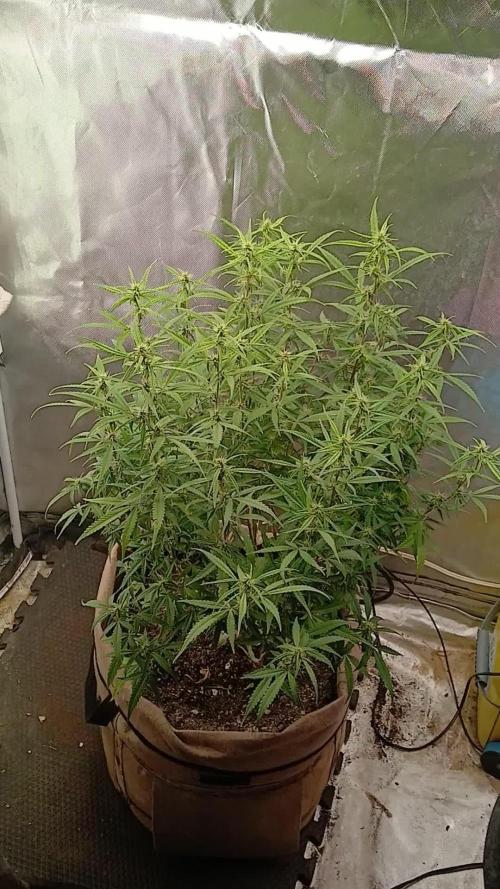
Stopped using chemical nutrients and will only be using Gaia Green power bloom to top dress the soil for the remainder of the grow. This plant will most likely be a monster. Im sure it will yield a lot.

Likes
8
Share


@Shalma_kush_420
Follow
Muy buenas mi gentee
Por aquí otra semana en crecimiento con esta increíble SherbetZ V3 de Art Genetix
Llevada con bioestimulantes The hype company, que dan unos resultados muy buenos.
Estamos en la semana 4 para esta planta y después de la poda apical le salieron muchas más ramas y a seguido creciendo sin estrés.
La dejaremos una semana más antes del último cambio de maceta y después la pasaremos a floración.
Aver cómo sigue la próxima.

Likes
24
Share


@AsNoriu
Follow
Day 86. Almost no sugar leaves, most of trim went to bin, part left for bubble hash. Kind off hoped a bit more from this strain, maybe smoke will bright me up ;)
Day 96. 77 g. went for curing. Smallest from all.
Two month later. Made some bubble hash. Great strain, waiting for sunny day and will make smoke review. Not a lot of bubble, but it was great !
Happy Growing !


Likes
12
Share


@Chubbs
Follow
420Fastbuds-Greenhouse Grow 2025
The feminized strains RainbowMelon, GorillaMelon, LemonPaya, PapayaSherbet, LemonMandarin, the FastFlowering GG4/Sherbet from Fastbuds are doing amazing for there first full week in the greenhouse. The heat in SoCal is warming up with temps in the low 90's in the daytime and 60's for nighttime. Over all they're starting to reach for the stars after being topped. Besides a couple of yellow leafs I snipped at the soil level, I'm seeing growth almost daily. I'll start feeding this week Grow A & B as well as Calmag from AthenaBlendedLine. Since being transplanted into the 5gal fabric pots they've only got well water.
Happy Growing.
Likes
10
Share


@Shefman93
Follow
Budding up nicely. Will make banana peel tea this week and apply during week 5 for a boost to flower.

Likes
3
Share


@fabialien
Follow
3ra semana de vida. Fotos y videos del dia 2 de Agosto 2024, las cepas van bastante bien, una gorilla murio pero vendrán nuevas BSF


Likes
21
Share


@MG2009
Follow
01/09/2022
Finally time to flower, and all girls went into flower room at lights out.The males will be next week, don't want to put them in to early so I will carefully check every day and separate before they open their flowers. I'm guessing week 3-4
I Will select two branches on each female to selectively pollinate.
01/11/2022
Blue Matter #5 (update #5 culled male) repotted with lemon og seed
Will continue in her own evolving diary. My hope is to eventually graft different cuts for a multiple variety mom plant, I can have 6 total plants
And would be nice to be able to maintain only one mom.


Likes
5
Share

@CannaArchive
Follow
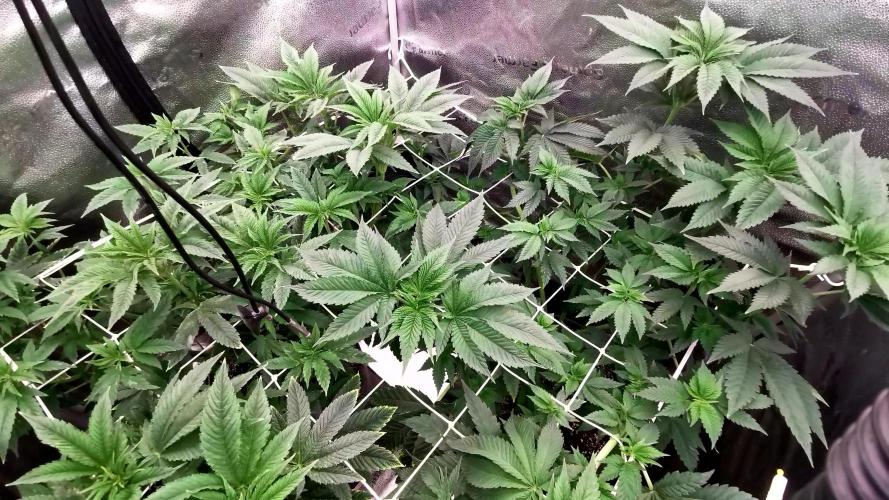
Week 2 of flowering was all about maintaining a healthy stretch while continuing to shape the canopy underneath the SCROG net. 🌸
Candy Hustle responded incredibly well throughout the week, showing vigorous vertical growth and filling more and more of the available screen every single day. 🚀🌿
The ongoing heat wave continued to make climate control challenging. Temperatures stayed around 28°C with 60% relative humidity, and despite additional efforts it simply wasn't possible to lower either value any further. 🌡️💧
Fortunately, Candy Hustle seemed to thrive under these conditions, showing no signs of heat stress while maintaining strong daily growth and excellent leaf posture. ☀️💚
This week the plant received one feeding of Orgatrex and one application of Green House Bio Enhancer, alongside RO water with CalMag. 💧🌱
The biological activity in the soil continues to develop nicely, and the plant appears to be making excellent use of the nutrients available in the BioTabs system.
Training remained the primary focus throughout the week.🌱
Every few days the main branches were tucked back underneath the SCROG net to keep the canopy as level as possible while encouraging more secondary shoots to reach the light. The screen is now filling very evenly, creating a strong foundation for the coming flowering weeks. 🌿✨
Only a very light defoliation was performed. ✂️
I removed a few of the lowest leaves along with several fan leaves that were shading developing shoots underneath the canopy.
This opened up airflow and allowed more light to reach the future bud sites without stressing the plant unnecessarily. 🍃
The slight discoloration on some of the older leaves is still a leftover from the nutrient imbalance experienced during the previous week rather than a new issue. Encouragingly, all new growth is coming in healthy, vibrant and free of deficiencies, confirming that the plant has recovered well. 💪💚
Overall, this was another excellent week. 🌸 Candy Hustle continues stretching exactly as hoped, the canopy is becoming increasingly even, and the SCROG is filling nicely. With the first flower sites now developing across every branch, the coming weeks should shift the focus from stretch to bud production. 🚀🔥
Environment
🌡️ Temperature: 28°C
💧 Humidity: 60%
💡 Light: 50% (~800 PPFD)
🌸 Stage: Flower Week 2
Water & Nutrients
💧 RO Water + CalMag
🌱 1× Orgatrex
1× Green House Bio Enhancer
Training
🕸️ Continued SCROG training and daily branch tucking
✂️ Light defoliation (lower leaves and leaves shading developing shoots)
🌿 Canopy becoming increasingly even across the net