Likes
Comments
Share
@Roberts
Follow
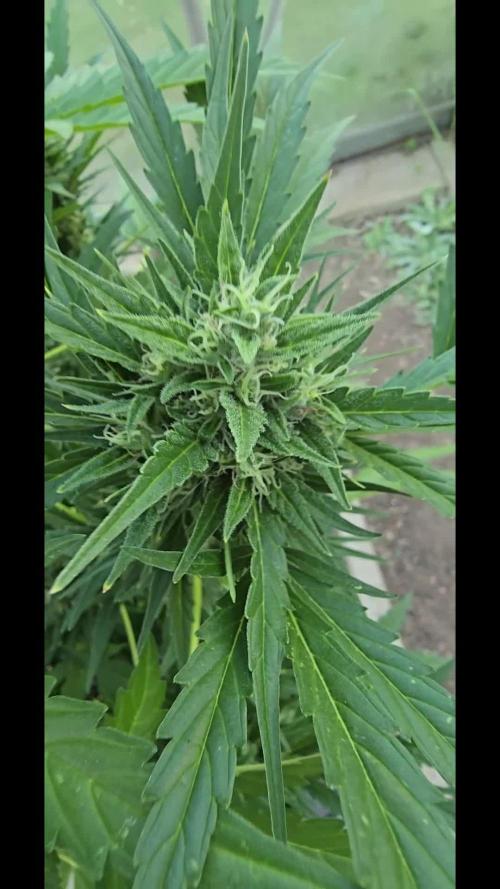
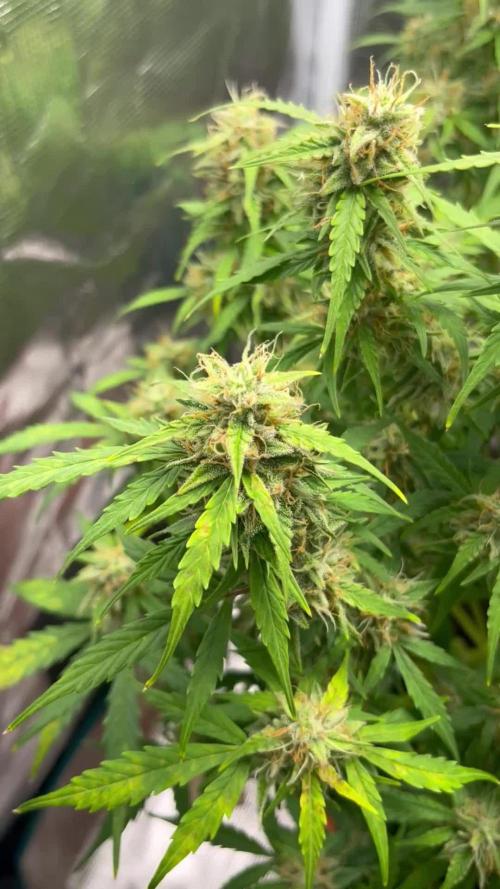
Mamba Negra was a very frosty, and smelly autoflower. Has been chopped, and hung to dry. Looks very promising to be some great smoke. We shall see. No contest winner, but got some good smoke out of it. PEV said they wanted to send me some more seeds to grow. We will see if they get back to me. After this beautiful plant, and Moby Dick auto is going monster size, check it out 🌱😁. I will work my way through some or all their autos. 🌱😏 Thank you Grow Diaries community for the likes, follows, and subscriptions on my YouTube channel. I appreciate your support. Happy Growing everyone 🌱🌱🌱🌱
Likes
15
Share
@ohcibi
Follow
Due to issues with my ISP, I can't upload photos or videos right now. Like, I could upload slowly but then I always get errors from th website. Grow is continueing to thrive. Both Ryu and Ken now have proper Buds growing at their tops and internodes are closing up as well. Kens biggest top bud is 3x4 centimeters. So I'm really looking forward to harvest within the next two weeks. I might be forced to harvest but more on that, when time arrives. Update: I managed to upload my photos by some public WiFi. Enjoy friends!
Likes
3
Share
@AndrewC
Follow
So this experiment is going terribly! LOL This ulitmately taught me a few important things about this sytle of growing. 1.) My Frequency was way to high in the beginning. When i start over next, i will be going for 1 hr -> Spray for 1 min -> Wait 1hr (Repeat) 2.) Never reuse hydroton or CC. It ends up having left over material and nutes in it, which not matter how much you wash just make the soil a land mine of nutrients etc. 3.) Do no use rockwool cubes inside the medium, they hold onto water for too long leading to rot. 4.) Fill the buckets up right until about 2cm short of the nozzles that spay. Otherwise you lose too much water and nutrients to the misting, which spreads your nutes all over the enviroment. Ultimately, even though this is a living disaster, I have learnt valuable lessons, and who knows, some of them still might produce smokable flower!
Likes
11
Share
Start of Week 9 - Day 57 06/28: The ladies are looking amazing! Aaliyah and Alexis have a lot of buds coming up. Annie is starting her stretch, so I’ve been moving around some of the leaves that are blocking the light to the cola branches. As of now she’s standing at 20” from the top of the coco. Alexis is now at 27” and Aaliyah has reached a height of 30” from the top of the coco. That height definitely caught me off guard! Still keeping waterings at every day and a half and EC and pH levels in runoff are good. A few of the lower leaves on the plants have yellowed and withered up, but I think it’s just the plants themselves getting rid of leaves that aren’t getting light. Overall the ladies are looking great! Can’t wait to see how much progress they make this week. 06/30: Checked in the gals and by my surprise they have all grown two inches. Aaliyah is now 32” tall and has pretty much grown into the light. Luckily I went with the LEDs so there’s not much heat. Hand up to the light is still cooler than the sun on some days. Her buds have started forming and are now covered with pistils. Annie is still creeping her way into flowering and is now at 22”. Hopefully she doesn’t get as tall as Aaliyah. Alexis is now at 29”. I have to admit, I was worried Alexis wasn’t going to do well. She didn’t look as healthy as the other two when she was a seedling. But that has changed. She looks extremely healthy and although she is in a 3-gallon pot and isn’t as big as Aaliyah, she still has a lot of buds sites coming up. I’m glad she made it. More for the yield. 07/02: Watered the ladies. EC levels in runoff are good. pH in Aaliyah’s runoff is a little low, so I’m going to keep an eye on her. She’s now at 34” tall, but I tied her down. It was either this, or no light. Hopefully she takes it okay. Her buds are really starting to grow. Annie is now at 24”. She is currently on her stretch. Hopefully she doesn’t get as tall as Aaliyah. Alexis is at 32” and looking great. As of now I’ve seen no pests inside the tent, or on the trap I put up. But I did see a few flies while watering that looked more like fruit flies than fungus gnats. Hopefully they are and the pest problem is solved. 07/04: The ladies keep growing! Aaliyah is now at 33” because of the new bending, Alexis is at 34” (I just bent her main cola down), and Annie is at 25 1/2”. With Alexis at 34” she has also passed my light. Since Aaliyah seems to be doing okay with the bending, I decided to bend Alexis down as well. Annie is going into her stretch. Found a dead fly in tray and a live one on the trap. I guess my problems continue. I gave the ladies a good amount of water (4500mL for Annie!) and am going to leave the next watering for two days now. Hopefully this can help. Happy Independence Day to all my growers in the USA! 🇺🇸 I know times are rough right now, but together we can make the world a better place. And a little weed doesn’t hurt anybody. Much love to everyone.
Likes
25
Share
@PacMan420
Follow
One Lsd-25 is moving fast while the other is still behind, they all started at the same time. Im thinking week 8 the lsd -25 plant should be ready for flushing. The Blackberry autos are doing good no signs of stress or lack nutrients
Processing
Likes
39
Share
@SamDo
Follow
Slt, nous sommes à la fin de la 2ème semaine. Les plantes semblent se developer normalement. Il y a un léger décalage entre les pieds due au retard pendant la germination, mais sans conséquences pour la suite. J’ai noté tout de même une très légère brûlure sur une ou deux feuilles, probablement due à un démarrage trop tôt en nutriments, à corriger pour les prochaines sessions. J’ai aussi baissé de 5% l’humidité, je suis passé de 70% pendant la 1ère semaine à 65% pour la 2ème. Maintenant je vais stabiliser à 60% pendant toute la période de croissance. Pour l’arrosage, je n’ai presque pas arrosé pendant les 2 premières semaines, ou vraiment très légèrement avec un peu de pulvérisations foliaires. Maintenant j’arrosage avec 0,50cl par pots, je pense 1 fois ou 2 par semaines, je verrais, et j’augmenterais petit à petit avec la croissance. Voilà c’est à peu près tout pour cette semaine... Happy grow..
Likes
3
Share
This week went by fast! They're growing really fast and always hungry! They're getting ready for the flower stage and entering Bloom. They're getting 2L of H20 per day that's pH at 6.8. I water 2x a day! I turn them on at 6am and give them 1L of H20 at 9am that way they're awake and 1L of H2O at 9pm that way they're split. I feed my nutrients at the 9am watering. I pH my nutrient mix somewhere between 5.8 and 6.2. I also have amended the soil with Soil Recharge and that's once a week as well as the Fish Shit and The Stash Blend. Then, I always flush with only pH H20 the day after any nutrient mix. Overall, the plants are healthy and I'm waiting to see how they turn out!
Likes
46
Share
@Dreadnug
Follow
Mid week check in with grow issue (mostly on the Future #1 and Future Island - other strains in my grow room). Will post for feedback. Held of on any nutes this week as I try to get my grow issue under control. Looks like either calcium or potassium or both. I initially bought some lime and added that to some well water instead of the RO water I had been using. I also fully flushed out all of them in order to ensure that I didn't have any lingering issues. A little unsure how it got to this point as I have used RO in past grows. My RO is barely 6.0 ph and the well is well over 7...closer to 7.5. I had not changed my diary's ph since veg since I think I had mixed up the reading between the RO and well water. Either way, I plan to feed them all well water and balance the ph to 6.5. Except for some of the leaves showing some stress, the bud development is looking very nice. I plan to ease back into a more reserved nute blend later this week. Trying to get the humidity under control but with the excess heat the humidifier gives off it has been a bit of a struggle. Going to set up the unit on a timer so it dehumidifies at night where there is less heat in the room. Plant #1 - Continued fattening of the bud locations as well as more turpentine development. Looking good. Plant #2 - no more stretching, bud development is coming along just lagging behind a bit.
Likes
2
Share
For most crops, a slightly acidic soil pH between 6.0 and 6.8 is ideal because it optimizes nutrient availability. When soil pH rises above 7.0 (alkaline), the concentration of hydrogen ions H+ drops significantly, and they are replaced by calcium, magnesium, or sodium ions on the clay colloid exchange sites. To naturally lower alkaline soil pH, you can add organic matter (carbon-rich materials), which produces weak organic acids as it decomposes. Maintaining this slightly acidic range stimulates a highly active, diverse microbial community; these microbes decompose organic matter and release carbon dioxide CO2, which plants absorb through their roots and leaves to boost photosynthesis and sugar production. Furthermore, the added organic carbon acts like a sponge, drastically improving the soil's water-holding capacity. While soil biological activity does involve cellular electron transport, electrical conductivity (EC) in soil is actually a measure of dissolved mineral salts, not a voltage carried by individual microbes. Soil microorganisms secrete organic acids and chelate metallic and non-metallic minerals, transforming locked-up inorganic compounds into bioavailable organic complexes. Unlike harsh synthetic fertilizers that can dehydrate soil life in high concentrations, these naturally chelated nutrients safely nourish the plant, creating a thriving, self-sustaining ecosystem where plants can efficiently synthesize their own food. Metal-based: Could include elements like iron, manganese, copper, or zinc, which are essential nutrients for plants but can exist in forms not readily accessible. Non-metal-based: Examples like calcium carbonate, phosphate, or sulfur are also important for plant growth and potentially serve as building blocks for the organic salt. Chelation in a plant medium is a chemical process where a chelating agent, a negatively charged organic compound, binds to positively charged metal ions, like iron, zinc, and manganese. This forms a stable, soluble complex that protects the micronutrient from becoming unavailable to the plant in the soil or solution. The chelate complex is then more easily absorbed by the plant's roots, preventing nutrient deficiency, improving nutrient uptake, and enhancing plant growth. Chelation is similar to how microorganisms create organic salts, as both involve using organic molecules to bind with metal ions, but chelation specifically forms ring-like structures, or chelates, while the "organic salts" of microorganisms primarily refer to metal-complexed low molecular weight organic acids like gluconic acid. Microorganisms use this process to solubilize soil phosphates by chelating cations such as iron (Fe) and calcium (Ca), increasing their availability. Added sugars stimulate soil microbial activity, but directly applying sugar, especially in viscous form, can be tricky to dilute. Adding to the soil is generally not a beneficial practice for the plant itself and is not a substitute for fertilizer. While beneficial microbes can be encouraged by the sugar, harmful ones may also be stimulated, and the added sugar is a poor source of essential plant nutrients. Sugar in soil acts as a food source for microbes, but its effects on plants vary significantly with the sugar's form and concentration: simple sugars like glucose can quickly boost microbial activity and nutrient release. But scavenge A LOT of oxygen in the process, precious oxygen. Overly high concentrations of any sugar can attract pests, cause root rot by disrupting osmotic balance, and lead to detrimental fungal growth. If you are one who likes warm tropical high rh, dead already. Beneficial, absolutely, but only to those who don't run out of oxygen. Blackstrap is mostly glucose, iirc regular molasses is mostly sucrose. Sugars, especially sucrose, act as signaling molecules that interact with plant hormones and regulate gene expression, which are critical for triggering the floral transition. When sucrose is added to the growth medium significantly influences its effect on floral transition. Probably wouldn't bother with blackstrap given its higher glucose content. Microbes in the soil consume the sugar and, in the process, draw nitrogen from the soil, which is the same nutrient the plant needs. Glucose is not an oxygen scavenger itself, but it acts as a substrate for the glucose oxidase (GOx) enzyme, effectively removing oxygen from a system. Regular molasses (powdered if you can), as soon as she flips to flower or a week before, the wrong form of sugar can delay flower, or worse. Wrong quantity, not great either. The timing of sucrose application is crucial. It was more complicated than I gave it credit for, that's for sure. When a medium's carbon-to-nitrogen (C:N) ratio reaches 24:1, it signifies an optimal balance for soil microbes to thrive, leading to efficient decomposition and nutrient cycling. At this ratio, soil microorganisms have enough nitrogen for their metabolic needs, allowing them to break down organic matter and release vital nutrients like phosphorus and zinc for plants. Exceeding this ratio results in slower decomposition and nitrogen immobilization, while a ratio below 24:1 leads to faster breakdown and excess nitrogen availability. Carbon and nitrogen are two elements in soils and are required by most biology for energy. Carbon and nitrogen occur in the soil as both organic and inorganic forms. The inorganic carbon in the soil has minimal effect on soil biochemical activity, whereas the organic forms of carbon are essential for biological activity. Inorganic carbon in the soil is primarily present as carbonates, whereas organic carbon is present in many forms, including live and dead plant materials and microorganisms; some are more labile and therefore can be easily decomposed, such as sugars, amino acids, and root exudates, while others are more recalcitrant, such as lignin, humin, and humic acids. Soil nitrogen is mostly present in organic forms (usually more than 95 % of the total soil nitrogen), but also in inorganic forms, such as nitrate and ammonium. Soil biology prefers a certain ratio of carbon to nitrogen (C:N). Amino acids make up proteins and are one of the nitrogen-containing compounds in the soil that are essential for biological energy. The C:N ratio of soil microbes is about 10:1, whereas the preferred C:N ratio of their food is 24:1 (USDA Natural Resource Conservation Service 2011). Soil bacteria (3-10:1 C:N ratio) generally have a lower C:N ratio than soil fungi (4-18:1 C:N ratio) (Hoorman & Islam 2010; Zhang and Elser 2017). It is also important to mention that the ratio of carbon to other nutrients, such as sulfur (S) and phosphorous (P) also are relevant to determine net mineralization/immobilization. For example, plant material with C:S ratio smaller than 200:1 will promote mineralization of sulfate, while C:S ratio higher than 400:1 will promote immobilization (Scherer 2001). In soil science and microbiology, the C:S ratio helps determine whether sulfur will be released (mineralized) or tied up (immobilized) by microorganisms. A carbon-to-sulfur (C:S) ratio smaller than 200:1 promotes the mineralization of sulfate, when the C:S ratio is low, it indicates that the organic matter decomposing in the soil is rich in sulfur relative to carbon. Microorganisms require both carbon and sulfur for their metabolic processes. With an excess of sulfur, microbes take what they need and release the surplus sulfur into the soil as plant-available sulfate A carbon-to-sulfur (C:S) ratio higher than 400:1 will promote the immobilization of sulfur from the soil. This occurs because when high-carbon, low-sulfur materials (like sawdust) are added to soil, microbes consume the carbon and pull sulfur from the soil to meet their nutritional needs, temporarily making it unavailable to plants. 200:1 C:S 400:1: In this range, both mineralization and immobilization can occur simultaneously, making the net availability of sulfur less predictable. This dynamic is similar to how the carbon-to-nitrogen (C:N) ratio regulates the availability of nitrogen in soil. Just as microbes need a certain amount of nitrogen to process carbon, they also require a balanced amount of sulfur. Both mineralization and immobilization are driven by the metabolic needs of the soil's microbial population. Sulfur is crucial for protein synthesis. A balanced ratio is particularly important in relation to nitrogen (N), as plants need adequate sulfur to efficiently use nitrogen. A severely imbalanced C:S ratio can hinder the efficient use of nitrogen, as seen in trials where adding nitrogen without balancing sulfur levels actually lowered crop yields. Maintaining a balanced carbon-to-sulfur (C:S) ratio is highly beneficial for plant growth, but this happens indirectly by regulating soil microbial activity. Unlike the C:N ratio, which is widely discussed for its direct effect on nutrient availability, the C:S ratio determines whether sulfur in the soil's organic matter is released (mineralized) or temporarily locked up (immobilized). Glucose will hinder oxygenation more than sucrose in a solution because glucose is consumed faster and has a higher oxygen demand, leading to a more rapid decrease in oxygen levels. When cells respire, they use oxygen to break down glucose, and this process requires more oxygen for glucose than for sucrose because sucrose must first be broken down into glucose and fructose before it can be metabolized. In a growth medium, glucose is a more immediate and universal signaling molecule for unicellular and multicellular organisms because it is directly used for energy and triggers a rapid gene expression response. In contrast, sucrose primarily acts as a signaling molecule in plants to regulate specific developmental processes by being transported or broken down, which can be a more complex and slower signaling process. Critical stuff.
Likes
15
Share
Gracias al equipo de Seedsman y XpertNutrients sin ellos esto no sería posible. 💐🍁 Alaskan Do-Si-Dos: Alaskan Do-Si-Dos ha sido desarrollada por expertos como una versión mejorada de la siempre popular variedad Alaskan Purple de Seedsman. La introducción de la genética Do-Si-Dos en la Alaskan Purple ha creado un híbrido índica/sativa que aumenta la potencia y el rendimiento al mismo tiempo que mejora el perfil de sabor y sigue siendo versátil en lo que respecta al cultivo en exterior. La Alaskan Do-Si-Dos está destinada principalmente al cultivo al aire libre y en invernaderos. Las plantas crecen altas y prosperan en climas fríos, templados, cálidos y secos, al mismo tiempo que se desempeñan bien en altitud. Esto no impide que se cultive en interior, pero estas plantas grandes necesitarán mucho espacio. Las plantas muestran una resistencia moderada al moho pero, si se cultivan en interiores, hay que tener en cuenta que son RUIDOSAS, por lo que se beneficiará del uso de filtros de aire de carbón. En exterior, en latitudes septentrionales, la cosecha está prevista para finales de septiembre, mientras que en interior las plantas tardarán entre 8 y 10 semanas en completar la floración. Los rendimientos en exterior son muy altos y pueden superar fácilmente los 750gr/planta, mientras que en interior los rendimientos son elevados, hasta 600gr/m2. Los cogollos maduros tienen una densidad media y mantienen un color verde medio. 🌻🚀 Consigue aqui tus semillas: https://www.seedsman.com/eu-es/alaskan-do-si-dos-feminised-seeds-sman-aldsd-fem 🍣🍦🌴 Xpert Nutrients es una empresa especializada en la producción y comercialización de fertilizantes líquidos y tierras, que garantizan excelentes cosechas y un crecimiento activo para sus plantas durante todas las fases de cultivo. Consigue aqui tus Nutrientes: https://xpertnutrients.com/es/shop/ 📆 Semana 6: Esta semana ha explotado 💣, los cogollos comienzan a tomar densidad y llenarse de resina, me hubiera gustado aplicar algo mas de nutrientes en la fase vegetativa, la próxima vez será.
Likes
2
Share
Hey Leute, die kleinen Damen sind nun 5 Tage alt und entwickeln sich prächtig👌🏻🌱 Ich habe sie in 0,2L Töpfe gesetzt nachdem sie die Easyplugz durchwurzelt haben. Zusätzlich habe ich ein wenig Myrkoriza Pulver mit in die Erde gegeben. Heute wurde je Setzling 🌱 ein Schnapsglas Wasser gegossen(PH 6,3). Bis nächste Woche 🏻
Likes
92
Share
Harvest Notes ✂️ • Harvest Timing: Papaya Zoap was harvested at day 63, with select buds taken earlier at day 56 due to mold concerns. • Drying: After careful trimming, the buds were dried for 12 days. The quality and aroma during drying hinted at the stellar smoke to come. • Density & Yield: Buds were rock-solid, delivering an excellent yield with perfect density for storage and enjoyment. Terpene Profile & Aromas 🍋 • Primary Aromas: A tropical explosion with sweet papaya upfront, complemented by creamy, soapy undertones that make her truly unique. • Complexity: As the buds cure, a hint of citrus zest and exotic fruit emerges, creating a full-bodied terpene profile that’s simply irresistible. Cultivation Experience 💡 • Highlights: Her uniform growth, heavy trichome production, and response to super cropping made her a delight to grow. She thrived under careful spectrum adjustments and defoliation, showcasing her adaptability and vigor. • Challenges: The dense bud structure made her more prone to mold, especially in a high-humidity environment. However, proactive monitoring and swift action mitigated the spread. Verdict: 🌟🌟🌟🌟🌟🌟🌟🌟🌟🌟 (9.8/10) Papaya Zoap is a strain that commands attention with her beauty, aroma, and unstoppable growth. While her susceptibility to mold required extra care, her overall performance, yield, and quality were nothing short of exceptional. A grower’s dream and a frosty masterpiece! Stay tuned for their individual harvest reports, smoke reviews, and more as we wrap up this epic series! Discount Codes so you can save big on your next check out 💚💚💚 Kannabia - DOGDOCTOR 30% off SeedsmanSeeds - DOGDOCTOR 10% off CannaKan- DOGDOCTOR 15% off terpyz.eu - DOCTOR 15% off The Neutralizer - PORKIT5-DOG 15% off Fast Buds - DOGDOCT 15% off As always thank you all for stopping by, for the love and for it all , this journey of mine wold just not be the same without you guys, the love and support is very much appreciated and i fell honored and so joyful with you all in my life 🙏
 With true love comes happiness 💚🙏 Always believe in your self and always do things expecting nothing and with an open heart , be a giver and the universe will give back to you in ways you could not even imagine so 💚 Friendly reminder all you see here is pure research and for educational purposes only Growers Love to you all 💚💚💚
Likes
Comments
Share
Welcome to Flower Week 3-4 of Divine Seeds Auto White Widow I'm excited to share my grow journey with you all as part of the Divine Seeds Autoflowering Competition 2025. It's going to be an incredible ride, full of learning, growing, and connecting with fellow growers from all around the world! For this competition, I’ve chosen the Feminized Automatic strain: Auto White Widow Here’s what I’m working with: • 🌱 Tent: 120x60x80 • 🧑‍🌾 Breeder Company: Divine Seeds • 💧 Humidity Range: 50 • ⏳ Flowering Time: 58 Days • Strain Info: 20%THC • 🌡️ Temperature: 26 • 🍵 Pot Size: 0.5l • Nutrient Brand: Narcos • ⚡ Lights : 200W x 2 A huge thank you to Divine Seeds for allowing me to be a part of this amazing competition and Sponsoring the Strains. Big thanks for supporting the grower community worldwide! Your genetics and passion speak for themselves! I would truly appreciate every bit of feedback, help, questions, or discussions – and of course, your likes and interactions mean the world to me as I try to stand out in this exciting competition! Let’s grow together – and don’t forget to stop by again to see the latest updates! Happy growing! Stay lifted and stay curious! Peace & Buds!
Likes
11
Share
Hi guys! For this run i got some nice looking clones. Really looking forward for this one. 11x Gelato Sorbet (Dna Genetics) left side in the box 13x Cookies&Cream (Exotic Genetics) middle of the box 8x French Macarron (T.H. Seeds) right side of the box My setup got a nice update with the Sanlight Evo 5 100 with 320w. Aim to upgrade all of my S1 Q6w soon. All together with 985watt now. I use Biobizz-Lightmix and started to add Nutrients at week 3 after i planted it in the 8l pots. For this run ill use Hesi Nutrients because i use them for years and worked most of the time pretty well for me. I fimmed some plants and trained most of them with LST-Training. I will send them into flower in the middle of week 5 ---‐------------------------- Week 4: Plants are looking ok. I wanted a higher humidity and tried to increase it with a humidifier. Week 5: The fimming worked quite well on the plants i used it on and i got a nice increase in height and strength Aiming to send them into flower in the next few days. :) Week 6: Day 3 of Flowering plants look nice and healthy. Some gelato sorbets had issues from stress but they catched up ok. Week 7: End of week 2 of flowering plants look ok most of them. After i saw some nice results at tents from friends and had some own nice experience with the terpinator i start giving "purpinator" this run a go and start mixing it into my feeding schedule every watering Hope u like the diarie and follow with this run!
Likes
Comments
Share
Week 9 day 65 autoflowers Royal Queen seeds organic living soil. Tropicana cookies was top dressed 4 tbs of Gia green 284 power boom and 1 tbs of glacier rock. Watered with recharge ph 6.00 Granddaddy purple not top dressed late into flower already North thunderfuck not top dressed. Do not like the slow growth, structure, amount of leaf in veg. Hoping m for big stretcher or bud packer
Processing
Likes
38
Share
@snowybudz
Follow
There is definitely some deficiencies present. I had planned on doing a flip to flower however this will put me off for another week or two while I correct any nutritional problem. Other than that they look good, very bushy. What do you guys think? Am I going to have a good 1212?
Likes
8
Share
ESPAÑOL: Hola chicos, espero se encuentren muy bien! Esta semana las chicas han mejorado un poco, se detuvo el amarillamiento, descubri que Cal-Max de Grotek interfiere en la composicion de la linea hesi por lo que las chicas sufren un bloqueo de nutrientes, dejé de utilizarlo y las chicas han continuado con su desarrollo relativamente normal. ya estan en su 5ta semana de floracion, Tutankhamon ha producido una cantidad gigantesca de resina, Lennon esta engordando a toda velocidad y aun le quedan 6 semanas aprox. Anubis a pesar de su color intenso amarillo palido esta engordando bastante bien y su produccion de resina es inimaginable y ya solo que quedan 2 semanas y media aprox. espero que a partir de ahora ya no surjan mas problemas y que las chicas terminen su floracion de la mejor manera. esto es todo por esta semana chicos, espero que se encuentren muy bien ! INGLES: Hello guys, I hope you are very well! This week the girls have improved a little, the yellowing stopped, I discovered that Cal-Max from Grotek interferes with the composition of the hesi line so the girls suffer a nutrient lock, I stopped using it and the girls have continued with their relatively normal development. They are already in their 5th week of flowering, Tutankhamun has produced a gigantic amount of resin, Lennon is gaining weight at full speed and he still has about 6 weeks left. Anubis, despite its intense pale yellow color, is gaining weight quite well and its resin production is unimaginable and there are only about 2 and a half weeks left. I hope that from now on no more problems arise and that the girls finish their flowering in the best way. This is it for this week guys, I hope you are doing well!
Likes
10
Share
🙌12/12 to bloom.🙌 I changed the light cycle last week because I was tired of the vegetation phase. and a lil bit lazy w and upload - sorry! Some side shoots were removed, then I let them rest for a while (3 days) before switching to 12/12. I can still see the (N) surplus inside my substrate, this will NEVER EVER HAPPEN AGAIN💀 we'll see how this affects flowering 😎 Due to the inner substrate of cheap soil, which has a poor NPK value, I now perhaps have a construction site that can be worked on. The plants continue to look very good, except for the (N) surplus and a little (K) blockage which I can remedy this with some Epsom salts.