


Processing
Likes
Comments
Share


@Energie111
Follow
it was a super week, the girls grew nicely, the full moon is always effective. :) I like to grow cannabis.

Likes
5
Share


@HighOhioAn
Follow
Loving the buds on two of the strains I’ve only had black buds one time before, and it was some of the best, but I’ve ever had super excited for this grow🔥💯
Likes
9
Share


@SantaStone
Follow
Hello friends! Thank you for visiting! 👋
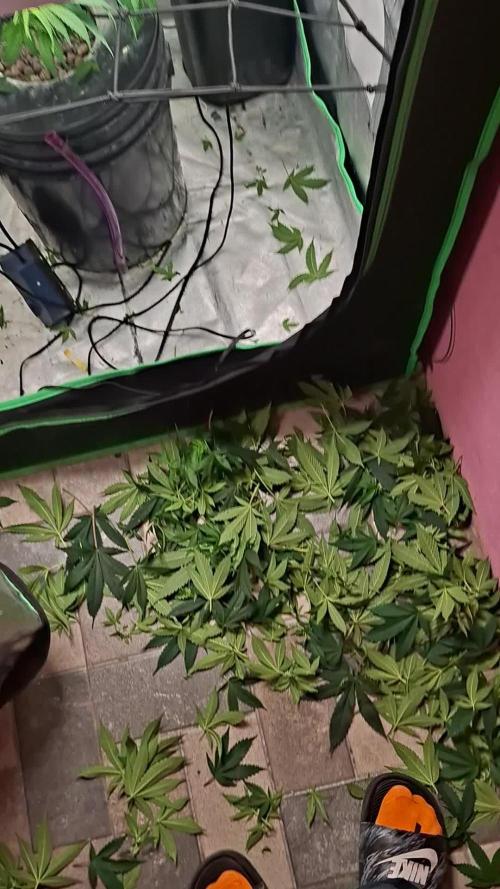
🌿 The strongman continues to gain strength. The last 2-3 weeks are ahead.
-The plant eats well, drinks 2-3 liters of fertilizer solution every day. Rinsing with water with pH 6 twice a week.
-Very dense inflorescences and a lot of resin.
-A bright smell of sweet berries appeared.


Likes
6
Share


@Creatorknbsland
Follow
Boasemana!início dos pestilhos e tb achei um macho qe foi ra fora da tenda!vou tentar usar seu semen para criar algo.por aqui com as genéticas que tenho!mais tudo.com.maior controle de pólen para nao polinização nas outras que ja estao a 4 semana de flora!seria u erro!agora somente 2 somango!

Likes
Comments
Share


@Sativ_420
Follow
Vienen creciendo muy bien. Se nota la diferencia de tamaño entre las que están en 30L y las que están en 50(tienen la tierra por la mitad en maceta de 100. Espero en unos días poder transplantarlas también


Likes
13
Share


@Youngbuds1
Follow
So as you can see I now have four flowering which I guess were the autos and I have one gelato that is still vegging and is doing damn good. There are two that have lighter color leaves, I’m trying to focus on on these and see if I can get better production. As for the tall GG in the back, leaves are waxy and have resin production starting. A lot better, overall I’m learning more and more every week!
Hope everyone is enjoying my grow and stick around, ask questions. Happy New Year!

Likes
55
Share


@nonick123
Follow
Día 92 (14/04) Riego con 500 ml H2O EC 0,45
Ha bajado algo la temperatura promedio
Día 93 (15/04) Riego con 500 ml H2O EC 0,45
Reviso los tricomas y aún le faltan unos días...
Día 94 (16/04) Riego con 500 ml H2O EC 0,45
Día 95 (17/04) Riego con 750 ml H2O EC 0,45
Tiene mucha sed! El tiempo está loco por aquí! Picos de 27 ºC en abril... 😵💫
Día 96 (18/04) Riego con 1.000 ml H2O EC 0,45
Día 97 (19/04) Riego con 500 ml H2O EC 0,45
Día 98 (20/04) Fiesta de la Cosecha!
Reviso los tricomas y están un 10% ambar, 85% nublados y 5% transparentes
Perfecta!

Processing
Likes
4
Share


@Nookandplant42o
Follow
previous watering was fed with nutrients this is one with the highest EC of the three that are in the tent, and my temperature is not low so it should go with minimum to medium quotas with more water avoiding burns without much runoff taking place mixing with the soil compounds and mycorrhizae for better performance i know i need calcium magnesium for better performance the problem is money i will continue to use salt Epson the option i have at the moment the direct sulfur in the soil mix has helped me hear a change visible.
water ph 6.2 solution temperature 20 ° - 0.50 g of great white mycorrhiza 2 days earlier were sprayed with water without ppm via leaves - lights off to serve as a cooling shower in the heat is great for stomata .
Simple led panel added as main light source 260watts being divided to 3 plants in the fullspectro tent model, did not get much difference in temperatures compared to HPS, is more the same spectro ratio and UV to reach more directly in the trichomes and terpenes.
this amnesia is not as fast as your sister but from the stress she had back in the beginning, I admire her strength with thinner sativa leaves her trichomes are coming close to the smaller leaves.
LST has reduced its size by half as its sister is 40 cm while her tree-shaped sister is 88 cm.

Likes
20
Share


@eldruida_lamota
Follow
Variedad con una floración corta, entre 8/9 semanas.
Procedente del original Exodus Clon (UK).
Predominancia indica con un nivel de thc superior al 16% .
Es muy fácil de cultivar y la alimentación la acepta muy bien en general .
Cada etapa cumplió con mis expectativas y por ello aparte del sabor el colocon ... en cuanto a todas sus etapas le doy 9/10 .
CEPA BRUTAL enserio.

Likes
11
Share


@MarcoP
Follow
Before drying, she smelled a little spicy, after drying, she just smells sweet & creamy, amazing smell.
Her taste while smoking is insane, it really tastes like you took a spoon of some berry-orange type of ice cream, no spicyness, just bare candy terps. The buds are rock solid and she is covered in frost. Opening the jars is like sticking your nose in a bag of candy.
Her effects are relaxing, she really makes you stoned, beautiful night time smoke


Likes
1
Share


@Ultraviolet_
Follow
Turned off IR @ nights
Red wigglers (Eisenia fetida) are highly beneficial. They are considered an ideal choice for "no-till" or container-based organic growing because they live in the upper layers of soil, feeding on organic mulch rather than the plant's root system. Red wigglers accelerate the breakdown of organic amendments and produce high-quality, nutrient-dense worm castings directly in the root zone. Clover is another exceptional component of an organic rhizosphere, offering a sustainable, self-sustaining alternative to synthetic nitrogen fertilizers produced via the energy-intensive Haber-Bosch process. By forming a symbiotic relationship with Rhizobia bacteria, clover converts atmospheric nitrogen N2 into ammonium NH4, providing a steady, slow-release nutrient source that enhances soil health and reduces environmental impacts. Red clover offers superior nitrogen fixation and biomass production compared to white or yellow clover, making it the premier choice for maximum soil vitality, particularly for improving soil structure and providing a high-volume nitrogen credit for subsequent crops.
If it is fully functional and efficient soil, the rhizophagy cycle is far superior long-term than any synthetic delivery when it comes to preventing deficiencies, not because it's "better," per se. The medium will require a very high CEC to make it to harvest without re-fertilization. The rhizosphere acts as a dynamic, interactive exchange where plants and soil microbes trade resources based on immediate needs. When a plant lacks a specific nutrient, it changes its physiology and releases specialized chemical cocktails—root exudates—into the surrounding soil. These exudates, which include sugars, amino acids, and organic acids, serve as a "shopping list" to attract specific microorganisms, which in turn return higher levels of desired nutrients. There is nothing in comparison to synthetic delivery, which causes plants to stop producing exudates, effectively "starving" the beneficial soil life, over time turning the soil barren and void of microbial life. Responsible use, applying the right amount at the right time, can minimize these negative effects. Relying solely on synthetic fertilizers without replenishing organic matter is what typically leads to exhausted soil. The use of synthetic fertilizers can utilize the Cation Exchange Capacity (CEC) of the soil, but without a robust rhizosphere and active microorganisms, the efficiency of this process is significantly reduced. This makes synthetic growing more difficult to prevent deficiencies overall compared to an efficient organic living soil with a robust rhizophagy cycle, as there is no "one size, fits all" when it comes to different nutrient profiles of strains/genetics, making it trickier to "guess" and prevent creeping deficiencies.
CEC does not contribute towards EC. Add more CEC using biochar, problem solved. If you keep pH between 6.3 and 6.7, hydrogen is exudated to cycle the medium's CEC for its needs. Keeping the pH between 6.3 and 6.7 creates an environment where plants release H+ to displace positively charged nutrients (like Ca2+, Mg2+, K+ held on soil particles or within artificial media this cycle through nutrients via the medium's Cation Exchange Capacity (CEC)
Microorganisms generate a stable potential of approximately 0.5 V EC. The rhizosphere creates its own food, similarly to chelation, using 1000's of varying combinations to create its own food.
Start to finish, just add water. Eventually, more materials will need to be added at the beginning of each new grow, but very attainable to go from seed to harvest without ever fertilizing, regenerative cultivation.
ATP is king above all else when it comes to biomass accumulation. Cellular root respiration and cellular respiration are essentially the same biological process, the breakdown of glucose to create usable energy (ATP) in the presence of oxygen, just taking place in different parts of the plant. Synthetic (salt-based) grows have significantly lower levels of total rhizosphere respiration, often referred to as root-zone activity, compared to organic living soil grows. While the plant roots themselves may respire in both systems, the surrounding soil ecosystem in a living soil setup is vastly more active, teeming with bacteria, fungi, and beneficial microorganisms.
2 pools of ATP, it won't double in growth buuuut, but improving root respiration by ensuring high oxygen in the soil is crucial. Good aeration ensures roots can fully utilize glucose to generate the ATP necessary for nutrient uptake, leading to healthier and more productive plants, even if growth isn't exactly doubled. The ATP created using root respiration is dedicated to rootzone growth; the ATP created using regular cellular respiration in a synthetic system would have to dedicate a lot of ATP to the roots when there is little or no root respiration. It's true that there is less of an initial ATP cost in breakdown when nutrients are already in their final form (synthetic), but you lose a solid chunk of ATP when the entire plant is reliant on cellular respiration alone; a large portion of ATP is dedicated to root zones for "forced" (active) nutrient uptake. Making it overall less efficient, even if the initial cost of breakdown is higher. If that makes sense. Oxygen is of critical importance when growing in living soil compared to synthetic methods because it supports the metabolic needs of the microbial, fungal, and insect ecosystem, rather than just the root respiration required by the plant itself. While synthetic grows can survive in lower-oxygen environments with precise mineral feeding, living soil systems rely on aerobic microbes to decompose organic matter (microbial mineralization) to create plant-available nutrients, which is an oxygen-intensive process. While a specific fair percentage is difficult to guess, my experience points to a massive, compound difference between the two methods and the amount of oxygen required. All the ATP spared is used on more biomass, not only that, but the extra root respiration can achieve a much higher CO2 compensation point naturally than you could with synthetic and atmospheric CO2 alone.
As a plant grows faster and increases in size, its demand for nutrients to support that growth increases, requiring a higher rate of nutrient uptake. As plants enter phases of rapid vegetative/floral growth, their metabolic demand for nutrients increases exponentially. Without a robust buffer zone—whether in the soil (cation exchange capacity) or in a hydroponic reservoir—deficiencies will occur rapidly because the instantaneous demand for specific nutrients can quickly exceed the rate of supply.
A growing body of evidence suggests that organic living soil provides superior long-term soil health and environmental benefits compared to synthetic fertilizers, which are often criticized for promoting a cycle of dependency and degradation. While synthetic fertilizers offer short-term convenience and high yields, they often come at the expense of long-term soil health, sustainability, and increased corporate control over growers/ farmers. Organic living soil, while slower and requiring more care to establish, creates a sustainable, resilient, and, ultimately, more fertile environment.
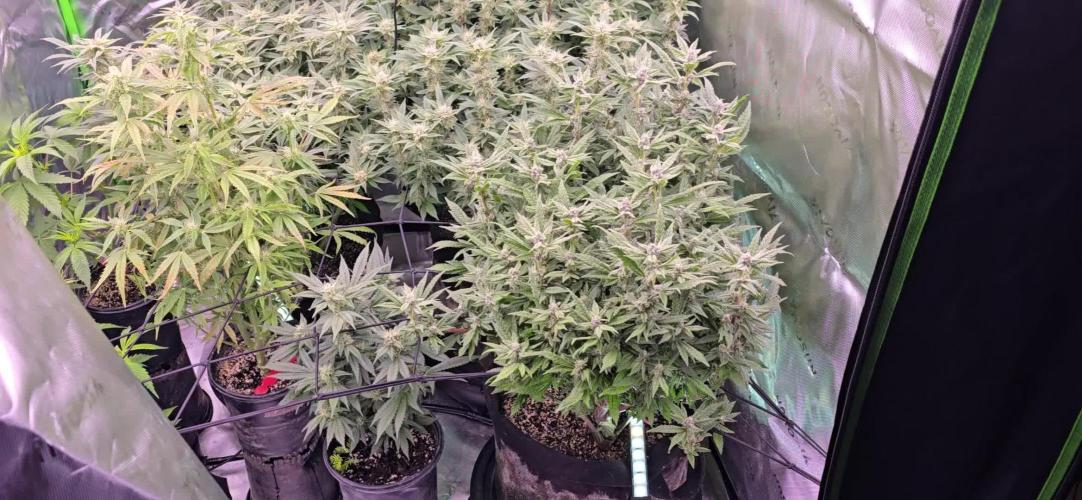
We don't grow; we facilitate energy conversions.
Once all water is removed, approximately 95% to 97% of a plant’s dry matter consists of carbon, oxygen, and hydrogen. These three elements form the structural backbone of all plants. Corporate interest sells you the other 3-5% NPK & all the rest in RATIOS! Why not throw the 3-5% in a pot, and focus your energy on the other 95-97%?
Indigenous Amazonians created, or at least significantly enhanced, the fertile, dark soil known as Terra Preta de Índio (Portuguese for "Indian Black Earth") by incorporating biochar and other organic materials into the soil. This anthropogenic (human-made) soil technique, which dates back roughly 2,500 to 8,000 years, allowed ancient civilizations to flourish in regions with naturally poor, acidic, and nutrient-poor tropical soils.





Likes
2
Share


@Abendkraut
Follow
Week 7 of flowering and the ladies are looking great, a couple more weeks until harvest. I keep the nutrs the same until the end phase where I will only add some Flawless Finish to my water.


Likes
2
Share


@DurbanPoison420
Follow
So I am halfway through my first harvest and I'm starting to feel like I may have been impatient! Would appreciate any advice or constructive criticism from any experienced growers out there! Do you think I harvest the rest of my plant now or leave it a while? Any tips/hints on the best way to maximize bud density? Thanks in advance

Likes
1
Share

@nonick123
Follow
🚀 4 clones de Blueberry Pie F1 Fast seleccionados por @stacksfarmsltd - https://www.instagram.com/stacksfarmsltd
🚀 Breeding by @seedsmangenetics - https://www.seedsman.com/eu-en/blueberry-pie-f1-fast-feminised-seeds-sman-blpi-fast-fem
💦 BioTabs 15% DISCOUNT code "GDBT420" biotabs.nl/en/shop/ @biotabs_official
🌱Substrate PRO-MIX HP BACILLUS + MYCORRHIZAE @promixmitch @promixgrowers_unfiltered
💡2 x Mars Hydro FC1500 EVO Led Grow Light (2024 NEW FC 1500-EVO Samsung LM301H 150W LED) - https://marshydro.eu/products/fc1500-evo-led-grow-lights/ - https://www.amazon.de/dp/B0CSSGN5D8?ref=myi_title_dp
Processing
Likes
12
Share


@HylianGrass
Follow
Week 12 . Tricomes are nicely starting to form everywhere. They are starting to look daam sexy! . The smell gets stronger and stronger and the leaves are getting real sticky to touch and when cut. Overall conditions are golden! And each time i change my water i get amazed by how clear it is!
Likes
21
Share


@Gram_Solo
Follow
These have shooted right up! 🚀🚀
I only topped once and she's responded well
1 has deficiency I think some weird leaves but she looks healthy overall
Switching to flower in 2 weeks 🙌

Likes
3
Share


@Ninjabuds
Follow
It’s the 1st week of flower I flipped the plants to 12/12 a few days ago. There is a lot going on and a lot of cool and amazing things coming in the near future. Make sure to check out my YouTube page. I bought me a DJI gimbal this week. Might be my new favorite toy. The temps are starting to break for the summer. I don’t see it being very long until winter is here and it’s time to use a heater and not an ac unit. All of the plants are healthy. The plants have all grown so well I turned down the light intensity a bit today the plants didn’t seem like they was starting to strech very much. Hopefully the lower light intensity will make them strech out just a bit