


Likes
3
Share


@humidsubtropical
Follow
Haven't uploaded week 8 so here's a few words about then. I couldn't do much else since I was waiting for some supplies before transplanting them.
Overall, it was interesting to learn more about watering. I was definitely underwatering them and I think that contributed for them looking "sad" on week 7. After increasing the amount of water, they started looking better and growing more too. I also sprayed them with bauv. for IPM.
About week 9:
Supplies arrived so I mixed some Bokashi in the soil mix, filled some 7L vases (made some extra holes on sides, lesson learned from the first weeks hahaha) and transplanted the plants. After that, I watered them some Shrimp FPE to increase microbial life, phosphorus and chitin content in the soil.
2 days later and two of them are looking really happy ( plant 1 and 3)

Likes
22
Share


@PrairieFrostGrow
Follow
*
********* Week 3, April 25 to May 1, 2020 - Days 15 to 21 from germination **********
*
So we have been chugging along and doing well. Keeping the feeds in check and not given any waterings over 6.0pH before this week. By mid week when checking runoff numbers found they were flipping 7.2pH!!!!!! What is shooting up the numbers so high?? They were given some Epsom salt and not sure if they have been given too much magnesium. Wondering if it could be the pots? Watering patterns have not changed? Cut slits in the bottom of all the fabric pots to help with drainage and see if moisture is sitting in the bottom of the pot causing issues with pH???
They are doing well but not at the same time.....GSC girls seem a little show in veg growth at this stage.
Little more detail.......
April 25/20 - Day 15
- Mixed 1L of water with Vitathrive, Dual Fuel @ 1.5ml = 700ppm and 6.0pH.
- each girl given 0.5L feed.
- humidity a little low at 52% and bumping up to 65%
- light heights at 30” roughly right now.
- GSC outer edges of leaves getting a little light.
- GSC2 is forming a nice structure and new leaves are wider.
April 26/20 - Day 16
- no real growth and the girls don’t look happy.......not sure of the issue?
- mixed 2L water with Sensi CalMag @ 1.5ml. Sensyzime @ 2ml, Epsom Salt @ 1/4 tsp/L
- GSC fighting magnesium deficiency so adding Epsom Salt,
- increased light intensity a bit today.
April 27/20 - Day 17
- dry out day
- think the root zone is holding too much moisture and causing pH issue.
- cut long slits in the bottom of the pots to let moisture run out faster/easier.
- GSC has liked the increased lighting.
- all the girls got clockwise rotation today.
April 28/20 - Day 18
- Girl Scout girls given 3L watering with Vitrathrive @ 1.5ml = 100ppm and 5.1pH
- runoff numbers:
- GSC - 600ppm and 7.2pH
- GSC2 - 475ppm and 7.2pH
- pH is still too high!!!!
- leaf colours on all the girls look good😳
April 29/20 - Day 19
- more runoff numbers to look at
- Mixed 8L for each girl with Dual Fual @ 1.75ml - 325ppm and 5.0pH........each girl given this amount!!!!
- Run off numbers:
- GSC - in tray before feed was 7.2pH, brought down the pH to 7.0 and 525ppm
- GSC2 - in tray before feed was 7.2pH, brought down the pH to 7.0 and 500ppm
- now we see if the flush will help in the next couple of days.
April 30/20 - Day 20
- dry out day
- stems are looking thicker today. All nodes are separating and they are growing.......slowly though.
May 1/20 - Day 21
- dry out day again
- need to let the pots dry out in order to adjust the pH further.
- they are looking taller and happier today.
Sorry for running behind gang. Always so much to stay on top of😀........

Likes
12
Share


@PedroAndHisPlants
Follow
Day 29 (Second Grow):
"Hey everyone!
Starting a new week with some exciting plans! 🌿 We've got about one more week before we transition the plants to the flowering phase.
Just to recap last week's updates for those following along:
We’ve named all the plants in both grows. This makes it easier to identify and keep track of each one, especially if they get moved around. It should also help you all follow along more easily with the pictures we post.
We've built a SCROG (Screen of Green) net for the plants. A SCROG net helps train the plants to grow horizontally, which maximizes light exposure to all parts of the plant and promotes more even growth. We're using it to ensure all plants get plenty of light and develop a uniform canopy.
We’ve placed a hygrometer among the plants to measure the humidity between the leaves. We've noticed that the humidity sometimes exceeds 70% in those areas. We're considering whether we need more fans, an intake ventilation system, or if a dehumidifier would be a better option. We're leaning towards adding more fans to improve air circulation, but we'd love to hear your thoughts and suggestions!
Stay tuned for more updates as we continue to watch both grows progress and prepare for the flowering phase!"
Day 33 (Second Grow):
"Hey everyone!
Exciting news for our second grow: we’ve added a new member to the grow tent – a praying mantis! 🦗 Her species is Timor shield mantis, and she still needs a name.
We got her to help with pest control naturally. Praying mantises are excellent predators and can help keep unwanted insects away from our plants.
Feel free to suggest a name for her! Any tips or fun facts about keeping a mantis in the grow tent are also welcome!"
Day 34 (Second Grow):
"Hey everyone!
Big update today: we’ve switched the timer to a 12/12 light cycle to initiate the flowering phase! 🌸
Our second batch of plants, just like the first, has developed well and we believe they’re ready to start blooming. This change should encourage them to shift their energy towards producing buds.
For those following along, here’s a quick recap:
We've implemented a SCROG net to manage the canopy and ensure even light distribution.
We've introduced a Timor shield mantis for natural pest control.
The plants have responded well to all adjustments and are looking healthy.
Now that the flowering phase is starting, we’re excited to see how they develop over the next few weeks. Any tips or advice for optimizing this phase? Let us know in the comments!"


Likes
5
Share


@freshdb
Follow
The first week that I took pictures. The seeds all popped within 24 hours of paper towel germination, after 24 hours in h2O2 and water. Transferred to super soil mix and rockwool respectively.
Likes
36
Share


@Roberts
Follow
Gorilla glue is growing well. Have a few minor issues like the light burn wet spot, and a slight magnesium deficiency I believe. She got heavy training today with lst and defoliation. Just spreading the case out more. The spider Farmer G3000 is on about 25 percent. Very strong light. Everything is moving along. Another 2 weeks, and will be looking for maturity signs and going to flowering around then. Thank you Spider Farmer, and Amsterdam marijuana seeds. 🤜🤛🌱🌱🌱
Www.amsterdammarijuanaseeds.com
Thank you grow diaries community for the 👇likes👇, follows, comments, and subscriptions on my YouTube channel👇. ❄️🌱🍻
Happy Growing 🌱🌱🌱
https://youtube.com/channel/UCAhN7yRzWLpcaRHhMIQ7X4g
Spider Farmer G300w: https://amzn.to/3S2zvsd
Spider Farmer 10X20 Heat Mat Kit - https://amz.fun/lsa0J
Spider Farmer Amazon Store: https://www.amazon.com/spiderfarmer
Spider Farmer Official Site: https://spider-farmer.com
Discount code: saveurcash (is stackable)

Likes
34
Share


@AsNoriu
Follow
Approximately day 115 since seed touched soil.
Girls got light trim and went for drying. Think it will be 100 g total from all 3 plants, but this strain surprised me.
I tried this house Bubblegum, just in very bad conditions, all brought very smelly buds, but AK still think are better, The strain of this summer for me personally.
Happy Growing !!!


Likes
9
Share


Likes
23
Share


@Firepharmer
Follow
Love this strain!! Nutty and meaty spicy terps one one of my favourite to medicate with and grow
Both plants where grown in 1 gallon pots so nothing to big of a yield but was expected with the small pots . One plant was canna nutrients one was remo nutrients


Likes
19
Share


@candiedamberfarms
Follow
Completing their first week of bloom. They’ll be measured again on Sunday but going into flower they sat at 42”. There was a runt and I was able to hoist up the xxl autopot to even out the canopy before flipping. I did a heavy defoliation but you’d never know. I’ll wait until stretch is over and really get in there to open up the airflow. Super healthy and very vibrant. Constantly praying and up taking Lotus extremely well. I expect a 10-11 week bloom. Happy growing y’all.

Likes
63
Share


@Krisis
Follow
08/21/24. Going into week 8 flower
Welcome back to hell.
Just kidding.. kinda..
Day 57 out of the 71 stated.
This girls definitely going the whole way, if not more. She’s trying to make up for time that was taken from her.
With the way she’s filling out now, I’m like damn. What would she have been like had we not hit a huge long bump in the road??
I’m shocked at what she’s even doing honestly. Big ups to Pablita. 👊
I guess this diary can just be a testament to this strain being resilient af. Also, hopefully it can serve as an example that you can bring a plant back from near death.
Anyhow, giving her plain water currently as I think there’s still some build up in her soil. I tried feeding her a bit and noticed immediate tip burns. Going do water again next time as well and then a VERY light feeding that time after and see the happenings.
I’m just trying to take it as slow and easy as possible with her. With progress .. don’t wanna throw everything back to shit.
She’s thirsty every other day. Drinks almost a gallon, and get about 10% run off.
Guess that’ll be all for now. ✌️

Likes
11
Share


Likes
8
Share

@Organic473
Follow
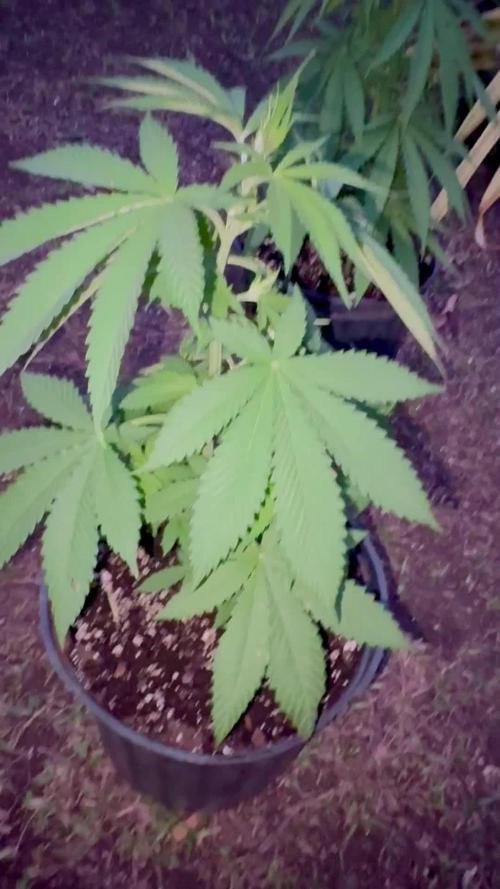
Transferred her to 1 gallon part I’m going to veg her for a few more weeks then transfer her to 5 gallon then possibly pollinate.


Likes
6
Share

@McChi
Follow
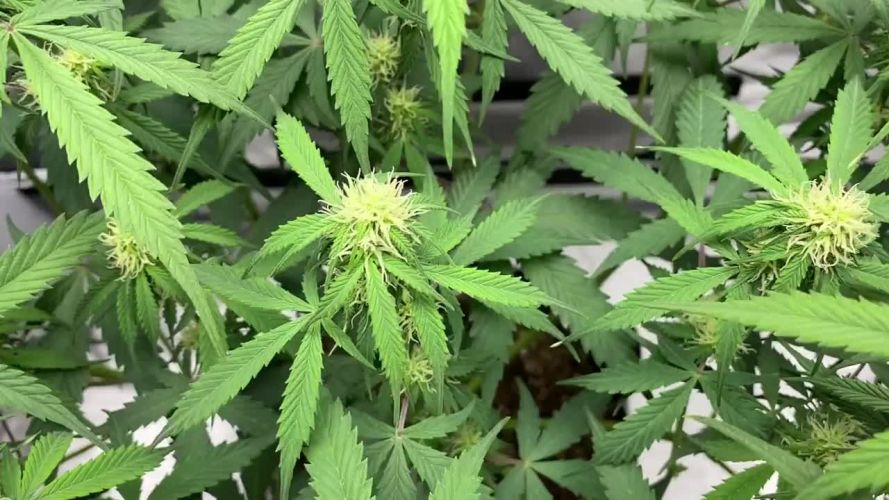
Solid week!! Fed her bloom nutrients on day 50. Responding nicely. I pulled down the main 8 to allow for better light and airflow throughout. Once I did that she really started to fill in again. This also seems to help stop the stretch, or maybe it was just timing and stretch was coming to an end anyways. Either way, glad it did as I am am running out of room to raise the lights and have no more options for setup. Bud sites are all starting to fill in good and fatten up a tiny bit. Looking forward to seeing how these shape up!!!
Likes
25
Share


@Ultraviolet
Follow
ANTHOCYANIN production is primarily controlled by the Cryptochrome (CR1) Photoreceptor ( !! UV and Blue Spectrums are primary drivers in the production of the pigment that replaces chlorophyll, isn't that awesome!
1. Diverse photoreceptors in plants
Many civilizations, including the sun god of ancient Egypt, thought that the blessings of sunlight were the source of life. In fact, the survival of all life, including humans, is supported by the photosynthesis of plants that capture solar energy. Plants that perform photosynthesis have no means of transportation except for some algae. Therefore, it is necessary to monitor various changes in the external environment and respond appropriately to the place to survive. Among various environmental information, light is especially important information for plants that perform photosynthesis.
In the process of evolution, plants acquired phytochrome, which mainly receives light in the red light region, and multiple blue light receptors, including his hytropin and phototropin, in order to sense the light environment. .. In addition to these, an ultraviolet light receptor named UVR8 was recently discovered. The latest image of the molecular structure and function of these various plant photoreceptors (Fig. 1), focusing on phytochrome and phototropin.
Figure 1
Ultraviolet-visible absorption spectra of phytochrome, cryptochrome, phototropin, and UVR8. The dashed line represents each bioactive absorption spectrum.
2. Phytochrome; red-far red photoreversible molecular switch
What is phytochrome?
Phytochrome is a photochromic photoreceptor, and has two absorption types, a red light absorption type Pr (absorption maximum wavelength of about 665 nm) and a far-red light absorption type Pfr (730 nm). Reversible light conversion between the two by red light and far-red light, respectively(Fig. 1A, solid line and broken line). In general, Pfr is the active form that causes a physiological response. With some exceptions, phytochrome can be said to function as a photoreversible molecular switch. The background of the discovery is as follows. There are some types of plants that require light for germination (light seed germination). From that study, it was found that germination was induced by red light, the effect was inhibited by subsequent far-red light irradiation, and this could be repeated, and the existence of photoreceptors that reversibly photoconvert was predicted. In 1959, its existence was confirmed by the absorption spectrum measurement of the yellow sprout tissue, and it was named phytochrome. Why does the plant have a sensor to distinguish between such red light and far-red light? There is no big difference between the red and far-red light regions in the open-field spectrum of sunlight, but the proportion of red light is greatly reduced due to the absorption of chloroplasts in the shade of plants. Similar changes in light quality occur in the evening sunlight. Plants perceive this difference in light quality as the ratio of Pr and Pfr, recognize the light environment, and respond to it.
Subsequent studies have revealed that it is responsible for various photomorphogenic reactions such as photoperiodic flowering induction, shade repellent, and deyellowing (greening). Furthermore, with the introduction of the model plant Arabidopsis thaliana (At) and the development of molecular biological analysis methods, research has progressed dramatically, and his five types of phytochromes (phyA-E) are present in Arabidopsis thaliana. all right. With the progress of the genome project, Fi’s tochrome-like photoreceptors were found in cyanobacteria, a photosynthetic prokaryotes other than plants. Furthermore, in non-photosynthetic bacteria, a homologue molecule called bacteriophytochrome photoreceptor (BphP) was found in Pseudomonas aeruginosa (Pa) and radiation-resistant bacteria (Deinococcus radiodurans, Dr).
Domain structure of phytochrome molecule
Phytochrome molecule can be roughly divided into N-terminal side and C-terminal side region. PAS (Per / Arndt / Sim: blue), GAF (cGMP phosphodiesterase / adenylyl cyclase / FhlA: green), PHY (phyto-chrome: purple) 3 in the N-terminal region of plant phytochrome (Fig. 2A) There are two domains and an N-terminal extension region (NTE: dark blue), and phytochromobilin (PΦB), which is one of the ring-opening tetrapyrroles, is thioether-bonded to the system stored in GAF as a chromophore. ing. PAS is a domain involved in the interaction between signal transduction-related proteins, and PHY is a phytochrome-specific domain. There are two PASs and her histidine kinase-related (HKR) domain (red) in the C-terminal region, but the histidine essential for kinase activity is not conserved.
3. Phototropin; photosynthetic efficiency optimized blue light receptor
What is phototropin?
Charles Darwin, who is famous for his theory of evolution, wrote in his book “The power of move-ment in plants” published in 1882 that plants bend toward blue light. Approximately 100 years later, the protein nph1 (nonphoto-tropic hypocotyl 1) encoded by one of the causative genes of Arabidopsis mutants causing phototropic abnormalities was identified as a blue photoreceptor. Later, another isotype npl1 was found and renamed phototropin 1 (phot1) and 2 (phot2), respectively. In addition to phototropism, phototropin is damaged by chloroplast photolocalization (chloroplasts move through the epidermal cells of the leaves and gather on the cell surface under appropriate light intensity for photosynthesis. As a photoreceptor for reactions such as escaping to the side of cells under dangerous strong light) and stomata (reactions that open stomata to optimize the uptake of carbon dioxide, which is the rate-determining process of photosynthetic reactions). It became clear that it worked. In this way, phototropin can be said to be a blue light receptor responsible for optimizing photosynthetic efficiency.
Domain structure and LOV photoreaction of phototropin molecule
Phototropin molecule has two photoreceptive domains (LOV1 and LOV2) called LOV (Light-Oxygen-Voltage sensing) on the N-terminal side, and serine / on the C-terminal side. It is a protein kinase that forms threonine kinase (STK) (Fig. 4Aa) and whose activity is regulated by light. LOV is one molecule as a chromophore, he binds FMN (flavin mononucleotide) non-covalently. The LOV forms an α/βfold, and the FMN is located on a β-sheet consisting of five antiparallel β-strands (Fig. 4B). The FMN in the ground state LOV shows the absorption spectrum of a typical oxidized flavin protein with a triplet oscillation structure and an absorption maximum wavelength of 450 nm, and is called D450 (Fig. 1C and Fig. 4E). After being excited to the singlet excited state by blue light, the FMN shifts to the triplet excited state (L660t *) due to intersystem crossing, and then the C4 (Fig. 4C) of the isoaroxazine ring of the FMN is conserved in the vicinity. It forms a transient accretionary prism with the tain (red part in Fig. 4B Eα) (S390I). When this cysteine is replaced with alanine (C / A substitution), the addition reaction does not occur. The effect of adduct formation propagates to the protein moiety, causing kinase activation (S390II). After that, the formed cysteine-flavin adduct spontaneously dissociates and returns to the original D450 (Fig. 4E, dark regression reaction).
Phototropin kinase activity control mechanism by LOV2
Why does phototropin have two LOVs? Atphot1 was found as a protein that is rapidly autophosphorylated when irradiated with blue light.
The effect of the above C / A substitution on this self-phosphorylation reaction and phototropism was investigated, and LOV2 is the main photomolecular switch in both self-phosphorylation and phototropism. It turns out that it functions as. After that, from experiments using artificial substrates, STK has a constitutive activity, LOV2 functions as an inhibitory domain of this activity, and the inhibition is eliminated by photoreaction, while LOV1 is kinase light. It was shown to modify the photosensitivity of the activation reaction. In addition to this, LOV1 was found to act as a dimerization site from the crystal structure and his SAXS. What kind of molecular mechanism does LOV2 use to photoregulate kinase activity? The following two modules play important roles in this intramolecular signal transduction.
Figure 4
(A) Domain structure of LOV photoreceptors. a: Phototropin b: Neochrome c: FKF1 family protein d: Aureochrome (B) Crystal structure of auto barley phot1 LOV2. (C) Structure of FMN isoaroxazine ring. (D) Schematic diagram of the functional domain and module of Arabidopsis thaliana phot1. L, A’α, and Jα represent linker, A’α helix, and Jα helix, respectively. (E) LOV photoreaction. (F) Molecular structure model (mesh) of the LOV2-STK sample (black line) containing A’α of phot2 obtained based on SAXS under dark (top) and under bright (bottom). The yellow, red, and green space-filled models represent the crystal structures of LOV2-Jα, protein kinase A N-lobe, and C-robe, respectively, and black represents FMN. See the text for details.
1) Jα. LOV2 C of oat phot1-to α immediately after the terminus
Rix (Jα) is present (Fig. 4D), which interacts with the β-sheet (Fig. 4B) that forms the FMN-bound scaffold of LOV2 in the dark, but unfolds and dissociates from the β-sheet with photoreaction. It was shown by NMR that it does. According to the crystal structure of LOV2-Jα, this Jα is located on the back surface of the β sheet and mainly has a hydrophobic interaction. The formation of S390II causes twisting of the isoaroxazine ring and protonation of N5 (Fig. 4C).
As a result, the glutamine side chain present on his Iβ strand (Fig. 4B) in the β-sheet rotates to form a hydrogen bond with this protonated N5. Jα interacts with this his Iβ strand, and these changes are thought to cause the unfold-ing of Jα and dissociation from the β-sheet described above. Experiments such as amino acid substitution of Iβ strands revealed that kinases exhibit constitutive activity when this interaction is eliminated, and that Jα plays an important role in photoactivation of kinases.
2) A’α / Aβ gap.
Recently, several results have been reported showing the involvement of amino acids near the A’α helix (Fig. 4D) located upstream of the N-terminal of LOV2 in kinase photoactivation. Therefore, he investigated the role of this A’α and its neighboring amino acids in kinase photoactivation, photoreaction, and Jα structural change for Atphot1. The LOV2-STK polypeptide (Fig. 4D, underlined in black) was used as a photocontrollable kinase for kinase activity analysis. As a result, it was found that the photoactivation of the kinase was abolished when amino acid substitution was introduced into the A’α / Aβ gap between A’α and Aβ of the LOV2 core. Interestingly, he had no effect on the structural changes in Jα examined on the peptide map due to the photoreaction of LOV2 or trypsin degradation. Therefore, the A’α / Aβ gap is considered to play an important role in intramolecular signal transduction after Jα.
Structural changes detected by SAXS
Structural changes of Jα have been detected by various biophysical methods other than NMR, but structural information on samples including up to STK is reported only by his results to his SAXS. Not. The SAXS measurement of the Atphot2 LOV2-STK polypeptide showed that the radius of inertia increased from 32.4 Å to 34.8 Å, and the molecular model (Fig. 4F) obtained by the ab initio modeling software GASBOR is that of LOV2 and STK. It was shown that the N lobes and C lobes lined up in tandem, and the relative position of LOV2 with respect to STK shifted by about 13 Å under light irradiation. The difference in the molecular model between the two is considered to reflect the structural changes that occur in the Jα and A’α / Aβ gaps mentioned above.
Two phototropins with different photosensitivity
In the phototropic reaction of Arabidopsis Arabidopsis, Arabidopsis responds to a very wide range of light intensities from 10–4 to 102 μmol photon / sec / m2. At that time, phot1 functions as an optical sensor in a wide range from low light to strong light, while phot2 reacts with light stronger than 1 μmol photon / sec / m2. What is the origin of these differences? As is well known, animal photoreceptors have a high photosensitivity due to the abundance of rhodopsin and the presence of biochemical amplification mechanisms. The exact abundance of phot1 and phot2 in vivo is unknown, but interesting results have been obtained in terms of amplification.
The light intensity dependence of the photoactivation of the LOV2-STK polypeptide used in the above kinase analysis was investigated.
It was found that phot1 was about 10 times more photosensitive than phot2. On the other hand, when the photochemical reactions of both were examined, it was found that the rate of the dark return reaction of phot1 was about 10 times slower than that of phot2. This result indicates that the longer the lifetime of S390II, which is in the kinase-activated state, the higher the photosensitivity of kinase activation. This correlation was further confirmed by extending the lifespan of her S390II with amino acid substitutions. This alone cannot explain the widespread differences in photosensitivity between phot1 and phot2, but it may explain some of them. Furthermore, it is necessary to investigate in detail protein modifications such as phosphorylation and the effects of phot interacting factors on photosensitivity.
Other LOV photoreceptors Among fern plants and green algae, phytochrome ɾphotosensory module (PSM) on the N-terminal side and chimera photoreceptor with full-length phototropin on the C-terminal side, neochrome (Fig. There are types with 4Ab). It has been reported that some neochromes play a role in chloroplast photolocalization as a red light receiver. It is considered that fern plants have such a chimera photoreceptor in order to survive in a habitat such as undergrowth in a jungle where only red light reaches.
In addition to this, plants have only one LOV domain, and three proteins involved in the degradation of photomorphogenesis-related proteins, FKF1 (Flavin-binding, Kelch repeat, F-box 1, ZTL (ZEITLUPE)), LKP2 ( There are LOV Kelch Protein2) (Fig. 4Ac) and aureochrome (Fig. 4Ad), which has a bZip domain on the N-terminal side of LOV and functions as a gene transcription factor.
4. Cryptochrome and UVR8
Cryptochrome is one of the blue photoreceptors and forms a superfamily with the DNA photoreceptor photolyase. It has FAD (flavin adenine dinucle-otide) as a chromophore and tetrahydrofolic acid, which is a condensing pigment. The ground state of FAD is considered to be the oxidized type, and the radical type (broken line in Fig. 1B) generated by blue light irradiation is considered to be the signaling state. The radical type also absorbs in the green to orange light region, and may widen the wavelength region of the plant morphogenesis reaction spectrum. Cryptochrome uses blue light to control physiological functions similar to phytochrome.
It was identified as a photoreceptor from one of the causative genes of UVR8 Arabidopsis thaliana, and the chromophore is absorbed in the UVB region by a Trp triad consisting of three tryptophans (Fig. 1D). It is involved in the biosynthesis of flavonoids and anthocyanins that function as UV scavengers in plants.
Conclusion
It is thought that plants have acquired various photoreceptors necessary for their survival during a long evolutionary process. The photoreceptors that cover the existing far-red light to UVB mentioned here are considered to be some of them. More and more diverse photoreceptor genes are conserved in cyanobacteria and marine plankton. By examining these, it is thought that the understanding of plant photoreceptors will be further deepened.

Likes
5
Share


@Oktoberfest
Follow
05. Mai 2025
- Blick in das Zelt als Video hochgeladen.
- Die Runtz darf die Streckung jetzt gerne einstellen und dickere Äste bilden. 😝
- Die kleinere Lampe hängt jetzt über der Sleepy Joe und der Lava Cake, die beiden Sanlight S4W beleuchten von der Seite die Runtz und indirekt die anderen beiden Pflanzen. So könnte die Runtz bis an die Decke wachsen. 👍
07. Mai 2025
Die Spitze der Runtz hat 130 cm erreicht, ich habe sie mit einer Kordel nach unten gebunden. Kappen wollte ich sie in der Blüte nicht. Jetzt werden natürlich auch die Seitentriebe nach oben schießen. Ob die Runtz was wird bei den spargeligen Trieben? 😂
11. Mai 2025
- Die Lichtdauer habe ich vor drei Tagen von 12 auf 10 Stunden reduziert. Das bleibt so, bis das Längenwachstum der Runtz praktisch aufgehört hat.
- Der Lüfter des Filters läuft jetzt auf Stufe 4 von 5 des Trenntrafos. Der Lüfter selbst hat zwei Stufen, er läuft immer auf der langsameren und vollkommen ausreichenden Stufe 1. Die Luftfeuchtigkeit im Zelt liegt so bei ca. 50%. 👍
- Wasserverbrauch: bisher 30 Liter Aqua Vega (20 Liter hätten gereicht), 45 Liter Aqua Flores, davon 25 Liter gerade aufgefüllt.
- pH-Korrektur: Aufgrund weißer Ablagerungen (Kalk?) an der Tankwand bin ich wieder auf die bewährte Korrektur des pH per pH-Down umgestiegen. Das Wasser hier ist sehr hart. Ich bin skeptisch, ob der Dünger das ohne pH-Down puffern kann. Sind nur 3 ml pro 10 Liter Wasser, also kein Mehraufwand. 👍
- Bei diesem Grow wollte ich bevorzugt die eher rötlich leuchtenden Sanlight S4W verwenden und nicht wie sonst die China-Panel mit weißem Licht. Keine Ahnung, ob die Runtz genetisch bedingt so in die Höhe schießt (die anderen beiden machen es nicht) oder ob sie besonders auf den roten Anteil im Licht reagiert. 👹
Was habt Ihr für Erfahrungen mit der Runtz oder der Sanlight S4W? 😊 Was meint Ihr, wird die Rutz bei den aktuell dünnen Trieben eher Top oder Flop? Schreibt gerne einen Kommentar! 👍
Morgen gibt es ein neues Video und Fotos aus dem Zelt. 😍

Processing
Likes
2
Share


@Valedor
Follow
semana de crecimiento de tricomas, ademas las flores presentan un crecimiento muy bueno, ya están madurando de verdad, el próximo cultivo lo documentaré con fotos mas claras, he aprendido mucho de tenerlas en hidroponia, me gusta y lo voy a seguir usando y explotando

