






Likes
6
Share


@colla69
Follow
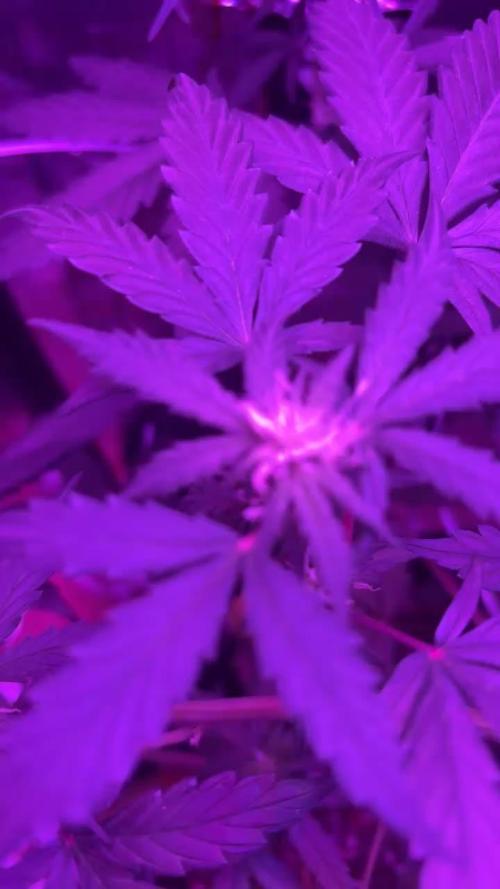
Still going strong, no problems at all.. This is a time of struggle I want do to something but the only thing to do is being patient.
Trichomes are still clear, smell is starting to become stronger, and they are already sticky as fuck :)
UPDATE:
Day 60 [f39]
some leaves are starting to yellow.. but it should be OK by now. I will start with Nitrogen deprivation in a couple of days.
Likes
1
Share


@GreenHouseSeedCo
Follow
9 weeks will guarantee the full range of cannabinoids. Commercially ready in 8 weeks. Yield up to 800 gr/m.2. Very good on ScrOG systems.

Likes
21
Share

@DogDoctorOfficial
Follow
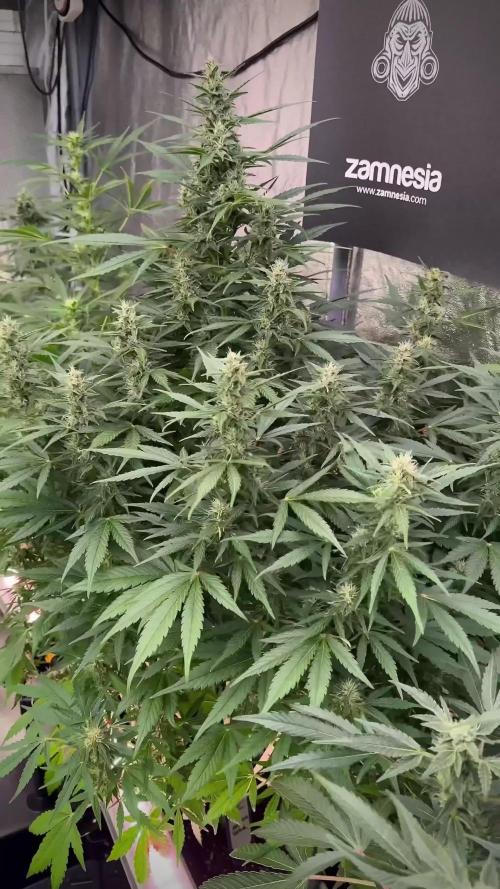
🌿 Cosmic Noodles — Week 6 Flower (Week 10 from Seed)
✦ Context & Run Setup
12/12 from seed. Autoflower expression under controlled flowering conditions — a hybrid rhythm between speed and structure.
What we’re seeing now is the result of early structure + stable environment + precise feeding.
And also… one lesson plant that deserves respect.
⸻
⚠️ The Overwater Plant — A Necessary Decision
This week, we made a call.
Not emotional — responsible.
One plant, previously pushed through intentional overwatering conditions, did not recover. Root zone remained compromised, oxygen exchange was limited, and overall plant vitality continued declining.
What we observed:
• Persistent droop and lack of turgor recovery
• Slowed or stalled bud development
• Increased risk profile (humidity pockets, potential for rot/microbial issues)
At this stage in flower, the plant wasn’t just underperforming —
she was becoming a liability to the room.
So the decision was made:
✂️ Harvest early, remove risk, protect the ecosystem.
Yield was minimal — but that was never the point.
This plant served as a living case study.
💡 Key takeaway for the community:
Overwatering is not about “too much water” —
it’s about lack of oxygen in the root zone.
Once that balance is lost for too long, recovery becomes unlikely.
Respect to her. She taught more than she produced.
⸻
🌱 The Rest of the Garden — Absolute Explosion
Now… the contrast.
The remaining plants are doing the exact opposite.
They are:
• Vigorous
• Structurally stacked
• Visibly happy
✦ What we’re seeing:
• Bud sites fully formed and stacking aggressively
• Dense, symmetrical structure across the canopy
• Leaves holding a deep, healthy green
• Strong transpiration and daily drinking rhythm
These girls are not just growing —
they are driving energy exactly where it needs to go.
⸻
💧 Water, Feeding & Plant Demand
Current intake:
• 1.6 – 1.8L per plant / 24h
This tells us everything:
• Root systems are active
• Transpiration is strong
• Environment is dialed
✦ Parameters:
• Temperature: 26°C
• RH: 60%
• EC: 2.0
• pH: 6.5
• CO₂: ~1000 ppm
This combination is creating:
→ Efficient nutrient uptake
→ Strong metabolic activity
→ Continuous flower development
They are eating, drinking, and converting.
⸻
🌸 Bud Development — Where It Gets Beautiful
At ~Week 6 flower:
• Calyx stacking is now visibly dominant
• Buds are transitioning from formation → mass accumulation
• Structure is tightening, weight is coming in
And the key detail:
👉 The plants are still pushing fresh growth, not fading early
→ This means the engine is still running strong
You’ve built a system where:
• Energy is available
• Environment supports it
• Genetics are expressing fully
That’s why they look like this.
⸻
🌿 Plant Size & Structure
• Average height: ~1.2 meters
• Even canopy with strong tops
• Light penetration still effective
This is the sweet spot:
👉 Big enough to produce
👉 Controlled enough to manage
⸻
🔍 Why They’re Thriving (While One Didn’t)
This is the real lesson of this week.
The difference wasn’t genetics.
It was the root environment.
Healthy plants:
• Oxygenated root zone
• Stable wet/dry cycle
• Consistent nutrient availability
Overwatered plant:
• Oxygen deprivation
• Root stress → reduced uptake
• Cascade effect into weak growth
Everything above the soil is just a reflection of what happens below it.
⸻
🔮 What to Expect Next
Coming into the next phase:
✦ Expect:
• Continued bud swelling
• Increased density and weight
• Possible early signs of fade (depending on feeding strategy)
• Higher demand for stability (environment becomes critical now)
✦ Watch for:
• Humidity control (as buds thicken)
• Airflow through the canopy
• Any signs of internal moisture pockets
We are entering the “everything counts” phase.
⸻
🤝 Closing Words
To everyone watching this journey:
• Day one supporters
• Silent observers
• Question askers
• Even the doubters
This is for all of you.
To the community, to GD, to the sponsors, to the genetics —
thank you for being part of this process.
Because this isn’t just a grow.
It’s:
→ Learning
→ Sharing
→ Improving together
⸻
And to the garden…
One plant taught us a lesson.
The others are showing us what happens when everything aligns.
This is balance.
📡 DELETED @ 1K Please stay tuned.we never quit https://www.youtube.com/@TheDogDoctorOfficial NEW 🙏 Thank you for your patience and continued support.
FOR DISCOUNT CODES AND MORE JUST FOLLOW THE LINK https://website.beacons.ai/dogdoctorofficial
📲 Don’t forget to Subscribe and follow me on Instagram and YouTube @DogDoctorOfficial for exclusive content, real-time updates, and behind-the-scenes magic. We’ve got so much more coming, including transplanting and all the amazing techniques that go along with it. You won’t want to miss it.
GrowDiaries Journal: https://growdiaries.com/grower/dogdoctorofficial
Instagram: https://www.instagram.com/dogdoctorofficial/
YouTube: https://www.youtube.com/@dogdoctorofficial Deleted by Youtube - https://www.youtube.com/@TheDogDoctorOfficial NEW
Vimeo : https://vimeo.com/dogdoctorofficial Under construction stay tuned ⸻
Explore the Gear that Powers My Grow
If you’re curious about the tech I’m using, check out these links:
🔆 Lighting & Environmental Control
• Future of Grow — Advanced LED lighting technology
https://www.futureofgrow.com/
DISCOUNT CODE: DOG20
• Lumiflora — Under-canopy LED lighting
https://lumiflorade.com/
• TrollMaster — Environmental controllers and automation gear (past collaboration)
⸻
Genetics
• Zamnesia Seeds — Genetics used in this project
https://www.zamnesia.com/
⸻
🌱 Soil, Substrates, Boosters & Root Support
• Plagron — Substrates, bio mixes, and supportive products
https://plagron.com/en/
⸻
🎒 Storage, Curing & Preservation
• Grove Bags — Curing and storage solutions
https://grovebags.com/
⸻
📸 Photography Equipment & Tools
(Not sponsors, but part of my creative toolkit)
• Sony A6700
• Sony full-frame macro lens + few more
• Stacking photography workflow - learning
• iPhone (for behind-the-scenes shots)
We’ve got much more coming as we move through the grow cycles. Trust me, you won’t want to miss the next steps, let’s push the boundaries of indoor horticulture together!
As always, this is shared for educational purposes, aiming to spread understanding and appreciation for this plant. Let’s celebrate it responsibly and continue to learn and grow together.
With true love comes happiness. Always believe in yourself, and always do things expecting nothing and with an open heart. Be a giver, and the universe will give back in ways you could never imagine.
💚 Growers love to all 💚
📸 P.S. – The Eye Behind the Lens
All photos in this diary (for now — except for the ones showing the camera, which I took with an iPhone) are taken with a Sony A6700 paired with a Sony full-frame macro lens and a few more.
Photography is part of the story — it’s how we share the fine textures, the glow, and the quiet details that words can’t always capture.
I’ve also started experimenting with photo stacking — a technique where multiple images, each taken at a slightly different focus point, are layered together to create one perfectly sharp image from front to back.
It’s not digital enhancement or AI; it’s pure photography — a way to reveal the plant’s beauty in microscopic depth, from trichome to petal.
You’ll even see a few shots of "ghost me" capturing the shots — camera, lens, setup — because every grow deserves not just to be cultivated, but documented like art.
FOR DISCOUNT CODES AND MORE JUST FOLLOW THE LINK https://website.beacons.ai/dogdoctorofficial
NEW DISCORD - Official Server Invite Link : https://discord.gg/ksjAkA5T74

Likes
1
Share

@Mazko
Follow
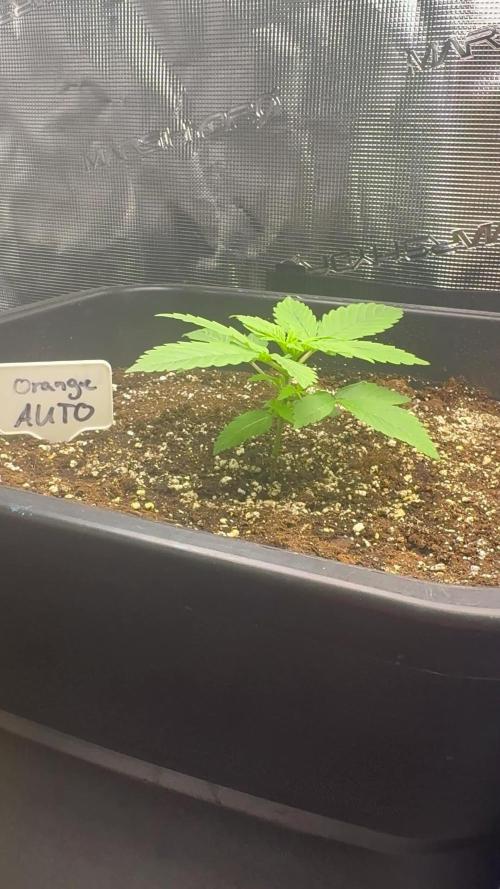
Freunde der Sonne, die Dritte Woche ist fast vorbei.
Sie wirkt etwas hell, was mit den 2 Liter Giesmenge von letztens zutun haben könnte.
Ich werde es beobachten.
Trotz dem habe ich sie heute mit 0,5L Nährlösung gegossen.
Ich fahre immer noch 360 PPFD.
Ich habe mich dazu entschieden die Komponenten Grow, Bloom und Top Max nur zu 50% und die anderen Zusätze zu 100% nach Schema zuzugeben.
Ich bin gespannt ob das ausreichend sein wird.
Bis nächste Woche. 🏻
Likes
2
Share


@Munchiesfrommars
Follow
I like the result a lot !
Not a lot of colas, but really big buds.
As I thought moon rock strain could be all white, but it is simple strain, smells like a gasoline and garbage, not anything fruity or juicy
But very beautiful !

Likes
5
Share

@Daidai
Follow
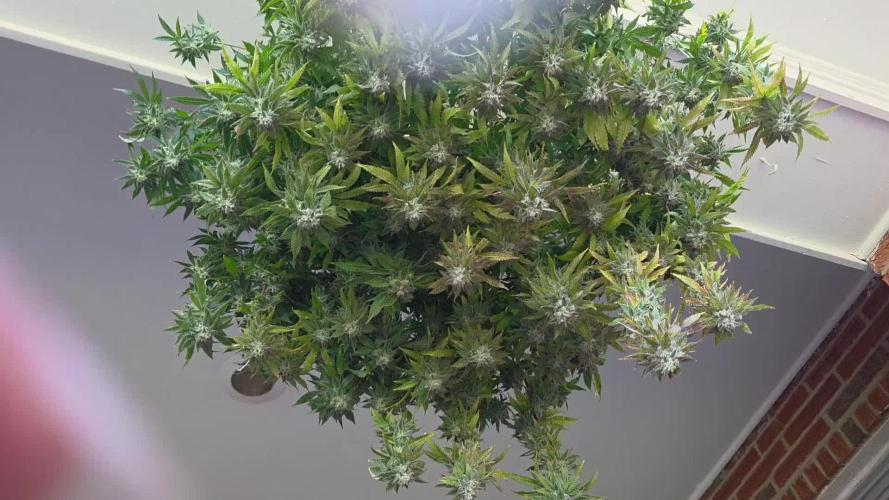
Didn't turn out how I thought it was going to but I learned alot from all the mistakes that were made. For the first time using a trellis i see that I need to clear out the bottoms way better because the are a ton of pop corn buds. I should also have some way to top off the plant incase the plants drink a lil faster then expected because there were a few times the water levels got extremely low.
Next time im gone have to make sure i have away to reach all sides of the plant once I cut her down I seen the back needed way more attention but couldn't really get back there because the tent was against a wall. None the less lessons learned time to regroup an get ready for the next grow.

Processing
Likes
51
Share


@Silverback_Guerilla
Follow
11/24:
Looks like the Emerson Effect/14 hour photoperiod is working...stretching has commenced.👍
11/25:
Had to raise the lights 5 inches today. The big Sucrose Overdose and a Zkittlez are really stretching.
I'm using platforms of varying heights for the shorter plants to keep the canopy level.
11/27:
Raised the lights another 5 inches and fed today.
11/28:
Raised the lights another couple inches this morning...now, I'm thinking I should have topped them...that's a foot in about 3 days...doh!😏
They're already starting to show signs of budding up, so I'll just have to do some supercropping and tie down the taller mains.
11/29:
Raised the lights a couple more inches and supercropped the tallest Sucrose Overdose.

Likes
14
Share


@Sadhus
Follow
Les fleurs arrivent , lumière a 75 % , 27 °c 70%RH , vpd ≈ 1 , température de l'eau 22.9°C , EC 2,2 , ph 5,9 , augmentation du délais entre marée et du temp de marré pour 5 min toutes les 30 min au lieu de 4 min toute les 20 min
Likes
11
Share


@GREENPHOENIX6262
Follow
*03/01 - Week 8 (Week 4 flower) - Heavy Flower Fuel and Cal mag every other day - 18/6 light till harvest- Colas are getting heavy and terps coming in nicely - Lite defo*
Likes
29
Share

@eldruida_lamota
Follow
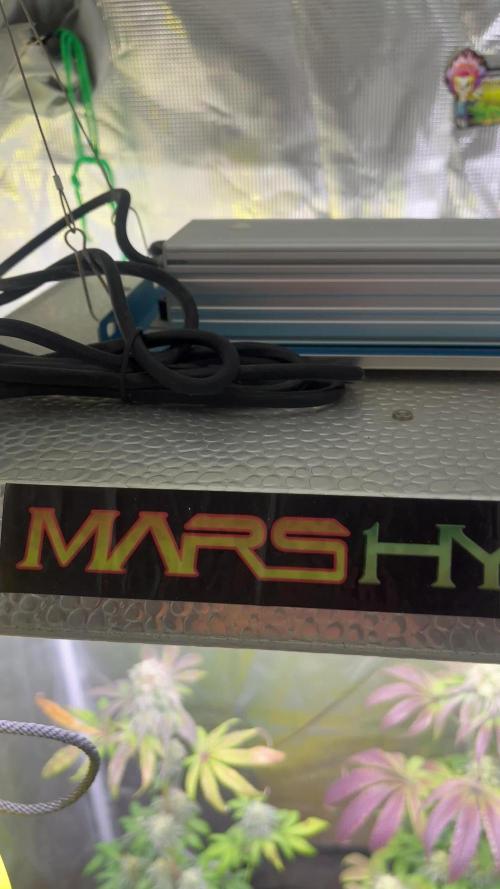
Que pasa familia, vamos con la novena semana de floración de estas Papayton feminizadas de fastbuds.
Vamos al lío, el ph se controla en 6.2 , la temperatura la tenemos entre 25/21 grados y la humedad ronda el 50%.
El ciclo de floración puse 12h de luz, el foco está al 100% de potencia.
Va madurando y marcándose unos aromas bastante dulces y afrutados.
COMENTAR: que una de las 3 salió macho y otra la corte ya por qué me estaba dando problemas pero la que queda la aguantamos y ya os enseñaré al final la que corte ya también.
- os dejo por aquí un CÓDIGO: Eldruida
Descuento para la tienda de MARS HYDRO.
https://www.mars-hydro.com
Hasta aquí todo, Buenos humos 💨💨💨
Likes
26
Share


@BigDaddyK
Follow
A sweet little number , lower yielding , high quality : 1: SOOOOOO SMELLY
Likes
34
Share

@sellem
Follow
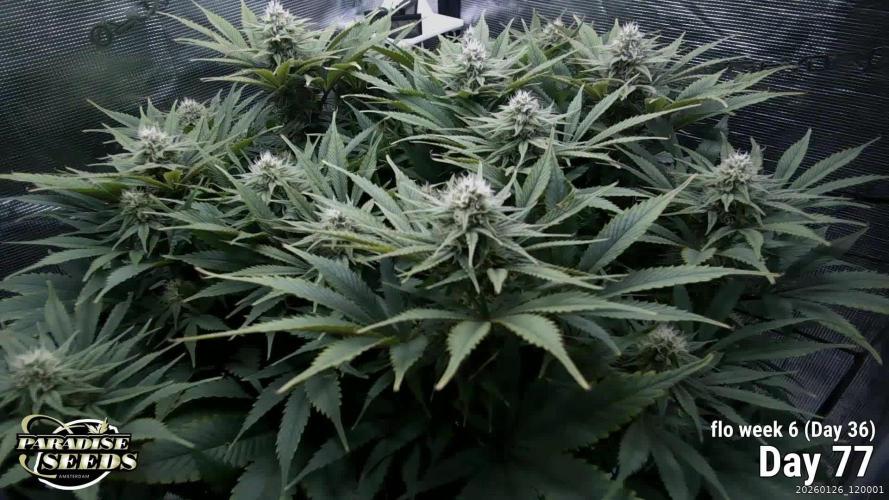
Shes a stinker and a stunner. 👻👽💀
My watering schedule got a bit out of whack so she began eating herself a bit, but nothing a good dose of some nutes and ye old reliable, calmag, shouldnt be able to fix
Watering is still 6L, 6PH, 5ml/L bloom, introduced her to green sensation this week, and a healthy dose of calmag to repair my inconsistent schedule (its magic, dont ask)
did some minor defoliation of the worst evidence of my neglect that sprung to my eye. but other than that, ill just call it fade 😎😎😎
Jokes aside, she IS developting some nice colors. 😍

Likes
14
Share


@goeser
Follow
slowly starting to get a setup.cstep by step. first time indoor.
cant wait them to be bigger and start flowering

Likes
11
Share


@MadeInGermany
Follow
Info:
Unfortunately, I had to find out that my account is used for fake pages in social media.
I am only active here on growdiaries.
I am not on facebook instagram twitter etc All accounts except this one are fake.
Flowering day 4
since time change
to 12/12 h.
Hey everyone ☺️.
4 days ago she was placed in the flowering tent.
Thanks to the training it has become very bushy :-).
1 g Enhancer Pro l cocos was added.
As always, a cuttings were cut before moving 👍.
Otherwise everything was cleaned and checked.
Have fun and stay healthy 🙏🏻
You can buy this Strain at
https://www.amsterdamgenetics.com/product/kosher-tangie-kush/
Type:
Kosher Tangie Kush
☝️🏼
Genetics:
Kosher Kush
X
Tangie
👍
Vega lamp:
2 x Todogrow Led
Quantum Board 100 W
💡
Bloom Lamp :
2 x Todogrow Led
Cxb 3590 COB 3500 K 205W
💡💡☝️🏼
Soil :
Canna Coco Professional +
☝️🏼
Fertilizer:
Green House Powder Feeding
☝️🏼🌱
Water:
Osmosis water mixed with normal water (24 hours stale that the chlorine evaporates) to 0.2 EC. Add Cal / Mag to 0.4 Ec Ph with Organic Ph - to 5.5 - 5.8 .

Likes
6
Share


@PersonalSmok3s
Follow
Being Mephisto Freebies there’s not a lot of info on how these particular seeds grow. I found them low maintenance, they weren’t the thirstiest girls I’ve grown and I found quite late on they didn’t like high temperatures, caused over half of them to foxtail. That being said the trichome production was there from week 2 of flower and by the time I cut them down they were some of the greasiest plants I’ve grown to date!
I left a decent amount of the sugar leaves on while trimming with the hopes it will slow the drying process by a few extra days, between 7-10 days hanging, then into jars with humidity packs to cure.
It’s been a fun grow and an exciting introduction into the Mephisto brand, over the last year I’ve managed to purchase a few different strains on there Monday drops so il definitely be running some more in the future.
Hope this diary has been helpful ✌️
Il upload the dry weight before I put it all into jars.
Likes
27
Share


@MrJones
Follow
OSS Cheese XXL
🔹⊱╮🔹╰⊰🔹 GROW Started 03.10.24 INFORMATION 🔹╰⊰´🔹⊱╮🔹
🌞Environment - Maintaining 80F and 65%Humidity
🌾Training - These ladies are Pruned and Defoliated and ready for flower.
⚱️2-Gallon 📊6.2 PH
💧 Feeding - Using Horti Grow 8-11-21, Bloom 5-15-26, Late Bloom 0-24-26, Cal 12-0-0
🌞Medic Grow Smart 8 760 Watts
🕷️ IPM - CannControl from Mammoth and Mosquito Bits as needed
🔹⊱╮🔹╰⊰🔹 GROW Started 03.10.24 INFORMATION 🔹╰⊰´🔹⊱╮🔹
🌞Environment - Maintaining 80F and 65%Humidity
🌾Training - The girls are recovering from last week's Pruning and Defoliation,
⚱️2-Gallon 📊6.2 PH
💧 Feeding - Using Horti Bloom and Horti Cal 12-0-0
🌞Medic Grow Smart 8 760 Watts
🕷️ IPM - CannControl from Mammoth and Mosquito Bits as needed
🔹⊱╮🔹╰⊰🔹 PLANT UPDATES 🔹╰⊰´🔹⊱╮🔹
📝 Notes - These ladies are just going nuts; they are stretching aggressively, and the vertical growth is outstanding. I want to defoliate these plants, but I need to be cautious and not stunt the stretch.
📝Fertigation injects fertilizers into an irrigation system to supply dissolved nutrients to crops.
🗓️04.27.24 Just feeding daily, sometimes twice; today, fed with Hort-Bloom @ 2.7 GRMS Per Gal and Horti-Cal @ 2.5 GRMS Per Gal.
🗓️04.28.24 Just feeding daily, sometimes twice; today, fed with Hort-Bloom @ 2.7 GRMS Per Gal and Horti-Cal @ 2.5 GRMS Per Gal.
🗓️04.29.24 Just feeding daily, sometimes twice; today, fed with Hort-Bloom @ 2.7 GRMS Per Gal and Horti-Cal @ 2.5 GRMS Per Gal.
🗓️04.30.24 Just feeding daily, sometimes twice; today, fed with Hort-Bloom @ 2.7 GRMS Per Gal and Horti-Cal @ 2.5 GRMS Per Gal.
🗓️05.01.24 Just feeding daily, sometimes twice; today, fed with Hort-Bloom @ 2.7 GRMS Per Gal and Horti-Cal @ 2.5 GRMS Per Gal.
🗓️05.02.24 Just feeding daily, sometimes twice; today, fed with Hort-Bloom @ 2.7 GRMS Per Gal and Horti-Cal @ 2.5 GRMS Per Gal.
🗓️05.03.24 Just feeding daily, sometimes twice; today, fed with Hort-Bloom @ 2.7 GRMS Per Gal and Horti-Cal @ 2.5 GRMS Per Gal.
╰⊰🔹╰⊰´🔹⊱╮🔹╰⊰🔹╰⊰🔹STRAIN INFORMATION🔹⊱╮🔹╰⊰🔹╰⊰🔹╰⊰🔹⊱╮
Cheese XXL cannabis seeds are a unique blend of Afghan Kush x Super Skunk, producing the most pungent dank weed. Cheese XXL is the third commercially available edition released by Original Sensible using and developing these Afghan and Skunk genetics. The first release of these genetics was their Skunk Afghani. The second improved version was Stinkin' Bishop, which had an enhanced and more potent THC content and was more intense in terms of smell. The third and improved release on a similar theme is this Cheese XXL, which has a similar THC content but an enhanced heavier yield. The smoke is incredible, with an outstanding flavor of pungent skunk and spicy, extra strong mature cheese created by the dominant terpene myrcene with its earthy solid scent accompanied by caryophyllene and pinene, which combine to create a peppery acrid cheesy odor. THC levels are exceptionally high in this Cheese strain, and the effect is well-balanced, developing mental and body relaxation with a remarkable alleviation of stress and depression.
The intense solid aroma starts early in the flowering period; if you're growing Cheese XXL indoors, you'll need plenty of ventilation to disperse these babies' stinky "road kill" aroma! Cheese XXL is a cheese strain suited to indoor setups and thrives outdoors well. These feminized marijuana seeds are incredibly resistant to mold and disease and produce a substantial harvest that professional and amateur growers can quickly achieve. These Cheese weed seeds are outstanding, break open the buds ready for use and you'll see why, the stench will make your eyes water!
Cheese XXL from Original Sensible Seeds is a great choice to break into the commercial market of growing cannabis, so if you're looking to buy something special with extreme yield, potency, and flavor, Cheese XXL cannabis seeds are simply the best choice.
Translate


Likes
4
Share


@Hommero75
Follow
This week was good. The bud density increase. The ladies are looking great and they have an amazing aroma. They just received their last feeding. Now is PH water and cal-mag into they are ready to harvest. It might take a couple of weeks to for them to be ready. Due to the fact the I had some issues in the beginning with the developing of the plants. The growth was slow and it took longer than expected. Tropicana Cookie is the tallest with 17" , Forbidden Runtz with 16" and Banana Purple Punch with 15". I expected them to be taller.
Likes
4
Share


@QixxGrows
Follow
Day36, 37, 38: Seems to be growing a set of leaves per day now. Super growth! Stretching to the top.
Day39: I had a hiccup with the camera. For some reason it stopped responding at 04:30 in the morning. I only realized it much later. I still don't really know why, but reseating the data ribbon fixed the issue.
Day40: After fixing the camera, I decided to take this view again. The Lady is starting to show some nice growth and this view will show it best. If you look carefully, you'll see that her branches are not green, but rather reddish. Definitely related to genetics :) Everything else is within limits. Plus, the leaves look super healthy.
Day41: Here you can see the stem colour better.