


Likes
Comments
Share


@Santica_Garden
Follow
How's it growing guys, just a quick update on the Alien OG by The Cali Connection, end of Week 3 of Flower, I have uploaded a video for you guys so any questions just ask 👍🏾 Happy Growing 🌱💚


Processing
Likes
15
Share


@Luv2Grow
Follow
Day 71 - Not much going on today but is is starting to smell a bit more. Kinda sweet with a little bit of funk is the easiest way to explain it. Noticed some of her top leaves were tacoing a bit so raised the light up a little bit to try and relax her.
Day 72 - She’s still chugging along and she’s packing in nicely. Other than that, not much else happening. I raised the lights a little more cause still have a few leaves up top folding like tacos. Have the high temps no higher than 78 and around 69 at night so I don’t think heat is the cause, I think I had the lights way to close.
Day 73 - Nothing much to update today. She’s gonna need some more water tomorrow. Still have some tacoing of the leaves but did about all I can do now so just hoping it doesn’t bother her the last couple weeks.
Day 74 - Almost waited a day to late to give her some water and nutrients. She was just starting to drop a bit but got her fed before she really had any big issues. She took 2 full gallons of water and nutes so that should hold her over for about 2-3 days.
Day 75 - All looks great since watering, no more droopy leaves but man oh man the buds are getting fat and dense as hell. There’s still plenty of clear trichs and most pistils are still thick and white so still at least two week left but can’t wait for this harvest.
Day 76 - Will probably be attaching some of those plant yoyo’s soon because these buds are getting fat and heavy and don’t want anything bad happening to them. This is turning out to be one of my best grows to date. The top few leaves are really tacoing and getting brittle, not a lot but a few so I raised the lights a bit more. Probably too late for the couple that are damaged but overall she should be ok.
Day 77 - No major updates today, she’ll be needing some water for sure tomorrow. Other than that, I’ll be attaching some plant yo-yo’s today to support the massive buds.

Likes
5
Share


@MadeInGermany
Follow
Flowering day 65
since clock change
to 12/12
Hey guys :-) .
It's so far, the lady is ripe and will be cut at the bottom end in the coming days and hung upside down in the drying tent :-) .
Next week there will be an extra update on how they are hanging.
Watering would be done twice this week with 1 l each (nutrients see table above)
Otherwise it was checked and everything was cleaned.
Have fun and stay healthy 💚🙏🏻
👇🏼👇🏼👇🏼👇🏼👇🏼👇🏼👇🏼👇🏼👇🏼👇🏼👇🏼👇🏼
You can buy this Nutrients at :
https://greenbuzzliquids.com/en/shop/
With the discount code: Made_in_Germany you get a discount of 15% on all products from an order value of 100 euros.
👇🏼👇🏼👇🏼👇🏼👇🏼👇🏼👇🏼👇🏼👇🏼👇🏼👇🏼👇🏼
You can buy this strain at :
https://gardenofgreenseedbank.com/candyland/
Water 💧 💧💧
Osmosis water mixed with normal water (24 hours stale that the chlorine evaporates) to 0.2 EC. Add Cal / Mag to 0.4 Ec Ph with Organic Ph - to 5.8 - 6.5
MadeInGermany

Likes
4
Share


@Cold_Farmer
Follow
Die Purple Punch wächst ein wenig langsamer als die Purple Queen und hängt mittlerweile schon ca 10 Tage hinterher. Ansonsten bin ich mit dem Wachstum zufrieden.

Likes
12
Share

@Prilyfe13
Follow
02/14/2026
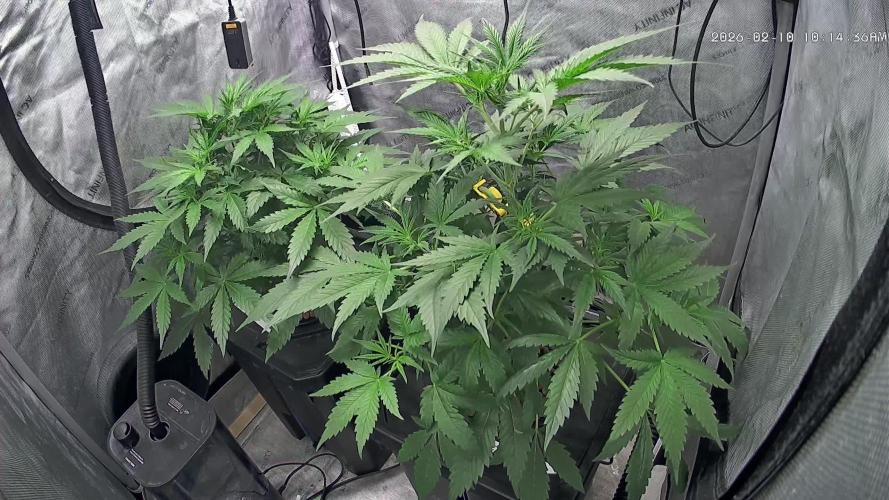
Honestly, I'm not sure that she is stretching. Filling out, yes. But stretching, no. Not sure what to make of this. She's only 17" tall and has been in the "pre flower" stretch for about a week. Or maybe it takes a week for the stretch to start? I don't know, but I'm not seeing any rapid growth. Like from yesterday to today, I see like a quarter inch difference in height. Not a stretch. That's like casual growing. I'm now wondering if the stretch has yet to start. So this week we are leaving it on Veg.
For that reason, I'm not changing the water. Just topping it off as needed. Like today. I bet she needs a gallon. I think I'll change the water out when I start to see buds. Currently, I'm using a mix of grow and bloom nutrients while she transitions from veg to flower. I'm really hoping the stretch hasn't started yet. I've been saying it since I saw the first pistils. That was a week ago.
She looks great! I don't understand where the vigor went. No signs of stress, hunger or toxicity. A perfectly healthy plant. No leaf discoloration. And still producing 7 finger leaves. Her branches are strong and most are almost caught up to the top.
She's super wide and frankly, she doesn't have all that many leaves. They just got big. Maybe this lady is a 5 or 6 week veg time. But the pistils! Argh!
The environment is pretty level. No issues there. We are at a nice 75° and 55%. The VPD is a bit high, but I also have the CO2 bag in the tent, so it can stand to be a bit warmer. I also think I can increase the light intensity, but I won't be doing that.
Update:
I raised the light to 25". It would be 24" but the Apple Strudel is 3" taller and I need to make sure I don't burn that one. So we are at 25" with a DLI of 35.6 mol. I increased the light power to 60% as well. Currently 195 watts.
I also noticed the EC and TDS dropped quite a bit last night. Not sure why, but I might have to add more nutrients. It's happening with the Apple Strudel as well. Not really sure what to do besides continue adding nutrients until she levels out? But if she's taking in more nutrients than water, how do you stop that? Does it level out and she drinks the same amount she eats?
02/15/2026
Apparently I forgot to do an entry this day. Oops. I was busy.
Real quick. Not much going on.
02/16/2026
Readings:
pH: 6.05
EC: 800
TDS: 402
Temp: 66.2
The EC and TDS are still low, but now TDS is in the 400s, so that's good. I'm trying to figure out how to increase the dose without pumping the water out again. I'm going to have to wait until I need to top off again. So tomorrow it seems. Now just to figure out how much I need. It's 4 gallons, so what to do? I only need 50 ppm more. Maybe 500? I'm still trying to figure out how it works.
Like if I add a certain amount, will the plant eat and drink the same amount based on a number? Like if the water was 500 ppm, and 2 days later when she's taken in a gallon of water, I see the EC and TDS at the same level. Or would 500 ppm still not be enough to keep up? I'm not exactly understanding what I'm experiencing here.
I added a little micro to the mix too. I almost forgot about it. Just a little bit. I think it'll help with the TDS and might help the plant grow more. When I change the water out in a couple days, I'm going to be adding 1 ml per gallon to start. It should be like 7.5 or something, but I'm taking it slow. I'll add a bit more until I get to 5 or so and see how she does. I'm trying to not go over 500 ppm as this is an autoflower. She doesn't need a ton of food. Although, this particular strain is nutrient heavy. She could probably take 550 ppm. But I'm not doing that. I'll stick with 450 ppm until she hits full flower. Then I'll bump it up to 500 then 550, and if needed, 600.
She also has started budding. Not too sure what that means for her growth. But I'm thinking she's not gonna grow much more. Shame that. However, the Apple Strudel is still growing. No budding, nothing. Well, she has pistils, but that's because she's transitioning to flower. She is going to finish stretching in a few days I think. Maybe longer. Hopefully a little longer to grow.
Anyway, that's it for the day.
02/17/2026
Swapped the water out. Honestly forgot to write in today. So this is the next day. I swapped water and that was about it.
02/18/2026
Readings:
pH: 5.90
EC: 809
TDS: 403
Temp: 65.1
We are looking pretty good. Is the EC supposed to be that low? The TDS is decent but I'd like to see it at 450 to 500. Temp looks great! I've been swapping the ice bottles out 3 times a day. 1 in the morning then afternoon and then evening. It's been working perfectly. The pH is spot on, as it should be.
Her root ball is a bit small for my liking. I don't have a way of taking a picture of it without a second pair of hands. It's not too small. But definitely could be bigger. The root ball in the Apple Strudel is taking up the entire bucket. It's pretty cool. No pics of that either.
As for after her defoliation, she showed zero signs of stress from it. Very happy plant. Leaves perky and happy looking. Nothing drooping. Just good happy plant. I also had to lift the light up again and drop the power down to 50%. Now she's 24" from the light and the DLI is 37 mol. It has to be that low because the apple Strudel is a bit taller and I don't want to burn her. As it is, she was showing signs of light stress already. Blue Dream, that is. But it's all fixed now. I really should be checking the light daily. I forget to. I only have a few inches to the ceiling.
The environment looks great! No issues, equipment is barely running now. Perfect for this little lady.
Speaking of little, I'm pretty sure that's it for the stretch now it's stacking time I guess. I'll take a total height measurement at the beginning of next week, but I'm pretty sure she's over 20" now. Maybe she'll get taller when the stacking starts.
02/19/2026
I think I forgot to mention a few days ago, she has buds now. So I'll be switching to bloom nutes coming next week. Well, 2 more days. I should have switched last week, but she didn't have buds yet. I was assuming she would stretch. Lol
Apparently not. No clue what happened. Maybe not enough food. But she showed zero signs of stress. A very healthy plant. But no stretch. I'm hoping the stacks make it taller. If the stacks happen. I'm very confused with this plant. I mean, flowering as early as she did is pretty cool. But where did the stretch go?
Anyway, I was considering topping off today, but she definitely doesn't need it. Maybe a half gallon. I want to try and hold off until I swap the water out. That way I'm not pulling out 4 gallons. With 1 being fresh. Nope. Not me.
The environment is looking pretty good. No issues. I'm gonna drop the humidy next week to 50%. I'll leave the temp the same though. Roughly 75° I could get to 77°, but I'm not gonna bother.
She also took really well to the defoliation. No stress that I can see. But she's still short! Why? Why Lord why?! Oh well. I'll just do my best to make sure she has massive rock hard buds.
02/20/2026
Last day of week 6 and last day of Veg. I probably should have started flower last week, but I wasn't thinking about it. Oh well. Now we have buds and the the start of flower. Tomorrow I'll be changing out the mix to bloom nutrients. Big bud, tasty terpenes and bringing back B-52 for the rest of the run. I'll be taking out Piranha, Tarantula, Voodoo Juice and Bud Ignitor.
Currently I'm at a third dose for next week, so the week after, a half dose should be fine. Plus it was only ever nitrogen I was having a problem with and just barely. I figure if that's the only issue I've seen and it was the only issue. Although, it really wasn't an issue. The only thing I saw was dark tips. But the Apple Strudel got nitrogen toxicity from the Grow part of the nutrients.
Not much else to report on. She's budding and that's what matters. Hopefully she stacks right up. I'll be very upset if this turns out to be a small budded plant. Too early to tell though.
The environment is good.
The water is low, but I'm swapping it out tomorrow. Hopefully I'm not causing any issues with her by waiting the extra day to fill the bucket up.

Likes
Comments
Share


@NeuralGrowBro
Follow
This is the last day of flowering, followed by harvest.
Buds recovered from light stress, white tops are no longer visible. Everything went as I planned - lots of light and lots of fertilizer for this strain gave me big buds on every cola.

Likes
11
Share


@Zurbena
Follow
No stress at all. growing like crazy🤪✌️🏻
He will have to practice again this week. ( 5.12.2022.)
Defoliation was done once again today (7.12.2022)
I would like to thank CannapediaGrowersCup for the lights (mars hydro ts1000) and for help.

Likes
26
Share


@siL01337
Follow
What do you think about this road to candy kush express.... Let me know....


Likes
Comments
Share

@Elron_mc_Bong
Follow
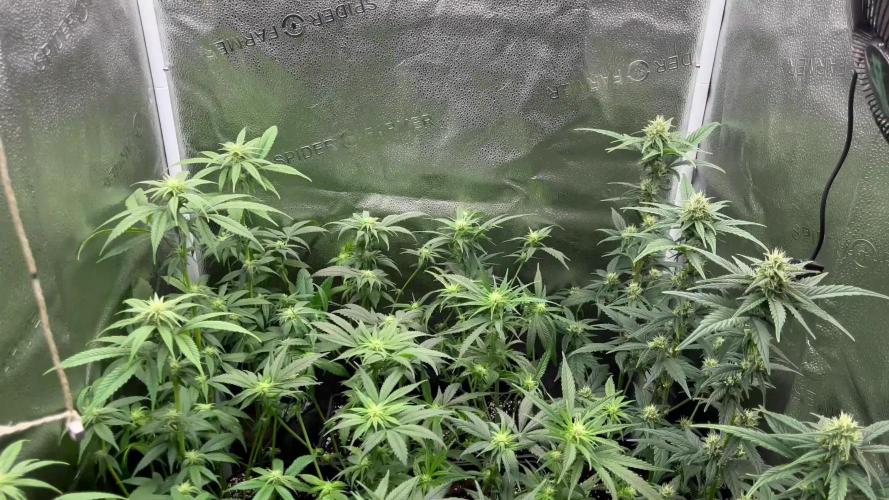
Week 7 – Canopy-Kontrolle & Verdichtung
Diese Woche merkt man deutlich:
Der Stretch ist vorbei. Jetzt geht es nur noch um Blütenmasse.
Die Struktur steht.
Jetzt wird verdichtet.
⸻
🌿 Entwicklung der Sorten
Die Early Skunk hat sichtbar aufgeholt und fügt sich jetzt viel harmonischer ins Gesamtbild ein.
Die Big Bud bleibt zwar optisch dominant, aber durch aktives Angleichen der Höhe wirkt das Zelt jetzt deutlich homogener.
Bei Pure Power Plant und Somango XL habe ich die Töpfe erhöht, um ein gleichmäßiges Canopy zu erreichen.
Ergebnis:
• bessere Lichtverteilung
• weniger Hotspots
• gleichmäßigere Bud-Entwicklung
• saubere Oberkante
SoG zahlt sich jetzt richtig aus.
⸻
💡 Licht
Die Lampe wurde in dieser Woche auf 90 % erhöht.
Abstand unverändert.
Die Pflanzen reagieren stabil:
• keine Lichtverbrennungen
• keine Bleaching-Anzeichen
• kräftige Blütenbildung
Man sieht deutlich, dass die Energie jetzt komplett in die Buds geht.
⸻
🌸 Blütenstatus
• Buds beginnen dichter zu werden
• Internodien schließen sich
• erste leichte Harzbildung sichtbar
• Pistillen weiterhin frisch und weiß
Die Big Bud zeigt lange, gestapelte Colas.
Die anderen Sorten bauen kompaktere, rundere Blüten auf.
⸻
Klima
Die reduzierte Luftfeuchtigkeit zahlt sich aus.
Das Blätterdach ist dichter geworden, aber die Luftzirkulation scheint zu passen.
Keine Anzeichen von Feuchtigkeitsstress.
⸻
📊 Fazit Woche 7
• Canopy aktiv ausgeglichen
• Licht fast am Maximum
• Stretch abgeschlossen
• Bud-Stacking läuft
• Struktur sauber kontrolliert
Ab jetzt geht es in die Phase, wo Gewicht und Harz entscheiden.
Man sieht:
Das ist kein Zufallsgrow.
Das ist Planung + Kontrolle.



Likes
17
Share


@Buddyhighs
Follow
Day42: 20 degrees 77% humidity 1l water
Day 43 : 19 degrees 69% humidity 500 ml water and feed
Day 44: 20 degrees 72 % humidity 1l water
Day 45 : no readings no water heavy defo added heat after advice on coments
Day 46 : 21 degrees 57% humidity 300ml water
Day 47: day of pics 22 degrees 64% humidity 2l water
Week avg : 20 degrees 67% humidity 800ml water
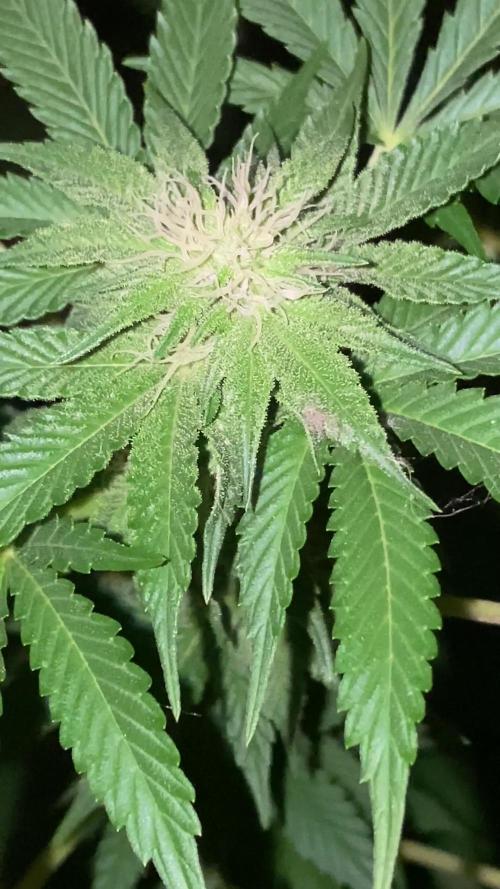
Purple colours showing
Advice from comments seem to work
Likes
6
Share


@weedisdegenerate
Follow
Flowering is going great so far and temps are staying low with the light on full blast. I'm running dangerously close to running out of space though, the last grow stayed so short and bushy, this one got very lanky during flower, I have 3 inches before I go past 12 inches between the canopy. Hopefully the stretch has slowed down. Noticed some burnt leaf ends so I dialed it back on the calmag to 3ml per gal. Also noticed spring tails in the water, but after reading I'm not worried about those little guys in my soil. This plant is massive and takes the whole tent up

Likes
6
Share


@LoganatorDude
Follow
Well finally by day 80 the heavy rain is over and we are looking at afternoon showers, but sunny hot and humid until then. Well, relatively humid. About to finally get in there and tying some branches and picking little sucker branches that I don’t want. Branches appear as suckers to me when they’re more than likely located lower on the plant or at the interior in a way where it would grow with less light or grow inside the plant and congest the airflow, again with less light.
I fed her a 2 Gallon Heavy Feeder mix. It will be watered in with tsp water that is 156 PPM @ pH of 8.5. Normally ALL waterings are done with an incredible amount of water from the garden hose that is from a well. I intend to feed with soil amendments and top dressings, however localized feeds or things like worm castings tea is coming up. I also foliar fed her one evening with phosphates, and the fulvex which is basically magnesium and fulvic acid with a yucca wetting agent. I want to help her to spread those roots!
I know it sounds like a lot of molasses. But I’ve never had issues with large doses in these situations outdoors. The plants and microbes go bonkers for the stuff!
Also that feed water went in strong but as it was watered in with the regular water, it diluted the tds quite a bit.
Literally the following day, I am noticing what looks like more than preflowers. Is she really starting to flower an entire month early?! Last week er so, we had those 4 days of really cold, dark, rainy weather, that came after some nasty hot and super dry weather. Multiple plants have begun to flower on me! I suppose there is no problem getting an early start with things. But not this!
I don’t want to go back and forth! She can be in vegetative stage and grow bigger and spread her roots. Grow and prepare for flowering stage. Then go into flowering stage and STAY in flowering, 100%. Not something crazy like: stop veg(preparing for flower) and just flower out with what was developed, then 2 weeks later realize it was too early and go back to Veg, only to jump right back into flower! I don’t want some kinda of chaotic misdirection of energy, for most likely some weird results. But we shall see.
All I can say is, if she is going to flower, then flower hard! Don’t turn back.

Likes
7
Share


@eldruida_lamota
Follow
Venga familia, acabamos la séptima semana de estas gelato olandesse de DutchFem.
Última semana que alimento, a partir de hoy viene lavado y aguantar ya lo que queda , a ver si no sube mucho la temperatura, porque podría ser un problema.
Agrobeta:
https://www.agrobeta.com/agrobetatiendaonline/36-abonos-canamo
Mars hydro:
Code discount: EL420
https://www.mars-hydro.com/
Las maximas de temperatura no superan los 26 grados y las mínimas no bajan 20, así que no me puedo quejar.
Los niveles de humedad también son los correctos van entre 50%/65% de humedad relativa.
Por supuesto el Ph lo estamos dejando alrededor de 6.
Hasta aquí es todo, buenos humos 💨💨💨.

Likes
16
Share

@GoodTimesOrganics
Follow
Hi liebe Community and Welcome Back! 🌿💚
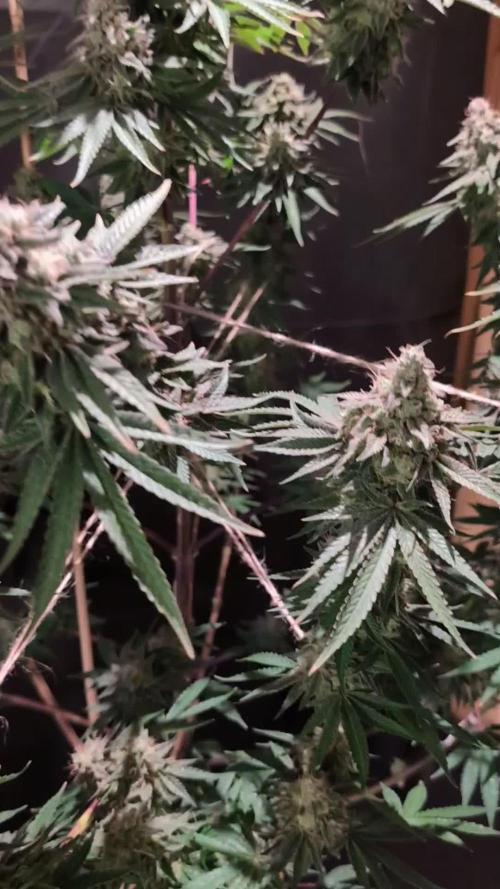
Willkommen zur achten vergangenen Blütewoche! Blütetag 64
Die Buds haben nochmal an Dichte und Größe zugelegt.
Ich bin beeindruckt, welche Power nochmal zum Ausdruck kommt.
Auf jeden Fall zeigen sich Phenotypische unterschiede in der Gesamtstruktur.
Allmählich kommen wir auf die Zielgeraden. Sie zeigt eine richtig schöne Struktur und wir landen beim Ertrag sicherlich im XL Bereich.
Das Aroma hat bei dieser Pflanze einen stärkeren süsslichen und fruchtigen Touch, wobei inzwischen auch etwas herbere und beißendere Untertöne (etwas Chemisch) hinzu kamen.
Denke nächste Woche ist es Zeit zum harvesten.
Die Umgebungsgegebenheiten sind aktuell gut:
—————
🌞 Temp: 27
🌚 Temp: 18°C bis 19°C
💨 RH: 62%
VPD: 0,96kPa
💡ppfd: 830 mpm
—————
Viele Grüße 👋
Likes
Comments
Share


@Budking420
Follow
This nug is getting huge on top hole mackerel! I'm super excited for this idk what's I'm doing that it likes so much I just fed it grow dots and that's it just been keeping it wet with the self watering ac infinity bases! Check back in a week to see how far it has progressed!

Likes
8
Share


@mikearon
Follow
May 31st - Day 104 : I had to take two babies out because of the lack of space in the tent. Didn’t realize they would grow that much.. So I planted them outside and will let them do their thing as I didn’t have the heart to kill them. But besides that, thriving.


Likes
9
Share


@bigolebuds
Follow
Week 8 Day 1: how did we get here?! Northern Lights is looking beautiful (the only plant in a 5 gal pot outside). No major issues. Kids were fed liquid nutrients for the second time 9/8, and will be recieving them once a week moving forward (hopefully every other watering). Gotta find a way to make watering a smoother process tho, might invest in a home RO filter 😂 Big dreams being discussed, this could be the start of the only cultivation, breeding, and distribution center that has a primary focus on re-entry and subsequent business development.. That’s how you do socially responsible business and policy.
You heard me?
