


Likes
Comments
Share


@Grindlife219
Follow
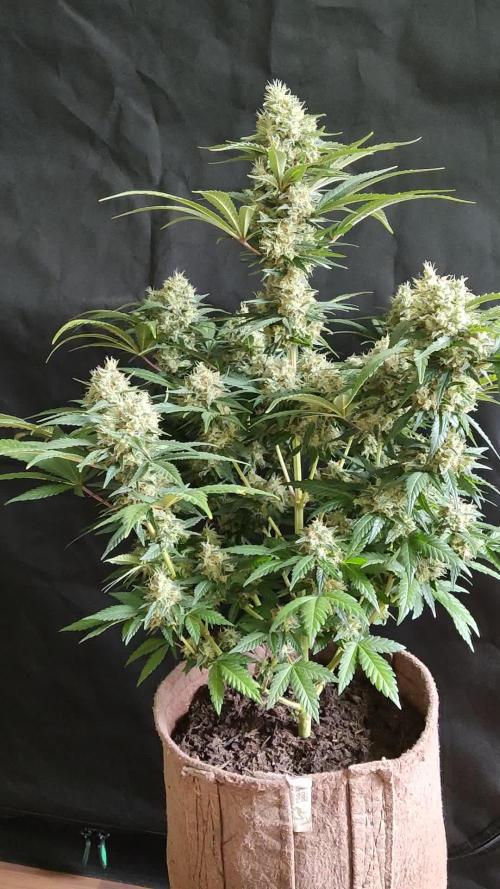
Topped last week plants are growing vigorous
Day 58 is today 06/01/21 today I topped dressed with 4-4-4 and earthworm castings and continue to lst plants




Likes
4
Share
@Chrisandweed
Follow
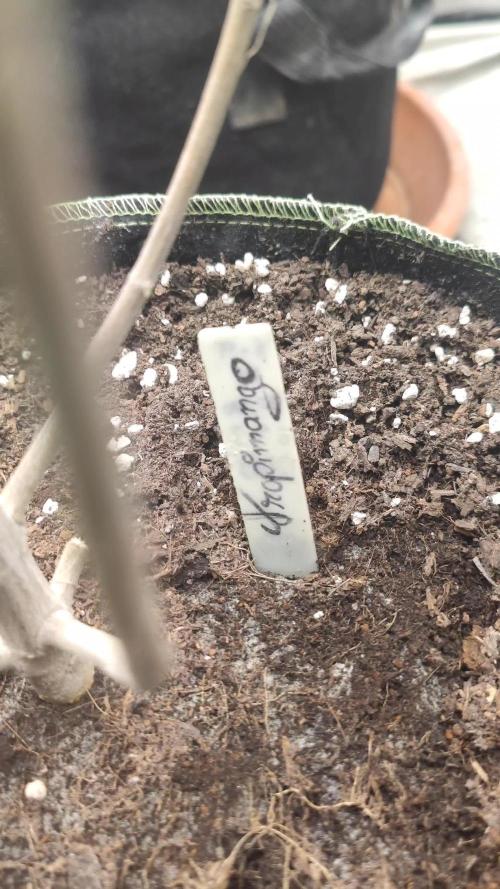
Novena semana de floración de 11 que van a llevar casi casi seguro todas.
Fuah, todas parece que tienen una gelatina de tricomas por encima, espero que salgan riquisimas!

Likes
9
Share


@Jakobyzone420
Follow
Sono molto felice della mia pianta e dei suoi frutti spero in un buon raccolto da secca 😉 io direi di farmi fare altre 3 settimane di fioritura e poi raccogliere. Saluti 🙏🙏


Likes
20
Share

@DE_BW
Follow
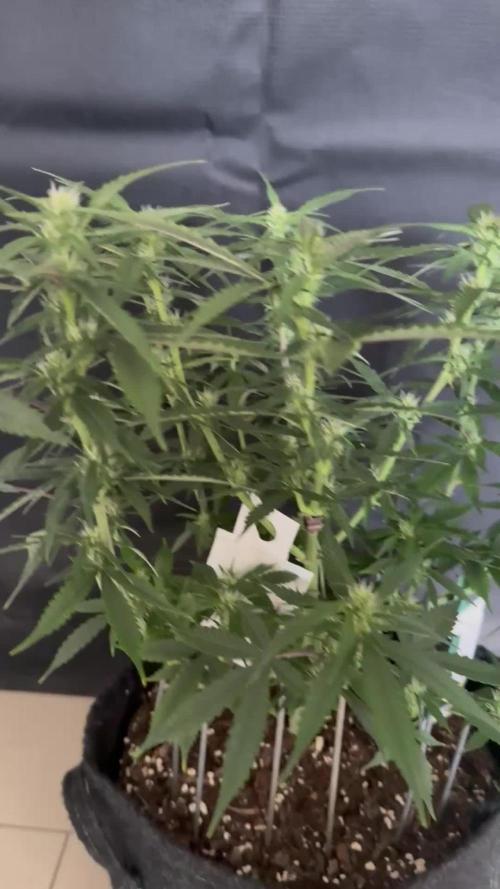
The Strawberry Gorilla has officially entered her first week of flowering and is looking extremely promising. Every branch is developing strong flower sites, and the amount of branching makes her look like she could become a very productive plant.
I continued with some light LST this week to keep the canopy open and evenly distributed. I also gave her a fairly thorough defoliation, especially through the inner growth, to improve light penetration and airflow.
The structure is exactly where I wanted it to be going into flower, with plenty of well-developed tops and good spacing between them. From here on, I’m mostly going to leave her alone and let her do her thing.


Likes
1
Share


@tigerbomb
Follow
la seconda pianta ossia quella che non era ermafrodita è stata impollinata solo nel ramo in diretto raggio del ventilatore, forse avrei potuto pensarci, comunque ho 12 semi, per il resto non ho trovato molti semi e sono soddisfatto nel complesso, la pianta non ermafrodita ha avuto un esplosione di tricomi, veramente piena, per altro le cime sembravano pesare molto, per adesso stanno seccando, di muffa ne ho trtovata poc e niente


Processing
Likes
6
Share


@ganjaman24
Follow
Week 5 I believe and they’re doing great..topped them lil over a week ago. Thinking another week or two then flip to flower! 😎


Likes
7
Share

@Stacy_smokez
Follow
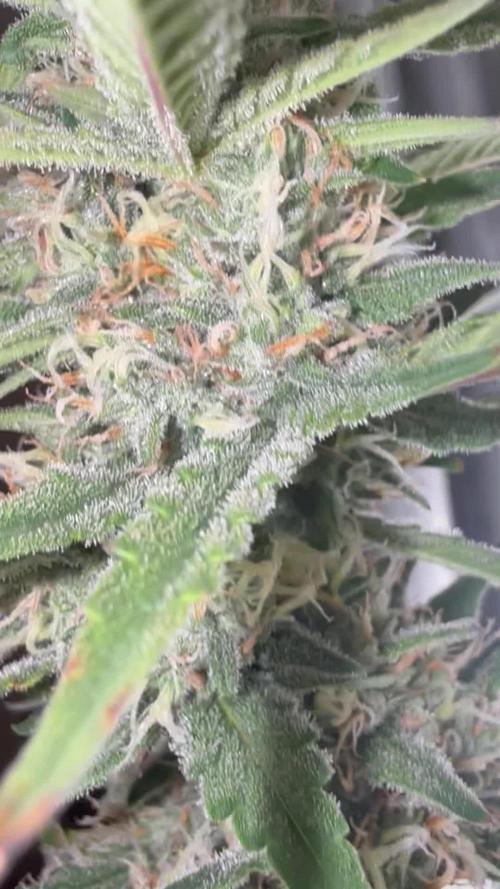
Coming into week 8 strong in flower starting to look real frosty. And bulking up nicely she has very strong sweet profiles coming from her now
Likes
52
Share


@Ultraviolet
Follow
You don't become confident by shouting affirmations in the mirror, but by having a stack of undeniable proof that you are who you say you are, outwork your self-doubt.
Nitrogen fixation is a chemical process by which molecular nitrogen (N2), which has a strong triple covalent bond, is converted into ammonia (NH3) or related nitrogenous compounds, typically in soil or aquatic systems but also in industry. The nitrogen in air is molecular dinitrogen, a relatively nonreactive molecule that is metabolically useless to all but a few microorganisms. Biological nitrogen fixation or diazotrophy is an important microbe-mediated process that converts dinitrogen (N2) gas to ammonia (NH3) using the nitrogenase protein complex (Nif).[2][3]
Nitrogen fixation is essential to life because fixed inorganic nitrogen compounds are required for the biosynthesis of all nitrogen-containing organic compounds, such as amino acids and proteins, nucleoside triphosphates and nucleic acids. As part of the nitrogen cycle, it is essential for agriculture and the manufacture of fertilizer. It is also, indirectly, relevant to the manufacture of all nitrogen chemical compounds, which include some explosives, pharmaceuticals, and dyes.
Nitrogen fixation is carried out naturally in soil by microorganisms termed diazotrophs that include bacteria, such as Azotobacter, and archaea. Some nitrogen-fixing bacteria have symbiotic relationships with plant groups, especially legumes.[4] Looser non-symbiotic relationships between diazotrophs and plants are often referred to as associative, as seen in nitrogen fixation on rice roots. Nitrogen fixation occurs between some termites and fungi.[5] It occurs naturally in the air by means of NOx production by lightning.[6][7]
All biological reactions involving the process of nitrogen fixation are catalyzed by enzymes called nitrogenases.[8] These enzymes contain iron, often with a second metal, usually molybdenum but sometimes vanadium.
Green clover (Fixation)
White clover (Fixation)
Red Clover. (Fixation)
Yellow Clover. (Fixation, deeper roots)
Sweet Thai Basil. (Terpenes)
Italian Basil. (Terpenes)
Chamomile.(Oil production)
Borage.(Pest attraction taste)
Lavender.(Pest attraction smell)
Marigold(Pest attraction visual)
Mycorrhizae are beneficial associations between mycorrhizal fungi and a plant’s root system. Mycorrhizal fungi spores germinate in the soil, creating filaments (hyphae) that penetrate the root cells, thus establishing a symbiotic relationship. This collaboration leads to the development of both intra-radical and extra-radical networks of filaments, enabling efficient exploration of the soil for enhanced access to nutrients and water. Consequently, these vital resources are transferred to the plant, resulting in numerous benefits for crop cultivation.
Various mycorrhizal products are available in diverse formulations (powder, granular, and liquid), concentrations, and qualities. Ongoing advancements in products, technologies, and research are reshaping our understanding of mycorrhizae. Despite these positive developments, certain misconceptions persist. In the following discussion, we aim to clarify the truths and dispel the myths surrounding mycorrhizae products.
MYTH #1
A HIGHER NUMBER OF MYCORRHIZAE SPECIES MEANS BETTER RESULTS.
Contrary to common belief, having a higher number of mycorrhizae species in a product does not translate to better results; in fact, it often yields the opposite outcome. A plant can sustain only one association with a particular mycorrhizal fungi species. Introducing multiple species creates competition among them, which is not advantageous for the plant. The initial colonizer does not ensure the highest success; instead, it gains precedence. It is recommended to select a product with a concentrated presence of a single mycorrhizae species known for its effective performance, rather than opting for a product with multiple species at lower concentrations.
MYTH #2
ECTOMYCORRHIZAE ARE EFFECTIVE FOR CANNABIS PLANTS.
Although ectomycorrhizae can colonize five to ten percent of plant species, cannabis is not among them. Ectomycorrhizae do not penetrate the root cells; instead, they develop around the roots and on the exterior. For cannabis plants, it is essential to seek out endomycorrhizae. Endomycorrhizae are capable of colonizing 70% to 90% of plant species, including cannabis. Unlike ectomycorrhizae, endomycorrhizae penetrate the root cells, forming structures like arbuscules for the exchange of nutrients and water with the plant.
MYTH #3
WHOLE INOCULANT (PROPAGULES) PERFORM BETTER THAN ONLY VIABLE SPORES.
The propagule count specified on most mycorrhizae products indicates the presence of spores (viable and unviable), hyphae, and root fragments. However, it is crucial to note that only viable spores, those with the capacity to germinate, can successfully colonize a plant’s root system. Spores are to mycorrhizal fungi what seeds are to cannabis plants—a fundamental component enabling fungi reproduction. Consequently, even if a mycorrhizal product boasts millions of propagules, its effectiveness hinges on the presence of viable spores. Without viable spores, the product will not contribute to plant development. Therefore, the genuine value of a mycorrhizal inoculant lies in the quantity of viable spores it contains, as only viable spores can efficiently initiate symbiosis.
MYTH #4
ALL METHODS OF APPLICATION YIELD IDENTICAL RESULTS.
To establish the symbiosis, mycorrhizal fungi spores must be close to the plant roots. The optimal recommendation is to directly apply mycorrhizal inoculant to the roots, either in powder, granular or slurry form. This method ensures maximum proximity between the spores and the roots, facilitating a rapid establishment of symbiosis. Particularly with crops like cannabis, which have a short growing cycle, employing this technique is the most effective way to obtain optimal benefits. Alternatively, techniques such as blending the inoculant with the soil are effective, but there may be a delay in the establishment of symbiosis. This is because the roots need to grow and come into contact with the dispersed spores throughout the growing media.
MYTH #5
MYCORRHIZAE CAN ONLY BE GROWN ON LIVING PLANTS.
While the predominant method for commercially producing mycorrhizae involves growing them on the root systems of living plants (in vivo production), it is not the exclusive nor the optimal technique. In fact, this production approach has notable drawbacks that the “root organ culture” method just does not have (in vitro production). In vitro production occurs in meticulously controlled, aseptic laboratory conditions, allowing for the consistent generation of products that are viable, highly concentrated, species-specific, and free from pathogens. Achieving such precision and quality is impossible when relying on the cultivation of mycorrhizal fungi on plants exposed to external conditions.
In conclusion, it is crucial to take all these factors into consideration when choosing the appropriate product for your crop to fully harness the wide array of benefits provided by a high-quality mycorrhizal product.
STRONGER PLANT – Stress resistance.
FASTER GROWTH – Improve plant structure and shorter veg time.
INCREASE YIELD – Overall more biomass.
IMPROVED QUALITY – Increase cannabinoids and terpenes content.

Likes
3
Share


@bigsmoke42069
Follow
Week 4 of flower 8/30/24
Defoliated a little for all the tops to get maximum light exposure.
Some strange marking started to appear on some of the leaves.
The problem was a very high salts buildup in the coco because I watered with almost no drainage for a couple of days.
EC 3, in the drainage.
PH was a little high but still at normal range.
Watered with a diluted nutrient solution with H2O2 (2.5ml a gallon).
Waited a couple of hours and watered with nutrients again same day without the H2O2 (usually I water once daily at the start of the 12 light cycle).
EC got lower to 1.6 and on the following days it got lower even more to 1.3.
The plant seems happy and there is damage only on some parts of the leaves/branches. (seems like the salt buildup was only in some areas of the roots because only specific ares of the plant got damaged.)
I like to see the daily progress in mass and trichome production :)
Noticed the plant mass increasing daily.
The smell intensified a bit
I grabbed the leaves I defoliated, rubbed the trichomes to release the oils and the smell was just incredible, It is not fully developed yet so I cannot put my finger on the most dominant terpenes, but I can surely tell the smell of tropical fruits mixed with sweet candy notes are something mega pleasant.
Watering with nutrients daily (mama likes to drink a lot).
Likes
107
Share


@Tropicannibis_Todd
Follow
💩Holy Crap Growmies We Are Back💩
Code Name FBT2309
Well growmies we are at 21
days in and everything is going great 👌
👉 So the low stress training👈 has been going great she's gonna be a big girl, shes in the Pre-flower Stretch 👌
Lights being readjusted and chart updated .........👍rain water to be used entire growth👈
👉I used NutriNPK for nutrients for my grows and welcome anyone to give them a try .👈
👉 www.nutrinpk.com 👈
NutriNPK Cal MAG 14-0-14
NutriNPK Grow 28-14-14
NutriNPK Bloom 8-20-30
NutriNPK Bloom Booster 0-52-34
I GOT MULTIPLE DIARIES ON THE GO 😱 please check them out 😎
👉THANKS FOR TAKING THE TIME TO GO OVER MY DIARIES 👈
Likes
13
Share


@JoeyGonz
Follow
Defoliated the heck out of them for the last time.. 2 weeks into flowering, now I’ll just clip stuff here and there that interferes with light.. But that’s it they both look healthy.. Crazy happy with the Red Diesels come back from death to 18” tall so far and multiple colas. For a backup the Cinderella grew great.. Caught up to the diesel with a decent height and still growing.. Both strong plants I may try one re-veg, I’m in between that or mini field of green with Orange Creamsicle seeds I have.. The nutrient calculations are off.. I give them 5ml of mantis per liter every feeding, and 15 ml Bembe per gallon once a week now during flowering.

Likes
13
Share


@Aircoholic
Follow
Girl Scout Cookies Auto was suddenly ready to get chopped - I would've like to see a few more amber trichomes, but the fan leaves started yellowing faster, and more sugar leaves got crispy tips. Also, the smell got pretty strong over the last week or so. It was a very nice grow, and I'm curious on the yield and effect after drying and curing.
Yuhbar Auto still needs a little more time, and will enjoy a few more days or weeks under the (artificial) sun, giving the trichomes more time to ripen.

Likes
6
Share


@IamCy
Follow
Here we are. Week 2. On the Day 8 video, I give my method on how I produce nearly zero larf and huge buds. It's easier than most think 😉
Likes
26
Share


@GoodVibeGarden
Follow
She starting to get her fade, buds are getting packed and hard. She smells heavenly. And is drinking alot less.

Likes
12
Share


@CheeRz
Follow
Time flies and we r hittin' week 8 💚💚💚.The development is quite good for the fact that the ladies had such problems in the vegi. Some day this week I'll also scrog the ladies.
Likes
8
Share


@Growingistherapy
Follow
Only Compost tea mix
Worm,cow,fish, rabbit, chicken,
two pieces deployed late
