


Likes
Comments
Share


@Mrg7667
Follow
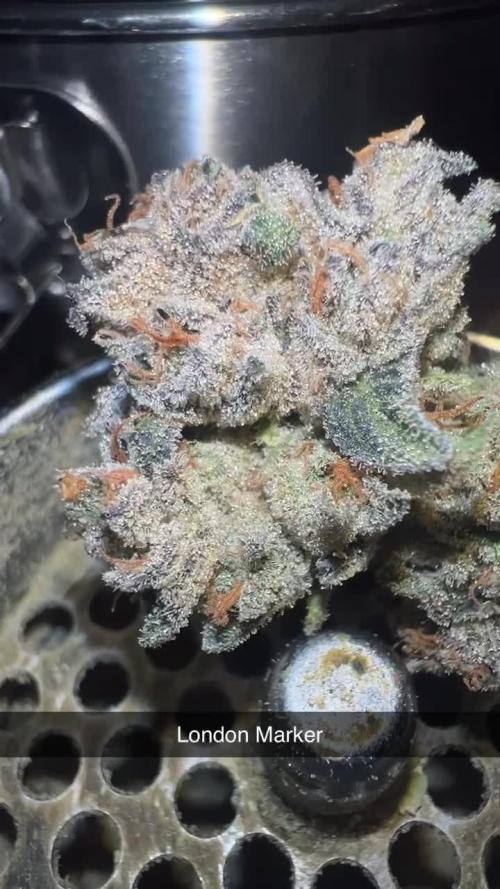
Day 74 and there getting chopped today! I thought the harvest was going to be broken into two separate weeks considering the times on the Choco was listed about 7-10 days sooner then the DD (wich was listed at 70 days for flowering)
However looking at the tricombs on the Chocolate Marshmallow most pheno didnt start getting amber untill the DDs did as well! A couple DD pheno could have maybe gone a couple more days but we will see!
Going for reveg on all the pheno, since i didnt get to take any clones. We will see how it goes!


Likes
26
Share


@Jsammy09
Follow
Another pretty solid week in the books on these girls. I did have my first real issue though and totally my fault. I have been topping with a mix of nutrients and just plain RO water and have not been adding in my calmag to the RO water and a few leaves showed some signs of deficiencies but I think I have corrected the issue pretty quickly. I may be adding a second trellis because these girls are growing like crazy, I am very glad I put the net up when I did, spreading these girls out and providing some support seems like it was 100% needed. I am still learning and figuring out what and when to defoliate and remove some things. I did a bit of defoliation on Friday and tried to clean up the bottoms of these girls a bit under the net. I know I am going to need another round of that, but I will give them a few more days to recover. I am still keeping the nutrient strength relatively low and seems to be working out just fine. My environment, temps, rh, and water temps are all staying in pretty ideal conditions. Grow seems to be going well, just need more experience and practice with training and defoliation, but its been a blast!
As always, any tips, comments, and recommendations always welcomed and appreciated! Thanks!👊👊

Likes
7
Share



Likes
5
Share


@Scottydarkmoonbuds
Follow
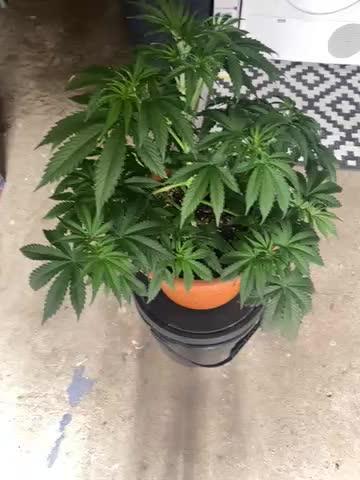
I posted the video with music and then the whole video that shows the Z-up at the end. Frostbanger, purple haze, and test strain fba2504 are flowering beautifully. The Z-up is just now in the early flowering stage and she is doing fantastic!
Likes
75
Share


@DogDoctorOfficial
Follow
Week 4: A Flourishing Symphony of Growth and Transition
Greetings, fellow cultivators and green enthusiasts! Week 4 with our Panty Punch Auto has been nothing short of a botanical marvel, a harmonious blend of veg and flower phases unfolding before our very eyes. Join me as we embark on a journey through the lush landscape of her growth, enriched by the remarkable support of TrolMaster, Aptus Holland, Seedstockers, and the vibrant community on Grow Diaries.
As we transition into Week 4, the sheer vitality of our Panty Punch Auto is simply awe-inspiring. Her growth trajectory knows no bounds, with each day bringing forth leaves of unprecedented size and vigor. It's a testament to the resilience of autoflowers and the magic woven into their genetic makeup.
Amidst this whirlwind of growth, the emergence of her pre-flower signals the impending transition to the flowering phase. It's a breathtaking sight to behold, a delicate dance of life unfolding in the heart of our grow space. With each passing day, her beauty deepens, foreshadowing the abundance of blooms to come.
As Week 4 draws to a close, we bid adieu to the veg feeding regimen provided by Aptus Holland. It has been instrumental in nurturing our plant through her formative stages, but the time has come to adjust our approach for the flowering phase. Stay tuned as we unveil the new recipe in the weeks to come.
Transitioning Technology: From Hydro-X to Tent-X
The heartbeat of our grow space continues to pulse under the vigilant gaze of the TrolMaster Hydro-X Controller. However, an exciting shift looms on the horizon as we prepare to transition to the cutting-edge technology of the Tent-X Controller. Its arrival heralds a new era of precision and control, promising to elevate our cultivation experience to new heights.
Before I conclude this report, I extend heartfelt thanks and shout-outs to Grow Diaries, Seedstockers, and Aptus Holland for their unwavering support and contributions to this journey. A special acknowledgment to TrolMaster for providing the controllers that have been instrumental in optimizing our grow environment. Wishing all contestants in the Grow Diaries contest the best of luck on their green adventures.
As we bid farewell to Week 4 and embrace the dawn of a new phase, let us continue to nurture our botanical companions with love, care, and boundless curiosity. Until next time, may your gardens flourish and your spirits bloom.
Genetics - Panty Punch Auto - https://seedstockers.com/
Plant nutrition - Aptus Holland - https://aptus-holland.com
LED Photons - Lumatek - https://lumatek-lighting.com
Controls - Trol Master - https://www.trolmaster.eu/
Watering - myself
Love and attention - Me, myself and i
As always thank you all for stopping by, for the love and for it all , this journey of mine wold just not be the same without you guys, the love and support is very much appreciated and i fell honored and blessed with you all in my life, With true love comes happiness. Always believe in your self and always do things expecting nothing and with an open heart , be a giver and the universe will give back to you in ways you could not even imagine so
More info, the ocasional give-away and exclusive updates from all my adventures can be found - links in the profile description
Friendly reminder all you see here is pure research and for educational purposes only
Growers Love To you All 💚 💚 💚

Likes
7
Share


@CarpediemOK
Follow
I had to travel and left then for 3 days with no water, when I arrived she was quite yellow but ss soon as I put water on it, refuse it but later suck it all and become very healthy

Likes
12
Share


@LetItGrow420
Follow
Week 2 she's getting bigger and stacking them nodes, having to water more frequent. Also she almost ready for a transplant.

Likes
17
Share

@Organic_G
Follow
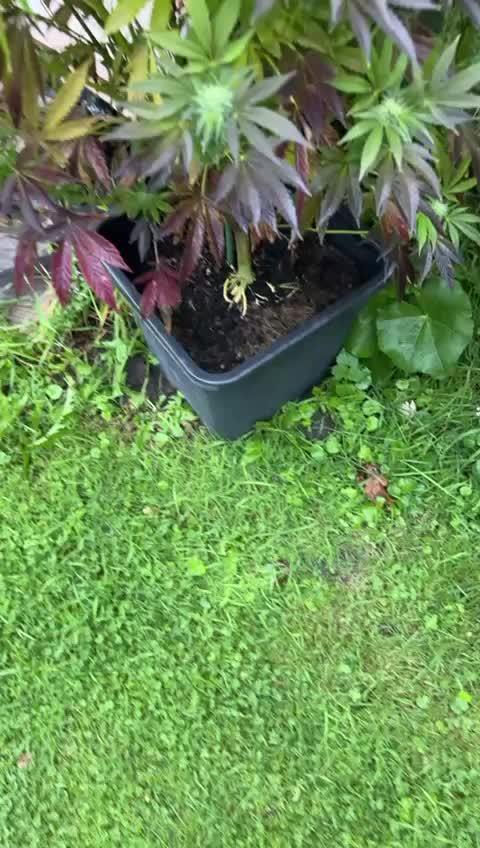
Wachsen unbesonnen schon gute Blüten Bestände werden aber die Tage rein geholt aufgrund von Schimmel Gefahr und schlechtem Wetter fürs weitere Wachstum, zu kalt und zu feucht

Likes
5
Share


@BudBrewerz
Follow
Thick, smelly dense buds ... They are still drying, some off them allready wet trimmed, some of them still attached to the stem, hanging to dry slower ... So can't come up with any numbers. It's a very nice harvest though 🤠



Likes
25
Share


@AsNoriu
Follow
Outside girls now inside, hope they will add up a bit of weight, during first 5 days i didn't noticed any changes in bud size, but pots are getting lighter, all leaves praying and i don't see any budrot - so all is good !!!
Thinking to give them 3 weeks or so ...
Fifth day of the week. Found budrot, had to chop again BIGGEST cola, budrot loves big ;)))
But other girls ok, drink 6.5 water, trichs are still clear mostly...
Max 3 weeks, min one ...
Would love max, but one more budrot and all are chopped.
Happy Growing !!!


Likes
37
Share


@boneyjones77
Follow
Hey guys, hope all is well !
Nothing much going on except the fact I have to break ice to get my water now lol . I’m just letting them try to find themselves a little on their own this week. I find one of the biggest advantages of indoor growing could also become a problem is that you spend way to much time staring through the window then opening it back up and playing with stuff !!!

Likes
10
Share


@Lazuli
Follow
I just defoliated her one last time, no clue how much longer she needs now
Likes
6
Share


@TheFoxFarmer
Follow
Flowers starting to form towards the end of the week, but first they were lollipopped at the beginning of the week. This was just the first of 2 leaf strips from under the canopy, to allow better air flow and to remove the lower, unwanted flowering sites. These would only grow into fluffy nothingness if left throughout the whole cycle, and would probably even shoot some nuts due to stress from lack of light/airflow, especially as im not using the most powerful lights 😅
Nutes increased with the adition of sugars and a slight pk boost to promote healthy growth now they're getting hungrier. All looking healthy and filling out nicely 🦊
Likes
91
Share


@KanOrganics
Follow
Well week 5 of bloom is complete, and this week brought a few challenges.
Humidity in my area has been through the roof, close to 100%. My heavy-duty equipment was struggling to bring my tent to acceptable late flowering levels, sometimes reaching over 60% RH, especially at night when the plant was respirating more.
Additionally, her pale yellow color, and leathery leaves didn't excite me too much. If you remember, we had a severe heat wave a couple of weeks ago, which contributed to that. But also, since I messed up the ScrOG training, and regrettably decided not to super-crop her, a fair share of the leaf problems were due to light stress as well, as I didn't want to sacrifice lower colas, so I let it go.
My biggest mistake this grow, was not paying attention to her the one day she decided to stretch nearly a foot, and was unable to be weaved into the net the next day without being snapped in half. My second biggest mistake is NOT snapping it in half, and letting it repair itself. I wouldn't have had nearly as much bleaching of leaves I think.
This week, and I'm assuming because nearly all chlorophyll was depleted from her fan leaves, I didn't notice much of any change from last week. Her buds seemed to be about the same mass, and the stigmas still had the same ratio of red to white coloration.
I suspected she was dead, or dying, or just...done. Not all genetics will transform all of their stigmas from white, and not all genetics will have their trichomes turn amber.
So, I did a few things to confirm that suspicion.
First, I looked at her trichomes on various buds closely with a microscope. They were almost all cloudy, with very very few amber. That told me that she was at an acceptable level of ripeness, even if she could have went longer, assuming she was still alive.
Next, I removed the pea gravel mulch I was using in the raised bed, so I could get a closer look at the soil she was growing in, and more specifically, her roots. The soil, although moist a few inches deep, was not at the level I expected, and I think I have not been watering her enough. I don't think I'll be using a gravel mulch again. On the plus side, it did help prevent fungus gnats, as there was zero the whole grow, apart from an early week when I placed some solo cups to germinate on top of the bed, but after removing them, the fungus gnats disappeared with them.
Also while inspecting the soil, I carefully dug down to inspect some of her primary roots. They were actually dry, despite the surrounding soil being moist. This could explain why she wasn't drinking much if any for the better part of the week.
So, given her dry foliage, dry roots, and ripe-enough trichomes, I decided it was time to harvest her, earlier than expected. Let's also not forget that I was frightened this week with some high humidity scares, so growing longer, and possibly for no reason if she was dead or barely alive, was not in the cards. I've dealt with my fair share of bud rot before, and I would rather try what I have of her now, than to wait the extra week or so for her to be fully ripe.
So, that is what I did, on the last day of the week -- I chopped her down, cut off some larger fan leaves, and hung her upside down. This, of course, was after removing the raised bed. It took me a while to empty about 45 gallons of soil so I could move it, but in doing so, I noticed a lot of beneficial critters, and nothing bad. Such critters included small centipedes, which feed on other insects, and soil mites which eat dead organic matter.
I set the tent to dry at around 72F and 55 RH. And now we wait for about a week before trimming.
One thing is for sure -- I am very proud of this grow, despite all these flaws. She smells incredible -- like pure citrus emanating throughout my house. This is a very strong-smelling plant.
As a bonus, I've included a time-lapse video of the entire grow from start to finish in the last media above. Check it out and let me know what you think.
I'll be back for the harvest week for the dry weight in about a week or so, after we're done drying and trimming.


Processing
Likes
4
Share


@Ageddd
Follow
Switching to full flower nutrients, she loved the transplant, starting with half the recommended doses, growing some hairs so its te perfect moment to apply some Big One 1ml/l + TopBloom 2ml/l twice a week, to boost hairs growing and to create more bud spots.
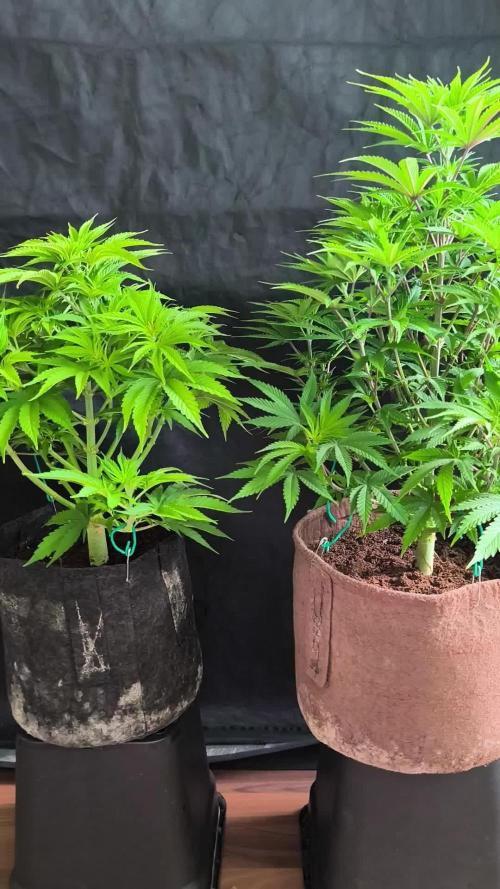
She really is turning in to a little bush i really like the structure ^^

Likes
17
Share


@EXZELENS
Follow
Bud wet weight : 168,1g of trimmed medium to big sized buds
25,4g of tiny tiny buds/larfs = 193.5 grams of trimmed wet buds.
Details on genetics and smoke report above.
This, as my first grow, is way more than I ever expected it to be. I haven´t had that much fun and enthusiasm in a very very long time.
I can´t even explain the feeling it is to harvest your own cannabis, but I know most of you know what I´m talking about haha.
It was really nice to practice LST, even tho it was SO HARD, ´cause I didn´t had barely any space to work since I used a hard pot and did not fill nearly half the size of it and the walls of the pot were really high. It was even difficult to water without dropping water on the lower buds.
I haven´t learnt much about defoliation tho, I feel I need to study a little more about the phases you should or should not do it.
Also, I discovered thrips are a pain in the ass. I had 2 tough weeks dealing with thrips, but in the end it was alright.
I don´t have any humidity control device, which I intend to buy for the next grows.
Growdiaries was really helpful for me, it kept me motivated everyday (not that I wouldn´t have had it anyways), the Grow Questions are REALLY useful and all the community is awesome. Thanks to all people that helped me here on GD during this first grow!
To conclude it: I am really happy and satisfied with how the grow turned out. They look incredible, it almost feels like I can´t believe it still.
Peace.
UPDATES:
07/10 : The buds are now dry and already in curing jars, one of them with a Boveda 58% humidity pack.
The total grams of the dry buds are: 41.4g (medium to big sized buds)
4.1g (tiny buds) = 45.5 grams!
I´m really happy with the results, I thought it would be around 30g so yeah, that´s a really good surprise!
In 2 weeks I´ll be back to update the smoke report.
Thanks so much for reading! Peace.
09/10 : I managed to fit everything in the same container with some space between them, so now every bud is with the Boveda pack.
14/10: It´s been a week and the smell improved, it still smells a little like hay/plant ( even tho it´s not too dry neither too wet ).
21/10: Now it´s been two weeks and even tho the smell isn´t anymore hay, it´s a lot herbal. I really think the aroma can get better, but the taste is already good enough for me. The smoke report has been done and in case I have something to add, I´ll report here.
Thank you so much for reading! Peace.