


Likes
Comments
Share


@MadeInGermany
Follow
Info:
Unfortunately, I had to find out that my account is used for fake pages in social media.
I am only active here on growdiaries.
I am not on facebook instagram twitter etc All accounts except this one are fake.
Flowering day 37
since time change
to 12/12 h.
Hi everything :-).
A lot has happened this week.
The buds develop very nicely and she looks very healthy :-).
The tent was cleaned and everything was refilled.
Have fun with the update.
Stay healthy 🙏🏻
You can buy this Strain at :
https://originalsensible.com/original-sensible-seeds-zkittlez~20503
Type:
Zkittlez
☝️🏼
Genetics:
Afghan Kush Indica x Grandaddy Purple x Grapefruit hybrid
👍
Vega lamp:
2 x Todogrow Led
Quantum Board 100 W
💡
Bloom Lamp :
2 x Todogrow Led
Cxb 3590 COB 3500 K 205W
💡💡☝️🏼
Soil :
Canna Coco Professional +
☝️🏼
Fertilizer:
Green House Powder Feeding
☝️🏼🌱
Water:
Osmosis water mixed with normal water (24 hours stale that the chlorine evaporates) to 0.2 EC. Add Cal / Mag to 0.4 Ec Ph with Organic Ph - to 5.5 - 5.8 .

Processing
Likes
16
Share


@The_green_room
Follow
Using the paper towel method, my girl's taproot starting showing after 24 hours.
I also buffered my medium with Multi Total and Calmag, before flushing with pH 6 water to a low EC.
Once the taproot was 3/4 inch long, I planted her into the coco and watered her with RO water at PH 6.2 for a few days. I also switched my light on (first at 20% power and 30 inches away from seedling, gradually up to 40% at 25 inches). Until the first leaves unfurled, I kept the light on for 24 hours.
After the first cotyledons opened I switched my light to 18/6 at 60% power and have given her the first dose of nutes at EC 400.
Think we can say germination was a success so on with week one! 🌱 💡

Likes
12
Share


@Jays_Not_Here_Man
Follow
Nearing the finish line! OMG these ladies are blowing me away 😳 the Tricomes are carpeted, the buds are fat and dense. I’ve been. Tapering off all the nutrients and feeding ph’d water until I get 10-15% runoff from the pot to help break up the pockets left behind and to use up what’s left in the plant. Have some very distinct phenos, all of them are stellar but there are a few standouts… won’t be much longer 🇨🇦👊❤️


Likes
14
Share

@Joni2017
Follow
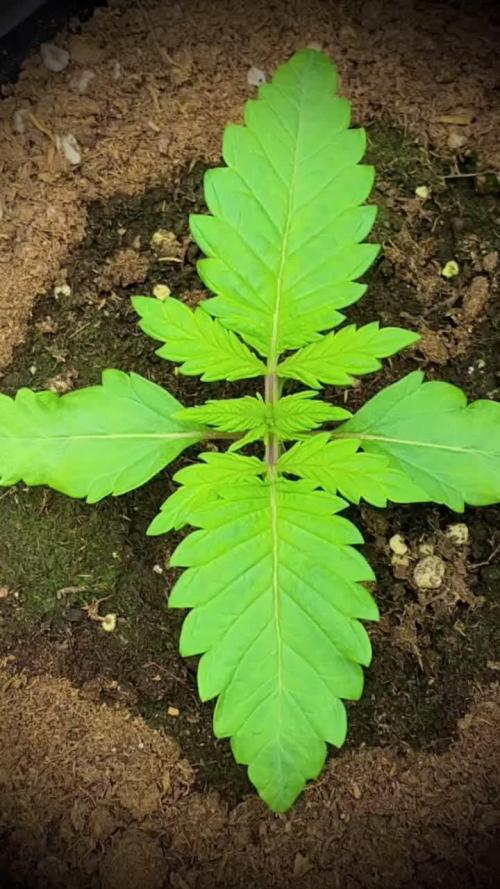
Hello, Growdiaries Community!😎
The small one follows its rhythm 8 cm 😋👏🏻, temperature 27º C ☀️ humidity 70% 💧 irrigation 500 ml 💦 alternating one day with nutrients and another without nutrients.
Happy growing, and see you in the next update!😉👍
Processing
Likes
8
Share


@Bossman
Follow
I'm just winging it out to see what's going to happen but so far so good I think.

Likes
14
Share


@BLAZED
Follow
Week 14 (17-10 to 23-10)
17-10
Temperature: 23.4 degrees (lights on) 17.5 degrees (lights off)
Humidity: 70% (highest) 55% (lowest)
Watering: 400 ml. PH 6.5 EC: 0.6 (without Hybrids & PK+)
18-10
Temperature: 23.6 degrees (lights on) 17.1 degrees (lights off)
Humidity: 70% (highest) 54% (lowest)
Watering: 900 ml. PH 6.5 EC: 0.6 (without Hybrids & PK+)
19-10
Temperature: 24.3 degrees (lights on) 17.8 degrees (lights off)
Humidity: 81% (highest) 59% (lowest)
Watering: 1210 ml. PH 6.5 EC: 1.7 (with Hybrids & PK+)
20-10
Temperature: 25.1 degrees (lights on) 18.2 degrees (lights off)
Humidity: 84% (highest) 62% (lowest)
Watering: None.
21-10
Temperature: 25.6 degrees (lights on) 18.6 degrees (lights off)
Humidity: 99% (highest) 64% (lowest)
Watering: 1200 ml. PH 6.5 EC: 0.6 (without Hybrids & PK+)
22-10
Temperature: 25.8 degrees (lights on) 19.3 degrees (lights off)
Humidity: 89% (highest) 63% (lowest)
Watering: None.
23-10
Temperature: 25.7 degrees (lights on) 19.1 degrees (lights off)
Humidity: 89% (highest) 60% (lowest)
Watering: 1000 ml. PH 6.5 EC: 1.7 (with Hybrids & PK+)
Likes
119
Share


@JamMAKEcan
Follow
Not enough room.. I cant baby them the way i like to.. Lesson learned.. Sticky already ..leafs are perfect color.. No burns at all

Likes
36
Share


@Growgirl1114
Follow
#lovingthisbrucebannerauto My experiment is moving right along the stem on this plant is solid the buds are growing thicker by the day. I’m anxious to see where the root ball is in this upside down girl. I think I will cut the container off so we can get a good view of how she grew ✌️🌱✌️ #funstuff

Likes
89
Share


@nonick123
Follow
Dia 20 (05/02) Han pasado 8 días desde el ultimo riego. El sustrato de PRO-MIX HP se encuentra esponjoso al tacto a pesar de que está seca la parte superior
Riego 1 Litro H20 + Wholly Base 1,25 ml/l + Solid Green 0,5 ml/l + Rise Up 1 ml/l de Gen1:11 - pH 6,23 TDS 660 PPMs
Día 22 (07/02) Vamos a probar a hacer este ciclo con LST
Día 23 (08/02) A +24 horas la planta ha reaccionado muy bien al LST. Se han estirado las ramas inferiores y la rama apical se sigue estirando
Día 25 (10/02) Sigo con ajustes de LST para abrir la canopia. La planta está reaccionando con mucho vigor 😍💥
Este día añado a la carpa el sistema TrolMaster TCS-1 Tent-X
Día 26 (11/02). Riego 1 Litro H20 + Wholly Base 1,5 ml/l + Solid Green 0,75 ml/l + Rise Up 1,25 ml/l de Gen1:11
TDS 780 PPMs - pH 6,36 (mínimo ajuste con pH+ para subirlo desde 6,2)
La planta avanza vigorosa. En una semana pasamos a 12/12 😁
Nutrients by Gen1:11 - www.genoneeleven.com
Substrate PRO-MIX HP BACILLUS + MYCORRHIZAE - www.pthorticulture.com/en/products/pro-mix-hp-biostimulant-plus-mycorrhizae
Controlled by TrolMaster TCS-1 Tent-X System Main Controller - https://www.trolmaster.com/Products/Details/TCS-1

Likes
51
Share


@MadeInGermany
Follow
Info:
Unfortunately, I had to find out that my account is used for fake pages in social media.
I am only active here on growdiaries.
I am not on facebook instagram twitter etc All accounts except this one are fake.
Flowering day 65
since time change
to 12/12 h.
Hey guys :-)
We arrived in the last days before the harvest 😊.
The buds have swollen again the last few days.
The trichomes are 90% milky and 10% amber 👍.
This week it was poured twice with 1.2 l each time (for nutrients, see table above).
As always, it is put in the darkroom for 48 hours before it is harvested.
There is still a harvest update and a final update after fermentation 👍.
Until then, I wish you all a lot of fun with the update and stay healthy 🙏🏻
A thank you for this wonderful strain goes out to
Herzog
https://instagram.com/herzog030?utm_medium=copy_link
and the Exotic Seeds team
You can buy this Nutrients at :
https://greenbuzzliquids.com/en/shop/
With the discount code: Made_in_Germany you get a discount of 15% on all products from an order value of 100 euros.
You can buy this Strain at :
https://www.exoticseed.eu/
Type:
Herz Og
☝️🏼
Genetics:
Larry OG X Kosher Kush
Indica 60 % / Sativa 40 %
👍
Vega lamp:
2 x Todogrow Led
Quantum Board 100 W
💡
Bloom Lamp :
2 x Todogrow Led
Cxb 3590 COB 3500 K 205W
💡💡☝️🏼
Soil :
Canna Coco Professional +
☝️🏼
Nutrients :
Green Buzz Liquids :
Organic Grow Liquid
Organic Bloom Liquid
Organic more PK
More Roots
Fast Buds
Humic Acid Plus
Growzyme Big Fruits
Clean Fruits
Cal / Mag
Organic Ph - Pulver
☝️🏼🌱
Water: Osmosis water mixed with normal water (24 hours stale that the chlorine evaporates) to 0.2 EC. Add Cal / Mag to 0.4 Ec Ph with Organic Ph - to 5.8 - 6.4
Likes
49
Share


@Roberts
Follow
Green Cure CBD is acclimated, and starting to grow. She is looking really healthy, and ready to go. I will likely try to lst her some with what space I have. Everything is looking good at the moment. Thank you Medic Grow, and Zamnesia seeds. 🤜🏻🤛🏻🌱🌱🌱
Thank you grow diaries community for the 👇likes👇, follows, comments, and subscriptions on my YouTube channel👇.
❄️🌱🍻 Happy Growing 🌱🌱🌱
https://youtube.com/channel/UCAhN7yRzWLpcaRHhMIQ7X4g

Likes
26
Share


@420DeepGrow
Follow
Gracias al equipo de FastBuds y XpertNutrients sin ellos esto no sería posible.
💐🍁 Gorilla Punch (Auto):
Niveles fulminantes de THC. Testado en laboratorio con un 25,695 % en cannabinoides.
Perfil rico en terpenos. Los complejos y sabrosos terpenos de esta variedad son codiciados tanto por los extractores como por los fabricantes de hachís.
Rendimientos impresionantes. Los cultivadores pueden esperar hasta 550 g/m² de flores deliciosas y aromáticas, rebosantes de THC y otros jugosos cannabinoides.
Prueba de excelencia. Dos premios al primer puesto en menos de dos años dejan claro que esta cepa es una auténtica campeona.
🌻🚀 Consigue aqui tus semillas:
https://2fast4buds.com/es/seeds/gorilla-punch-auto
⛽ XpertNutrients: es una empresa especializada en la producción y comercialización de fertilizantes líquidos 🍶y sustratos🐛, que garantizan los mejores resultados y cosechas de la más alta calidad. A través de una cuidadosa selección de materias primas y un proceso de producción avanzado, sus productos son sinónimo de resultados confiables.
🛒 Consigue aqui tus fertilizantes:
https://xpertnutrients.com/es/sobre-nosotros/#:~:text=Xpert%20Nutrients%20es%20una%20empresa,de%20la%20m%C3%A1s%20alta%20calidad.
📆 Semana 12:
Una semana regular debido al mal tiempo, el engorde ha sido menos de lo esperado pero voy a aplicar solo agua a partir de ahora porque no tengo nada para fumar 😅🔥🐒
Likes
16
Share


@DrLaggis
Follow
🌱 Day 57 - Start of the Second-to-Last Flowering Week 🌱
Hello, Grow Friends!
Today marks the start of the second-to-last flowering week—Week 9 overall, and Week 5 of flowering. 🌿 I’m getting more and more excited as my first grow nears its end. As I approach harvest, I’ve decided, based on my research, to stop feeding nutrients and stick to just pH-adjusted water for the final two weeks. 💧⚖️
Watering Routine:
I’ll keep the same watering schedule—1 liter every two days, which is about 10% of the pot volume. 🌱💧 This should be enough to flush out the remaining nutrients, ensuring a clean finish for the plant.
Temperature & Humidity:
The temperature remains stable between 19-23°C, which I believe is ideal for this stage of the grow. 🌡️🍂 No more high temperatures to worry about! The humidity is fluctuating between 45-58%, and I’m keeping a close eye on it to stay below 60%. 💧🔍 Everything seems on track for now. 🌿
Plant Health & Growth:
The plant still looks very healthy overall. 🌱💪 However, I’ve noticed that in the past three days, there haven’t been any visible changes in the size of the buds. 🤔 It could just be that I’m not seeing the growth clearly, but the only noticeable change is the daily opening of new flower calyxes. 🌸
Harvest Preparation:
I’m already getting my equipment ready for drying after harvest. 🛠️ Once it’s time to cut, I’ll be hanging the plant to dry for the first 10 days. 🌿✂️ I want to make sure everything is set for a smooth drying process.
Stay tuned for more updates, and as always, daily photos of the plant will be posted! 📸🌱
Day 62 - Last-Minute Decisions with Urgent Changes 🌱
Hello, my grow friends! Due to the trichome pictures I took on Day 61—which you can check out too—I’ve made an unexpected decision to harvest my plant a bit earlier than planned and make some changes.
🌿 Watering and Flushing:
The last time I watered was on Day 61, using all the usual nutrients at the doses I mentioned before. But after seeing the trichome pictures, I decided to start a light flush today. I gave the plant 4 liters of plain water to begin flushing and will now only water lightly on Day 64. After that, no more water until harvest on Day 67.
🌑 Dark Period:
From Day 66 to Day 67, I plan to keep the plant in darkness. I’m not entirely sure if this will make a difference, but I’m curious to try it out.
✂️ Defoliation:
The plant is doing well, and I’ve done a thorough defoliation. I removed all leaves that aren’t sugar leaves or directly attached to the buds to improve air circulation and reduce the risk of mold as I approach the end of the grow.
💭 Trimming Decisions:
I’m still undecided about whether to do a wet trim or a dry trim. Based on what I’ve read, especially regarding the yield from trim, I’m leaning towards dry trimming, as it might give me more usable trim material.
I can feel the plant entering its final phase, and I’m getting really excited about the results and what the next few days will bring. Remember, I post a video update every day. If you have any tips or suggestions, I’d love to hear them!
Until next time! 🌱
Processing
Likes
34
Share


@The_Bearded_Grower
Follow
welcome to Day 37 as you can see from the photos the plants are doing very well 0 deficiencies have been found however the plants strain appears to be very slow and what I mean by that is it grows very slowly at least it seems to be in the early stages of course it's probably even slower because I have topped it. If you have any questions pop them in the comments below happy growing and keep your stick on the ice
Day 41 i had to start using green planets vitathrive since i cant find any voodoo juice

Likes
4
Share
@ThatsmyGrow
Follow
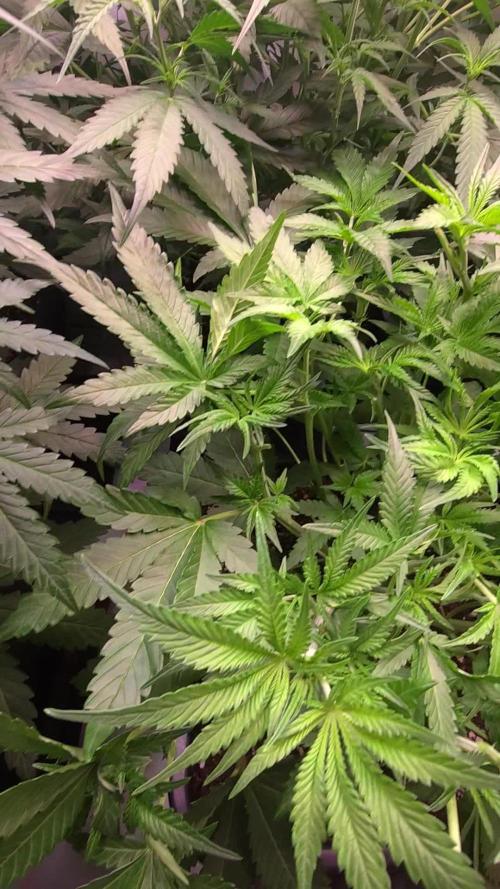
🌸 Week 5 – Gorilla Cookies Auto Pheno Hunt
Another week is done and the differences between the phenos are becoming more obvious with every update 👀🔥
Now that flowering is progressing, each phenotype is starting to show its own character much more clearly. Even though all plants are running under the same conditions, their reactions are very different.
📈 Current observations:
Some phenos are handling irrigation and feeding extremely well and continue pushing strong growth
Others are showing a bit more sensitivity and reacting differently to the same watering routine
Leaf size differences are becoming huge now — some phenos are producing massive fan leaves while others stay much more compact
Plant structure and overall vigor continue to separate more week by week
At this point, 4 out of the 6 phenos are currently looking like strong candidates and fall into what I’d personally consider the “good” category so far 👀
🍃 Maintenance & feeding:
I’m still managing the canopy and keeping an eye on how each plant develops through early flower. Small adjustments and observation are becoming more important now as every pheno responds differently.
📊 Current environment:
Temperature stable around 26°C
Relative humidity staying between 63–65%
VPD maintained around 1.3 kPa
Light intensity unchanged from previous adjustments
Now I’m especially excited to see how the buds start forming over the next weeks, because that will probably decide which phenos really stand out in the end 🔥🌸
The structure is there — now let’s see who delivers when it matters.
💬 Which pheno do you think will end up producing the best flowers?
Likes
17
Share


@AfroBlooming420
Follow
I got a week and a half notice that I had to go on a work trip out of country for 10 days, so the clown show continued.
I was definitely overwatering them. Thanks @shinsimilla, I saw the difference after waiting a few extra days. Also, I definitely should have started LST at least a week earlier than I did.
Now for work issues: I found an old security camera that the cats had knocked over a million times and damaged. With a lot of tape, I got it working again and set up in the tent so I could see what’s going on while gone. Be warned, the photos are NOT good quality. I also looked up DIY self-watering systems. I needed it as simple as possible to reduce the risk of something breaking while I was thousands of miles away.
I found one where it wicks water up a cotton or wool string. Here's the link: https://youtu.be/P0hn5cKZ0Z0 I cut up an old 10K shirt that was made of cotton. I had just broken down my balcony garden since it’s already getting cold here. I took two long planters, lined them with a construction garbage bag to be the reservoirs. Even though the floor of the grow tent is waterproof and I put plastic between the floor and outside of the grow tent, I didn’t want to risk any water getting out while I was away. I was nervous y’all.
Basically, you wet the fabric then use a chopstick to run the it through the plant from bottom to top. It needs to be long enough to have a few inches sitting in the bottom of the reservoir. I filled each with 3L of water with the BioBizz nutrients mixed in and ph’d to 6.1.
More info in week 5.

Likes
18
Share


@valiotoro
Follow
The buds shine like a shooting star mad sticky too⭐️
First thing that hits me with the smell straight up like canned pineapples in syrup🤤🍍
Likes
37
Share


@happygrower1
Follow
Starting to get a nice sweet strong smell buds are coming along nicely 😍 really can’t wait till these beauty’s are done

Likes
5
Share


@RastaRick
Follow
Starting to see some real good growth. Everyone is looking real gree. I think next week calls for a session of LST. Still only using water with BioTabs. Not issues. Tenet is pretty hot at 27C and dry at 27%rh... Ruff but it's what I got

Likes
9
Share


@PalanKush
Follow
Amnesia already forming dense buds, Cheese's internodes are too long so the buds are taking it's time to grow, and just like last week, Northern Light still hasn't started to flower, but, it's starting to show the first pistils
