


Likes
Comments
Share


@Mrs_Larimar
Follow
May, 8th
Little Limoncello is no more Little she was growing very much from last Week on
too me it feels like she doubled her Size
and she already shows tiny Flowers
As i already said in the last Weeks, the has anatural good shpae and stability
I just topped her once, no further trainig on her
Waaterings everry Day,,, Thiss Girl is very THIRSTY!!! and Feeding if she shows it
We will se what she shows us until next Week

Likes
23
Share


@adam_pawloski87
Follow
This grow was pretty simple ! They went a total of 103 days from seed! Very trichomy dense buds with the smell of Berries vanilla and skunk ! This is a must try for you all Fastbuds has the greats!!!

Likes
5
Share


@pzwags420
Follow
I started the GSC seeds from HSC by soaking in a glass of water overnight then planted in coco coir under a humidity dome in my veg tent. I will plant them in flower box in a couple weeks when they can handle the feed that my BB clone is on right now. On day 5 my 2 other Gsc seeds rotted perhaps too wet but I have one good remaining for this run. I started White widow seeds and will run 2 phenos. Gsc is looking good so far.


Likes
7
Share


@spanish420pasiongrow
Follow
Las flores empiezan a rellenarse, la verdad muy contento para estar usando solo tan pocos productos flores densas y bien resinadas, los cogollos satélite igual que mecheros y para ser clones con esas ramitas flores densas, muy contento, pequeña carencia de calcio mg pero ya está cubierta, ya veremos

Likes
12
Share

@MrGrowDiarie
Follow
Day 49
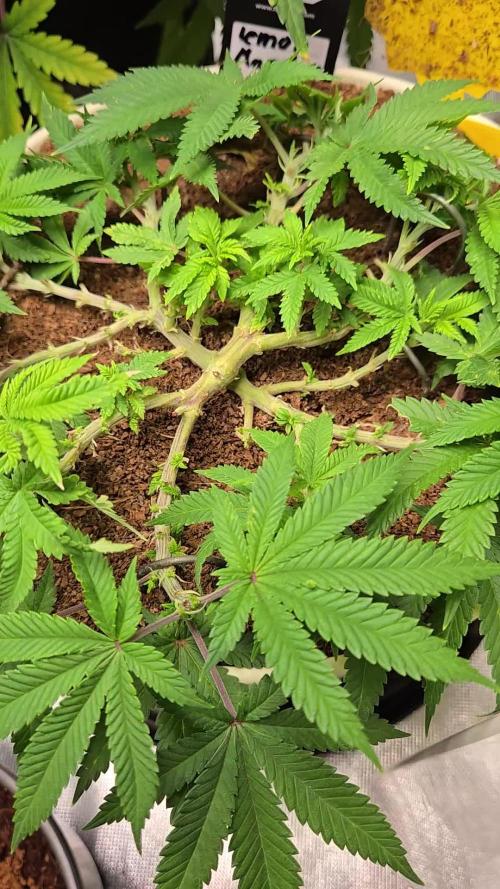
Since the last update, the plant has only shown very slow signs of recovery. There’s a bit of fresh growth appearing in the center, but overall it remains weak and far behind expectations.
The leaves are still drooping, though not quite as badly as a week ago. The pale green color persists, with some areas still edging toward yellow. This shows the roots are still struggling and nutrient uptake is limited.
The heavy topping has given the plant a wide, flat structure with many bud sites, but at the moment it can’t take advantage of that shape. The potential is there, but growth is stalled by the stress it’s under.
Watering has been kept very cautious — smaller amounts with longer breaks to avoid waterlogging. The medium was allowed to dry out thoroughly before watering again this time. Even so, the plant seems to be putting most of its energy into recovery rather than active growth.
Compared to the other plants, this one looks “stuck.” Because of that, my expectations have shifted — I now see it more as a learning project. The new strains I started alongside are doing much better and give me confidence for this run overall.
For now, the focus is still the same: no extra stress, no experiments — just steady care, patience, and time
Likes
5
Share


@CityFarmer
Follow
Hello everyone,
Even tho I've been busy around the house this week, I took a few minutes and transplanted these into 5 gallon fabric pots, get them going early in some super soil. Lets see how they turn out. Ill have better picture's for you guys next week...
See you guys next week...

Likes
Comments
Share


@Unpluggy
Follow
Decided to transplant the ladys because they werde Not so happy in their small cups.
Now they got plants of space in their new 55l pot🍋🍒🍦
Plant in back needs more nitrogen

Likes
4
Share


@Kountryboi90
Follow
She's now starting to get some good bud developemnet. Took super long to even start budding. Started giving her some nutrients. A little too late but she'll make it. Overall, I'm pleased to have gotten her this far!
Likes
16
Share


@Ultraviolet
Follow
A cutting requires roots to uptake water, we must create an environment so humid the plant can absorb moisture through its one set of leaves, 70+RH% but also a good supply of fresh air and full temperature control. Once I see light lime green it will signify new growth of the plant, I will know it has started to re-root.


Likes
41
Share


@Skinnytalls420
Follow
Well I have to say even though I had a few temperature issues in the night that I think may have stressed them. They took a lot longer than expected but after drying I don’t know how but I ended up with some fantastic tasty buds a few of the plants even came out purple!! I have to say the purple buds are my favourite 🤩 fastbuds never disappoints!!!!!
Processing
Likes
19
Share


@BigBuds95
Follow
Day 33, ordered a new 1000W(400W actual draw) that's been on them about a week as theyve exploded into my small 24"x48"x60" tent, it started to get a slow light burn at day 30ish the same day I did a pretty heavy defoliating and was NOT happy, since I've l turned the VEG switch off, leaving only the Red BLOOM lights on (manufactors state 200W with BLOOM only) until my new 32"x60"x80" tent arrives then I'll hang appropriately and turn to full power! Took the time between yesterday AM and today to clip off 90% of the light damage tips and fed a light Cal-Mag and Tiger Bloom and she seems to be perking up, (significantly more even since the video) Been LST like a mother****er, hoping she really packs on the weight and recovers smoothly from the light burn.


Likes
88
Share


@Wastent91
Follow
Ehi ragazzi eccoci a noi! Le ragazze hibride stanno crescendo davvero rigogliose, le foglie sono proprio di un bel verde intenso del colore corretto ,ma quello che mi sta stupendo è la capacità di questa lampada Mars hydro FC E3000 di essere uniforme e intensa di qualità in tutte le piante ,le quali stanno crescendo in modo molto più omogeneo rispetto ai cicli precedenti! E sto utilizzando solo il 50 %della potenza di questa benedetta luce! È davvero impressionante , anche la velocità di crescita mi sembra aumentata rispetto ai cicli precedenti! Spero che tutto vada come ho progettato senza carenze di nutrienti.. ma purtroppo come bene sapete ogni ciclo e totalmente diverso dall' altro e ogni ragazza e strain differente hanno anche esigenze nutrizionali differenti, questo l ho notato solo con l esperienza, prima pensavo che bastava dare a tutte la stessa quantità e sarebbero cresciute identiche .. ma questo nn succede quasi mai, bisogna progettare e anticipare tutte le possibili variabili in gioco! Alla fine è "vita"❤️ noi stiamo crescendo della vita con amore al massimo delle nostre possibilità come fossero nostre figlie! Speriamo continuino così e che crescano in libertà nel miglior modo possibile! Buon 420 a tutti ragazzi vi adoro!! 👊❤️🌱🌿🌲

Processing
Likes
76
Share


@ThrashedTV_BakedByGlaze
Follow
MY WEED SMELLS LIKE WEED.
Filling the room, creeping through the apt, what a glorious time. No major smell worries where I am so I'm just enjoying the atmosphere. 😍
On to Backbuilding/Bud Tipping. (Shoot me any advice on this down below!)
I experimented back mid-week with 3 tipped buds that had similar control buds side-by-side.
After 4 days there is a noticeable difference in density and bud structure in the 3 tipped buds compared to the very fluffy and softer buds next to them. No overall size difference but the tipped buds are rock hard and filling in gaps down the cola compared to the untipped buds. A light squeeze on both a tipped bud and untipped will tell you the difference right there.
Happy with the results after seeing them for myself and lucky enough to find this technique at the end of week 4, I tipped majority of the main colas on Danny and some larger buds on Arnold today. Which means I also get what OG growers call a "First Taste" once my tips dry out and cure for a few days. 😛
Other than tipping, I've just had to keep up with Arnold's feedings since lower leaves are still fading if I skip mineral nute feedings. Looks like they will be getting only PH Perfect and/or Molasses feedings until the final flush since they can't get enough food in the ProMix medium. I've still had constant defoliation during to avoid leaf overlap and light blockage. Since I'm now entering week 5 of flower I'll have to get it where I want in the next couple days and go hands off for the last month or so.
Thanks for checking out my grow! Follow along as we're getting to the good part and I'll update again this week once the tipping sets in 💪
MID-WEEK UPDATE:
Random Heat/Humidity wave in Southern Ontario so I'm keeping a close eye on the buds after dark periods. Keeping air moving well so far so hopefully I can avoid mold/mildew in last few weeks.
Twins are looking good. Arnold still super hungry so I've upped the nutes a tad and skipped plain water feeding until the flush. Just fed them PH Perfect/Molasses cocktail. Big Arnold on the right is definitely rootbound by how the water is draining so I'm looking at a lower yield from the right plant. I get run off from small Danny during a regular feed but takes a lot more to get any from Arnold and I don't want to overwater in this random heat/humidity wave.
The Backbuilding/BudTipping is working like a charm. The tipped buds are filling down and way more dense than the untipped.
Popped the SoundLink in the tent today to give the twins some music while I go about my business.
PLANT PLAYLIST:
Vulfpeck - Mr Finish Line
Anderson Paak - Ventura
Prince - Purple Rain Remastered
Unless anything crazy happens I'll update at start of week 6 flower.
Thanks for stopping by, liking, following, what-have-you 😃

Likes
Comments
Share

@DogDoctorOfficial
Follow
👑 8×8 Adventure – Week 12
Godfather OG – Pheno B
The Big Mama Keeps Shining – Doing Nothing, Seeing Everything 👑🌿🌸💎
Hello everyone, and welcome back to another chapter of the 8×8 Adventure! 🌱💚
And here she is again...
Our beautiful Godfather OG Pheno B.
👑🌿
And honestly...
I'm loving this girl.
She's big.
She's beautiful.
She's evolving quickly.
She's filling her space.
She's building flowers.
She's developing more and more character.
And the funniest part?
I'm barely doing anything to her.
😂
This is one of those weeks where the grower walks into the room, looks around, checks everything, looks at the plants again...
and thinks:
"Yep."
😂
That's it.
That's the job right now.
Observe.
Pay attention.
See what is happening.
Check whether anything is actually needed.
And if nothing is needed...
leave the plant alone.
Because sometimes...
doing nothing is actually doing something.
And this Big Mama is proving that beautifully.
👑🌸💚
────────────────────────
🌱 WEEK 12 – THE BIG MAMA KEEPS MOVING
────────────────────────
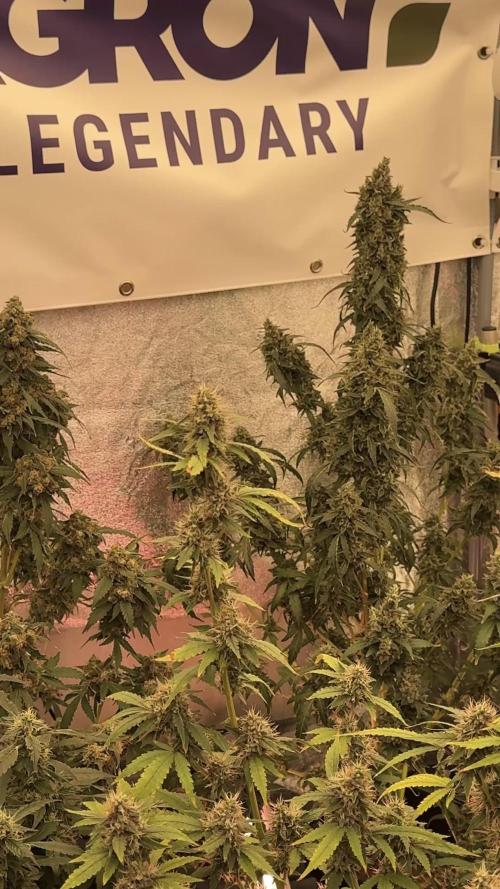
Godfather OG Pheno B continues to move quickly.
She's not slowing down in the way that makes you think she's finished.
She's evolving.
She's developing.
She's continuing to build her flowers and fill out the structure she's spent the entire grow creating.
And when I look at her now compared with the earlier weeks...
it's almost funny how much plant we're looking at.
She has become a substantial girl.
A proper Big Mama.
😂👑🌿
She's occupying her space.
She's making herself noticed.
And she's doing it without asking me to constantly reach into the canopy and change something.
That's exactly where I want her.
Healthy.
Developing.
Stable.
And doing her thing.
────────────────────────
👑 BIG MAMA HAS CLAIMED HER SPACE
────────────────────────
There are plants that quietly exist inside a tent.
And then there are plants that seem to say:
"Yes, this corner is mine."
😂👑
Godfather OG Pheno B has definitely claimed her place.
She's got presence.
You notice her.
You look across the room and she's there.
Big structure.
Beautiful flowering sites.
Healthy foliage.
Increasingly developed flowers.
And that unmistakable Godfather OG personality we've been following throughout this entire journey.
That's one of the things I love about running individual phenotypes.
Eventually, you stop seeing just a plant with a label.
You know who she is.
You know her habits.
You know her structure.
You know her appetite.
You know how she fills the space.
And Pheno B?
She's our Big Mama.
😂👑🌿
────────────────────────
🌸 THE FLOWERS ARE DOING THE TALKING
────────────────────────
At this point, the flowers are becoming the main story.
And they're speaking pretty loudly.
😂🌸
The flowering structures continue to develop.
The buds are becoming more substantial.
The pistils continue evolving.
The resin is becoming increasingly visible.
And the whole plant is gradually shifting from:
"Building flowers"
toward:
"Developing what those flowers are going to become."
That's one of my favourite stages.
Because you can actually see the progression.
You don't need to imagine what the plant might become.
She's showing you.
Week by week.
Photograph by photograph.
And Godfather OG Pheno B is showing us plenty.
────────────────────────
💎 THE FROST IS GETTING HARDER TO IGNORE
────────────────────────
The closer we look at this girl...
the more there is to see.
💎🌸
The resin continues becoming more noticeable across the flowers and surrounding sugar leaves.
And this is where the camera becomes such a beautiful tool.
From a distance:
"She's beautiful."
Closer:
"Whoa..."
😂📸💎
The flowers have texture.
The pistils weave through the developing structures.
The trichomes begin creating that frosted appearance.
And suddenly you realize just how much is happening inside what initially looks like one flower.
That's why I love keeping the weekly photographic record.
Because when you put the weeks together...
you can actually see the plant progressing.
────────────────────────
🌿 DOING NOTHING... AND SEEING EVERYTHING
────────────────────────
This is probably the biggest theme of this week's report.
We're not doing much.
And that's intentional.
The plant doesn't need us to invent work.
She's not asking for major training.
She's not asking to be reshaped.
She's not asking to be stripped.
She's not asking us to constantly reach into the canopy.
She's growing.
She's flowering.
She's developing.
She's healthy.
So what exactly would I gain by interfering?
Nothing.
😂
My job right now is observation.
I walk in.
I look.
I inspect.
I check the flowers.
I check the leaves.
I check the environment.
I check the irrigation.
I check whether anything needs attention.
And if the answer is:
"No."
Then...
I walk away.
😂🌱
That's not laziness.
That's experience.
Knowing when a plant needs you...
and knowing when it doesn't.
────────────────────────
👀 OBSERVATION IS STILL WORK
────────────────────────
I think this is something people sometimes underestimate.
When a grow is in its active training phase, it's easy to feel productive.
You're moving branches.
You're positioning things.
You're adjusting the canopy.
You're doing things with your hands.
But later in the run?
The most important tool can be your eyes.
👀🌿
You observe.
You compare.
You notice changes.
You catch something early.
You decide whether it matters.
And you act only when necessary.
That's what we're doing with Big Mama.
We're not ignoring her.
Quite the opposite.
We're paying attention.
We're just not manufacturing problems where there aren't any.
And right now...
she looks like she's doing exactly what she should be doing.
────────────────────────
🌸 WATCHING THE PLANT CHANGE
────────────────────────
One of the most rewarding things about this stage is watching the little changes accumulate.
The flowers become larger.
The pistils change.
The resin becomes more apparent.
The plant's overall appearance changes.
Some leaves begin to show signs of age.
Other leaves remain beautifully green.
And all of these things are part of the plant's progression.
The important thing is context.
We don't look at one leaf and immediately decide the whole plant has a problem.
We look at the entire plant.
We compare with previous weeks.
We look at where changes are occurring.
We look at the flowers.
We look at the new growth.
We look at the environment.
And then we decide whether anything actually needs attention.
So far?
Big Mama is simply moving.
And moving beautifully.
────────────────────────
⚗️ THE NUTRITION IS STARTING TO COME DOWN
────────────────────────
We're also entering the stage where the nutritional strategy begins to change.
As we approach the final part of the flowering cycle, I'm starting to reduce the mineral nutrition gradually.
And this is something I personally prefer.
I don't like the idea of going:
"Full nutrition today."
Then:
"ZERO EVERYTHING TOMORROW."
😂
Especially when working with mineral nutrition.
I prefer a gradual transition.
Reduce a little.
Observe.
Let the plant continue.
Reduce again when appropriate.
And allow the plant to naturally move toward the end of the cycle.
The plant doesn't suddenly stop being alive because we're approaching the finish line.
She's still functioning.
Still transpiring.
Still photosynthesizing.
Still developing.
So for me, a progressive reduction makes more sense than slamming the door shut overnight.
We're beginning that transition now.
Less nutritional input.
Continued observation.
And allowing Big Mama to finish her work.
────────────────────────
🌿 WHY I PREFER A GRADUAL REDUCTION
────────────────────────
Plants don't have a little calendar hanging on the wall saying:
"Two weeks left!"
😂
They respond to their environment.
They continue functioning.
They continue using resources.
And different plants can behave differently during the final stages.
That's another reason why I prefer to reduce gradually.
I'm watching the plant.
Not just the calendar.
Godfather OG Pheno B is still actively developing.
She's still beautiful.
She's still moving.
So I'm not interested in suddenly starving her simply because we're getting closer.
The nutritional input is being reduced progressively while we continue observing her response.
That's the philosophy.
Slow transition.
No panic.
No unnecessary extremes.
────────────────────────
💡 THE ARTIFICIAL SUN IS STILL FLYING
────────────────────────
The lighting setup remains upgraded with the two additional Future of Grow Black Series 600W fixtures.
And we're still controlling that extra capacity rather than simply running everything flat out.
Approximately:
🔌 59% power from the plug
with approximately:
☀️ 1,500 PPFD across the upper canopy.
And once again...
this is where having more capability becomes useful.
We don't have to use everything.
We have the headroom.
We have the fixtures.
We have the photons.
And we can control how much we're actually using.
That's much more interesting to me than simply chasing the biggest number possible.
Big Mama has plenty of light available.
Now we're watching what she does with it.
😂☀️👑
────────────────────────
☀️ PHOTONS MEET A BIG PLANT
────────────────────────
Godfather OG Pheno B is a fantastic example of why I keep talking about three-dimensional lighting.
She's not a flat surface.
She's a big plant.
😂🌿👑
She's got height.
She's got branches.
She's got flowers occupying different levels.
She's got leaves facing different directions.
She's got areas exposed directly to the fixtures...
and areas deeper inside the canopy.
So when we say approximately 1,500 PPFD across the upper canopy, that's exactly what we mean.
The upper canopy.
The rest of the plant naturally receives different intensities.
That's normal.
That's physics.
That's plant architecture.
And the additional Lumiflora lighting helps us explore how we can bring additional illumination into deeper parts of that structure.
We're not just lighting a tent.
We're lighting a three-dimensional garden.
────────────────────────
💚 FUTURE OF GROW – THANK YOU FOR THE EXTRA SUN
────────────────────────
A big thank you again to Future of Grow for providing the two additional Black Series 600W fixtures for us to test here in the 8×8 Adventure.
This upgrade has given us something I really value:
Control.
More available lighting.
More headroom.
More flexibility.
And because we don't need to run the fixtures at maximum output, we can find the operating point that makes sense for the room.
We're currently around 59% power from the plug and approximately 1,500 PPFD across the upper canopy.
That's a serious amount of artificial sunlight.
☀️😂
And Big Mama is sitting right underneath it...
catching photons and turning them into flowers.
Thank you, Future of Grow, for giving us the opportunity to test these fixtures in a real flowering environment.
────────────────────────
🌿 SAME ROOM – ANOTHER BEAUTIFUL ANSWER
────────────────────────
And once again...
the 8×8 experiment continues to prove why genetics are so fascinating.
Same room.
Same general environment.
Same lighting philosophy.
Same irrigation.
Same nutritional strategy.
Different plants.
Different expressions.
Different personalities.
Godfather OG Pheno B has given us a very clear answer.
She's big.
She's vigorous.
She's hungry.
She's beautiful.
She's developing quickly.
And she has claimed her own space.
She's not trying to be Pheno A.
She's not trying to be another cultivar.
She's simply being herself.
And that's exactly what we wanted to see.
────────────────────────
📸 THE PHOTOS TELL THE STORY
────────────────────────
And looking at this week's photographs...
I can see why I'm loving this girl.
😂📸👑
The full-plant images show just how substantial she has become.
The flower photographs show the developing structure.
The closer images reveal the resin and pistils.
And together...
they tell a story that a single photograph never could.
She's changing.
She's maturing.
She's becoming more defined.
And she's doing it quickly.
This is why I don't want to rush through these final stages.
There is still so much to observe.
Every week gives us another little piece of the story.
────────────────────────
🌸 BIG MAMA IS STILL BUILDING
────────────────────────
She's not finished.
That's the important part.
She's still developing.
Still building.
Still changing.
And although we're getting closer to the final part of the journey, I don't want to start treating the plant like the finish line has already arrived.
She's still here.
Still working.
Still using the environment.
Still developing her flowers.
So we continue observing.
We continue providing what she needs.
And we let her decide how the next chapter looks.
No forcing.
No unnecessary intervention.
Just support.
And patience.
────────────────────────
🌡️ THE ROOM CONTINUES TO DO ITS JOB
────────────────────────
The general room environment remains consistent with the current 8×8 setup:
• 🌡️ Day temperature: approximately 26.5–27°C
• 🌙 Night temperature: approximately 25–26°C
• 💧 RH: around 60–61%
• 🥥 Substrate temperature: around 25–26°C
• 💦 Nutrient solution: around 25°C
• ⚗️ pH: approximately 6.0
• ⚡ EC: gradually being reduced as we move toward the later flowering stage
• 💨 CO₂: approximately 693 ppm
• 💡 Light schedule: 12/12
• 💧 Irrigation: approximately 1.4–1.45 L/plant/24h
• 🌱 Pot size: 15 L
• ☀️ Upper canopy: approximately 1,500 PPFD
• 🔌 Lighting output: approximately 59%
And again...
these numbers are useful.
But they're not the entire story.
The plant tells us the rest.
And Big Mama is telling us:
"I'm good."
😂👑🌿
────────────────────────
👑 SHE'S SHINING BRIGHT
────────────────────────
There are weeks where a plant gives you a dramatic event.
Something happens.
Something changes.
Something needs fixing.
And then there are weeks like this.
Nothing dramatic.
Nothing broken.
Nothing demanding intervention.
Just...
growth.
Beautiful growth.
And honestly?
Those are some of my favourite weeks.
Because this is the payoff of all the work we did earlier.
We built the structure.
We established the environment.
We got the irrigation working.
We provided the nutrition.
We upgraded the lighting.
And now...
we watch.
Godfather OG Pheno B is doing the rest.
👑🌸💎
────────────────────────
🔬 THIS IS THE PART I LOVE
────────────────────────
This stage of the grow reminds me why I enjoy growing so much.
You can plan.
You can measure.
You can prepare.
You can control as many variables as possible.
But eventually...
you have to let the plant be a plant.
And that's where the magic happens.
The grower provides the opportunity.
The genetics provide the expression.
The environment provides the conditions.
And the plant writes the story.
Godfather OG Pheno B is writing hers very clearly.
She's a Big Mama.
She's beautiful.
She's moving fast.
She's filling out.
And she's making herself impossible to ignore.
😂👑🌿
────────────────────────
🔮 LOOKING AHEAD
────────────────────────
From here...
we continue exactly as we've been doing.
Observe.
Check.
Photograph.
Measure.
Support.
And only intervene when something actually requires intervention.
The nutrition will continue its gradual reduction as we move toward the later stages.
The lighting remains controlled.
The environment remains stable.
The irrigation continues.
And Big Mama gets to keep doing what she's been doing.
Over the coming weeks, I'll be watching:
🌸 Continued flower development
💎 Resin development
? Pistil evolution
🌿 Natural changes in the foliage
⚗️ Response to the gradual nutritional reduction
💧 Water demand
☀️ Response to the lighting environment
🌡️ Environmental stability
📸 Changes from week to week
No rushing.
No forcing.
No unnecessary work.
Just observation.
────────────────────────
💭 FINAL THOUGHTS – DOING NOTHING, SEEING EVERYTHING
────────────────────────
Week 12.
And Godfather OG Pheno B continues to shine.
👑🌿🌸💎
She's big.
She's beautiful.
She's evolving quickly.
She's filling her space.
She's developing her flowers.
And I'm loving her.
This week, once again, we didn't need to do much physically.
And that's okay.
Actually...
that's fantastic.
Because it means the plant is doing what she's supposed to do.
Our job right now is mostly to observe.
Look closely.
Check the flowers.
Check the foliage.
Watch the environment.
Monitor the irrigation.
Gradually reduce the nutritional input as we approach the later stages.
And if something is needed...
we respond.
If nothing is needed...
we leave her alone.
That's the balance.
Because growing isn't always about doing more.
Sometimes growing is knowing when to stop doing.
😂🌿
And this Big Mama?
She's got it.
She's claiming her place in the tent.
She's shining under those photons.
She's building beautiful flowers.
She's becoming increasingly frosty.
She's evolving quickly.
And she's doing it all while I stand there with a camera thinking:
"Well...
you're doing a pretty damn good job without me."
😂📸👑
So keep shining, Big Mama.
Keep growing.
Keep building.
Keep showing us what this Godfather OG expression can become.
We're watching.
We're learning.
We're documenting.
And we're enjoying every minute of it.
👑🌿🌸💎☀️🔥
────────────────────────
🙏 THANK YOU
────────────────────────
As always, a massive thank you to everyone following the 8×8 Adventure. 💚🌱
Thank you to GrowDiaries for giving us the platform to document these individual journeys and share the process with growers around the world.
Thank you to Zamnesia for the Godfather OG genetics and for giving us the opportunity to explore these different phenotypes side by side.
Thank you to Plagron for supporting the garden throughout this journey with the growing media and nutrition.
A huge thank you to Future of Grow for supplying the additional Black Series 600W fixtures and allowing us to test this expanded lighting setup in a real flowering environment.
More capability.
More control.
More photons.
And the ability to run the fixtures at a controlled output rather than simply pushing everything to maximum.
Thank you to Lumiflora for helping bring additional light into the deeper parts of the canopy and allowing us to explore lighting as a three-dimensional environment.
Thank you to TrolMaster for helping monitor and manage the room behind the scenes.
And finally...
thank you to everyone following these girls week after week.
Every comment.
Every question.
Every message.
Every person stopping by.
You're all part of this adventure. 💚
Twelve plants.
One room.
One shared environment.
And twelve completely different stories.
Godfather OG Pheno B is writing hers as a Big Mama.
😂👑
She's big.
She's beautiful.
She's hungry.
She's developing fast.
She's building flowers.
She's getting frostier.
And she's shining brighter every week.
So let's give this girl the spotlight.
Let's keep watching.
Let's keep photographing.
Let's keep those photons flying.
And most importantly...
let's keep doing what this stage of the grow asks us to do:
Pay attention.
Provide what is needed.
And let the plant shine.
👑🌿🌸💎☀️🔥
Growers Love, my friends. 💚🌱
Happy growing, take care everyone...
and I'll see you next week in the 8×8 jungle.
🌿📸👑🔥

Likes
1
Share


@jojopfoh
Follow
they are all growing great and starting to get taller. a very robust plant and very easy to grow and maintain. they are getiing 1/2 the recommeneded dose of nutrients 3 times a week

Likes
9
Share


@Franco123
Follow
the sprouted seedling and a seed that they had given me some time ago and a cross of black Domina x NY diesel o super skunk? I don't remember however I selted it to make a mini jar grower than a peanut butter jar
Likes
12
Share


@Charly_grower
Follow
Vamos bien el olor es dulce fuerte afrutado y de flor muy prensada. Esta casi listo todo para poder disfrutar de estas deliciosa hiervas..muchos tricomas
Regadas con amor y mucha felicidad
Charly Grower 👨🌾
Likes
32
Share


@StunFlower
Follow
Well, the old girl was showing signs of calcium defciency (some spotting/rust on some of the leaves) so she got her rez change a day early this week with some added Cal-Mag. She did some stretching this week and grew about 5". Cleared out some undergrowth and small branches under the canopy to keep things neat. She seems to be setting up to produce some nice buds. 🤞
--------------
Day 65: PPM 658; PH 6.2. She was thirsty but watered down her drink as her PPMs were increasing a bit. Fed her a gallon of filtered water with a tsp of Cal-Mag. PPMs now at 563 with PH 6.2.
Day 66: PPM 553; PH 6.2. Left her alone. She seems in a bette place after having her drink watered down yesterday.
Day 67: PPM574; PH 6.2. Topped her off with a gallon of filtered water and light nutes. She's sitting at PPM 574; PH 6.2.
Day 68: PPM 584; PH 6.2. Left her alone.
Day 69: PPM 563; PH 6.2. Topped her off with a gallon of filtered water/nutes. Sitting at PPM 595; PH 6.1
Day 70: PPM 595; PH 5.4. I've suspected for a while that my PH meter has not been giving accurate readings (even after calibration). Bought a new meter and was proven correct - PH has been running much lower than readings have been showing. Corrected her to 6.1 today - maybe now she'll start sucking up some of that calcium she's been missing out on.

Likes
Comments
Share

@CheeRz
Follow
🌿 VEG WEEK 4: AK-47 XL | Divine Seeds
🌱 VEGETATIVE PROGRESS
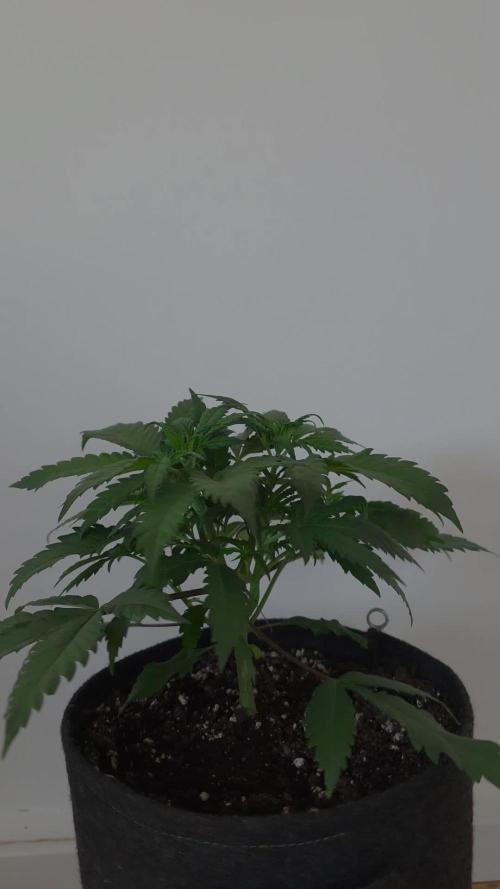
Moving through Week 4 and the response to the topping has been phenomenal. The growth hormone distribution has shifted completely, turning this AK-47 XL into a beautifully thick, bushy canopy with multiple strong shoots pushing up.
Looking at the lower structure, the main stem is getting incredibly thick, acting like a solid tree trunk already. The node spacing remains tight, and the plant is developing a very dense structure from the top-down view. The fan leaves are wide, lush, and a healthy dark green, showing that she’s soaking up the light and converting it efficiently into rapid growth. No shock, no slowing down—just pure vegetative vigor. 📈
💧 NUTRIENT FEEDING & WATERING
She is processing the current feeding well, supporting both the thick stem development and the new branch expansion.
Current Feeding Schedule (per Liter):
Root-Juice: 2.0 ml/l
Acti-Vera: 1.0 ml/l
Calmag: 0.5 ml/l
Parameters:
pH: 6.5
Relative Humidity (RH): 69%
Temperature: 23°C
VPD: 0.88 kPa (Perfect spot!)
CO2: 716 ppm
💭 GROWER'S NOTE
The canopy is filling out perfectly after the top. We now have a great multi-topped baseline, and the side branches are catching up fast to create an even profile. Stem thickness is 10/10 for Veg Week 3, which is exactly the robust foundation needed for the heavy AK-47 XL yields later on. With a stable VPD of 0.88 kPa, environmental stress is at an absolute minimum. Ready to explode! 🚀