


Likes
Comments
Share


@Ace_Algorithm
Follow
This is my first grow and I'm following the canuck method because it's the easiest . Eventually I would like to get into high frequency fertigation with a coco medium but I want to produce a great smoke in soil first to get some experience.




Likes
Comments
Share

@GoodTimesOrganics
Follow
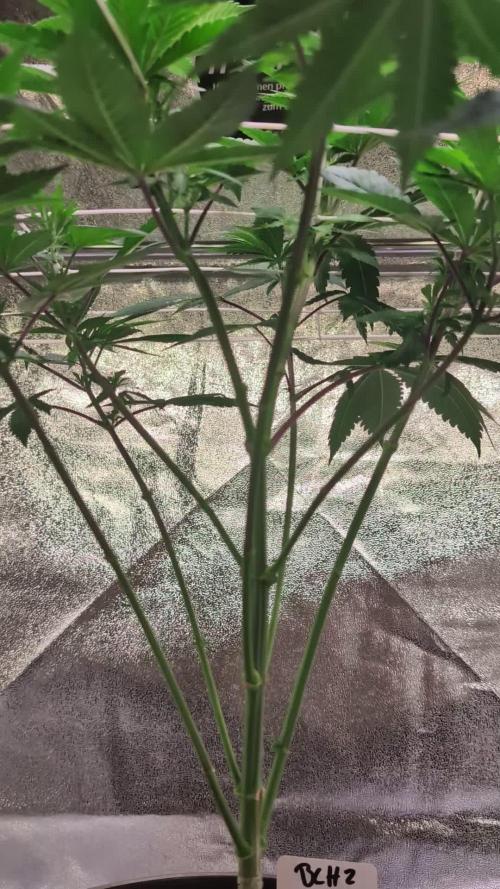
Die Blue Cream Haze hat nochmals einen kleinen Wachstumsschub hingelegt und es war nun Zeit die Ladys unter das Netz zu flächten.
Aktuell liegen die oberen 15 cm nun über dem Netz.
Unten herum wurde die Pflanze nochmals komplett ausgedünnt wie es sich für die Scrog Methode gehört. Hier folgen bis zur BW3 noch Nachbesserungen
Die aktuelle Temperatur liegt immer zwischen 22,5°C und 24°C und auf Grund des aktuellen vielen Regens, liegt die Luftfeuchtigkeit immer zwischen 60% RH und 63% RH was für den Anfang der Blüte völlig in Ordnung ist.
Die Blüte wurde nun am 25.07.2025 eingeleitet.
Processing
Likes
5
Share


@dutchMASTAkilla
Follow
Added frame to keep tent from being sucked in by filter fan.

Likes
3
Share


@tastic7
Follow
Ok week 6. So putting my eyes to the plants and found out that, we have 1 confirmed female. I named her "Shiori"! There is one unknown sexed plant and three (mostly) confirmed males. Shiori was the one I wanted to be female due to her indica leaning leaves. I will take some cuts of Shiori before I flip.
Sunday update...
I decided to put these plants in the flower tent with their sister (Falda) who will be harvested in a few weeks.
Depending on which male shows some vigor, I might keep his pollen to possibly create f2's to pollinate three females (Bratz, Falda and Shiori)
Wish I could document all the grows I have going on right now but it's alot.
Sunday update:
I decided to move the five plants into one of my flower tents. Shiori was cut for clones (4), the rest weren't cloned because of assumptions of 3 males and 1 unknown still. Another AC infinity oscillating fan was added to the tent they are in. More updates soon.
Likes
25
Share


@InhaleXhale
Follow
Next week is gone. The weather was bad the last days, we had much rain and maximum 19°C. All plants are in the same stage of flowering some of them look more frosty some of them less.
I already harvested the SkunkXL #3, I was very busy so I hung the plant in the shad last weekend, today I trimmed her and it was about 350g, but the buds will loose a little bit of weight. I will add the weight when the other plants get harvested.
Happy growing!

Likes
69
Share


@Natrona
Follow
DIVINE SEEDS
*******Sponsored Grow******
FRACTAL
I will be growing this photo flower outside during the summer. I've started the seed a bit early due to our May Vacation.
They will be about a month to 6 weeks old before our Colorado trip.
Thank you @DivineSeeds

Likes
51
Share

@Comfrey
Follow
Dutch Passion Shaman
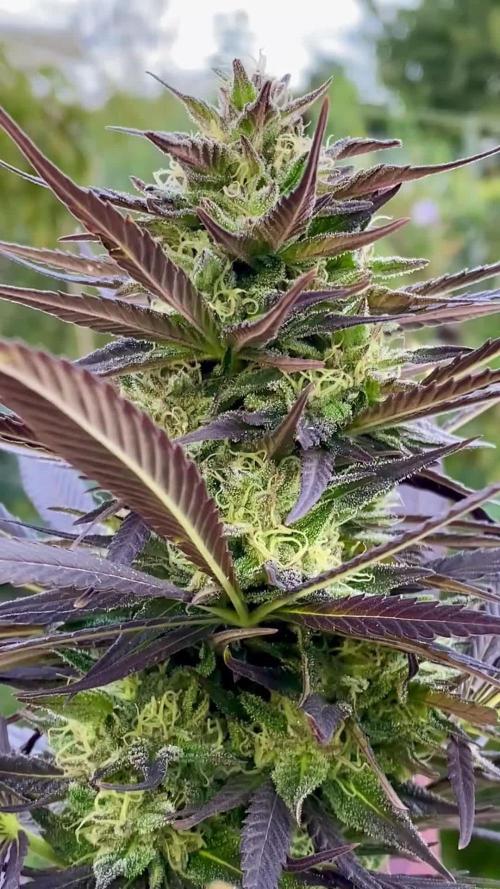
Pünktlich zum Erntedankfest am 5.10. war für mich der kritische Punkt überschritten. Shamanin 1 hat ihren Headbud und drei weitere Blüten genommen bekommen. Ich habe die beiden Pflanzen in der letzten Zeit täglich mit einer Taschenlampe abgesucht und nun war es soweit, leichte Faulstellen an den Stielen in mehreren Bereichen der Pflanze. Es waren nur sehr kleine Teile der Blüten, bzw. schlaffe Zuckerblätter betroffen, ich erkenne das mittlerweile relativ früh. Die Stielfäule, wie bei @birdmountain hatte sich bei der dunklen Dame an fünf Stellen gebildet und die angrenzende Blüte befallen. Verlust liegt bei zwei bis drei Gramm trocken.
Am Sonntag gab es zum Erntedank Space Tee für zwei und der war sehr lecker, mit starker aber angenehmer Wirkung. Ich lasse den frischen Trimm und Blütenmaterial bei 90 Grad mit einem guten Schuss Olivenöl (zwei Esslöffel ca. eine Stunde ziehen. Die Kräuter aus dem Tee schmecken mit bissl Salz wie Spinat, lecker, und wenn man sich die auch reinzieht, dann wird‘s richtig gut, mit Lachflashs. 🤤 😅 Jetzt bin ich entspannter, was den Erntezeitpunkt und die zu erwartende Wirkung betrifft.
Shamanin No. 2 musste dursten, hat recht weit oben eine weitere Blüte verloren, wobei ich die Stelle an einem dünneren Stiel auch hier vor der eigentlichen Blütenfäule entdeckt habe. Hier saß auch ein kleiner Käfer in der Nähe, wahrscheinlich hatte der es mitgebracht. Ihre Blätter beginnen sich zu verfärben.
Es geht weiter, bis nächste Woche! Danke für‘s vorbeischauen. 💚

Likes
7
Share


@Oktoberfest
Follow
19. Mai 2025
- Neues Video aus dem Zelt.
- Links nach rechts/Left to right: Sleepy Joe, Lava Cake, Runtz

Likes
2
Share


@TTerpz
Follow
Start of week 9
4/9/25
4/10/25: was fed with the nutrient dosage above
4/12/25 : watered with plain ph’d water
Likes
80
Share


@Roberts
Follow
Pure Ice cream clone is very top heavy. She fills the whole tent. She has a good strong smell. Looking frosty, and just eating, and drinking everything I throw at her. Cokas are looking frosty, and dense. Thank you Spider Farmer, and Pure Instinto Seeds. 🤜🏻🤛🏻🌱🌱🌱
Thank you grow diaries community for the 👇likes👇, follows, comments, and subscriptions on my YouTube channel👇. ❄️🌱🍻
Happy Growing 🌱🌱🌱
https://youtube.com/channel/UCAhN7yRzWLpcaRHhMIQ7X4g

Processing
Likes
24
Share


@DaddyPrime
Follow
8/9 shes flowering💚 pistils everywhere. Been feeding with open sesame from fox farms and everythings looking awesome. I am concerned about how lanky she is. Her node spacing is tight but shes long and the branches are already drooping from the weight from pistils and new leaves lol fml im gonna have to get stakes/supports soon
8/10 shes loving the weather or the nutes, shes praying so fucking hard its beautiful


Likes
1
Share


@Ultraviolet_
Follow
Turned off IR @ nights
Red wigglers (Eisenia fetida) are highly beneficial. They are considered an ideal choice for "no-till" or container-based organic growing because they live in the upper layers of soil, feeding on organic mulch rather than the plant's root system. Red wigglers accelerate the breakdown of organic amendments and produce high-quality, nutrient-dense worm castings directly in the root zone. Clover is another exceptional component of an organic rhizosphere, offering a sustainable, self-sustaining alternative to synthetic nitrogen fertilizers produced via the energy-intensive Haber-Bosch process. By forming a symbiotic relationship with Rhizobia bacteria, clover converts atmospheric nitrogen N2 into ammonium NH4, providing a steady, slow-release nutrient source that enhances soil health and reduces environmental impacts. Red clover offers superior nitrogen fixation and biomass production compared to white or yellow clover, making it the premier choice for maximum soil vitality, particularly for improving soil structure and providing a high-volume nitrogen credit for subsequent crops.
If it is fully functional and efficient soil, the rhizophagy cycle is far superior long-term than any synthetic delivery when it comes to preventing deficiencies, not because it's "better," per se. The medium will require a very high CEC to make it to harvest without re-fertilization. The rhizosphere acts as a dynamic, interactive exchange where plants and soil microbes trade resources based on immediate needs. When a plant lacks a specific nutrient, it changes its physiology and releases specialized chemical cocktails—root exudates—into the surrounding soil. These exudates, which include sugars, amino acids, and organic acids, serve as a "shopping list" to attract specific microorganisms, which in turn return higher levels of desired nutrients. There is nothing in comparison to synthetic delivery, which causes plants to stop producing exudates, effectively "starving" the beneficial soil life, over time turning the soil barren and void of microbial life. Responsible use, applying the right amount at the right time, can minimize these negative effects. Relying solely on synthetic fertilizers without replenishing organic matter is what typically leads to exhausted soil. The use of synthetic fertilizers can utilize the Cation Exchange Capacity (CEC) of the soil, but without a robust rhizosphere and active microorganisms, the efficiency of this process is significantly reduced. This makes synthetic growing more difficult to prevent deficiencies overall compared to an efficient organic living soil with a robust rhizophagy cycle, as there is no "one size, fits all" when it comes to different nutrient profiles of strains/genetics, making it trickier to "guess" and prevent creeping deficiencies.
CEC does not contribute towards EC. Add more CEC using biochar, problem solved. If you keep pH between 6.3 and 6.7, hydrogen is exudated to cycle the medium's CEC for its needs. Keeping the pH between 6.3 and 6.7 creates an environment where plants release H+ to displace positively charged nutrients (like Ca2+, Mg2+, K+ held on soil particles or within artificial media this cycle through nutrients via the medium's Cation Exchange Capacity (CEC)
Microorganisms generate a stable potential of approximately 0.5 V EC. The rhizosphere creates its own food, similarly to chelation, using 1000's of varying combinations to create its own food.
Start to finish, just add water. Eventually, more materials will need to be added at the beginning of each new grow, but very attainable to go from seed to harvest without ever fertilizing, regenerative cultivation.
ATP is king above all else when it comes to biomass accumulation. Cellular root respiration and cellular respiration are essentially the same biological process, the breakdown of glucose to create usable energy (ATP) in the presence of oxygen, just taking place in different parts of the plant. Synthetic (salt-based) grows have significantly lower levels of total rhizosphere respiration, often referred to as root-zone activity, compared to organic living soil grows. While the plant roots themselves may respire in both systems, the surrounding soil ecosystem in a living soil setup is vastly more active, teeming with bacteria, fungi, and beneficial microorganisms.
2 pools of ATP, it won't double in growth buuuut, but improving root respiration by ensuring high oxygen in the soil is crucial. Good aeration ensures roots can fully utilize glucose to generate the ATP necessary for nutrient uptake, leading to healthier and more productive plants, even if growth isn't exactly doubled. The ATP created using root respiration is dedicated to rootzone growth; the ATP created using regular cellular respiration in a synthetic system would have to dedicate a lot of ATP to the roots when there is little or no root respiration. It's true that there is less of an initial ATP cost in breakdown when nutrients are already in their final form (synthetic), but you lose a solid chunk of ATP when the entire plant is reliant on cellular respiration alone; a large portion of ATP is dedicated to root zones for "forced" (active) nutrient uptake. Making it overall less efficient, even if the initial cost of breakdown is higher. If that makes sense. Oxygen is of critical importance when growing in living soil compared to synthetic methods because it supports the metabolic needs of the microbial, fungal, and insect ecosystem, rather than just the root respiration required by the plant itself. While synthetic grows can survive in lower-oxygen environments with precise mineral feeding, living soil systems rely on aerobic microbes to decompose organic matter (microbial mineralization) to create plant-available nutrients, which is an oxygen-intensive process. While a specific fair percentage is difficult to guess, my experience points to a massive, compound difference between the two methods and the amount of oxygen required. All the ATP spared is used on more biomass, not only that, but the extra root respiration can achieve a much higher CO2 compensation point naturally than you could with synthetic and atmospheric CO2 alone.
As a plant grows faster and increases in size, its demand for nutrients to support that growth increases, requiring a higher rate of nutrient uptake. As plants enter phases of rapid vegetative/floral growth, their metabolic demand for nutrients increases exponentially. Without a robust buffer zone—whether in the soil (cation exchange capacity) or in a hydroponic reservoir—deficiencies will occur rapidly because the instantaneous demand for specific nutrients can quickly exceed the rate of supply.
A growing body of evidence suggests that organic living soil provides superior long-term soil health and environmental benefits compared to synthetic fertilizers, which are often criticized for promoting a cycle of dependency and degradation. While synthetic fertilizers offer short-term convenience and high yields, they often come at the expense of long-term soil health, sustainability, and increased corporate control over growers/ farmers. Organic living soil, while slower and requiring more care to establish, creates a sustainable, resilient, and, ultimately, more fertile environment.
We don't grow; we facilitate energy conversions.
Once all water is removed, approximately 95% to 97% of a plant’s dry matter consists of carbon, oxygen, and hydrogen. These three elements form the structural backbone of all plants. Corporate interest sells you the other 3-5% NPK & all the rest in RATIOS! Why not throw the 3-5% in a pot, and focus your energy on the other 95-97%?
Indigenous Amazonians created, or at least significantly enhanced, the fertile, dark soil known as Terra Preta de Índio (Portuguese for "Indian Black Earth") by incorporating biochar and other organic materials into the soil. This anthropogenic (human-made) soil technique, which dates back roughly 2,500 to 8,000 years, allowed ancient civilizations to flourish in regions with naturally poor, acidic, and nutrient-poor tropical soils.

Likes
3
Share


@Mr_nugs_lover_David
Follow
Beautiful strain to grow I'll say it 1 thousand times. Super sweet and floral aroma, very frosty and dense hard flowers, the exact same smell that her sisters have, I love to grow black cherry punch and hope I can keep doing so. This lady is one of the 2 purple phenos I have. The other 3 phenos are green but have the exact same smell all of them. Very recomended to all the growers out there if you are looking for exotic smells, very sweet. Peace out 💚✌️

Likes
59
Share


@burnerac
Follow
I think I was pHing wrong. My cheap digital meter isn't helping. Switching to drops shows that my run off is pH 4. I am currently doing a flush with 2 tablespoons per gallon of Hurculean Harvest pH'd to 8.
Questions:
1) For the flush, do I just keep running water through all at once until the run off changes?
2) How do I save this plant?
3) When do I begin trimming?
4) How and what do I trim?
5) When do I begin Sog or Scrog training?
6) How do I flush and avoid root rot?
7) When do I switch to flowering?
Grown from seed. Gold Leaf.
Grow medium: Strawberry Fields. Initially germinated in Happy Frog.
Light: MarsHydro 300W LED Grow Light Full Spectrum for Hydroponic Indoor Plants Growing Veg and Flower
Pot: 5 gallon Smart Pot
watering schedule: about every 4-7 days
pH: runoff is 4. Food is pH 6. Currently doing a flush at pH 7-8
Plant in a Hongruilite Hydroponic Indoor Grow Tent Room w/Plastic Corner (32''x32''x63'').
Likes
23
Share


@SonomaSungrown
Follow
Buds are really setting up nicely.
French Macaron smells right on brand... and the Chem Brulee... my god!
It smells like a Tropical Rocket Fuel. Amazong.
The Pineapple Meatball has a really unique odor, but it is still fairly faint.
Hoping that the neem/nute burn didn't somehow affect its resin/terp/bud production.
It certainly hasn't seemed to affect the French Macaron and the Chem Brulee!
This week, I sprayed 3 times with Dr Zymes, and it completely knocked out the small number of fungus gnats I was dealing with. Also released 4,500 ladybugs, and it's been fun watching them spread and work.
Will probably stick with the once-per-week Zymes treatment for the next few weeks.


Likes
26
Share


@GrowInger420
Follow
The last 2 weeks was good, grown bigger, but like wedding cake not enough i thonk. Think 1 week to go. Give her just water since 2 weeks
Likes
6
Share


@Yeyup
Follow
1/12 start of week 2 she’s getting bigger every time I open the tent 😂 didn’t need to water today we’ll check again later.
2/12 didn’t do much just a light water
3/12 Doomday 😂 my temperature and humidity monitor came and I realised my poor plant was in the desert and thanks to the community I also realised I’m growing in a massive fire hazard I purchased a new light and temperature has dropped thank god and thanks to everyone who answered my question. We’ll see how we get on with this CFL light
3/12 I also fed her this morning 1l of water with 2.5ml of Canna vega
4/12 nothing to be done
5/12 same as day before I think she’s looking good tho

Likes
6
Share


@Elguacho420
Follow
Buenas a tod@s.... Séptima semana de estás tropicanna poison de sweet seed.. las veo bien, fuertes y engordando, rico aroma y parece q bastante recina, no quiero anticiparme a nada, faltan unas semanas y van a engordar algo más, es verdad q a mí parecer creo q las pasé a flora antes de tiempo( errores de novato ese y otros mas) pero puede ser mi parecer, pero podría haberlas dejado crecer algo más en su etapa anterior, apuntado para el próximo cultivo....💪🏻 X lo demás todo en orden, temperatura, humedad, pH, luz y nutrientes... Es verdad que las variedades pueden prometer mucho más, si hay carencias es x falta de experiencia la cual se aprende paso a paso🙏🏻 nos vemos en unos días, buenos humos para tod@s 🔥💨💨💨🏻😎⚕️
🇦🇷🤝🏻🇪🇦
