


Likes
Comments
Share


@Donbehzad
Follow
In this week, the only concern and things I monitor daily are the temperature and humidity. Temperature should always be around 20C-23C, while humidity should be around 60-70%. No nutrients is given to the plant just balance ph of water (6.5) if the top soil is dry.

Likes
4
Share

@GREENPHOENIX6262
Follow
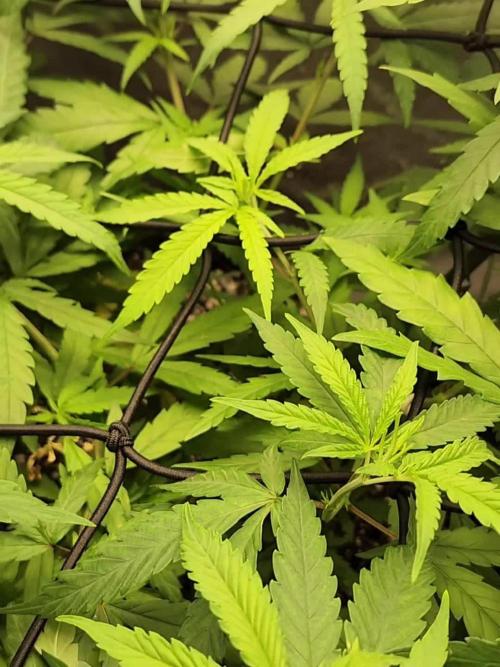
09/07 - Reveg still in process - Mother plant in recover from clone clipping - unhealthy clones disposed - cutting new clones this week - Myco and Superthrive feed increased - Net dropped an LST.
09/10 - Mother reset in motion - clones are healthy and rooting effectively - humidity 89% at 18 hrs.

Likes
4
Share


@weed_gastro
Follow
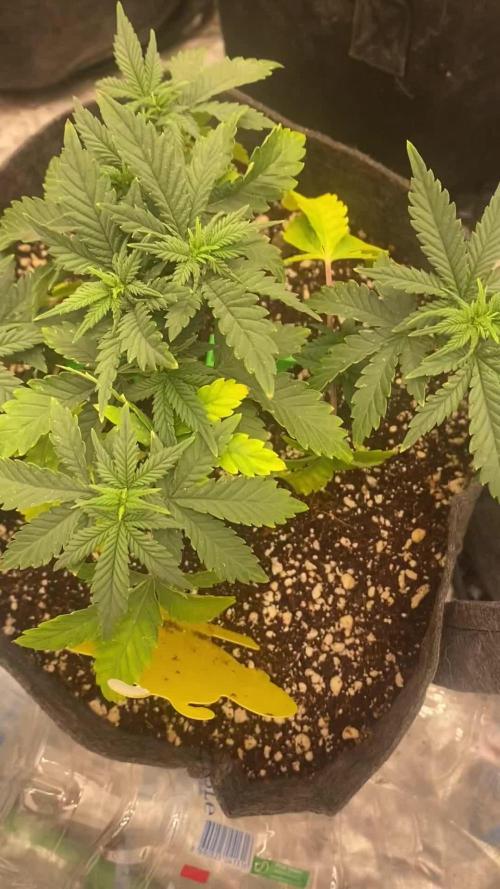
day 42: LOTTA leaves, had to defoliate 2-3 times.
they started to show their first pistils a couple days before the Ayahuascas, hope I can do a harvest before May,(the Peyotes) but it seems really tricky..unfortunately I need to leave them for a week in April. I'm pretty scared to leave them alone at the end of flowering...
Day 43: do you think the leaves on 2 plants might be too dark green? Thanks!
day 46: defoliating



Likes
30
Share


@DrewbieDoobieNoobie
Follow
Well The stretch has begun, I got one Lady boy in the mix not sure how it happened. see the week 6 time-lapse plants look good lollopped the bottom 3rd of all of them and gave them their early flower feeding week 2 per the Emerald Harvest booklet. So will this Hermie produce Feminized pollen ? looking for some feedback from ya all. or should I pull it from the garden before it shoots its wad? let me know.

Likes
49
Share


@masterofsmeagol
Follow
5/24 Woke up on payday to find that my father is in the hospital. My house was robbed a few days before so I guess the hits keep coming. The plants are doing good though. I'm glad I kept them in as we had a frost last night. I moved my cage yesterday onto the asphalt and put the big pallet in. I just need to sanitize the others before they go in the cage. I'm being super cautious. I think tomorrow will be the day I make the switch to the garage while they fill out these 3's.OK.
5/25 Plants were all moved to the garage with the door open for indirect light. It's 54 degrees. At night I'll pull them back in and give them a few more hours under the hps which will also help with heat. Knocked a stem sideways but it'll pop back. Feels good to get things moving. HST seems to being going good.
UPDATE: Went back over at one and noticed that the plant I hit with a wire (or something I didn't see what happened) was almost sideways and really loose. I had tied it to a clip with flagging. That didn't work. I asked a friend and I ended up pinching off the first true leaves then mounded happy drug up around it to keep it upright. It LOOKS much happier. Of course that shit happens to your biggest healthiest plants. Oh well all the 10th planet are doing phenomenal. Can't wait to move these girls to there final homes. Plants went under lights at seven. I'm acclimenting them to the right light schedule. I don't want to jump from 18/6 to 15 hours. They did really good in the cold Temps and wind. The big one I had to fix looks like it's doing great. Once they are hardened and fill these pots they go in their final home.
5/26 Plants did great being in direct sunlight for a few hours and staying in the garage at night. They look super healthy. I'm planning on watering tomorrow. Wondering if I should start to add some silica to strengthen the stalks. Also wondering if I should add more soil to some of the pots like I did to the other one as the stretched a little. This is something I may do tomorrow before I water.
Went back over to switch the lights on and pull the plants back and lock up at 7:30. Forgot my phone of course and these girls were looking amazing. I have to water tomorrow. I coukd add more soul to some of the pots but I'm reluctant due to stem rot. They'll get buried much deeper in there final homes. Don't want to mount up soil and then water and promote rot. Anyway plants are adapting amazing. Dialing the light closer to normal here. This is a great transition place for them to he. I've noticed a few wrinkled leaves but thats to be expected. Oh, I got my free pure Michigan seeds from premium cultivars!!!
5/27 WATERED EVERYTHING TODAY WITH HALF A Powerade BOTTLE APPROX. 16OZ. Plants are in direct light in the mornings and I haven't seem any burning yet. I noticed a small spot on one of the first true leaves but I think it's just a bite from an insect. Everything is green as hell. I'm wondering if I should add fresh soil to the pots but I didn't want to do it on a watering day. Plus the plants will be going in there final homes shortly. Very happy with progress this far.
UPDATE Went over at 1230 and everything looked great. I sanitized the cage AND the pallets. Also bought 3 more 30 gallon grow bags. Once they go in there they will explode! I can't wait. I'm considering ordering netting for moths. Depending on price i might get some. If not I'll keep using the BT.
UPDATE: Went and checked around 430. Temps were in the 70's and they had a few hours of direct sun. No burns evident as of yet. Pallets fit in the cage like puzzle pieces. Now I need to sanitize my grade stakes bamboo and trellis and setthat stuff up. I'm going to screw the grade stakes to the pallets and attach garden rods and bamboo with zip ties and I'll have a horizontal trellis. Once branches are a little bigger I'll begin LST. The plants that I topped AND the ones I FIMed are doing great. The FIMed ones with at least three colas some have four. Hoping the plants took that time growing roots.
5/28 Plants are all standing up tall. They loved that water. Haven't noticed any burns and they get direct sunlight in the mornings. Soon I can put them in the cage and start setting up my trellis and supports. Fan leaves on soms are bigger than my hands. These girls are probably the healthiest plants I've grown. I usually do clones and end up starting with problems. This is great starting with seeds and have no problems.
UPDATE: Went back around two because Temps had reached 92f and rh was only 20%. Nights cool off greatly so it's a dramatic temperature shift. Plants looked great. All standing up looking great. Put plants in at 7:30 ,and continue the light until 9 and have it turn on at 4am. Then they are out by sunrise. Did notice some burning on one of my plants a large fan leaf. What can I say? It was extremely hot. I'm surprised they did as well as they did.
5/29 Everything standing up perfectly looking great. Plantscget an extra hour of sun at night and morning and are on 19/7 with the extra added light. Trying to acclimate and finish hardening off this week. I'd love to be able to at least put them in full sunlight for the day. I think they'd be fine. I'm really impressed with how they are growing. Second guessing not HST all of them. However I think I might light dep a couple. We'll see. I've still got work to do.
UPDATE: put the plants in around 7. One of my lights shit the bed. They are just 150 watt hps but I was using them to finish hardening off my plants and slowly adjust them to the natural light. The on/off switch fell off. I'm sure my cousin can fix it bit the one is pe9bably fine as I'm only going fir a few more days. The thing about having this many plants to choose from is that I can pheno hunt and put the VERY best into the final containers and if I decide too I could light dep.
5/30 WATERED EVERYTHING TODAY WITH HALF A POWERADE BOTTLE. My cousin can probably fix the other light but I don't think it will matter. Within a week I'm going to have these girls in their final homes. I just need to sanitize the trellis and posts and then screw them to the pallets. I'll have this all taken care of before the plants go in the hole. I did notice another burn on a leaf. Def glad I'm taking the time to do this right.
UPDATE: I put the girls in the barn around 7:30 and flicked the one 150 watt HPS light I have working on. I added a half hour more of darkness to try to acclimate them quicker. Light stays on until 9 qnd came back on at four but i changed it to 4:30. I'm usually there by 5. I'm looking through my surveillance cameras and it doesn't even look like the light is on. Of course its super bright out but I should be able to see from that image. Luckily the building the go in has massive windows up top to let light in and windows on every side so the light is probably unnecessary. However due to my bullshit luck last year I'm being as cautious as I can. Tomorrow is supposed to be extremely hot again as is the next day. I think I'll leave the door down a little, open the other and move the plants back so they have no direct sunlight and adding a fan. That way they can continue to recover. They seem bigger everything I see them.
5/31 Another hot day. I figure a few more days (under a week) and I can transplant these girls! Supposed to be 85 today and 90 tomm. It was 45 when I got here. These girls are doing well handling this bipolar weather.
UPDATE: IM AN IDIOT AND THIS IS AN 8 DAY WEEK lol. Maybe I'll do a six day week next time to get back on track. Went back over at two and noticed some burns. Sent a video to a friend andcwith the sun we've had and the weather in the 90's he agreed the damage was minimal. However there was someone there working who opened more doors which let a lot more light in. It's supposed to be in the 90s tomorrow too. I may leave the doors shut. There are windows on everyside and an enormous cone at the top so the get plenty of sun. He also grows and I've been careful to not let anyone that grows go around my plants. I'm going to have to talk with family about this. To be honest I'm kinda pissed. Next watering I may add some kelp me kelp you and start a small nute regimen.
UPDATE Went back over at seven after having a panic attack. Half stoned half asleep. Stupidly I was looking at a plant and thought "shit" the FIM must not have took but in reality I was just stoned and tired so I topped a plant that had already been fimmed so we'll see how that goes. Purple punch is so far behind everything else it's not even funny. There might be one that's doing pretty well and that of course is the one with no HST. Branches on the other strains are thick and ready for LST though. What I think I'll do is transplant the 10th planets and the blueberry cheese ones that are ready and hold off on the rest for a while. Hopfully I'll be able to show plants in final homes next week.


Likes
1
Share


@Dvrkstvr
Follow
Not much other than yet another super progressive week!
Oppsies tape came off and it was fully healed. I'm shocked.
Went through and defoliated today and grabbed some pictures.
Didn't grab many through the process.
Week 1.5 of flower was solid.
Likes
7
Share


@007kgrowerBR
Follow
Desenvolvimento acelerado. Temperatura alta, durante as luzes acesas. Mais não aparenta estresse!
2º dose do top crop (deepe underground)


Likes
17
Share


@MG2009
Follow
08/23/2023
Starting week 2 flowering
AK #1 is now 17" tall
AK #2 is now 12.5" tall
Bruce Banner is 16" tall
All going well no more bug issues fed a little bit of nitrogen this week in the form of
(901 C release) 1/4 strength
trying to push some Carbon on her, no more Nitrogen will be used after week 2 of flowering, only P-K will be from Fox Farms Big Bloom
0-0.5-0.7 mixed with Bio-Remedy
Hope that they have more stretch in them but time will tell. Either way flower are exploding all over her!
Going to give them some Fresh Aloe Vera water, there loaded with Amino acids other good stuff.
08/27/2022
Not sure if auto flower goes through different flowering stages, if they do phase one is fleeting first flush of pistils fading and fresh ones popping up everywhere . Bruce Banner is a resin monster even some bigger leaves getting resin rails.

Likes
2
Share


@TEKNOGROW
Follow
CONTEST TEKNOGROW
BIG BUDDHA SEEDS
BUDDHA TAHOE
GROWER GIOVANNI
www.teknogrow.it
Instagram @teknogrow

Likes
25
Share


@Cdaddk
Follow
Did some adjustment to the lights this week nothing else , water with nutrients every day when light turns on , i love growing in Coco 👍

Likes
8
Share


@Bread_n_Buds
Follow
Our Monster Dwarf Automatic #2 is the most resin-producing monster of this autoflowering season, bursting with energy from every stomata, trichome, and the fantastic microcosm I photographed for you.
The buds are firm, truly of high quality, especially in terms of resin.
Maturity - The resin content is excellent. The trichomes are amber, with some very beautiful red heads when ripe (about 60%), with some white/cloudy ones (20%), and a few transparent ones (20%). There are quite a few beautiful red-headed trichomes, as mentioned. The pistils are almost all red (about 85%). Remember, the plant should be harvested according to your tastes. Since it's an indica-dominant plant, I want to make the most of the relaxing side, and I let this plant mature quite a bit longer than usual for me. Remember: Amber is a sign of THC oxidation, so don't overdo it!
The overall shape of the plant is truly splendid.
Techniques chosen: As mentioned, we performed a not-too-intensive LST here, followed by just pruning, lollipopping, and defoliation. Essentially, we cleaned the lower parts, which, as mentioned, helps us achieve better results on the surface.
We're 100% organic and 1000% Plagron, as always.
The soil we chose is the recently launched Plagron Bio LightMix, which will allow us to start with smoother and more reliable watering, without the sudden changes that liquid fertilizers can cause. A week's worth of soil is sufficient, so don't overdo it.
Choose your preferred style and calculate your results on the website:
www.plagron.com
Visit the new Growshop area on the Zamnesia website:
Z - https://www.zamnesia.io/it/531-growshop
A fantastic strain, a heavenly scent,
above-average resin production!
Z - https://www.zamnesia.io/en/4330-zamnesia-monster-dwarf-auto-feminized-seeds.html
Z - Monster Dwarf Auto is a new addition to the Zamnesia range. Extremely compact, it's the size of a bonsai tree. This autoflowering strain boasts numerous qualities. To create this hybrid, Zamnesia combined some of the best autoflowering strains with an exceptional Skunk female, preserving all of its autoflowering characteristics.
Its name should already give you an idea of what to expect from this plant. Monster Dwarf Auto is small and mighty! It maintains a very compact structure, never exceeding 40-60 cm in height, proudly displaying a large quantity of compact, elongated buds towards the end of flowering. This strain is suitable for small grow spaces. It performs equally well in larger grows, both indoors and outdoors, and requires no special growing skills to achieve excellent results in about 8-9 weeks. Given its autoflowering nature, even less experienced growers can easily achieve excellent yields of 60 grams per plant, without requiring any special attention. Thanks to its Skunk genetics, it's no surprise that Monster Dwarf Auto is capable of releasing very intense aromas and developing beautiful, compact buds completely covered in resin. Its Skunk lineage is also evident when smoking it: the effects are worthy of an incredible Skunk hybrid, full-bodied and very relaxing, yet capable of keeping you sociable without being excessively heavy.
Monster Dwarf Auto is a small, fast, and easy-to-grow plant. Despite its small size, it stands out from other autoflowering cannabis strains!
You know it, but I recommend it. Here you will find many wonderful things, essentially "the best that nature has to offer."
Z - www.zamnesia.com
Music //
www.radionula.com
+ Feng Shui Music
+ 432 Hz Frequencies

Likes
7
Share


@Cthoff
Follow
Alright gents, it’s the 2 week homestretch!!!
Gonna start flushing with RO water and that’s it. Want to get rid of all the nutes I’ve been feeding for that nice smooth smoke.
pH of 6.2-6.4......temperature usually 72-76 F on the water.
I only have be defoliating the bright yellow/white leaves.
Today was my last feeding with nutes and I’m excited to see development without nutes.
Really happy so far with my first grow. Spent so much time on YouTube, reading articles, and scrolling through so many friggin forums.

Likes
9
Share


@RolandRoss
Follow
This plant has too much growth that has never seen the light! Did a couple mild rounds of defoliating and some LST to pull the canopy wider. The first trained branches from ealier in the week look GREAT, so i'm hoping the whole plant springs up next week! Added a fresh layer of ammendment and a little TPS one in the water.
Likes
14
Share


@Terpyboyz
Follow
Alrighty growmies 👌🏻 so I’ve had a bit of a week set back due to issues, but back on track, the heat wave has definitely given a few girls a bit of a hard time not being able to attend but none the less, lifted the light again, trying to get on top of this PH fluctuating I’m having again using these stupid PH drops as my PH pen also keep jumping. Besides that I’ve managed to make a new home for the clones and got them under a couple UFO LEDs so that will house them for a few more weeks and al bring out the 600w HPS for them, but these runtz since being repotted have not taking nicely to it at all even using dynomyco so again hopefully by Friday they should be past that stage if not on flowering either way going to be a bomb scare when these taller plants start to stretch might have to bring out the net for sure 🤣🤙🏻 if all goes wrong at least I have my clones for back ups, keep eyes open for the incoming fire thou 🔥


Likes
15
Share


@ThePotFactory
Follow
Just flushing the girls this week, waiting for most trichomes to go cloudy instead of clear. Ive now switched the lights off for 36/48 hours and will harvest in the next couple of days :))
Likes
3
Share


@Xpie77
Follow
🌸 Kweekverslag – Amnesia Autoflower (Hy Seeds)
Week: 5 totaal – Week 1 van de bloei
Type: Autoflower (Sativa-dominant)
Aantal planten: 5
Medium: Aarde (lightmix)
Potten: 11 liter
Verlichting: Mars Hydro 450W LED
Lichtschema: 20/4
Temperatuur: 22–26°C
Luchtvochtigheid: 50–55%
---
🌱 Plantontwikkeling
Planten zijn gemiddeld 40–60 cm hoog (afhankelijk van fenotype & training).
Bloei is begonnen: witte bloeiharen (pistils) goed zichtbaar op top en zijtakken.
Stretch-fase volop bezig → sommige planten groeien nu 3–5 cm per dag.
Structuur: slank, sativa-achtig met veel zijtakontwikkeling.
---
✂️ Training (indien gedaan)
✅ LST kan nog worden afgemaakt (geen toppen bij autoflowers).
⛔ Geen nieuwe stress (zoals defoliatie of buigen van dikke stengels).
✅ Blad een klein beetje uitdunnen onderaan indien luchtcirculatie beperkt is.
---
💧 Watergift & Voeding
Watergift: Om de 2 dagen bij ±50% droog gewicht pot
pH: 6.3–6.5
Voeding aanpassen naar bloei:
Biobizz Bloom: 2–3 ml/L
Biobizz Top Max: 1 ml/L
Biobizz Grow: 1–1.5 ml/L (nog licht aanhouden tijdens stretch)
Eventueel CalMag 0.5 ml/L bij tekenen van tekorten (LED-kweek → soms nodig)
---
🔍 Waarnemingen
Gezonde bladstand, donkergroen en licht omhoog gericht ("biddend")
Witte pistils zichtbaar op hoofdtop en zijtakken
Geen verbrande punten, geen overvoeding
Geur begint zich te ontwikkelen: scherp citrus/haze profiel
