


Likes
Comments
Share


Likes
13
Share


@TrialAndErrorGrows
Follow
Final and longest week lol
I dried these lady’s for 7 days in the tent I grew them in. The tent was around 73F-75F temperature. I used a humidifier to keep the humidity in between 55 and 60. I hung them on the trellis netting. Once they dried I trimmed and put them into jars.

Likes
3
Share


Likes
49
Share


@masterofsmeagol
Follow
8/8 Rained all night. Still raining today and the forecast says it will continue throughout the day until midnight. It's come down heavy at times but for the most part it's a rain that plants like. Defoliated a couple leaves but nothing really needed it. Without a trellis or my tarps up the grow bags seem to dry out incredibly fast so I need to watch that. It's also "toughened" up the plant wants. I've seen them blowing straight sideways and they were fine. I do need to find that four lined plant bug and spray BT after the rain. Plants lovedcthe nutes. I might feed a little later today or tomorrow. I've got a few things to do but I'll keep this updated.
Went over and defoliated ANYTHING that needed it and combed through every plant during a pause in the storm. Then I shook them all off and did a video. This is by far the healthiest crop I've grown! I think they can handle more nutes too so I'm going to up it next feed. Still seeing stptadoc chunks missing and random pillar damage. BT will handle it. It's just so minor I'm not even sure if it should be addressed that way. I've had pretty good luck just looking for them and picking them off.
8/9 Cannabis can grow an inch or two in a day and it definitely has been! The rain has finally stopped. I went and shook all my plants off. I'm going to check and see the last time I fed and try to get a feeding schedule created that won't cause lockout. That's been a problem in the past. I've defoliated a lot of leaves lately but EVERYTHING is looking amazing. Extremely healthy. I DO need to spray BT for the pillars and I need to move that one plant back. I keep forgetting to grab the little wheels I need to make a platform. There are other ways I could do it I guess. I'll keep this updated. No damage from the storm and I went through and defoliated before and after. Forgot to upload shit and now I'm back home with this shitty internet connection. I'm trying to upload this video but we'll see. It's at like 32%. I did a full workout and came back to find this at 77% lol. I need to remember to upload things when I'm not in the middle of the woods.
UPDATE: Checked on things and did a video. Need to feed, apply bt and secure individual branches before flowering increases
8/10 LOOKS to be a beautiful day. Growbags are heavy as hell and wet on the bottom. I ALMOST fed today and I still might. The pp in the 10 seems to have leeched a lot of nutes. That and a giant blueberry cheese are the only places I'm seeing a deficiency and I want to keep it simply. I also need to put a trellis up apply BT. also if I'm going to move things around I've got to do it before I put up flowering supports. It's harder to move stuff when it's wet. I'll keep this updated. The girls look fantastic.
UPDATE: Went and trellised two of my plants. I was going to feed today but decided to wait until the next time I water. I'm only seeing deficiencies on the phrple punch in the ten and the GIANT blueberry cheese that I watered the most. Bags were heavy as hell this morning but I bet I'll need to water tomorrow. We'll see. Hahaha wow. I'm trying to upload a video but even my tough as fuck plants might have some difficulty in torrential rains like this. Wow. That's all I can say. I'll either go check and shake them off tonight or if it keeps it up I'll wait until morning I guess. What a shit show
8/11 WOW. That's probably the hardest I've ever seen it rain. Got to the grow this morning and found NO damage. It's super sunny amd windy so the bags will probably dry out. I think it's suppised to rain again Sunday. I definitely haven't had to water that's for sure. Nothing was even bent over this morning. The blue cheese I didn't fim or top (I wanted to see gow it grew naturally) pop ka was bent down a little bit but not much considering the pounding it got. You can see on the videos. Since bags were saturated I didn't need to water before I fed. I fed 1.25 pints to every plant. I gave the fifty 2.5 pints and the purple punch in the 10 got closer to a pint. I want to start out slow with nutes as I'm nor seeing many deficiencies. I may fuck around today and put some more trellises up seeing this wind bur when flower comes I can just put my tarp up. I'll update as I go.
UPDATE: WENT BACK OVER BECAUSE THE WIND WAS WHIPPING LIKE CRAZY AND TREES WERE DOWN. I SANITIZED ALL MY TRELLISING AND HORIZONTALLY TRELLISED TWO 10TH PLANETS IN FRONT AND VERYICAL TRELLISED THE THIRD. HORIZONTAL TRELLISED THE PURPL WE PUNCH IN THE 10 AND VERTICAL TRELLISED THE BLUE CHEESE IN THE 50 AND THE 10TH PLANET IN THE MIDDLE OF THE CAGE. GLAD I GOT THIS DONE. NOW I JUST NEED TO SPRAY BT AND I'LL FEEL CAUGHT UP.
8/12 Got my supports up and ready now I've just got to find the time to give the girls an application of BT. I've done a pretty good job with manual removal thus far. Bags are over watered. It's Rained so hard and so often that the bags have stayed drenched. Luckily this ridiculous wind has been drying my grow bags out relatively fast. I'm hoping that will be the case today. They're starting to dry out but it's supposed to rain tonight and I think tomorrow. Bright and sunny right now. These are some resilient plants. They seemed to like the liquid kool bloom. I noticed (barely noticeable but I was looking for it) a SLIGHT color change at the very TIPS of a few leaves on a plant but not enough to consider it burn. I will monitor but I think ive got a pretty good feeding regimen. I plan to use as little as I can get away with. I'll keep this updated.
UPDATE: WENT TO CHECK ON PLANTS AS I GOT "THAT FEELING". EVERYTHING WAS LOOKING GREAT BUT THEN I WENT AND LIFTED MY DRY 22GALS OF SOIL AND COMPATED IT TO MY 20S AND LIKE I THOUGHT THE WIND HAD DRIED THEM OUT. I CANT BELIEVE HOW QUICK THEY DRY OUT. I GAVE EVERYTHING 1.5 GALLONS AT LEAST EXCEPT FOR THE 10 WHICH I GAVE A LITTLE LESS THAN A GALLON. I GAVE THE 50 A LITTLE OVER 2 GALLONS AND I DISNT NOTICE RUNOFF. I HAD MORE WATER MIXED UP IM THINKING I SHOULDVE GIVEN IT ANOTHER GALLON. OH WELL ITS SUPPISED TO RAIN A LITTLE TONIGHT AND THEN TOMORROW. I HAVEN'T WAYERED IN LIKE A WEEK SO I PROBABLY SHOULD'VE GIVEN THE WHOLE 2 GALLONS. THEY GOT DAMN CLOSE THOUGH.
8/13 Rained like hell last night. Oh course it did. Doesn't really matter though. I had to water. I thibk the last time "I" watered was lime a week ago. My bags were dry. Plants weren't drooping and they might've been ok but I've under-watered twice already to the point they drooped right over dead looking and I wasn't going to do that again. Plants seem to love the nutes I gave. Keeping the tarps off and allowing the wind through and having my bags on pallets has really saved me this year. Everyone else is bitching about the rain and lack of sun but things are going great for me knock on wood. I'm not 'in the ground' though so that probably has something to do with it. I just need to check my plants multiple times a day. These plants are getting massive. The cage is at least 8ft tall and the biggest one is about to the top now. Almost as wide too.
8/14 I forgot to write the entry but I uploaded some pics from this morning. They were wet from the storm but I went back over and took video that's like two and a half minutes plus I took some pictures. I pulled the cage out but I need to undue one of the lathes and pull it forward. I also need to apply BT. Plants seem to be aggressively flowering (some more than others) so it's a real exciting time. I went over this afternoon and everything looked fantastic. I'll try to upload a few pictures but the video will have to wait. Didn't rain today and my bags sry out quick so I'm sure they'll be fine even if it rains. I did notice that the two plants I watered most including the smallest container seem lighter in color. IT might hust be the transition to flower but u think I need to increase feed. On the 10th planet's they are green as can be and have that SLIGHT little almost unnoticeable part you really have to look for on the tips that means it's getting its nutes but it's not burnt. I believe I'm going to have to make feeding schedules for each strain

Likes
19
Share


@ELBICNIVNI
Follow
the plant grew pretty nice, and i am thinking if i should let them flower more or not, your suggestions will help me figure out what would be best, i will appreciate any input! THANK YOU! and also your opinion on the growth of the plant, who experienced with this strain, and what they got out of it? it smells amazing! super fruity, can t wait to cure it and smoke it :) peace!
Likes
25
Share


@mrlovesgrow
Follow
My first ever harvest went great! I trimmed 3 different ways as well as flushed for different amounts of time.
24hr flush and wet trim with bowl trimmer, dried on dry rack. Aprox 4 ounces as i was smoking it soon as it dried, small buds first. 🤷♂️🏻
3 day flush. Wet trimmed by hand. Hung to dry. 119 grams
Last two ladies were the bushy ones. I let them flush for a full week and then hung to dry. We hand trimmed them both(not as close of trim) to make edibles and oils with. 412 grams!
I think I did pretty well on my harvest. I have over a pound of bud! I’m all smiles!

Likes
24
Share


@DeepRootsGrowTrees
Follow
SWISS DREAM ROSE🌹 CBD AUTO
KANNABIA SEEDS
WEEK #5 Overall June 23rd-30th
Week #2 Flower
This week I had to adjust the feeding a little as she got a few burn spots on the leaves new organic soil and nutrients so learning what the plant wants and doesn't want.
Stay Growing!!
Kannabia.com
SWISS DREAM RIDE🌹 AUTO

Likes
4
Share
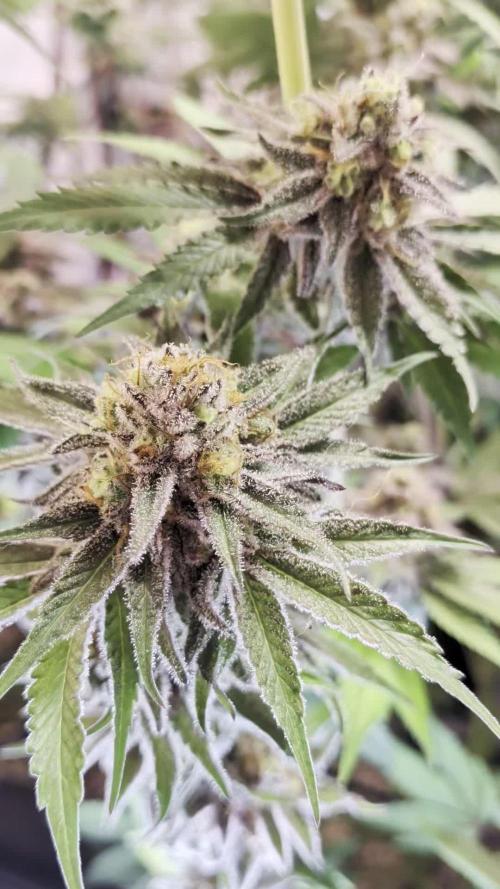

@Colonel_oCoQ
Follow
So the finals weeks for the Zillions and Cookie Casket. I already had to harvest 3 top- colas, they were ready. The rest needs a bit more days. After the AN Overdrive switch typically the flowers got new light pestilles, the second level 😅!
I let the PH drift now a lit bit more to 5.8- 6.0 for the last weeks. EC is around 1800-1850. Mimosa Evo will needs at least 2 weeks, maybe 3.😇
EC now down to 1722 as they are getting ready.


Likes
46
Share


@Hologram
Follow
..Baphomet is standing in safehouse, bc of rain and 💩..
i just plucked a snail off a leaf too.. heading to her buds!
I was just in time..i have put it some where safe, so it can think about its actions... 😳 (rubbed some slime over my face too.. its good for skin 😎👍 and now the 'growgods' can see who took care of the snail *'sacraficed' it* so they can reward me.. yeah i have Viking blood 😼✊)
She is streching a lot, 20cm this week, making room for her buds 2come! 🙌
Happy growing 4 all ✊
KISS! growingtechnique: KeepItSimple, Stupid!

Processing
Likes
58
Share


@DailyDabs
Follow
Going into week 8 she is looking great. I just added some cha ching and it looks like she doubled in frostyness over night. Its been a little longer than I thought since I last took some close up pics but I still think it shows a difference,
Likes
8
Share


@HazeGrowGang
Follow
I'll be updating with more accurate notes and better phones on next entry just wanted to get my diary back up and running again. This plant was flipped on 5/20/20 Happy Growing #420Lifestyle

Likes
22
Share


@J_diaz420
Follow
Todo normal, en esta semana comenzamos la dosificación de engorde para las flores.
También se colocó malla scrog, con la finalidad de usarla como tutor para ayudar a la planta a soportar el peso.

Likes
4
Share


@GeminiCQC
Follow
This plant was ready on Sunday, but I didn't have the time nor energy to chop her. Today was the day, and I am excited to see how it is after the dry. Maybe this will allow me to take a break before I get my next lineup selected.

Likes
7
Share


@herbalistssword
Follow
So close to ready, I probably could take her down now, but my thinking is that since this is a cbd strain, I'll leave her longer and get more of that couch lock. Flushing her so giving 0 nutrients, only phdown.
She is in the garage more than she is outside because the weather is so bad, so I improved her accommodation, put her under a couple of sky100s and surrounded with some reflective material I have, bundled the buds as close as possible to get more lights concentrated.

Likes
13
Share


@Weedeep
Follow
guys this plant is monster!!! that is all i can say!!! cant wait to taste her
one bad news, i have to take her out of the box for about 2 weeks before my Mephisto testers finished stretching, i have very small box ((( soon will move to the tent in house ✊👌

Likes
2
Share

@Mexicanasseeds
Follow
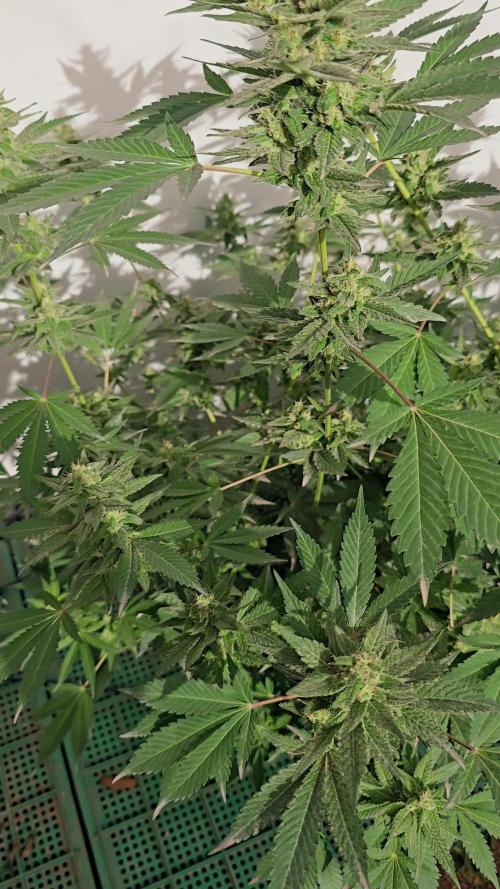
Semana 4 floración
Fase: Máximo Engorde Estructural / Fin de Crecimiento Foliar
El cogollo central se muestra denso y maduro estructuralmente, en pleno ciclo de ganancia de peso. La cubierta de resina es total y profusa, confirmando la alta eficacia de los protocolos de estimulación. Esta semana marca la última aplicación foliar de Algas Marinas y Aminoácidos, así como la segunda y última aplicación de Ácido Salicílico, para dar un impulso final a la producción de resina antes de suspender tratamientos foliares y evitar riesgos fúngicos en la floración avanzada. El control de drenaje y la medición de pH y PPM del lixiviado continúan siendo críticos para asegurar la salud radicular y la eficiencia en la absorción.
Likes
22
Share


@bypado_farm
Follow
16 days of slow drying each plant with the environment controlled inside the tent with 2 meters.
I have two fans on, pointing at the floor to circulate the air
temps - 20 - 23 º
humid - 50- 60 %
Likes
11
Share


@Cortez_The_Konqueror
Follow
One of the shorter phenos but I got a feeling she's going to be a bush!
Likes
40
Share


@nijuana
Follow
Let's harvest ! Let's dry 💚 this was a good week like usual , it was the flushing and final week

Likes
23
Share


@Zuppler
Follow
**Grow Report by Zuppler - Week 1 Flowering Phase**
Ayo, what’s good fam? Zuppler back in this b**** with the week 1 flowering update, straight outta the capital. We just flipped the switch to that 12/12, and these girls already know what time it is – they starting to stretch out like they tryna reach for the stars. We runnin’ that Ape Formula from Advanced Nutrients, got the whole squad dialed in on some next-level s***. Feeding them queens like they royalty, nah mean?
We keepin' it real precise with that RO water – pure as it gets, no cap. I ain't lettin' no junk minerals mess up the game. We stayin’ locked on that pH balance like a sniper, so the nutes hit right, and them roots keep drinkin’ smooth. So far, no issues – the plants look strong, real healthy. Ain’t no signs of deficiencies, and the leaves stayin’ green like money.
The canopy lookin’ good too, spreadin’ out evenly. All them colas just gettin' ready to explode. You already know, we keepin’ everything low stress, tryin’ to maximize that yield without no drama. Temperature’s steady, humidity right where it need to be – we not takin’ no L’s, bro.
It’s early days, but the stretch is comin’ in strong. In a minute, these girls gon' be stackin’ up them buds real heavy. I can already tell we ‘bout to be sittin’ on some fire soon. Stay posted, this is just the beginning.
Zuppler signin' out.