Likes
12
Share
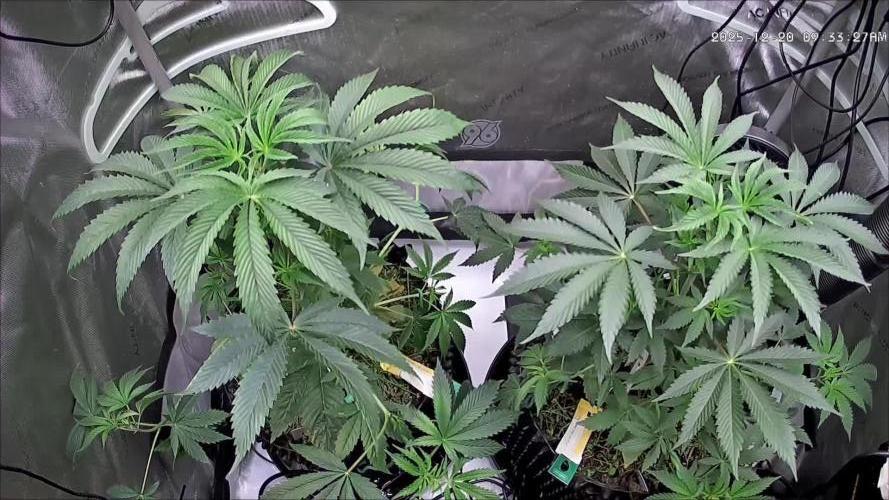
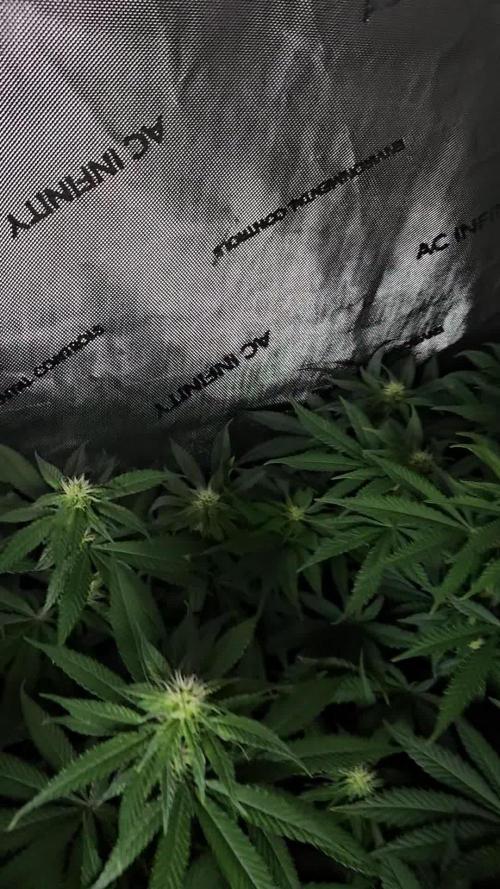
MIMOSA by ROYAL QUEEN SEEDS Week #20 Overall Week #3 Flower This week she's doing good just starting to flower so that's always exciting to see no issues this week she's healthy!! Stay Growing!! Royal Queen Seeds MIMOSA
Likes
18
Share
@Diips
Follow
d.79. done alittle lst in order to get some of the colas away from the hot zone.. gotta be creative when it all grows too close to the light 😅. big lady she is and really smelly nice!. also
Likes
4
Share
@Lazuli
Follow
So this plant grew during winter, i cant heat the room where the tent is so the only warmth was from my LEDs and dehumidifier, during summertime this strain finishes in around 10 weeks from seed, if u like strong smoke you should try her out
Likes
8
Share
@JohnWeed
Follow
The girls is grow well, the bud look biggest this weed. Some leaves especialy the bottom leaves have started to become yellow surely because of the light penetration. However everything look good for me
Likes
2
Share
Last and finally feed before I haverst her. Can not wait to see how the dry and cure goes. Peace
Likes
4
Share
Plant starts to change colours , trichomes start changing from clear to cloudy . I am checking the development every 3 Days , looking in top , middle and bottom , to get a good avg. result . Overall I want like 5-10% Clear ones , 70-90% cloudy ones and around 5-10% amber ones , this wont be achieved perfectly in every layer , but gives me a little more variety in the effect later on. I do sort them when I put them in jars or curing bags. I flush with around 2-3l with a little top max acti vera and heaven like 1-2ml per l on the first flush with like 10 % runoff , after like 2 Days i went with clear water aiming for very little run off . Also cleaning my pot with a pump sprayer to get salts and used fertilizer out of it . I think the plant has another 1-2 weeks to go .
Likes
13
Share
Mulberry F3 day 91. All is good and just a couple of days left to go. Plans are to shut off the lights tonight and give her 36 hrs of darkness and harvest Monday morning.
Likes
6
Share
@Ryno1990
Follow
Buds came out very good for being on a 12 an 12 cycle
Likes
1
Share
@Ninjabuds
Follow
My super boof plant is gonna be a really thick bushy plant. It already I showing signs of large fan leaves and the nodes are already starting to stack on top of each other. I think this will just be a plain Jane green plant in the end but seems like it will stack really well. We will see it’s always a surprise It’s day 41 from seed and all of the plants are really thriving
Likes
18
Share
Hey fellow green thumbs! 🌿💚 We’ve just wrapped up the fourth week of flowering with our Auto Fast Pete and Auto Northern Dragon Fuel from Super Sativa Seed Club. This week has been a mix of challenges and progress, but our resilient ladies are pushing through. Let’s dive into the details! 🌟 Week 8 (Fourth Week of Flower) Progress: Day 50-52: Bud Bulk and Stress Signs • Auto Fast Pete: Pete has bulked up significantly, with buds swelling and becoming more resinous. However, the light schedule change seems to have caused some stress, resulting in burned leaves and possible nutrient deficiencies. Despite this, the buds are looking fantastic and are still on track for a great harvest. 🌿🌸 • Auto Northern Dragon Fuel: Dragon Fuel is also showing impressive bud development. The buds are thick and sticky, but like Pete, she’s showing signs of stress with some burned leaves and potential CalMag deficiency. Her resilience is evident as she continues to push through and develop beautifully. 🌱✨ Day 53-55: Addressing Deficiencies and Adjustments • Nutrient Strategy: In response to the stress signs, we increased the dose of CalMag slightly to see how the plants would react. The goal is to mitigate any deficiencies and support healthy bud development. 🌿 • Reservoir Details: • TDS: 450 (increased slightly to boost CalMag) • Temperature: 18°C • pH: 6.2 • Environmental Conditions: • Temperature: 31°C • Humidity: 51% Monitoring these adjustments closely to ensure the plants recover and thrive. Thank you Trol Master, seriously 🌡️💧 Day 56: Observing and Fine-Tuning • Auto Fast Pete: The buds are continuing to grow and mature despite the stress signs. The plant’s overall health is being monitored closely, with an eye on the leaves and bud development. 🌿🌼 • Auto Northern Dragon Fuel: The bud sites are dense and sticky, and the plant is showing resilience in the face of stress. Continued monitoring and fine-tuning of the nutrient regimen are key to supporting her through this phase. 🌱🌟 🌟 Care Tips: • Light: Adjusted to a 12/12 light schedule, which seems to have caused some stress. We’re keeping a close eye on the plants to ensure they adapt and recover well. 💡 • Autopot System: The Autopot system continues to provide a steady water supply, reducing the need for frequent manual watering. This system is great for maintaining consistent soil moisture, which is crucial during the flowering phase. 🌊 • Nutrient Monitoring: Increased the CalMag dose to address potential deficiencies. Keeping an eye on the reservoir’s TDS and pH levels to ensure the plants receive the right amount of nutrients and minerals. 🌿 • Environment Control: Maintaining a stable temperature of 31°C and humidity around 51% to create the perfect conditions for flowering. Adjusting airflow and positioning to optimize plant health. 🌡️💧 🌟 Genetics Spotlight: Auto Fast Pete: • Characteristics: Rapid bud development, strong structure, early resin production, but showing signs of stress and possible nutrient deficiencies. This strain is still pushing through with impressive bud bulk. • Future Expectations: Continued bud swelling and resin production. Monitoring nutrient adjustments closely to ensure a healthy finish. Auto Northern Dragon Fuel: • Characteristics: Robust structure, dense bud sites, resilience, but also showing stress signs and possible CalMag deficiency. The buds are still developing beautifully. • Future Expectations: Significant bud growth and increased resin production. Close monitoring and adjustments will support a strong finish. 🌍🌿 Fun Fact: Did you know? 🌿✨ CalMag deficiencies are common during the flowering phase as the plants have higher demands for calcium and magnesium to support bud development. Addressing these deficiencies early can make a big difference in overall plant health and yield! For all the in-depth action and detailed explanations, head over to my YouTube channel! 🎥✨ I’m sharing all the tips, tricks, and step-by-step guides to help you get the best results from your grow. This week has been particularly challenging and exciting, and there’s so much more to explore and learn together! 👉 Join me on YouTube Link in my profile 👈 🌟 Conclusion: Week 8 marks the fourth week of flowering, with both Auto Fast Pete and Auto Northern Dragon Fuel showing remarkable progress despite some stress and deficiencies. The buds are developing beautifully, and with careful monitoring and adjustments, we’re set for a promising harvest. Stay tuned for Week 9, and happy growing! 🌿💚✨ #SuperSativaSeedClub #Week8Report #FastPete #NorthernDragonFuel #PlantMagic #GardeningJoy #NatureLovers #PlantPower #InspireGrow #YouTubeJourney Germination method 🌱 @thecannakan Genetics @supersativaseedclub_official Nutrition @aptusholland 🌿 @aptus_world 🌎 @aptus_es 🌍 @aptusbrasil 🌱 @aptus_thailand 🌿 @aptus_portugal 🌳 @aptususa_official 🍀 @aptusplanttechnz 🌺 @aptusplanttechaus 🍃 Ambient controls🎮 @trolmaster.eu @trolmaster.eu.support @trolmaster.support @trolmaster.agro Soil @promix_growers_eur @promix_cannabis LED - @lumatekeu Watering- @autopot_usa @autopot_global Love and attention- @dogdoctorofficial As always thank you all for stopping by, for the love and for it all , this journey of mine wold just not be the same without you guys, the love and support is very much appreciated and i fell honored and so joyful with you all in my life 🙏 With true love comes happiness 💚🙏 Always believe in your self and always do things expecting nothing and with an open heart , be a giver and the universe will give back to you in ways you could not even imagine so 💚 More info and complete updates from all my adventures can be found ⬆️link in the profile description ⬆️ Friendly reminder all you see here is pure research and for educational purposes only 💚Growers Love To you All 💚 Discount Codes : @thecannakan DOGDOCTOR 15% off @theneutralizer PORKIT5-DOG 15% off @kannabiaglobal DOGDOCTOR 30% off @seedsmangenetics DOGDOCTOR 10%off @terpyz.mutant.genetics DOCTOR 15% off
Likes
5
Share
@ertaverd
Follow
Empieza el adiestramiento! Corte apical en el brote central y defoliacion general😋
Likes
3
Share
🌱 : 💧 : 4l day 47 💡 : Dli: 45 mol/m²/d 🤔 :
Likes
4
Share
DÍA 1 - CUARTA SEMANA DE VEGETA (26-05-2022) *Se sigue con el LST (28-05-2022) * Se le aplica una poda selectiva a todas * Tuve un problema de riego con varias * En su día 31 desde q salió del sustrato, de las 6, hay 3 ya que van bien y han sufrido soportaron mejor el estrés, de las otras 3; hay una Banana y una AK que vienen más bajas que todas, de ramas más cortas y distancia internodal corta a comparación de las otras. Después esta la lemon que se viene recuperando muy bien de estrés y fue la que siempre vino más grande y ramificada :) DÍA 7 ÚLTIMA SEMANA VEGETA (01-06-2022) * Último día de la semana de vegetación, ya mañana es su día 1 de flora. * El día de ayer se le regó lo último con Vegalquimia, y se le añadió 1ml de Alquisweet de LAAOS. * Estos últimos 2 días he tenido problema de temperaturas muuuy bajas donde vivo, con luz encendida llegan 20 grados con suerte y luz apagada a 12-13 grados. Estoy tratando de jugar con bajar la humedad pero no la puedo bajar a menos de 55% aprox. Espero ya mañana arreglar ese problema de bajas temperaturas. * Lo que es el cultivo se ve bien dentro de todo. Hay dos enanas que se estresaron en la semana 2 y quedaron pequeñas. A todas se le aplicaron LST, unas resistieron mejor los distintos estrés ya mencionados en semanas anteriores. Pero va bien. * Hay 3 en pre flora, una de ellas en pre flora avanzada y es una de las más enanas.
Likes
43
Share
@Coopmc
Follow
Oh Ya looking good smelling stinky Got some lowers for Fresh Frozen Nug Rince
Likes
10
Share
@yaron
Follow
The gorilla glues are looking better but the wedding cheesecake not so much. The cakes are going down tonight because i see a couple of brown spots.I guess this is budrot.The smell is amazing and its sticky a.f.So i see what i am left with. Cheers
Likes
5
Share
@GrowFunMD
Follow
I am now putting my weekly comments in the videos. Watch the videos for updates.
Likes
5
Share
Likes
18
Share
A light spectrum in the scope of 400 to 700nm induces growth and development, and UV (100–400nm) and infrared (700–800nm) light play a role in plant morphogenesis—which is essentially the process of plants developing their physical form and external structure. Optimizing Your Knowledge in the Grow Room To maximize your yield, always aim for 40 moles, or 40,000,000 μmol, per day. Here is how much PPFD is needed per second for each phase of cannabis growth to achieve the DLI of 40 moles of light per day. Seedling phase (18hr cycle): 200–300 μmol m-2 s-1 Vegetative phase (18hr cycle): 617 μmol m-2 s-1 Flowering phase (12hr cycle): 925 μmol m-2 s-1, (1500 μmol m-2 s-1 @2000ppm co2) (ballpark) When choosing grow lights for cannabis, it is essential to check the technical specifications to determine if they are strong enough to get the job done. Of course, this doesn't mean that you have to buy the most expensive lights there are. Still, it does mean that you should research each of these specifications in relation to your cannabis plants to find a grow light that will fully serve your needs. This is especially true with PPFD, as this is arguably the most insightful value for growers—it tells you exactly how much useful light your plants are absorbing at a certain distance from the grow light. With my fixed light source, as the plant develop height through stages, it will naturaslly grow into higher μmol ranges naturally dictated by its height. Look forward to filling the tent for the next grow. Last week will see increased blues. ELONGATED HYPOCOTYL5 (HY5), a bZIP-type transcription factor, acts as a master regulator that regulates various physiological and biological processes in plants such as photomorphogenesis, root growth, flavonoid biosynthesis and accumulation, nutrient acquisition, and response to abiotic stresses. HY5 is evolutionally conserved in function among various plant species. HY5 acts as a master regulator of a light-mediated transcriptional regulatory hub that directly or indirectly controls the transcription of approximately one-third of genes at the whole genome level. The transcription, protein abundance, and activity of HY5 are tightly modulated by a variety of factors through distinct regulatory mechanisms. This review primarily summarizes recent advances in HY5-mediated molecular and physiological processes and regulatory mechanisms on HY5 in the model plant Arabidopsis as well as in crops. Plants utilize light as the predominant energy source for photosynthesis. Besides, light signal acts as an essential external factor that mediates a variety of physiological and developmental processes in plants. Plants are continuously exposed to dynamically changing light signals due to the daily and seasonal alternation in natural conditions. The various light signals are perceived by at least five classes of wavelength-specific photoreceptors including phytochromes (phyA-phyE), cryptochromes (CRY1 and CRY2), phototropin (PHOT1 and PHOT2), F-box containing flavin binding proteins (ZTL, FKF1, and (LKP2), and UV-B RESISTANCE LOCUS 8 (UVR8). These photoreceptors are biologically activated by various light signals, subsequently initiating a large scale of transcriptional reprogramming at the whole genome level. Extensive genetic and biochemical studies have established that the ELONGATED HYPOCOTYL5 (HY5), a bZIP-type transcription factor, tightly controls the light-regulated transcriptional alternation. Loss of HY5 function mutant seedlings display drastically elongated hypocotyls in various light conditions, suggesting that HY5 acts downstream of multiple photoreceptors in promoting photomorphogenesis in plants. In addition to inhibiting hypocotyl growth, HY5 regulates other various physiological and developmental processes including root growth, pigment biosynthesis and accumulation, responses to various hormonal signals, and low and high temperatures. This review summarizes the recent advances and progress in HY5-regulated cellular, physiological, and developmental processes in various plant species. We also highlighted emerging insights regarding the HY5-mediated integration of multiple developmental, external, and internal signaling inputs in the regulation of plant growth. Among the genes regulated by the circadian clock, we found that the excision repair protein XPA is controlled by the biological clock, and we, therefore, asked whether the entire nucleotide excision repair oscillates with daily periodicity. XPA transcription and protein levels are at a maximum at around 5 pm and at a minimum at around 5 am. Importantly, the entire excision repair activity shows the same pattern. This led to the prediction that mice would be more sensitive to UV light when exposed at 5 am (when repair is low), compared to 5 pm (when repair is high). We proceeded to test this prediction. We irradiated two groups of mice with UV at 5 am and 5 pm, respectively, and found that the group irradiated at 5 am exhibited a 4–5 fold higher incidence of invasive skin carcinoma than the group irradiated at 5 pm. Currently, we are investigating whether this rhythmicity of excision repair exists in humans. Molecular mechanism of the mammalian circadian clock. CLOCK and BMAL1 are transcriptional activators, which form a CLOCK-BMAL1 heterodimer that binds to the E-box sequence (CACGTG) in the promoters of Cry and Per genes to activate their transcription. CRY and PER are transcriptional repressors, and after an appropriate time delay following protein synthesis and nuclear entry, they inhibit their own transcription, thus causing the rise and fall of CRY and PER levels with circa 24-hour periodicity (core clock). The core clock proteins also act on other genes that have E-boxes in their regulatory regions. As a consequence, about 30% of all genes are clock-controlled genes (CCG) in a given tissue and hence exhibit daily rhythmicity. Among these genes, the Xpa gene, which is essential for nucleotide excision repair, is also controlled by the clock. Circadian control of excision repair and photocarcinogenesis in mice. The core circadian clock machinery controls the rhythmic expression of XPA, such that XPA RNA and protein levels are at a minimum at 5 am and at a maximum at 5 pm. The entire excision repair system, therefore, exhibits the same type of daily periodicity. As a consequence, when mice are irradiated with UVB at 5 am they develop invasive skin carcinoma at about 5-fold higher frequency compared to mice irradiated at 5 pm when repair is at its maximum. The mouse in the picture belongs to the 5 am group with multiple invasive skin carcinomas at the conclusion of the experiment.
Likes
10
Share
@GIJOSE
Follow
Week 9 veg Sorry for the long absence, I had some fam issues I had to take care of. In today's video we go over the neutriants, and introduce the new placement of our grow tent. Cheers everyone! -G.I.JOSE