Likes
Comments
Share
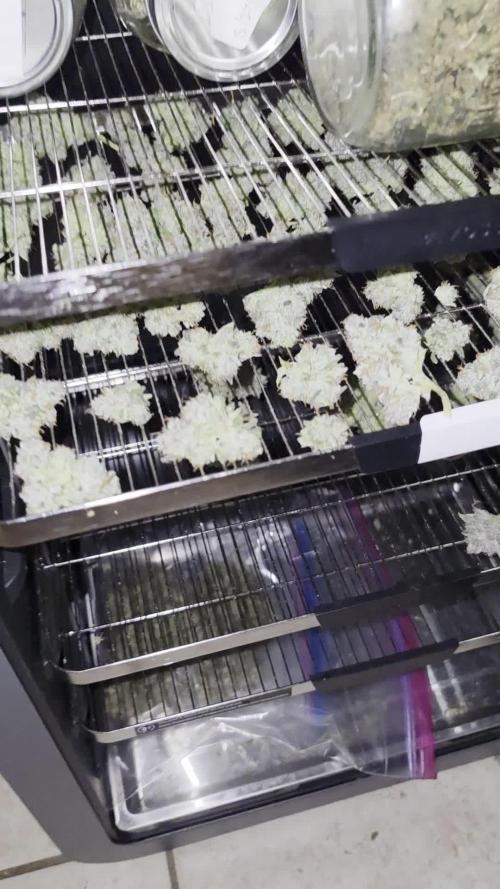
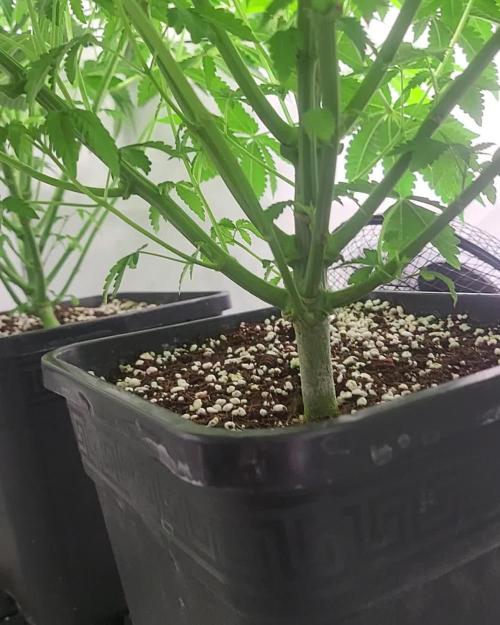
I had not finished updating this diary since I came back I show how it ended 💚👽 the girls got too big and the situation almost got out of hand ... but in the end everything went well and the harvest was endless! thanks to everyone who came to visit the diary🌱
Likes
2
Share
Α,α (alpha) and Ω,ω(omega) Here we grow again. LAST GROW. 344g+280g+445g+255g=1324g dry bud. Yielding 1,324 grams of dry cannabis using a 600W light in a 4x4 tent is exceptionally efficient. This breaks down to roughly 2.21 grams per watt, far exceeding the standard indoor benchmark of 1.0 g/W and outperforming elite professional targets (1.5–2.0 g/W). For carbon and energy efficiency, this output drastically lowers the carbon cost per gram compared to typical indoor grows. Achieving 1,324 grams (47.2 ounces) of dry cannabis from a 600W light in a 4x4 tent is exceptional, yielding roughly 2.21 grams per watt. This is an elite-tier result that reflects world-class photosynthetic conversion, highly optimized canopy light distribution, dialled-in CO2 supplementation, and precise environmental control. Growing 1.3kg of dry in a 2x2 with 1 plant is just being silly and not understanding how carbon and energy conversion works towards mass. Took 6 years and 10,000+ Hours to break the 2 grams-per-watt barrier not exactly 600W, in honesty, though—even with modern, high-efficiency LEDs—is an incredible feat that requires hitting the absolute genetic ceiling of the cultivar and maintaining flawless environmental parameters for the space. Photosynthesis is the literal conversion of light energy (photons) into chemical energy (carbohydrates). Leaf temperature, driven by radiation from fixtures and mitigated by latent heat of vaporization (transpiration), dictates metabolic rates. If your room's thermal dynamics are off, enzyme activity inside the plant stalls, grinding growth to a halt. Anyone else pretending to have done so with nothing but Plagron nutrients at 75F is telling porkie pies *cough*, otherwise known as a liar, liar with a bum that's on fire, but it seems that's the new norm these days on GD. *cough cough*. Using copper and zinc plates in the plant medium to form a natural earth battery to assist with Electrochemical Reactance. The moist soil acts as an electrolyte, while zinc serves as the anode and copper as the cathode. Zinc is a highly reactive metal and oxidizes, losing electrons into the soil. These electrons travel through an external wire to the copper plate. The moisture and dissolved salts in your plant medium allow charged ions to move freely between the plates, completing the circuit and generating a small direct current (usually between 0.8 and 1.1 volts). This micro-current subtly alters/the Electrical Conductivity (EC), allowing more effective breaking apart of chemical bonds in the soil (electrolysis), making soil nutrients like phosphorus, calcium, and potassium more accessible to roots. Buried the zinc plates around the sides of the plant pot's root zone and the copper plate in the middle. Ran an insulated copper wire above ground to connect the zinc plate to the copper plate, creating a closed loop. Making sure the soil remains perfectly moist and contains everything it needs; entirely distilled water or bone-dry medium will prevent ion exchange and block the current. Leave that up to the rhizosphere. Currently testing new parameters for a couple of weeks. Seeing what she can do with a new and upgraded ducting closed loop and double the water capacity. Also added 6kg of inoculated biochar along with a slew of small improvements. Keeping an eye on. Zinc toxicity vs. consumption, given how sacrificial zinc is. Want to make sure the biochar stabilizes first. A Synganic closed-loop bioengineering-logic grow room merges synthetic inputs (precision minerals/chelated nutrients) with an organic living soil matrix (microbial life/bio-stimulants), managed via automated, data-driven automation. Master Operating Procedure (MOP): The system balances a sterile environment with a thriving, dynamic rhizosphere, merging the biological resilience of living organic soil with the high-precision chemical control of modern Controlled Environment Agriculture (CEA). Synganic blends a biologically active living soil or microbe-rich substrate with targeted, low-dose mineral or synthetic fertigation to optimize both metabolic yield and secondary metabolite expression (terpenes/flavonoids). What else is alive! Eisenia fetida (Red Wigglers) will continuously process organic matter into plant-available nutrients and aerate the media. Stratiolaelaps scimitus (Hypoaspis mites) provides excellent biological control against fungus gnats and pupating thrips. Armadillidium vulgare (Pillbugs) excel at breaking down tough, woody organic matter and toxic heavy metals. New "Closed-Loop Sealing" Isolates the internal microclimate from external weather, vectors, and pests. Air is scrubbed 264nm UV-C, recirculated, and enriched rather than openly exhausted. Operational Parameters (MOP Framework). Microbes act as biological buffers for the mineral inputs, preventing salt toxicity and ensuring continuous nutrient availability. Precise management of Vapour Pressure Deficit (VPD) day and night to force optimal stomatal conductance without stressing the biological media. Strict clean-room protocols prevent pathogen intrusion while maintaining non-sterile, highly active beneficial bacteria and fungi populations in the root zone. Looking at a grow room as a closed-loop system changes everything. You aren't "growing a plant"; you are managing a mass and energy balance equation where the plant is a biological transducer. Every watt of light introduces sensible heat. Every drop of water turns into latent heat via transpiration. When a deficiency appears, a grower flushes or adds a bottle of "magic" additive. A master looks at the HVAC duty cycle, realizes the dew point spiked, the stomata closed, and calcium transport stalled due to lack of transpiration, not lack of nutrients. Protocol-driven logic can be automated, replicated, and optimized. Legacy growing and anecdotal habits fail the moment the room moisture volume changes. ADD CALMAG! Comprehensive Substrate Composition: Because why not. 1. Substrate Base & Aeration Media Expanded Clay Aggregates (Hydroton Pebbles) Coir Chunks & Horticultural Coco Coir Sphagnum Peat Moss Horticultural Perlite Horticultural Vermiculite Horticultural Pumice Volcanic Basalt Rock 2. Mineral Amendments & Soil Conditioners Agricultural Gypsum (Calcium Sulfate) Wollastonite (Calcium Silicate) Dolomitic Limestone (Calcium Magnesium Carbonate) Basalt Rock Dust (Trace Mineralizer) Azomite (Micronutrient-Rich Volcanic Ash) Glauconite (Greensand) Crushed Seashells (Calcium Carbonate Source) Pyrolyzed Carbon Feedstocks (Biochar & Horticultural Charcoal) Shungite (Carbonaceous Mineraloid) 3. Organic Nutrient Amendments Steamed Bone Meal (High Phosphorus) Dehydrated Blood Meal (High Nitrogen) Fish Bone Meal (Phosphorus & Trace Calcium) Cold-Processed Kelp Meal (Ascophyllum nodosum) Dehydrated Moringa Oleifera Powder (Botanical Nutrient) Spirulina Powder (Arthrospira platensis / Cyanobacteria Nutrient) Marine Crustacean Biomass (Shrimp & Crab Chitin) 4. Biological Inoculants & Organic Acids Mycorrhizal Fungi Inoculant (Endomycorrhizae / Ectomycorrhizae) Vermicompost (Premium Worm Castings) Humic & Fulvic Acids (Concentrated Humates) Soil-Plant-Atmosphere Continuum (SPAC): An ecological concept referring to the pathway of water moving from the soil, through the plant, and into the atmosphere. Humidity of the air dictates the moisture in the medium, which dictates the rate of pull from the terracotta stakes 15 in total. Terracotta (unglazed, low-fired clay) is highly porous, acting as a breathable, permeable membrane that transports water based on the moisture gradient between the potting medium (soil) and the surrounding air. White terracotta and brown terracotta often have different pore sizes and overall porosity, primarily driven by differences in clay composition, impurities, and firing temperatures. While both are considered porous, brown terracotta often has higher iron content and impurities that behave as fluxes, affecting how the pores form during firing, while white terracotta is generally derived from more refined clays, with smaller pores making it more suited to pure water. This mechanism is driven by capillary action and evaporation. When the surrounding soil is dry, the terracotta acts as a wick, pulling water out of the pot and into the soil. If the soil is very saturated, the terracotta absorbs water from the soil and allows it to evaporate from its outer surface, increasing the drying rate of the soil. Terracotta tends to keep the potting mix at an optimal saturation point, wicking up more water when the outside surface evaporates water into the air. The greater the difference in moisture between the soil and the outside air, the faster the water transfers through the ceramic. In low humidity and hot weather, the evaporation rate from the terracotta surface is high, creating a rapid drying effect. Newer terracotta pots often have a denser, lighter-toned structure that is less porous than traditional, red-orange terracotta, slowing down the moisture transfer rate. Over time, dissolved salts from fertilizer or tap water build up and block the pores, reducing the permeability of the clay. Water is all that is used or needed, thanks to the biochar and the massive storage bank of nutrients. Just waiting until something creeps up. Clay pot irrigation (Ollas), an ancient farming practice, utilizes this property by burying unglazed jars in the soil, allowing water to slowly seep into the surrounding soil only when the soil dries out. Remember to clean terracotta stakes in mild acid after each grow. Submerge the stakes in a solution of 1 part distilled white vinegar to 3 or 4 parts water. Let the stakes soak for 20 to 30 minutes. You will hear a fizzing sound as the acid reacts with and dissolves the mineral salts. Use a stiff-bristled brush or an old toothbrush to scrub away the loosened residue. Rinse the stake thoroughly in clean water to wash away any leftover vinegar. BOOM good for next grow! Indigenous Amazonians created, or at least significantly enhanced, the fertile, dark soil known as Terra Preta de Índio (Portuguese for "Indian Black Earth") by incorporating biochar and other organic materials into the soil. This anthropogenic (human-made) soil technique, which dates back roughly 2,500 to 8,000 years, allowed ancient civilizations to flourish in regions with naturally poor, acidic, and nutrient-poor tropical soils. Electrical Conductivity refers to how easily a material or solution allows electrons or ions to flow continuously when an electrical potential is applied. Electrochemical Reactance is the opposition to alternating current (AC) caused specifically by the temporary storage of energy in electric or magnetic fields, rather than energy being lost as heat. Reactance does not directly alter a material's intrinsic electrical conductivity. Instead, it dictates how the system stores and releases energy over time, which creates a temporary barrier to current flow in AC circuits. Together with resistance, reactance makes up total impedance. Electrical impedance (the combination of resistance and reactance) in the rhizosphere dictates how easily ions and water move into plant roots, directly impacting the Electron Transport Rate (ETR). High impedance restricts ion mobility, leading to nutrient deficiencies that decrease ETR and stunt overall plant growth. Electrolysis in the rhizosphere can reduce the direct ATP energy cost for a plant by electrochemically altering soil chemistry, changing pH gradients, and splitting or reducing compounds so that nutrients become easier to absorb or break down. Electrolysis uses an external electrical voltage to drive chemical reactions (like splitting water or reducing ions). This external electricity performs thermodynamic work on the soil solution. Rather than directly fueling plant enzymatic machinery or lowering biological ATP synthesis costs inside root cells, electrochemical reactions alter surrounding nutrient forms (e.g., changing pH, altering redox states, or breaking tight mineral bonds). By electrochemically making mineral ions more mobile or bioavailable, the plant may spend less root exudate carbon or membrane-transport ATP trying to scavenge locked nutrients, though the plant's baseline respiration and ATP costs for active uptake still apply. Laws of math are conceptual, laws of math are universal, the laws of math are invariant, and the laws of math are exceptionless. The laws of mathematics are the foundational rules that govern structure, quantity, space, and change. Unlike the laws of physics, which describe how our specific universe behaves, mathematical laws are absolute truths independent of physical reality. Think of electricity like highway traffic to easily understand the difference between the movement, the road, and the speed. •Electron Flow is the traffic (the cars moving). •Electrical Conductivity is the highway (how wide and smooth the road is). •Electron Transport Rate (ETR) is the speedometer (how many cars pass by per second). ETR stands for Electron Transport Rate. It measures the speed at which electrons are moved through the thylakoid membranes in a plant's chloroplasts during the light-dependent reactions of photosynthesis. Mass is effectively "congealed" energy. Energy is just numbers. Energy isn't a physical "substance" you can hold or touch. It is essentially an abstract, calculated number that we assign to a system to predict how it will change, interact, or move. A numerical label we attach to matter to track how it behaves. ATP (adenosine triphosphate) is the primary energy carrier in cells, including plant cells. It powers various cellular activities like nutrient uptake, protein synthesis, and cell division. Without ATP, the plant's metabolic machinery would grind to a halt, regardless of the presence of nutrients, oxygen, or carbon. Nutrients, like nitrogen, phosphorus, and potassium, are essential for building plant tissues and various molecules. They are incorporated into proteins, nucleic acids, and other vital compounds. While crucial, their uptake and utilization rely on ATP-driven processes. Oxygen is vital for cellular respiration, a process that generates ATP. While plants can produce ATP through photosynthesis, oxygen is essential for maximizing ATP production in mitochondria through oxidative phosphorylation. Carbon is the backbone of all organic molecules, including carbohydrates synthesized during photosynthesis. It's the fundamental building block of plant structures and fuels. However, its incorporation into organic molecules is also ATP-dependent. We don't grow we facilitate energy conversion. Everything is energy. Energy is represented by numbers. Numbers are frozen music. Music is moving sacred geometry of the Uni-verse.
Likes
24
Share
Ended up having to remove the bottom two fan leaves. Did not want to put the went complete yellow on me. Oh well. Right now I'm working on the exterior root. It is turning green so that's awesome. It's going to keep going. I think I will try to get it to make its way up the drain hole that way I can completely uncover it.
Processing
Likes
57
Share
this lady from the off set was the fastest growing and largest plant from the off set growing bushy with lots of leaves needing the biggest defoliation's too get that important light down too the many branches below, she is drinking about 8 pints of feed a week and loving life , and her bud production is also coming along nicely too , i cant wait too try this one ,
Likes
15
Share
Iniziamo un nuovo ciclo alla scoperta di nuove genetiche e nuovi sapori. Continuiamo crescendo a fare e condividere con voi nuove esperienze! Seguitemi e lasciate Like!! Happy growing!!
Likes
5
Share
Money maker strain was very satisfying. High THC. Made and smoked with love in 2017.
Likes
4
Share
Day 8 and she's growing fine! I slightly over watered her yesterday so she's got some bouncing back to do!
Likes
12
Share
This is final harvest week in the growroom Plants are coming down all around me. As always I strip the plants down and put them back under the lights for a few days then I cut them down a hang them by the toes until around 20% humidity which is still a little wet but I like to start the sweating early so it slows the drying down a little and starts the cure Thanks for stopping by and for following along with me on another grow.... Cyrus
Likes
25
Share
Likes
5
Share
@CalGonJim
Follow
12/16 MONDAY!! I nearly died from all the work yesterday........ Got ALL 7 ......but... I have never put spouts in dirt before....It took 6 hours to get the new tent setup for some reason and the tails got too long on the seeds........I didn't prepare right....did everything in one day instead of....well shreck..... New tent is AWESOME, CannaKan is AWESOME.... Re-using dirt AWESOME. I might be a little retarded. 🎉👍3am!! 4am!! 11am looks good. CBD not sure yet and one other but still the best Ive done so far! I had a seed from Dark Devil Auto by Sweetseeds that also didn't lose its shell on its own. I got that one off and it grew just fine. 1217 7am Just finished SEED SURGURY!!!🚨 Successfully!!!!!!!!! removed a stuck seed AND the impossibly thin skin coating preventing the sprout from opening!!! 9am looks great. 12pm ALL are GO!!!! I didn't get Gorilla Zkittlez planted right but she's coming around. 100 per cent success..... CANNAKAN Changes everything. As I get better at this I will be able to grow more plants. I get more enjoyment from growing lots of smaller different plants, I can do that so much easier now. IMPORTANT.... I ONLY buy dirt that is sealed airtight and made for INDOOR HERB, or lavender dirt. Sunrise Soil Herb is the best, I cant find it on amazon now. So CannaKan, Sunrise Soil Indoor Herb, and the best seeds in the world....WOW!!! 2pm CBD is looking great, but.....Garlic Muffin #3 must have hit something in the dirt maybe old nutrients, but I dont think she's going to make it. Maybe though. 12/18 12 am Garlic Muffin died....... Im going to do 2 more plants today. Probably Critical Kush to replace it. 11am. They are looking great!! I only lost 1. I didn't get them in the dirt soon enough, the one that died. Lesson learned. So excited I started a new grow!!! Fast Flowers this time. The new Spider Farmer Tent will be perfect for that, CannaKan what a difference!!!!! 12/19 1am All are looking great 12/20 4pm WOW they are all doing great!!!!
Likes
7
Share
@Coughy
Follow
Super lazy week... noticed some deficiency from only adding water a couple times this week. I’m a few days late in reservoir change. Vegging longer than I want but all good. 😎
Likes
7
Share
@viejo
Follow
16th June We're drawing to a close. I'm not sure how much longer there is to go, we're well into the expected 55-65 day flowering window at this point. It's about to shut. At this point my past plants would have some mild chlorosis from nutrient burn or lockout, or at least some yellowing of leaves this late into flower as the plant goes looking for resources. I think the huge volume of soil works as a magnificent buffer against common errors. I feel like she really filled out the space we gave her beautifully. Makes me wonder if topping maybe three times might have given us a very interesting result, and much better in terms of light intensity per bud. I'm used to some chlorosis as a sign I look for that the plant has decided we're at the end of the road. So far, we're evergreen from top to bottom. I'll have to rely on inspecting the individual trichomes for change. Speaking of the main cola, it's huge. It's fat, it's girthy. Weighty, even. It's a sight to behold. It's also full of mould. See photos, I tried to open things up a bit for the camera. None of the other flowers seem affected. I'm honestly not surprised in the least, but if I knew to open the bud up a bit I would have done so. Might not have succumbed to the creeping grey death. About half of it is salvageable from a hasty first assessment. Fingers crossed as always. Looking forward to sampling, not long now :):):)
Likes
14
Share
@BLAZED
Follow
Week 12 (17-4 to 23-4) 17-4 Temperature: 23.1 degrees (lights on) 19,1 degrees (lights off) Humidity: 62% (highest) 50% (lowest) 18-4 Temperature: 22.5 degrees (lights on) 17.9 degrees (lights off) Humidity: 61% (highest) 52% (lowest) Opened the reservoir for a couple of minutes. ec 1.4 ph 5.7 19-4 Temperature: 22.5 degrees (lights on) 18.4 degrees (lights off) Humidity: 64% (highest) 54% (lowest) No pictures. 20-4 Temperature: 24.1 degrees (lights on) 19.1 degrees (lights off) Humidity: 65% (highest) 54% (lowest) Light increased from 50% to 60% strength. I also made a new 10L feed, and added it to the reservoir, there was still 2850 ml in the reservoir, so i can calculate how much they get per watering. Opened the reservoir for a couple of minutes. 21-4 Temperature: 24.4 degrees (lights on) 19.3 degrees (lights off) Humidity: 66% (highest) 54% (lowest) No pictures. 22-4 Temperature: 23.7 degrees (lights on) 19.7 degrees (lights off) Humidity: 67% (highest) 42% (lowest) Opened the reservoir for a couple of minutes. 23-4 Temperature: 23.6 degrees (lights on) 17.7 degrees (lights off) Humidity: 64% (highest) 50% (lowest)
Likes
77
Share
These girls are smelling amazing! I'm so excited about the purple Zkittlez phenotype! It's the dominant smell in the grow space. I flushed each plant with pure filtered water @ 6.25pH
Likes
5
Share
@VividLeaf
Follow
More updates to arrive at the end of the week.
Likes
Comments
Share
This week was so mixed with the ladies and the heat issue we had this week. Cherry Bomb seemed to be the only one who didn't care that it got hot the rest have burned leaves from the heat. But they all are bouncing back and should be looking better over the next week.
Likes
1
Share
Woche 5 – Start der Vorblüte & explosive Entwicklung Die fünfte Woche beginnt mit einem deutlichen Wachstumsschub und den ersten sichtbaren Anzeichen der Vorblüte. Besonders die GMO Cookies zeigt bereits erste Blütenansätze – ein klares Zeichen, dass der Run jetzt in die nächste Phase übergeht. ⸻ 📊 Umweltbedingungen • 🌡️ Temperatur: konstant ~22–23°C • 💧 Luftfeuchtigkeit: 55–65% • 🌬️ VPD: stabil bei ~1.0–1.2 • 🌱 Bodentemperatur: ~21–23°C • ⚡ EC: leichter Anstieg seit Top-Dressing (28.03.) 👉 Setup läuft weiterhin extrem stabil im Optimalbereich ⸻ 💡 Setup & Maßnahmen • Licht aktuell bei ~60% • Abstand: ~40–50 cm (nach Stretch angepasst) • Gießen: 500 ml pro Topf (pH 6,3) 👉 Wasserverbrauch zieht jetzt deutlich an → Pflanzen arbeiten sichtbar stärker ⸻ 🌿 Pflanzenentwicklung Das Wachstum hat sich innerhalb weniger Tage stark beschleunigt: • kräftige Seitentriebe entwickeln sich jetzt sichtbar nach oben • das Canopy beginnt sich zu schließen • Struktur wird zunehmend gleichmäßiger 👉 klassische explosive Phase vor der Blüte ⸻ 🔥 Einzelbetrachtung Top Performer: • GMO Cookies (erste Vorblüte sichtbar 🔥) • Hyperion / Blueberry → buschig, kräftig, sehr gute Verzweigung Solide Entwicklung: • Runtz → etwas mehr Stretch, wächst aber gleichmäßig weiter Purple Punch: → kompakter Indica-Pheno → dicke, fleischige Blätter → bleibt niedriger, entwickelt aber stabile Struktur 👉 kein Rückstand, sondern genetischer Unterschied ⸻ 🌱 Düngung • Greenhouse Bio Feeding (~3g/L) um Tag ~24 eingearbeitet (45g pro Topf) • Wirkung jetzt klar sichtbar im Wachstum ⸻ 🧠 Einschätzung Der Run läuft aktuell sehr sauber und kontrolliert. Alle Parameter greifen ineinander, keine Anzeichen für Stress oder Mängel. 👉 Übergang in die Vorblüte ist voll im Gange 👉 Struktur entscheidet sich jetzt für die Blütephase ⸻ 🚀 Ausblick (Mitte Woche 5) • weiteres schnelles Wachstum • mehr Pflanzen werden Vorblüte zeigen • Höhenunterschiede werden deutlicher 👉 Fokus: • Licht schrittweise erhöhen • Gießmenge weiter anpassen • Canopy beobachten
Likes
2
Share
@Fyno_TH
Follow
Strong vegetative growth with vibrant green fan leaves
Likes
149
Share
Hi all the happy people here in GrowDiaries. This is my second cultivation ever and it will be fun to try a bigger space than my closet grow. First, I'm just going to say I'm done with the construction of my new growroom. I put some pictures on the construction here in week one. The room is 2.14 meters by 1.7 meters and has a ceiling height of 2 meters. It provides a floor area of ​​3.6 square meters. I use a 54 Watt Lightwawe T5 for germination and 2 Pcs 400 Watt HPS lamps. I have a channel fan that replaces the room air about 40 times an hour to get a comfortable theme in the room, the air enters a fresh air intake from the outside. The air is purified through a carbon filter to then leave the room to the rest of the basement. Then I use that heat to heat the rest of the basement. I will use 8 pcs 15 liter Autopots to grow with and a 100 liter water tank that supplies the pots of water and nutrition. I will grow completely organically in soil and will watercure my buds to get the best possible medicine for me. But there are no cultivation rooms to be displayed here, so I continue with what is most important. Today I have put my seeds in my moisture dome and hope the seeds have germinated within a few days. I am very excited to see how the new growroom will work and how this Blue cheese Auto from Royal queen seeds will turn out. Blue Cheese automatic cannabis seeds are a cross of Blueberry Automatic and Cheese Automatic that has been perfected over five years of breeding and careful selection. The result is a feminized, autoflowering strain with superior yield, flavor, and effects to either of its distinguished parent strains. THC: 16% CBD: Low Yield Indoor : 325 - 375 gr/m2 Yield Outdoor: 60 - 110 gr/plant Height Indoor: 40 - 70 cm Height Outdoor: 60 - 110 cm Flowering: 7 - 8 weeks Harvest month: 9-10 weeks after planting Genetic Background: Blueberry x Cheese x Ruderalis Type: Sa 35% In 40% Ru 25% Effect: Cerebral and uplifting Climate: Mild .............................................................................................................................................................................................................................................................................................................................................. Update 2017-08-15. All 4 seeds have germinated and planted in small pots inside the humidity dome. I'm so glad it worked so well and now it's just hoping they'll start growing and become 4 big healthy girls :) ............................................................................................................................................................................................................................................................................................................................................... Update 2017-08-16. I have mixed my own soil today. Its 40% sieved peat harrow H2-H4 0-30 mm, 45% sieved peat harrow H4-H6 0-30 mm. 5% sand and 10% of compost soil. And i use 15% of perilite and mix it all together. ................................................................................................................................................................................................................................................................................................................................................ Update 2017-08.20. Nr1 and 2 grow and thrive. Number 3 just got rid of the seedpod and is folding out the sheets. Number 4 is a bit shy and can only be seen if you look carefully into the soil. ......................................................................................................................................................................................................................................................................................................................................... Update 2017-08-21. Nr 1 and 2 is doing well. Nr3 is trying to catch up and Nr4 is still shy. -------------------------------------------------------------------------------------------------------------------------------------------------------------------------------------------------------- 2017-08-23. Transplanted 2 girls from humidity dome and the small germinating pots to 15 liter autopots. The other 2 girls have to wait a little more before transplant to the autopots. ................................................................................................................................................................................................................................................................................................................................................................................ 2017-08-27. The girls have settled in to there new home of the 15 liters autopot after a little transplant chock. Now the real week 1 starts for me and the girls. -------------------------------------------------------------------------------------------------------------------------------------------------------------------------------------------------------- 2017-08-28. New pic and movies. --------------------------------------------------------------------------------------------------------------------------------------------------------------------------------------- 2017-08-28. Nr3 is transplanted in 15 liter autopot. ------------------------------------------------------------------------------------------------------------------------------------------------------------------------------- 2017-08-29. New movie of the girls. Its no water for 3 days now for Nr1 and 2 so the roots develop more and match the plant above the soil. The temp controlled fan is awesome, its easy to set what temp you like to have in the room. Right now its 28 celcius. And humidity is 56%. ------------------------------------------------------------------------------------------------------------------------------------------------------------------------------------------ 2017-08-29. Hello to you who read my diary, I just want to say that I am pleased that you have chosen to check in with me and in my diary. I just want to say that I do this for myself and for a steady flow of my medicine. Everything you read and see in my diary is 100% honest and I will never distort or beautify anything here. I document my crops so that I can learn from my mistakes and also to look back at those different crops. I try to update with pictures every day and with text if something special has happened in the garden. This is my strainhunt for the best medicine and the beginning of my journey with cannabis and the cultivation of it. ----------------------------------------------------------------------------------------------------------------------------------------------------------------------- 2017-08-30. Cleaned the room this morning, just vacuuming and cleaning with chlorine solution. Im testing the fan to control temp and humidity, it works great. Added some pics with measurements and movie. Everything is looking great right now. --------------------------------------------------------------------------------------------------------------------------------------------------------------------------- 2017-08-31. New pics and videos. --------------------------------------------------------------------------------------------------------------------------------------------------------------------------------- 2017-09-01. New pics and videos. Gave each of the girls with 2 ml Alg-A-Mic, 4ml Bio-Grow, 4ml Bio-Heaven and 10 ml Formulex mixed in 2 liters of water. I hope they like it :) ------------------------------------------------------------------------------------------------------------------------------------------------------------------------------------------------------------------------------------------- 2017-09-02. New pics and the girls liked the water and nutrients yesterday. ------------------------------------------------------------------------------------------------------------- 2017-09-03. New videos of the girls this morning. Nr1 and 3 looks great and nr 2 is looking a little funny, maby a little stressed. Kl. 16.00. Did some defoliation on the girls. Added video. Kl.. 23.00. New videos, defoliation and leaftucking. -----------------------------------------------------------------------------------------------------------------