


Likes
Comments
Share


@Gery21
Follow
I had bad luck, or beter I didn’t keep the rain out of the structure.
So unfortunately the lady’s did get wet! We had a lot of rain after a great summer.
I think if I didn’t had rotten flowering 800 gram per plant was normal yield!
It is a great plant verry easy to grow and a big yield!
I like the seeds of high-Seeds!
Its a great supplier!
This year a couple of diverent lady’s!
Whit a new growhouse.


Likes
22
Share


@J_diaz420
Follow
Muy olorosa genética, me encantó mucho, termino de engordar al 100% los cálices absorbiendo los postilos de las flores y eso para mi es muy importante, muy agradable al fumar con un efecto inmediato apto para el día a mi pensar ya que su efecto se nota mucho pero no es para dejarte tumbado si no que con mucho ánimo en fin muy agradable para conectar tu mente a la música que es algo que me encanta al fumar, en fin muy fácil de cultivar, crece mucho así que procura dar poca vegetación, creo que yo me excedí un poco, y no olvidar alimentar a tiempo ya que beben mucho.
Realmente contento con esta experiencia
Muchas gracias por pasar y felices cultivos!!

Likes
53
Share

@Green_Claws
Follow
🗓️ Week 6 (Flower): Sticky Broccoli #1 — The Chromatic Transition & The 10ml/L Seaweed Offensive 🍋🌋
The Data Dump: We have officially hit the Week 6 milestone, and the Sativa-dominant Sticky Broccoli #1 is putting on a masterclass in late-stage floral maturation. We are moving past the "growth" phase and into a high-intensity period of secondary metabolite synthesis and biomass consolidation.
🎨 The Chromatic Spectrum: Terminal Senescence
The Autumnal Fade: The canopy is currently undergoing a stunning physiological shift. We are seeing a spectrum of yellows, oranges, and deep reds. This is more than just a "fade"—it’s the degradation of chlorophyll unmasking the plant's latent anthocyanins and carotenoids.
Nutrient Translocation: This color shift confirms that the plant is strategically cannibalizing its remaining mobile nutrient reserves and relocating that vital energy into the swelling floral clusters. It’s the ultimate "last stand" to maximize bud density.
🍋 Terpene Profile & Resin Saturation
The Limonene Surge: The olfactory intensity has reached a critical level. We are dealing with an aggressive, dominant citrus profile—a sharp, "lemon-cleaner" punch that signals a massive concentration of Limonene.
Trichome Lamination: The sugar leaves are officially "dripping." Instead of just a light frost, we are seeing a total saturation of glandular capitate-stalked trichomes. The resin is so thick it’s practically laminating the floral surfaces, creating a protective barrier of pure potency.
The 10ml/L Phytohormonal Blitz
We’ve made a bold tactical adjustment by pushing the Cold-Pressed Seaweed Juice to a massive 10ml/L.
The Logic: At this concentration, we aren't just "feeding" the plant; we are overwhelming the Rhizosphere with complex carbohydrates and cytokinins. This acts as a biological "turbocharger" for our Microbe Army.
Metabolic Support: By super-charging the soil life, we ensure the Green Sensation and FFJ are being processed and delivered with zero latency. This keeps the metabolic "gears" turning even as the plant enters its final autumnal phase.
🚀 Strategic Forecast: Structural Consolidation
We are ignoring the trichome color for now—it's far too early for cloudy/amber data. Instead, we are monitoring structural markers:
Calyx Swell: Watching for the individual calyxes to "crown" and harden, merging the loose stacks into solid blocks of flower mass.
Pistil Recession: The engine stays at full throttle as long as we see those active, bright white pistils. Once they begin to recede and wither, we'll know we're in the endgame.
💧 The Week 6 High-Octane Cocktail (Per Liter)
🌊 Seaweed Juice: 10ml/L (The Metabolic Catalyst)
🍌 Banana & Jaggery FFJ: 4ml/L (Organic P/K Energy)
💥 Green Sensation: 1ml/L (Mineral P/K for Density)
🍯 Sugar Royal: 1ml/L (Amino-driven Resin Synthesis)
🌸 Power Buds: 1ml/L (Bio-stimulant for Stacking)
Silica Tea: 2ml/L (Vascular Armor)
CalMag Boost: 1ml/L (Secondary Nutrient Buffer).
Thank for stopping by ✌️💚

Likes
148
Share


@BioBuds
Follow
She truly might be becoming the Gorilla that was promised, huge leaves. Not as pungent or bushy as the Orange Hill beside her but she seems to get there. I'm finally seeing some exponential growth, I'm going to give them as much rest as I can coming weeks to maximize growth before flowering and to prevent (hopefully) them going hermie on me, which both Gorillas and Orange Hill Special are prone to.
I have made a video to thank them for letting me use their SP-3000. What a beast of a light!! Thanks again @MarsHydroLED for letting me test this awesome light!
I have made a new layer of topsoil made of organic coco-peat, which should help me prevent more fungus gnats. They already seem to hate it and are wandering around in agony trying to dig in... Good for them, freeloading beastards.
Now we go to flowering coming weeks, and I can't wait... Thanks for checking in and the likes and support!

Likes
15
Share


@Ketamascience
Follow
El crecimiento ya esta cogiendo ritmo. Desde que cambie la tierra por una mezcla de turba-60% y perlita-40%, no solo ha mejorado la retención de agua sino que ahora se evapora mucho menos, cosa que se agradece en un cultivo exterior donde la incidencia de la luz solar directa es tan fuerte junto a una temperatura tan alta en el ambiente.
Feliz cultivo y buenos humos compañeros.

Likes
Comments
Share

@Growfather1
Follow
Hello everyone,
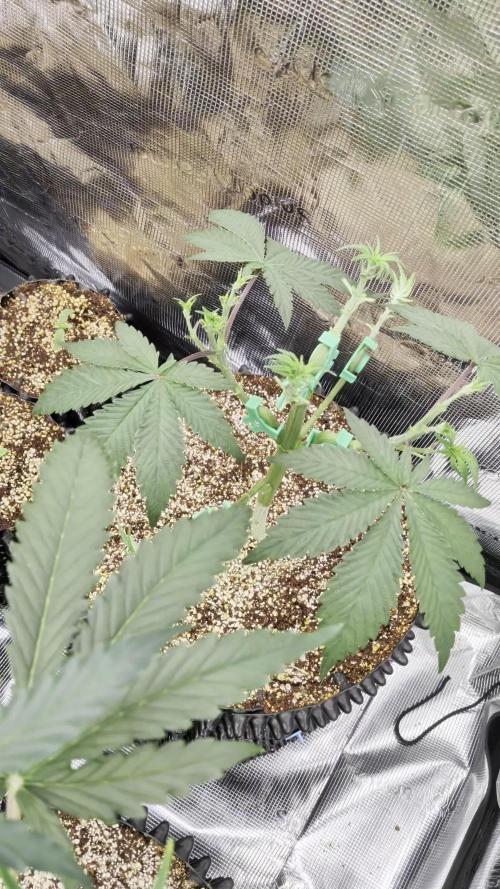
Week 5 is going okay i gave her a good haircut 💇♀️ removed leaves and internodes and made a video that refuses to upload tried many times but kept getting the error notification.
I will switch to flower in week 7 i need her to develop more roots.
Thanks for stopping by and have a nice day.
Growfather


Likes
2
Share


@Ultraviolet_
Follow
Topped once, turned off IR @ nights, slowed vertical growth back down, and took off both of the very lowest internodes on each plant.
Eisenia fetida
Stratiolaelaps scimitus
Armadillidium vulgare
Red wigglers (Eisenia fetida) are highly beneficial. They are considered an ideal choice for "no-till" or container-based organic growing because they live in the upper layers of soil, feeding on organic mulch rather than the plant's root system. Red wigglers accelerate the breakdown of organic amendments and produce high-quality, nutrient-dense worm castings directly in the root zone. Clover is another exceptional component of an organic rhizosphere, offering a sustainable, self-sustaining alternative to synthetic nitrogen fertilizers produced via the energy-intensive Haber-Bosch process. By forming a symbiotic relationship with Rhizobia bacteria, clover converts atmospheric nitrogen N2 into ammonium NH4, providing a steady, slow-release nutrient source that enhances soil health and reduces environmental impacts. Red clover offers superior nitrogen fixation and biomass production compared to white or yellow clover, making it the premier choice for maximum soil vitality, particularly for improving soil structure and providing a high-volume nitrogen credit for subsequent crops.
If it is fully functional and efficient soil, the rhizophagy cycle is superior long-term than any synthetic delivery when it comes to preventing deficiencies, not because it's "better," per se. The medium will require a very high CEC to make it to harvest without re-fertilization. The rhizosphere acts as a dynamic, interactive exchange where plants and soil microbes trade resources based on immediate needs. When a plant lacks a specific nutrient, it changes its physiology and releases specialized chemical cocktails—root exudates—into the surrounding soil. These exudates, which include sugars, amino acids, and organic acids, serve as a "shopping list" to attract specific microorganisms, which in turn return higher levels of desired nutrients. There is nothing in comparison when using synthetic delivery, which can cause plants to stop producing exudates, effectively "starving" the beneficial soil life, over time turning the soil barren and void of microbial life. Responsible use, applying the right amount at the right time, can minimize these negative effects. Relying solely on synthetic fertilizers without replenishing organic matter is what typically leads to exhausted soil. The use of synthetic fertilizers can utilize the Cation Exchange Capacity (CEC) of the soil, but without a robust rhizosphere and active microorganisms, the efficiency of this process is significantly reduced. This makes synthetic growing more difficult to prevent deficiencies overall compared to an efficient organic living soil with a robust rhizophagy cycle, as there is no "one size, fits all" when it comes to different nutrient profiles of strains/genetics, making it trickier to "guess" and prevent creeping deficiencies.
CEC does not contribute towards EC. Add more CEC using biochar, problem solved. If you keep pH between 6.3 and 6.7, hydrogen is exudated to cycle the medium's CEC for its needs. Keeping the pH between 6.3 and 6.7 creates an environment where plants release H+ to displace positively charged nutrients (like Ca2+, Mg2+, K+ held on soil particles or within artificial media this cycle through nutrients via the medium's Cation Exchange Capacity (CEC)
Microorganisms generate a stable potential of approximately 0.5 V EC. The rhizosphere creates its own food, similarly to chelation, using 1000's of varying combinations to create its own food.
Start to finish, just add water. Eventually, more materials will need to be added at the beginning of each new grow, but very attainable to go from seed to harvest without ever fertilizing.
ATP is important when it comes to biomass accumulation. Cellular root respiration and cellular respiration are essentially the same biological process, the breakdown of glucose to create usable energy (ATP) in the presence of oxygen, just taking place in different parts of the plant. Synthetic (salt-based) grows have significantly lower levels of total rhizosphere respiration, often referred to as root-zone activity, compared to organic living soil grows. While the plant roots themselves may respire in both systems, the surrounding soil ecosystem in a living soil setup is vastly more active, teeming with bacteria, fungi, and beneficial microorganisms.
2 pools of ATP, it won't double in growth buuuut, but improving root respiration by ensuring high oxygen in the soil is crucial. Good aeration ensures roots can fully utilize glucose to generate the ATP necessary for nutrient uptake, leading to healthier and more productive plants, even if growth isn't exactly doubled. The ATP created using root respiration is dedicated to rootzone growth; the ATP created using regular cellular respiration in a synthetic system would have to dedicate a lot of ATP to the roots when there is little or no root respiration. It's true that there is less of an initial ATP cost in breakdown when nutrients are already in their final form (synthetic), but you lose a solid chunk of ATP when the entire plant is reliant on cellular respiration alone; a large portion of ATP is dedicated to root zones for "forced" nutrient uptake rather than traded. Making it overall less efficient, even if the initial cost of breakdown is higher. Not sure if I butchered that but one can hope It makes sense.
Oxygen is of critical importance when growing in living soil compared to synthetic soil because it supports the metabolic needs of the microbial, fungal, and insect ecosystem, rather than just the root respiration required by the plant itself. While synthetic grows can survive in lower-oxygen environments with precise mineral feeding, living soil systems rely on aerobic microbes to decompose organic matter (microbial mineralization) to create plant-available nutrients, which is an oxygen-intensive process. While a specific fair percentage is difficult to guess, my experience points to a massive, compound difference between the two methods and the amount of oxygen required. All the ATP spared is used on more biomass, not only that, but the extra root respiration can achieve a much higher CO2 compensation point naturally than you could with synthetic and atmospheric CO2 alone.
As a plant grows faster and increases in size, its demand for nutrients to support that growth increases, requiring a higher rate of nutrient uptake. As plants enter phases of rapid vegetative/floral growth, their metabolic demand for nutrients increases exponentially. Without a robust buffer zone—whether in the soil (cation exchange capacity) or in a hydroponic reservoir—deficiencies will occur rapidly because the instantaneous demand for specific nutrients can quickly exceed the rate of supply.
A growing body of evidence suggests that organic living soil provides superior long-term soil health and environmental benefits compared to synthetic fertilizers, which are often criticized for promoting a cycle of dependency and degradation. While synthetic fertilizers offer short-term convenience and high yields, they often come at the expense of long-term soil health, sustainability, and increased corporate control over growers/ farmers. Organic living soil, while slower and requiring more care to establish, creates a sustainable, resilient, and, ultimately, more fertile environment.
We don't really grow; we facilitate energy conversions, and energy is just numbers. Because the universe works the same way today as it did yesterday, there is a single, fundamental mathematical quantity that remains constant. We call this quantity energy. You cannot put "energy" under a microscope. You observe matter and forces (like heat, motion, or light), but energy is just a scalar number calculated to help predict how these things will change and interact. When an object falls, or when a battery powers your phone, matter shifts and changes form. Through it all, the universe ensures the "total score" of the numbers remains exactly the same.
Once all water is removed, approximately 95% to 97% of a plant’s dry matter consists of carbon, oxygen, and hydrogen. These three elements form the structural backbone of all plants. NPK & all the rest 3-5%.
Indigenous Amazonians created, or at least significantly enhanced, the fertile, dark soil known as Terra Preta de Índio (Portuguese for "Indian Black Earth") by incorporating biochar and other organic materials into the soil. This anthropogenic (human-made) soil technique, which dates back roughly 2,500 to 8,000 years, allowed ancient civilizations to flourish in regions with naturally poor, acidic, and nutrient-poor tropical soils.

Likes
6
Share


@Weedman268
Follow
Week 7 of flower,room is a bit to cold but they are very close to finishing. 👍🏾
Likes
3
Share


@Unculti_responsable
Follow
La primer semana se flora vinene muy bien , fertilizamos unas semanas antes con fertis de pre flora , a los 15 días vamos a hacer el último riego foliar con ferstis y un riego con guano de murciélago con melaza para mejores resultados

Likes
9
Share


@Darth_Cha
Follow
Day 15 (7/1) - I missed day 14 but here are some hopefully good pictures of Day 15. First day of week 3 since sprout! I decided to FIM the CP just because it was growing so much taller than the XLK. I added a picture if the result. The FIMing actually took place on Day 14 so these photos are 1 day after.
The XLK is staying low and getting a little bushy under rather but it’s still thriving so far. I still have not fed the plants anything other water with calmag added then PHed out so far. I think this one is going to be really compact. I don’t want to star real LST on it yet due to its low height. It’s about 4-5 inches.
CP is thriving the day after its FIM session. The growth looks good to me..?? I don’t honestly know or have any experience to go off of. It grew a little taller and I was able to adjust the tie on it so more underleaf was exposed. This all took place on day 14. These pictures are the result. I like how much new green I see under after just one night.
Day 17 (7/3) - Provided a few updated pictures. I won’t be able to provide another update until Sunday night so I will be posting another video at that time. FIMing has produced a lot of new growth in the lower nodes as I read it should do. I’m glad that it seems like the process went well. We will see how much they’ve grown on day 19.
Day 20 (7/6) - I was away from the grow for a few days longer than I thought I would be but they still seem to be doing their thing. The soil was dry but that’s only about two or three days worth of drying out which is completely fine and the humidity was a little low but when I got back I refillEd the humidifier and everything seems to be going smoothly. Tomorrow will be the last day of week three and then after week four. I hope to see some height from these cause the tallest is still at about 6 inches due to LST.

Likes
5
Share


@Ninjabuds
Follow
My Skunk Apple plant's a little behind the others. I think it started flowering a couple weeks later. It's a smaller plant, but it's finally starting to fill out. I'm guessing I've got maybe two weeks left before it's ready to chop.
The past week has been awesome for drying my plants. The weather's been perfect – nice and dry, with just enough breeze to keep things moving. I finally got around to chopping down those two big plants I've been meaning to trim. They're almost ready, just need a little more time to dry out completely. I can't wait to see how they turned out.
Likes
17
Share


@akroaster
Follow
Cold water on 4/21 and 4/19. Will water one more time 4/23, lights off 4/26, cut down planned 4/28
Likes
18
Share


@Luca90
Follow
Back to lst, my homemade scrog wasn’t too good so I decided to order a professional one for the next grow in the meanwhile I tide them back doing lst
Also now they are really growing bigger and bigger
Again not sure if I’m doing a good job only time will speak
Got a microscope posted a pic and video of how my watermelon is doing with its flowers, the northern light is still not in full flower but its switching
Likes
44
Share


@Roberts
Follow
Casey's Rollex OG sprouted on the second seed. The husk was caught on the leaf, and was wet. Which caused the burn from the light on the tip. Regardless she is started and doing okay. She is still very young. Nothing more to report yet. Thank you DutchFem Seeds, and Spider Farmer. 🤜🏻🤛🏻🌱🌱🌱
Thank you grow diaries community for the 👇likes👇, follows, comments, and subscriptions on my YouTube channel👇. ❄️🌱🍻
Happy Growing 🌱🌱🌱
https://youtube.com/channel/UCAhN7yRzWLpcaRHhMIQ7X4g

Processing
Likes
13
Share


@Prozak
Follow
to mutch cold here 2 week with low temps at night cicle betwen 12 &16 graus in europe.
maybe this is the reason of that purple orange colors (:


Likes
7
Share


@Canna_Enthusiast
Follow
Sadly I’ve discovered some rootrot.
The PH dropped to 5.2 within one day, I measure PH daily and already noticed some deficiency in the old leaves.
I immediately checked the roots and discovered slimey brown gunk on my roots.
Decided to cut all the gunk off and clean and sterilize the resivoir.
Placed the plant in quarantine with very low light to let the plant focus on recovery and root building instead of growth.
This rotting situation will probably set me back for 2/3 weeks but I expect the plant to comeback fine.

Likes
2
Share

@GreenEldritchGardens
Follow
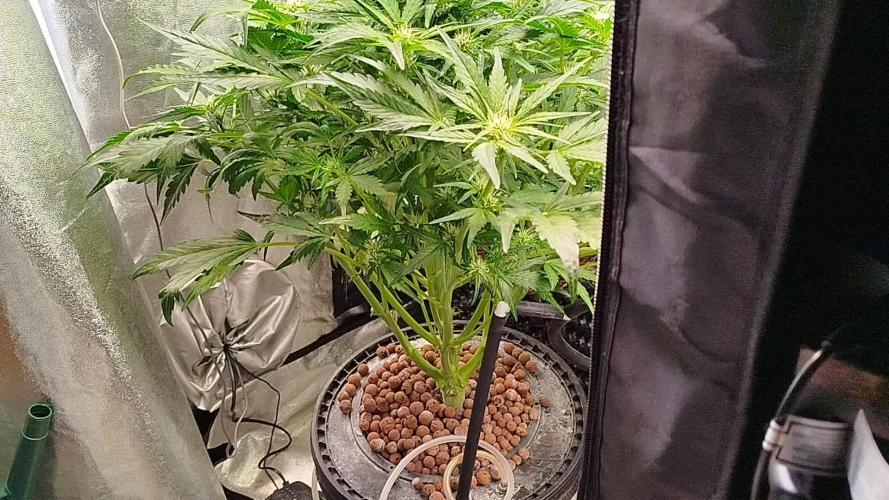
Some top defoliation as needed because of high humidity.
She is growing very wide now she has a bit more space, very bushy as previous grows on soil. Also she drank a lot this week, had to fill the pot almost twice.
Another interesting thing from my soil grows with this strain was that she had some yellowing in the second week of flower, now on DWC no signs of deficiency at all.
Going well let's get fat next week
Likes
9
Share


@L8bloomr1008
Follow
Happy girls. Buds swelling nicely. Got the frosties poppin off.
They’re loving the fish shit.
The GWK passed DG in height this week and just starting her buds. Week 5 for her.
