


Likes
Comments
Share


@Rastaluna
Follow
Planties are getting bushier :3
This week we focused on LST, providing as much light so smaller tops could reach the size of bigger ones.
We raised the light cause NL started showing signs it didnt like being close to the light, but also saw some other issues, tips of canna leafs started to yellow, about a week and a half ago we fed them some nutrience, home made organic and also a mix. So now im not really sure from what caused the yellowing tips. Nutriante deficiancy? Nutrient burn? Light?
Taking now a closer look, to see upcoming signs that would make this situation clearer.
Apart from yellowing leafs, the smell(rrrlll goood) becomes more noticable, its nice coming to the tent, feels like youre high from growing nature :=)
We topped speedy chille and took of yellowing leafs, she really liked it and is now growing 4 tops

Likes
6
Share


@Onlygrow99
Follow
Empezamos nuevo cultivo de semillas GBSTRAINS debo decir que no son las que pone dado que hasta Marzo no salen a la venta y no puedo publicarlas aun jejejej
Por otra parte todo lo demás 100% tal cual.
Se empezo a germinar el 09/02/24
Sustrato GBNUTRIENTS + Fertilizantes BOOM Nutrients + luminaria LED 780W RESINX GBLIGHTING
Técnica de cultivo sencilla con poda de bajos y en "strech" de flora una buena de poda da ramas bajas que no tienen luz + brotes bajeros sin luz.
Expresión natural de la planta con porra central + satélites en macetas de 1L con trasplante a 7L definitivo.
Serán 9 macetas definitivas de 7L para 120x120 con 780w LED
Vamos para alla.
**ACTUALIZADO**
26/02/24 Nuevas fotos con 17 días desde que se empezaron a germinar y, a partir de este próximo miércoles 28/02/24 empezamos a contar 1º semana de crecimiento.
Likes
7
Share

@DogDoctorOfficial
Follow
🌺 Week 1 Flower – Full Speed Into Bloom
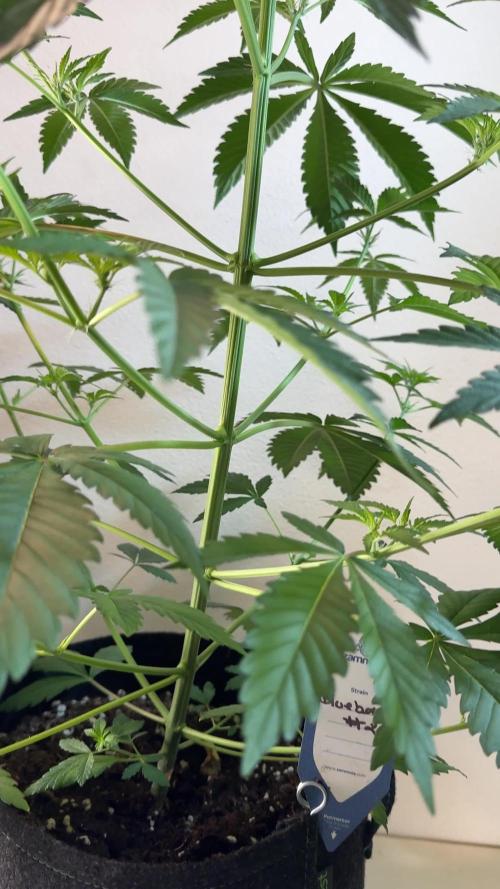
Grower’s Journal – BlueBerry by Zamnesia Seeds | Entry 006
The shift has begun, and our BlueBerry girls didn’t wait for permission.
By the end of the week, they were already showing pistils popping and bud sites forming, not just the promise of flowers, but flowers beginning to shape up already.
We’re still in what some would call pre-flower, but let’s be honest:
These girls are on the move.
⸻
🌱 Structure, Height & Symmetry
Both girls are clocking in around 57 cm, with near-mirror symmetry in structure and development.
Their growth is tight, lush, and beautifully balanced, like they were clones of each other.
📣 Shout out to Zamnesia
This is what great genetics look like.
Stability, vigor, and uniformity that shows their heritage proudly.
⸻
🌍 Genetic Roots – A Quick Nod to the Legend
We touched on it before, but it’s worth a reminder, BlueBerry is more than a name. It’s a landrace-influenced legend, blending Thai, Afghan, and Purple heritage into a profile that’s nostalgic, rich, and full of stories.
This isn’t just a plant.
It’s a revival of history, growing in a modern tent.
⸻
Nutrient Transition – Start Booster Out, Top Booster In
As we move into flower, we’ve adjusted the feeding plan accordingly:
🌼 Current Feed (per liter):
• Regulator – 0.15 ml
• CalMag Boost – 0.25 ml
• 💧 All-in-One Liquid – 1 ml
• Top Booster – 0.25 ml (NEW this week)
Why Top Booster now?
Because with bud sites forming, we’re shifting the nutrient profile to support:
• Phosphorus + Potassium demands
• Bloom hormone signaling
• Tight flower stacking
It’s a small change, but the timing is everything.
And the girls are loving it.
⸻
Environmental Stats – Riding the Heat Wave
• Room Temp: 31°C
• Humidity: 50.3%
• VPD: 2.23 kPa
Yes, it’s a little high—but we’re monitoring closely.
Plants are adapting well, leaves are still perky and expressive, and the structure remains lush.
✅ Coming soon:
AC unit incoming to help dial this environment into a more stable and optimal range. Until then, the genetics are showing great resilience.
⸻
💨 Airflow, Extractions & Gear Overview
Even with summer heat, airflow remains dialed:
• Exhaust:
• 6” Spider Farmer inline with carbon filter — managed via Spider Farmer GGS Controller
• 6” AeroFan inline with carbon filter — connected to TrolMaster Tent-X
• Intake:
• 6” fresh air intake, passive-cooled and filtered
• 💡 Lighting:
• Black Series 600 LED (Zone 1)
• ThinkGrow Model One LEDs (Zone 2)
Both managed by TrolMaster ecosystem, alongside:
• 🧠 CO₂ Sensors
• Temp/Humidity Probes
• 💡 PPFD Sensors for real-time light data
📹 Video Room Tour Available
We’ve uploaded a generic grow room tour this week, showcasing the entire grow setup, including gear, layout, controllers, and environment flow.
⸻
🌸 What’s Next – Stretch & Structure
We expect:
• Stretch to continue in the next 10–14 days
• Node stacking to tighten
• Early trichome shimmer possibly appearing toward Week 2–3
This is a critical window for:
• Monitoring internode spacing
• Light height and spectrum adjustment
• Fine-tuning VPD as flowering kicks into high gear
⸻
🚫 What Not to Expect Yet:
• No defoliation or major training—structure is too delicate right now
• No aggressive boosts—flower development is just beginning
• No topping or stress—focus is now on upward and outward bloom formation
⸻
💬 Final Thoughts – BlueBerries in Bloom
This run has always been about balance:
Classic genetics. Modern precision. Beautiful biology.
With pistils out and the tent full of energy, it’s time to watch this legendary strain write her next chapter.
From landrace roots to LED-powered flower—our BlueBerries are in full stride.
Let them shine. 🌸✨
With love, care, and growing admiration,
Your ever-faithful garden friend
DD (DogDoctor)🌱💚
📲 Don’t forget to Subscribe and follow me on Instagram and YouTube @DogDoctorOfficial for exclusive content, real-time updates, and behind-the-scenes magic. We’ve got so much more coming, including transplanting and all the amazing techniques that go along with it. You won’t want to miss it.
• GrowDiaries Journal: https://growdiaries.com/grower/dogdoctorofficial
• Instagram: https://www.instagram.com/dogdoctorofficial/
• YouTube: https://www.youtube.com/@dogdoctorofficial
⸻
Explore the Gear that Powers My Grow
If you’re curious about the tech I’m using, check out these links:
• Genetics, gear, nutrients, and more – Zamnesia: https://www.zamnesia.com/
• Environmental control & automation – TrolMaster: https://www.trolmaster.eu/
• Advanced LED lighting – Future of Grow: https://www.futureofgrow.com/
• Root and growth nutrition – Aptus Holland: https://aptus-holland.com/
• Nutrient systems & boosters – Plagron: https://plagron.com/en/
• Soil & substrate excellence – PRO-MIX BX: https://www.pthorticulture.com/en-us/products/pro-mix-bx-mycorrhizae
• Curing and storage – Grove Bags: https://grovebags.com/
⸻
We’ve got much more coming as we move through the grow cycles. Trust me, you won’t want to miss the next steps, let’s push the boundaries of indoor horticulture together!
As always, this is shared for educational purposes, aiming to spread understanding and appreciation for this plant. Let’s celebrate it responsibly and continue to learn and grow together.
With true love comes happiness. Always believe in yourself, and always do things expecting nothing and with an open heart. Be a giver, and the universe will give back in ways you could never imagine.
💚 Growers love to all 💚

Likes
6
Share


@ChitownCannaChica
Follow
Next will be harvest!!!
She’s a yielder and a beauty! Easy to grow, nice nugs- very happy


Likes
1
Share


@BruWeed
Follow
11/10 - comenzó su cuarta semana de floracion.
Su evolución fue muy notoria, de un dia para el otro se desarrolló mucho.
No tuve problemas en ninguna etapa, hasta el momento se encuentra perfecta.
Los cocos son muy resinosos y grandes.


Likes
23
Share

@SkunkyDog420
Follow
Hallo zusammen 🤙.
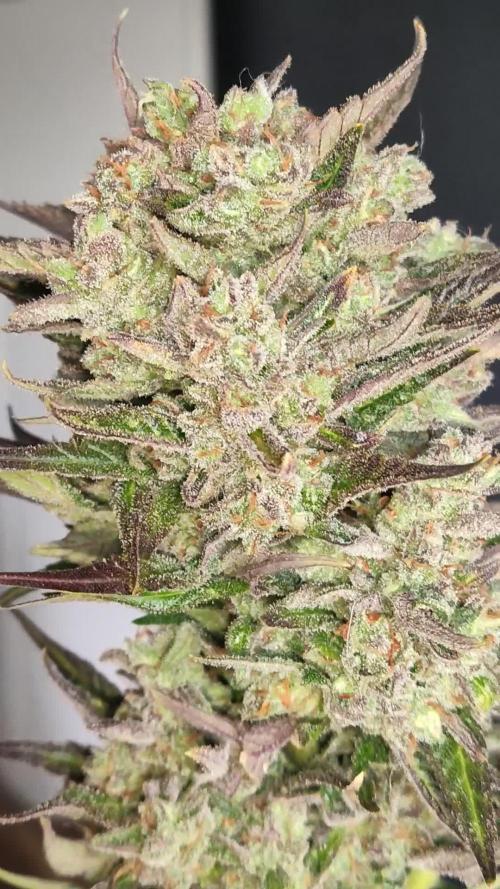
Habe sie heute geerntet wir sehen uns in 3 Wochen mit dem Erntebericht.

Likes
17
Share


@CanadianFillmore
Follow
Harvest time, both divine storm ladies did amazing under the Mars-Hydro TSW2000. Pheno 1 was an absolute monster! Huge dense buds!! Pheno 2, while the runt of the grow, also produced impressive buds.
Will update in 7-10 days with weight and initial smoke report.
Update - April 16 - dry weight of 47 grams on DS2 and 77 grams on DS1. Results are close to round 1 grow, very impressed with the TSW2000 light!


Likes
11
Share


@Mo_Powers
Follow
and on it goes. i don't have much to report. due to some very hot days she has been given alg-a-mic and acti-vera from BIOBIZZ for better nutrient uptake. she has grown another few centimetres, looks healthy and strong.


Likes
5
Share


@KushSlayer
Follow
End of the week 5 of flowering
I have little bit problems with humidity 60-70% and i found something that doesnt look like good thing in bud :( but only in one lady
Overall ladies look good only one have something going, should i start flushing?
week 6 of flowering starts today

Likes
2
Share


@High_Grade_Dadli
Follow
Girls are doing well they are due a cut which will be sometime soon.. G4 is massive the main colar is eye level to me and about 5 nodes down from that are over my

Likes
19
Share


@ELBICNIVNI
Follow
growing this strain was super easy, but for some reason i had 5 seeds and i wanted to germinate another 2 and i followed the germination process 420 fast buds has on the web and unfortunately from 5 seeds just 1 germinated. which you can see in this diary. the buds are really fat and they smell super fruity and they get you really high lol

Likes
28
Share


@TeamQuality420
Follow
My pictures seem to have re organized themselves, just give me a few here and I'll get the full rundown .
So this week ( day 21-23) was MAJOR defoliating.
What my first step is to start taking the largest fan leaves . My next step is about halfway through the canopy I'll stop and then I'll start working on the very bottom of the plant now at this stage in the game anything that doesn't even have a nice Bud site so a nice white hair sticking bud at the very bottom like shoots I'll just cut them right off.
This is the first steps of a main line but I don't complete the actual full main line I probably will try it sometime soon just not this time.
So you take off anything that is a small shoot coming off the main stems and then your next step is .
STOP. It might be a minute it might be 10 minutes, 20 min , it might be an hour or more ( my tip is don't wait a full day I try and do it within the first 12 hours of starting it) but I always stop just to look at what I've done sometimes if you get going too quickly you can end up doing way too much.
Stand to talk to canopy and look what sites are getting hit by light what places are these families beneficial to use for photosynthesis. Anything that is not doing as much good will be taken off and at that point I'll probably do another you know 5-10 minutes of defoliation maybe take one or two more shoots at the bottom to ensure what's left there is a huge fat cola that's going to give you those huge buds .
After this you're going to want to do your best to support those stems that are going to hold a lot more weight as if the plant would have been with all the shoots so you're going to want to just make sure that you have staking in place or some sort of support system to keep them from flopping over a breaking them in the future because that's one thing yeah it's great but then it'll get to a point where oh no stuff falling over and then it's just more hassle than it is helpful.
I got alot more pictures to follow this week so stay tuned !!!


Likes
7
Share


@Weedganja420
Follow
Ya huele para comersela, tiene un olor dulce muy fuerte.
Lleva 30 dias a 12/12 horas.
Sigo fertilizando con los productos de terranabis.
Vamos a ir viendo como engordan esas flores.

Likes
13
Share

@PhinolaGreen
Follow
14. Woche
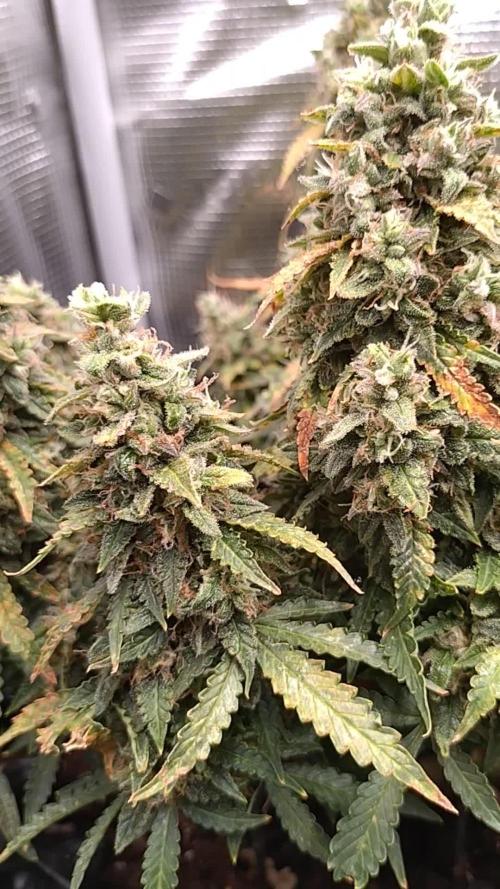
Wir kommen dem Ende langsam näher. Sie bekommt jetzt keinen Dünger mehr, denke das sollte reichen. Jetzt wird sie erstmal gespült die nächsten 2 Wochen und dann kommt nach Ostern die Opferung 🤭😄
Die meisten Grower sind bestimmt schon lange fertig mit ihren Autos aber bei meiner Sticky Broccoli Auto lief der Zyklus aufgrund des Mainlining und Training 4-6 Wochen länger als normal. Also es ist fjedenfall möglich und freue mich, sie trotz der Probleme mit dem Magnesium, hat sies ja doch gut gepackt 😌
Update: habe die jetzt mal gespült, brauchte echt 4x Wasser, also 32L ca und habe noch bisschen Flawles Finish gegeben. Ich schaue mal nach dem Wochenende, weil viel mehr Masse kommt wohl nicht mehr, die sind jetzt schon sehr Sticky 😌
Processing
Likes
13
Share


@Cheesefarmer420
Follow
This plant has a solid stench of pure ripe lemons. So much aroma and color in every bud, purples, to dark green, to lime green, to solid frost. This one definitely a fun strain to watch grow and tend too for the last few months. She’s definitely a hungry girl, seemed to be the only strain out of the three that accepted and thrived with full feed nutrients. Would definitely recommend this Strain to someone For a nice uplifting day smoke, also seems to do me good for some pain and stress relief.
Processing
Likes
9
Share


@Farr710
Follow
Last week in veg!!!!! Can’t believe 7 weeks came that fast! I’m training the HELL out of her, getting her nice and strong. Trimmed some leaves off today and trained even more. The main stem is about a quarter of an inch thick. She’s getting very strong! Can’t wait to flip into flower. Haven’t had any problems knock on wood.