




Processing
Likes
47
Share


@blazin_skywalker
Follow
Day 64 - I've been patiently waiting for the time to come, and it's finally here! Changed the lights over to 12/12 to send the tent into flower. Current light settings R99 W99 B50 as suggested by California Lightworks.
I did a full reservoir change - switching over to bloom nutes. I also added some Si28 and P31 Microbes to the reservoir to test out this new product that I was fortunate enough to receive samples of. I've seen the results of others with crazy booming root growth.... Let's see what happens!
Day 65 - I swear, it's like she's been waiting for me to flip the light cycle. I kicked one plant out of the tent so now there's even more room for improved air circulation and light distribution.
This plant is a serious beast!
Day 67/ Day 3 of Flower - Last massive round of defoliation before I sit back and let her do her thang. ✌️

Likes
13
Share


@ernest_twwg
Follow
May 2nd:
She seems to be growing strong. She's trying to grow vertically!
Just natural well water.
Light intensity is at 75%.
No nutes, yet.

Likes
17
Share

@RakonGrow
Follow
Harter ritt diese Dame , alles viel zu schwer das es gleich umknickte beim defolieren .
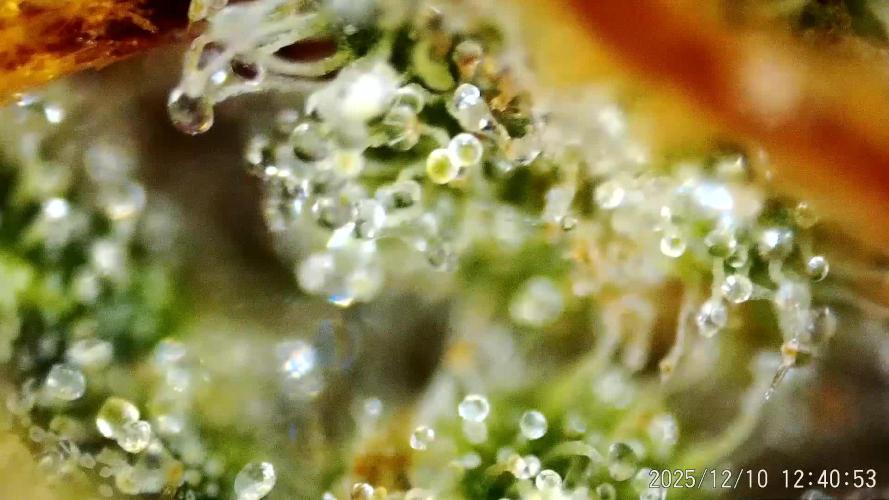
Hab mal ein getrockneten Bud aus der mitte genommen und Trichom analyse (Videos und Bilder) gemacht . ja viel klar wenig milchig und einige rot . Ergo , zuviel Licht an der Spitze (abstand zum licht viel zu gering) und im Boden zu kalt ist keine gute Kombination .



Likes
8
Share

@DogDoctorOfficial
Follow
Week 8 Flower – Roller Coaster Haze (Zamnesia Seeds)
The Final Act of a Beautiful Journey
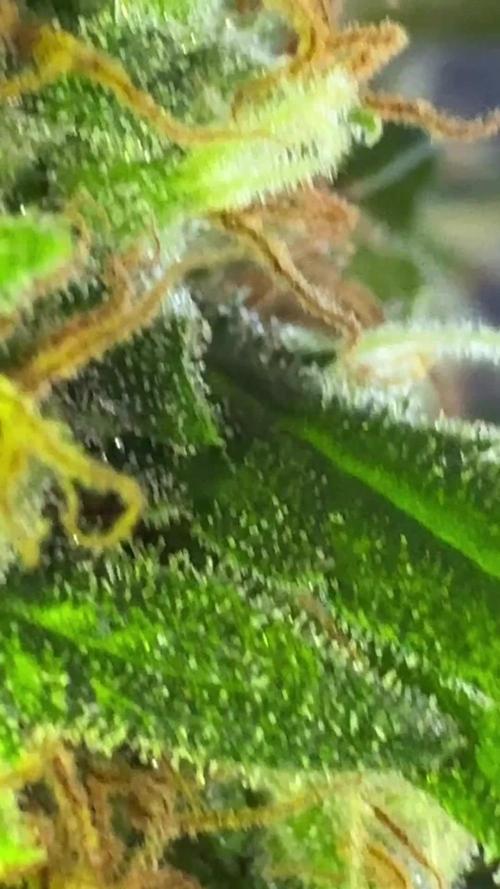
Here we are, Week 8 of flower, and the Roller Coaster Haze girls are at their absolute peak. Massive, elegant, and shining with frost — these plants are true works of living art. The colas are huge, dense, and heavy, coated in trichomes that glisten under the lights. The aroma is intense, that unmistakable hay-sweet haze scent filling the room the moment you approach them.
It’s been an incredible journey from seed to this point — full of learning, adjustments, and evolution — and the girls are showing their gratitude with a breathtaking display.
⸻
Light Defoliation & Canopy Health
This week, we performed a light defoliation, focusing mainly on yellowing and fading fan leaves. At this stage, the goal isn’t to push growth, but to maintain airflow and prevent moisture buildup, which can lead to bud rot or other late-stage issues.
By selectively removing what the plant no longer needs, we’re allowing more light to penetrate the canopy and helping the buds finish strong and clean. The fading is beautiful — a sign that the plants are naturally consuming their reserves as they approach the end of their cycle.
⸻
Aroma, Density & Structure
Each branch tells a story of energy and balance. The colas are dense and resin-packed, sticky to the touch, with pistils slowly darkening and curling inward. The aroma has deepened, becoming more earthy and hazy, with a sweet undertone that hints at the potency within.
These are true haze beauties — towering, expressive, and powerful. Every part of the plant speaks of the care, patience, and intention behind this grow.
⸻
Feeding & Environment
We have now completely stopped nutrient feeding.
This week’s watering is plain, clean water only, measured at:
• EC: 0.3
• pH: 6.8 – 7.2
The goal is to gently flush out any remaining salts and allow the plants to finish on what remains in the super soil. This natural fade encourages better flavor and cleaner results after harvest.
Environmental conditions remain steady despite the high outdoor temperatures. With careful management through TrolMaster and Spider Farmer controls, we’re keeping:
• Temperature: around 28°C
• Humidity: 60–65%
• VPD: approximately 1.3
Everything stays balanced and stable to allow the final ripening stage to unfold smoothly.
⸻
Light Adjustments – Simulating the End of the Season
To mimic the natural end of the season, we’ve begun gradually lowering the white light intensity, while pushing the red, far-red, and UV spectrums to 100%.
This spectrum shift signals to the plants that the cycle is ending, stimulating final ripening, color development, and resin production. The reds encourage energy transfer in the deeper parts of the canopy, while UV light helps enhance secondary metabolite production — the oils, terpenes, and resins that give Roller Coaster Haze her unique flavor and strength.
⸻
Reflections & Recap
From seed to this stage, this run has been all about precision, patience, and experimentation. The Roller Coaster Haze responded beautifully to the Aptus + Plagron blend, the controlled environment, and the small adjustments we made each week.
The natural fade is now in full display — leaves turning golden and soft while the buds continue to swell and frost over. The plants are enormous and full of life, and the garden is filled with that unmistakable late-flower perfume that makes this stage so magical.
⸻
What to Expect Next
Expect:
• Final ripening, with trichomes transitioning from cloudy to amber
• Continued fading of the fan leaves
• Aroma deepening even further, more earthy and hazy notes
• Buds hardening and resin maturing for peak potency
Not to Expect:
• Any new vegetative growth
• Heavy feeding — water only from now until harvest
⸻
Final Words
Week 8 is the calm before the harvest. The girls are thriving, finishing strong, and showing every bit of love and work poured into them over the past two months. The Roller Coaster Haze truly lived up to her name — a thrilling, rewarding, and beautiful ride.
We’re almost there. One or two more weeks, and it’ll be time to cut, dry, and celebrate what nature and care created together.
Thank you all for following along on this journey. 🌿✨
Let’s grow together,
– DD (DogDoctorOfficial) 💚
⸻
🌸 Quick Summary – Week 8 Flower
• Stage: Week 8 of Flower
• Plants: Roller Coaster Haze (Zamnesia Seeds)
• Feeding: Plain water only
• EC: 0.3
• pH: 6.8–7.2
• Environment: Temp 28°C / RH 60–65% / VPD 1.3
• Work done: Light defoliation (yellow/faded leaves removed)
• Lighting: Whites reduced gradually / Reds, Far-Reds & UVs at 100%
• Notes: Massive dense colas, strong haze aroma, full fade in progress
• Outlook: Entering final ripening — harvest soon!
📲 Don’t forget to Subscribe and follow me on Instagram and YouTube @DogDoctorOfficial for exclusive content, real-time updates, and behind-the-scenes magic. We’ve got so much more coming, including transplanting and all the amazing techniques that go along with it. You won’t want to miss it.
• GrowDiaries Journal: https://growdiaries.com/grower/dogdoctorofficial
• Instagram: https://www.instagram.com/dogdoctorofficial/
• YouTube: https://www.youtube.com/@dogdoctorofficial
⸻
Explore the Gear that Powers My Grow
If you’re curious about the tech I’m using, check out these links:
• Genetics, gear, nutrients, and more – Zamnesia: https://www.zamnesia.com/
• Environmental control & automation – TrolMaster: https://www.trolmaster.eu/
• Advanced LED lighting – Future of Grow: https://www.futureofgrow.com/
• Root and growth nutrition – Aptus Holland: https://aptus-holland.com/
• Nutrient systems & boosters – Plagron: https://plagron.com/en/
• Soil & substrate excellence – PRO-MIX BX: https://www.pthorticulture.com/en-us/products/pro-mix-bx-mycorrhizae
• Curing and storage – Grove Bags: https://grovebags.com/
⸻
We’ve got much more coming as we move through the grow cycles. Trust me, you won’t want to miss the next steps, let’s push the boundaries of indoor horticulture together!
As always, this is shared for educational purposes, aiming to spread understanding and appreciation for this plant. Let’s celebrate it responsibly and continue to learn and grow together.
With true love comes happiness. Always believe in yourself, and always do things expecting nothing and with an open heart. Be a giver, and the universe will give back in ways you could never imagine.
💚 Growers love to all
Likes
1
Share

@psychonaut420
Follow
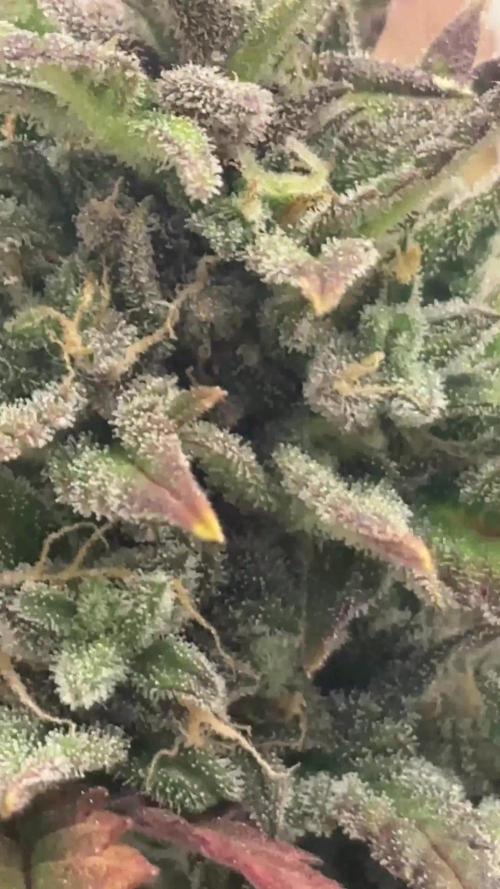
Lemon cherry cookies auto first 2 in video and last one is frozen face auto they iall in 2nd week of flushing and they thickening up and has pretty much stoped stretching and just been focusing her energy on thrichome production and filling out the buds

Likes
12
Share


@CanarianGrow92
Follow
This week the plant almost doubled in size, i must add that we had very nice weather and stable temperatures, shes getting sunlight from around 7AM to around 15PM-16PM and after that just daylight, i dont think i can harvest before the competition ends so bad luck, but its still great to grow this strain, cant wait to see her full of buds, hopefully they get fatter than my last balcony grow, but of course i had some bad weather with my last balcony grows also this one is in a much bigger pot which i really notice 👌😀
22 august: nothing
23 august: nothing
24 august: water
25 august: nothing
26 august: nothing
27 august: water
28 august: nothing
Likes
2
Share


@Growstopher
Follow
3.23.25
Fastbuds LSD-25 auto #1
Germination 1st week
Only watering with spring water. Going to be using foop nutrients with Humboldts secret cal/ mag and nectar for the gods ph up and down!
Here we go!
Likes
12
Share


@GrowZex
Follow
Heallo Beautifull peole!
Today we gonna start another diary! Blueberry by Zamnesia.
Blueberry is such an oldskool classic, i'm realy curious how these auto's will perform. Im still a newbie when it comes to growing auto's.
I popped 4seeds;
I'm gonna use Aptus nutes;
I'm not gonna do to much training or scrogging on this run. Mayb top the girls once at best;
Will be running at 24h lights first 2 weeks before switching to 20/4
Wish me luck!
Love and peace 4 all!
Likes
18
Share


@EaRtH
Follow
Entering third week...all of my plants have developed second pair of leaves and third one is growing already!
Had an issue with watering as in first week I have overwatered, last week I have underwatered.
One of the plants is significantly behind other two, however I hope that she will survive.
14.10. - Starting with 1ml/l of Bio Grow and Bud Candy to see how they'll respond. Also done the first LST.
10.10.2023 - 16.10.2023
Likes
75
Share


@Mrs_Larimar
Follow
Saturday, June12th.
I removed the SCROG a few Days ago, and took away some Fanleaves
Holy Guercamole, those RED HOT COOKIES........😍
Stacking like Crazy, smelling very lovely, and some Days ( weeks) left until Harvest
Plants are still fresh Green, only one is fading
Buds are swlling, having LOOOONG Trichomes
Watering daily,Feedings every other Day, introduced to Organic More PK ( Boost)

Likes
Comments
Share


@Laylowandgrow
Follow
Start of week 3 and all plants doubled in size all plants are healthy, been defoliating every couple of days most of the leaf removed are the ones that overlap each other,or blocking bud sites.
This week they will go under new gavita 1700e led lights. Should be interesting to see how they grow,and see what all the hype is with led tech.

Likes
52
Share


@Ultraviolet
Follow
Once again she passes my expectations, late to the show with trichome production. I'm surprised there is purple on the bud, maybe Purpinator does work. I thought I could see hints under the grow lights and thought my eyes were deceiving me, I was just being hopeful. But nah 2 of the 3(under the UV) have developed a beautiful tone of purple. I was never going to bother with a deep freeze but maybe the whole bud will change given conditions, that would be something, fingers crossed. 🤔 was a little skeptical that reducing temps humidity would change density, but it does, buds are solid something I've not been able to achieve before.
Rule of thumb is never to surpass 60% RH in the flowering phase and try to progressively reduce it down to 40% in the last 2–3 weeks before harvest. The plant will react as it seeks to protect its flowers, responding by producing denser buds and a higher concentration of resin. Cannabis plants are sensitive to sudden temperature changes, especially in the flowering stage. Extreme heat or cold can impact bud density and overall yields. In nature as a defense mechanism from cold, the plant sensing sudden dips in temperature will attempt to remove the pockets of air within the bud, it achieves this by compacting itself in doing so to better protect itself from cold snaps which are normally indicators in nature that worse weather is on the way.
Terpene levels are the highest just before the sun comes out. Ideally, you want as many terpenes present in your plants as possible when you harvest. Cannabis plants soak up the sun during the day and produce resin and other goodies at night. The plant is at its emptiest from "harvest undesirables" so to speak right before the lights on. Boiling cannabis roots during harvesting slows down the drying process. When you boil cannabis roots, it shocks the plant, closing the stomata on the leaves. This prevents massive moisture loss through the leaves, leaving only the floral clusters actively losing moisture at a reduced pace. I've always run a strict 60/60 and it took almost twice as long to dry to a snap than previous grows where I didn't boil for what it's worth.
Chlorophyll is good for the plant but not for you. When you harvest the buds, even after you flush them, if you flush them, they’re still filled with chlorophyll. Freshly cut buds are greener than dried buds because they still contain loads of chlorophyll. However, when rushed through the drying process, the buds dry but retain some chlorophyll, and when you smoke it, you will taste it. Chlorophyll-filled buds are smokable, but they aren’t clean. Slow drying gives the buds enough time and favorable conditions to lose the chlorophyll and sugars, giving you a smoother smoke. How the plant disposes of the chlorophyll and sugars by a process of chemically breaking them down and attaching the decomposed matter once small enough to water molecules which then evaporate back into the ether. Time must be given to the process to break down the chlorophyll and sugars. Think of it like optimizing the environment for decay.
All the nutrients it could ever need are in abundance, it eats nutrients based on its demand for growth, which is dictated primarily by available light.
Plant growth and geographic distribution (where the plant can grow) are greatly affected by the environment. If any environmental factor is less than ideal, it limits a plant's growth and/or distribution. For example, only plants adapted to limited amounts of water can live in deserts. Either directly or indirectly, most plant problems are caused by environmental stress. In some cases, poor environmental conditions (e.g., too little water) damage a plant directly. In other cases, environmental stress weakens a plant and makes it more susceptible to disease or insect attack. Environmental factors that affect plant growth include light, temperature, water, humidity, and nutrition. It's important to understand how these factors affect plant growth and development. With a basic understanding of these factors, you may be able to manipulate plants to meet your needs, whether for increased leaf, flower, or fruit production. By recognizing the roles of these factors, you'll also be better able to diagnose plant problems caused by environmental stress.
Water and humidity
*Most growing plants contain about 90 percent water. Water plays many roles in plants. It is:*
A primary component in photosynthesis and respiration
Responsible for turgor pressure in cells (Like the air in an inflated balloon, water is responsible for the fullness and firmness of plant tissue. Turgor is needed to maintain cell shape and ensure cell growth.)
A solvent for minerals and carbohydrates moving through the plant
Responsible for cooling leaves as it evaporates from leaf tissue during transpiration
A regulator of stomatal opening and closing, thus controlling transpiration and, to some degree, photosynthesis
The source of pressure to move roots through the soil
The medium in which most biochemical reactions take place
Relative humidity is the ratio of water vapor in the air to the amount of water the air could hold at the current temperature and pressure. Warm air can hold more water vapor than cold air. Relative humidity (RH) is expressed by the following equation:
RH = water in air ÷ water air could hold (at constant temperature and pressure)
The relative humidity is given as a percent. For example, if a pound of air at 75°F could hold 4 grams of water vapor, and there are only 3 grams of water in the air, then the relative humidity (RH) is:
3 ÷ 4 = 0.75 = 75%
Water vapor moves from an area of high relative humidity to one of low relative humidity. The greater the difference in humidity, the faster water moves. This factor is important because the rate of water movement directly affects a plant's transpiration rate.
The relative humidity in the air spaces between leaf cells approaches 100 percent. When a stoma opens, water vapor inside the leaf rushes out into the surrounding air (Figure 2), and a bubble of high humidity forms around the stoma. By saturating this small area of air, the bubble reduces the difference in relative humidity between the air spaces within the leaf and the air adjacent to the leaf. As a result, transpiration slows down.
If the wind blows the humidity bubble away, however, transpiration increases. Thus, transpiration usually is at its peak on hot, dry, windy days. On the other hand, transpiration generally is quite slow when temperatures are cool, humidity is high, and there is no wind.
Hot, dry conditions generally occur during the summer, which partially explains why plants wilt quickly in the summer. If a constant supply of water is not available to be absorbed by the roots and moved to the leaves, turgor pressure is lost and leaves go limp.
Plant Nutrition
Plant nutrition often is confused with fertilization. Plant nutrition refers to a plant's need for and use of basic chemical elements. Fertilization is the term used when these materials are added to the environment around a plant. A lot must happen before a chemical element in a fertilizer can be used by a plant.
Plants need 17 elements for normal growth. Three of them--carbon, hydrogen, and oxygen--are found in air and water. The rest are found in the soil.
Six soil elements are called macronutrients because they are used in relatively large amounts by plants. They are nitrogen, potassium, magnesium, calcium, phosphorus, and sulfur.
Eight other soil elements are used in much smaller amounts and are called micronutrients or trace elements. They are iron, zinc, molybdenum, manganese, boron, copper, cobalt, and chlorine. They make up less than 1% of total but are none the less vital.
Most of the nutrients a plant needs are dissolved in water and then absorbed by its roots. In fact, 98 percent are absorbed from the soil-water solution, and only about 2 percent are actually extracted from soil particles.
Fertilizers
Fertilizers are materials containing plant nutrients that are added to the environment around a plant. Generally, they are added to the water or soil, but some can be sprayed on leaves. This method is called foliar fertilization. It should be done carefully with a dilute solution because a high fertilizer concentration can injure leaf cells. The nutrient, however, does need to pass through the thin layer of wax (cutin) on the leaf surface.
It is to be noted applying a immobile nutrient via foliar application it will remain immobile within the leaf it was absorbed through.
Fertilizers are not plant food! Plants produce their own food from water, carbon dioxide, and solar energy through photosynthesis. This food (sugars and carbohydrates) is combined with plant nutrients to produce proteins, enzymes, vitamins, and other elements essential to growth.
Nutrient absorption
Anything that reduces or stops sugar production in leaves can lower nutrient absorption. Thus, if a plant is under stress because of low light or extreme temperatures, nutrient deficiency may develop.
A plant's developmental stage or rate of growth also may affect the amount of nutrients absorbed. Many plants have a rest (dormant) period during part of the year. During this time, few nutrients are absorbed. Plants also may absorb different nutrients as flower buds begin to develop than they do during periods of rapid vegetative growth.
432 Hz is said to be mathematically consistent with the patterns of the universe. Studies reveal that 432 Hz tuning vibrates with the universe’s golden mean PHI and unifies the properties of light, time, space, matter, gravity and magnetism with biology, the DNA code and consciousness. When our atoms and DNA start to resonate in harmony with the spiraling pattern of nature, our sense of connection to nature is said to be magnified.
Another interesting factor to consider is that the A=432 Hz tuning correlates with the color spectrum while the A=440 Hz is off.
Audiophiles have also stated that A = 432 Hz music seems to be non-local and can fill an entire room, whereas A=440 Hz can be perceived as directional or linear in sound propagation.
Once you adopt the idea that sound (or vibration in general) can have an equalizing and harmonizing effect (as well as a disturbing effect), the science of harmony can be applied to bring greater harmony into ones life or a tune to specific energies. There is a form of absolute and of relative harmony. Absolute harmony can for example be determined by the tuning of an instrument. The ancients tuned their instruments at an A of 432 Hz instead of 440 Hz - and for a good reason. There are plenty of music examples on the internet that you can listen to in order to establish the difference for yourself. Attuning the instrument to 432 Hz results in a more relaxing sound, while 440 Hz slightly tenses up to body. This is because 440 Hz is out of tune with both macro and micro cosmos. On the contrary, 432 Hz is in tune. To give an example of how this is manifested micro cosmically: our breath (0,3 Hz) and our pulse (1,2 Hz) relate to the frequency of the lower octave of an A of 432 Hz (108 Hz) as 1:360 and 1:90.
It is interesting to note that 432 Hz was the standard pitch of many old instruments, and that it was only recently (19th and 20th century) the standard pitch was increased. This was done in order to be able to play for bigger audiences. Bigger audiences (more bodies) absorb more of the lower frequencies, so the higher pitch was more likely to “cut through”. One of the oldest instruments of the world is the bell ensemble of Yi Zeng (dated 423 BC), tuned to a standard F4 of 345 Hz which gives an A= 432 Hz. The frequency of 345 Hz is that of the platonic year! Similarly many old organs are tuned in an A=432 as well; for example: St. Peter’s Capella Gregoriana, St. Peter’s Capella Giulia, S. Maria Maggiore in Rome.
Maria Renold’s book “Intervals Scales Tones and the Concert Pitch C=128 Hz” claims conclusive evidence that 440 Hz and raising concert pitch above scientific “C” Prime=128 Hz (Concert A=432 Hz) disassociates the connection of consciousness to the body and creates anti-social conditions in humanity.
The difference between concert pitch A=440 Hz and Concert A=432 Hz is only 8 cycles per second, but it is a perceptible difference of awareness in the human consciousness experience of the dream we share called existence.

Likes
16
Share


@Samsemilla
Follow
Die dritte Woche der Blüte startet und die Ladies bekommen ihre Mischung aus Orgatrex und Bactrex.
Auch hier deaktiviere ich rechtzeitig die Bewässerung, gebe erstmal die Hälfte der Nährstoffe und ein paar Tage später die andere Hälfte.
(Die Red Mandarine bekommen die selbe Behandlung, nur eine Woche nach hinten versetzt.)
Die Ladies haben einige Blätter verloren und ein zweites Netz bekommen - das Leben ist ein geben und nehmen.
Die Lampe läuft auf ca 170w Leistung.


Likes
13
Share


@Prozak
Follow
the strain is really strong ,
low temperatures resist , 3 weeks around 12/16º graus and steell growing wel
nice new colos between week 4/6 in flowering.
really good strain to manipulate! 5 stars * * * * *

Likes
86
Share


@DogDoctorOfficial
Follow
Greetings, fellow cultivators and enthusiasts of the green realm! Week 7 of our Apolo F1's botanical odyssey has unfolded with a sense of urgency, as she races towards harvest with astonishing speed. Join me as we delve into the world of autoflowers, where time bends and nature's clock reigns supreme.
In the realm of autoflowers, time moves like a river, swift and unyielding. Our Apolo F1 is a testament to this enchanting phenomenon, progressing at a pace that defies expectations. With each passing day, she inches closer to her moment of glory, a testament to the genetic marvel that is the autoflower.
The floral symphony reaches a crescendo as our green virtuoso enters the later stages of flowering. Buds swell and mature with remarkable speed, painting the canopy in hues of green and gold. It's a sight to behold, a testament to the accelerated growth and vitality inherent in autoflowers.
Despite the rapid pace, we remain vigilant, knowing that nature's timing is the ultimate arbiter. While our Apolo F1 may be racing towards harvest, we must respect her journey and allow her to dictate the pace. The moon on harvest day beckons, but patience is the virtue that will ensure a truly celestial yield.
As we marvel at the accelerated growth and breathtaking beauty of our Apolo F1, it's worth reflecting on the brilliance of autoflowers. These genetic marvels have revolutionized cultivation, offering a streamlined experience without sacrificing yield or quality. It's a testament to the ingenuity of nature and the boundless possibilities of genetic engineering.
Amidst the whirlwind of growth, the nutrient-rich serenade persists. The transition from veg to flower mix continues to fuel our green companion's journey, ensuring she has all the nourishment needed to reach her full potential. The aqueous symphony plays on, a constant companion in this botanical adventure.
A heartfelt thank you to Aptus Holland for crafting the nutrient symphony that fuels our green odyssey, and to Royal Queen Seeds for providing the genetic star of our celestial spectacle. The journey thus far has been nothing short of magical, and we continue to marvel at the wonders of nature's timekeeper.
Join me in the next chapter of our Apolo F1 Mission Diary, where we'll witness the final sprint towards harvest and celebrate the culmination of this extraordinary journey. Until then, may your gardens flourish, and your green endeavors be ever blessed by the magic of autoflowers!
Genetics -Apolo F1 @rqs_esp @royalqueenseedssp @rqsglobal
Food - @aptusholland @aptus_world @aptus_es @aptus_portugal @aptusbrasil @aptusplanttechaus @aptus_thailand @aptusplanttechnz @aptususa_official
LES @lumatekeu
Controls - @trolmaster.eu @trolmaster.agro @trolmaster.support
As always thank you all for stopping by, for the love and for it all , this journey of mine wold just not be the same without you guys, the love and support is very much appreciated and i fell honored and blessed with you all in my life
With true love comes happiness .Always believe in your self and always do things expecting nothing and with an open heart , be a giver the universe will give back to you in ways you could not even imagine so
#aptus #aptusplanttech #aptusgang #aptusfamily #aptustrueplantscience #inbalancewithnature #trueplantscience #rqs #ApoloMission #MoonHarvestAdventure #playwithlego #lego #legotime #legovideo #tothemoonandback
More info and complete updates from all my adventures can be found - link in the profile description
Friendly reminder all you see here is pure research and for educational purposes only
Growers Love To you All 💚💚💚
Likes
18
Share


@eldruida_lamota
Follow
Kio familia, que ya actualizo. Jaja
Al lío finalizamos la 3 semana de floracion, y esta genética también creció bastante se nota su tamaño xL.
Aumentamos la cantidad de comida por litro, Al ser grandes piden más.
La humedad no aumenta de 50% y la temperatura baja Algo en comparación al principio. 27 grados de media.
En la imágenes y vídeos podemos apreciar bien la evolución esta semana.

Likes
11
Share


@CBDreamer
Follow
The week started with a noticeable stretch! Plant growing fast and she is developing nice flowers. At day 65 noticed some yellowing in some lower leaves, they were in dark areas, maybe was because of that, or maybe a little bit of overwatering; anyway I decided to cut them and leave the plant concentrate on upper development. Hope is nothing wrong with her because I'm really putting a lot of effort on this girl! On day 66 she shown an underwatering wilting, and recovered fast after watering, so the yellowing was again caused by underwatering. Day 68 I noticed she is drinking really fast, still some lower leaves are yellowing. Thinking about a root flush.
Day 69 still can see some leaves yellowing, and not a vigorous growth, will proceed a flushing on next watering.

Likes
14
Share


@MrJones
Follow
As I mentioned above these plants were stunted, not one but all 3 which I found as consistently odd, however, I still got a small number of amazing buds, and the main colas were very chunky, with great terpenes of Cream, Sweet, Berry, Vanilla, looking forward to the smoke report.