Check the winners The Grow Awards 2026 🏆
Likes
Comments
Share
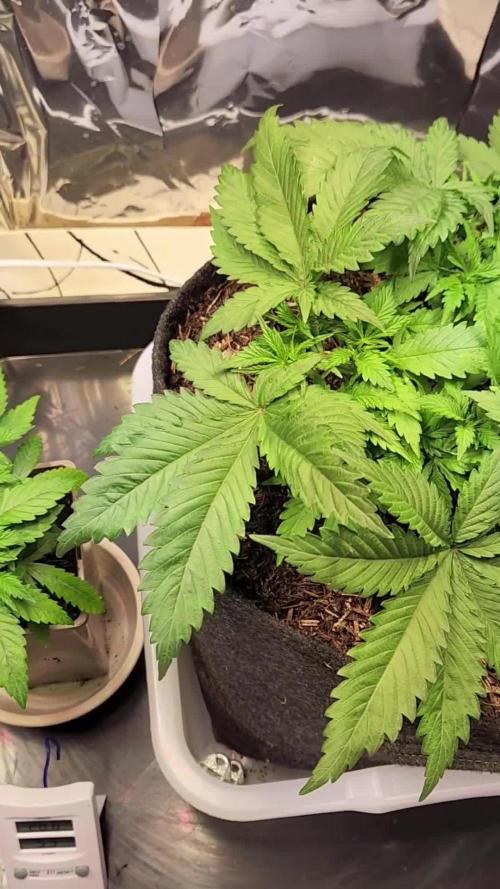
Tings are all over since my last update i moved most plants to flower but all the mac strains with the exception of 1 were still vegging as u can see gonna let the veg another tthree weeks before flipping them and the plant u see in flower vary the orange diesels range from finishing soon to jus begging flower the macalicious GG power plant clones and dqar clones are jus beginning to show pistils overall tho everything except for the guava looks good
Processing
Likes
15
Share
Likes
Comments
Share
After some research I decided to go for Advanced Nutrients for all amendments. Starting slow and building towards flower, then adding some Bud Candy. These plants really took off lol, shit got out of hand and I let them run a little, I'm definitely a habitual defoliator, I cant stop clipping when I really should just let them be, anyway I moved the tent out of the Closet space as its a friendlier time of year so they don't need the extra protection, kinda why I let them go, Season 1 needed to be smaller in height as they would have suffered outside the tent. Still topped and administered some LST, tried some clips out, but they were far too small and ended up snapping a stem. Would like to give them a go again but will research a bit more next time and not just go for Amazon crap. So far in terms of holding things down I really like the early pegs in the soil approach. I also tried some trellis netting this time, definitely like it and will be more prepared next time. Had to bail for an Easter break so a buddy came through and watered in nuets for me. SKOG was noticeably more Sativa-esque, thinner, stretchier. Runtz with the fatter leaves.
Likes
30
Share
Sherbet Queen Auto deserves only praise. I really haven’t had any problems during these little over ten weeks. And in the end I got above average yield. I wrote earlier but I will repeat the basic information: 81 days from when it sprouted until it was harvested. 3 weeks of vegetation. 7 weeks of flowering. 14 days drying 70 g total yield. 1 Sherbet Queen plant. In the end it grew almost 90 cm which is almost ideal for the height of my grow box which is a total of 180 cm high. All ten or so weeks passed without any problems, and in the end it produced large hard flowers with a sweet scent. After 14 days of drying in a grow box in the dark, I did the final trimming after the check I weighed the dried flowers and put them back in the jars. I also added moisture fighters to the jars that will regulate the moisture during final curing in the jars. And here we are at the end, Sherbet Queen is definitely a recommendation to everyone, I have no doubt you will enjoy the sweet smokes if you opt for this strain. I made an effort to write as much information as possible to help future growers on their journey. Thank you all for the comments and a big thank you to James from RQS for the great support. See you soon.
Likes
11
Share
@CCGS1mon
Follow
Hi ich habe die Pflanzen inzwischen etwas trainiert, aber es läuft noch nicht ganz so gut. Mal schauen, wie sich das in den nächsten Wochen entwickelt 😎👌
Processing
Likes
7
Share
@RunWithIt
Follow
Actually kind of glad the light fell on her two weeks back - right before flower and you can tell she's about to bush out. I've been diligently defoliating and tying her down at each developing node. Every day i seem to be greeted by new growth. In other words, she responds great in high stress situations! I may top my new Purple Lemonade purposefully since this one responded so well. Not much else to say... God speed fellow growers!!
Likes
52
Share
You don't become confident by shouting affirmations in the mirror, but by having a stack of undeniable proof that you are who you say you are, outwork your self-doubt. Nitrogen fixation is a chemical process by which molecular nitrogen (N2), which has a strong triple covalent bond, is converted into ammonia (NH3) or related nitrogenous compounds, typically in soil or aquatic systems but also in industry. The nitrogen in air is molecular dinitrogen, a relatively nonreactive molecule that is metabolically useless to all but a few microorganisms. Biological nitrogen fixation or diazotrophy is an important microbe-mediated process that converts dinitrogen (N2) gas to ammonia (NH3) using the nitrogenase protein complex (Nif).[2][3] Nitrogen fixation is essential to life because fixed inorganic nitrogen compounds are required for the biosynthesis of all nitrogen-containing organic compounds, such as amino acids and proteins, nucleoside triphosphates and nucleic acids. As part of the nitrogen cycle, it is essential for agriculture and the manufacture of fertilizer. It is also, indirectly, relevant to the manufacture of all nitrogen chemical compounds, which include some explosives, pharmaceuticals, and dyes. Nitrogen fixation is carried out naturally in soil by microorganisms termed diazotrophs that include bacteria, such as Azotobacter, and archaea. Some nitrogen-fixing bacteria have symbiotic relationships with plant groups, especially legumes.[4] Looser non-symbiotic relationships between diazotrophs and plants are often referred to as associative, as seen in nitrogen fixation on rice roots. Nitrogen fixation occurs between some termites and fungi.[5] It occurs naturally in the air by means of NOx production by lightning.[6][7] All biological reactions involving the process of nitrogen fixation are catalyzed by enzymes called nitrogenases.[8] These enzymes contain iron, often with a second metal, usually molybdenum but sometimes vanadium. Green clover (Fixation) White clover (Fixation) Red Clover. (Fixation) Yellow Clover. (Fixation, deeper roots) Sweet Thai Basil. (Terpenes) Italian Basil. (Terpenes) Chamomile.(Oil production) Borage.(Pest attraction taste) Lavender.(Pest attraction smell) Marigold(Pest attraction visual) Mycorrhizae are beneficial associations between mycorrhizal fungi and a plant’s root system. Mycorrhizal fungi spores germinate in the soil, creating filaments (hyphae) that penetrate the root cells, thus establishing a symbiotic relationship. This collaboration leads to the development of both intra-radical and extra-radical networks of filaments, enabling efficient exploration of the soil for enhanced access to nutrients and water. Consequently, these vital resources are transferred to the plant, resulting in numerous benefits for crop cultivation. Various mycorrhizal products are available in diverse formulations (powder, granular, and liquid), concentrations, and qualities. Ongoing advancements in products, technologies, and research are reshaping our understanding of mycorrhizae. Despite these positive developments, certain misconceptions persist. In the following discussion, we aim to clarify the truths and dispel the myths surrounding mycorrhizae products. MYTH #1 A HIGHER NUMBER OF MYCORRHIZAE SPECIES MEANS BETTER RESULTS. Contrary to common belief, having a higher number of mycorrhizae species in a product does not translate to better results; in fact, it often yields the opposite outcome. A plant can sustain only one association with a particular mycorrhizal fungi species. Introducing multiple species creates competition among them, which is not advantageous for the plant. The initial colonizer does not ensure the highest success; instead, it gains precedence. It is recommended to select a product with a concentrated presence of a single mycorrhizae species known for its effective performance, rather than opting for a product with multiple species at lower concentrations. MYTH #2 ECTOMYCORRHIZAE ARE EFFECTIVE FOR CANNABIS PLANTS. Although ectomycorrhizae can colonize five to ten percent of plant species, cannabis is not among them. Ectomycorrhizae do not penetrate the root cells; instead, they develop around the roots and on the exterior. For cannabis plants, it is essential to seek out endomycorrhizae. Endomycorrhizae are capable of colonizing 70% to 90% of plant species, including cannabis. Unlike ectomycorrhizae, endomycorrhizae penetrate the root cells, forming structures like arbuscules for the exchange of nutrients and water with the plant. MYTH #3 WHOLE INOCULANT (PROPAGULES) PERFORM BETTER THAN ONLY VIABLE SPORES. The propagule count specified on most mycorrhizae products indicates the presence of spores (viable and unviable), hyphae, and root fragments. However, it is crucial to note that only viable spores, those with the capacity to germinate, can successfully colonize a plant’s root system. Spores are to mycorrhizal fungi what seeds are to cannabis plants—a fundamental component enabling fungi reproduction. Consequently, even if a mycorrhizal product boasts millions of propagules, its effectiveness hinges on the presence of viable spores. Without viable spores, the product will not contribute to plant development. Therefore, the genuine value of a mycorrhizal inoculant lies in the quantity of viable spores it contains, as only viable spores can efficiently initiate symbiosis. MYTH #4 ALL METHODS OF APPLICATION YIELD IDENTICAL RESULTS. To establish the symbiosis, mycorrhizal fungi spores must be close to the plant roots. The optimal recommendation is to directly apply mycorrhizal inoculant to the roots, either in powder, granular or slurry form. This method ensures maximum proximity between the spores and the roots, facilitating a rapid establishment of symbiosis. Particularly with crops like cannabis, which have a short growing cycle, employing this technique is the most effective way to obtain optimal benefits. Alternatively, techniques such as blending the inoculant with the soil are effective, but there may be a delay in the establishment of symbiosis. This is because the roots need to grow and come into contact with the dispersed spores throughout the growing media. MYTH #5 MYCORRHIZAE CAN ONLY BE GROWN ON LIVING PLANTS. While the predominant method for commercially producing mycorrhizae involves growing them on the root systems of living plants (in vivo production), it is not the exclusive nor the optimal technique. In fact, this production approach has notable drawbacks that the “root organ culture” method just does not have (in vitro production). In vitro production occurs in meticulously controlled, aseptic laboratory conditions, allowing for the consistent generation of products that are viable, highly concentrated, species-specific, and free from pathogens. Achieving such precision and quality is impossible when relying on the cultivation of mycorrhizal fungi on plants exposed to external conditions. In conclusion, it is crucial to take all these factors into consideration when choosing the appropriate product for your crop to fully harness the wide array of benefits provided by a high-quality mycorrhizal product. STRONGER PLANT – Stress resistance. FASTER GROWTH – Improve plant structure and shorter veg time. INCREASE YIELD – Overall more biomass. IMPROVED QUALITY – Increase cannabinoids and terpenes content.
Likes
14
Share
Day 28. First signs of preflower. Day 31. Continuing with general Hydroponics maxigro every other watering.
Processing
Likes
18
Share
@Ch33cH
Follow
Can always spot good genetics and this lady has them. Great nodes, she spits out growth daily. There has been no issues at all with her. This strain has potential to be a keeper so far. Heading for flip soon, looking forward to the journey with her.
Likes
5
Share
@Blesk
Follow
Muy bueno un que se me complicaron algunos detalles muy pocos pero el resto todo bien actualizare en 2 semanas para lo g en seco
Likes
13
Share
7th of May Day 59 day 11 of 12/12 4 plants are looking healthy the stretch has started and and the canopy is starting to get a bit dense I may rom I’ve some large fan leaves on day 14 of 12/12 to give better airflow and allow for the lower growth to get more light, I can picture the colas already 😁🍁 ppm still going in at 650 ph 6.5, i top dressed each plant with fish blood and bone mean 3 table spoons to each 3gal pot on day 1 of flower
Likes
29
Share
@Rangaku
Follow
Pulled this beautiful girl today and the house smells like an orchard, it’s truly something special this strain . Looks to be about a half pound so I’m just stoked. One day when I get sorted to breed my own or clone I’ll deffo be revisiting this strain , hands down my favourite smoke ever.
Likes
4
Share
🌱 Grow Diary Update 🌸 What’s up! It’s Week 7, Day 1 of flower, and the girls are keeping me on my toes. 🌿 After getting the PPMs back in range last time, they’ve crept up again, so it’s flush time once more. 💧 I think letting the coco dry out too much between waterings might’ve been the culprit. Lesson learned—keeping a closer eye on that from now on! Besides that little hiccup, everything’s looking good. These buds are getting juicier and stinkier by the day, and there’s no serious nutrient burn, so we’re still in the clear. 🙌 Wish me luck as I ride out these last couple of weeks—hoping to finish strong! 🍀 Catch you in the next update! 💚
Likes
28
Share
@Salgeezi
Follow
Here we are week 6/7 in this post. Slowly fattening up. I don't think they will swell much more. Sugar leaves are showing signs of amber but actual bud there's still many clear Tris. Breeder says 8 weeks. My grows tend to go over breeder specs of strain lol. I'd like to push it as far as I can ALOT of the plants bid sites are very small was expecting them to get alot bigger.
Likes
5
Share
@Ozgrow
Follow
just about finished up this week. Choc mint 1 is about ready for chop. Chopped couple of main colas as i seen couple of signs of budrot. Dropped lights down to 400w each as temps are starting to rise above 30c. Choc mint 2 is looking unreal. Heaps of huge colas,think i will pull the most of this one. Will probably give till day 65.
Likes
36
Share
@Roberts
Follow
Gorilla Glue from AMS is doing great under the Spider Farmer G3000 light. I just changed light times to 12 hours today. So let the flowering phase start 💐. I think I am past most my previous issues. My feed is pretty strong already. So I am not adjusting it yet. I will be going into more of a potassium rich diet while trying to reduce nitrogen levels once stretching is done. I defoliated today and will again more aggressively in 2 weeks. I wanted to open it up for the stretching in hopes it stays more in a bush or more even canopy. I will likely have to hst them if they stretch a lot. Time will tell of course. Thank you Spider Farmer, and Amsterdam Marijuana Seeds. 🌱🤜🏻🤛🏻🌱💪🏻❄️🌱 Www.amsterdammarijuanaseeds.com Thank you grow diaries community for the 👇likes👇, follows, comments, and subscriptions on my YouTube channel👇. ❄️🌱🍻 Happy Growing 🌱🌱🌱 https://youtube.com/channel/UCAhN7yRzWLpcaRHhMIQ7X4g Spider Farmer G300w: https://amzn.to/3S2zvsd Spider Farmer 10X20 Heat Mat Kit - https://amz.fun/lsa0J Spider Farmer Amazon Store: https://www.amazon.com/spiderfarmer Spider Farmer Official Site: https://spider-farmer.com Discount code: saveurcash
Likes
92
Share
Day 50..they really look small and already fattening the buds. i don't know what to expect because i've seen some diaries and my plants look too small. i hope to see some more stretch over the next week or so.
Likes
8
Share
@dreamLife
Follow
Se siento rico aroma en la habitación, un aroma bastante cítrico.
Likes
65
Share
@Dendegrow
Follow
Woche 4 bricht an und es läuft hervorragend! Die Orange Sherbet bekommt diese Woche frischen Boden: eine Mischung aus Bio-bizz All-Mix und Greenhouse-Feeding, perfekt für die letzten Vegetationswochen und blüte. Zudem hat sich die Orange Sherbet sehr gut mit dem Backhefe-Buttermilch-Melasse-Experiment entwickelt, was zu einem starken CO2-Anstieg auf bis zu 1500 ppm geführt hat. 💨 Ich bin gespannt, wie sie sich in der neuen Umgebung entwickeln wird. Auf der anderen Seite explodieren die Frozen Black Cherries förmlich in der Hydroponik! 🌱 Die Entwicklung ist beeindruckend, und ich könnte nicht zufriedener sein mit ihrem Fortschritt. Die Blütephase rückt näher, und ich bin gespannt, wie sich alles weiterentwickelt! Ich halte euch auf dem Laufenden! 🚀 Week 4 is here, and things are going great! The Orange Sherbet is getting new soil this week—a blend of Bio-Beth All-Mix and Greenhouse-Feeding, setting her up perfectly for the final weeks of vegetation and . Additionally, the Orange Sherbet has responded well to the back yeast-buttermilk-molasses experiment, resulting in a significant CO2 increase of up to 1500 ppm. 💨 I'm excited to see how she adapts to her new environment. Meanwhile, the Frozen Black Cherries are absolutely thriving in hydro! 🌱 Their growth has been phenomenal, and I couldn't be more impressed with their progress. The flowering phase is getting closer, and I can't wait to see how everything unfolds! I'll keep you updated! 🚀