


Likes
Comments
Share


@coolesrat
Follow
I got the purple pheno at last !! So glad actually... that it is actually changing colour and with so many more weeks left for it to continuously transition.
Totally what I’m looking for in future breeding projects.
Black amnesia haze fast: for its rooting and overall vigorous performance. Creating good yields each run
And this one I’m still waiting to see how she goes!
Way more grows in the future!


Likes
5
Share


@GrowFunMD
Follow
Harvested Plant #2 and Plant #3 at 11 weeks. Still have #4 and #5 to go. They are just about ready. Been waiting until the leaves turn purple. These plants have been flushing for weeks because I thought they were going to be done sooner, but they haven't missed a beat. They have a very strong, sweet smell. I highly recommend Cobbler Crisp!!!

Likes
2
Share


@DrBud420
Follow
Today they got a flawless finish for the second time since the last update, the weather should be like this until the end of the month, without rain, that's what I hope for, so we'll see...
all in all, the girls are close, it's time to finish this season, I hope for good weather for at least another 10 days and then I can finish this seasom😁

Likes
75
Share


@Theia
Follow
Started week 7 with another topping. She looks a bit of a mess ATM as I have had to bend some of her arms a full 90degrees and do some funky leaf tieing to keep everything in shape.. Nothing snapped and she seems okay. I will see how she recovers in the next day or two.
Re introduced grow to her feed.
I shall check back in after a few days of recovery and try to get a better pic then the blurple ones I managed earlier.
Day 48
She is so strong. The topping did not bother her showing 3 cm of growth the night I topped her.. I have cleaned all old fan leaves and defoliated the mainlines. Just have 8 colas atm. I attached a ring from a plant holder to try and hold the shape. 7 of the 8 colas have grown exactly where I wanted but 1 has taken a funny turn and as a result it's grown a bit short of where I need it. I shall try to bring them all to a uniformed height then I think I'm going to let 2 more nodes grow out and if that looks like it's given me enough space I will do the final topping for 16 colas. If she looks like it will be to busy I shall stick to 8..
Thanks for looking stay safe and happy growing.😁👍🤘
Likes
11
Share


@samuraifroggig
Follow
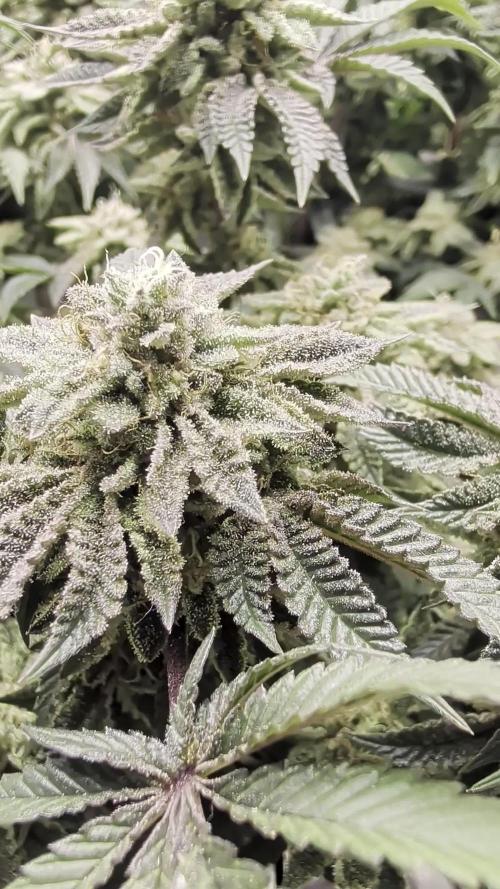
Did a jump start tea, 3 feeds of cutting edge solutions. For past 4 weeks have Found one adult spider mite per week, and destroyed eggs on the leaf's bottom with the white spots. I have no clue where they came from never had them before. I live next to a river and it is spider season so the normal spiders have been hunting the mites just becasue they are attracted to the lights at night. I don't see the mites as a threat and I'm not going to spray for them I might try to make a ladybug farm if I see more.



Likes
9
Share


@Green_Friends_Inc
Follow
Commencing Week 8: day 50 on January 19th
Update is late my sincerest apologies. I will make it up by giving a very thorough smoke report when all is done.
Otherwise all is going very well 😁😁👏👏
On day 50 I took the head off of bloody skunk.
I checked trichome colors under USB microscope. At least 90% fully milky-white with maybe 5 or 6% Amber and the remainder clear. 😁
On day 55 I gave all of the plants a fan leaf trim including the remaining bottom half of bloody skunk. as I sit here and think about it I believe this will help with ensuring the entire plant ripens and matures at the same time - versus the tops being ready before the bottoms.
I still plan on letting the bottoms of all these plants go way beyond the recommended time to see if I can initiate the process of rodelization. Either way I am glad to report that Bloody skunks pollenization looks like it is resulting in some seeds. (See photo). In hindsight my only concern is that because the plant finished a bit earlier than I expected the seeds may not make it to full maturity but I believe it should be okay we'll just have to wait and find out.
That being said besides the bloody skunk being done just a few days early everything else seems to be right on time as described in plant profiles on company websites.👍
That's all for now thank you for your patience and attention and support and as usual feel free to leave any suggestions comments or questions and I'll do my best to get back sooner rather than later 😁


Likes
Comments
Share

@42munichgrow0
Follow
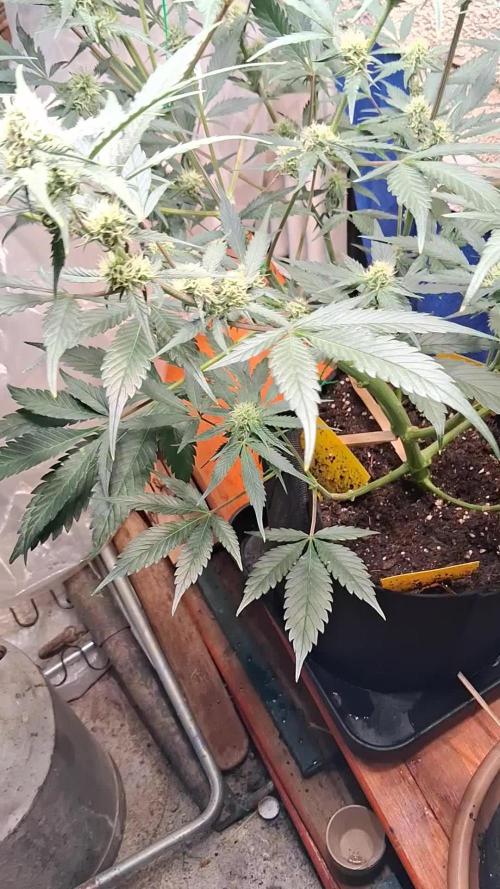
Sie performed sehr sehr 👍 gut, ich hatte davor den gleichen strain und war nicht so zufrieden.
Aber dieser pheno geht ab für Auto wie Rocket

Likes
7
Share


@x_grower
Follow
Last week plants were looking super healthy and responded very well to the second topping so I decided to flip the light schedule few days later. They already started stretching and the smell is noticeably enhanced.
Likes
76
Share


@Canna96
Follow
This week went pretty well, but I am struggling with a heat wave here in my region. She is finally starting to smell like sweet grapes, and a few of the top leaves have a couple light burn spots on them because they are constantly pointing straight up and the tips are pretty close the lights. She is at 52" tall right now, and in her 5th week of flower. I think she should be ready to harvest in about 5 weeks. I have no idea what this little lady is going to put out, but I have a feeling it is going to be huge if she keeps bulking up for a couple more weeks like she did this past week. I also had to add another dehumidifier outside and one inside the tent. So now between the 3 dehumidifiers I have running non-stop, I am able to maintain 45% RH inside the tent. I have never seen a single plant put out this much humidity. Also waiting for this heat wave to end on Wednesday, I am struggling to keep my tent at 75 degrees F. This little lady is turning out to be a little piglet, she eats and drinks everything I throw at her and then wants more..... I hope everyone had a great weekend, stay safe and Blaze On!!!

Likes
72
Share

@Natrona
Follow
Strawberry Trop Cherry - STRNG Seeds
W13 F4 2/1-7
I am following the TPS1 feed schedule for 9-10 weeks, reducing the PPMs until they reach 850-950.
2/2 PPM 1001 Ph 6.6 68.7
2/5 PPM 934 Ph 6.5 67.4
Tps1 13ml/g
Silica Gold 3ml/g
CalMag 3ml/g
Side by side you can see I usually get a tall and a short pheno when I grow 2 of the same strain. Both S-Lectric Lemonade and S-Trop Cherry are like this. The Cadillacs are both tall exceeding 6 feet: the super cropping held them at 52 inches.
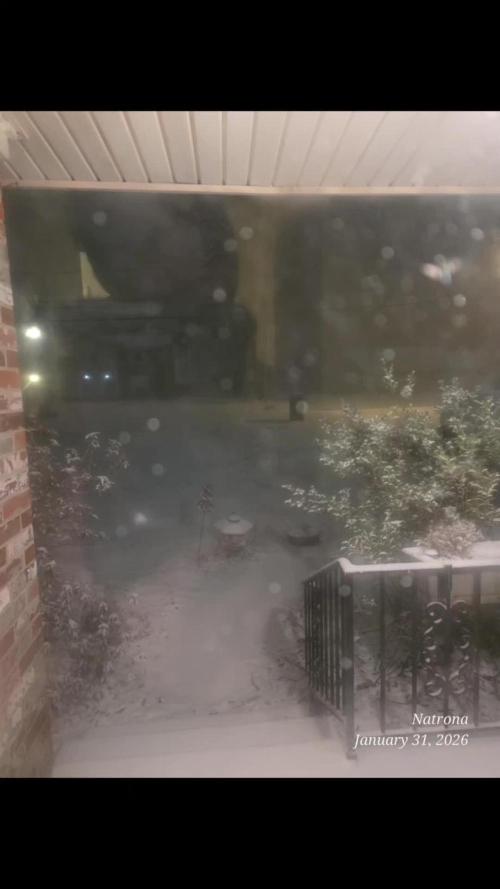
We had our first big snow this week following a light dusting last week. Pics show my kitties investigating (but not for long).
Stay green, growers love 💚🌿
💫Natrona
Likes
44
Share

@PavementPunk
Follow
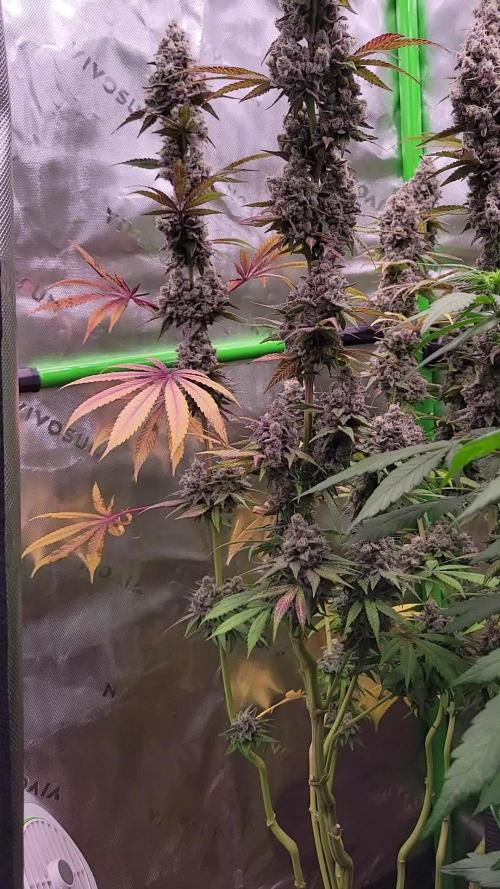
The mighty permanent marker decides the time to ripen is nigh. Finally shes starting to show shes nearly ready for harvest. The buds are looking prettier everyday the smell is dieselish dank and a bit pungent. Pretty much the terps im after. This is definitely the frostiest plant ive grown, especially when dried the buds almost look white. Insane. Really happy with this grow and cant wait to see what shes really all about. ZAMMIGROW2024 for 20% off at checkout on zamnesia.com. Been going well in the garden. Learning with each grow. Happy Thanksgiving and growers love friends

Likes
10
Share

@farah4weed
Follow
Hello guys😍😍
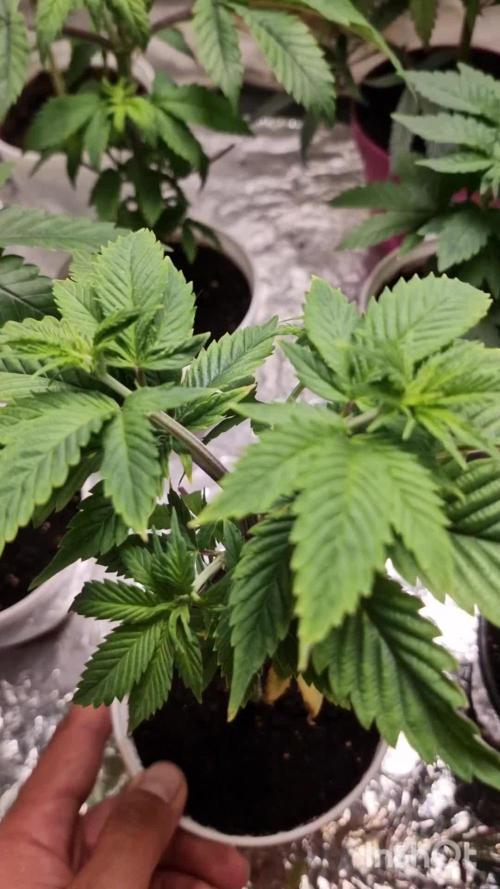
Fifth week of growth.
Last week, the plants were a little shocked after topping, but after a few weeks they returned to normal growth.
To reduce this shock, I used BioEnhancer fertilizer.
And this week I checked the roots.
The pots are ready to be Transplat.Thank you for following my project.
🌷farah4weed🌷
Likes
2
Share

@DmbTexasRanger
Follow
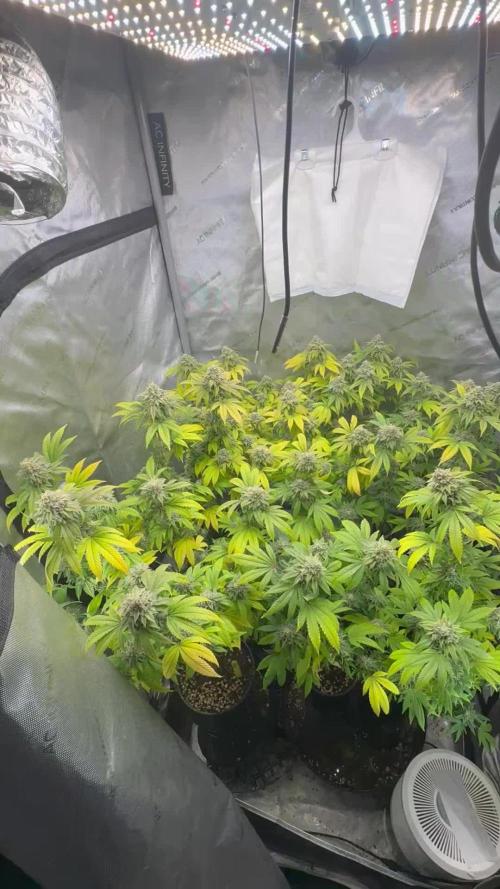
Blue zushi having a tough time finishing again. The stretch lasts 2+ weeks, wondering if flowering time is based on 1st preflowers? harvest is roughly 11 weeks from 12/12 flip both seed and clone. Canopy will stagger in late flower even if it’s flat after stretch.



Likes
20
Share


@CanadianFillmore
Follow
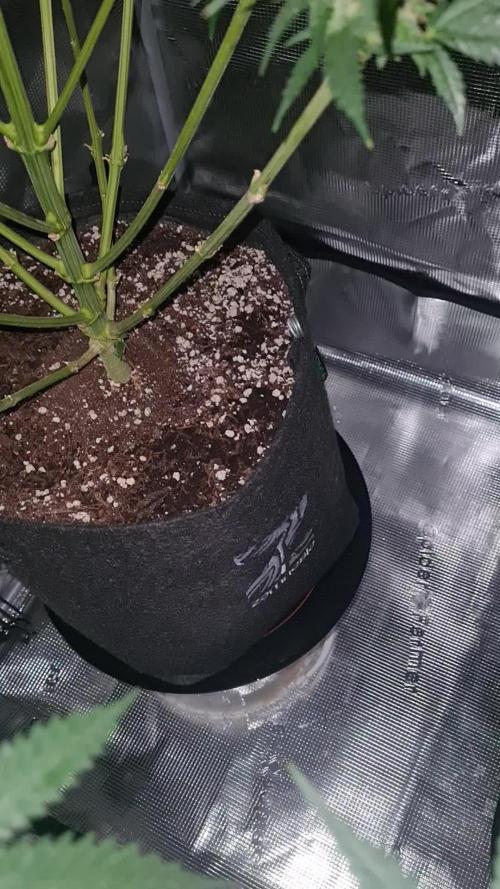
Start of week 4 of flowering. Week 3 went well, even with temps reaching 35°c in the closet. I've since added another fan to circulate more air, temps have dropped down to 31°c. Despite the heat stress, the plants are growing rather well and bud sites are developing nicely. Light defoliation again this feeding. Based on the heat issues, I need to upgrade my exhaust fan, 100 CFM isn't enough to get ride of the heat.
Likes
35
Share

@gr3g4l
Follow
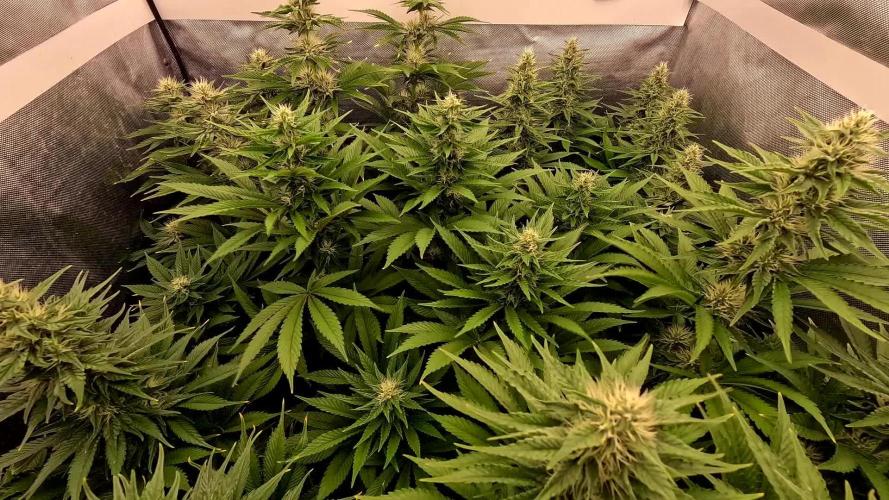
A week of noticeable bud fattening, lower leaves starting to dry out, loss of color, and very slow growth.
The smell also intensified considerably.
A week in which they began to show signs of nutrient overload, and I had to reduce the bloom dosage.
Una semana de un notable engorde de los cogollos, hojas bajeras que empiezan a secarse , perdida de color y un crecimiento ya muy lento.
El olor también aumentó considerablemente.
Una semana en la que empezaron a mostrar un exceso de nutrientes y me tocó rebajar la dosis de bloom.
Likes
31
Share


@AbroCadabro
Follow
I just added weeks 5 and 6 into one week because I didn't really have time to post last week.
There seems to be a problem with my plants that I can't quite figure out. The only commonality that I changed with both plants since the last grow is the microbe Inoculant that I bought from NPK. The Black Afghan that I harvested back in November didn't have these microbes added to the soil and it grew into a monster. I am beginning to wonder if these microbes are stealing food from my plant. Even though these microbes are sold as "flowering" microbes. I'm beginning to think they are starving my plants.
Also, I am technically 7 weeks from the flip to 12/12. So I may just be at the end of the flower period for these plants. I checked the Tricomes and they are mostly cloudy with about 5-10% amber. Normally at this point I would be cutting out the nutrients and letting her consume her leaves. However, she has already started to so that and now I don't know what to do. I just don't know. So... lesson learned. Stick to the basic nutes and stop trying to make this job harder than it needs to be. KISS
Likes
11
Share


@BroGanja
Follow
9/28/22
Feedings have tuned to full strength, and amazing uptake! These babies will be vegged 8-10 weeks for cloning, as well as the stud being grown out and collecting the pollen to carry on this tester to an F2 genetic.
NPK Industries has done amazing things with these plants, and they will be repotted into 7 gallons later this week. Depending on structure, these plants will recieve a late topping to avoid pushing too close to lights in the flowering period.
Water/Nutrients:
pH- 6.4-6.8
TDS- 650-750ppm
3/8-1/2 G per plant
Excess pH- ~6.5
9/30/22
Hello all! We decided to repot the Purpetual Punch F1's from 3 gal. fabrics to 7 gal. fabrics. All went without a hitch, and #6 out of the tested phenos has had the largest root mass, overall structure, and best production. I'll have updated pictures soon!
All soils were amended with Roots Organic Uprising Grow + Bloom (1 tbs each), and inoculated with Roots Organic Bioforce,
OregonismXL, and NPK Industries Grow Microbe (1/2 tsp each). After transplant they were watered with NPK Industries B-Vitamins (1/8 tsp), FishSh!t (5 mL), and Fulvic Acid (5 mL).