


Likes
Comments
Share


@Highguyz
Follow
Going too switch plants too a 48x48x80 with two full spectrum 1000 watt defoliated last night

Likes
7
Share

@LaBurlaVerde
Follow
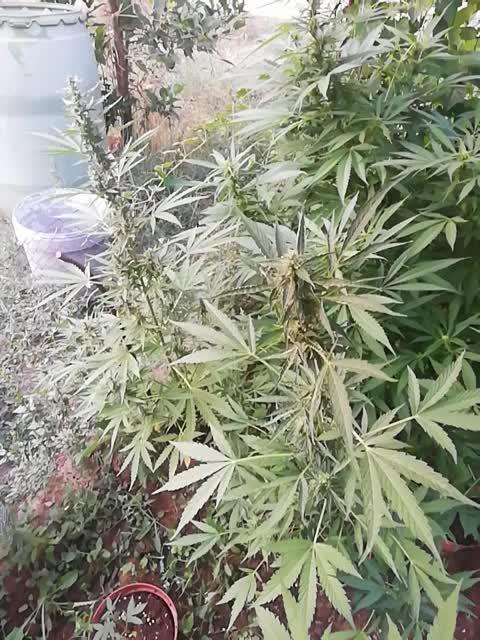
Me e saltado una semana porque estuve de vacaciones.. perdonad compañeros.. Seguimos con la Semana 7 las fotos y el video son del dia 49 de vida, ya se empiezan a ver buenas florecillas y cada una de las cheese auto tiene un cogollo diferente, quizas ese es el principal problema de las autos a granel, pero que realmente eso me gusta porque huelen algo diferente cada una.. Como podreis observar las plantas estan un poco sobrefertilizadas, el Top Auto esta es la ultima semana que se lo voy a dar, en mi opinion tiene mucho Nitrogeno y mejor suprimirlo ya, lo tenia que haber echo la semana pasada o incluso la anterior. Si estuviesen en macetas seria diferente, pero al estar en el suelo no demandan tantos nutrientes porque esta tierra aunque parezca que no es muy buena en ella saco unas plantas muy decentes solo usando agua durante todo el cultivo. La pobre Titan al salir mas pequeña una planta que tengo detras una Sugar Black Rose de Delicious seeds le esta quitando horas de Sol estoy intentando doblar la rama que la tapa para que al menos saque una buena porra central. Creo que va a ser la primera en cosecharse, seguramente si la hubiese puesto en otro sitio seria diferente, pero tengo el espacio que tengo y la verdad que no me esperaba que la Sugar Black Rose creciese tanto, se esta haciendo un pequeño monstruito y eso que es fast version.


Likes
22
Share

@wolfvb
Follow
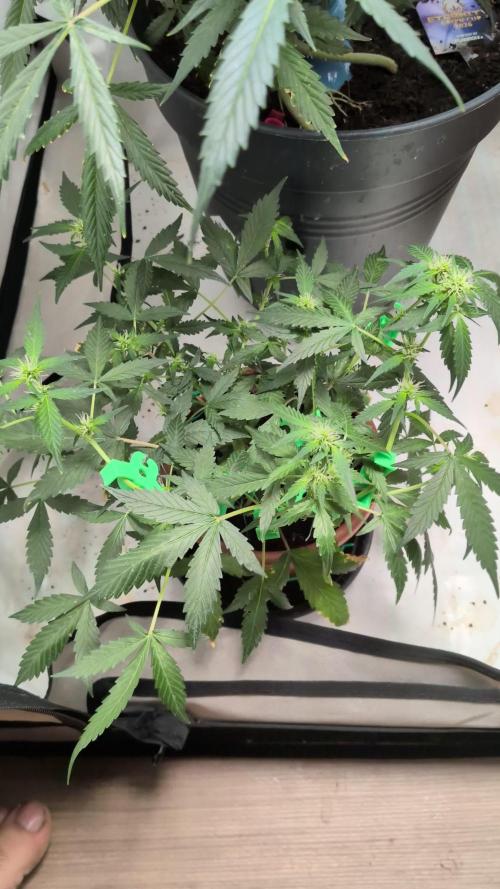
Week 7 Update: Welcome to the Jungle! (Flowering has officially begun)
General Observations:
Week 7 is here, and the stretch is on! The plant has officially transitioned into the flowering phase. As you can see from the photos, bud sites are developing rapidly all over the plant, and there is an explosion of white pistils (hairs) at every top. The plant seems incredibly happy and vigorous right now.
Training & Canopy Management:
The Low Stress Training (LST) has been paying off massively. You can see in the close-up shots how the green LST clips and wire ties have successfully kept the main stem bent and the canopy even. Because of this, multiple colas are reaching the top of the canopy and getting an equal share of the light. The stems are thickening up nicely to support the future buds. I'm keeping a close eye on the clips and wires to ensure they aren't choking the stems as they grow thicker.
Plant Health:
Overall health is excellent. The foliage is a lush, dark green, indicating that nitrogen levels have been solid through the vegetative stage. No major signs of stress, pests, or deficiencies. The leaves are praying upwards, which means she is loving the light and current environmental conditions.
Next Steps for this Week:
Nutrients: Now that she is heavily developing flowers, I will be adjusting/continuing the bloom nutrients to give her the Phosphorus and Potassium (P-K) she needs to swell those buds, while slowly easing off the Nitrogen. (Edit this part based on your actual feeding schedule)
Defoliation: I might do some very light defoliation of the lower, shaded leaves that aren't getting light, just to improve airflow and direct the plant's energy strictly to the top colas, but I don't want to stress her out too much during the stretch.
Environment: Keeping humidity in check as the bud sites get denser to prevent any future issues.
Looking forward to seeing these little puffballs swell up over the next few weeks! Happy growing! 🌱✌️

Likes
2
Share


@ScouseCityLX
Follow
Was so happy to finally get to harvest day,
I had a lot going on at this stage of my life, almost 2 years ago now this grow was. Times did get better and I did heal from things.

Likes
42
Share


@MrJoint
Follow
✌️🎃 Thank you for checking my cultivation.
🤤 She's surprising me, how she's getting fat!

Likes
92
Share


@DogDoctorOfficial
Follow
Week 9 - First Week of Flowering 🌸
The dark period has ended, and these ladies came back into the light fully energized and ready for action! It’s just the first week of flower, and they’re all praying, stretching, and absolutely thriving—filling up every inch of the tent. This grow space is officially packed from wall to wall, with each plant competing for its share of light and showing off some of the biggest, healthiest leaves I’ve seen yet! 🌱
A few strategic plucks here and there have kept airflow smooth and light penetration balanced. Those big leaves? They’re a sign of happy, healthy growth. Large leaves help the plant capture maximum light energy, essential during this stage, especially as they start focusing on developing those flowers. When plants grow huge, vibrant leaves like these, it means they’re well-nourished and content in their environment—a true testament to the well-balanced conditions we’ve got going in the tent!
Flowering Parameters 🌡️
Room Environment:
• Temperature: 26.7°C
• Humidity: 63.3%
• CO2: 960 ppm
• VPD: 1.29 kPa (prime zone for flowering health!)
Lighting:
• Light Intensity: 835 PPFD (ideal for boosting flower growth)
• Solution: pH 5.96, TDS 460 ppm, temp 21.1°C
• Medium: Moisture: 100%, TDS: 520 ppm, Temp: 21.6°C
Carbon Filter Installation & Smell Management 🌬️🌱
With the transition to flower, the scent profile is already starting to kick in—crazy for the first week, right? 🌸 To keep everything fresh and under wraps, I’ve set up a carbon filter system. Here’s how it’s working: I’ve connected the filter to my Aerofan, which pulls air directly from the tent. This air is cleaned by the filter and released into the main room, where it then passes through another filter before exiting my space. This dual-filter setup means no scent escapes into the wild, keeping things stealthy and the grow room a peaceful, scent-contained environment. Perfect for anyone concerned about keeping their home free from that telltale aroma! 🕶️🌬️
Enhanced Lighting with Emerson Effect 🌞
This week, I’ve introduced an extra 15 minutes of red light at the beginning and end of each light cycle. Why? Well, this red boost taps into the Emerson effect, enhancing photosynthesis efficiency, especially during the flowering stage. By stimulating a little extra wake-up and wind-down light, we’re mimicking the natural sunrise and sunset experience for these plants, which can help reduce flowering time. Not only does it encourage smoother transitions into day and night, but in theory, it’ll help these ladies finish a bit faster, while giving them a little nudge to build more substantial, quality flowers. 🌇
Nutrient Adjustments 🌱
Now that we’re in flower, I’ve swapped out the Start Booster for P-Boost and TopBooster to specifically support flowering needs. Here’s why:
• P-Boost brings in additional phosphorus, vital for energy transfer and cell division as the plant channels more resources into budding sites.
• TopBooster supports the flowering phase by improving flower quality and density, helping to build those big, aromatic buds we’re after.
These changes bring the nutrient mix in line with what’s most beneficial at this stage. All this precise dialing in is easy to manage thanks to the TrolMaster system. From pH to nutrient scheduling, the TrolMaster ecosystem and ThinkGrow LEDs have been the ultimate teammates in this grow journey, giving me real-time data, fine control, and peace of mind. 💯
(Not introducing UV light just yet, but stay tuned as that’s coming soon for an added boost!)
Looking Forward 🌟
Next week, we’ll be upping the reds, giving us an even greater chance of activating those flowering signals for a smoother, faster transition through the cycle. I’ll keep tweaking and fine-tuning every parameter to make sure these ladies get exactly what they need to thrive.
Big thanks to the TrolMaster system for keeping everything in balance and optimized, along with the supportive Grow Fam following this journey! Your enthusiasm, advice, and support are a huge part of this grow’s success. Keep following for more updates, and stay tuned for what’s next! 🌿✨
P.S. Deep Dive: TrolMaster’s MBS-S8 CO₂ Sensor & Smoke Detector 🚨
The MBS-S8 CO₂ Sensor from TrolMaster is a powerhouse for growers, especially when it comes to optimizing plant growth and efficiency in a controlled environment. This sensor continuously monitors CO₂ levels and integrates directly with the TrolMaster ecosystem, giving you real-time data on CO₂ concentration. Ideal levels of CO₂ can significantly boost growth and yield during certain stages, so understanding and managing CO₂ is key. With the MBS-S8, I can control CO₂ levels precisely, keeping them within the optimal range for photosynthesis. This sensor is a game-changer because it adjusts CO₂ delivery automatically, giving plants exactly what they need without any extra monitoring from me.
Meanwhile, TrolMaster’s Smoke Detector is an essential safety device, especially in spaces with electrical equipment, lights, and heat-generating components. This detector can be set up to alert me instantly via the TrolMaster app if any smoke is detected, allowing me to respond immediately to any potential issues. Fires and smoke are rare in controlled grow setups but having this safety measure provides peace of mind and lets me focus on the plants without constant worry. It’s an incredible tool for any grower prioritizing safety and proactive monitoring.
Discount Codes so you can save big on your next check out 💚💚💚
Kannabia - DOGDOCTOR 30% off
SeedsmanSeeds - DOGDOCTOR 10% off
CannaKan- DOGDOCTOR 15% off
terpyz.eu - DOCTOR 15% off
The Neutralizer - PORKIT5-DOG 15% off
As always thank you all for stopping by, for the love and for it all , this journey of mine wold just not be the same without you guys, the love and support is very much appreciated and i fell honored and so joyful with you all in my life 🙏
With true love comes happiness 💚🙏 Always believe in your self and always do things expecting nothing and with an open heart , be a giver and the universe will give back to you in ways you could not even imagine so 💚
Friendly reminder all you see here is pure research and for educational purposes only
Growers Love to you all 💚💚💚


Likes
17
Share


@SugarandTerps
Follow
Bloom W6 Fastbuds Mendo Frost ❄️❄️
16.5
Temperaturen sinken langsam wieder. Es werden die nächsten Tage zwischen 25-30°C
Ab jetzt wird nur mit PH (6,5) regulierten Wasser gegossen.
Farben sind im Wechsel, Blätter und Blüten bekommen eine schöne Färbung 🤗
Likes
17
Share


@Right2Flower
Follow
Day 120 - Getting closer to harvest day for this lady. She's huge and full of buds towards the top, smaller somewhat fat buds in the middle, and larfy buds at the bottom. I should have lollipopped her 1 or 2 more nodes up, especially for the colas that did not end up stretching as far as the others. Fed the lady water amended per this week's diary. Still seeing white pistils on her main colas so still 2 weeks away or so from harvest. I think this will be her last full nutrient feeding and for her next watering she'll get her last Cal-Mag feeding. I'll probably do 2 more plain water feedings from there and harvest once the soil is dried out after her last plain water feeding. I'm seeing a few of the lower buds of the lowest colas show some spots on the leaves so I just cut those parts off and hung to begin drying. It doesn't appear to be spreading but I'll keep an eye out these next few days.
Day 123 - Fed the lady her last Cal-Mag amended feeding. Trichomes are looking more cloudy now on the middle buds. Will give 1 more plain water feeding instead of 2, I want to see how this bud will smoke with minimal flush versus the first lady harvested that was flushed more.
Day 127 - Decided to skip completely flushing her to compare versus an over flushed plant. Harvested her today with the soil nice and dry.

Processing
Likes
2
Share


@DIRTYKEG
Follow
63 days from start and 3rd day flower and started adding flower fuel bloom booster to the water...
67 days 7 days flowering with second half of pics and 2 videos


Likes
2
Share

@RatmanJR
Follow
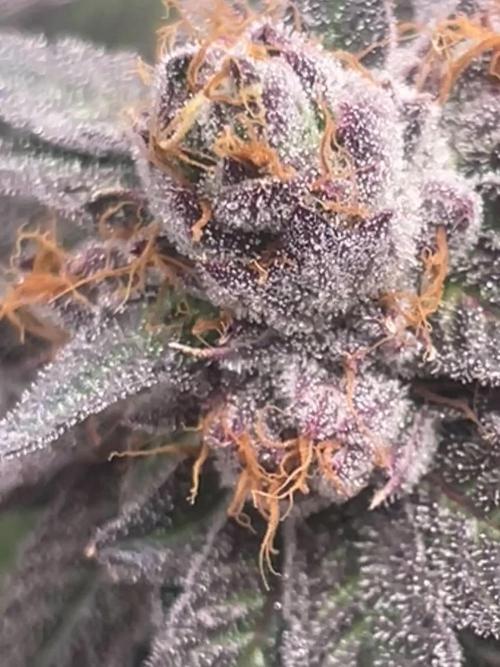
July 20th, 57 days post flip.
Plant is maturing well. I was worried with the color changes that she wouldn’t put on much weight but the buds are still fattening and gaining weight. Starting to see some of the branches not caught by the scrog starting to collapse.
Most Trichomes are still clear, seeing some orange Trichomes on the leaves but none at all on the calyxes so thinking another week or two. I did lower the lights from 80% down to 60% on July 19th to slightly lower my DLI in the last week or two.
Will continue to give only water, been watering by hand as the auto set up was under watering. She seems to be responding much better to hand waterings.
Smell has been and still is crazy, cannot wait to smoke this thing. I tried squeezing one of the upper buds and she is beyond dense, I couldn’t even get the bud to collapse. I took a small popcorn and will give it a test in a week or two likely around the same time the plant gets chopped.
God bless!




Likes
5
Share


@Unkraut
Follow
nice resinous strain, with strong scent and quite hard hitting high!
check www.sr-organics.com for some topnotch 5 in 1 fertilizer!
root, growth, bloom, micro-organisms, enzymes & vitamins all in one!
CODE: "Unkraut10" for 10% Discount! 😊


Likes
77
Share


@Roberts
Follow
FBT2309 is doing great. She has grow a lot in a week. In a few days more space will open in grow room and that will help as well. Everything is looking good under the Medic Grow Mini Sun-2, in the Gen1:11 nutrition. Thank you again Gen1:11, Medic Grow, and Fast Buds. 🤜🏻🤛🏻🌱🌱🌱
Thank you grow diaries community for the 👇likes👇, follows, comments, and subscriptions on my YouTube channel👇. ❄️🌱🍻
Happy Growing 🌱🌱🌱
https://youtube.com/channel/UCAhN7yRzWLpcaRHhMIQ7X4g
If anyone needs to purchase fastbuds here is a link for my affiliate program
https://myfastbuds.com/?a_aid=60910eaff2419
Likes
22
Share


@DankBudz
Follow
Well, still endless white hairs at 73 days.
However they are starting to tighten up good now, and trichs are starting to pick up.
Hopefully I can take them down in within 7-10 days.
Just tossed 2 GDP(Big Head Seeds), 1 Gelato(Broken Skull Seeds), and 1 Exodus Cheese(Green House) in the tupperware for next round, will be a bit uneven with the diff phenos but I'll weed out the best one and run that x4 next time around.

Likes
9
Share

@Chucky324
Follow
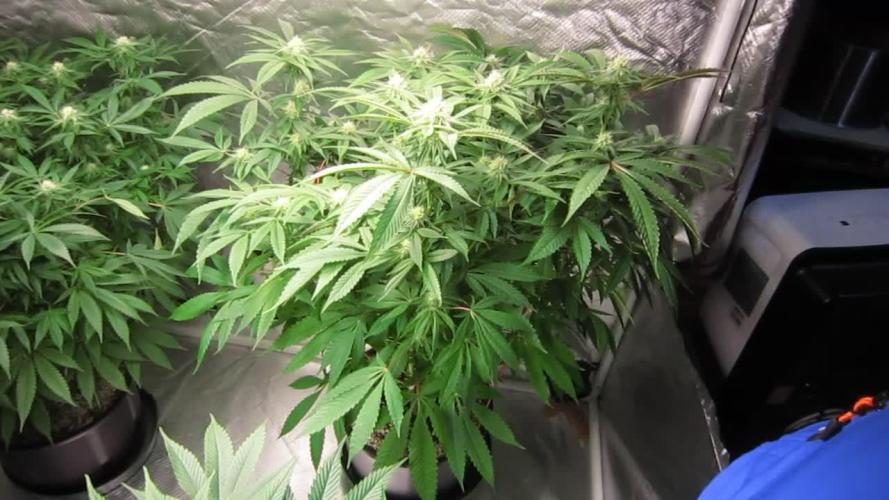
Hello This is the end of week 4 and the beginning of week 5 of flowering.
The plant is doing well and I see the resin has started to flow.
I can defiantly smell the sweet diesel off it. But it has fruity hints too. Could be strawberry.
The plant has a bit of red on the stem and leaf stems... so we might see some color at harvest... We'll see...
OK. Be Great.
Chucky.

Likes
22
Share


@bypado_farm
Follow
16 days of slow drying each plant with the environment controlled inside the tent with 2 meters.
I have two fans on, pointing at the floor to circulate the air
temps - 20 - 23 º
humid - 50- 60 %
Processing
Likes
13
Share


@GrowGuy97
Follow
Flower day 17 - All the ladies are looking great, starting to see a lot of bud sights & the smell is definitely getting stronger everyday I open the tent! Thanks for following & happy growing friends!🌱✌️🏼
Flower day 19- Got a bigger dehumidifier because I was having problems on days I would water the humidity would go through the roof at night so to prevent mold I bought a bigger dehumidifier but now it is throwing off so much heat the tent is pushing 90 degrees F at some points throughout the day so I’m not exactly sure how to fix the issue! Will definitely not be running so many plants in the next run for the 5x5! Hopefully things get better!😅😅


Likes
56
Share


@PEAKYPLANTERS
Follow
hello weed friends!welcome back to Peaky's Enchanted Gardens!Our beautiful girls are in excellent health and everything seems to be going well! Meanwhile they continue their phase of fattening the buds and sweating of trichomes and to help their development we have added PK
Stay up to date my friends that soon I will show you a lot of glue😜🤪😎🍭
Likes
15
Share


@Lordviper28
Follow
This strain has been wonderful from jump 👏 all seed made it and all came out looking gorgeous with a very tropical berry smell to them the taste I get from them is tropical although most turned purple in the end after hanging them up I could see a red tint to some of the buds 😁 but the purple kinda took over its fun growing with diaries and can't to get my next strain 8n the grow and share with grow diaries