


Likes
Comments
Share


@Firepharmer
Follow
In to week 7 now starting to flush!!
Very impressed with this run 💚🌱💚🌱
I’m now running the Futur vert 30 W uv led for 5 hours of the 12/12 with the Futur vert flora max series


Processing
Likes
7
Share


@x_grower
Follow
Last week plants were looking super healthy and responded very well to the second topping so I decided to flip the light schedule few days later. They already started stretching and the smell is noticeably enhanced.

Likes
9
Share


@Grow_for_Happiness
Follow
Well it finally happened, the girls have outgrown the 4x4! Was mid week and was having a hard time keeping humidity below 65%. Thought of defoliating, but can't keep doing that weekly or it will shock them sooner than later. So I decided to move the front left plant to the 3x3 under the Photontek SQ300W, giving the girls in the 4x4 some much needed breathing room. Set about retraining the plants to maximise space in the big tent, and then flattened out the lonely girl in the 3x3. Crazy enough the 4x4 still looks full by end of week, and the one by itself is getting close to filling the 3x3! This could be a pretty big grow by the time we finish 🤞.
Have the solo plant running on the older Autopot valves with 6mm hose, and already had one clogging issue. Seems really early on, in past would take 2-3 weeks so thinking maybe I didn't have the lines 100% clean to start. Either way easy fix just blow out the clog and flush the lines with a liter or so and back in business. Always remember to flush the on/off valve as well as the main valve in the tray.
Otherwise raised the lights in 4x4 to their max height (5" from roof) and took all the slack out of the cables to keep them off the lights. Adjusted the ties on last day of the week, but things seem pretty set now in the big tent so will just be widening out the lone girl once she grows a bit more. I'm sure by end of week that tent will be packed as well!

Likes
1
Share


@MindFlowers68
Follow
Buds are looking nice, getting plum and frosty fast. Shes still still stretching and bushing out. It was very stormy and wet this week but got some burst of nice sunlight that dried her off right away. I didn't need to eater but still fed compost tea and the stuff leftover from brewing as a top dress. Compost tea has liquid kelp and cal mag and around 700 ppm.

Likes
9
Share


@Bakeryguy420
Follow
C4 week 6 of flowering letting to go to about 9 weeks then going chop. This will be my last week of feeding her then going flush down these next 2 weeks into harvest so freaking excited. My first c4 ever grown along with my first time growing in coco. Fucking back in the game.
Little update notice yesterday while watering c4 she throwing some pink hairs. So fuckig beautiful:)
Likes
Comments
Share

@Cletus5150
Follow
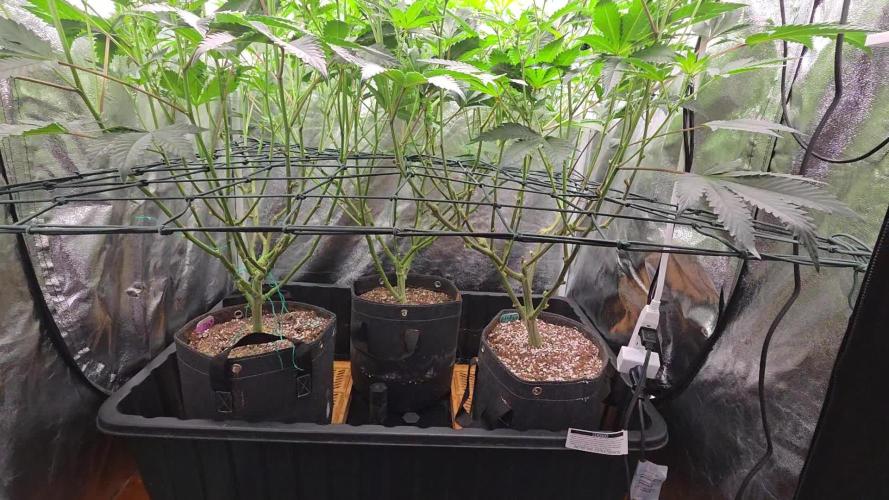
Big stretch during second week. We'll see when they stop. I will trim the lowest branches one last time before week 3.

Likes
2
Share


@Ninjabuds
Follow
Ive got two Skunk Apple Runz plants(tossed 1 when I repotted the plants) with exotic-looking leaves and some great genetics. These are seeds I made and both the parents were top notch. They're both about five inches tall and growing strong they both seem to have the growth strength from the ricky bobby Unfortunately, one of them might not make it because of some damage or mutation im not sure, it just seems to have stop growing upward correctly but the other one's looking really healthy.
Happy late turkey day grow diaries world!!!! It's now day 24 from seed for all the seedlings I have going. The past few days the plants have really started to take off. There roots have really started to dig in. Every other water I am still giving 2ml per gal of fox farm grow big. I keep having to tell myself not to add any more nutes other than that. I don't want to fry my plants but I also want they to start jumping. I'm quite excited for the coming week, I think the next 7 days or so is when the plant really starts to transform and look more like a pot plant than just some random little green thing.
A few days ago I decided to move the plants from under my 55w cheep amazon light to under my spider farmer 100w newer version light with the good leds in it. The plants will hopefully be ready to up pot them here soon and get them in the large tent.
Sometimes when growing multiple different strains it can be really hard to balance giving to much or to little light. You don't want the faster growing plants to get to stretched out waiting on the slower plants to catch up
I spend Thanksgiving day morning transplanting the plants into 2gal pots. I am useing spme promix potting soil it's my 1st time tring this soil. It is actually doing really well the roots were all white and nice looking. I think next time I'm going to add some worm casting, kelp, granular mycos, and a little bit extra perlite. I just didn't have the money with christmas coming to splurge for all the extra stuff. I got rid of 2 plants 1 of the bubble og and 1 skunk apple runtz. There is only room for 10 pots in the 2x4 tent. I will peob only bring 8 of them to flower, always good to have back ups. Yesterday I also stuck the plants back under the 500w medicgrow mini sun 2 in my 2x4 tent. They did great under it the 2nd half the day I was happy they didn't get stressed. I had put them under that light a little early about 10 days ago or so. I am expecting in a week these plants will ge going crazy with growth
Likes
46
Share


@Capo420
Follow
Week has had ups and downs🙃
Plants seem to be growing fine 🙂 But there is yellowing and spotting still that I cannot resolve.🙄
Day 22- Still having some kind of deficiency/issue. They are growing well, don't really seem to be stunted. I think I may have burnt them with nutes.🤧 Flushing may help. 🤷♂️😅
Run-off pH is at 6.08, PPM 266
I have flushed them, lowered feeding... I'm driving myself crazy. Hahaha
Update 119 Day 23- Things are looking better. I definitely have been overfeeding them.😅
They are responding well to half nutes.🙌
Issues seem to be getting much better.
Happy Growing!
🤙💚💪🌱😎🌱💪💚🤙
Likes
4
Share


@OHighOBoyz
Follow
Hoping by the end of this week to see a decent bit of vegative growth. I also had a boost in growth after sprouting but has slowed down decently. Plants leaves started drooping down and one edge of leaf turned a lighter green, leaves also look wrinkled, but don’t feel dry. I was advised it was nothing to be concerned of but I want other opinions. Also started a little LST today 2/15/24

Processing
Likes
5
Share


@Mr_nugs_lover_David
Follow
She looks as healthy as her sister,she's happy,no issues at all,and starting to show the first pistils on August 24th.let's see how this wonderful strain performs. 😊💚🌱
Likes
12
Share


@CanarianGrow92
Follow
This week we gave some more guanokalong nutrients, more specific for flowering the buds are starting to form and getting bigger slowly day by day! We see lot pf bud sites everywhere! Also applied a small amount of foliar bio insecticide just in case before the plant is too advanced in flowering
29 august: nothing
30 august: water
31 august: nothing
1 September: nothing
2 September: water and guanokalong nutrients ( powder, black pellets, palm tree ashes)
3 September: nothing
4 September: nothing
Likes
9
Share


@MenaceFantome971
Follow
Cette semaine 3 et 4 a été sans plus un seul bémol est que ma deuxième fille qui montrait nettement des nuances violettes sur ses pointes de têtes s’est cassé pendant un essai de LST, faute entièrement personnelle, j’assume néanmoins on continue avec quand même.
La 2e s’est étiré un peu et a reçu parfaitement son LST et a même commencé à montré ses pistils de pré floraison donc on engraisse.
Du coup on a profité de ces essai de LST sur les deux fifilles pour commencer les engrais BIO GROW & BIO TOP MAX et bientôt BIO BLOOM pour la phase complète de floraison.
En attendant je vous laisse admirez les vidéos et photo, pas dans l’ordre mais celle en B&W est d’aujourd’hui ! 1 mois pile depuis sa mise en terre 👏🏾💯 ainsi que une petite WW de chez RQS que je développerais dans un autre agenda


Likes
Comments
Share

@deseed_uy
Follow
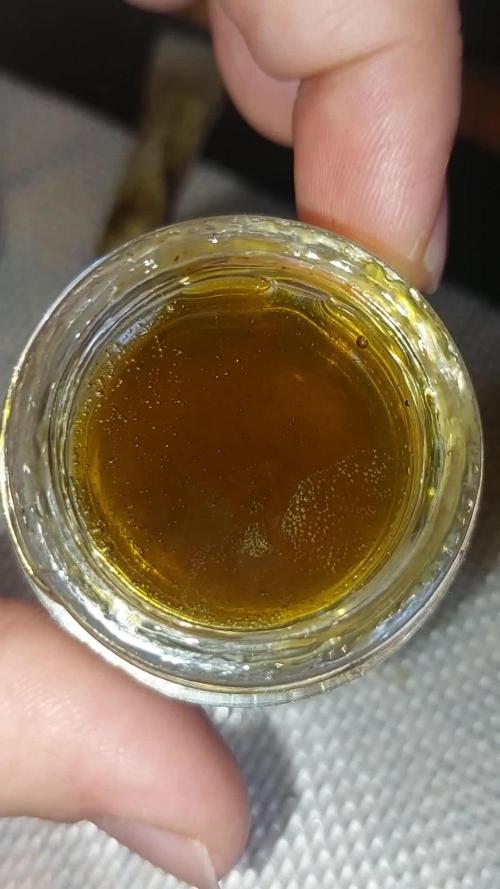
Una delicia esta genetica, muy alimonada.
Lo que he notado del 13/11 ademas de que se atrasa bastante la cosecha, es la cantidad de tricomas q se generan, y las flores quedan hecha roca. Excelente servicio para el q sabe eaperar
Likes
3
Share


@HomeToGrow
Follow
Moin,
Eine weitere Woche ist vorbei und die Lemon Z hat zum Glück final aufgehört sich zu stretchen. Der Lichtschaden durch den zeitweisen Abstand von 5 cm zwischen LED und Blüte ist auch nicht stärker geworden und der Abstand von 15 cm (?) scheint ausreichend zu sein.
Die Lemon Z sticht vorallem bei ihrer wirklich sehr starken Trichombildung und Blütenansätze heraus, hier entwickelt sich gerade ein Ertragmonster, wie es für mich scheint. Allerdings bleibt das Terpenprofil bisher hinter meinen Erwartungen zurück, ein leichter Geruch von süßen Zitronen ist zu erkennen mehr aber nicht. Noch bleib ich da aber auch entspannt da noch mindestens 4 bis 5 Wochen vor der Pflanze liegt. Die Z aus dem letzten Run hat sich ähnlich verhalten und erst in den letzten Wochen sind die Terpenen explodiert. Die Blüten an sich wirken sehr frosty, dicht und mit einem guten Blatt zu Blütenverhältnis.
Ansonsten wirkt der Strain bisher sehr robust und anpassungsfähig, einzig der wirklich enorme Stretch und die gebildete Blattmasse lässt mich nicht ganz zufrieden sein.

Processing
Likes
16
Share


@DTHEREID
Follow
They got a higher dose of nutes and some didn’t like the bump up. Had to flush and hopefully be ok. Start em back up lol. Just a lil curling
The auto purple gorilla is a beast for an autoflower!! She’s bulking up finally in week 5-6 of flower


Likes
89
Share


@nonick123
Follow
Día 54 (10/03) Riego 1,25 Litro H20 + Wholly Base 2,5 ml/l + Solid Green 2 ml/l + Early Flower 1,25 ml/l de Gen1:11
TDS 1033 PPMs - pH 6,51
Día 55 (11/03) Defoliation time!
Con la increíble ayuda de @miyaguiokpolilla, @dogdoctorofficial y @growwithflow420 hice la defoliación recomendada exactamente después de 21 días cambiada a 12/12
Consejos de defoliación
- Elimine menos del 20% de las hojas de abanico y solo las hojas de abanico
- Retirar el tercio inferior de la planta, incluidas las ramitas.
- Retirar las hojas en forma de abanico dirigidas hacia el interior de la planta.
- Retire las hojas de abanico que dan sombra a los futuros cogollos.
Día 56 (12/03) Esperando algo de estrés tras la defoliación... Han crecido 2 centímetros en 24 horas 😍🚀
Día 57 (13/03) Riego 1,25 Litro H20 + Wholly Base 2,5 ml/l + Solid Green 2 ml/l + Early Flower 1,25 ml/l de Gen1:11
TDS 1043 PPMs - pH 7,0
Las plantas muestras una ligera deficiencia de CalMag. Voy a subir el pH a 7.0 en este riego para mejorar la biodisponibilidad
Día 58 (14/03) Siguen con su crecimientos, los cogollos formándose y las hojas de azúcar empezando a llenarse de resina
Parece que la corrección de la deficiencia de CalMag ha sido muy efectiva! No hay más manchas y las plantas no paran!
Día 59 (15/03) Como mañana me voy a Spannabis 😍 voy a adelantar 1 día el riego reduciéndolo a 1 litro
Riego 1 Litro H20 + Wholly Base 2,5 ml/l + Solid Green 2 ml/l + Early Flower 1,25 ml/l de Gen1:11
TDS 1080 PPMs - pH 6,57
Día 60 (16/03) Spannabis time! 🚀
Día 61 (17/03) Spannabis time! 🚀
💦Nutrients by Gen1:11 - www.genoneeleven.com
🌱Substrate PRO-MIX HP BACILLUS + MYCORRHIZAE - www.pthorticulture.com/en/products/pro-mix-hp-biostimulant-plus-mycorrhizae
🎚️Controlled by TrolMaster TCS-1 Tent-X System Main Controller - https://www.trolmaster.com/Products/Details/TCS-1


Likes
18
Share


@ODNTrick
Follow
Better weather this week. I fed kelp and molasses on day 45. Canuck is showing nice trichome development. The pyramid continued to grow so I gently applied a couple of more tie downs to let as much light in as possible. Branches are getting quite stiff. Smell is nice from both in the evening.

Likes
11
Share

@Mr_nugs_lover_David
Follow
This plants has got pretty big, she's about to be Transplanted into her new home, hope she has long internodes and very beautiful sativa leaves,very elegant, I love this plant, however looks like she's gonna stretch quite a bit during flower so I'll try to keep as low as I possibly can, let's see how this lady keeps developing growmies around the world!!! ❤️💚💛 #probioticgardening this lady has been Transplanted to her definitive 30l pot on day 34 since planted may 5th

Likes
79
Share


@JUNGLE_B4RNS
Follow
-Sensi Seeds Research:
The Sensi Seeds Research breeding project has created eleven cannabis seed varieties.
How? By combining new cannabis cultivars with a selection of strains from their long-established cannabis gene bank. For the first time in thirty-six years, they are opening the doors of the Sensi Seeds Research and Development Department.
-Week #10, week #2 of Flowering :
This is where each days, when you open the door you say wow ! And this is where you start to look what distance is left between lights and ceiling... Technically it should be fine, canopy is under control...😅
This is also the week where you must check and hunt for hermies.... but not with Sensi Seeds 👍😎
All the genetics are stable, no signs of pollen sacks, it’s a pleasure to grow such strains.
Good genetics is really important !
Still feeding with Veg nutrients (using BIO range), at maximum amount recommended by manufacturers ! No signs of nootz burns neither signs of Nitrogen excess ! All plants are doing great, the air/water ratio of BIO Soil is remarkable it is fully oxygenated even with no perlite.
Next week is the "week 3 trimming" , stay tuned folks 😉
(I’m looking for a job in the Cannabis industry as Master Grower, Mineralogist, Quality Control 🐞)
