


Processing
Likes
Comments
Share


@NugLife420
Follow
Things are going pretty well. 🙂 I am just about to start flushing. Buds are swelling up and getting denser every day. Getting close to the finish line. 😎 I'll update throughout the week.

Likes
4
Share


@EileanDonanCastle
Follow
It’s been a long day potting these girls into there new home.
All is looking well. Little bit of heat stress but ime sure they will cope 🤞

Processing
Likes
9
Share


@AlphaNoob
Follow
Pistils changing color no idea how longs left now but would assume Atleast 2 weeks

Likes
1
Share


@SkunkySteve
Follow
Had problem since last week with PH. Was down and staying down below 5.0. Managed to sort it and keep it higher for a while to make up the cal mag. Everything seems to have levelled out for our for now. GSC and GG showing stighs of early buds.

Likes
103
Share


@Hou_Stone
Follow
️ Tarte Tatin = Caramel Apple Gelato x King’s Tart ️ 🌲💚
Tin tin tin tin tintin 🎵
------------------------------------------------------------
💧Watering each pot:
Day 25 : 0.5 L
Day 28 : 0.5 L
I use tap water, adjust the ph to around 6 and water
------------------------------------------------------------
🔥❄️Temperature of the week :
Day : 19-23°C (Humidity : 60-75%)
Night : 14-17°C
------------------------------------------------------------
🚀Equipment of the week ⭐️ :
Light FC3000 Mars hydro. power 95% at 50cm
Extractor 6 inch Mars Hydro. power 1/10. ON 24/24h
2 fans to circulate the air inside the tent. Each on for 30 minutes then off for 1 hour. this rhythm repeats itself in a loop
Heating mat 95x95cm. ON 45 minutes. OFF 30minutes. In a loop. The day only
------------------------------------------------------------
Likes
151
Share


@VanCplGrows
Follow
As we move into week 5, we're keeping a close eye on plant #2, which is showing some different characteristics than plant #1, namely, nutrient deficiencies.
We seem to be dealing with it okay so far, having reduced the nitrogen input and increased the calcium and magnesium. I think these girls are anxious for some phosphorous and potassium but we're being cautious and will be feeding under 400ppm, starting tomorrow.
Day 29:
- increased HLG Elite 360 fixture's light intensity, from 65% to 70%.
- minor LST adjustments and some leaf tucking to both plants.
- installed reciprocating fan at top of tent, blowing fresh intake air across the light fixture and down to the plants.
Day 30:
- watered with a 500ppm nutrient solution, 4ml per gallon of Remo Nutrients' Flowering line, but with General Hydroponics' "CaliMagic" replacing Remo's "MagNifiCal", due to the lower Nitrogen content.
- pH'd to 6.2/6.3
- minor LST adjustments
Day 31:
- calcium deficiency is showing up more on plant #2. Is there PK deficiencies as well? I'll continue feeding cal-mag and flowering nutes this week but i need to do a runoff test, and/or maybe a slurry test.
Day 32:
- watered with a 270ppm solution of "CaliMagic" (Cal/Mag).
- pH'd to 6.4
- slurry test done with 100ml of soil and 200ml of distilled water at pH7.0. Tested slurry after 5 minutes, had a pH of 6.1.
Day 33:
- Plant 2 still showing a severe deficiency, which i assume is still calcium & magnesium, although the stems of the leaves are very purple and despite the genetics, i think this is indicative of deficiency issues as well.
- Oddly, Plant 1 is not showing the same issues.
Day 34:
- did some light defoliation, removing a few small, lower shoots from the lower branches and a few of the lowest fan leaves.
- increased HLG "Elite 360" fixture intensity from 75% to 80% (approx. 145 watts per each QB96 board).
- Temp: 78F (lights on); 62-66F (lights off)
- RH: 46-55% (lights on); 60-62% (lights off)

Likes
4
Share


@Guerrilla_grower777
Follow
07/10/20253
19:00
15.6°C 54%RH
Another week with loads of rain passed,this time was so heavy that i waited two days of sun to come back and even if so i found the pots pretty full of water
These days were so cold with nights under 10°C but the plants looks good so It's ok
Forecast says next week will be fully sunny with no rain, temperature will raise to 24/25 °C during days which is aligned to my place in this period
#1 Apricot auto 76 days from seed
Last video right before harvest
#2 gorilla z auto 102 days from seed
Harvest for these branches too,i will update with smoke report and the final weight
Smell Is super piney and pungent nothing about the z terps i smelled during the first stage of flowering,sadly vanished
#3 Coco fresh 68 days from seed
This plant won't stop surprising me,in a week the bud development was enormous with a nice coat of resin
Even if this one started flowering later Is now officially outstanding the Coco Milk
The smell Is unbelievable a 50/50 ratio of gassy and creamy flavour with a tropical candy hint like an original runtz,i can't wait to see how this comes out
With these cold days leaves are fading to the blue/purple side
What is surprising me the most Is how the flowers looks,full of pistils,full of trichomes,perfect calix/leaf ratio and dense medium/small size exactly what i'm looking for
#4 Coco Milk 80 days from seed
Flowers are now bulking a lot but the heavy defoliation and lollipopping seems to have pretty damaged this plant
The smell Is so strong and noticeable far from the spot,flavour il like a gassy milk somehow fresh like a coconut and buttery like cookie dough
I don't know honestly how many days i have to wait until harvest but this is definitively going to chop before Coco fresh
#5 Just some hash i'm smoking right now ,always by anonymouz farm ,this one Is 90u which Is cheaper than a static but pretty enjoyable
#6 sample joint of apricot auto i'm smoking right now,as you can see this one has an impressive amount of trichomes ,flavour Is the best out of the three autoflower and potency Is here,lineage says it'a heavy indica but i feel creative and uplifted with a little sedative side after an hour
Probably this week i will come back another time as will be sunny,next week end i will update with the dry weight of apricot and gorilla z,buds are now drying at 19/17 °C and 53/52% RH which Is pretty near the perfection and will take 8/9 days minimum

Likes
45
Share


@AsNoriu
Follow
Day 104. Last Tangies chop day.
So , as you know three girls have dry results at the moment.
Fatty tangie 69.65
Foxtail tangie 72.03
Slim Fat tangie 65.03
Upsidedown tangie still in dry tent, but one hanger was left with most of leaves for dry trim and other two made 29+ and 35+ , so its AMAZING that this plant will make 3 oz, look at week 4 and you will understand why i am so happy and amazed ;)
Lanky aka Sativa dominant tangie which is choped today could still go, its day 104 from seed. This girl and really all of them except upsidedown should be defoliated, but its my first auto run purely indoors and i read so many crapy results, didnt want to stress them a lot.
From 6 girls only 5 sprouted. All very diff just two fatties where lookalikes . Upside down had strange life and she looked and was trained ( toped ) other way than her sisters. Foxtail early started so quick and so strong but ended with airy foxtailed buds and last lanky aka sativa diminant had loads of colas in videos before harvest its easy to spot she should be lolitoped higer, again i would ajust it during grow, but fears about autos prevented me from using many tricks.
With all love to RealGorillaSeeds , this bach was crap.
Day 108. I have holidays and UpsidedownTangie with leaves was still damp as was Lanky Tangies all bigger buds ( if that airy long strech but crystaly as f@#k crap around stemp we can call weed or bud ;)))) )
So both where left for extra 3 weeks overdry ;))) hope it wont be harsh from that.
I can guarantee that Upsidedown is the Champ at moment, those 4 top branches will have an ounce in them, so plant will be 90+.
With Lanky Tangie is diff story, she is airy i needed to trim and lolitop her a lot more, she just couldnt feed every bud, still that pheno is super crystaly. I like it and from 2 bottom branch hangers i got 35+, so 3 other will have like 45-50 on them, again loads of ....
Thats my nutes, in bag epsom salt, it was first grow with all of them, as you see for 9 plants I used almost nothing.
In 3 weeks i will have full weights and smoke report, i like Tangie more everyday, still not even close to my fav taste ...
P.s. i had a bit of leftovers of topmax, bio grow and bio bloom. Max like 200 ml. Bio grow still have a bit left in promo bottle.
Less is more !
Day 125
Upsidedown Tangie 93.4 - current Champ, its amazing what she managed to do ...
Lanky Tangie - 76.8
So total for all 5 Tangies is : 376.91
Not bad, still i will update later and ill explain why i didnt liked them ...


Likes
97
Share


@farah4weed
Follow
Hello everyone👽🔥😍
I’ve done a genetic cross, and now I’m testing the results.We’ve reached the eighth week of flowering.
This week I’m giving the plants their final nutrients and supplements, and next week I’ll start flushing them.
I’m really excited to dry the buds and finally try the finished product 😍😍
Thanks so much for following my page and sharing your thoughts🙏🙏
"Farah4weed"


Likes
35
Share


@TheBudWhisperer
Follow
Finishing out at a full 9 weeks of flower for the rest of this cycle. All of em are at various stages of doneness and now nothing left to do but chop em up and see what we got. It was a generally flawless run, save issues with WPM, a bit of nute burn on the northern lights and one leaky pot. The seals cracked on all of em again and we’ll mod the outlets to uniseals next run and see if that is the final missing piece to this hydroponics puzzle😎. The 5ml/L baking soda solution did wonders to keep the WPM in check and it’s also a much cheaper option than h2o2. We’ll draw about 1/2oz per plant when alls said and done - pretty much exactly what we were trying for with this grow of clones. Nothing but top shelf, rock hard bud🤟👍. Really happy to get these strains dialed in. The nutrient system was nothing short of phenomenal too. We could’ve jumped on the nute burn issue with the NL a little earlier but for a first run of this one component system, this is a fantastic result regardless. Proof that you can get a hydro run to scale on a recirculating system that accommodates multiple strains (with the right nute system)🤩🤩🤩.
As much as I’m dying to give the whole thing a go with straight fem seeds that’ll have to wait a couple months. We’ve got bigger fish to fry and a new cross to start drilling down on. The layover may be short lived if we end up with multiple fem cuts on that grow. We’ll see what happens. Harvest details will follow shortly and until the next one - thanks to everyone who stopped in for a look👊.


Likes
8
Share


@Franz1234567
Follow
what is small is beautiful.
The girls look healthy and vital. coconut has an unnecessarily low EC - 0.8 and pH 7.4 - both from leaching measurements from coco samples in distilled water.
The EC of the solution will be set at level 1.5 with the intention of gradually increasing it up to 2.5. pH by the same principle with a start around 6 and an upper limit of 6.5.
looks easy right?
What girls will say. Only time can show.
I almost forgot. the led panel hangs closer to the tops of the plants
Likes
4
Share


@richthegrower
Follow
Welcome to my chaos. The 2x2 is becoming an early veg and seedling tent I think for now she has the giant Manhattan girl from Twenty20. She was taking too much room up for herself in the 2x3.




Likes
18
Share


@VI_Cannabis
Follow
June 28 - They are doing great, We switched to the recommended amount of nutrients for flowering, Also 2 air stones I ordered have come in so now those are on 24/7 with the nutrient water in a 5 gallon bucket.
June 29 - Still just growing away, I am still feeding roughly 3L per plant of nutrient water every 24-36hr depending on how dry they feel.
June 30 - Totally forgot to take pictures/videos today. I gave them there daily watering and they are still just growing away. They are in flower now I believe!
July 1 - Awesome to see this amount of progression. Tons of hairs and a decently even canopy. There is a small smell coming from in the room!
July 2 - Again I forgot to take pictures, But as always they are still just growing away. so far so good!
July 3 - Tons of growth and they are starting to become uneven. I don't have a ton of time so I think I will leave them for another week before doing some LST or HST. Tons of colas forming, lots of hairs and they are starting to have a heavier smell! So far so good!
July 4 - Same thing as yesterday, still growing away, Ive turned the lights up to 100% now and I have removed the SF-1000 as I needed it for another project! (be sure to check out my other diary's which I will be uploading today!
Likes
27
Share


@Kirsten
Follow
Hulkberry has continued to develop big fat buds, which are becoming frosty!
The leaf situation is not looking pretty. I had taken down my Northern Lights, which was really large, and decided to rearrange the tent. I noticed that the worst leaves were all on the side of the plant closest to the lights.
She has much more space now and hopefully will manage to finish out nicely.
She is still feeding heavily and needs to be watered several litres a day or so.
Here is what I fed her this week:
10.6.25:
The plant was watered with 6ltrs of dechlorinated water PH'd to 6.2.
I added per 6.5 litres;
♡ 7ml Ecothrive Trace
♡ 1/4 TSP Sea K(elp)
PPM: 605
PH: 6.2
I decided to feed each plant separately and mix it up in the 2l jug.
12.6.25:
I watered with 4L of dechlorinated water PH'd to 6.4 and containing the following nutrients per 6.5 litres;
♡ 7ml Ecothrive Trace
♡ 1/2 Tsp Ecothrive Biosys
PH: 6.4
PPM: 890
14.6.25:
I watered with 6L of dechlorinated water PH'd to 6.4 and containing the following nutrients per 6.5 litres;
♡ 7ml Ecothrive Trace
♡ 1Tsp Mega Crop Part A by Greenleaf Nutrients
PH: 6.4
PPM: 890
15.6.25
I gave 5l of dechlorinated water PH'd to 6.2 with the following nutrients;
♡ 12ml Ecothrive Flourish
PPM: 463
PH: 6.2
17.6.25:
I watered with 4.5L of dechlorinated water PH'd to 6.3 and containing the following nutrients per 6.5 litres;
♡ 1Tsp Ecothrive Biosys
PH: 6.3.
PPM: 436
Thanks for following along 😊🍃✌️💚🤞
Likes
7
Share

@Kirsten
Follow
16.4.25:
I have retied the fabric ties again, as they're growing like crazy. Trying to open up the plant, to grow out as well as up. This will also create new colas.
At this stage, I'm trying not to over fertilise like I did with the last grow.
Focusing on Cal-Mag amino acids and Mega Crop Part A.
The medium is my custom super soil, which is already fertilised with Ecothrive dry amendments. So I could just add water. However, as we've already run into deficiency, that would be careless.
I find it easy to keep an eye on the plants and carefully inspect them daily to act quickly when issues arise.
Learning how to determine the issue is what I'm still learning, which is the hard part 😅
It's all fun though, and I'm really enjoying this grow with all the toppings and FIMs. So far so good!
21.4.25:
Hope everyone had a great 420!
Northern lights is absolutely beautiful, great structure.
I'm determining when to relax the LST as we are now in the beginning of week 3 flower. I do have height. However, I'd like to keep it reasonable. You never know when they will stop growing.
I'm not really adjusting any ties since the last time, but I have added an LST clips as one of the middle tops was much talker than the others.
I am trying very hard to exercise some much necessary self restraint here! 😅 it is becoming increasingly difficult!
I have also noticed that there are signs of Nitrogen excess. Maybe 2 leaves have very thin overlapping blades. Instead of Mega Crop Part A and Cal-Mag amino acids, I will use Bud explosion PK booster with the Cal-Mag. This will make the N5 the only Nitrogen being given.
It still may be too much, but will monitor closely to see the effect this change will make, if any.
Balancing the nutrients is very important for me to learn, and it's going to be an ongoing process.
I watered today with 3 litres of dechlorinated water PH'd to 6.4 with the following nutrients:
♡ 1/2 Tsp of Bud Explosion PK booster by Greenleaf nutrients
♡ 5ml Cal-Mag amino acids by Xpert Nutrients
23.4.25:
Plant seemed to be drinking heavily, so I watered again with 3 litres of dechlorinated water PH'd to 6.3 with;-
♡ 2.5ml Cal-Mag amino acids by Xpert Nutrients, and
♡ Ecothrive Biosys 1/8 tsp.
I removed the plant ties and retied the plant after watering.
Less ties are necessary as the plant has moulded and stayed in that structure.
25.4.25:
Northern Lights was much overdue for a retie of the fabric ties.
After this session of LST, the plant is absolutely huge. I really could easily fill the tent with just her.
The fact that this plant could fill out a 4ft² space absolutely proves that autoflowering strains can outdo photoperiods.
This particular strain, as well as my RQS Fat bananas, have been an absolute dream to grow. They take training like they're craving it. 😍
Thanks for checking out my diary and hanging out
😃💚✌️🍃😊
Likes
Comments
Share


@MonctonGrows
Follow
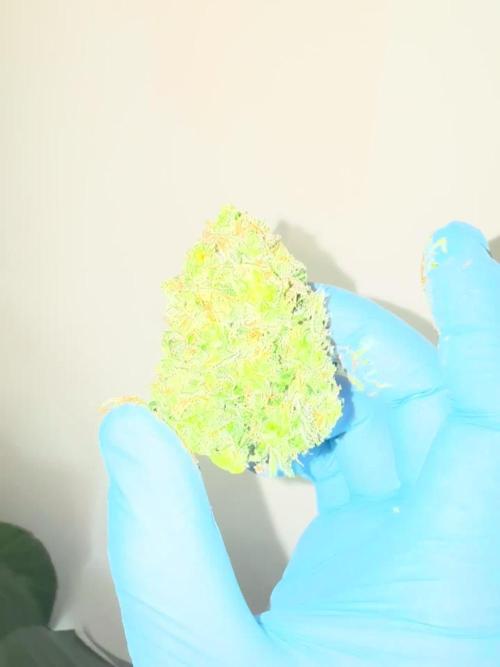
This strain has never disappointed. Always a beautiful fade and amazing smell.
Likes
3
Share


@Bdawg
Follow
Think mighy av slight magnesium or calcium defiency on plant where i zoomed in on viseo.
Am feedin cana a&b.
And green sensation.
Stopped calmag last week
Likes
3
Share


@Altitonans_Fulmen
Follow
Lights are 58 inches from the main source to the top of the pot and the soil surface. If you added up all the lights in the tent, it would be 1100w-1200w total across 14 lights. Using them all at once is far too much for a plant and incredibly difficult to deal with environmentally. The lights are fixed in position; side lights have dimmers, allowing for pinpoint precision of PPF. Fixed at 58 inches, cannot move them closer to increase intensity. Instead, achieve optimal PPF by distributing smaller wattages across a massive, multi-fixture matrix. Triggering specific plant defenses without melting the canopy.
What's the point/blah blah wattage?
Never really go above 600W at any one time. Lights come on in the east of the tent and set in the west. At sunrise and sunset, the red-to-far-red R:FR light ratio drops because the sun's low angle scatters red light more than far-red light. This shift reduces active Pfr and increases inactive Pr, mimicking Mother Nature herself.
Deployed a lighting system featuring extra 660 nm deep-red and extending the spectrum up to 780 nm achieves the full Emerson Enhancement Effect by simultaneously balancing Photosystem II (PSII) and Photosystem I (PSI) to maximize quantum yield. By pairing deep-red photons with far-red photons, you trigger a synergistic biological response where the resulting photosynthetic rate is higher than the sum of both wavelengths used individually. This practice directly leverages the updated extended Photosynthetically Active Radiation (ePAR) framework. The Emerson effect accelerates plant metabolism and heat capture; you must proactively scale up your ambient room temperature, nutrient delivery, and CO₂ supplementation to prevent the light from stalling out your cannabis plant.
UVA stays high all day from morning to night, but UVB peaks at solar noon (middle of 18-hour days) when the sun is peak. Morning color starts at 2k-3k; by noon it goes to 5k- 6k and back to 2-3k for sunset, with differing P:FR at light off.
The extra-blue light is to assist with photoreactivation of UVB damage. No more yield loss for me. Using extra blue light for photoreactivation is what I do. Blue/UVA light activates photolyase enzymes, which directly repair DNA damage caused by UVB radiation.
But what's the point if it's not for yield?
Ultraviolet (UV) radiation—specifically UVA (315–400 nm) and UVB (280–315 nm)—acts as a critical environmental signal that programs a plant's photoprotective genes to unlock its true photosynthetic potential. When growers push crops to their absolute photosynthetic maximum via high-intensity light and elevated carbon dioxide, the photosynthetic machinery easily becomes overwhelmed. Emerging photobiology research demonstrates that UV radiation prevents this limiting bottleneck; it triggers specific transcription factors and signalling networks that fortify the plant's cellular defenses, allowing it to process extreme light levels without sustaining structural damage.
There are 8 limiting factors of plant growth; when carbon dioxide becomes the 9th limiting factor of plant growth, it shifts the growth curve from exponential to linear. The restriction after that is "photoprotection" against reactive oxygen species (ROS), managed via non-photochemical quenching (NPQ) and the xanthophyll cycle, which bridges into precise hydrogen and redox dosing.
UV radiation, particularly UVA, and the synthesis of zeaxanthin are critical for the xanthophyll cycle to function.
It's not chasing purple strains... One likes to call it chasing the limits of growth, trying to make the linear exponential, just like father mathematics prefers.
In order to do that, must control every environmental variable and compound the plant’s metabolic rate. True exponential growth means the rate of increase matches the current mass at every stage, requiring a closed-loop system where light, CO2, and nutrition lock into a synchronized upward curve. First, you must attempt to understand what restricts it. Precise hydrogen and redox dosing.
Nature mathematically optimizes quantum energy transfer and light absorption efficiency within the photosynthetic machinery, as it naturally dictates energy scaling hierarchies and resonance dynamics. Most won't even understand that; once you do, it changes everything.
Constructive interference occurs when two or more overlapping waves meet in phase, meaning their crests and troughs perfectly align. Their amplitudes add together, creating a new, amplified wave with greater intensity than the individual components.
Constructive interference is the foundational mechanism that establishes a resonance hierarchy across physical, structural, and acoustic systems.
Chromophore spacing is tuned to sub-nanometer precision to match the wavelengths of absorbed light, forcing constructive interference.
Light-harvesting proteins form geometric rings and lattices. These shapes act as physical resonators, trapping and focusing the wave energy.
This same principle dictates how opera singers shatter glass, how musical instruments resonate, and how bridges withstand structural vibrations. Nature uses the exact same math to harvest a photon as an engineer uses to design a concert hall.
When you push high PPFD and elevated CO₂, you create a metabolic bottleneck. The plant cannot process the energy fast enough, leading to electron backup, light-induced damage, and a collapse from exponential growth into a flat, linear rate. UV light acts as the regulatory valve that prevents this collapse.
In standard agronomy, Liebig's Law of the Minimum dictates that growth is limited by the scarcest resource. When you maximize water, nutrients, light, temperature, and CO₂, the bottleneck shifts to metabolic processing speed and photoprotection. By controlling the Redox state of the plant using UV, the xanthophyll cycle, and managing ROS, you can prevent the plant from hitting a hard photosynthetic ceiling. Instead of the growth curve flattening out (linear or plateauing due to photoinhibition), the plant continues to compound its metabolic rate efficiently. You are forcing the plant to operate at peak thermodynamic efficiency.
By matching the UVB peak with sustained UVA and shifting Kelvin temperatures (2K to 6K), you are damaging the plant just enough to trigger defensive genes, while simultaneously providing the exact light energy needed to repair that damage instantly.
UVA radiation and specific blue wavelengths accelerate this enzymatic conversion. Zeaxanthin acts as a structural sponge that absorbs excess excitation energy from chlorophyll and dissipates it safely, preventing ROS formation. Without UV signaling, the xanthophyll cycle cannot keep pace with extreme light, leading to dynamic photoinhibition (yield loss).
The addition of Spirulina is primarily for zeaxanthin, as it contains a lot. But on top of that, the active Hawaiian Spirulina in the matrix was cultivated in open ponds using a combination of 100% fresh potable water from Hawaiian aquifers and ultra-pure, deep ocean water containing all 94 trace minerals & elements. Then gently dried using patented Ocean Chill Drying technology and cold-pressed to ensure maximum nutrient levels. Spirulina, a blue-green alga, is rich in nitrogen, phosphorus, and potassium (NPK), making it an excellent source of nutrients for plant growth. Studies have shown that Spirulina can be used as a biofertilizer, effectively replacing chemical fertilizers, especially for nitrogen, with a whopping NPK of 10% (N), 20% (P), and 20% (K). Rich in proteins, amino acids, trace minerals, and plant growth-promoting compounds.
Zeaxanthin is a vital plant pigment that accumulates under intense light to drive non-photochemical quenching (NPQ), acting via thermal energy dissipation, direct singlet oxygen scavenging, and thylakoid membrane stabilization.
The violaxanthin cycle (or xanthophyll cycle) reversibly converts violaxanthin to zeaxanthin via antheraxanthin to protect plants from photooxidation.
Understanding this interconversion is vital for optimizing non-photochemical quenching (NPQ) and pushing photosynthetic limits under high-light stress.
Ascorbic acid (vitamin C) is a natural antioxidant that plants produce internally to neutralize harmful reactive oxygen species caused by photosynthesis and high light stress. Acts as a co-factor for enzymes like violaxanthin de-epoxidase in the xanthophyll cycle, which safely dissipates excess light energy.
1g ascorbic acid will neutralize 100% of chlorine in upwards of 30 gallons of tap water. If your local tap water uses chloramines (chlorine bonded with ammonia) instead of free chlorine, you will need roughly 20% to 30% more ascorbic acid to completely break the tougher chemical bond.
Molecular hydrogen and hydrogen-rich water act as selective antioxidants that help lower oxidative stress. They neutralize toxic reactive oxygen species like hydroxyl radicals and boost natural antioxidant defense systems in biological and plant systems exposed to high-intensity light or abiotic stress.
UVA and UVB act as stress signals that upregulate the plant's secondary metabolism. It forces the plant to build an internal "sunscreen" (flavonoids and anthocyanins) and fortify its cellular defenses before the peak solar noon crisis. This keeps the metabolic highway open.
In nature, the ambient ratio of UVA to UVB at solar noon sits roughly between 10:1 and 20:1 (depending on latitude and elevation). In a high-PPFD indoor matrix, maintaining a strict ratio—often aiming for around 12:1 to 15:1 UVA to UVB—provides the optimal signaling threshold.
Balancing Far-Red (FR) light at "light-off" to manage the phytochrome photo-equilibrium (Pfr to Pr conversion) in tandem with the UV schedule. Omg, the logic.
Hydrogen concentration and redox signaling as secondary messengers in this high-intensity loop.
Under the intense solar noon matrix, the pH of the thylakoid lumen drops. This acidic environment activates the enzyme Violaxanthin De-Epoxidase (VDE), which converts violaxanthin into the photoprotective zeaxanthin. VDE cannot function in a vacuum; it strictly requires ascorbic acid (Vitamin C) as an electron donor to run this conversion. If a plant undergoes heavy light stress and runs out of internal ascorbic acid, the xanthophyll cycle stalls. The plant can no longer engage in Non-Photochemical Quenching (NPQ), leading to immediate singlet oxygen O2 formation and destruction of the thylakoid membrane. This is "The Ascorbic Acid / Xanthophyll Engine"
Using ascorbic acid to neutralize chloramines in your water isn't just protecting your rhizosphere biology it actively prevents the degradation of your nutrient solution's redox potential before it ever touches the roots.
When pushing plants to the absolute edge, traditional antioxidants can be a double-edged sword because they blindly neutralize all free radicals. This is a problem because some Reactive Oxygen Species (ROS) act as critical signaling molecules telling the plant to grow. Molecular Hydrogen H2 is the Selective Kill-Switch.
Molecular hydrogen H2 is a revolutionary tool because it is a selective antioxidant. It ignores beneficial signaling ROS (like mild hydrogen peroxide) and targets only the most destructive, cell-shattering radicals—specifically hydroxyl radicals OH) and peroxynitrite.
By dosing hydrogen-rich water or managing hydrogen redox signaling, providing an emergency pressure-release valve for the plant's electron transport chain. It keeps the cellular environment stable enough that the plant never has to downregulate photosynthesis to protect itself. This maintains cellular voltage.
To trigger this defensive matrix without stunting the plant, you cannot simply blast UV indiscriminately. You must use UVA as the "scout" and UVB as the "enforcer. High UVA acts via the cryptochrome and phototropin photoreceptors to upregulate the expression of the HY5 transcription factor and prime the VDE enzyme. When the sharp spike of UVB hits at solar noon via the UVR8 receptor, the plant's biochemical "sunscreen" (flavonoids and anthocyanins) and its zeaxanthin pools are already pre-staged and waiting. This prevents the temporary stunting or "lag phase" usually associated with sudden UVB exposure."
Closing the Loop: Far-Red End-of-Day (EOD) Synergy
The final masterstroke is aligning this UV defense with a Far-Red (FR) lights-off routine. The Red-to-Far-Red Drop: At the end of the photoperiod, knocking out the blue/UVA spectrum and leaving a targeted burst of pure Far-Red (730nm) instantly flips the plant’s master switch. It converts active Pfr to inactive Pr in minutes rather than hours. Why this matters for the UV loop: UV radiation and high-intensity lighting keep the plant in a highly alert, photoprotective state that requires massive ATP expenditure to maintain. By forcing an immediate Pfr/Pr) conversion at lights-out, instantly commanding the plant to cease defensive expenditure, lower its metabolic respiration rate, and transition directly into nighttime cellular repair and carbohydrate translocation. You are maximizing the efficiency of its "sleep." every ounce, every last piece.
Highly synchronized biological dance, balancing the exact input of electrons with the exact mechanism to dissipate them safely when they overflow.
Peace.