Processing
Likes
Comments
Share
Likes
2
Share
@PalmaGrow
Follow
No se cómo expresar mi felicidad después de casi 3 años sin poder cultivar consecutivamente he podido cosechar esta belleza gracias a @blacktunaco por la K.O una genética llena de resina con flores compactas. Cometiendo errores desde el principio se pudo obtener una excelente planta corrigiendo todo para así mejorar el aprendizaje continuo. Se dieron 12 días de lavado de raíz y 3 de estos estuvo expuesto a lluvia constante durante los 3 días por tal razón se decidió cosechar para evitar dañar las flores
Likes
9
Share
@BUZIMAN
Follow
Gelonade is gently growing, with a nice lemon smell. I have a feeling this plant is going to give me popcorn flowers. (Maybe due to the high heat 🤷‍♂️) I always found the buds quite thin from the beginning of flowering. Despite that, it looks healthy. More in the next episode 😎 Milky Way: Also growing very good, Nice smells, seems quite heat-resistant. The pistils are starting to turn color 😎
Likes
9
Share
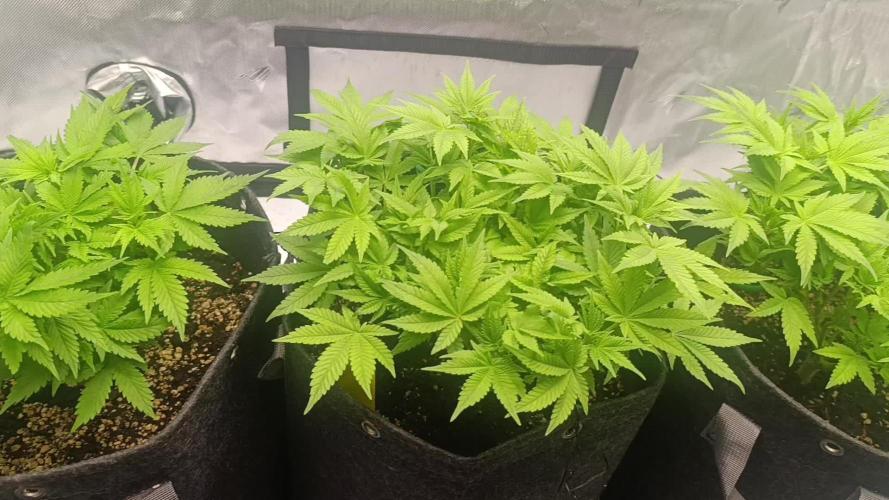
Been a busy week getting the new setup going. She has been going really well , first week of flower , interested to see how she goes. She is a nice little plant problem free so far.
Likes
5
Share
So jetzt habe Ich meine erste Ernte hinter mir. Das Ergebnis hat mich überrascht. Mit so einem kleinen Setup und eigentlich Keine professionelle LED Lampe, Habe ich solches fertig bekommen. Nach dem groben befreien der Blätter habe ich auf der Waage 577 g nass. Ich bin gespannt wie viel es circa trocken sein werden. Ich denke mit 100 g kann ich wohl rechnen. Sobald sie trocken sind werde ich mich noch mal melden.
Likes
3
Share
Waited 5 days for soil dry and cannazym to arrive. Watered ¾qt today. Will monitor soil moisture levels a little closer. Also going to recalibrate both of my ph meters. More pictures to come, waiting on the lights to kick on. Suggestions appreciated! Happy growing!
Likes
26
Share
Gracias al equipo de FastBuds y XpertNutrients sin ellos esto no sería posible. 💐🍁 Gorilla Punch (Auto): Niveles fulminantes de THC. Testado en laboratorio con un 25,695 % en cannabinoides. Perfil rico en terpenos. Los complejos y sabrosos terpenos de esta variedad son codiciados tanto por los extractores como por los fabricantes de hachís. Rendimientos impresionantes. Los cultivadores pueden esperar hasta 550 g/m² de flores deliciosas y aromáticas, rebosantes de THC y otros jugosos cannabinoides. Prueba de excelencia. Dos premios al primer puesto en menos de dos años dejan claro que esta cepa es una auténtica campeona. 🌻🚀 Consigue aqui tus semillas: https://2fast4buds.com/es/seeds/gorilla-punch-auto ⛽ XpertNutrients: es una empresa especializada en la producción y comercialización de fertilizantes líquidos 🍶y sustratos🐛, que garantizan los mejores resultados y cosechas de la más alta calidad. A través de una cuidadosa selección de materias primas y un proceso de producción avanzado, sus productos son sinónimo de resultados confiables. 🛒 Consigue aqui tus fertilizantes: https://xpertnutrients.com/es/sobre-nosotros/#:~:text=Xpert%20Nutrients%20es%20una%20empresa,de%20la%20m%C3%A1s%20alta%20calidad. 📆 Semana 7: Por fin se ha acabado este temporal maldito y se pu ahora espero que crezca algo mas y se hagan unos buenos cogollos resinosos. Todo va bien hasta ahora 😊
Likes
2
Share
Topped once, turned off IR @ nights, slowed vertical growth back down, and took off both of the very lowest internodes on each plant. Eisenia fetida Stratiolaelaps scimitus Armadillidium vulgare Red wigglers (Eisenia fetida) are highly beneficial. They are considered an ideal choice for "no-till" or container-based organic growing because they live in the upper layers of soil, feeding on organic mulch rather than the plant's root system. Red wigglers accelerate the breakdown of organic amendments and produce high-quality, nutrient-dense worm castings directly in the root zone. Clover is another exceptional component of an organic rhizosphere, offering a sustainable, self-sustaining alternative to synthetic nitrogen fertilizers produced via the energy-intensive Haber-Bosch process. By forming a symbiotic relationship with Rhizobia bacteria, clover converts atmospheric nitrogen N2 into ammonium NH4, providing a steady, slow-release nutrient source that enhances soil health and reduces environmental impacts. Red clover offers superior nitrogen fixation and biomass production compared to white or yellow clover, making it the premier choice for maximum soil vitality, particularly for improving soil structure and providing a high-volume nitrogen credit for subsequent crops. If it is fully functional and efficient soil, the rhizophagy cycle is superior long-term than any synthetic delivery when it comes to preventing deficiencies, not because it's "better," per se. The medium will require a very high CEC to make it to harvest without re-fertilization. The rhizosphere acts as a dynamic, interactive exchange where plants and soil microbes trade resources based on immediate needs. When a plant lacks a specific nutrient, it changes its physiology and releases specialized chemical cocktails—root exudates—into the surrounding soil. These exudates, which include sugars, amino acids, and organic acids, serve as a "shopping list" to attract specific microorganisms, which in turn return higher levels of desired nutrients. There is nothing in comparison when using synthetic delivery, which can cause plants to stop producing exudates, effectively "starving" the beneficial soil life, over time turning the soil barren and void of microbial life. Responsible use, applying the right amount at the right time, can minimize these negative effects. Relying solely on synthetic fertilizers without replenishing organic matter is what typically leads to exhausted soil. The use of synthetic fertilizers can utilize the Cation Exchange Capacity (CEC) of the soil, but without a robust rhizosphere and active microorganisms, the efficiency of this process is significantly reduced. This makes synthetic growing more difficult to prevent deficiencies overall compared to an efficient organic living soil with a robust rhizophagy cycle, as there is no "one size, fits all" when it comes to different nutrient profiles of strains/genetics, making it trickier to "guess" and prevent creeping deficiencies. CEC does not contribute towards EC. Add more CEC using biochar, problem solved. If you keep pH between 6.3 and 6.7, hydrogen is exudated to cycle the medium's CEC for its needs. Keeping the pH between 6.3 and 6.7 creates an environment where plants release H+ to displace positively charged nutrients (like Ca2+, Mg2+, K+ held on soil particles or within artificial media this cycle through nutrients via the medium's Cation Exchange Capacity (CEC) Microorganisms generate a stable potential of approximately 0.5 V EC. The rhizosphere creates its own food, similarly to chelation, using 1000's of varying combinations to create its own food. Start to finish, just add water. Eventually, more materials will need to be added at the beginning of each new grow, but very attainable to go from seed to harvest without ever fertilizing. ATP is important when it comes to biomass accumulation. Cellular root respiration and cellular respiration are essentially the same biological process, the breakdown of glucose to create usable energy (ATP) in the presence of oxygen, just taking place in different parts of the plant. Synthetic (salt-based) grows have significantly lower levels of total rhizosphere respiration, often referred to as root-zone activity, compared to organic living soil grows. While the plant roots themselves may respire in both systems, the surrounding soil ecosystem in a living soil setup is vastly more active, teeming with bacteria, fungi, and beneficial microorganisms. 2 pools of ATP, it won't double in growth buuuut, but improving root respiration by ensuring high oxygen in the soil is crucial. Good aeration ensures roots can fully utilize glucose to generate the ATP necessary for nutrient uptake, leading to healthier and more productive plants, even if growth isn't exactly doubled. The ATP created using root respiration is dedicated to rootzone growth; the ATP created using regular cellular respiration in a synthetic system would have to dedicate a lot of ATP to the roots when there is little or no root respiration. It's true that there is less of an initial ATP cost in breakdown when nutrients are already in their final form (synthetic), but you lose a solid chunk of ATP when the entire plant is reliant on cellular respiration alone; a large portion of ATP is dedicated to root zones for "forced" nutrient uptake rather than traded. Making it overall less efficient, even if the initial cost of breakdown is higher. Not sure if I butchered that but one can hope It makes sense. Oxygen is of critical importance when growing in living soil compared to synthetic soil because it supports the metabolic needs of the microbial, fungal, and insect ecosystem, rather than just the root respiration required by the plant itself. While synthetic grows can survive in lower-oxygen environments with precise mineral feeding, living soil systems rely on aerobic microbes to decompose organic matter (microbial mineralization) to create plant-available nutrients, which is an oxygen-intensive process. While a specific fair percentage is difficult to guess, my experience points to a massive, compound difference between the two methods and the amount of oxygen required. All the ATP spared is used on more biomass, not only that, but the extra root respiration can achieve a much higher CO2 compensation point naturally than you could with synthetic and atmospheric CO2 alone. As a plant grows faster and increases in size, its demand for nutrients to support that growth increases, requiring a higher rate of nutrient uptake. As plants enter phases of rapid vegetative/floral growth, their metabolic demand for nutrients increases exponentially. Without a robust buffer zone—whether in the soil (cation exchange capacity) or in a hydroponic reservoir—deficiencies will occur rapidly because the instantaneous demand for specific nutrients can quickly exceed the rate of supply. A growing body of evidence suggests that organic living soil provides superior long-term soil health and environmental benefits compared to synthetic fertilizers, which are often criticized for promoting a cycle of dependency and degradation. While synthetic fertilizers offer short-term convenience and high yields, they often come at the expense of long-term soil health, sustainability, and increased corporate control over growers/ farmers. Organic living soil, while slower and requiring more care to establish, creates a sustainable, resilient, and, ultimately, more fertile environment. We don't really grow; we facilitate energy conversions, and energy is just numbers. Because the universe works the same way today as it did yesterday, there is a single, fundamental mathematical quantity that remains constant. We call this quantity energy. You cannot put "energy" under a microscope. You observe matter and forces (like heat, motion, or light), but energy is just a scalar number calculated to help predict how these things will change and interact. When an object falls, or when a battery powers your phone, matter shifts and changes form. Through it all, the universe ensures the "total score" of the numbers remains exactly the same. Once all water is removed, approximately 95% to 97% of a plant’s dry matter consists of carbon, oxygen, and hydrogen. These three elements form the structural backbone of all plants. NPK & all the rest 3-5%. Indigenous Amazonians created, or at least significantly enhanced, the fertile, dark soil known as Terra Preta de Índio (Portuguese for "Indian Black Earth") by incorporating biochar and other organic materials into the soil. This anthropogenic (human-made) soil technique, which dates back roughly 2,500 to 8,000 years, allowed ancient civilizations to flourish in regions with naturally poor, acidic, and nutrient-poor tropical soils.
Likes
12
Share
@thonhash
Follow
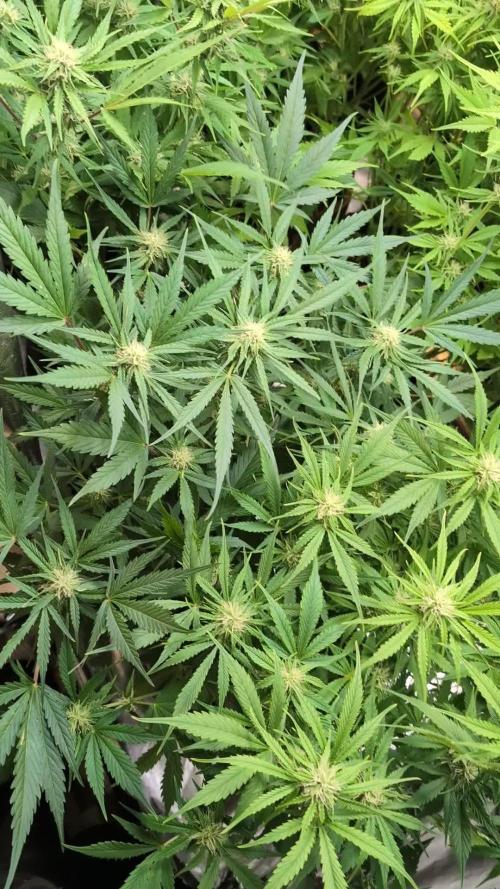
En esta última semana de prefloracion, aprovechamos a hacer otra poda de bajos y defoliación (como podéis observar,si se ha llevado bien hsta ahora el cultivo,y hacer correctamente los cortes,y en su momento, se recuperará en apenas horas/día. Seguimos regulando el led a un 75/85%(225/240w aprox) y entra en acción el terpesyn. Volvemos a aplicar enzynabis
Likes
41
Share
Likes
4
Share
@Borberad
Follow
Woche 11 Nachdem die Blüte sich recht lange nach hinten geschoben hat und nun auch die Blütenansätze etwas seltsam wirken, müssen wir wohl festhalten, dass die Gute wahrscheinlich mit ihrer Mutation zu kämpfen hat, und nicht wie erwartet zu einer nährstoffgierigen Palme geworden ist. Parameter wie Bodenfeuchte oder Überdüngung (pH, Ec) wurden gecheckt ergaben jedoch keine Auffälligkeiten. Mal schauen, was aus der kleinen Mutantin evt. doch noch erwächst. Interessant zu beobachten ist an dieser Stelle, wie dicht die noch recht kleinen und knubbeligen Buds mit Trichomen bedeckt sind. Sollte das Pflänzchen noch ordentlich zu bulben beginnen wird es eine Glitzerpracht werden.
Likes
1
Share
Day 62 lookng good.. really coming along now.. two more weeks.
Processing
Likes
13
Share
@4F1M6
Follow
I started germination of 3 Sweet Zkittlez beans on 29/12/2020 (now sweet zenzation). I pre moistened my rockwool cubes with ph balanced water to 6.4. Made sure the plugs were just damp and not soaked. Using a small wooden dowel I increased the size of the plugs pre made holes. Than I sowed my beans into the holes. Ripped off a small piece of rockwool and mulched it up. Lightly filled the holes in with the mulched rockwool. Than stuck the plugs into a misted humidity dome, to complete germination. Shouldn't take anymore than 4-5 days to see some sprouts. Once I see some cotlydon leaves bursting to the surface. I will get the plugs planted into some 1 gallon pots. Plus get these ladies situated into their home. Cant wait! Some background information on my experience with Sweet Zkittlez. I've only grown this one out once. Did her up in a 1 gallon SOG grow. It had a very impressive main cola. With quality bud structre and trichome production. The plant had a very luring sexy odor. I was very satisfied with the results. The variety got extra hungry for both p and k mid flower. A little bit needier but definitely worth the extra attention. Very excited to see the results in a full size plant. Giving thus a variety a chance to show me full swing.
Likes
10
Share
Ok so I put a significant amount of time into this grow. Learned a ton (everything lol) as it was my first. After the final week, I decided to harvest when the trichs were milky and clear. Few amber here and there but time constraints meant I had to chop a bit earlier than I’d have preferred. I do prefer a more uplifting cerebral effect yet realize with an indica leaning strain, having all cloudy and maybe 25% amber would have been 👌🏼. My drying process began by chopping a plant at a time, I washed the buds to get the PM or traces off (also grime from outdoor city air). I used a big bucket and did hydrogen peroxide. In heindsight I would have used baking soda as well and did a two step wash. After washing them, I hung to dry with a fan until they stopped dripping then into the tent they went for drying at roughly 68 degrees and 55% humidity. I staggered the harvest and wet trimmed about 70% of the time with the latter 30% dry trimmed. This was done for convenience and to try both ways. I dried everything for about 12-13 days until the smallest stems snapped and the larger ones were borderline cracking. I started jarring everything with humidity meters, about a half oz per smaller widemiuth jam jar. The smell was never hay-like but did vary in strength and scent from plant to plant. Almost no seeds which was pretty great to see. One of the outdoor plants had quite a few seeds so I kept that separate. It ironically had the stinkiest floral smell. So what’s the total!! After curing in jars for about a month, I weighted everything and came out with 10.5oz of cured trimmed flower and about 2 oz of sugar leaf trim which I am making canna butter with and cooking. Made some reduculously strong cookies: 11 cookies from about 10 grams of trim. Ate two and was medicated for about 24hrs 😂. Some of the buds were super dense and cured down to 58 RH easily. There were a few of the large big buds that had mass but less density and fewer trichomes. These were more red-hair visually than the others. The smoke: surprisingly smooth. The effect is energizing and uplifting at first, with a nice sedative body feeling on the second half of things. Overall, I’m super happy with the result. Learned a TON and will be modifying my approach a bit next go-around this spring. Stay tuned!!!
Likes
6
Share
@Chucky324
Follow
Hello This is the end of week 9 and the beginning of week 10 of veg. Got my 4 year cancer checkup... got the nose and throat camera.. And the Dr. couldn't find anything wrong. I get 1 more checkup in a year before they can give me a... all clear for cancer. I'm going to beat it... Thanks Rick Simpson... Picked up this magazine a few days ago and just wanted to share the adds and articles. There's a Cheech and Chong interview and story in my Captain Future diary this week if your interested. Everything is going good in here. I've seen some fungus gnats flying around But I've also seen some very small spiders starting webs, and they will grow, and take care of the gnat problem. The plants are just getting rainwater for now. There's is lots of compost in each pot... the roots just have to find it. I'll give some food in a week or two. Going to be turned to flowering by June 1st, so there is still another month of veg to go. OK. Have Fun. Chuck
Likes
31
Share
Likes
7
Share
@XxWald0
Follow
The Do-Si-Dos Auto has some huge heavy buds and it definitely could've benefited from more LST but I'm I didn't have the room
Likes
10
Share
------------------------------------------------- Day 22 Water: N/A Humidifier: 45% (LOW-MIST) Fan Speed: High Light on @ 19:00 (26.4° celsius @ 48% RH) Light off @ 13:00 (22.8° celsius @ 56% RH) ------------------------------------------------- Day 23 Water: N/A Humidifier: 45% (LOW-MIST) Dehumidifier: On Fan Speed: High Light on @ 19:00 (27.6° celsius @ 46% RH) Light off @ 13:00 (27.1° celsius @ 51% RH) ------------------------------------------------- Day 24 Water: N/A Humidifier: 45% (LOW-MIST) Dehumidifier: On Fan Speed: High Light on @ 19:00 (26.2° celsius @ 51% RH) Light off @ 13:00 (22.7° celsius @ 40% RH) ------------------------------------------------- Day 25 (Feed day: 15 tbsp Worm castings + 5 tbsp 2-8-4 Gaia Green Power Bloom) Water: 0.5 Gallon RO water + 5ml Remo VeloKelp Humidifier: 50% (LOW-MIST) Dehumidifier: On Fan Speed: High Light on @ 19:00 (27.1° celsius @ 48% RH) Light off @ 13:00 (23.0° celsius @ 50% RH) ------------------------------------------------- Day 26 **LST** Water: N/A Humidifier: 50% (LOW-MIST) Dehumidifier: On Fan Speed: High Light on @ 19:00 (26.8° celsius @ 48% RH) Light off @ 13:00 (23.5° celsius @ 50% RH) ------------------------------------------------- Day 27 Water: N/A Humidifier: 50% (LOW-MIST) Dehumidifier: On Fan Speed: High Light on @ 19:00 (27.7° celsius @ 48% RH) Light off @ 13:00 (23.4° celsius @ 50% RH) ------------------------------------------------- Day 28 Water: N/A Humidifier: 50% (LOW-MIST) Dehumidifier: On Fan Speed: High Light on @ 19:00 (26.7° celsius @ 50% RH) Light off @ 13:00 (23.2° celsius @ 50% RH) -------------------------------------------------