


Likes
Comments
Share


@Italianganya88
Follow
Letzten 7 tage unglaublich an masse und höhe gewonnen echt atemberaubend das anzusehen ,hab das zelt gut voll bekommen mit wenig plants bis jetzt alles super. Habe heute meine neue Led lampe bekommen bin positiv begeistert.Habe 600watt durch eine 1200watt ausgetauscht.


Likes
2
Share


@Fleetwood
Follow
I am busy all weekend, so I wanted to make sure I got something out of the grow (just in case). I might use a good portion of this harvest for rosin and for when friends ask :) That is if the second plant lasts until next week. I cant ask my wife to keep an eye on water, roots, or bud.

Likes
13
Share


@gr3g4l
Follow
Empezamos la semana cambiando los nutrientes al observar ya unos pequeños pistilos o estigmas , en definitiva, empezaron a mostrar tímidamente el sexo. Empiezo con poco y iré subiendo la dosis hasta 4ml/L hasta que vuelva a cambiar de nutrientes.
Creo observar del Lumatek ATSpro que le fataria un punto de luz en el centro del panel. Por lo general con otras luminarias la planta del medio me solia crecer mucho mejor y esta vez está quedando retrasada. Seguiré cultivando y si me sigue pasando lo mismo entonces no tendré ninguna duda, por ahora solo son conjeturas, xd
De lo anterior rectifico , tengo que decir que pasados dos dias lo estoy viendo diferente, la del medio parece que sigue por buen camino, ahora apenas notaria la diferencia.
La semana anterior, la sexta, se les hizo una segunda pulverización con dosis alta de 3ml/L con spiderbloom ( "fitofortificante de impacto muy rápido") pero de nada sirvió, durante esta semana subió la temperatura a 30ºC un par de dias y las arañas salieron a pegarse el gran festín.
Una vez constatada la existencia de araña roja correteando por el envés de las hojas solo toca desinfectar bién el armario, lavarlas a todas una a una con agua corriente para arrastrar el máximo de arañitas y una vez secas darles con algun acaricida químico. De no hacerlo ahora me seria imposible más adelante y no tengo ningunas ganas de dejar perder este cultivo. No soy partidario de lo químico pero menos de dejarlas perder.

Likes
38
Share


@Snakeking
Follow
Gz# 1 & 3 & 6 is maturing
Gz#3 is not fattening so much and sugar leaves are turning brown.maybe i chopif in next 2/3 days .
I am happy with them

Likes
11
Share


@Green_Dream
Follow
Such a great week!
I’ve never seen such a fast growth before.
Since they were ready the girls got transferred in their final pots, 5l pot + 2l extra from the self watering grow box.
The soil is ca. 50% coco, 50% soil … well there’s probably about 15% perlite in there as well.
They soil mix is amended with ca. 1,5g/l green house feed biogrow. Plus ca. 6g/pot Aktivator.
And from now on they will stay in the greenhouse

Likes
23
Share

@Pblc_10
Follow
11.12.25
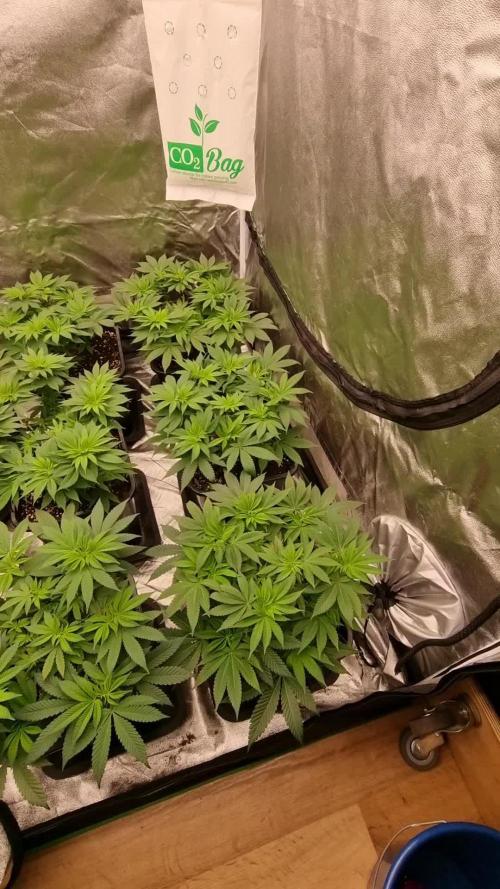
Heute wird die blüte eingeleitet und ein paar Fotos folgen noch. Zu sagen gibt's nicht viel nur das sie sehr gut aussehen, alle Tops auf einer Höhe sind und die seitentriebe auch bereits neue seitentriebe bilden. An 2 Stelle ist mir vor n paar Tagen ein trieb abgebrochen aber innerhalb der paar Tage sind schon 2 dafür nachgewachsen aus dem Stück was noch hing.
13.12.15
Hab erstmal nur die Bilder hochgeladen hab im moment nur wenig zeit ✌️
Wie immer würde ich mich über Tipps freuen ✌️🍀
Likes
29
Share


@deFharo
Follow
Hola cultivadores de marihuana, bienvenidos a la semana de corte, después de 14 semanas de vida de esta cepa auto floreciente con dominancia índica, ha llegado a la gloria de su zenit.
He cultivado esta cepa con atención y esmero, en una maceta air-pot de 6l, en una mezcla de sustratos ligeros con minerales, sustratos activados con microbiología autóctona recogida en los bosques vírgenes de mi región y regada siempre con agua pura de montaña.🗻
La he alimentado con macro y micro nutrientes solubles creados con fermentados anaeróbicos e hidrolizados propios, creados en casa con microbiología, elementos orgánicos y minerales, mantengo mucha y buena luz en las carpas de cultivo, cultivo esta planta con 10h de luz interior, más otras 10 horas de luz exterior y cuatro de sueño, mis plantas siempre llevan sombrero (mulch), con materia seca para dar de comer a la microbiología y mantener niveles de humedad óptimos en superficie, para facilitar la creación y mantenimiento de raíces adventicias desde el primer centímetro de tierra.... 💧🌞👨🌾
Triple satisfacción al cortar esta planta
1) Deja hueco en mi carpa de cultivo en un tiempo récord.
2) Acabó el stress que me suponen las cepas auto florecientes en su veloz carrera por fructificar.
3) Por el objetivo cumplido de cultivar en pequeña maceta, con horario mixto interior/exterior (10/10n), que me hizo ahorrar gastos, y conseguir unos buenos datos de producción.
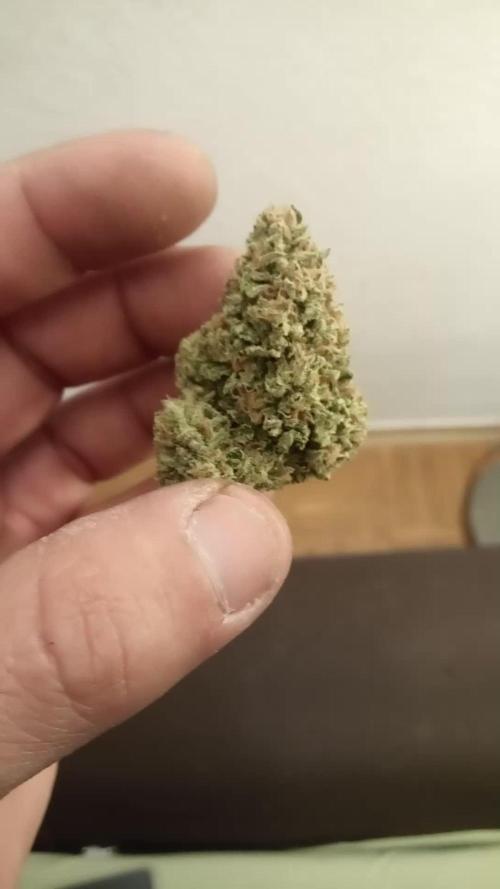
La planta se ha comportado con vigor y fortaleza, gran bebedora, me ha regalado gruesas, pegajosas y densas colas... ahora están secando durante una semana y después cuando lleven una semana de curado publicaré los datos y valoraciones de la cosecha.
Hasta la cosecha...
SALUDOS A TODOS Y GRACIAS POR ESTAR AHÍ!! 🖐️👨🌾🌞💧
================================= 🙄☮️👇🙏👌🤛👍👉👉👉❤️💜❤️👈👈👈🤜👌🙏👇☮️🤩🖐️🏻 =================================




Likes
17
Share

@Pheno_Minds
Follow
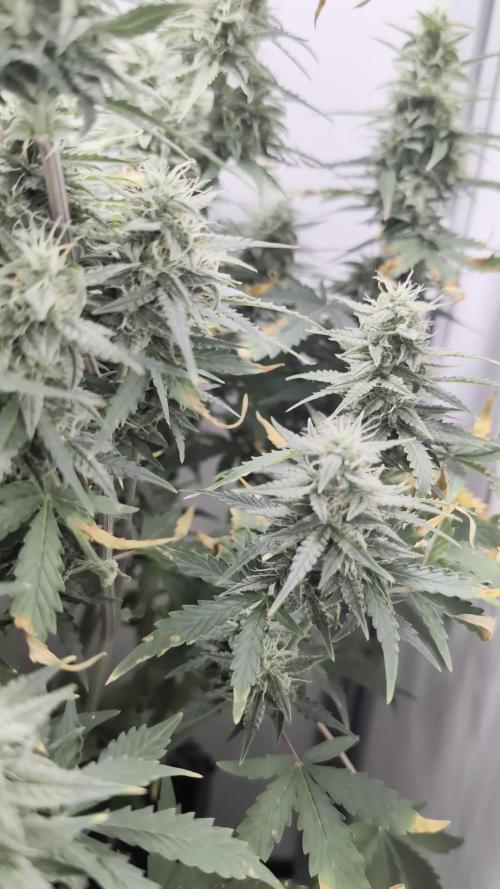
💧 Wir sind jetzt in der Blütephase, Woche 6, und die Pineapple Pulse von Original Sensible Seeds legt ordentlich an Masse zu. Die Pflanze steht stabil, die Blütenstände verdichten sich zusehends und zeigen eine ordentliche Harzbesatzdichte. Das Gesamterscheinungsbild ist kräftig, auch wenn die Blattspitzen an einigen Stellen schon etwas gelblich bis braun werden, was bei dem Stadium und dem hohen EC-Wert kein Grund zur Panik ist.
📏 In dieser Woche gab es 2 Düngungen bei einer gesamten Gießmenge von 6 L, also im Schnitt 3 L pro Mal. Der pH-Wert lag im Schnitt bei 5.7, der EC-Wert bei 1.5 mS/cm. Der Abfluss hat sich bei einem pH von 6.7 und einem EC von 2.6 mS/cm eingependelt. Die Umgebungswerte waren stabil bei einer Temperatur von 27.76 °C, einer Wassertemperatur von 19.85 °C und 65 % Luftfeuchtigkeit. Der VPD liegt bei 1.32 kPa, bei einem CO2-Wert von 946 ppm und 18 Stunden Licht am Tag.
📋 Beim Dünger fahre ich das volle Advanced Nutrients Programm: Sensi Cal-Mag Xtra mit 0.6 ml/L, Connoisseur Bloom A und B mit 1.2 ml/L, Rhino Skin mit 1 ml/L, Tasty Terpenes mit 2 ml/L, Bud Candy mit 2 ml/L und Canna Cannazym mit 2 ml/L. Einziger Ausreißer im Schema: Ich habe das Overdrive auf 1.7 ml/L statt der vorgesehenen 1.5 ml/L leicht angehoben, um den Endspurt nochmal ein bisschen zu pushen.
📸 Auf den Bildern sieht man den aktuellen Zustand gut: Die Pflanze zeigt eine tiefgrüne Blattfarbe, die durch die beginnende Vergilbung an den Rändern und Spitzen kontrastiert wird. Die Blütenstruktur ist kompakt und die Trichombildung ist bereits weit fortgeschritten. Die Pflanze sieht gesund und vital aus, trotz der leichten Anzeichen von Nährstoffstress an den unteren Blättern.
Die Buds sind jetzt richtig prall, jetzt heißt es, das Klima stabil zu halten und den Reifeprozess nicht zu stressen. In den nächsten Tagen werde ich genau beobachten, wie sie auf die leichte Erhöhung des Overdrives reagiert und die Farbe der Trichome im Auge behalten, um den idealen Erntezeitpunkt nicht zu verpassen.

Likes
26
Share


@Mr_weed_pt
Follow
One more week and they have grow really good this week nice buds and I hope 🙏It continue to grow more and more and more .I put a net because my gelato is to branch and she can’t kept the buds height ,my fault. Very happy with this grow 🙂

Likes
21
Share


@CanadianFillmore
Follow
Welcome growfessors to another episode of growfessor theatre 👽💚
Week 6F begins for the ladies of the 4x4, Green Crack, LSD and Mandarin dreams are rocking! Buds a bulking up, getting sticky, frosty and stanky!! Do-si-dos is a bit behind the other ladies as this strain will take an extra week to finish, but she's also packing on size, frost and stickyness.
The Mars-Hydro TSW2000 light is rocking the grow, lighting up the 4x4 really well!
Thanks for stopping by growfessors, stay tuned for another episode! 👽🌳💚


Processing
Likes
2
Share


@midEastern
Follow
I think flowering is initiated..worst case I will have 9th week of flowering
Likes
42
Share


@Trainrails
Follow
### Day 22 ###
Jeej, the last week of vege! She looks to respond pretty well to the LST, I see nice new growth everywhere. She is also very dence as shown in the video up above. I hope she will get a mayor stretch when starting to flower. I'm already very proud of how this little plant is turning out. 😁🌱
Also ordered some biobizz top max and bio heaven to boost flowering when it happens.
### Day 23 ###
Decided to add more LST, a lot more LST (like 7 wires extra in addition to the 2 initial ones)! 😂 Was a little hard because of the density, but it worked out. I think only one budsight does not have access to direct light. I just could not get it in the right place, oh well, there looks to be enough others 😋. Hope she is not stressed too much, some of the bends are pretty hard, but she is still flexible.
After reviewing the photos again I realized that I'm growing her in kind of a spiral.
### Day 24 ###
Started the day by tucking the bigger leafs underneath the small ones who need more light. She looks happier now! Also watered her 0.6l with nutrients, the soil was becoming pretty dry and it was 3 days ago since her last watering.
### Day 25 ###
Pretty uneventful day. She is still liking the LST, like a lot! Readjusted the LST and tucked the bigger leaves under. There is only one part of new growth I'm concerned about! It is in the middle of the top view picture, so it is from a few nodes before, but looks terrible in comparison to the rest of the plant. Like it was eaten by something. Hopefully she will rebound from this.
### Day 26 ###
I put some cardboard in a V shape in front of the intake fan to defuse the airflow more. Now the new growth that had problems yesterday looks a little better, the brown red-ish is fading away. Windburn is a real thing apparently 😲
Did a lot of LST again today, trying to stay ahead of the growth.
### Day 28 ###
The last day of week 4. Did some more heavy LST to make sure all potential budsights get enough light. The growth that was struggling a few days ago is doing a lot better and seems to be recovering.

Likes
10
Share

@FPVGROWCZ
Follow
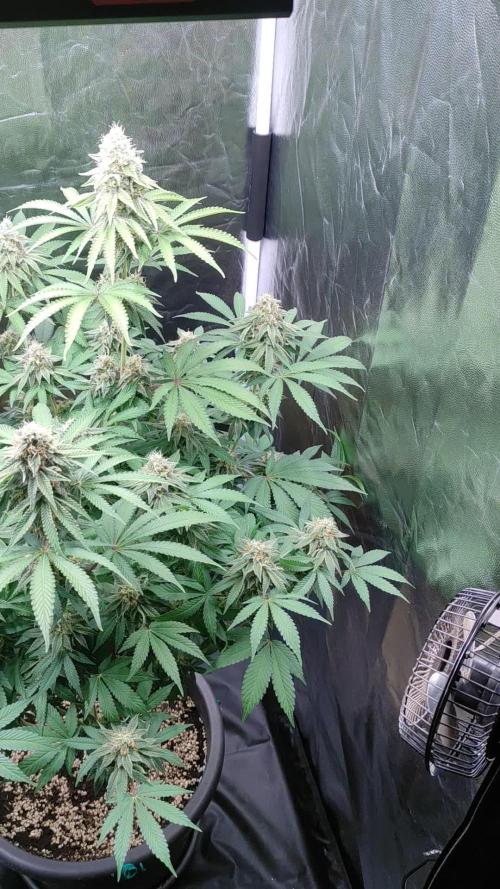
Ahoj. Vypadá holka fakt hezky. Buclatí všude kde může a nestačím se divit :)) taky začala extrémně krásně vonět. Jsem zvědavý na výsledek. Mějte se Growerz
Likes
10
Share


@mikheil007
Follow
Every day the whole plant iis getting heavier and the buds are growing bigger minute by minute...
Thank you Barney’s Farm for such a super quality of every your seed and produce!...

Likes
16
Share

@Green_Dream
Follow
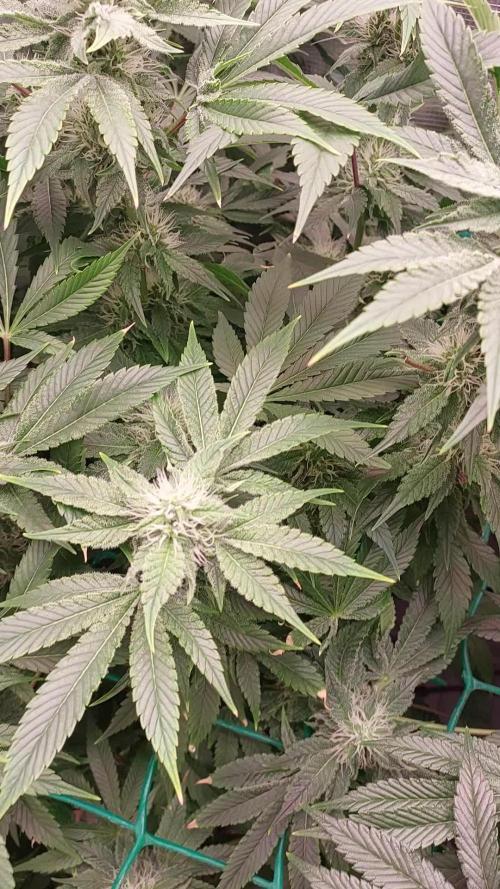
Big week here.
The girl got moved into the tent and also into the Autopot system.
I'm excited to see how the Autopot performs!
There appeared some burns, I had been busy with xmas, so I didn't had that much time to attend her. I believe she will get back on track now. The biggest challenge is to keep the PH stable in the water tank.



Likes
37
Share


@Roberts
Follow
It was a interesting grow I had Spider mites in flowering. I treated with lady bugs. Seemed to do the trick. All my other autos got hplvd. This likely had it too at end with close proximity to them. She made it. Great looking plant, and smell. Thank you Mars Hydro. DO NOT BUY AMS. The owner is a convicted criminal, and he stole 550 dollars from me. It's not worth it.
Thank you grow diaries community for the 👇likes👇, follows, comments, and subscriptions on my YouTube channel👇. ❄️🌱🍻
Happy Growing 🌱🌱🌱
https://youtube.com/channelUCAHN7YRZWLPCARHHMIQ7X4G

Likes
46
Share


@Capo420
Follow
Start of Week 3. Been an awesome first 2 weeks.😎
I have learned more than I thought possible. I want to thank everyone who has helped me.🙏
Gonna start LST later in the week. 💪
Will be updating throughout the week.
Happy Growing!
🤙💚💪🌱😎🌱💪💚🤙
Likes
4
Share

@LivingSoilGrown
Follow
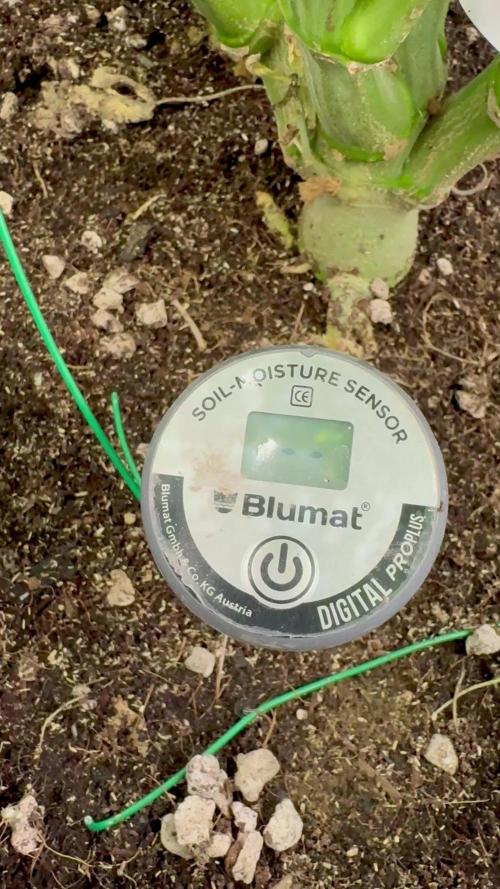
Early flower, maintaining a good soil tension. Moving between 40-80 millibar. Fully trained out now and ready to fill out flowers
