


Likes
Comments
Share


@FrenchOG
Follow
We’re coming along very nicely.
Start of flush has started m/
Let her rip billy boy.


Likes
2
Share

@Wondrej
Follow
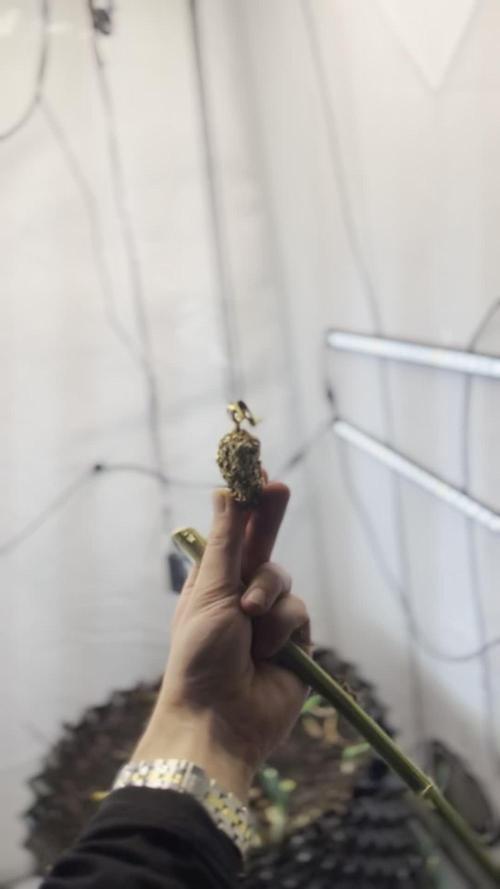
One Love Growers! 🇯🇲✌️ Let's Get This Veg Phase Rolling!
16.11.2025-Our little warriors are officially done messing around—we’re moving into the full vegetative stage!
Getting them into the final big living soil pot is like moving them into their permanent home; it’s a big deal.
We are transplanting them into soil that was mixed and treated fourteen days before with my own blend of soils, earthworms, springtails, and dried crushed eggshells + 400g of Herbis living soil starter.
24.11.2025- QUICK UPDATE: GROWTH SPURT!
The girls clearly love their new home! They've started to accelerate their growth noticeably, which tells me the Living Soil is totally dialed in.
Because they are growing so fast, I'm going to increase their watering volume starting in Week 3 to keep up with their demands.
It's all up to the soil and worms now. Remember: with Living Soil, we feed the soil, and the soil feeds the plants!
Happy soiĺ=Happy plants
Fingers crossed for rapid root development! Week 3 of vegetation begins tomorrow, so expect that new photos coming.
Peace and Harmony! 💚 Wondrej

Likes
54
Share


@rhodes68
Follow
3/11 Week 11 a day early due to schedule - Day 26 of Flower
Buds building very well no signs of any deficiencies and the tips are ok so leaving all nuets as is.
Halfway to projected harvest date according to Fast Buds, I believe them from what I am seeing.
Having some humidity issues due to our funky weather.
Humidity running higher than is safe on lights out , 60-70%, so installed one small dehumidifier but getting a larger one today to add to it.
That is the extent of our problems so aint beechin guys
One final comment here, these Fast Flowering photo strains seem tailor made for growing indoors.
The flowering times, the way they grow and the lack of strong odors even with larger buds just impresses the crap out of me.
👍 Fast Buds
3/12 - 27/Flower
Continue to stack up the buds I had to raise the lights one click to keep em at 16" on both lights.
The increased feed PPM is showing in rapidly growing buds.
No changes in feeding at this time.
My wife has sweetly pointed out I messed up reading the calendar.
This is day 27 of flower
😜
Yeah it was real good for 23 days too LOL
So FB pegged 45 days of flower on the FF7 , with 18 days remaining.
Flush could begin in 11 days at the soonest.
Which consequently is when I drop the seeds for the last grow before my vacation. 😉
3/13 Day 28 Flower
Raised the lights up a bit, want better dispersal from the two light sources and since there is now almost too much light this seems wise as the buds continue to stack up.
The two light together are 1100 and 700 umols at a minimum so with 1800 Umols (the same as a 1000 watt HID) I can afford a dispersed pattern of light sans hot spots and dark corners.
Multiple light sources is the way to go no doubt now. maybe pics later if I've time.
Pics
3/14 Day 29 Flower
Ye though there be no toilet paper in the land we do have buds...
This virus thing is just insane aint it.
Why toilet paper I wonder...
Anyway increased PK to max 5ml/gal as I see no toxicity and they are building like crazy so feed em.
This is the last week for the PK booster cutting it out in a few days, plenty in the pot to carry her through the flush.
No other issues to comment on pretty easy grow so far.
Pics

Likes
25
Share

@SkunkyDog420
Follow
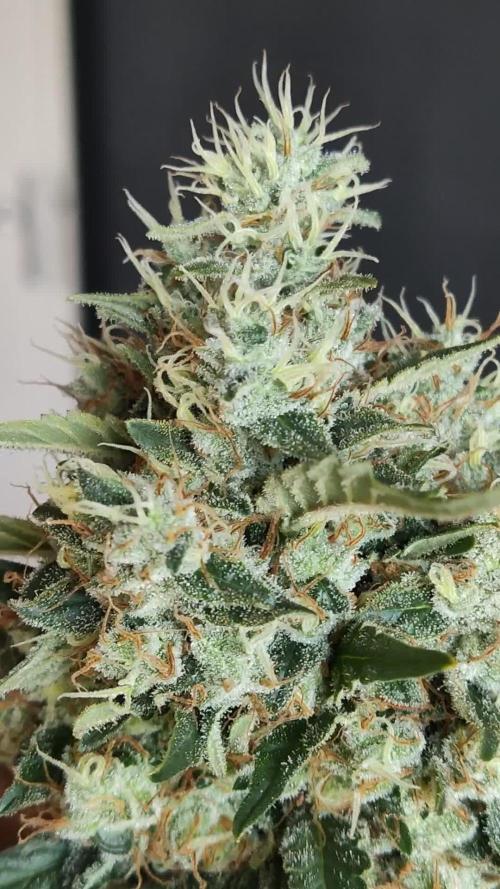
Hallo zusammen 🤙.
Habe sie heute geerntet. Wir sehen uns in 3 Wochen mit dem Erntebericht.




Likes
3
Share


@Boscaglia
Follow
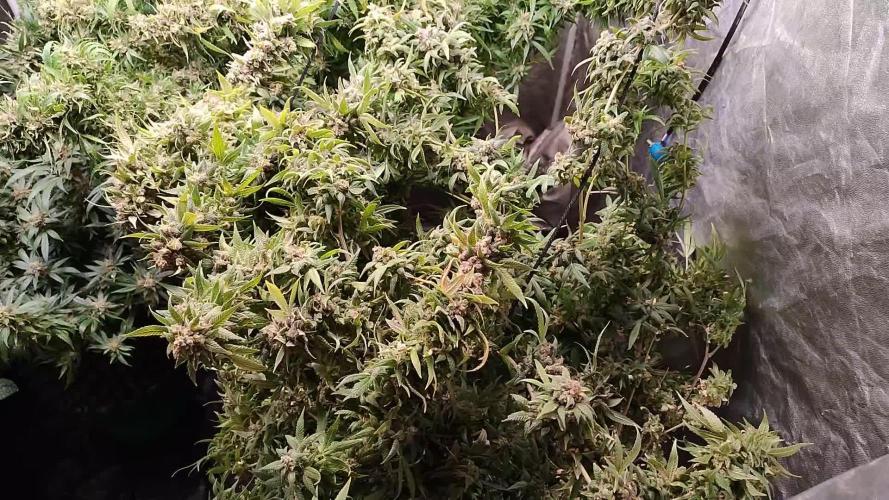
Still not touching the plant or setup and just letting it be pretty much. Did a full tank water removal and started to add some Calcium Magnesium as I'm seeing some deficiencies on the leafs.
So far this setup has been incredibly easy, haven't had to do anything, no topping, no training, etc. Could have used a scrog to keep the main branch a bit shorter but it looks like it should work out.
Processing
Likes
9
Share


@Yiyis_Grow
Follow
Estas chicas son un experimento. Puse cuatro de ellas en una sola macetera y les di únicamente 2 semanas de vegeta. Por lo general hago un crecimiento de meses y nunca había hecho una planta con tan poco crecimiento.... , y por lo que proyecto, también vale la pena hacer cultivos rápidos.
Es impresionante lo que han crecido en esta semana. Se ven sanas.
Buenos humos

Likes
7
Share


@Hisoka420
Follow
Hello guys I'm very impressed with this buds they got so resinous and compact
Likes
57
Share


@BudBoutique
Follow
Welcome to Bud Boutique Grow Diary - really appreciate all your love and support :)
Dont forget to check out my other current grows!
🗓️ This Week:
- Day 52: the end is near
- Day 53: Trichomes check from #1 and #2 - looking super good almost all cloudy, a few amber and clear. perfect point to chop
- Day 54: this one is finished, let's chop them both #1 & #2 !! ✂️✂️✂️
- both phenos got still super purple beautiful leaves
- now its time to dry inside the tent at about 60%rh and less than 20°C/68°F trying to get it even lower for the next 10-14 days
Thank you for still staying with me 💚
___________________________________________
--- 🌱 Strain (Sponsor) 🌱 ---
🏷️ PEACH GIRL by Art Genetix
https://www.artgenetix.world/product-page/peach-girl
--- 🥗 Nutrients and Feeding (Sponsor) - (APTUS Ambassador) ---
🍸 APTUS: full nutrient schedule extreme
-- Regulator, N-Boost, P-Boost, CaMg-Boost, K-Boost, Allin1 Liquid, Startbooster, Topbooster, Enzym+ every feeding
-- Fulvic-Blast, NutriSpray as Foliar each once a week
🔗 https://aptus-holland.com/
--- ♻️ Grow Control (Sponsor) ---
TROLMASTER: TENT-X + LM14 Light Adapter to dim/sunrise/sunset lights + Temp & rH Sensor all remote on App
🔗 https://www.trolmaster.eu/
--- 🚿 PetraGrow (Sponsor) ---
CannaFogger Foliar Spray
🔗 https://www.petratools.com/product/petragrow-cannafogger-atomizer-new-mini-fogger
--- 🏭 Grow Setup ---
💡LUMATEK Zeus Pro 600
* 🏠🌿 Indoor: Homebox 120x120x200cm (4x4)
* 📐🌀 PrimaKlima exhausting Fan 1180m3/h (running on 60-80%)
* 🌀 Can Light Filter 800m3/h & 1x Fanbox 1x Dyson fan for Air circulation
🔗 https://lumatek-lighting.com/zeus-600w-pro-29/
🔗 https://primaklima.com/de/shop/ventilatoren-de/ec-ventilatoren/pk160ec-tc/
🔗 https://canfilters.com/products/filters/
All Likes and comments are highly appreciated!!!
👨🌾 don't forget to check out my Instagram for daily educational content: budboutiquee
- Bud Boutique

Likes
2
Share


@sunshinegroww
Follow
Final week has arrived very nice and dense flowers smeels very nice and strong off to the druer

Likes
22
Share


@EhJay
Follow
D23 Looks like the calcium deficiency affected the growth on #2 a bit as it is a little behind #1
D24 I cut off the infected fan leaves on #2 also it's looking really yellow
D28 #1 really thriving compared to #2. Going forward I will be posting pictures of #1 only
Made a newbie mistake and fed my girls without checking the ph level.... hopefully no major side effects pop up

Likes
9
Share


@TiRobotProds
Follow
4ème semaine de floraison. Cette dame ce porte a merveille ☠️☠️💀 irrigation tous les 3 jours environ 6L, 12L/Semaine.


Likes
16
Share

@420DeepGrow
Follow
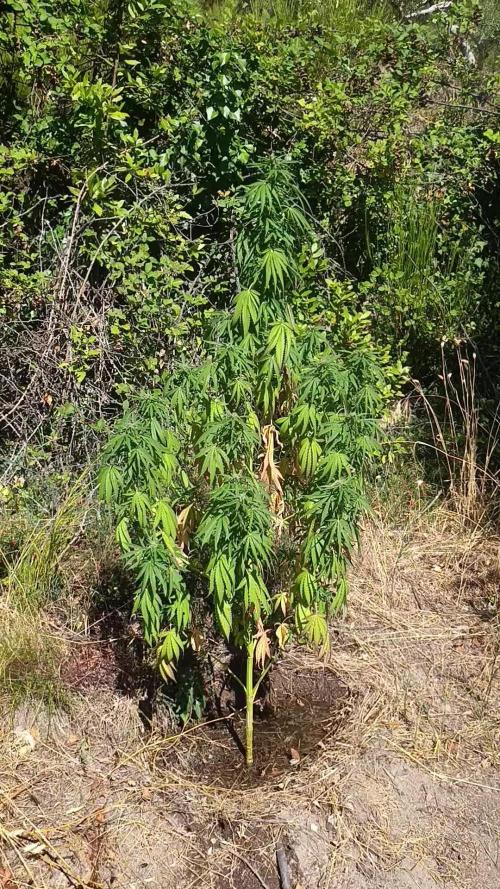
📆 Semana 8
Durante esta octava semana, la planta continúa recuperándose y avanzando con fuerza en floración. El riego se realiza cada 48 horas con unos 30 litros de agua; llega algo marchita por la demanda hídrica, pero recupera rápidamente su firmeza tras el riego. La floración progresa con buen desarrollo de las flores y mayor producción de resina, mientras aumenta también su demanda nutricional.
⚡ EC: 1.4–1.5
💧 pH: 6.2–6.5
🌡️ Agua: 20–23°C
🌫️ Humedad: 50–60%
💡 PPFD: Luz solar exterior
🌡️ Temp. ambiente: 20–32°C
🔥 Nota: La planta está entrando en una fase de mayor consumo, respondiendo muy bien a los riegos y mostrando una demanda nutricional creciente. Ajustamos progresivamente la alimentación para acompañar el ritmo de floración.
Seguimos creciendo fuerte 💪!


Likes
146
Share


@EZgrower
Follow
5th week. Well. its time to start pre-flowering stage. Next 2 days will be 18/6 light period. then 2 days 16/8, then 3 days 14/10, then 12/12. Total width 25cm. Do you like my videos about grow? Please let me know -> leave your comments. 4-20 Brothers! 😎
32day - 4 november - second day of 16/8 light period. guys ! I'm growing a real mini jungle😜 Width is 29cm. the total width of the pot is 35cm.
Next 3 days will be 14/10 light period.
34 day - 14/10 switched on

Processing
Likes
5
Share


Likes
13
Share


@Limelight
Follow
Hello 👋… This week kicks off w8 of flower for unknown but, again I’m a few days behind. As the pics and vid for this week suggests she’s, fading quite well and looks to be ready in maybe a week or so. Temps have been under control this week and with that being said she’s still packing on “frost” and her smell is something that, definitely rocks in a very stink but amazing way 😷🤤🤤. She’s also finished with recent end of 3w nute feed (Dr. Earth 💪) so I’m just letting her, finish up depleting what’s left in the medium.
This week kicks off (few days behind as well) w13 for wwa. As you can see still fattening up and packing more frost on as well. I’ve been checking for maturity of trichomes (still very new) and haven’t seen any majority of, milky cloudy or amber trichomes. I’m basically waiting for her to show me she’s ready and I believe that, maybe another week will do the job 🤞🤞🤷♂️. Also stopped feeding nutes as well. Oh yesssss and it’s VERY obvious that wwa will be producing some purple excellence 🤩😎😎.
Thanks for stopping by reader/fellow growmie. If you feel that I’m wrong please help a noob out! Will post more picks and some of trichomes ✌️.
Ps…. Soooo this part is actually an edit in which, I added more photo’s and most definitely believe both girls to be ready, judging by recent look at trichomes. However looking for more amber even though it isn’t necessary because, I prefer a “certain” relief 😮💨


