


Likes
Comments
Share


@DrewbieDoobieNoobie
Follow
Ah nothing like a good stretch, Week 2 of flower after the massive transition feeding of 1800 ppm and no sign of nutrient burn so the media and nuites seem to be a winner. In the last feeding I doubled the watering, the second half was just water PH'ed to 6 for two reasons, dilute the 1800 ppm and to promote a deep watering for the roots. I let them dry out till the fan leaves started to wilt on one of the Strawberry Ice and after a deep watering of just water again this week they bounced back. I wanted to make sure the food from the last feeding is used up and also a mini flush before the next feeding for the flowering stage. I am going to go higher with the P & K % on top of recommended chart feeding. I want to play around with the numbers as a lot of growers have their own special sauce recipe. Based on these two strains they look pretty healthy, next week will be a lollipop on the bottom 1/3 to the canopy. as to promote air flow and stretch they are getting pretty thick and bushy still tucking the stems to fill out the scrog completely. The one BLUE DREAM HAZE is a different phenom by the look of it lets see how it turns out its a little shorter than her sisters, Please ;eave a comment good or bad I love to hear from you folks. TTFN


Likes
23
Share


@Santica_Garden
Follow
Yeah not much to update on this week apart from the ladies are doing really well, best grow so far. Really easy strain to grow, no issues whatsoever.

Likes
5
Share


@PortkeyCannabis
Follow
Ah well she is done! I learned so much on this first grow and I’m not stopping now. I’ll have chop pics and weights. I’m doing whole plant hang so we will see how she turned out!!

Processing
Likes
21
Share


@Siriuz
Follow
We started week 7
Day 44
We noticed a little bit of nutrient burnt
That's okay tho we went medium hard
Last time we fed them
It's okay, just the tip of 2 leaves not much to worry about.
We already flush a little with just plain water today so she could feel better just in case.
She's healthy and strong and developing tons of buds :)
Any suggestion? Please feel free to comment below and thank you for your support, happy growing guys!
Day 46
Great day outdoors from 7/7pm
Rainy, cloudy, sunny
But great after all, then we brought them back Inside for more CFL light
Day 47
Weather outdoor Kinda hot but humid
Only left them outdoors from
7/2pm then back inside for CFL
Day 48
Fed them up, ladies all set
All day outdoors great weather
Gave them a Lil flush to each one after nutes, they had a nice run off
Day 49
They looking even better today
But I snapped accidentally one of the stems that carried 3 flowers, I was tryna get her LST so she could come out of scrog better but she's too thick and I was not gentle I'm so sorry guys, since she's full of buds and super healthy and literally fed yesterday and since she's full of nutes I think she'd be able to replace that stems which has already another bud forming below, so I think she'd be ready to double the stem and produce like 4 times more Buds on that area, that's what I'm hoping since it's not the main stem, anyways, I will keep you guys posted.
I'm the mean time I'm taking that ripen stem with buds and hanging it so she can cure and dry and even tho it's so small hairs are already turning brownish so I guess I could smoke it and try it in several weeks I guess not sure but will keep you up to date and will open a grow question to see what's up with that
Day 50
Outdoors from 6.40am until weather gets too hot
DAY 51
Not much, everything good
Day 52
A little bit defoliation
Day 53
Outdoor and indoor comfort zone
She's great we expanded the net we were using and also watered them a little
End of week #7

Likes
69
Share


@Natrona
Follow
Sour Jealousy Auto FastBuds 2025 Outside Grow
Week 7 May 11-17
FLOWER 1
Sour Jealousy has started to flower. She is 18” now after a 6-inch spurt. She really benefitted from last week’s rain. This week’s weather has been cloudy and sunny but the temps ranged from 93 high and low of 53 at night. I watered and fed 2x with Kelp 30 ml/g and TPS1 4ml/g. I included some garden pics and some cool boats. I live in a coastal area with 6 bridges. Since maritime law still governs commerce, the boats have the right of way to vehicles. On this day I got stopped by the bridge opening and was close enough to see the boats. A parade were luxury yachts.
Your likes and comments are appreciated. Thanks for stopping by.
Growers love 💚🌿
💫Natrona💫

Likes
29
Share

@yan402
Follow
FERMAKOR KOH Extraction – Update
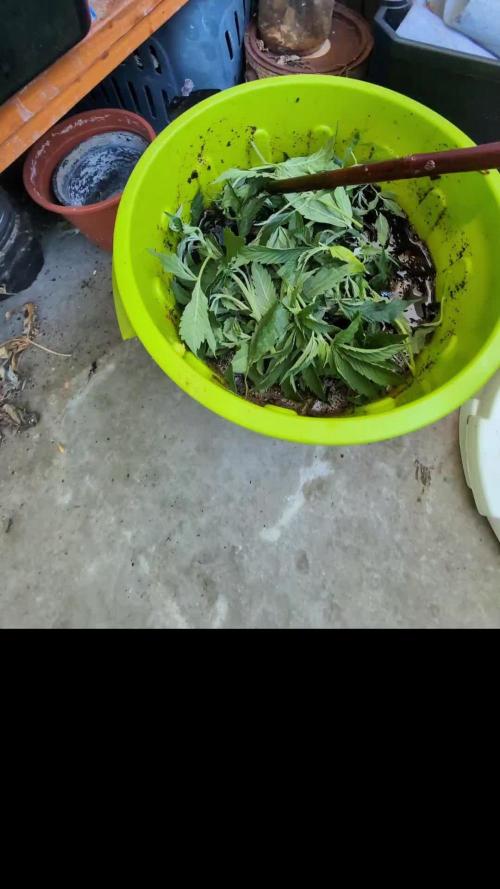
Last time I said the batch would be done in 3–4 days, but I made a last-moment change. I added fresh cannabis leaves, branches, and pistils to help buffer the extra KOH, fix the PK imbalance, and see if I can bring it into line without using citric acid.
Reaction so far: greens are breaking down fast, adding nitrogen while soaking up some of the excess alkalinity.
Smell: strong ammonia, but not rotten — typical of proteins and chlorophyll being stripped out.
Texture: slurry has darkened, foam is down, liquid looks stable.
Plan: let it sit a couple more days stirring, then check if it’s ready to use and use some citric acid in case the pH is still to high and "force" it ready.
Likes
1
Share

@LokalGrenz
Follow
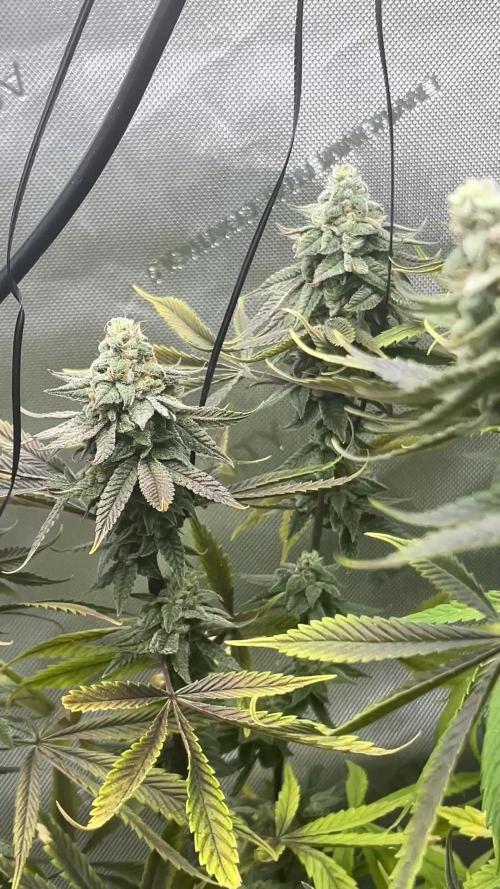
8/20 yellowing cause I’m lazy with the magnesium and ph but other than that it’s looking good and frosty
Processing
Likes
11
Share


@Fibro_Witch
Follow
Managed to sex out the males this week, especially easy since the girls were putting out some pre-flower pistils. Moved others around a little using my potato fork and now everyone is in a much better spacing. Bummer that 2 out of 3 were males, but that's ok! The ladies that are left will have more room to stretch. I gave them a little Big Bloom and some molasses.
Likes
35
Share


@Bud_Spencer
Follow
Hi Grower!
Day 42
This Bluematic wakes up my interesst to this great Strain. I never think that this comes so nice , all circle runs with RQS Easyboost i only give Water every day. 😉
Thanks for follow.
Bye,Bud


Likes
3
Share


@hinterhofgrower
Follow
.
📹 : Full Video on YouTube @hinterhofgrower
🌱 : soft topping on day 17+20
💧 : 2l day 19
💡 : Dli: 20 mol/m²/d
🤔 : Finally, a plant is growing with wider internodal spacing, even though it's supposed to be Indica dominant.
There was the usual overwatering discussion on YouTube.
The soil I'm using consists mainly of peat with added perlite. It's also not compacted. In my last grow with this soil, it settled by about 5 cm in the 20L pot. The measured soil moisture reaches about 60% when saturated, but with my current watering pattern, it only reaches a maximum of just under 30%. I think there's always enough oxygen in the soil. I did, however, wait longer before watering this time.
The removal of the bottom pair of nodes was also hotly debated. In my opinion, it was exactly the right thing to do. I would have had to remove the large pair of leaves above them to give the two branches full light. I would have had to trim the next pair of branches down significantly to bring them to the same level. In my previous grows, this resulted in small, bushy plants. This meant the buds were very close together and therefore susceptible to mold. Furthermore, the lower parts weren't fully developed. This was something I wanted to prevent in this grow.
No more energy needed to be invested in the small branches, allowing the plant to focus on photosynthesis with its large leaves. The result is a uniform canopy.
Likes
2
Share


@vwfrisco96
Follow
~July 12th-July 18th~
🌡️Temp: 🌞78-84 , 🌚74-80
💨Humidity: 🌞65-85%, 🌚70-80%
💡Lights: 🌞18h/6h🌚, 24’ from 🌱,
PPFD approx-275
🌬️Airflow: 2 small oscillating fans and a 200cfm inline fan+carbon filter
~Day 15~ Plants are still showing signs of a deficiency or overwatering. I’ll continue to wait to water but will add nutes next time I do. The new growth on the 3 plants look good and the smallest sprouts growth is looking good. Started ph balancing and dechlorinating my humidifier water just in case.
~Day 16~Plants seem to finally be drying out after the overwatering, the growth on the 2 biggest plants has been stunted and the mutated plant is still growing funky. Smallest plant is growing well. Dialing in on the humidity and temps well. Close ups of the discolorations on the 2 largest plants in the photos.
~Day 17~ Old discoloration not gonna get better but it hasn’t spread anymore so that’s good. The plants are still growing slow though which gives time for the mutated plant and the sprout to catch up at least. Woke up to the mutated sprout producing resin like drops from its lower leaves and it had a noticeable smell to it almost similar to a concentrate smell of thc. Prepping the 2 bigger plants for transplant tomorrow, filled 2 fabric 3-gallon AC Infinity pots with about an 1-1.5in layer of perlite at the bottom then Happy Frog and Perlite mixed in a 75/25 ratio layered over top of that up to the holes. Put the plants in the hole still inside their original pots so I could adjust the lights and get them used to their new places.
~Day 18~ Woke up to not much change with the plants other than some small growth in the mutated plant and the small sprout. Definitely time for a transplant and some nutrients so I prepped them for transplant. I mixed up my GH Trio along with some GH Cal-Mag and Ph-down all in distilled water along with a separate spay bottle of rooting powder diluted with Ph balanced distilled water to spray in the hole and on the root mass. The plants were very hard to get out of the small pots and the roots were sticking to the sides while the dirt was falling out around them so I had to cut open the pots and manually set them in. Not too messy but I was scared for the plants, I watered them both approx 250ml of the new nutrient mix along with the other 2 plants who got less. Will check back tomorrow.
~Day 19~ All the plants have exploded with growth since yesterday, the 2 biggest plants have perked up and grown a lot while the mutated has sprouted even more leaves and the little sprout now has its second set of leaves coming in. Everything looks great and I have more confidence in the grow now that I know the nutrients and environment is good for them.
~Day 20~ Lot of new growth continues and the transplant and feed seems to have worked really well. More leaves keep appearing and the growth seems to be going at a much faster rate as they grow older. Getting the other 2 plants ready for transplant tomorrow and I will feed them all again.
Likes
2
Share


@Cis420
Follow
Esta semana se lanzo a crecer la micro - selva....
En 2 días más se pasa a florar, buenas genéticas han resistido bien a muchos factores adversos, clonare algunos ejemplares, los más robustos a pesar de los problemas mencionados.... éxitos.
Buenas vibras
Likes
31
Share


@The_Doctor_Green
Follow
Como mencionaba en el 1er video por intensas lluvias y vientos, la planta más grande se ha partido, intente "repararlo" pero será cuestión de días para ver si ha sobrevivido o no.
Por las dudas he regado( a pesar de la lluvia) 1ml x litro de agua. La cantidad de la misma fue de 3litros con flora booster.
Likes
24
Share


@1_Plant_Wonder
Follow
Day 70, end of week 10, about 6 weeks into flower for the OG Kush, and everything goes smoothly ✌️🏽😊
The plant keep putting on some weight and size, and starting to give signs that she's about to finish! 😋
Trichomes seem mostly cloudy, although there are some clear as well, i have a feeling I'll start see amber in the next week... So tomorrow I'll decide if its time to start flushing or not.
For me deciding when to start flushing always seems like the hardest choice to make during the growth cycle 😅😂
Anyway this monster plant looks great!
buds are cover in resin all over, and the weight start to feel good.
This phenotype is very different then a classic OG Kush when it comes to the bud appeal, as fast-buds describe the buds as rock hard (like a classic kush should be),
The buds on this phenotype are more open in structure....🤷🏽
They still looks amazingly frosty and delicious though 😋
So, next week, harvest or not, we shall see😎✌️🏽🌱
Likes
2
Share

@PapaTerps
Follow
Wizard Fuel - Wizard Trees
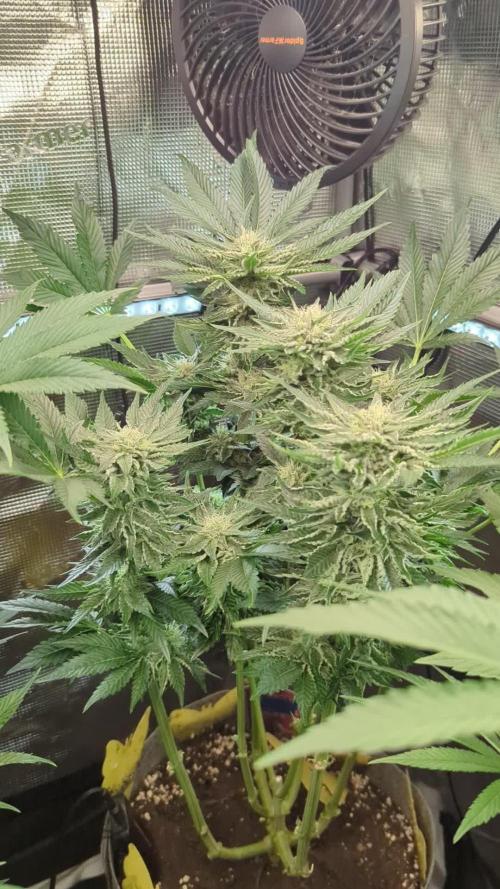
Day 77 - Watered with 3L of RO tap water with nutrients mixed individually, in order and then pH'd to 6.3 💪🏻 Great week, she is bulking like crazy and requires feeding every second day, her buds are getting so big🤘🏻 I removed a couple of the lower hanging fan leaves and that's pretty much it, she has been a super easy grow so far!!




Likes
4
Share

@Ensign420
Follow
|»» LOG DISCLAIMER: Not intended as a grow guide. Grow log entries are usually posted 3 weeks later and are for my learning reference. ««|
Introduction - Week 19 Summary -
Ensign's log, stardate 17566.0,
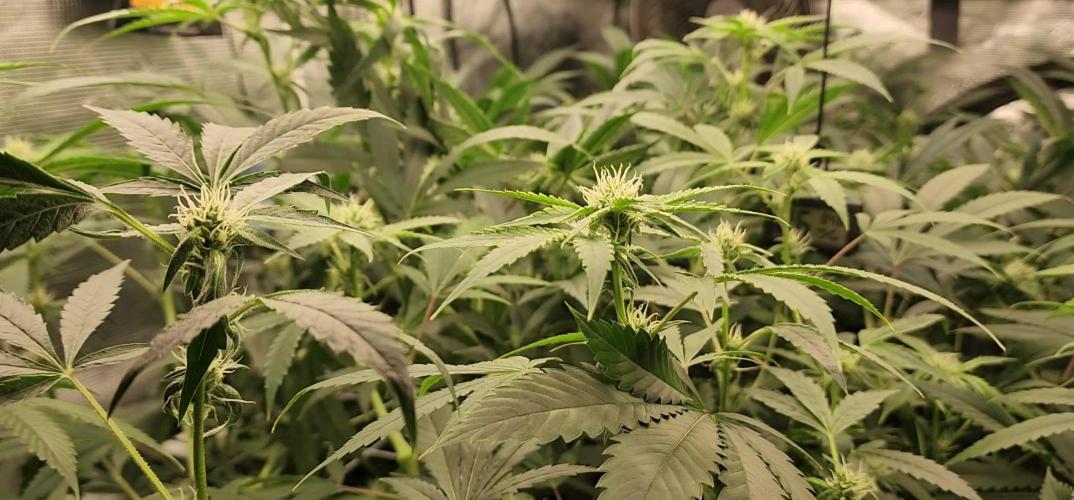
Another dope week in the garden! Growth has been thriving and the canopy is looking incredible!
Fed both Heady OG and TKO which blew up with growth! Heady reached the grow light again so super cropped the taller top branches and the canopy is nice and even. Buds are also getting terpy! Getting hyped!
As for the veg tent, topped both mother plants and culled the extra mother cuttings. Been tending to the spare clones. Growth has all around been healthy and green!
Anyways,
Onwards to next week Ensign!
[START OF WEEK 19]
==========================================================
---------- [ 4x4 MAIN TENT ] ----------
Heady OG BX1 #1 [Round4 ~Wk12] - WEEK 19 - Full Bloom Wk3
TKO [Round2 ~Wk17] - WEEK 19 - Full Bloom Wk3
----------- [ 3x3 VEG TENT ] ------------
TKO - WEEK 02 - Full Veg
Heady OG BX1 - WEEK 02 - Full Veg
08/25/25 → 08/31/25
This Week's Estimated Goals
----------------------------------------------------------------------------------------------
DLI: ~30 mol/m²/d
PPFD: ~694 μmol/m²/s
VPD: ~1.0 kPa
This Week's Meter Readings & Averages
----------------------------------------------------------------------------------------------
Light On/Off: 19:00 - 07:00 | Wattage: ~326.5W [LV04]
Distance From Canopy: ~7”, 7”
DLI: ~32.10 mol/m²/d
PPFD: ~743 μmol/m²/s
VPD: ~0.58 kPa
Soil %: [49.6, 43.6, 28.0, 51.9, 42.1, 40.9, 43.9, 43.3]
==========================================================
Day 01 - Monday - 08/25/25 - Total Days: 134
-----------------------------------
Daily Averages ~[+01:00]
- Temps: 84.7°F [29.3°C]
- Humidity: 86.7%
- VPD: 0.55 kPa
- Soil %: [49, 45, 29, 52, 42, 40, 43, 42]
-----------------------------------
- [23:02]: Night check on the 4x4 tent.
--- Week 3 of flower (week 5 since 12/12 flip) and growth is looking incredible!
--- Both Heady OG (BX1 #1) and TKO are looking perky as growth is straightening up from buds are continuing to swell up!
--- Grow strong my ladies!
- [23:05]: Checked the Ecowitt soil moisture sensor data:
------------------ [ 4x4 MAIN TENT ] ---------------
------ 51% - [CH01 FT » G30 - Heady OG BX1 #1]
------ 44% - [CH02 FB » G30 - Heady OG BX1 #1]
------ 29% - [CH03 BT » G20 - TKO]
------ 53% - [CH04 BB » G20 - TKO]
------------------ [ 3x3 VEG TENT ] ----------------
------ 41% - [CH05 BL » GR7 - TKO]
------ 40% - [CH06 BR » GR7 - Pheno #2]
------ 45% - [CH07 FL » GR7 - Heady OG BX1 #1]
------ 42% - [CH08 FR » GR7 - Pheno #4]
--------- Veg: 38% - 45% | Flower: 45% - 55%
--------- General: 30% [Dry] «| 45 - 60% [Moist] |» 70% [Wet]
- [23:09]: Checked the 3x3 veg tent.
--- Ooo yea! Looking great in the veg garden!
--- Ca-Caw! Both Heady OG and TKO mothers are thriving and soaring upwards with perky growth!
--- The spare Heady OG clones are looking beautiful and getting taller!
- [23:15]: Checked the humidifiers.
--- Tanks are still full and no leaks found.
Day 02 - Tuesday - 08/26/25 - Total Days: 135
-----------------------------------
Daily Averages ~[+01:00]
- Temps: 84.3°F [29.1°C]
- Humidity: 86.2%
- VPD: 0.56 kPa
- Soil %: [50, 44, 28, 52, 42, 42, 44, 41]
-----------------------------------
- []: Evening check on the 3x3 veg tent.
--- Looking great my girls!
--- Both Heady OG and TKO mothers are growing along and already getting huge!
--- Plan to top both girls in soon, but going to let them grow!
--- Ca-Caw! Let’s go ladies!
--- The spare Heady OG clones need to be watered!
- [17:13]: Here are the starting initial watering ranges:
------ Heady OG BX1 #1A » 237.7g → 300.3g
------ Heady OG BX1 #1B » 244.4g → 305.6g
--------- General Solo Range: [Dry] «| [Initial Cup Weight] + ~55-100g |» [Wet]
--- All cups were last watered 3 days ago.
--- Took the starting weight of both clones before watering,
------ Heady OG BX1 #1A » 246.6g
------ Heady OG BX1 #1B » 236.6g
--- While on a scale,
--- Gently misted the straw mulch of both cups with RO water.
--- Focused on the straw and sprayed as evenly as possible.
--- Misted 10-20 sprays. Waited a moment, then misted again.
--- Made sure to reference the watering weights.
--- Repeated this process for both cups.
--- There was no runoff.
- [17:35]: Took the saturated weight of both clones after watering,
------ Heady OG BX1 #1A » 320.1g
------ Heady OG BX1 #1B » 325.3g
--- Marked the final wet weight on the back of each cup. Also marked the watering date on the front.
--- Also refreshed the spare mother cutting’s RO water.
- [20:04]: Checked the 4x4 tent.
--- Both Heady OG and TKO look healthy and wow a few tops are soaring upwards again!
--- Pinched and super-cropped a few tops to even out the canopy a bit.
--- Grow strong my girls!
- [20:21]: Checked the humidifiers.
--- Tanks are still full and no leaks found.
Day 03 - Wednesday - 08/27/25 - Total Days: 136
-----------------------------------
Daily Averages ~[+01:00]
- Temps: 84.5°F [29.2°C]
- Humidity: 86.8%
- VPD: 0.54 kPa
- Soil %: [49, 44, 26, 51, 42, 41, 48, 40]
-----------------------------------
- [23:37]: Night check on the 4x4 tent.
--- Looking great in the garden!
--- Top growth is still stretching upwards!
--- Both Heady OG and TKO are looking beautiful!
--- Bud growth is also swelling up and getting frosty!
- [23:41]: Checked the 3x3 veg tent.
--- Woah the mothers are getting tall!
--- Heady OG and TKO are perky and healthy with new growth! Both are getting closer to the grow light and will need topping soon.
--- The spare Heady OG clones also look great!
--- The extra mother cuttings and clones in the propagation tray are looking good too!
--- Refreshed the RO water for the mother cuttings.
- [23:55]: Checked the Ecowitt soil moisture sensor data:
------------------ [ 4x4 MAIN TENT ] ---------------
------ 45% - [CH01 FT » G30 - Heady OG BX1 #1]
------ 44% - [CH02 FB » G30 - Heady OG BX1 #1]
------ 28% - [CH03 BT » G20 - TKO]
------ 54% - [CH04 BB » G20 - TKO]
------------------ [ 3x3 VEG TENT ] ----------------
------ 43% - [CH05 BL » GR7 - TKO]
------ 41% - [CH06 BR » GR7 - Pheno #2]
------ 45% - [CH07 FL » GR7 - Heady OG BX1 #1]
------ 40% - [CH08 FR » GR7 - Pheno #4]
--------- Veg: 38% - 45% | Flower: 45% - 55%
--------- General: 30% [Dry] «| 45 - 60% [Moist] |» 70% [Wet]
- [23:58]: Checked the humidifiers.
--- Tanks are still full and no leaks found.
Day 04 - Thursday - 08/28/25 - Total Days: 137
-----------------------------------
Daily Averages ~[+01:00]
- Temps: 84.1°F [28.9°C]
- Humidity: 85.1%
- VPD: 0.59 kPa
- Soil %: [50, 43, 27, 52, 43, 40, 43, 42]
-----------------------------------
- [09:20]: Decided to lower the RH average a bit.
--- Within the AC Infinity App,
--- For the Main Tent [4x4] controller,
--- Adjusted the 'Flower [12/12]' Schedule for the exhaust fan.
------ Decreased the Humidity’s HIGH trigger value from 87% to 80%
--- Great! By lowering the RH, this should also increase the VPD average.
- [17:18]: Evening check on the 3x3 veg tent.
--- Wow! The mother garden is looking beautiful and growth is thriving!
--- Both Heady OG and TKO moms are getting taller and growth looking perky and green!
--- The spare Heady OG clones have also fully recovered and are looking good too!
- [17:33]: Okay! Time to top the moms!
--- Using a pair of trimmers,
- [17:36]: Cut and removed a good 8-9 inches from the main stalk from both Heady OG and TKO.
--- Mulched the trimmings.
--- This was a pretty heavy topping so may take a while for them to recover.
- [17:41]: Also decided to mulch the spare mother cuttings.
--- I only took the cuttings to preserve the genetics.
--- Since the spare mother clones are now rooting and looking great!
--- All spare mother clones need to be watered!
- [17:45]: Took the initial starting weight range of all clones before watering,
------ Gorilla Goat #1 » 256.1g → 300.4g
------ Gorilla Goat #2 » 255.4g → 300.3g
------ Garlic Budder OG#1 » 263.5g → 305.2g
------ Garlic Budder OG#2 » 256.4g → 300.2g
--------- General Solo Range: [Dry] «| [Initial Cup Weight] + ~55-100g |» [Wet]
--- All cups were last watered 5 days ago.
--- While on a scale,
--- Gently misted the straw mulch of all cups with RO water.
--- Focused on the straw and sprayed as evenly as possible.
--- Misted 10-20 sprays. Waited a moment, then misted again.
--- Made sure to reference the watering weights.
--- Repeated this process until all cups weighted at least 300g.
--- There was no runoff.
- [18:07]: Took the saturated weight of all clones after watering,
------ Gorilla Goat #1 » 305.5g
------ Gorilla Goat #2 » 306.0g
------ Garlic Budder OG#1 » 310.3g
------ Garlic Budder OG#2 » 305.2g
--- Marked the final wet weight on the back of each cup. Also marked the watering date on the front.
--- Placed all cups back into the tent and onto the propagation tray.
--- Both of the spare Heady OG clones need water as well!
--- Ca-Caw! Let’s go Ensign!
- [16:19]: Here are the starting initial watering ranges:
------ Heady OG BX1 #1A » 237.7g → 300.3g
------ Heady OG BX1 #1B » 244.4g → 305.6g
--------- General Solo Range: [Dry] «| [Initial Cup Weight] + ~55-100g |» [Wet]
--- Both cups were last watered 2 days ago.
--- Took the starting weight of both clones before watering,
------ Heady OG BX1 #1A » 243.2g
------ Heady OG BX1 #1B » 255.4g
--- While on a scale,
--- Gently misted the straw mulch of both cups with RO water.
--- Focused on the straw and sprayed as evenly as possible.
--- Misted 10-20 sprays. Waited a moment, then misted again.
--- Made sure to reference the watering weights.
--- Repeated this process until both cups weighted at least 300g.
--- There was no runoff.
- [18:39]: Took the saturated weight of both clones after watering,
------ Heady OG BX1 #1A » 335.3g
------ Heady OG BX1 #1B » 335.1g
--- Marked the final wet weight on the back of each cup. Also marked the watering date on the front.
--- Placed both phenos back into the tent.
--- Since it’s almost time to transplant two of the mother clones (still deciding), want to give the spare Heady OG clones away or will need to cull them soon.
- [18:45]: Checked the Ecowitt soil moisture sensor data:
------------------ [ 4x4 MAIN TENT ] ---------------
------ 51% - [CH01 FT » G30 - Heady OG BX1 #1]
------ 44% - [CH02 FB » G30 - Heady OG BX1 #1]
------ 25% - [CH03 BT » G20 - TKO]
------ 50% - [CH04 BB » G20 - TKO]
------------------ [ 3x3 VEG TENT ] ----------------
------ 44% - [CH05 BL » GR7 - TKO]
------ 40% - [CH06 BR » GR7 - Pheno #2]
------ 43% - [CH07 FL » GR7 - Heady OG BX1 #1]
------ 40% - [CH08 FR » GR7 - Pheno #4]
--------- Veg: 38% - 45% | Flower: 45% - 55%
--------- General: 30% [Dry] «| 45 - 60% [Moist] |» 70% [Wet]
--- Also quickly checked on the auto-watering system.
--- System is still charged and no leaks or kinks found in the tubing.
- [19:07]: Checked the 4x4 tent.
--- Ca-Caw! Heady OG and TKO both look perky and healthy!
--- Growth seems to have fully recovered and is soaring upwards again!
--- Plan to super-crop the taller tops again at the end of the week.
--- Okay! Time to give these ladies a full bloom feeding!
--- Let’s go!
- [19:35]: Filled a pitcher with 12 cups of RO water.
------ Added 1/16tsp of Quillaja Saponaria Extract [60]
------ Added 1/8tsp of:
--------- Big 6 Micronutrients [+ Humic Acid]
--------- BuildABloom
------ Added 1/4tsp of Bio-Phos
------ Added 1/2tsp of:
--------- WDG3000 Extra Strength BTI
--------- Pure Protein Dry [Fish Hydrolysate Aminos]
--------- Recharge
--------- Stash Blend
------ Added 1tsp of Horticultural Coconut
- [19:39]: Mixed the solution and poured 6 cups straight into a pump sprayer.
--- Gave the sprayer a good shake before spraying the entire solution onto TKO’s straw mulch.
- [19:57]: Repeated this process again for Heady OG (BX1 #1).
--- Focused mainly on the straw.
- [20:10]: Checked the humidifiers.
--- Tanks are still full and no leaks found.
--- Wow what a grow day!
--- Need to still decide which of the mother clones to transplant. As of right now, planning to transplant Gorilla Goat #1 and Garlic Budder OG#2 for the pots. But still deciding.
--- Also continuing to research about tissue culture.
--- Anyways, Onwards Ensign!
Day 05 - Friday - 08/29/25 - Total Days: 138
-----------------------------------
Daily Averages ~[+01:00]
- Temps: 84.6°F [29.2°C]
- Humidity: 85.1%
- VPD: 0.60 kPa
- Soil %: [50, 43, 30, 52, 42, 41, 44, 47]
-----------------------------------
- [21:01]: Night check on the 4x4 tent.
--- Woah! These ladies got tall!
--- Heady OG and TKO are stretching upwards! A few tops have reached the grow light again.
- [21:10]: Pinched and super-cropped the taller tops.
--- Mainly tried to even out the canopy.
- [21:15]: Took the weekly general PPFD readings.
------ Both phenos were around 743 μmol/m²/s which gives a DLI of 32.10 mol/m²/d under an 12/12 light cycle (at ~326.5W).
- [21:17]: Took the weekly height and light distance measurements.
------ Both phenos were about 47" tall.
------ Both Heady OG (BX1 #1) and TKO were about 7" away from the grow light.
- [21:21]: Checked the Ecowitt soil moisture sensor data:
------------------ [ 4x4 MAIN TENT ] ---------------
------ 45% - [CH01 FT » G30 - Heady OG BX1 #1]
------ 43% - [CH02 FB » G30 - Heady OG BX1 #1]
------ 28% - [CH03 BT » G20 - TKO]
------ 52% - [CH04 BB » G20 - TKO]
------------------ [ 3x3 VEG TENT ] ----------------
------ 44% - [CH05 BL » GR7 - TKO]
------ 40% - [CH06 BR » GR7 - Pheno #2]
------ 42% - [CH07 FL » GR7 - Heady OG BX1 #1]
------ 46% - [CH08 FR » GR7 - Pheno #4]
--------- Veg: 38% - 45% | Flower: 45% - 55%
--------- General: 30% [Dry] «| 45 - 60% [Moist] |» 70% [Wet]
- [21:23]: Checked the 3x3 veg tent.
--- The veg garden is looking healthy!
--- Both mothers seem to be unaffected by the topping and all growth looks perky and green!
--- The spare Heady OG clones look great too!
--- Even the original mother clones are looking healthy and green.
- [21:37]: Checked the humidifiers.
--- Tanks are still full and no leaks found.
Day 06 - Saturday - 08/30/25 - Total Days: 139
-----------------------------------
Daily Averages ~[+01:00]
- Temps: 83.7°F [28.7°C]
- Humidity: 84.5%
- VPD: 0.61 kPa
- Soil %: [49, 43, 30, 52, 42, 41, 43, 46]
-----------------------------------
- [20:05]: Quickly checked on the 3x3 veg tent.
--- Looking great!
--- Growth looks healthy and no flooding!
--- May need to water the spare Heady OG clones soon, but growth is looking perky and green!
--- Mother clones in the propagation tray also look healthy!
- [20:33]: Night check on the 4x4 tent.
--- Ca-Caw!! Wow the garden looks incredible!
--- Both Heady OG and TKO are swelling up with bud growth!
--- The canopy looks pretty even and stoked for this harvest! Also a bit concerned about trimming. But more stoked!
- [20:39]: Checked the Ecowitt soil moisture sensor data:
------------------ [ 4x4 MAIN TENT ] ---------------
------ 51% - [CH01 FT » G30 - Heady OG BX1 #1]
------ 43% - [CH02 FB » G30 - Heady OG BX1 #1]
------ 29% - [CH03 BT » G20 - TKO]
------ 52% - [CH04 BB » G20 - TKO]
------------------ [ 3x3 VEG TENT ] ----------------
------ 42% - [CH05 BL » GR7 - TKO]
------ 41% - [CH06 BR » GR7 - Pheno #2]
------ 45% - [CH07 FL » GR7 - Heady OG BX1 #1]
------ 46% - [CH08 FR » GR7 - Pheno #4]
--------- Veg: 38% - 45% | Flower: 45% - 55%
--------- General: 30% [Dry] «| 45 - 60% [Moist] |» 70% [Wet]
- [20:45]: Checked the 3x3 veg tent.
--- Veg garden is healthy and wow growth is raging!
--- Heady OG and TKO mothers both look beautiful and haven’t slowed down since the topping. Both are bushing out quite nicely!
--- Both of the spare Heady OG clones need another watering!
- [20:47]: Here are the starting initial watering ranges:
------ Heady OG BX1 #1A » 237.7g → 300.3g
------ Heady OG BX1 #1B » 244.4g → 305.6g
--------- General Solo Range: [Dry] «| [Initial Cup Weight] + ~55-100g |» [Wet]
--- Both cups were last watered [2] days ago.
--- Took the starting weight of both clones before watering,
------ Heady OG BX1 #1A » 231.6g
------ Heady OG BX1 #1B » 241.0g
--- While on a scale,
--- Gently misted the straw mulch of both cups with RO water.
--- Focused on the straw and sprayed as evenly as possible.
--- Misted 10-20 sprays. Waited a moment, then misted again.
--- Made sure to reference the watering weights.
--- Repeated this process until both cups weighted at least 300g.
--- There was no runoff.
- [21:08]: Took the saturated weight of both clones after watering,
------ Heady OG BX1 #1A » 335.2g
------ Heady OG BX1 #1B » 335.4g
--- Marked the final wet weight on the back of each cup. Also marked the watering date on the front.
--- Placed both phenos back into the tent and back on top of the veg pots.
- [21:35]: Time for another grow board wipe!
--- Looking back at the last 5 weeks in the garden and am quite impressed with the amount of growth!
--- Started the 12/12 flip and now these ladies have easily doubled in size! Heady OG probably could have tripled in size but trained her several times to keep growth from getting too tall. In contrast, TKO has been staying pretty squat, which is great because I currently can’t reach the back of the canopy.
--- Oops. Forgot about the lacto-serum. Going to need to start a new batch soon.
--- Anyways, both the Heady OG and TKO were transplanted into solo cups. At the time, Heady OG was looking stressed so took extra cuttings. Glad that she recovered!
--- Upgraded the scrog frame by adding a second layer of netting 14 inches above the first one. Was quite surprised that both Heady OG and TKO managed to fill in the entire space. Heady actually reached the grow light twice and had to be super-cropped.
--- The rest of the garden work has been in the veg tent.
--- Reset the veg tent and took mother clone cuttings.
--- Transplanted both Heady OG and TKO into the veg pots. Growth has been raging and have already topped both girls once.
--- As for the near future,
--- Continuing to pheno hunt for keeper phenos for the mother tent and for my first breeding project.
--- Also been researching about tissue culture and think I’m almost ready to give it a try! If successful, I should be able to maintain the genetics of all future keeper phenos.
--- For breeding, TC will be essential to preserve each filial generation after each cross (F1, F2, F3, and so on).
--- What can possibly go wrong right!?
--- Anyways!
--- Both Heady OG and TKO are looking great and have completely filled the tent! By far the largest canopy I’ve grown so far. Bud growth has already started to swell up and these ladies are ready for the next 6-7 weeks of flower! Ca-Caw! Let’s go my girls!
- [21:39]: Checked the humidifiers.
--- Tanks are still full and no leaks found.
Day 07 - Sunday - 08/31/25 - Total Days: 140
-----------------------------------
Daily Averages ~[+01:00]
- Temps: 83.8°F [28.8°C]
- Humidity: 84.8%
- VPD: 0.60 kPa
- Soil %: [50, 43, 26, 52, 42, 41, 42, 45]
-----------------------------------
- [08:16]: Quickly checked on the 3x3 veg tent.
--- The veg garden are perky and green!
--- All mothers and clones are healthy and growth is starting to ramp up!
--- Looking good girls!
- [19:43]: Night check on the 4x4 tent.
--- Looking great in the garden!
--- Heady OG and TKO are both in full bloom and the canopy looks incredible!
--- Buds are swelling up starting to get a little terpy!
--- Getting a lemon citrus gas profile from Heady OG and wow she smells dank!
--- TKO is giving off a strong earthy fuel similar to Garlic Budder!
--- Getting hyped!
- [19:47]: Checked the Ecowitt soil moisture sensor data:
------------------ [ 4x4 MAIN TENT ] ---------------
------ 55% - [CH01 FT » G30 - Heady OG BX1 #1]
------ 43% - [CH02 FB » G30 - Heady OG BX1 #1]
------ 26% - [CH03 BT » G20 - TKO]
------ 52% - [CH04 BB » G20 - TKO]
------------------ [ 3x3 VEG TENT ] ----------------
------ 41% - [CH05 BL » GR7 - TKO]
------ 40% - [CH06 BR » GR7 - Pheno #2]
------ 40% - [CH07 FL » GR7 - Heady OG BX1 #1]
------ 45% - [CH08 FR » GR7 - Pheno #4]
--------- Veg: 38% - 45% | Flower: 45% - 55%
--------- General: 30% [Dry] «| 45 - 60% [Moist] |» 70% [Wet]
- [19:56]: Checked the 3x3 veg tent.
--- Veg garden is thriving and looking healthy!
--- Both Heady OG and TKO mothers are in full veg and bushing out with growth!
--- All clones look healthy and perky as well!
- [20:00]: Checked the humidifiers.
--- Tanks are still full and no leaks found.
--- Another grow week done and onwards to next!
[END OF WEEK 19]


Likes
11
Share


@CocoLogic
Follow
Sept 13th: (F27)
Fertigation once a day with same recipe (1200 EC 6.1 PH) watered until 10-20% run-off
Sept 14th: (F28)
Fertigation once a day with same recipe (1200 EC 6.1 PH) watered until 10-20% run-off
Sept 15th: (F29)
Fertigation once a day with same recipe (1200 EC 6.1 PH) watered until 10-20% run-off
Sept 16th: (F30)
Fertigation once a day with same recipe (1200 EC 6.1 PH) watered until 10-20% run-off
Sept 17th: (F31)
Fertigation once a day with same recipe (1200 EC 6.1 PH) watered until 10-20% run-off
Had to supercrop 1 branch on the PE#2 since it was almost in the roof of the tent
Sept 18th: (F32)
Fertigation once a day with same recipe (1200 EC 6.1 PH) watered until 10-20% run-off
Sept 19th: (F33)
Fertigation once a day with same recipe (1200 EC 6.1 PH) watered until 10-20% run-off


