Likes
Comments
Share
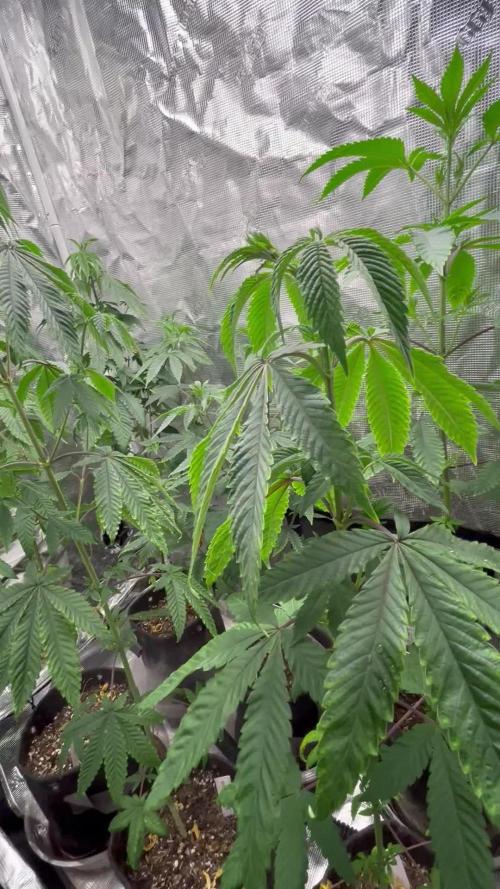
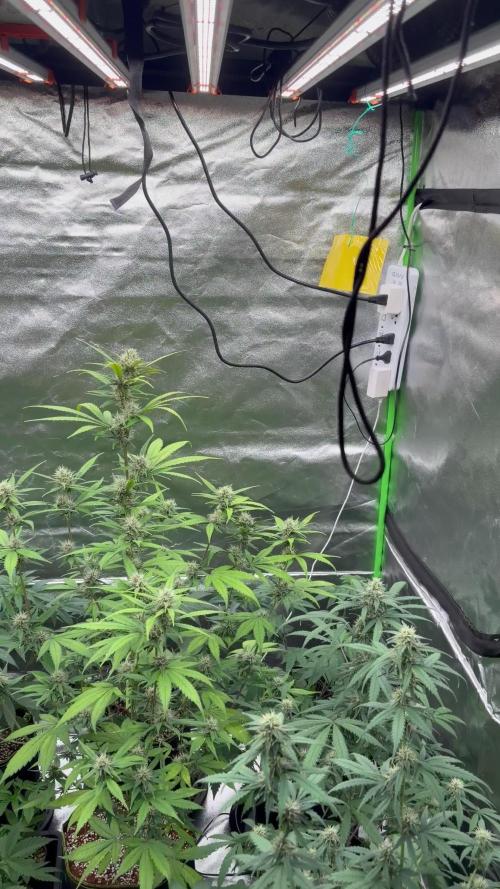
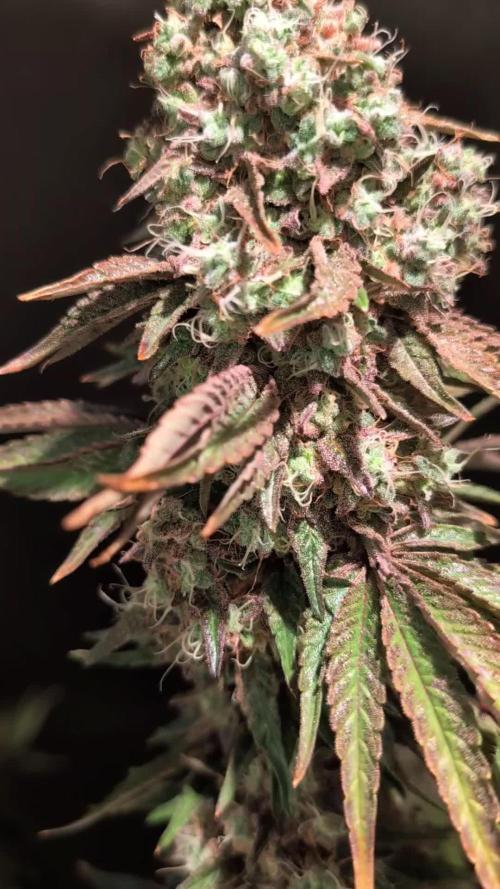
I think the stretch is nearly done, they could have filled out a little better but overall I’m pretty pleased, this is the fewest I’ve run in here and to have it this even and filled out im pleased. If low temps stunt growth we will find out soon, these had a brief stint in the mid 70’s toward the end of veg but they’ve been experiencing sub 50 degree nights for basically the whole run. Anyways, flowers are coming in, probably towards the end of next month, but who knows, they’re never simple. Thanks for checking this out!
Processing
Likes
4
Share
@420keef
Follow
First week of flowering! There are already small hairs coming out, so that's the third female i got from some bagseeds
Likes
228
Share
@StarLorr
Follow
Welcome to my Pablø Ęscøbar diary. In this diary: Seeds: sponsored by Ðivine Șeeds Media: Promix HP Nutrients: Advanced Nutrients, Diablo Nutrients, Gaia Green Power Bloom. Light and Weather: Şun☀️and Mother Earth.🌎 ___________________________ Feeding: Tue 03 Sep: 4L supplements Monster Flower, K not pH'd Wed 04 Sep: 4L supplements Monster Flower, K not pH'd Thu 05 Sep: 4L water not pH'd Fri 06 Sep: 4L nutrients pH'd 6.5 Sat 07 Sep: 4L water not pH'd Mon 09 Sep: 4L supplements Monster Flower, K and Carboload not pH'd ___________________________ *please note that watering are from the top.....since i smashed the saucers with the weed wacker*🤦🏻‍♂️ ______________________________ The week started cold then warm midweek then rain and cold for the weekend. ______________________________ Buds are puffing up nicely😋 ______________________________ Thanks for stopping by, likes and comments are appreciated!👊🏻😎 Keep on growin! Keep on tokin!!! 😙💨💨💨💨💨
Likes
165
Share
💩Holy Crap Growmies We Are Back💩 So what do you say we have some fun 👈 We got some EXOTIC SEEDS 👉 👻👻👻MONSTERMASH👻👻👻 😛 Well my friends we are just at the 14 day mark and it's the 2 headed monstermash clash who's gonna win 🏆 the left of the right👈 👉 Well it sure looks likes the runt picked up and is now equal to its sister 👈 It may come down to a coin toss 😉 Lights being readjusted and chart updated .........👍rain water to be used entire growth👈 👉I used NutriNPK for nutrients for my grows and welcome anyone to give them a try .👈 👉 www.nutrinpk.com 👈 NutriNPK Cal MAG 14-0-14 NutriNPK Grow 28-14-14 NutriNPK Bloom 8-20-30 NutriNPK Bloom Booster 0-52-34 I GOT MULTIPLE DIARIES ON THE GO 😱 please check them out 😎 👉THANKS FOR TAKING THE TIME TO GO OVER MY DIARIES 👈
Likes
Comments
Share
First ever Outdoor Grow after legalization in Germany 01.04.2024. The Purple Lemonade became root bound and was the worst plant I grew to date lol Fucked up my first dry of course 😂
Likes
17
Share
@igloo57
Follow
1/1/22 - just looked 1/2 - watered 1/3 - just looked 1/4 - just looked 1/5 - Just looked 1/6 - Cut
Likes
44
Share
@rudiak
Follow
Well another epic this week. The girls are looking very tasty indeed now! I have now harvested one plant on day 57. It was a tad early for her but she started looking pretty bad for some reason. Potentially started the flush on her a little early or could have been root rot. Either way the plant was chopped to ensure buds were saved. She weighed a cracking 550g wet, and dry was about 100g. This was the girl that was completely untouched, no defoliation etc complete virgin ;). Unfortunately the RH was high I ordered a dehumidifier but they sent me a faulty one and by time had a new one was too late some mould was starting to occur on the girls in a few places. I was over cautious and slung around 25g of buds that were near the mould just to ensure it didn’t spread to the rest of the plant. I also sped the drying up and placed in brown paper bags for last 2 days to suck the remaining moisture off after a full trim and inspection. The girls took a total of 5 days to dry and are now curing. They were a bit “hay” like in smell and taste but this was probably because of all the problems listed above. She is starting to smell much better after a couple of days of curing though so my faith is restored that the remainder of the buds may be quite good still! The last 3 girls have been going lovely, and starting to bring in some purple colours to the sugar leaves which are quite nice, all the trichomes are nice and cloudy and just starting to go amber. I will be harvesting on day 66 as this will allow me a good period of time to trim them fully into reasonable size buds and dry in my hanging net in the tent to ensure no mould problems again. For the last 3 days I have been flushing with 30L of water to ensure they are completely free of nutrients as again think this maybe another factor on the not so nice smelling/tasting buds from the first girl. I will give 2 days to fully dry the soil out bone dry before I cut them down. Happy I took her down early as it’s allowed me to ensure I have 3 good plants left and the remainder of the grow/dry/cure should go smoothly as know what I am doing now.
Likes
8
Share
@lateKdF
Follow
10/12/21 - phenomenal auto grow. Lvl canopy (mic drop). Was initialy disappointed with cure samples, but she is turning into a pleasant final cure. Est. 15%, nice and predictable
Likes
5
Share
Amazing buds from this amnesia pro, stinky dank nuggets with clasic amnesia fragrance, very enjoyable, very sticky flower that are starting to compact, very happy about this plant, let's see how she keeps developing! 🔝💚❤️💛
Likes
41
Share
HAPPY NEW YEAR! 🎉 starting off with a 2x4 Gorilla Grow Tent build, For lighting I went with the Horticulture Lighting Group 350R DIABLO paired up with Mars hydro UR45 bars for the UV spectrum🔥 -------------------------------------------------------------------------------- -Started some low stress training / continue LST maintenance -Planing to start some defoliation possibly take a clone later this week, further leaf tucking as I continue LST. -Foliar fed
Likes
2
Share
Α,α (alpha) and Ω,ω(omega) Here we grow again. LAST GROW. 344g+280g+445g+255g=1324g dry bud. Yielding 1,324 grams of dry cannabis using a 600W light in a 4x4 tent is exceptionally efficient. This breaks down to roughly 2.21 grams per watt, far exceeding the standard indoor benchmark of 1.0 g/W and outperforming elite professional targets (1.5–2.0 g/W). For carbon and energy efficiency, this output drastically lowers the carbon cost per gram compared to typical indoor grows. Achieving 1,324 grams (47.2 ounces) of dry cannabis from a 600W light in a 4x4 tent is exceptional, yielding roughly 2.21 grams per watt. This is an elite-tier result that reflects world-class photosynthetic conversion, highly optimized canopy light distribution, dialled-in CO2 supplementation, and precise environmental control. Growing 1.3kg of dry in a 2x2 with 1 plant is just being silly and not understanding how carbon and energy conversion works towards mass. Took 6 years and 10,000+ Hours to break the 2 grams-per-watt barrier not exactly 600W, in honesty, though—even with modern, high-efficiency LEDs—is an incredible feat that requires hitting the absolute genetic ceiling of the cultivar and maintaining flawless environmental parameters for the space. Photosynthesis is the literal conversion of light energy (photons) into chemical energy (carbohydrates). Leaf temperature, driven by radiation from fixtures and mitigated by latent heat of vaporization (transpiration), dictates metabolic rates. If your room's thermal dynamics are off, enzyme activity inside the plant stalls, grinding growth to a halt. Anyone else pretending to have done so with nothing but Plagron nutrients at 75F is telling porkie pies *cough*, otherwise known as a liar, liar with a bum that's on fire, but it seems that's the new norm these days on GD. *cough cough*. Using copper and zinc plates in the plant medium to form a natural earth battery to assist with Electrochemical Reactance. The moist soil acts as an electrolyte, while zinc serves as the anode and copper as the cathode. Zinc is a highly reactive metal and oxidizes, losing electrons into the soil. These electrons travel through an external wire to the copper plate. The moisture and dissolved salts in your plant medium allow charged ions to move freely between the plates, completing the circuit and generating a small direct current (usually between 0.8 and 1.1 volts). This micro-current subtly alters/the Electrical Conductivity (EC), allowing more effective breaking apart of chemical bonds in the soil (electrolysis), making soil nutrients like phosphorus, calcium, and potassium more accessible to roots. Buried the zinc plates around the sides of the plant pot's root zone and the copper plate in the middle. Ran an insulated copper wire above ground to connect the zinc plate to the copper plate, creating a closed loop. Making sure the soil remains perfectly moist and contains everything it needs; entirely distilled water or bone-dry medium will prevent ion exchange and block the current. Leave that up to the rhizosphere. Currently testing new parameters for a couple of weeks. Seeing what she can do with a new and upgraded ducting closed loop and double the water capacity. Also added 6kg of inoculated biochar along with a slew of small improvements. Keeping an eye on. Zinc toxicity vs. consumption, given how sacrificial zinc is. Want to make sure the biochar stabilizes first. A Synganic closed-loop bioengineering-logic grow room merges synthetic inputs (precision minerals/chelated nutrients) with an organic living soil matrix (microbial life/bio-stimulants), managed via automated, data-driven automation. Master Operating Procedure (MOP): The system balances a sterile environment with a thriving, dynamic rhizosphere, merging the biological resilience of living organic soil with the high-precision chemical control of modern Controlled Environment Agriculture (CEA). Synganic blends a biologically active living soil or microbe-rich substrate with targeted, low-dose mineral or synthetic fertigation to optimize both metabolic yield and secondary metabolite expression (terpenes/flavonoids). What else is alive! Eisenia fetida (Red Wigglers) will continuously process organic matter into plant-available nutrients and aerate the media. Stratiolaelaps scimitus (Hypoaspis mites) provides excellent biological control against fungus gnats and pupating thrips. Armadillidium vulgare (Pillbugs) excel at breaking down tough, woody organic matter and toxic heavy metals. New "Closed-Loop Sealing" Isolates the internal microclimate from external weather, vectors, and pests. Air is scrubbed 264nm UV-C, recirculated, and enriched rather than openly exhausted. Operational Parameters (MOP Framework). Microbes act as biological buffers for the mineral inputs, preventing salt toxicity and ensuring continuous nutrient availability. Precise management of Vapour Pressure Deficit (VPD) day and night to force optimal stomatal conductance without stressing the biological media. Strict clean-room protocols prevent pathogen intrusion while maintaining non-sterile, highly active beneficial bacteria and fungi populations in the root zone. Looking at a grow room as a closed-loop system changes everything. You aren't "growing a plant"; you are managing a mass and energy balance equation where the plant is a biological transducer. Every watt of light introduces sensible heat. Every drop of water turns into latent heat via transpiration. When a deficiency appears, a grower flushes or adds a bottle of "magic" additive. A master looks at the HVAC duty cycle, realizes the dew point spiked, the stomata closed, and calcium transport stalled due to lack of transpiration, not lack of nutrients. Protocol-driven logic can be automated, replicated, and optimized. Legacy growing and anecdotal habits fail the moment the room moisture volume changes. ADD CALMAG! Comprehensive Substrate Composition: Because why not. 1. Substrate Base & Aeration Media Expanded Clay Aggregates (Hydroton Pebbles) Coir Chunks & Horticultural Coco Coir Sphagnum Peat Moss Horticultural Perlite Horticultural Vermiculite Horticultural Pumice Volcanic Basalt Rock 2. Mineral Amendments & Soil Conditioners Agricultural Gypsum (Calcium Sulfate) Wollastonite (Calcium Silicate) Dolomitic Limestone (Calcium Magnesium Carbonate) Basalt Rock Dust (Trace Mineralizer) Azomite (Micronutrient-Rich Volcanic Ash) Glauconite (Greensand) Crushed Seashells (Calcium Carbonate Source) Pyrolyzed Carbon Feedstocks (Biochar & Horticultural Charcoal) Shungite (Carbonaceous Mineraloid) 3. Organic Nutrient Amendments Steamed Bone Meal (High Phosphorus) Dehydrated Blood Meal (High Nitrogen) Fish Bone Meal (Phosphorus & Trace Calcium) Cold-Processed Kelp Meal (Ascophyllum nodosum) Dehydrated Moringa Oleifera Powder (Botanical Nutrient) Spirulina Powder (Arthrospira platensis / Cyanobacteria Nutrient) Marine Crustacean Biomass (Shrimp & Crab Chitin) 4. Biological Inoculants & Organic Acids Mycorrhizal Fungi Inoculant (Endomycorrhizae / Ectomycorrhizae) Vermicompost (Premium Worm Castings) Humic & Fulvic Acids (Concentrated Humates) Soil-Plant-Atmosphere Continuum (SPAC): An ecological concept referring to the pathway of water moving from the soil, through the plant, and into the atmosphere. Humidity of the air dictates the moisture in the medium, which dictates the rate of pull from the terracotta stakes 15 in total. Terracotta (unglazed, low-fired clay) is highly porous, acting as a breathable, permeable membrane that transports water based on the moisture gradient between the potting medium (soil) and the surrounding air. White terracotta and brown terracotta often have different pore sizes and overall porosity, primarily driven by differences in clay composition, impurities, and firing temperatures. While both are considered porous, brown terracotta often has higher iron content and impurities that behave as fluxes, affecting how the pores form during firing, while white terracotta is generally derived from more refined clays, with smaller pores making it more suited to pure water. This mechanism is driven by capillary action and evaporation. When the surrounding soil is dry, the terracotta acts as a wick, pulling water out of the pot and into the soil. If the soil is very saturated, the terracotta absorbs water from the soil and allows it to evaporate from its outer surface, increasing the drying rate of the soil. Terracotta tends to keep the potting mix at an optimal saturation point, wicking up more water when the outside surface evaporates water into the air. The greater the difference in moisture between the soil and the outside air, the faster the water transfers through the ceramic. In low humidity and hot weather, the evaporation rate from the terracotta surface is high, creating a rapid drying effect. Newer terracotta pots often have a denser, lighter-toned structure that is less porous than traditional, red-orange terracotta, slowing down the moisture transfer rate. Over time, dissolved salts from fertilizer or tap water build up and block the pores, reducing the permeability of the clay. Water is all that is used or needed, thanks to the biochar and the massive storage bank of nutrients. Just waiting until something creeps up. Clay pot irrigation (Ollas), an ancient farming practice, utilizes this property by burying unglazed jars in the soil, allowing water to slowly seep into the surrounding soil only when the soil dries out. Remember to clean terracotta stakes in mild acid after each grow. Submerge the stakes in a solution of 1 part distilled white vinegar to 3 or 4 parts water. Let the stakes soak for 20 to 30 minutes. You will hear a fizzing sound as the acid reacts with and dissolves the mineral salts. Use a stiff-bristled brush or an old toothbrush to scrub away the loosened residue. Rinse the stake thoroughly in clean water to wash away any leftover vinegar. BOOM good for next grow! Indigenous Amazonians created, or at least significantly enhanced, the fertile, dark soil known as Terra Preta de Índio (Portuguese for "Indian Black Earth") by incorporating biochar and other organic materials into the soil. This anthropogenic (human-made) soil technique, which dates back roughly 2,500 to 8,000 years, allowed ancient civilizations to flourish in regions with naturally poor, acidic, and nutrient-poor tropical soils. Electrical Conductivity refers to how easily a material or solution allows electrons or ions to flow continuously when an electrical potential is applied. Electrochemical Reactance is the opposition to alternating current (AC) caused specifically by the temporary storage of energy in electric or magnetic fields, rather than energy being lost as heat. Reactance does not directly alter a material's intrinsic electrical conductivity. Instead, it dictates how the system stores and releases energy over time, which creates a temporary barrier to current flow in AC circuits. Together with resistance, reactance makes up total impedance. Electrical impedance (the combination of resistance and reactance) in the rhizosphere dictates how easily ions and water move into plant roots, directly impacting the Electron Transport Rate (ETR). High impedance restricts ion mobility, leading to nutrient deficiencies that decrease ETR and stunt overall plant growth. Electrolysis in the rhizosphere can reduce the direct ATP energy cost for a plant by electrochemically altering soil chemistry, changing pH gradients, and splitting or reducing compounds so that nutrients become easier to absorb or break down. Electrolysis uses an external electrical voltage to drive chemical reactions (like splitting water or reducing ions). This external electricity performs thermodynamic work on the soil solution. Rather than directly fueling plant enzymatic machinery or lowering biological ATP synthesis costs inside root cells, electrochemical reactions alter surrounding nutrient forms (e.g., changing pH, altering redox states, or breaking tight mineral bonds). By electrochemically making mineral ions more mobile or bioavailable, the plant may spend less root exudate carbon or membrane-transport ATP trying to scavenge locked nutrients, though the plant's baseline respiration and ATP costs for active uptake still apply. Laws of math are conceptual, laws of math are universal, the laws of math are invariant, and the laws of math are exceptionless. The laws of mathematics are the foundational rules that govern structure, quantity, space, and change. Unlike the laws of physics, which describe how our specific universe behaves, mathematical laws are absolute truths independent of physical reality. Think of electricity like highway traffic to easily understand the difference between the movement, the road, and the speed. •Electron Flow is the traffic (the cars moving). •Electrical Conductivity is the highway (how wide and smooth the road is). •Electron Transport Rate (ETR) is the speedometer (how many cars pass by per second). ETR stands for Electron Transport Rate. It measures the speed at which electrons are moved through the thylakoid membranes in a plant's chloroplasts during the light-dependent reactions of photosynthesis. Mass is effectively "congealed" energy. Energy is just numbers. Energy isn't a physical "substance" you can hold or touch. It is essentially an abstract, calculated number that we assign to a system to predict how it will change, interact, or move. A numerical label we attach to matter to track how it behaves. ATP (adenosine triphosphate) is the primary energy carrier in cells, including plant cells. It powers various cellular activities like nutrient uptake, protein synthesis, and cell division. Without ATP, the plant's metabolic machinery would grind to a halt, regardless of the presence of nutrients, oxygen, or carbon. Nutrients, like nitrogen, phosphorus, and potassium, are essential for building plant tissues and various molecules. They are incorporated into proteins, nucleic acids, and other vital compounds. While crucial, their uptake and utilization rely on ATP-driven processes. Oxygen is vital for cellular respiration, a process that generates ATP. While plants can produce ATP through photosynthesis, oxygen is essential for maximizing ATP production in mitochondria through oxidative phosphorylation. Carbon is the backbone of all organic molecules, including carbohydrates synthesized during photosynthesis. It's the fundamental building block of plant structures and fuels. However, its incorporation into organic molecules is also ATP-dependent. We don't grow we facilitate energy conversion. Everything is energy. Energy is represented by numbers. Numbers are frozen music. Music is moving sacred geometry of the Uni-verse.
Likes
13
Share
Can't believe we're at the start week 5 already. This is such a beautiful process. Things are looking good - I started defoliation on all the ants this week. I figure, the little one isn't getting much bigger, the big one is so bushy the light is having trouble getting thru even with LST, and the bag seed seems to be a photoperiod plant so I have all the veg time I need to recover on that one. Update: The bigger girl started flowering on day 32! Let me know what y'all think!
Processing
Likes
4
Share
From 3 leads i cut due to yellow spots, grows better and trying to reach up
Likes
5
Share
Likes
7
Share
@GYOweed
Follow
Doing nicely. Light green strain probably sativa genetics. Clone sexing and possible fem pollen donor.
Likes
10
Share
Week 11 day 78, you can see buds are really fattening up, some good trichome production as well, The smell is really awesome , sort of a sweet flowerish cannabis smell. All my other plants has grown big as well so there is not many room left. i did some defoliation but you hardly notice.😁 i gave a PK boost again this week also
Likes
16
Share
@Tipton
Follow
The stretch has gone nuts... Growth has been amazing... Nothing to really complain about besides they're hungry hungry hungry lol
Likes
19
Share
@Sativeta
Follow
Esta semana seguí con los mismos abonos subí un poco las bases hasta llegar a 1,8 de EC.al final de la semana riego solo con sensisym. Tienen buen color parece estar todo bien.
Likes
44
Share
@Belverde
Follow
Hello guys Welcome 🙂 We are at week n°15 from seed with this delicious, GREEN GELATO 🌲🍦 67° days of bloom.. That's the last sweet few weeks with this young lady.. Sweet weeks mostly for the her perfume.. I can only say.. Awesome 😍 It will can really has almost like a fruit/vanilla gelato aroma.. I hope also the taste.. And she makes a nice quantity of trichomes , very sticky 🔥 But first it's the lovely aroma.. All the big leafs are almost die and also the little ones , she will comes out nice and clean.. The majority of her energy she has use for produce a big central cola , so I think she can be good one for a SOG system from seed.. But don't trust too much my experience , because It's my first time with this genetics , I was start from only one seed , I was give her not so much nutrients , but , the most important thing was this phenotypes it's was super slow from the beginnig and so , for that reason , she has stay a little lady even she has grows for fifteen weeks 🙌 But I repeat , the quality of the terpens profile are impressive and still become more potent day by day.. Probably in the end she will give me around 20g perfectly dry and cure , super tasty cannabis.. We will see.. Now , I think in the end of the next week I will can do harwest ✂️ She will tell me exactly when to do it.. 🌱👌 Ah and obviously I gave her only water.. I also don't flush or use any "specific product" for this final bloom period.. I have only add regular h2o for the last three weeks.. Anyway.. If you like too see , for almost her entire life cycle , she share the space with other girls that you can find in the links here below 👇👇👇 https://growdiaries.com/diaries/46286-barney-039-s-farm-dos-si-dos-33-grow-journal-by-fun-clouds This.. https://growdiaries.com/diaries/46282-barney-039-s-farm-blue-gelato-41-grow-journal-by-fun-clouds And another one.. https://growdiaries.com/diaries/48209-barney-039-s-farm-dos-si-dos-33-grow-journal-by-funclouds That's all.. See you next week the final one of this diary , n°16 from when she born.. Thanks for reading 👍 Hope you enjoy 😎 Ciao✌️ 🇮🇹