





@CanadaGrows
Volgen
For the most part it was an easy plant to grow, it started yellowing though before it was ready. But overall gorgeous plant.


@Canna055
Volgen
Flower day 29
So 4 weeks done in flower the cherry Poppers are doing fantastic could lollipop them a bit more tbh but they’ve got yesterday the last topdess feeding till harvest just pure water
The HerzOG plants are 2 completly different phenos the one to the left seems to be more sativa dominant & the one to the Right more like a indica- hybrid
At least 5-6 weeks to go from now till harvest


@Ultraviolet
Volgen
You don't become confident by shouting affirmations in the mirror, but by having a stack of undeniable proof that you are who you say you are, outwork your self-doubt.
Nitrogen fixation is a chemical process by which molecular nitrogen (N2), which has a strong triple covalent bond, is converted into ammonia (NH3) or related nitrogenous compounds, typically in soil or aquatic systems but also in industry. The nitrogen in air is molecular dinitrogen, a relatively nonreactive molecule that is metabolically useless to all but a few microorganisms. Biological nitrogen fixation or diazotrophy is an important microbe-mediated process that converts dinitrogen (N2) gas to ammonia (NH3) using the nitrogenase protein complex (Nif).[2][3]
Nitrogen fixation is essential to life because fixed inorganic nitrogen compounds are required for the biosynthesis of all nitrogen-containing organic compounds, such as amino acids and proteins, nucleoside triphosphates and nucleic acids. As part of the nitrogen cycle, it is essential for agriculture and the manufacture of fertilizer. It is also, indirectly, relevant to the manufacture of all nitrogen chemical compounds, which include some explosives, pharmaceuticals, and dyes.
Nitrogen fixation is carried out naturally in soil by microorganisms termed diazotrophs that include bacteria, such as Azotobacter, and archaea. Some nitrogen-fixing bacteria have symbiotic relationships with plant groups, especially legumes.[4] Looser non-symbiotic relationships between diazotrophs and plants are often referred to as associative, as seen in nitrogen fixation on rice roots. Nitrogen fixation occurs between some termites and fungi.[5] It occurs naturally in the air by means of NOx production by lightning.[6][7]
All biological reactions involving the process of nitrogen fixation are catalyzed by enzymes called nitrogenases.[8] These enzymes contain iron, often with a second metal, usually molybdenum but sometimes vanadium.
Green clover (Fixation)
White clover (Fixation)
Red Clover. (Fixation)
Yellow Clover. (Fixation, deeper roots)
Sweet Thai Basil. (Terpenes)
Italian Basil. (Terpenes)
Chamomile.(Oil production)
Borage.(Pest attraction taste)
Lavender.(Pest attraction smell)
Marigold(Pest attraction visual)
Mycorrhizae are beneficial associations between mycorrhizal fungi and a plant’s root system. Mycorrhizal fungi spores germinate in the soil, creating filaments (hyphae) that penetrate the root cells, thus establishing a symbiotic relationship. This collaboration leads to the development of both intra-radical and extra-radical networks of filaments, enabling efficient exploration of the soil for enhanced access to nutrients and water. Consequently, these vital resources are transferred to the plant, resulting in numerous benefits for crop cultivation.
Various mycorrhizal products are available in diverse formulations (powder, granular, and liquid), concentrations, and qualities. Ongoing advancements in products, technologies, and research are reshaping our understanding of mycorrhizae. Despite these positive developments, certain misconceptions persist. In the following discussion, we aim to clarify the truths and dispel the myths surrounding mycorrhizae products.
MYTH #1
A HIGHER NUMBER OF MYCORRHIZAE SPECIES MEANS BETTER RESULTS.
Contrary to common belief, having a higher number of mycorrhizae species in a product does not translate to better results; in fact, it often yields the opposite outcome. A plant can sustain only one association with a particular mycorrhizal fungi species. Introducing multiple species creates competition among them, which is not advantageous for the plant. The initial colonizer does not ensure the highest success; instead, it gains precedence. It is recommended to select a product with a concentrated presence of a single mycorrhizae species known for its effective performance, rather than opting for a product with multiple species at lower concentrations.
MYTH #2
ECTOMYCORRHIZAE ARE EFFECTIVE FOR CANNABIS PLANTS.
Although ectomycorrhizae can colonize five to ten percent of plant species, cannabis is not among them. Ectomycorrhizae do not penetrate the root cells; instead, they develop around the roots and on the exterior. For cannabis plants, it is essential to seek out endomycorrhizae. Endomycorrhizae are capable of colonizing 70% to 90% of plant species, including cannabis. Unlike ectomycorrhizae, endomycorrhizae penetrate the root cells, forming structures like arbuscules for the exchange of nutrients and water with the plant.
MYTH #3
WHOLE INOCULANT (PROPAGULES) PERFORM BETTER THAN ONLY VIABLE SPORES.
The propagule count specified on most mycorrhizae products indicates the presence of spores (viable and unviable), hyphae, and root fragments. However, it is crucial to note that only viable spores, those with the capacity to germinate, can successfully colonize a plant’s root system. Spores are to mycorrhizal fungi what seeds are to cannabis plants—a fundamental component enabling fungi reproduction. Consequently, even if a mycorrhizal product boasts millions of propagules, its effectiveness hinges on the presence of viable spores. Without viable spores, the product will not contribute to plant development. Therefore, the genuine value of a mycorrhizal inoculant lies in the quantity of viable spores it contains, as only viable spores can efficiently initiate symbiosis.
MYTH #4
ALL METHODS OF APPLICATION YIELD IDENTICAL RESULTS.
To establish the symbiosis, mycorrhizal fungi spores must be close to the plant roots. The optimal recommendation is to directly apply mycorrhizal inoculant to the roots, either in powder, granular or slurry form. This method ensures maximum proximity between the spores and the roots, facilitating a rapid establishment of symbiosis. Particularly with crops like cannabis, which have a short growing cycle, employing this technique is the most effective way to obtain optimal benefits. Alternatively, techniques such as blending the inoculant with the soil are effective, but there may be a delay in the establishment of symbiosis. This is because the roots need to grow and come into contact with the dispersed spores throughout the growing media.
MYTH #5
MYCORRHIZAE CAN ONLY BE GROWN ON LIVING PLANTS.
While the predominant method for commercially producing mycorrhizae involves growing them on the root systems of living plants (in vivo production), it is not the exclusive nor the optimal technique. In fact, this production approach has notable drawbacks that the “root organ culture” method just does not have (in vitro production). In vitro production occurs in meticulously controlled, aseptic laboratory conditions, allowing for the consistent generation of products that are viable, highly concentrated, species-specific, and free from pathogens. Achieving such precision and quality is impossible when relying on the cultivation of mycorrhizal fungi on plants exposed to external conditions.
In conclusion, it is crucial to take all these factors into consideration when choosing the appropriate product for your crop to fully harness the wide array of benefits provided by a high-quality mycorrhizal product.
STRONGER PLANT – Stress resistance.
FASTER GROWTH – Improve plant structure and shorter veg time.
INCREASE YIELD – Overall more biomass.
IMPROVED QUALITY – Increase cannabinoids and terpenes content.


@Cultivators_Dream
Volgen
This lovely lady is awesome to grow. She grows fast and very thick and sturdy stalks. It transitions to flowering really fast only after 3 weeks she was already starting. She also packs on the trichomes really late. But her colors are a complete different story 😍.. She starts throwing the red on the bottom of the leaves but flowers came out a BEAUTIFUL dark purple with a lot of orange hairs.. The bag appeal is SWAG. Would recommend this lady just on how much stress she can truly take and still produce. Good job with this one @Sweet_Seeds


@xXBorn2BreedXx
Volgen
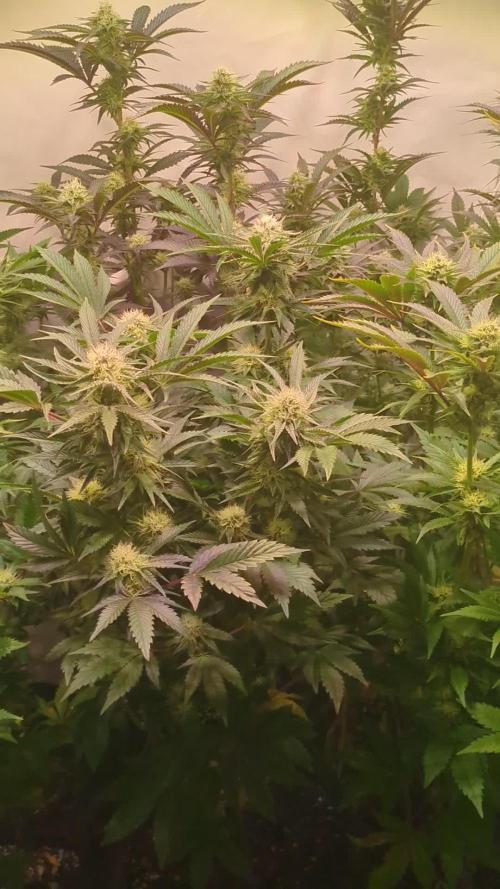
This girl is loving life right now since her burn. Her root system has flourished since she was transplanted in her solo which she has left on 4.15

@Nordgrow
Volgen
Die Farbenpracht wird immer intensiver wie auch die Harzproduktion.
Ein paar orange Stigmen bei einer der Frozen Biscotti sind zu erkennen.
Ansonsten werden die Blüten nur dicker und fester.
Bei leichtem Kontakt mit den Blüten sind die Finger direkt heftig ölig und klebrig.
Ich freu mich schon auf die Ernte


@KCChiefers
Volgen
Day 78 Update: Start of week 12! Watered plant with almost a gallon of pH balanced water until runoff. 4 days left of flushing on Plant #2. Going to play it day by day till harvest, depending on how this week's plans unfold.
Day 82 Update: Harvesting Plant #2 today. I will update the harvest part of the diary once I place these buds in jars. See you in a few days!


@Growing88
Volgen
Sono felicissimo,abituato alle hps e cmh e non riuscivo ad ottenere grandi risultati, con una hps 600 watt massimo 450 grammi,con un led 730 ho fatto 1500 grammi,waooo😍😍😍


@eaglestarledgrowlight
Volgen
I use the Eagle Star LED ESF8800 880 LED Grow Light for Veg and flower stage, it acts wonderfully, ESF8800 is perfect for planting with spectrum tunable (red+uv+ir), thanks very much.


@Telesforo
Volgen
semana tranquila , aplique la segunda dosis de abamectina para eliminar los huevos que quedaron de una muy pequeña plaga de micro acaros con la que venian los esquejes , aumento la cantidad de agua en riego y dicho sea de paso la segunda aplicacion de abamectina es para acabar con los huevos eclosionados durante los 7 dias posteriores a la primera dosis , la abamectina se obtiene del proceso de fermentacion de la bacteria de suelo Streptomyces avermitilisb y tiene una accion translaminar que quiere decir que penetra la hoja pudiendo llegar al enves de la misma de manera mas facil debido a esto
penetra el tejido foliar formando una reserva dentro de la hoja y su vida media es entre dos semanas y dos meses por eso la ultima aplicacion de preferencia es en la preflora , se degrada facilmente por microorganismos y NO SE ACUMULA ... un dato ¡ que tengan buena semaaana y buenos humos¡



@sellem
Volgen
Unfortunately, i have been incredibly busy this week and can only provide the timelapse.
photoshooting for the next week has already happened though so stay tuned 💀
She is continuosly doing very well, and boy howdy, does she stink now 😍
Watering stayed the same, 6L 6P, 5ml/L bloom
Beginning week 12, i introduced the rest of my green sensation at 1ml/L but that will only appear here next week 😛


@GREENPHOENIX6262
Volgen
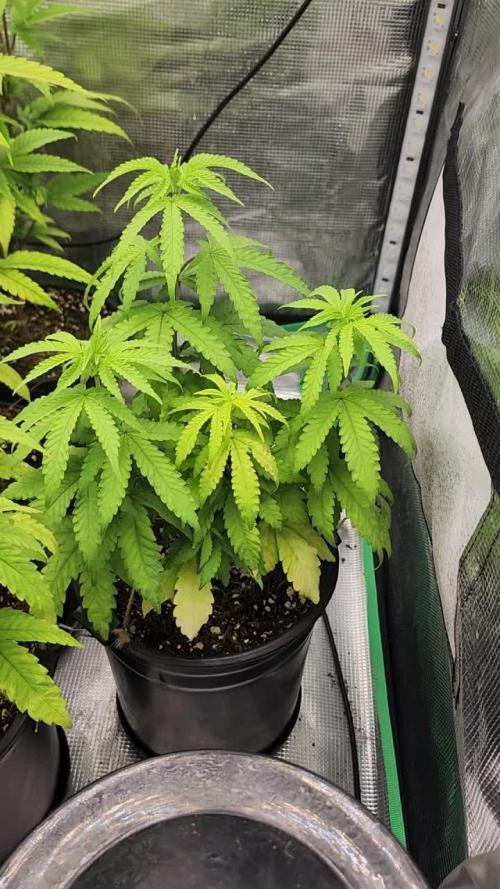
04/11 - Both plants are coming along accordingly on time - As stated previously I got careless with the PH and they suffered a harsh PH burn - Since then they have been flushed and nutes in coco stripped - Began introducing nute in micro-dosing stages.


@SAC87
Volgen
Hi Growers.
Everything is going well. Earlier this week I did another super light feeding, the same as last week. I raised the light to 50” and increased the light to 80% and will adjust accordingly per plant and environmental needs. I did notice a bit of yellowing on the PE and yesterday decided to do a stronger feed and go from there, but no problems with the Blue Dream. I don’t want them starving and getting stressed into flower. After the first light feeds they popped up nicely so I’m interested to see how they like the higher feed.
Environment wise, I turned on the oscillating fan to just help them strengthen their stocks and branches and still have the humidifier on. Temps & RH are good, no hot temp is a bit cool but it’s only 4 hrs.
What week do you growers start training autos??
Thanks for stopping, leave a like or comment if you’d like. I appreciate them.
Happy Growing 🌱


@Horseluisweed
Volgen
Básicamente lo mismo, aunque está semana pilló bastante más horas de luz(tuve que irme fuera de casa dos findes seguidos, en los cuales la dejé con la luz encendida full 24/7 en la caja)
Como experiencia utilicé café reposado 48h para "alimentarla" e intentar bajar el Ph de la tierra (coco ph6+hummus ph7+vermiculita ph8= ph total 7)
El otro experimento fue cubrir la tierra con coco para que el tallo eche raíces y aprovechar su espigamento!
Las horas de luz solía dejarla 8h en bombilla mientras duermo, y el día la pongo en la ventana a que tome el fresco, pero apenas tiene luz directa, me da la sensación que crece más rapido cuando vuelvo del finde, estoy replanteandome tenerla más tiempo en la caja con luz, porque la veo aún pequeña, y quizá ponerle un ventilador de pc o algo🤔..veremos, aún tengo el papel de aluminio al lado de la caja y ni se lo he puesto, con eso os lo digo todo☝️🎃


@Elpicor
Volgen
D65
Just a few days until the harvest, I'm checking the evolution of the trichomes and buds, we'll see what happens, I spent a lot of energy and hours I hope it will be worth it, meanwhile in my house there is the scent of ripe oranges and strawberries I hope to find the same aroma in the smoke.
D68
Tomorrow early morning I will harvest Purple Lemonade, no words for describe this magnificent plant!
D69
Tomorrow early morning I will harvest Banana Purple Punch and Cream cookies


@UrbanBoer
Volgen
Finally I meet you… she’s flowering and guess what I’ve done, due to an foreseen circumstance, going to be away for a month, and all I know is my babies will get water and rain if it does rain, Sad days ahead, however at least the are sheltered from the rising temperatures. As good as it is, guess what this genius does… you guessed it, i defoliated my babies. I hope my decision rewards me, I will surely find out when I return in September, I thought of getting my assistant to send me pictures so I can keep posting, however I think it’s best I stay completely away from posting. This will truly test my growing skill, not forgetting my building skill when it comes to the greenhouse, with temperatures rising I will finally see if this self ventilate design will keep humidity at a desirable level to promote adequate growth, I have not encountered any fungal or pest isssues, but usually problems arise during the hot seasons.