


Likes
Comments
Share





Likes
7
Share


Likes
33
Share


@KronicKobe
Follow
GWK: Day 68
AvT: Day 63
Notes:
-The AvT is on day 63 but for those confused why she looks the way she does, she almost died right as she entered flower and was stunted for about two weeks before ANY growth started again
-AvT looks like she could really put off a nice yield if everything keeps moving in this direction
-Planning to cut the GWK down between the 5th and 7th depending on the % of amber trichomes

Likes
3
Share


@KushHunter
Follow
Ernte nach 64Tagen. Für den falschen ph wert ganz akzeptabel. Auch erst mein 1ter richtiger grow. Hat spaß gemacht. Nächstes mal wird einiges besser. Wenn die blpten fertig sind gibts noch mehr bilder.

Likes
16
Share


@eldruida_lamota
Follow
Vamos familia, actualizamos la quinta semana de vida de estas Panty Punch de Seedstockers, salieron 3 una se resiste a tirar adelante, veremos cómo progresan.
Empezamos añadiendo varios productos de la gama de Agrobeta.
Temperatura y humedad dentro de los rangos correctos.
Ya realizaré el trasplante correspondiente a 7 litros.
Vamos viendo cómo avanzan estas próximas semanas.
Agrobeta:
https://www.agrobeta.com/agrobetatiendaonline/36-abonos-canamo
Hasta aquí todo, Buenos humos 💨💨💨

Likes
9
Share

@Skunk11
Follow
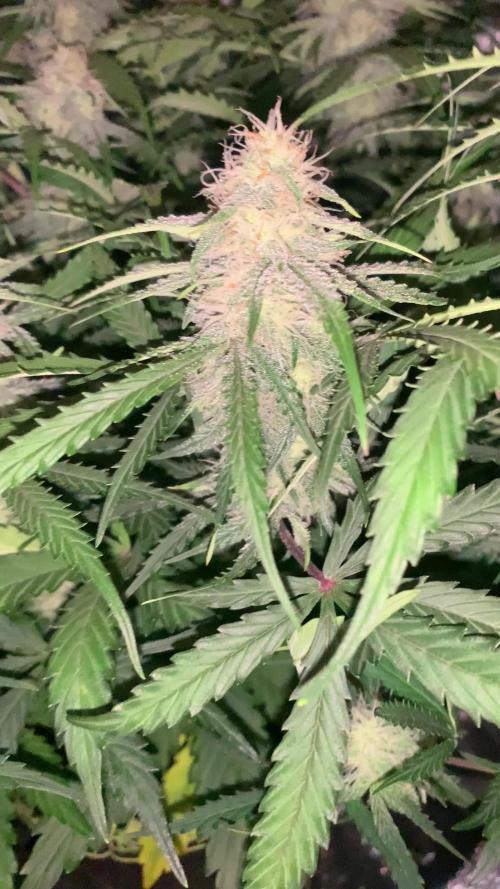
Day 42 doing good still tips burn not much only little and bottom leaves turning yellow and dropping off but she has enough leaves , think she’s gonna be ready about day 65 , I reckon she has been a quick grower , still drinking 2litres , buds arnt biggest propaly because of only using 100w ts, should of used my 300w , smells beautiful and some dence nugs are forming , I normally use big bud as a booster but trying out bio buzz.

Likes
1
Share


@BruWeed
Follow
18/10 - comienza su quinta semana en etapa de floracion. Su evolución fue muy rapida, apenas entro en flora cambio totalmente la planta. Los cocos están perfectos, super resinosos con olor muy fuerte.
El banco de semillas recomienda que este en flora de 8 a 9 semanas. Seguramente la deje hasta la semana 8. Esta bastante avanzada. No tuve problemas en ninguna etapa. Sin dudas es una genetica que volvera a cultivar. Cabe aclarar que esta planta genera mucha resina por que es ideal para extracciones.
Podes seguirme en instagram como @bruweed_arg

Likes
7
Share


@Cultivatorcarlos
Follow
Week 4 was actually pretty smooth. she was showing nitrogen and potassium deficiencies because she was being terribly underfed and because i had weened her off the veg nutes WAY too soon. I found the dyna gro nutrient schedule and ive been following that. i will definitely be following the schedule much better next round as i wasnt actually aware they had a schedule out. Shes currently week 5 day 1 and shes already fat af and super trichomey.s he still got at least 2 weeks left. she might be ready by week 7 honestly tho who knows guess well see. Ive been giving her 1 gal each time of dechlorinated tap water just straight water. it has been phd to 6.6 ph. runoff tested at 6.3 ph. will probably flush one last time before continuing the bloom feed.
Likes
Comments
Share


Likes
56
Share


@Prilyfe13
Follow
May 17, 2024 Day 92
This is the last week of the Flowering phase. I'll be harvesting most likely next midweek or earlier. The goal is to harvest by the end of the week, but I don't think they will be done.
Banana Purple Punch A looks amazing! Her branches are nice and leaning. Not too much, just enough. She's also starting to show signs of fade. Or at least unhappy leaves turning yellow. One weird thing I noticed is the back leaves all have signs of nitrogen toxicity. What's weird is that I haven't used nitrogen in over a week and the last time I used it, I did a quarter dose. This should not be happening. I'm confused.
Other than that, it's the end and I'm not worried about it, but it's still weird. Any insight?
Banana Purple Punch B looks great as well. Tons of orange pistils and lots of frost. What's nice is that a lot of that frost is still clear trichomes. Imagine what they will look like in the end. I'm so excited!
Both plants still have water in their basins, so I'm going to let them drain out and most likely not water again. It should be about a week for them to dry out completely. Perfect timing for harvest.
I may put Banana Purple Punch A in a dark period while Banana Purple Punch B finishes up for a couple days. I'm doing the same thing with my Tropicana Cookies.
Lighting. Well, it hasn't changed. Lol. Duh. Hahahahaha. Another week of this light intensity.
I've all but given up on the environment. It's got tons of airflow and lots of light. The temp is fine. It's just the damned humidity. I give up. I'll just keep removing the plants from the tent as need be.
I didn't touch Banana Purple Punch A today though. She is propping up the last Tropicana Cookies for the next 2 days. I will however, make sure to inspect her as much as I can. And as soon as she is freed up, I'll be flipping her around. And pulling her away from the side of the tent. Same with Banana Purple Punch B. Both are squished for the moment.
I also managed to get all 4 Sour Diesel plants in the tent after pulling one of the Tropicana Cookies. So these ladies are a bit tight for now. But only for a couple of days. If that. I was considering putting the Sour Diesel in the back and keeping the Tropicana Cookies up front for ease of access, but that will just cause chaos with bendy floppy branches. So I'm leaving it. It all fits. Snug as the Tetris skills I had to use to make it happen.
Grow System Environment:
Temp: 76.4°
RH: 61.4%
VPD: 1.17 kPa
Quick update on lighting:
I had to increase the light power up to 80% for the Sour Diesels now in the tent. They were at like 16 mol/m²/d instead of the 20 to 25 mol/m²/d it should be. Anyway, so the light was increased. It didn't change much. Some spots went back up to 40 mol/m²/d, and some went up to 38 mol/m²/d. Overall the spread is 34 to 40 mol/m²/d. These 2 should t have any issues with the light increase. I wonder if it will help along the maturing process. I don't know science. Maybe the dark does? Maybe they both do and just in different ways. Yah, that's it.
May 18, 2024
Watering day. Both ladies got a full gallon reservoir refill of plain water today. No sense in running the Flawless Finish anymore. They have mere days left to maybe a week. I'll just keep extending the time until I'm right. Lol. Hopefully it will be the last watering. Neither plant is thirsty at all, so it should take around a week for the reservoirs to empty.
Banana Purple Punch A looks great! She is nearly ready. No fade yet though. I don't really understand. Is she not fading because she isn't done yet? Or is this just how it's going to be? Insight? Lol.
Banana Purple Punch B is coming along nicely. I don't think she is near done yet. I don't get why they are taking so long. Either way, when she's done, there will be some amazing bud.
The light isn't hurting anything that I can tell. So it will stay the same.
The environment is an absolute mess now. With more power to the light comes more heat. Now I'm stuck in the mid 60s for humidity and 78° for the temp. All bad. I've been checking each plant for mold, mildew, bud rot and anything else that doesn't look right. So far we're safe.
Grow System Environment:
Temp: 75.4°
RH: 64.2%
VPD: 1.06 kPa
Can you say horrible environment? I'm so screwed. Even if I don't get any issues like bud rot, the humidity is doing a toll on trichome production.
Update: After some research, I have found that high humidity can cause plant production to slow down significantly. That could be the problem I'm facing right now. My humidity is entirely way too high and the plants aren't able to take in water. And some other science I'm sure.
Also, I've noticed the leaves on Banana Purple Punch A are really shiny and clawing just like nitrogen toxicity, but I'm in the second week of plain water and flushing agent. What gives? If anyone knows, I would greatly appreciate a comment or a DM. Thanks!
May 19, 2024
Not a lot to do today. No watering or trichomes.
Banana Purple Punch A is being weird with this nitrogen toxicity during flush. How would that work? Anyway, her leaves are starting to die off a little but no fade. Still, she has huge buds that smell wonderful.
Banana Purple Punch B is starting to show a bit of color in her leaves. Just a hint of purple but just a hint. If she fades, it won't be for a bit.
But it's time I don't really have. Let's hope she starts to fade quickly. Both have been in plain water for a week and before that a week of Flawless Finish. Must be more nutrients in the soil.
Nothing to talk about with lighting. We all know where it's at.
The environment. I'm really confused. So a week of high humidity and my room is also humid. Today, it's low humidity and my room is still high. Even with the door open from outside it's still high. Why? What sorcery is this? Anyway, the tent is still stuck at 65% humidity and temps are down to 73°.
Grow System Environment:
Temp: 72.5°
RH: 68.3%
VPD: 0.84 kPa
May 20, 2024
We are starting to fade! Finally! Both ladies are starting to fade in their own way. No watering today. They definitely don't need it at all. Maybe a half gallon before the drying period.
Banana Purple Punch A is fading in her own messed up unhappy way. Her leaves are super shiny and clawing like she has nitrogen toxicity, but she's flushing. I don't get it. Leaves are canoeing and turning yellow. Maybe this is her fading in the most messed up way. But she's fading. Some of her leaves are starting to get a purple hue. Her buds are super fat and stinky. It's wonderful.
Banana Purple Punch B is the picture of a perfect small plant. She is fading like a normal plant. She's getting purple hues on her leaves, buds are developing purple as well. By the end, I hope to have a couple deep purple plants. I'm still wondering why it's taking so long. They should have been done weeks ago.
The lighting is the same.
The environment is the same. Although, it dropped to 40% outside yesterday and the humidity stubbornly stayed in the mid 60s. It makes no sense. Anyway, I'm stuck at 65% still and the temp is finally under control again. I have it a bit low for the last bit of flowering at 73° it's going to be hot today, so I'm hoping my room stays cool. Maybe the humidity will drop again and I can try to get the humidity to come down.
Grow System Environment:
Temp: 72.6°
RH: 67.7%
VPD: 0.86 kPa
May 21, 2024
Trichome day! Some good things happening today.
Both ladies are looking great! They finally have some fade going on. Not a lot, but some.
Banana Purple Punch A is almost out of water. I'm going to let her dry out a bit more and then add another half gallon to her reservoir. Her trichomes are starting to show more amber. Maybe 5% now? About 10% clear and the rest are cloudy. She still has a bit more time to go. I'd say another 5 to 7 days? Maybe slightly less? Hopefully slightly less.
Banana Purple Punch B has a saturated bottom. I think it's because the roots never grew out of the container, so the soil is sucking up all the water and I guess the roots are not? I'm not sure, but I can def say that she is barely drinking. I'll pull the wicks tomorrow.
Her trichomes are looking great. She has around the same as her sister plant. About 5% amber, 10% clear and the rest cloudy.
Both plants have huge dense buds. I can only imagine how much more dense they will get over the next few days while they finish up.
We finally got the central air on in the house. It made all the difference in the environment. Well, that was until it shut off and then my room needed assistance. In the form of wet cold air. Definitely not good there, but the AC will kick on in no time. It's 80° out today, so I expect the central air to kick on anytime now.
When it's on, the humidity drops to 56% and the temp stays at 74°. Very nice.
Grow System Environment:
Temp: 72.7°
RH: 62.9%
VPD: 1.00 kPa
May 22, 2024
Nothing to do today with these two. I might have to water Banana Purple Punch A in a little while. I was hoping I could get away with it, but I think she is dried up enough for another half gallon of tap water PHed to 6.1.
Banana Purple Punch A looks good but has clear signs of previous stress. Interesting. Her tops are leaning even harder now. Those buds must be super heavy. The branches are pretty thick.
Banana Purple Punch B looks amazing. Purple is coming in quickly. Her buds are definitely denser and fatter now. Probably as big as they will get. Now it's just time for her to mature.
I have a small problem. I have 1 Tropicana Cookies left and 4 Sour Diesels in pre-flower in the tent as well. Suffice it to say, I need to make room for the Sour Diesels to stretch. And that could start anyway now. I'm concerned I'm going to run into massive crowding and cause mold. As it is, the humidity is still really high, so I don't want to risk it.
All that being said, I might now be able to wait for perfect doneness with these ladies. I might have to harvest them in a matter of a couple days. The last Tropicana Cookies in the tent should be pulled either tomorrow or the next day, unless the Sour Diesels start to significantly stretch, then all three including these two will have to be pulled.
So there you go have it. My current issue is space for 7 plants in a 3x3 tent. I know, I'm ridiculous. But you gotta do what you gotta do.
On a side note, I'm wondering what I'm doing wrong to always have plants go way past their time. Seriously, it kind of messes with my schedule. For example the Sour Diesels. Those were planted on 4/20 and these ladies were supposed to be fully done a week later. But it's been 4 more weeks and they still aren't done. Total wrench in my plans. What could I be doing wrong?
The environment is still a mess. The central air hasn't kicked on yet, so I'm relying on my own portable AC. The problem with that is it blows out really humid air when the compressor kicks off. So my humidity is high again. Over 60% yet again. The temp is fine at 75°.
Grow System Environment:
Temp: 75.7°
RH: 59.4%
VPD: 1.20 kPa
May 23, 2024
Last day of the week and we have some real purple coming in now. Especially on Banana Purple Punch B. Most of her tops are now a nice deep purple. Leaves are also getting the nice purple hue as well.
Banana Purple Punch A looks great. Lots of leaning branches now. She should be ready for harvest in just a few days. Not as much purple as I'd hoped, but it's fine. Her buds still look fantastic.
Banana Purple Punch B is quite nice. She has super heavy tops and should be ready in maybe 5 days. There's still too many white pistils on the lowers. I can't express how nicely the purple is coming in. A little late from what I've seen in other grows, but here nonetheless.
She still hasn't finished her gallon of water and it's been well into a week. I think I'll turn off the bottom feed system for her tomorrow. It should be perfect timing for her last week of life.
I definitely cannot change the lighting for these two. The Sour Diesels need more of it. I'll have to drop it down soon, they are growing pretty fast and starting to seriously pray. Too much.
So the light will remain her for now. I might still lower the light and turn down the intensity. I'm not sure yet.
The environment is starting to calm down. Not quite fast enough for my liking to be honest. Currently the temp is around 76.5° and the humidity is still high at 61%, but it will drop in a little while. Maybe we can get down to 50% today.
Update: I've decided to give these two no more than a week to finish up. Both of the Tropicana Cookies are out now and they are taking around 5 days to dry, maybe 7. But no longer than that. The other reason is the Sour Diesels that are now sharing the tent are in pre-flower and will need the space ASAP.
Grow System Environment:
Temp: 76.2°
RH: 60.6%
VPD: 1.18 kPa
Likes
5
Share


@Kinghaze
Follow
Harvest day !
The plants are chopped and are hanging to dry.
I put in a dehumidifier and a humidifier to control the humidity around 60%.
The goal is to dry for 10 to 14 days.
Then i will trim and cure them in grove bags for 6 weeks.
I put the mutant straight in a zip lock in the freezer.
I will make fresh frozen bubble hash (full spectrum) out of this one.
I will update if the buds are dry en trimmed 🍀✌️

Likes
7
Share


@skunkch
Follow
The heatwave is unfortunately coming back,
Currently removing yellow drying leaves day by day.
Trichomes are ready in a few days, so it won't be a problem.
Chop day is coming 👽

Likes
40
Share


@Totogrowuk
Follow
We’ve had a lot of rain and so I’m concerned about the more developed bud sites and bud rot. Hopefully have a dryer week.
The amnesia Zkittles is now the tallest and she’s looking fantastic.
Likes
4
Share


@JennK82
Follow
I had bugs but gone now since plants are out of room and a cleaning was done
Likes
2
Share

@Chucky324
Follow
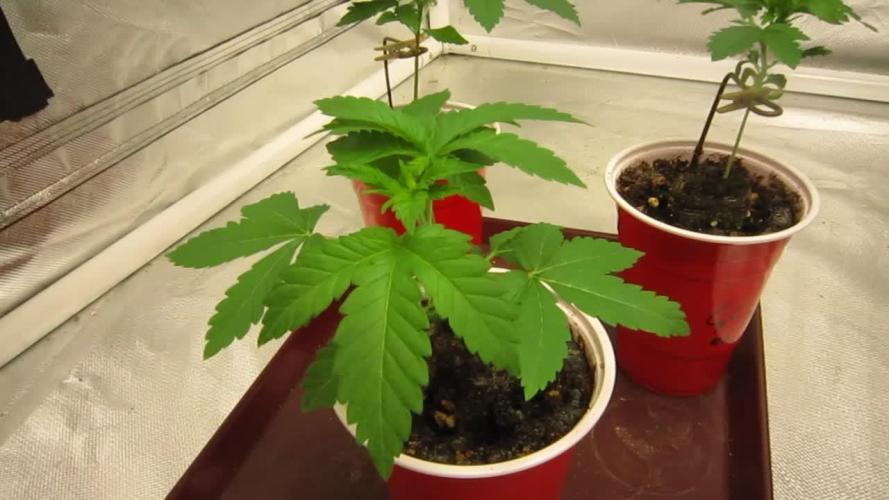
Hello. This is the end of week 2 and the beginning of week 3 of veg.
These plants are growing slowly, but doing good. Hope they can pick up some steam and get going.
These plant are going into my other grow room with the strain Grapes. There is 8 spaces in there, so I'm hoping these plants will get going soon.
But it is what it is. They will grow how they want... not how I want. 😒 Life's like that!
Next week this tent will have Kush Mints in it. I have to vacuum up the pollen from the males that were in the other grow room from this spring.
OK. Be Great. Chuck.
Chuck.
Processing
Likes
27
Share


@RastaGrow
Follow
Еще одна хорошая неделя, другая неделя ближе... 😁
Девочкам, кажется, нравится новый свет, хотя они перестают расти в высоту. Вы видите, что они начинают откормлять.
Я сделал дефоли... удалил большую часть листьев the big вентилятора с длинными стеблями. Я пробовал эту технику раньше со штаммом сативы, и, похоже, он работает хорошо... Так что давайте попробуем это с помощью индики
Ог куш проста бешеная сучка :)

Likes
10
Share


@BR1CK_SANCHEZ
Follow
The girls are doin pretty good this week. Finished off L.S.T. earlier in the week. Applied first re-amendment of nutes, not including the compost tea from last week. Turned the light almost all the way up. Hoping to flatten out the canopy with a trellis net. There doesn't seem to be deficiencies on the new growth, and they're going full steam ahead so I'm happy about that.


Likes
10
Share

@Growmigos
Follow
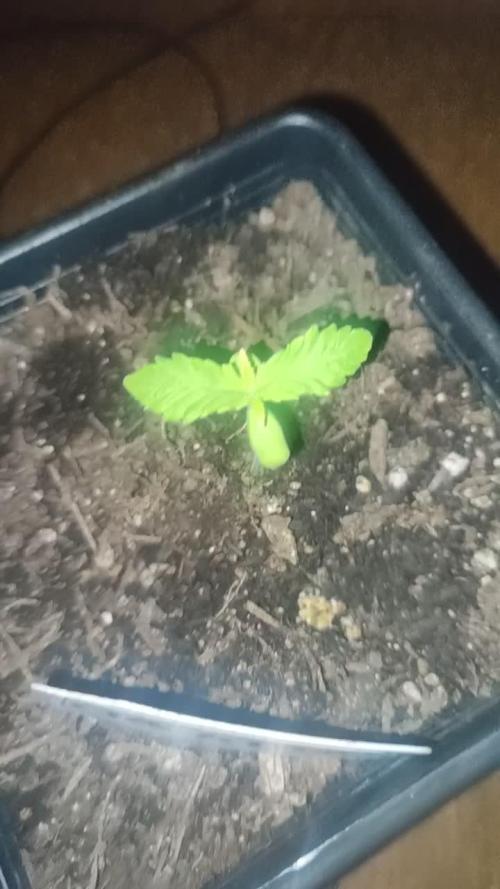
ICHch finde sie sieht aus wie letzte Woche ,bei Photos siehst du erstmal 1-2 Wochen nichts, unter der Erde bereitet sie sich auf ihr Leben vor!!!
Likes
14
Share


@BLAZED
Follow
Week 12 (17-4 to 23-4)
17-4
Temperature: 23.1 degrees (lights on) 19,1 degrees (lights off)
Humidity: 62% (highest) 50% (lowest)
18-4
Temperature: 22.5 degrees (lights on) 17.9 degrees (lights off)
Humidity: 61% (highest) 52% (lowest)
Opened the reservoir for a couple of minutes. ec 1.4 ph 5.7
19-4
Temperature: 22.5 degrees (lights on) 18.4 degrees (lights off)
Humidity: 64% (highest) 54% (lowest)
No pictures.
20-4
Temperature: 24.1 degrees (lights on) 19.1 degrees (lights off)
Humidity: 65% (highest) 54% (lowest)
Light increased from 50% to 60% strength.
I also made a new 10L feed, and added it to the reservoir, there was still 2850 ml in the reservoir, so i can calculate how much they get per watering.
Opened the reservoir for a couple of minutes.
21-4
Temperature: 24.4 degrees (lights on) 19.3 degrees (lights off)
Humidity: 66% (highest) 54% (lowest)
No pictures.
22-4
Temperature: 23.7 degrees (lights on) 19.7 degrees (lights off)
Humidity: 67% (highest) 42% (lowest)
Opened the reservoir for a couple of minutes.
23-4
Temperature: 23.6 degrees (lights on) 17.7 degrees (lights off)
Humidity: 64% (highest) 50% (lowest)
