




Likes
2
Share


@Bwright_315
Follow
She is growing like a champ! And has a really strong smell. Praying it stay warm out as we are heading to October


Likes
Comments
Share


@Sativ_420
Follow
Tuvieron dos dias de lluvia intensa y para prevenir plagas le hice una buena poda. Hasta el momento vienen creciendo sin carencias.


Likes
13
Share


@ButterfliesLittleFarm
Follow
Hello Diary,
The first week of vegetation is over on my little farm and so far everything is going well.
In order to better remember the arrangement of the plants, they are arranged alphabetically from left to right.
On the left is Apollo, in the middle is the Milky Way and on the right is Titan.
Titan F1 is developing and growing nicely. It grew 6.5 cm and I am generally satisfied.
Bright spots appeared on the leaves. As with her roommate Milky Way.
I'm not sure about the cause, but maybe it's genetics. I will see and follow what happens.
Watering was not frequent, considering the size of the pots, there is a lot of moisture in the ground, so I watered it every 5 days with a liter and a half of water.
In the first week, I didn't add any supplements, considering that I mixed a lot of supplements into the soil.
Conditions on the farm are satisfactory. The humidity is slightly higher than 50% and the temperature is around 25 degrees.
The light is set to 18/6 from the first day of vegetation.
I took pictures on the first and last day of the first week, just to see the difference in a week.
Here's a quick recap of the week.
30/04/2023 - Day 1.
Watering and photography. Officially, the first day of the growing season.
Prepared 5 liters of water, lowered the pH. at 6.0 and with that amount watered the Titan F1 and its two roommates with about the same amount of water.
Titan F1 - 3 cm
05/05/2023 - Day 6.
Watering. The procedure is the same as 5 days earlier.
06/05/2023 - Day 7.
Photography. End of the first week of vegetation.
Titan F1 - 6.5 cm
That's all for this week, see you soon and thank you all for your support.

Processing
Likes
34
Share


@Mr_Motalovah
Follow
Hello growers and tokers! 👋 👩🌾 🧑🌾.🔥💨
Alright so as promised to make up for the few pictures from last week I've got more photos and a little video to see more detail.
She hasn't stopped growing yet, that's another 10cm this week.
Really really visible for my top to neighbors.. 😂
Now I'm just at a point where it's like fuck it, whatever happens happens.
She's not stacking as good as I hope on the top four colas. For my taste there's too much space between each node.
The bottom growth isn't getting that much light anymore but there's some little bud sites..
No smell yet but I'm guessing that'll kick in next week.
That's it for this week. Stay tuned to see how she flowers.
Stay safe!


Likes
29
Share

@Diips
Follow
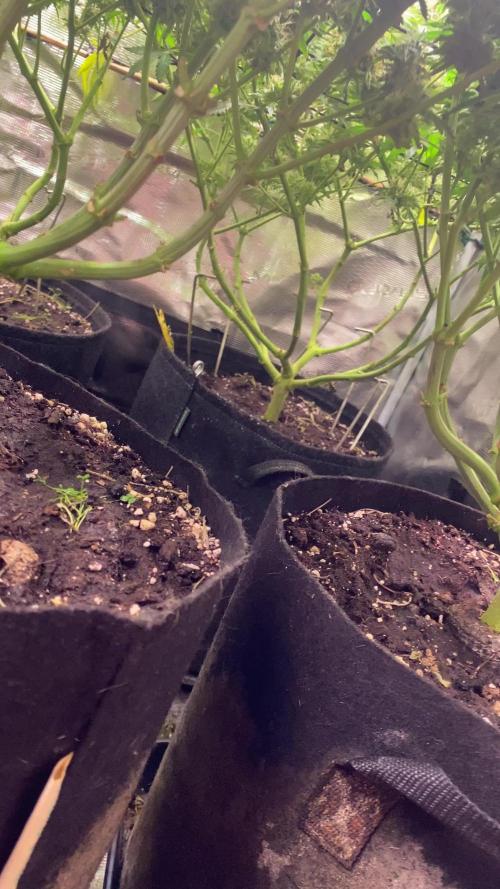
day 58 - 9/1/2026. time flies when you are having fun❤️ Got my new adlite installed uv + ir and Blue30 and red30. so is gonna be interesting to see, going from here. they seem to take it pretty well 🌞

Likes
1
Share


@BonusPackage
Follow
Day 17
All good, big and healthy
Day 19
Her leaves are the largest and are touching the soil. I'm hoping her height catches up to her width
Day 21
Her main stem is really thick and I think she is struggling a bit with the weight of her leaves

Likes
13
Share


@wheedtobeus420
Follow
She’s finally finished I’m so happy to have her. She smells like red starburst and zkittlez. She taste like she smells. I’m very happy how she turned out. Beautifully. Super sweet and right up my alley. Fastbuds hits it out of the park once again!
Likes
2
Share
@MaxWax
Follow
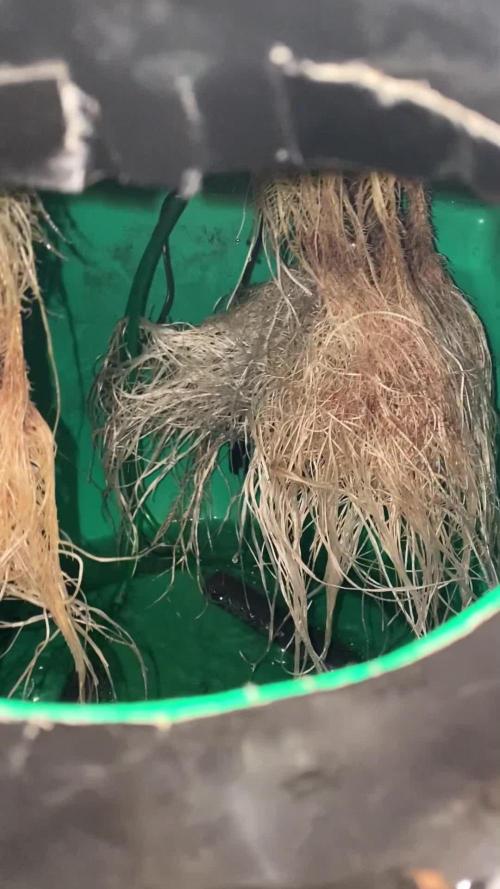
The plants are doing quite well so far, but one is much bigger than the other. At first, I thought it was due to genetics. However, I'm starting to suspect that it might be my fault—specifically the frozen water bottle I use to regulate the reservoir temperature. If I don't use the ice bottles, the temperature rises above 22°C, but I think the roots of the smaller plant might be getting a cold shock.
I’ve already learned a lot from this project that I will do right from the start in my next DWC grow 🙂

Likes
20
Share


@eldruida_lamota
Follow
Venga familia que ya viene la cosecha de estas Apple Fritter de RoyalQueenSeeds, que ganas que tenia ya de darles machetazo.
No veas que pinta que tienen estas plantas.
Las flores aparte de prietas se ven bien resinosas.
a sido una genética con la que disfruté mucho cultivarla, es algo complicada cultivarla pero merece la pena si eres cultivador con experiencia no te será problema cosechar.
Agrobeta:
https://www.agrobeta.com/agrobetatiendaonline/36-abonos-canamo
Mars hydro:
Code discount: EL420
https://www.mars-hydro.com/
Hasta aquí es todo , espero que lo disfrutéis, buenos humos 💨💨.
Likes
13
Share


@KAPT_SAVE_Da_HOE
Follow
Running into nutrient deficiency with magnesium and just the nutrients as a whole. I guess I didn't make my soil hot enough. Added extra topdress with BuildasoilBloom.
Likes
2
Share

@Olduffybastard88
Follow
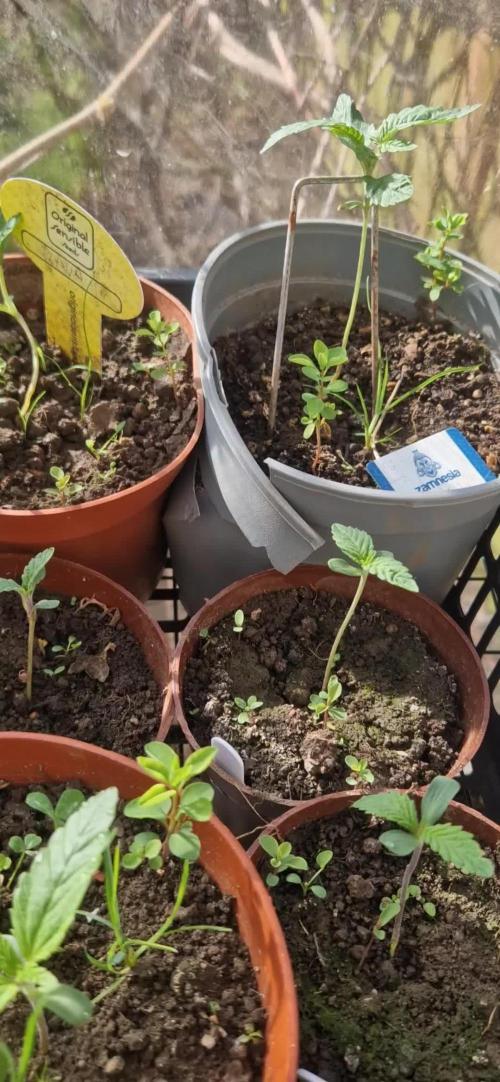
All the plants are loving the conditions in the greenhouse getting alot of movemnt after feed and loads of watering done due to greenhouse neing so hot hit with biobizz bloom and grow some. Rockdust aswell

Likes
9
Share


@Inganjawetrust
Follow
This was my first time growing a photoperiod and I decided to put her outside along with some autoflowers this past summer.
I started Purple Shot Photoperiod Fem. from Exotic Seeds in a one liter air pot and moved her into a 5 gallon phat sack on day 14 when she was 2.5 inches tall.🌱🌱🌱
By the start of week three she was 6.5 inches tall and looking quite happy in her new five gallon home. A short while later she was moved outside to adjust to her new environment.☀️☀️☀️☀️
By day 35 she was 16.5 inches tall and developing a nice bushy structure.
She started to flower towards the end of week 10
By week thirteen it was evident this girl was going to be making some nice tight lil nuggets 😁
By week fourteen I could hardly take my eyes off of her as she started to show her fall colors.
I harvested her on day 130 18wk 4d She was 43" tall and looking pretty as can be.
Her nuggets are not large but they are hard as rocks and sticky as fuck.
The original plan was to turn all the outside plants into hash but I like this one too much just the way she is 😋
After a nine day dry and month and a half to cure the dry weight for this girl was 78.50g / 2.80 oz
✌️😎💨
Likes
2
Share



Likes
10
Share


@SgtDoofy
Follow
5/1
Trainwreck is starting to absorb it's leaves nutrients. I pluck them as I go. I'm thinking of flushing Amnesia here soon too.
Edit: decided to take a chunk of Amnesia without flushing to see if I can get a flavor difference between flushing and not flushing. I'll be keeping the first clipping in a separate grow tent with fan set to 70F with a max of 60% humidity, I don't think I'll be able to get it to 60F in this tent, but I'll experiment with it and a second humidifier. It's currently 74F and 36% humidity. I wonder if putting a humidifier in there will lower the temperature to the correct level. I'll try.
5/2
Watered both with PH'd tap water. The tent is starting to smell distinct; probably of dead chlorophyll as the plants start absorbing their leaves. The clipping of Amnesia in the other tent is starting to smell a bit like hay. After a couple of weeks of drying, I'll trim and move it into Grove bags to let the terpenes come through during curing.
5/7
Trainwreck's leaves are turning more and more yellow. Gonna check the trichomes on both here soon. Giving them another plain PH'd watering today.


Likes
30
Share


@Grower_Of_Persia
Follow
week intel:
it was the time to prune the cover crops this week i chopped them - no problem all good
stresses :
just a little E.C stress around 1.4 once a week
feeding:
i feed them 3 times this week with this order :
day 1 : i feed them heavy with silicate +base nutrients(calcium & micros + Bloom) about 707 ppm - 1.4 e.c to cause a little stress.
day 3 : i feed them low dose of Feeding Booster around 275 ppm - 0.57 e.c to let them recover a little but not fully recover still a little stress will caused.
day 5 : i feed them with normal dose of Top-Max + B-52 around 213 ppm - 0.42 e.c to let them recover the stresses to get ready for another stress next week.
guide of the week :
autos do so so so much better with 20 hours light per day pls dont run autos near femenized 1 of them must get sacrificed